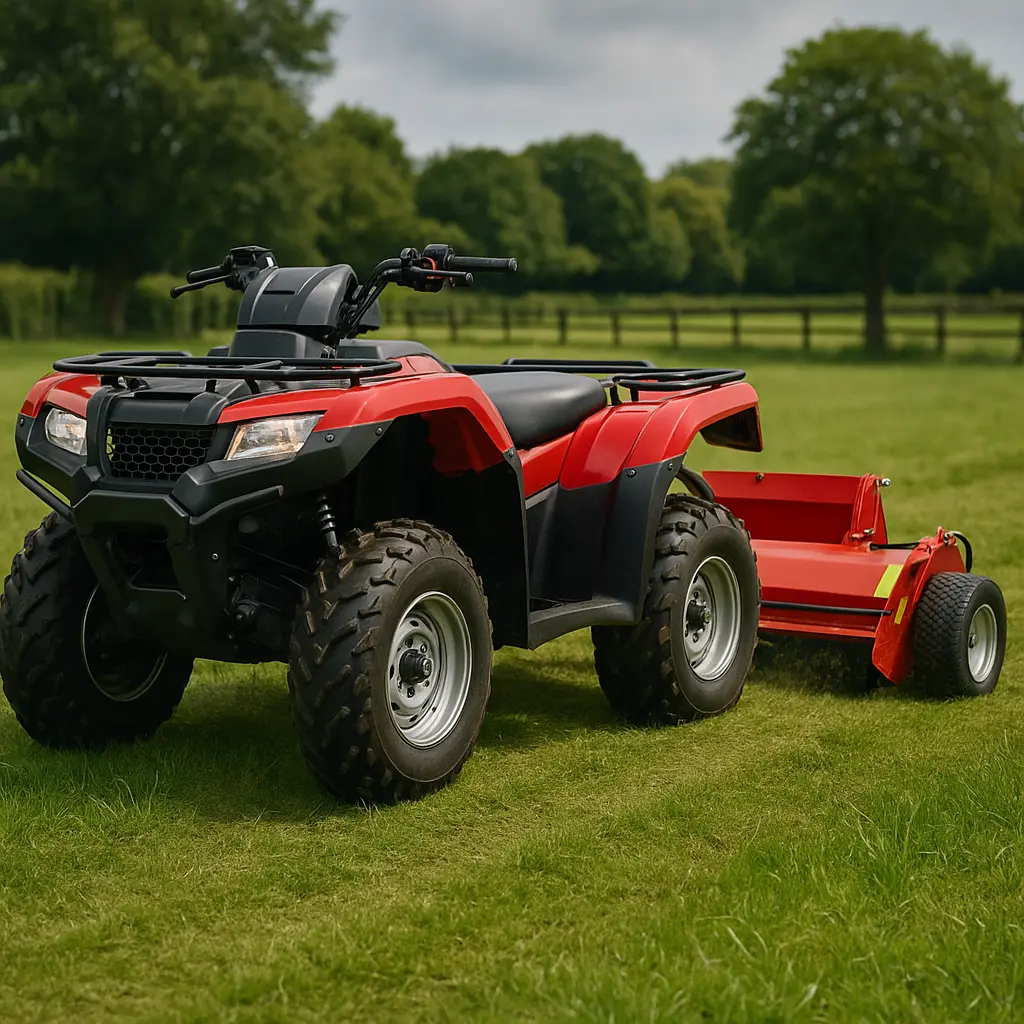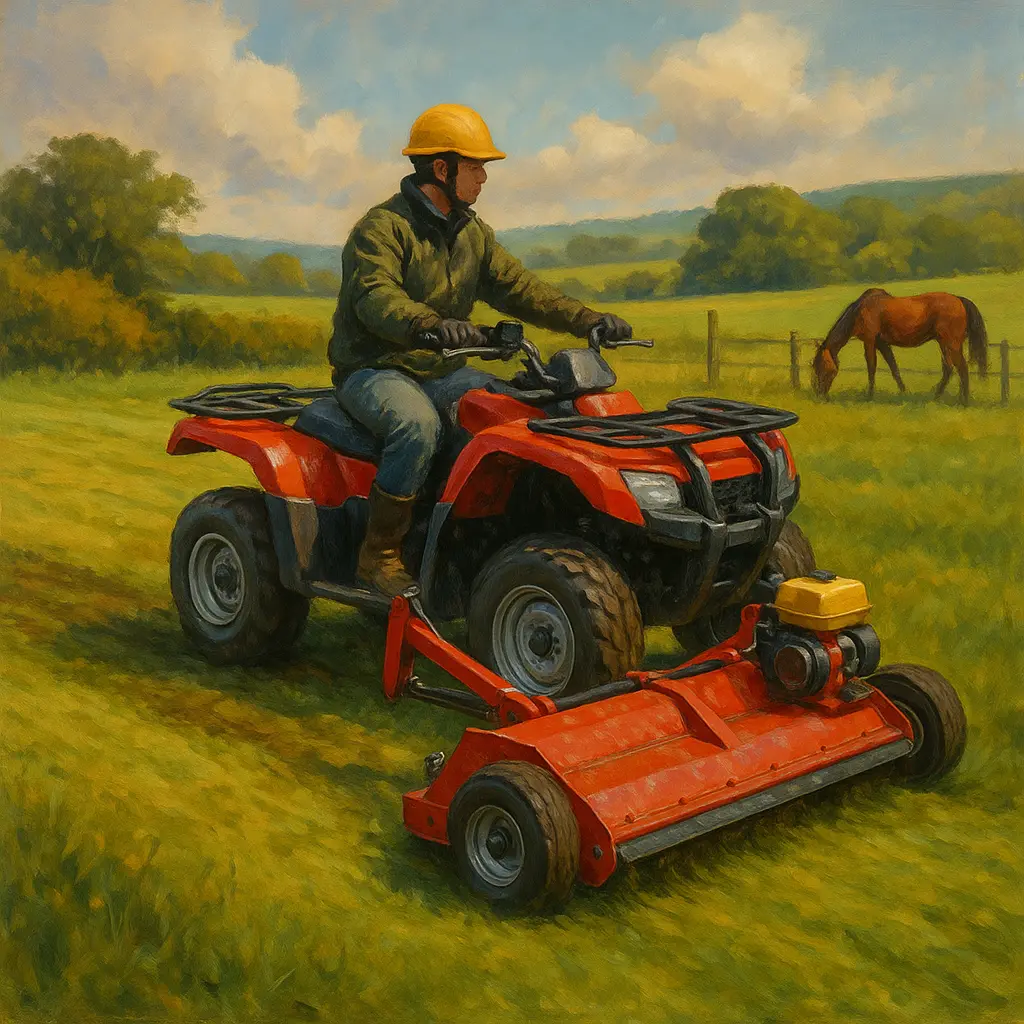
You don’t need a full tractor to keep 5–10 acres of UK horse pasture tidy, safe and productive. For most small yards, a quad bike (ATV/UTV) with the right flail topper and tyres will handle topping, ferrying and day‑to‑day jobs with ease.
Key takeaway: For 5–10 acre UK horse yards with 2–5 horses, a quad plus a 1.2–1.5m flail topper will manage paddock topping and daily chores; save the tractor for heavy lifting, larger acreages or commercial workloads.
Quad or compact tractor for 5–10 acre UK horse yards?
For non‑commercial yards up to about 10 acres, a quad with a flail topper is sufficient for topping, levelling and ferrying; a tractor only becomes essential for heavy work or larger acreages. UK owners managing 7–8 acres consistently report that quads with toppers handle the workload effectively.
On horse properties, ATVs shine for daily jobs: fence checking, hay field inspection and moving tools around pastures, especially where tractors struggle for access or would mark the ground (Stable Management). Forum consensus from UK smallholders managing 7–8 acres is clear: a quad with a topper/leveller is “man enough” for regular topping without the cost and bulk of a tractor (Horse & Hound Forum; The Farming Forum).
“We have quads and a tractor – love them both. Quads are really useful for ferrying things around day to day, and would be man enough for topping that acreage.”
While “the utility that a decent compact tractor… far exceeds that of an ATV,” owners starting with 10 acres and 3–4 horses find an ATV perfectly adequate for initial maintenance and topping, keeping tractor spend optional (Chronicle of the Horse Forum).
For hay, most small UK yards sensibly outsource to local contractors and use the quad for topping and chores in between (PistonHeads Forum).
The right ATV flail mower spec for paddocks
Choose a 1.2–1.5m ATV flail topper with around 15hp, electric start, and an openable rear flap, plus anti‑scalping roller and height adjustment. This spec is purpose‑built for equestrian paddocks, verges and rush/bracken control in the UK.
ATV flail mowers in the 1.2–1.5m range are designed for equestrian field maintenance, topping verges and paddocks, and coping with the mixed growth you’ll find on UK horse properties (Logic Manufacturing). Models like the FM Range are specified for weeds, rushes and bracken on paddocks and parkland, with robust builds suitable for yards up to about 10 acres (Chapman Machinery).
For ease and safety in British conditions, look for:
- 1.5m working width and ~15hp engine for efficient grassland topping
- Electric start and an openable flap to clear wet grass safely
- Anti‑scalping rear roller and easy height adjustment for uneven ground
- Fine grass flails for clean, even topping in horse pastures
- Engine kill switch for solo yard work safety
These features are standard on quality UK‑market units (e.g. Kellfri; Logic), and they make topping faster and kinder on your paddocks.
How much ground can a quad and flail manage?
A quad with a 1.2–1.5m flail comfortably maintains 7–8 acres and is specified for general upkeep on horse yards up to about 10 acres. For heavier growth, plan two passes and top before the late spring surge.
Real‑world UK owners running 7–8 acre set‑ups report quads with toppers “do the job” across the season (Horse & Hound Forum; The Farming Forum), while manufacturers specify these toppers for routine maintenance in that acreage band (Chapman Machinery). In practice, you’ll move quicker over fine ryegrass than you will through rushes and bracken, so allow extra time for those areas.
Pro tip: In the UK, top paddocks before peak growth (usually May–June) to stay ahead of seed heads and reduce the need for slow, heavy cuts later (Kellfri).
Tyres and attachments that protect wet UK pastures
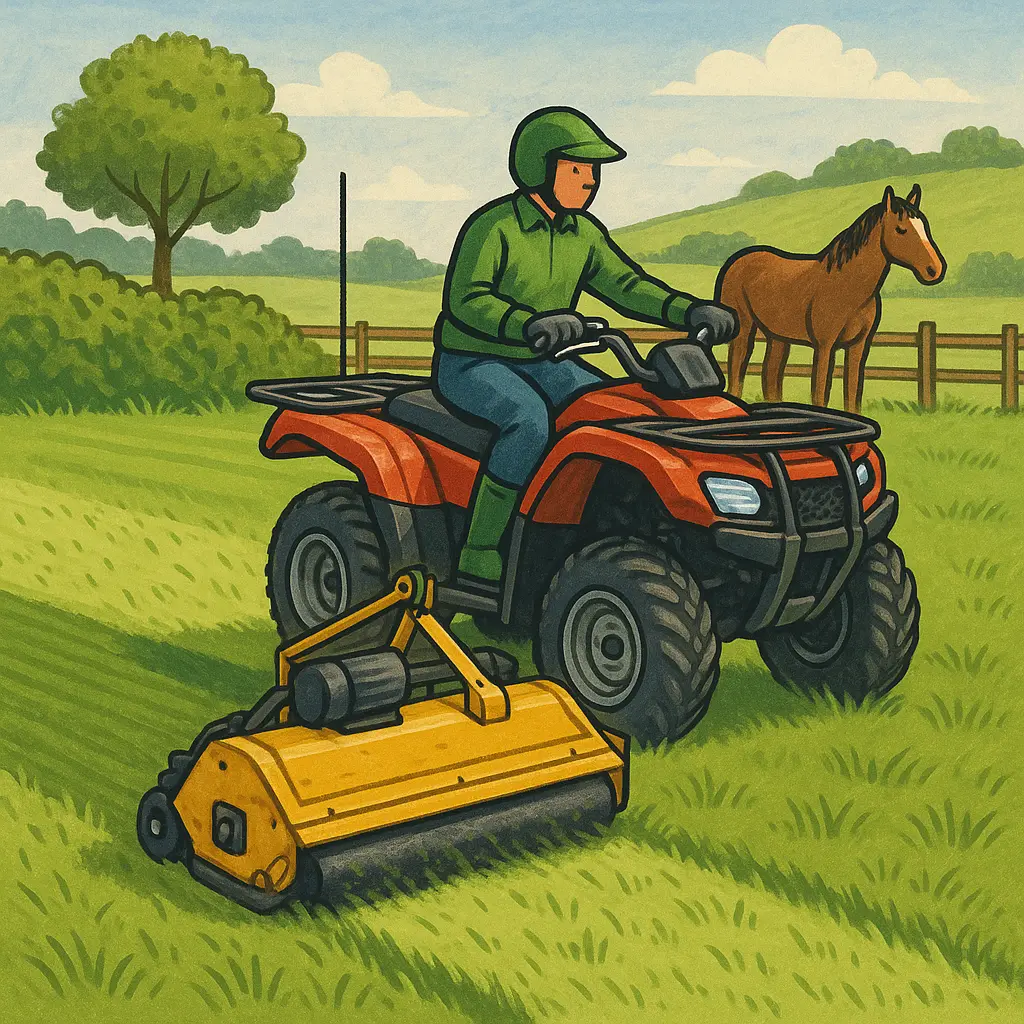
Specify low ground pressure (LGP) tyres on the topper and an anti‑scalping roller with quick height adjustment to avoid poaching and sward damage. An offset drawbar helps you avoid wheelings while topping close to fences and verges.
Wet British winters and soft shoulder seasons are unforgiving on small paddocks. LGP tyres on your topper reduce rutting and let you access softer ground, while the rear roller and height adjusters stop the flails digging in on undulations (Logic Manufacturing). An offset drawbar is invaluable along fence lines, giving you full‑width cut without running the quad on the same line as the blades.
Quick tip: Set cutting height higher for the first spring pass; drop it a notch once the bulk is off. This prevents scalping and protects root crowns.
When working around horses, wear visible PPE and keep the worksite obvious. High‑visibility outerwear reduces surprises when you pass gateways or tracks—see our curated hi‑vis gear for riders and yard work.
Safety and compliance: using ATVs legally on UK yards
ATVs and flail toppers used on UK yards must comply with PUWER 1998, which means maintained equipment, risk assessment, and competent operators with documented training. Fit safety features such as an engine kill switch and follow the manufacturer’s servicing intervals.
PUWER (Provision and Use of Work Equipment Regulations 1998) applies to livery and working yards. UK suppliers emphasise compliant operation, including maintenance logs and trained operators (Logic Manufacturing). Build a simple folder holding:
- Service/inspection records for the quad and topper
- Operator training notes/inductions and a brief SOP for topping
- Risk assessment (access, bystanders, gates, slopes, debris)
Use appropriate PPE for machine operation and the environment: sturdy boots with grip, gloves, hearing/eye protection where needed, and highly visible outer layers for field edges and shared tracks. If you’re hopping on a horse straight after fieldwork, keep a BS‑standard hat ready; our range of yard‑ready riding boots pairs well with wet, uneven ground.
Pro tip: Fit/choose an electric start and an easily accessible kill switch if you often work alone—these details matter when conditions turn and visibility drops.
Daily jobs a quad replaces on small horse properties
A quad covers the jobs you do most often: ferrying feed and fencing kit, towing small implements like manure spreaders, checking water, levelling an arena, and topping paddocks. Its manoeuvrability beats a compact tractor in tight gateways and around a manege.
Owners managing 7–8 acres specifically highlight the quad’s agility and speed between small paddocks, stable blocks and arenas (Horse & Hound Forum). A few common, time‑saving uses include:
- Towing a flail topper for routine topping
- Pulling a small manure spreader for regular turnover
- Dragging an arena leveller or light grader for an even surface
- Shuttling posts, tools and water to distant paddocks
- Checking fences and gateways quickly after storms
Because quads are light and narrow, they slip through typical UK gateways and cause less ground pressure than tractors—key on horse pasture that sees a lot of hoof traffic.
After topping brambles or rushy corners, check manes and tails for burrs and thistles before turnout; a few minutes with the right kit from our grooming collection saves a lot of detangling later.
Cost, transport and when to outsource
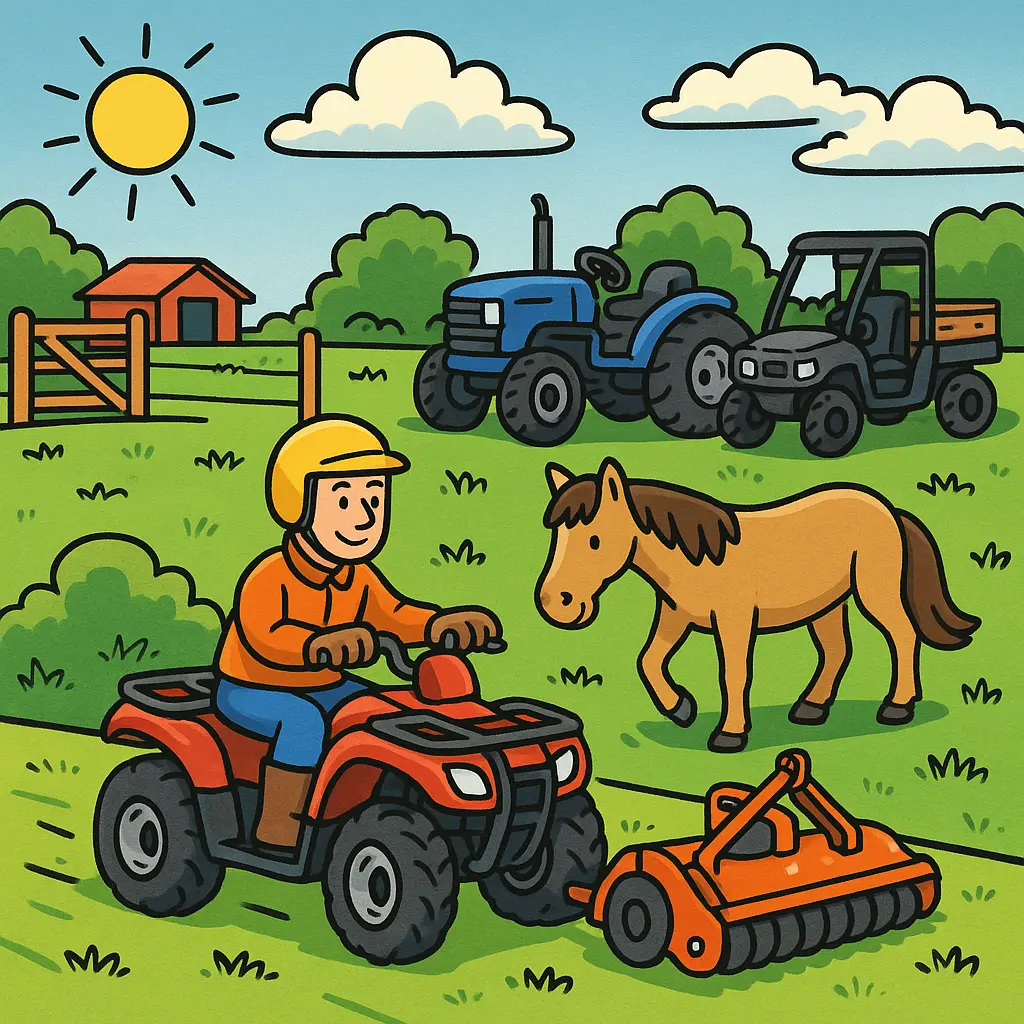
Start with a quad and flail for topping, levelling and transport; outsource hay to local contractors and consider a tractor later only if your workload outgrows the ATV. Quads can be trailered or carried in/behind a pickup, making them useful beyond the yard.
ATVs are a lower‑cost, lighter‑footprint way to get essential jobs done. They can be moved on a small trailer or in a pickup for hedge checks, hunt days or helping a neighbour—adding value you won’t get from a fixed, heavier machine (Stable Management).
“Quad bike and attachments will do [8 acres of pasture]” – a pragmatic choice over a full tractor investment for small equestrian operations.
Keep your horses comfortable while you focus on fieldwork: in winter, pick proven, weatherproof protection from our turnout rugs (we stock trusted brands such as WeatherBeeta), and in summer, reduce irritation post‑topping with breathable fly rugs that deter midges on fresh growth days.
Buying checklist and mistakes to avoid
Pick a 1.2–1.5m flail with electric start, fine grass flails and an anti‑scalping roller; add LGP tyres and a quick offset drawbar for wet, uneven paddocks. Test manoeuvrability in tight gateways and your manege before you buy.
At Just Horse Riders, we recommend you tick off the following:
- Width and power: 1.2–1.5m cut; around 15hp; engine‑driven topper suits most quads (Kellfri)
- Cut quality: fine grass flails for horse pastures; openable rear flap for clearing wet growth (Logic)
- Ground care: anti‑scalping roller; quick height adjustment; LGP tyres for soft ground (Logic Manufacturing)
- Reach and safety: offset drawbar; kill switch; good guarding on belts and blades
- Fit and feel: try tight turns, slopes and reversing into corners on your yard layout
Avoid these common mistakes:
- Over‑investing in a tractor for under 10 acres when a quad covers 95% of your jobs (Horse & Hound Forum)
- Buying too wide a mower for your gateways or too heavy for soft ground
- Running a low cut height on first passes in spring, which scalps crowns and invites weeds
- Skipping PPE and visibility—our hi‑vis layers make you easy to spot at field edges
When grass is thin after topping or during a dry spell, support condition with targeted nutrition; our horse supplements range includes trusted options from NAF to keep coats and hooves in top form. And if you’re kitting out on a budget, check our rotating deals in The Secret Tack Room clearance.
Pro tip: Try before you buy. Many UK dealers will demo a flail on your paddock—ask to test with your usual cut height on your softest field.
With summer flies peaking right when topping is in full swing, don’t forget to protect sensitive types with breathable, well‑cut fly rugs and keep spare lightweight layers from favourites like LeMieux and Shires ready when the forecast turns.
Ready to get more done, faster? Sort your PPE and yard footwear first—our durable riding boots for yard and saddle keep your footing secure around machinery and on wet turf.
FAQs
Is a quad bike with a flail topper enough for topping 8 acres with 2–5 horses?
Yes. UK owners running 7–8 acre yards report quads with toppers handle topping, ferrying and light levelling effectively; outsource hay to local contractors if needed (Horse & Hound Forum).
Which cutting width should I choose for horse paddocks?
Pick a 1.2–1.5m flail width for general field topping, verges and rush/bracken patches on UK horse properties (Logic Manufacturing).
Quad or tractor for a new manege and tight gateways on 7 acres?
Choose the quad. It’s more agile in arenas and small paddocks, while tractors excel at heavy lifting or large field work (Horse & Hound Forum).
When should I top horse paddocks in the UK?
Top before the late spring growth peak (typically May–June) to keep on top of seed heads and reduce the need for slow, heavy cuts later (Kellfri).
What attachments and tyres work best on wet ground?
Use low ground pressure tyres on the topper, pair with an anti‑scalping roller and quick height adjustment, and add a quick offset drawbar to protect swards on soft, uneven paddocks (Chapman Machinery; Logic Manufacturing).
Can an ATV replace a tractor entirely on small horse farms?
For 5–10 acres with low horse numbers, yes for most tasks like topping and daily transport; tractors still win for heavy duties or larger acreages (Chronicle of the Horse Forum).
Do I need to meet any legal requirements to use an ATV/flail on a yard?
Yes. Ensure compliance with PUWER 1998: maintain equipment, record inspections, and ensure competent operator training. Choose safety features like an engine kill switch and follow the manufacturer’s manual (Logic Manufacturing).
At Just Horse Riders, we’re here to help you work smarter around your yard. Sort your PPE and yardwear, plan your topping window, and equip your quad with the right flail—then enjoy tidy, healthy paddocks without the tractor price tag.