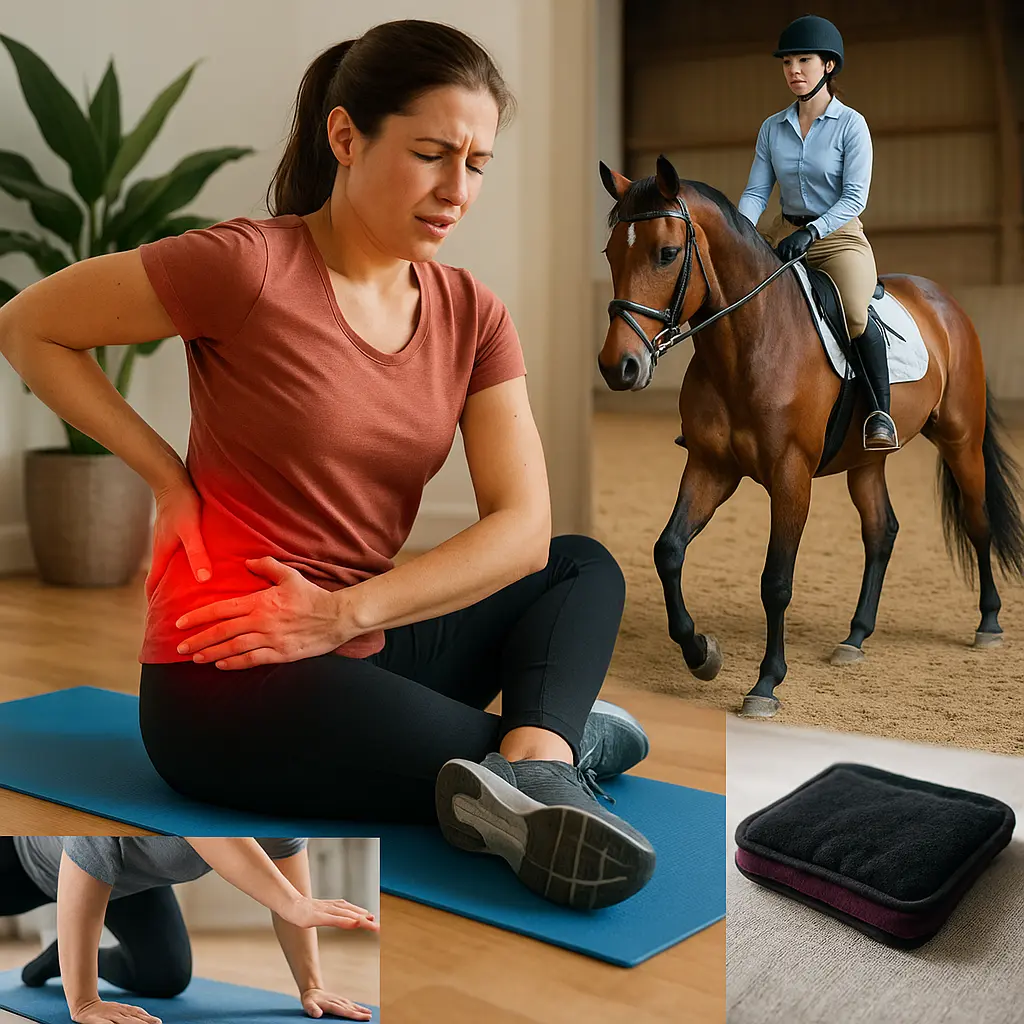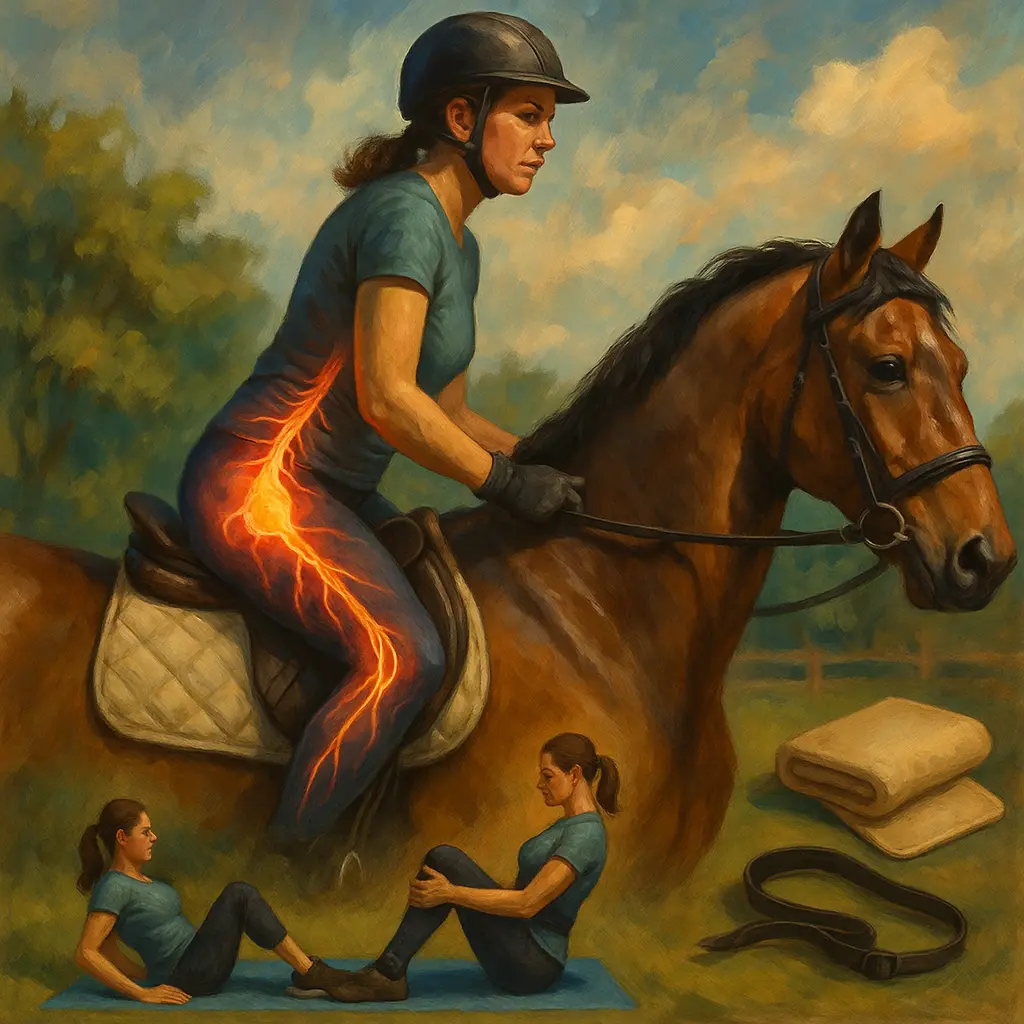
Sharp zings down the leg, a stubborn ache in your lower back, or pins and needles after a long hack — sciatica can make even mounting up feel daunting. Yet with the right plan, many UK riders stay in the saddle, ride better, and hurt less.
Key takeaway: Most riders with mild, non-worsening sciatica can keep riding by pacing activity, stretching 3–4 times a week, building core strength, adjusting posture, and taking recovery days — but stop and seek professional advice if pain escalates or you suspect a disc injury.
Can you keep riding with sciatica?
Yes — if your pain is mild and doesn’t worsen during or after riding, you can usually continue with smart modifications; if symptoms intensify, pause riding and get medical guidance. Nearly four in ten people experience sciatica at some point, and many riders manage it safely with a measured approach.
Here’s the rule we use with riders recovering from nerve irritation:
- Keep your pain under 3/10 while riding and for the 24 hours after.
- If pain, tingling, or numbness spreads or intensifies during/after a ride, step back.
- Alternate ride days with recovery or groundwork days to prevent flare-ups.
“If your pain is mild and doesn't worsen with riding, it's usually safe to continue. If the discomfort intensifies, it's time to step back.” — Dr Scott Thompson
“Riding with an active disc injury, sciatica, whiplash or sprains to your hip, knee or ankle may worsen your condition... unless your healthcare professional confirms that riding with limitations would be safe.” — Dr Pat Bona
At Just Horse Riders, we recommend you get clearance from your GP or a Chartered Physiotherapist before returning after an acute flare-up. A BHS Accredited Professional Coach can also help you adapt your position as you come back.
Quick tip: Use a “24-hour test” after each ride: if symptoms are the same or better the next day, you’re on track; if worse, reduce intensity or duration next ride.
The real reasons riders get sciatica
Riders develop sciatica from prolonged saddle pressure on the structures around the sciatic nerve, repetitive rising and sitting motions, and tight hips/hamstrings — sometimes compounded by a lumbar disc issue or a tight piriformis muscle.
The sciatic nerve runs from the lower spine through the hips and down each leg; irritation or compression anywhere along this path can cause pain, numbness, or tingling. Equestrians are especially at risk because we spend long periods seated with load through the pelvis, then add repetitive impact from rising trot, sitting trot, or collecting and lengthening work. In one study, 85% of competitive show jumpers reported neck and back pain — most commonly low back pain — and 85% of riders with pain said it affected performance, especially posture and range of motion.
Two culprits frequently aggravate the nerve in riders:
- The piriformis — a small hip rotator that sits over the sciatic nerve. If it tightens or spasms, it can pinch the nerve (often worse with mounting, sitting, or long hacks).
- Hamstrings and glutes — tight or overworked tissues reduce hip mobility, forcing the lower back to compensate.
UK-specific context matters, too. Winter cold and damp can tighten muscles, making a longer warm-up essential. Different horses also create different “movement harmonics”: some have a smoother, more back-friendly sitting trot or jog that feels far easier during a flare-up — it’s worth testing at various speeds to find what your body tolerates.
A week-by-week plan to keep you in the saddle safely
Ride little and often, alternate ride and recovery days, and progress gradually over four weeks while you build core and hip mobility. This pacing limits nerve irritation and lets tissues adapt without flaring.
Before every ride: 10 minutes of easy walking in-hand or mounted, then hip circles and gentle hamstring and piriformis stretches. In cold or wet weather, extend the warm-up to 15 minutes.
After every ride: Repeat the key stretches and add 5 minutes of loose rein walk-down.
Week 1 (reset):
- 3 short rides (20–30 minutes) at mostly walk/trot; avoid long bouts of sitting trot.
- 1–2 groundwork/lunge days on flat going.
- Core routine daily (see below), stretching 3–4 times this week.
Week 2 (build tolerance):
- 3–4 rides (30–40 minutes). Add brief canter if symptom-free.
- Trial 1–2 minutes of sitting trot only if your 24-hour test is clear; otherwise, stay rising.
- Keep alternate recovery days.
Week 3 (expand gently):
- 4 rides (~40 minutes) with varied figures, poles in walk/trot, and short hill work if your back feels settled.
- Maintain stretch work 3–4 times per week.
Week 4 (consolidate):
- 4–5 rides (45–60 minutes) at moderate intensity, with discipline-specific work as tolerated.
- Keep one full rest day; don’t add both duration and intensity on the same day.
Pro tip: On road hacks or dusk rides, keep sessions shorter while you rebuild — and wear high-visibility kit so you can focus on your position without worrying about being seen. See our curated rider hi-vis collection.
Yard comfort counts: Supportive footwear reduces back strain during chores; many riders find structured soles and ankle support make a big difference on concrete yards. Explore our riding and yard boots. High-waist, supportive breeches can also help you maintain a neutral pelvis; see our women’s jodhpurs and breeches.
The stretches that actually help riders with sciatica
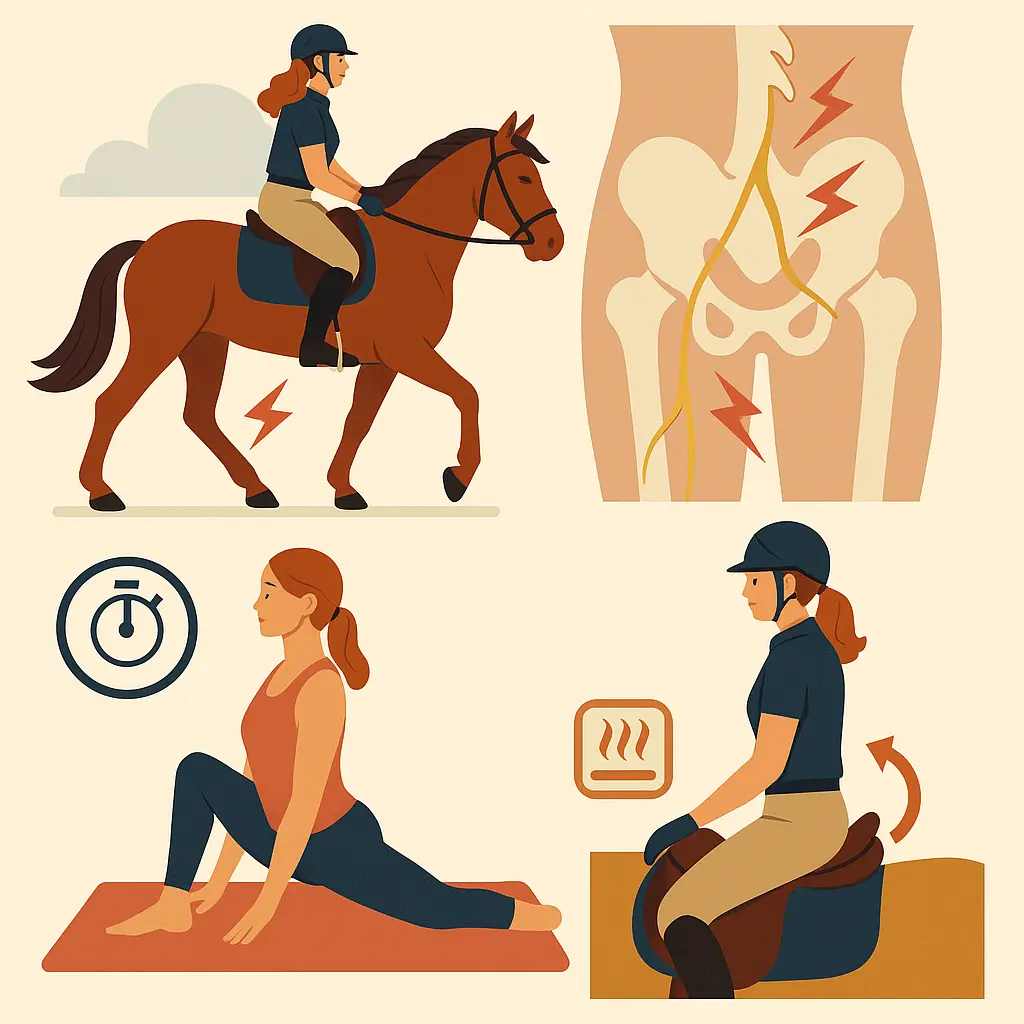
Prioritise hamstrings, piriformis (keyhole and pigeon), and glutes, two to four days per week, and use quick mobility drills before and after rides to prevent flare-ups. Consistency is the game-changer — not heroic one-off sessions.
Dressage Rider Training puts it well:
“Prevention is the best medicine and keeping your hips mobile and active will help… do these stretches before and after a ride to really help prevent any flareups.”
How to structure your routine (10–15 minutes):
- Hamstring stretch (standing or supine with a strap): Hold 30–45 seconds per side, 2–3 rounds. Keep a neutral back; hinge from the hips, no bouncing.
- Piriformis “keyhole” stretch (lying on your back, ankle over opposite knee): Hold 45–60 seconds per side, 2 rounds. You should feel a deep seat-glute stretch, not knee pain.
- Pigeon pose (on a mat): Ease in gently and support the front hip with a cushion if needed; hold 30–45 seconds per side. Great for releasing hip rotators and the lower back.
- Glute stretch (seated or lying): 30 seconds per side, 2 rounds.
- Hip flexor lunge (optional add): 30 seconds per side to balance the pelvis.
Before you ride do a shorter sequence: 5 minutes of marching on the spot, hip circles, and a single round of keyhole + hamstring stretch. After you ride repeat key stretches and add a gentle lower-back “cat-camel” mobilisation for 30–60 seconds.
Quick tip: In winter, warm your hips first — a hot shower or a microwavable heat wrap at home can make stretches safer and more effective.
Core strength and posture: your built-in back protector
Daily planks, bird dogs, and bridges create a stable base for your spine, and a slight forward pelvic tilt in the saddle reduces lumbar strain by loading the lower abdominals instead. This combination supports the sciatic nerve by calming the lower back and balancing hip mechanics.
10-minute rider core circuit (5–6 days/week):
- Front plank on elbows: 20–45 seconds x 3. Ribcage down, glutes lightly engaged, neck long.
- Bird dog: 8–10 slow reps each side x 2–3 sets. Keep hips level, draw your belly gently in.
- Glute bridge: 12–15 reps x 3 sets. Drive through heels, don’t over-arch.
In the saddle: Think “zip up” (low abs), “soft tail” (avoid hollowing), and tip the pelvis very slightly forward so you sit on your seat bones, not the back of your pelvis. This redistributes load off the lower back and improves stability for the upper body.
Tack tweaks that help: Shock-absorbing saddle pads can soften peak forces through the pelvis. Our riders rate the tech in LeMieux saddle pads for comfort and stability, and many also like the value of Shires performance pads. If your saddle tips you into a “chair seat” or a hollow back, get it checked — posture starts with fit.
Pro tip: Set a phone reminder for your core routine right after you muck out or before you tack up — habit beats willpower.
When to stop riding and see a professional
Stop and seek professional advice if pain escalates during or after riding, if numbness or tingling spreads below the knee, if you feel leg weakness or “giving way”, or if you cannot maintain your normal position. These are clear signs your nerve is irritated and needs a change of plan.
Heed Dr Pat Bona’s caution: riding through an active disc injury or acute sciatica can prolong and complicate healing without medical clearance. Your first ports of call in the UK are your GP and a Chartered Physiotherapist with sports or spinal expertise; a BHS Accredited Professional Coach can then help adapt your riding as you return. Some riders, under medical supervision, use prescription options such as gabapentin during severe nerve pain — that’s a conversation for you and your clinician only.
Self-care between appointments: short, frequent walks; gentle stretches (no forcing); heat for muscle spasm, or a brief ice pack for acute nerve pain if advised by your clinician; and strict rest from heavy yard lifting until symptoms settle.
Make your yard and tack work for you
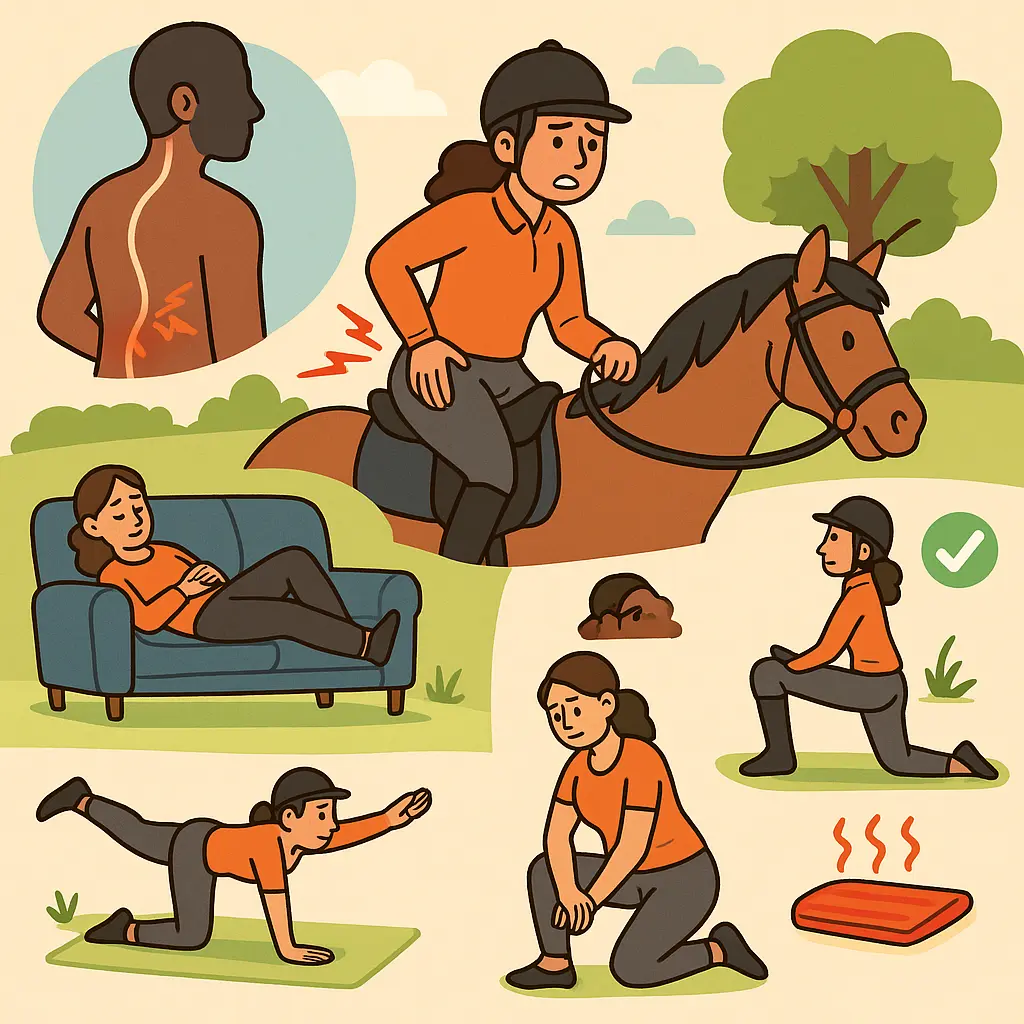
Choose horses, arenas, and kit that reduce vibration and strain, and streamline yard chores on flare-up days. Small environment tweaks add up to big relief for sciatic symptoms.
Match the movement: If sitting trot aggravates your back, test different horses and speeds — especially the jog/sitting trot — to find a rhythm that matches your spinal motion. Keep rising trot while you rebuild tolerance, and add sitting in micro-doses that pass your 24-hour test.
Pick the right footing: Use indoor schools in wet weather when rutted tracks increase jarring. Flat arenas beat uneven fields during a flare.
Livery logistics: Minimise long walks with full water buckets, choose yards with close parking or a kit room near stables, and use a barrow with good tyres to lower pushing loads. On bad days, prioritise groundwork or in-hand work on level surfaces. Protect your horse on lunge days with appropriate leg protection; see our horse boots and bandages.
Comfort kit for you and your horse:
- Shock-absorbing pads to reduce pelvic pressure — explore LeMieux and Shires options that riders trust for stability and comfort.
- Supportive clothing with a higher waist can help pelvic control; browse our women’s breeches and jodhpurs.
- Supportive yard and riding footwear reduce cumulative back stress; check our riding and yard boots.
- On a budget? Keep an eye on our rotating deals in the Secret Tack Room clearance for pads and breeches.
Quick tip: If you commute to the yard, don’t sit cold in the car then mount straight away. Take a 3–5 minute walk round the yard before tacking up to wake up your hips and core.
At Just Horse Riders, we see customers ride more comfortably when they combine smart training, smart pacing, and smart kit choices. That’s the trifecta.
Bottom line: Respect the nerve, build your base, and refine your position — most riders can keep progressing without sacrificing comfort.
FAQs
Yes — most riders with mild, non-worsening sciatica can continue riding with modifications; below are concise answers to the questions we hear most.
Can I continue riding if I have sciatica?
Often, yes. If pain stays mild (under 3/10) and doesn’t worsen during or within 24 hours after riding, continue with pacing, stretching, and core work. If pain escalates, you develop numbness/weakness, or you suspect a disc issue, pause and seek professional clearance.
What causes sciatica specifically in riders?
Prolonged saddle pressure on tissues around the sciatic nerve plus repetitive movements (rising/sitting) and tight hips/hamstrings. A tight piriformis or a lumbar disc problem can further irritate the nerve.
Which stretches are best for riders with sciatica?
The hamstring stretch, piriformis “keyhole”, pigeon pose, and glute stretches. Do them 3–4 times per week, and add a short mobility routine before and after each ride.
How should I pace my riding to avoid flare-ups?
Ride little and often, alternate ride and recovery days, and use the 24-hour test to judge progression. In early weeks, keep rides to 20–40 minutes and build gradually.
Can posture changes really reduce sciatic pain?
Yes. A slight forward pelvic tilt in the saddle offloads the lower back and improves abdominal support. Combine this with daily planks, bird dogs, and bridges for best results.
Should I change my tack or horse during a flare-up?
Consider shock-absorbing saddle pads and choose the smoothest-moving horse for now, avoiding prolonged sitting trot. Test small changes and keep those that pass your 24-hour test.
Are medications like gabapentin appropriate?
Some riders use prescription options under medical supervision during severe nerve pain. This requires a discussion with your GP — don’t self-prescribe.
If you’d value a second pair of eyes on your position, a BHS Accredited Professional Coach can help you make low-back-friendly adjustments while you rebuild strength and mobility. Add a consistent stretch routine, choose supportive kit, and keep an eye on your body’s response — that’s how you and your horse keep progressing, comfortably.