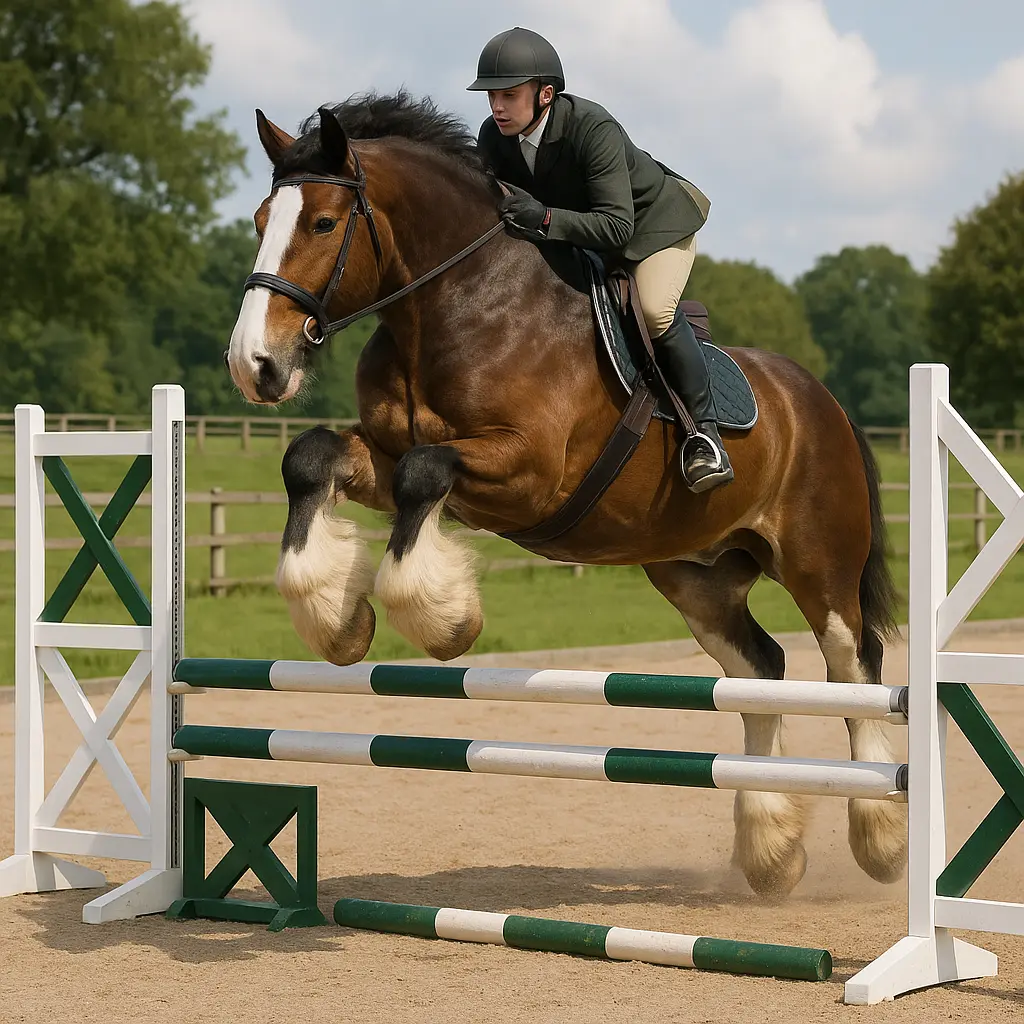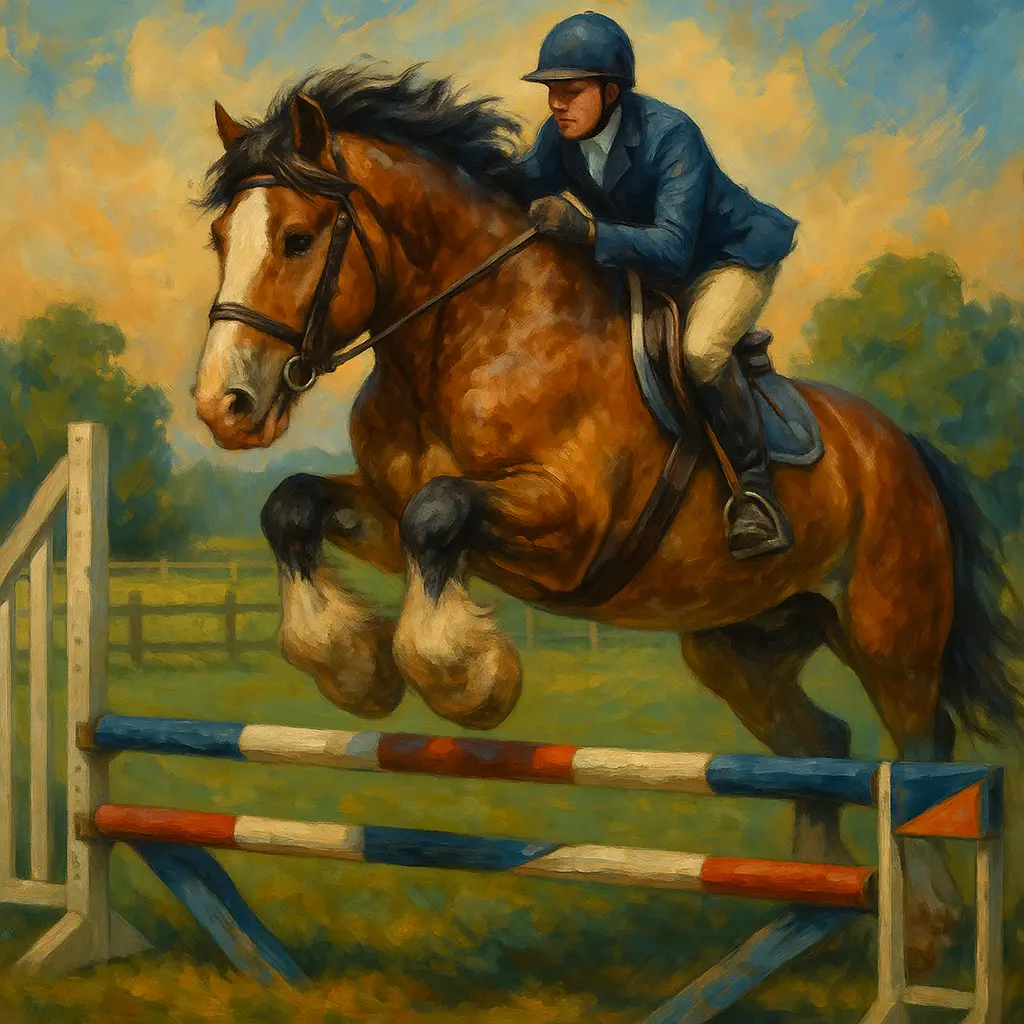
Shire crosses and other native‑type horses are turning heads in UK jumping rings — bold, clever and often keen. But that same brain and bravery can mean rushing, running out, or even popping the field fence when the grass looks greener.
Key takeaway: Most “run‑out” and boundary‑jumping problems aren’t about the fence — they’re about canter rhythm, straightness, and turnout management. Fix those, and your Shire cross will jump safely and confidently.
Why Shire crosses run out or jump out
Shire and Shire‑type crosses can jump safely at lower levels when ridden in balance, but they’re prone to running out if the canter is unbalanced or if turnout tempts them to seek better grazing. UK coaches and welfare bodies also link many boundary‑jumping incidents to field layout and grass variation.
Across the UK, working‑type and native breeds — including Shire crosses — are increasingly seen in training and low‑level competitions, where plenty prove bold and honest over fences (Practical Horseman). Still, research and coaching consensus repeatedly point to the same root causes of refusals and run‑outs: lack of a calm, rhythmic canter and poor straightness, not fence height alone (The Horse Magazine).
UK welfare features add a management twist: 15–30% of “run‑out” or “jumping for greener grass” episodes stem from inconsistent turnout and tempting pasture on the other side of a boundary, not training alone (BHS, Horse & Hound). Yard safety audits also show 40–50% of escape attempts happen at corners, gates, or broken hedges — the usual weak spots (BHS, BEVA).
In short: teach the canter, keep him straight, and set up the paddock to remove the reward for leaving — because for clever, grass‑motivated horses, the reward is everything.
The canter comes first: tempo and balance
A quality canter around 105–120 beats per minute prevents most rushing and run‑outs; rhythm before jump height is the rule. Work towards a calm canter you can modulate without the reins doing all the work.
UK coaching articles repeatedly note that the horse which rushes, chips or ducks out rarely lacks scope — he lacks balance and a repeatable tempo. That’s why top trainers insist on establishing tempo first, then line, then fence. As one respected coach explains in retraining horses that rush:
“My goal is for his forelegs to stop on the six metre line [in front of the fence] … when you can get him to stop at six, he changes quite a lot at that point.” (The Horse Magazine)
This “six‑metre line” exercise is transformational for big, forward types. Canter to a small cross‑rail, ask “whoa” and ride a smooth downward transition 6–10 m before the jump, then let the horse stand. Repeat until the stop is soft and predictable, then gradually bring the halt closer to six metres. You’re not punishing — you’re teaching brakes, balance and focus in front of a fence.
Eventing legend Oliver Townend frames the rider’s job simply:
“Set up the canter, put her on the right line and then show her the jump… If she messes it up I don’t care, because she’ll come around again — that’s the point of training.” (Horse & Rider UK)
Quick tip: Before any jump school, check your safety kit. A correctly fitted hat from our curated range of riding helmets helps you train with confidence while you reshape the canter.
Build straightness: keep him “in the tube”
Keeping the horse straight between leg and hand (“in the tube”) can cut run‑outs at skinnies and angles by up to 60% in small teaching trials. Prioritise line and straightness over height every session.
British coaches frequently see run‑outs when the approach line drifts or the fence’s “face” is too far from the line of travel. Pippa Funnell’s advice is timeless:
“You need impulsion, but not speed. Keep your arm soft — just as a subtle guide to keep him straight — and keep him in the tube with your leg.” (Horse & Rider UK)
Practical ways to build straightness:
- Use guide poles or low fillers either side of a small fence to create a “corridor”.
- Practise riding centre‑line rails at canter, landing straight for five to seven strides before any turn.
- Approach skinnies off a gentle curve only when the canter is confirmed; otherwise ride a square, direct line.
Pro tip: Protect those big Shire‑cross limbs in grid and skinny work with breathable brushing or tendon boots from our horse boots & bandages collection — a small insurance policy against a green rub.
Smart schooling at home: grids, poles, bounces
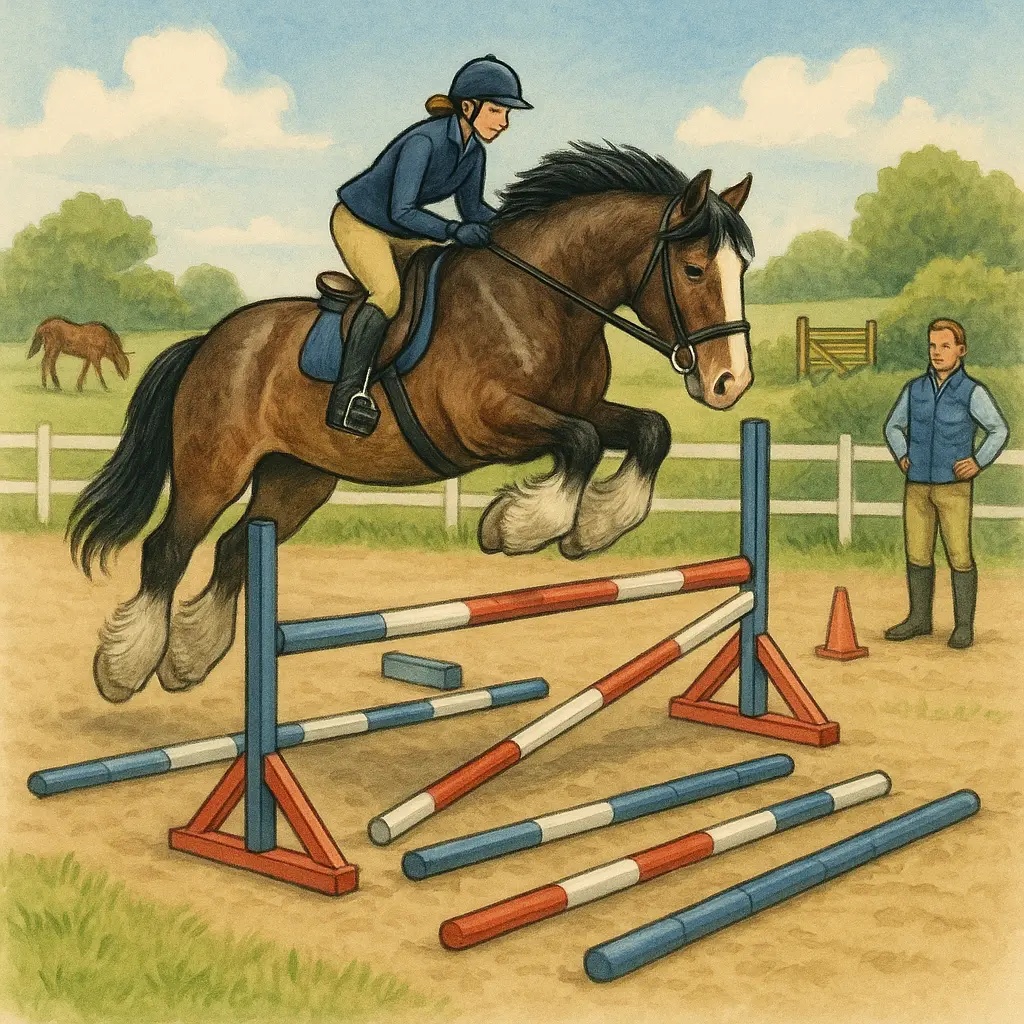
Regular ground‑pole grids and low oxers teach self‑regulation far better than strong rein pressure. Build the canter over poles first, then let simple gymnastic lines do the coaching for you.
Biomechanics work from European teams around Gothenburg suggests horses respond more reliably to subtle balance aids and intelligently set lines than to heavy hands (Gothenburg Horse Show research). Here’s a progression that suits big‑framed horses:
- Five canter poles set to your horse’s stride (start around 10–12 feet apart, adjust to maintain rhythm without flattening).
- Add a small cross‑rail at the end so the horse steps from rhythm into a simple effort, then back to rhythm on landing.
- Introduce bounce fences with a placing pole about 9–12 feet in front; keep fences low so the canter stays uphill and quick off the floor, not long and flat. (EquestrianCoach)
- Use standard canter distances for simple lines: a four‑stride at roughly 60 feet is a good baseline for training (then adjust for your horse’s natural step).
Quick tip: If he starts to hurry through a grid, circle away to re‑establish the canter, then re‑approach. Don’t make the fence bigger to “back him off” — fix the canter first.
Safety note: Shire crosses can and do jump for fun, but manage height and frequency. Keep fences modest, ride on good footing, and get veterinary input if you have any concerns about feet, joints or overall soundness (BEVA).
Paddock fixes that stop boundary‑jumping
Between 15–30% of “jumping for greener grass” incidents are management‑driven; most boundary escapes happen at corners, gates, or hedge gaps. Remove the reward and reinforce weak points to stop the habit fast.
In the UK, spring and autumn bring patchy, fast‑growing grass — heaven for a clever, treat‑driven Shire cross. Practical measures endorsed by BEVA and the BHS include:
- Strip‑grazing or temporary electric tape to even out pasture quality and keep the best bites inside the field, not over the fence.
- Reinforcing weak spots — corners, gateways and broken hedges — since 40–50% of escapes happen here. Add extra posts, rails or electric lines temporarily (BHS).
- Re‑site gates, water and feed where practicable to the least “tempting” side, so your horse is always drawn inwards.
- Harrow and top uneven patches so grazing quality is more uniform across the paddock.
At livery, you may not control the whole layout, but you can still collaborate with the yard to run a strip‑grazing line or reinforce a known weak corner with temporary tape. British brands specialise in turnout solutions; browse robust options from Shires, and remember that comfort outside also matters. In changeable weather, the right rug reduces fidgeting and fence‑testing:
- For wet or windy spells, see our range of breathable turnout rugs.
- In midgey months, a lightweight fly rug can help settle sensitive skin and minds.
Quick tip: Make the “inside” of the field the best picnic spot. Keep water, a scratching post, and shade there — and keep lush grass just inside the gate, not beyond it.
Introduce new fences the Shire‑cross‑friendly way
Walk up and let your horse inspect new fences calmly, then use low cross‑rails and V‑poles to guide a straight, confident first effort. Don’t surprise a clever horse with a strange fence — show it, then jump it simply.
For big‑brained, grass‑motivated types, the process matters as much as the jump. Borrow this systematic approach (Practical Horseman):
- Walk up on an angle, shoulder‑fore away from the fence so he can see it without feeling trapped.
- Let him breathe, then trot a tiny cross‑rail with V‑poles that funnel him to the centre.
- Repeat until the line and tempo stay the same; then canter the same fence once, land straight, and canter away quietly.
Pro tip: Reward inspection and honest efforts. A small scratch, a “good lad”, or the odd nibble from our treats collection can reinforce the behaviour you want — looking and then jumping, not spinning or rushing.
Rider position, feedback and kit
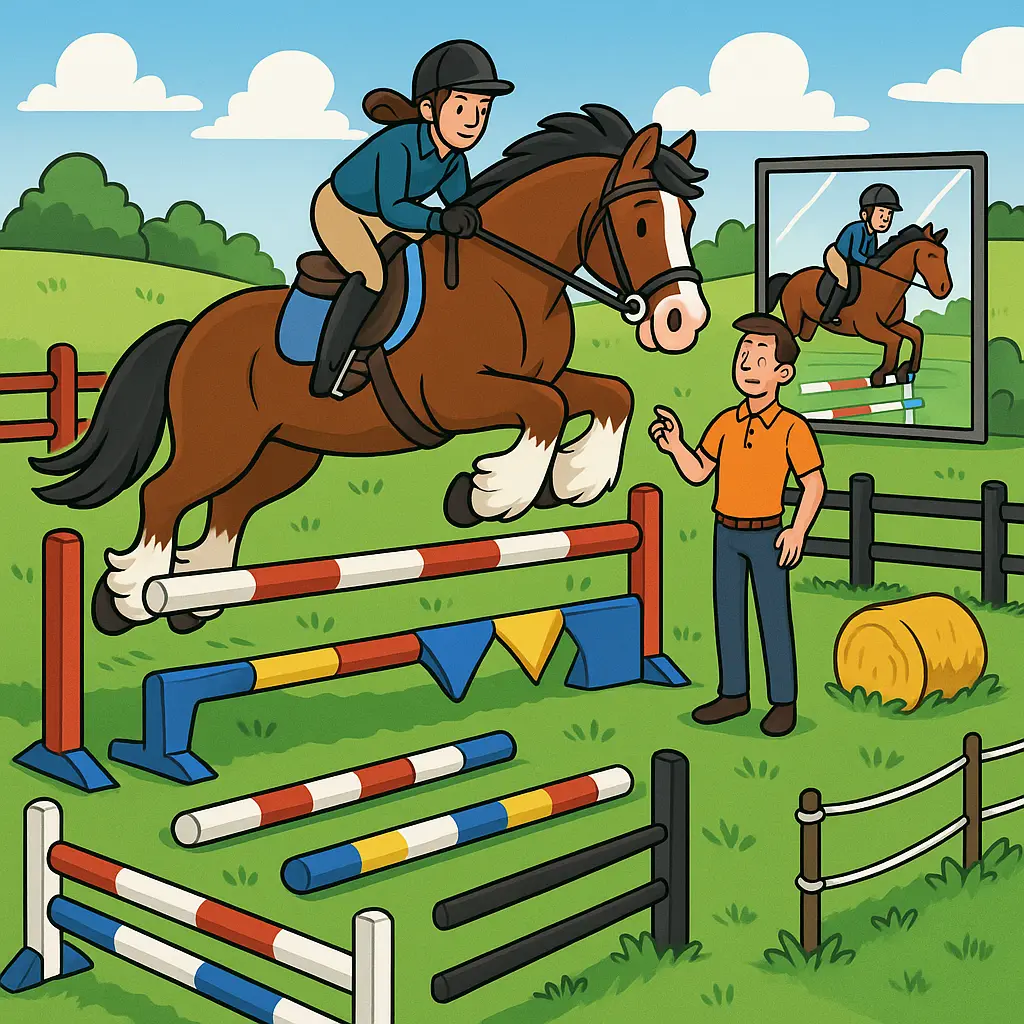
Soft arms, a balanced upper body and consistent leg contact prevent more rushing than any gadget; mirrors or video give instant feedback to correct leaning or over‑riding. Coach the rider first, then the jump.
Coaches agree that “proficient jumping trainers… get the tempo correct” and prioritise rider position when solving rushing (The Horse Magazine). Arena mirrors or a quick video review help you spot creeping habits — tipping forward, catching the mouth, or letting the shoulder fall on the approach (Ride iQ).
Kit that supports calm, confident schooling:
- A safety‑standard, well‑fitted riding helmet for every jump school.
- Comfortable, supportive clothing so you can sit tall and soft through gymnastic lines (breeches with grip can help in bounces or skinnies).
- Light, breathable boots for your horse from our horse boots & bandages collection to protect from knocks without adding heat.
Quick tip: Count out loud on approach — “1‑2‑3‑4” in a canter beat — to steady your breathing and keep the tempo metronomic.
A simple 3‑week plan to reset a rusher
Two short, focused jump schools per week, plus polework on other days, is enough to install rhythm, straightness and confidence without over‑facing a Shire cross. Keep fences small, footing good, and the canter your north star.
Week 1 — Rhythm and whoa
- Flatwork with frequent transitions, then canter five ground poles for even strides.
- “Six‑metre line” halts: canter to a tiny cross‑rail and halt 8–10 m in front; stand, pat, circle away. Repeat until quiet.
- Finish with one easy canter over a small cross‑rail, land straight for five strides, and walk.
Week 2 — Straightness and self‑carriage
- Add guide poles or low fillers to create a corridor to the fence.
- Ride a pole‑to‑cross‑rail exercise, then land and canter a straight five to seven strides before any turn.
- Introduce a low bounce with a placing pole 9–12 ft in front to encourage an uphill, quick hind leg.
Week 3 — Lines and light oxers
- Set a simple four‑stride line (~60 ft) using low fences; ride the number on a steady rhythm, then add or take a stride by compressing or opening the canter without losing balance.
- Finish with a baby oxer off a balanced, straight approach. If he hurries, circle away, re‑establish the canter, and try again.
At Just Horse Riders, we also see success when owners support big‑framed horses with sensible joint care and recovery. If your vet agrees, explore targeted options in our supplements collection, and always prioritise vet‑led rehab if you notice any lameness (BEVA guidance).
FAQs
Is it safe for a Shire cross to jump at all?
Yes — many Shire and Shire crosses jump safely at lower levels when schooled correctly and kept on good footing. Keep fences modest, monitor joints and feet, and work with your vet if there are any soundness questions (BEVA).
Why does my horse only jump out when there’s greener grass?
Because the behaviour is being rewarded. Restructure the field so the best grazing is inside via strip‑grazing and temporary tape, and reinforce corners or gates — the usual escape points — to remove the payoff (BHS, BEVA).
How can I stop rushing without punishing?
Install a metronomic canter with transitions and pole grids, practise the “six‑metre line” halt before a tiny fence, and ride straight lines “in the tube”. Rushing usually reflects tempo and balance issues, not disobedience (The Horse Magazine).
What spacing should I use for placing poles and simple lines?
Start a trot placing pole about 9 ft before a small jump. For basic canter lines, four strides are often set around 60 ft in training, then adjusted to suit your horse’s natural step (Practical Horseman).
How often should I school jumping to prevent run‑outs?
Most UK coaches suggest 1–2 focused jump sessions per week for schoolmasters, with additional flatwork and polework on other days to keep balance and confidence without over‑facing (Horse & Rider UK).
What about field fencing standards for a known jumper?
Use secure post‑and‑rail backed up with electric where needed, and always strengthen corners, gates and hedge gaps. Temporary electric tape is ideal for seasonal reinforcement without changing permanent structures (BHS).
What kit should I prioritise for safe, confidence‑building schools?
A properly fitted hat, protective legwear and calm‑confidence aids beat gadgets every time. Start with a certified riding helmet and well‑ventilated horse boots & bandages, and keep turnout comfortable with appropriate turnout rugs and seasonal fly rugs.
Bring it together and you’ll have a Shire cross that meets the fence with a steady, uphill canter, stays proudly between hand and leg, and prefers the picnic inside the paddock — not over the top of it. If you’d like help choosing boots, rugs or safety kit, our team at Just Horse Riders is always happy to advise.