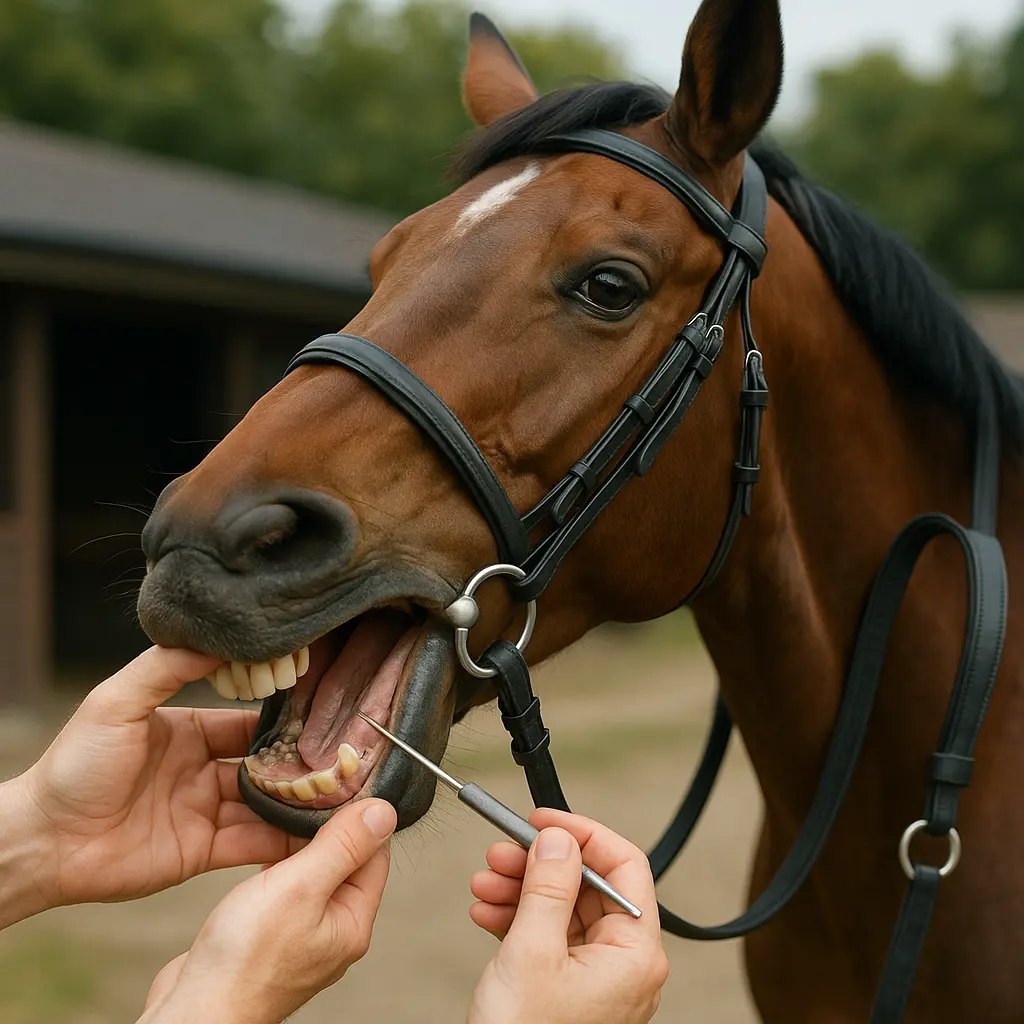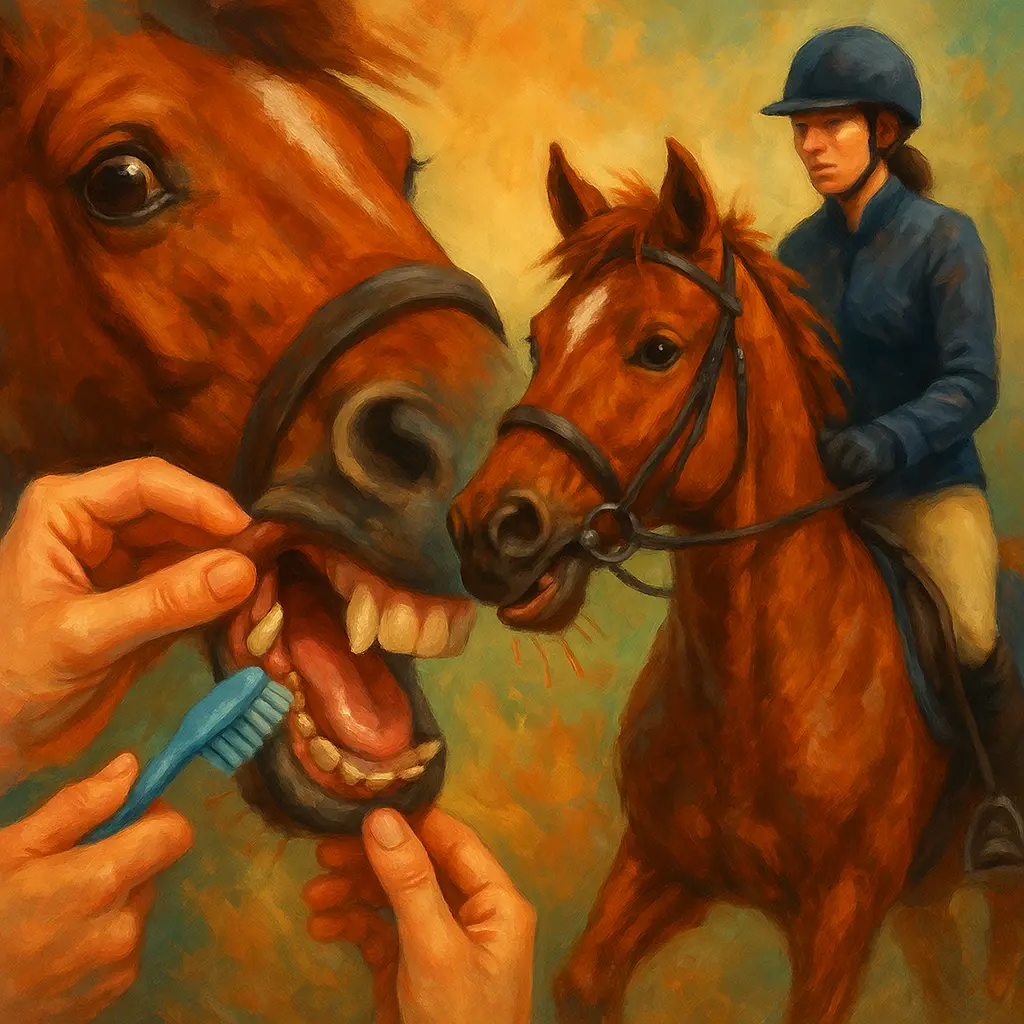
Your rising 4-, 5- or 6-year-old suddenly tossing his head, salivating or snatching at the reins? It may not be naughtiness — his canine teeth could be erupting and the bars of his mouth are sore.
Key takeaway: In most male horses, the canine teeth erupt at 4–5 years (sometimes as late as 6), and this teething phase can make bitting uncomfortable — plan 6‑monthly dental checks, adjust your bitting and training, and keep the canines clean to prevent problems.
When do canine teeth erupt in horses?
Canine teeth in horses usually erupt at 4–5 years of age in males, with full emergence occasionally delayed to 6; females often lack them or have very small, short‑rooted canines. As Horse & Hound explains, these teeth sit in the interdental space — the gap between the incisors and the cheek teeth — exactly where the bit lies.
Delayed eruption is not unusual; some youngsters don’t finish cutting their canines until 6. During this period, the gums can be tender and the surrounding bars of the mouth particularly reactive to pressure. In fillies, true canines are rare or appear as tiny “pegs”, but even small teeth can collect tartar and benefit from routine cleaning and checks.
“Canine teeth are usually absent or less developed in female horses, but erupt in most male horses by the time they are between four-and-a-half and five years old. They are situated in the interdental space (between the incisors and cheek teeth).” — Horse & Hound
Why erupting canines change bitting and behaviour
Between 4–6 years, erupting canines and changing bars can make the mouth highly sensitive, so many youngsters resist the bit with head tossing, excess salivation or bit‑grabbing. Behavioural signs commonly reported during this teething window include sudden tension in the contact, opening the mouth, “chewing” the bit without settling, or refusing forwards into an outline.
There’s good reason: the bit sits in the same interdental space as the erupting canines, and pressure can clash with unerupted wolf teeth or changing cheek teeth. The World Bitless Association, discussing veterinary-informed research and young Thoroughbred colts, notes the bars are “especially sensitive” until around 6 years:
“The bars of the mouth will be especially sensitive in a young Thoroughbred colt that is ‘teething.’ Canine teeth do not finish erupting until the colt is 6...” — World Bitless Association
In fact, a study collated by the same source recorded a 87% improvement across 37 pain‑based behaviours (median 23 to 2 per horse) after 35 days bit‑free, underscoring how mouth pressure can exacerbate sensitivity during this age. You don’t have to abandon bitted riding forever, but it’s a clear sign to evaluate fit, material, and training load when a youngster is teething.
Watch for soft‑tissue trauma too. If the bit pushes flesh into erupting teeth or sharp edges, you may find rubs, bruising or ulcers under the tongue. Weekly checks will often reveal a small problem before it becomes a big one (more on that below).
UK seasonal timing and dental checks
In the UK, book dental checks every 6 months for horses under 6 years, timed before the spring work‑up and after winter stabling when chewing patterns change. This schedule helps your equine dental technician (EDT) or RCVS-registered vet monitor eruption, remove small issues early, and prevent uneven wear as the permanent teeth come through.
Winter matters: many UK yards increase stabling on wet, muddy days. With more haylage and less abrasive grazing, cheek teeth may develop sharper points more quickly, and mouths can be less tolerant of a bit after a few weeks of soft forage. As Cinder Hill Equine Vets note, diet and environment influence dental wear; factor this into your check schedule and training plans.
Spring also exposes issues. As you ramp up schooling (March–May), 4–5‑year‑olds often first show canine eruption discomfort. Booking a pre‑season mouth assessment ensures you’re not training against a dental problem. For UK owners, working with a qualified EDT (registered under UK guidelines) or your RCVS vet is the gold standard; both align with best practice advocated across UK bodies such as BEVA.
Weekly mouth check: what to look for
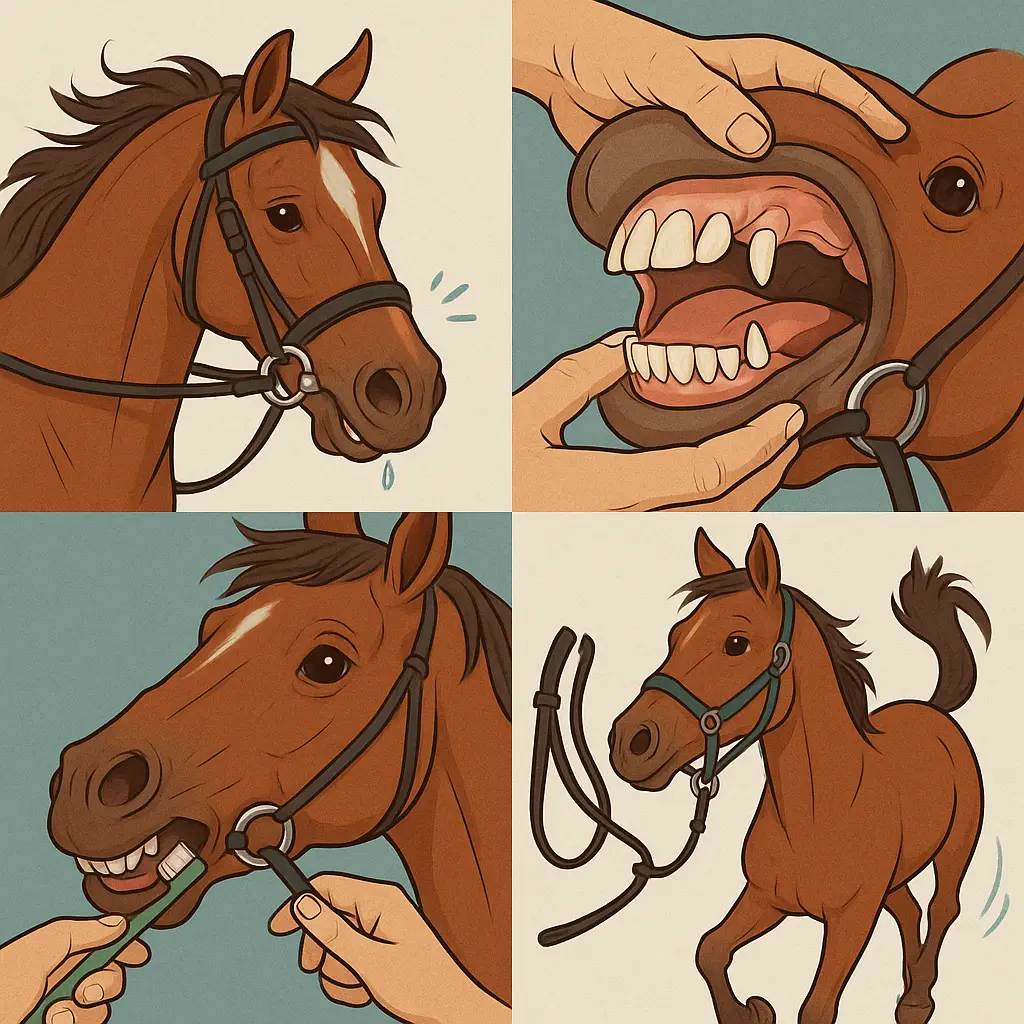
Check your horse’s mouth weekly for rubs, ulcers, bruising, flesh pushed into teeth by the bit, tartar on canines, and any sharp edges you can safely feel. You don’t need professional tools; calm handling, good light and a simple routine make the difference.
Here’s a quick, safe sequence inspired by rider‑level guidance from Online For Equine and other UK practitioners:
- Wash your hands, stand to one side, and gently lift the lips to inspect the incisors and gums. Look for redness, swelling, or feed trapped around any erupting tooth.
- Slide one finger (from the side, not the front) into the interdental space to feel for heat, swelling, or sharp edges — never force.
- Lift the tongue to glance underneath; check for ulcers or rubs from the bit or sharp teeth.
- Visually locate the canines (if present). If they’ve erupted, look for yellow/brown tartar at the gumline.
- Rinse the mouth after work if you’ve used a sugary treat or gel; residue can harden as tartar on canines.
Pro tip: After a professional clean, brush the canines weekly with a soft toothbrush and a horse‑safe gel to deter tartar. As Horse & Hound advises, tartar left in place predisposes to gingivitis and should be removed by your EDT or vet during routine checks.
For your at‑home kit, a soft brush and gentle gel will cost around £5–£15. You can keep them with your day‑to‑day care items — our grooming essentials make it easy to organise your yard routine. Use small, high‑value rewards so your horse enjoys the process; our horse treats are handy for positive reinforcement during mouth handling.
Bitting during teething: practical options
Use a correctly sized, smooth snaffle or temporarily go bitless (hackamore) to remove pressure while canines erupt and to differentiate pain from training issues. Start by testing in a controlled environment: the NS Bits guide recommends riding in a hackamore or bitless bridle in a school to compare behaviour and outline with and without bit pressure.
Practical steps that work for many 4–6‑year‑olds:
- Check width and thickness. Too narrow pinches; too wide rocks. Many youngsters also prefer a thinner, smooth mouthpiece during teething to reduce bulk on the bars.
- Try stable materials. Smooth single metals or salox‑type alloys can be more acceptable than rubbery textures that increase bulk when the mouth is tender.
- Bitless trials. School in a hackamore a few sessions and note changes: reduced head tossing, steadier outline, calmer chewing. If behaviour improves bitless, address dentistry and bit fit before resuming bitted work.
- Manage “bit‑grabbing”. Conflicts with unerupted wolf teeth or sharp cheek teeth can encourage a horse to hold the bit between teeth. Have your EDT or vet check for dental clashes and fit issues.
Quick tip: If a youngster occasionally gets the bit “stuck” between incisors and canines when bridling or fidgeting, gently press a finger on the gum beside the bit to release it. Some riders also find temporarily using a slightly heavier (steady) bit helps the horse carry it more quietly — a practical handling tip shared by UK riders on the Horse & Hound forum. If it’s recurrent, revisit fit and training steps rather than relying on a heavier mouthpiece long term.
Safety first whenever you experiment: always wear a properly fitted riding helmet, and if you venture out, add hi‑vis rider gear to maximise visibility while you focus on a softer contact. Quality bits typically cost £40–£100; at Just Horse Riders, our team can help you measure and select a mouthpiece that suits a sensitive youngster.
Training management for 4–6‑year‑olds
Keep sessions short, prioritise relaxation, and use groundwork while permanent teeth settle between 4–6 years. You’re not giving training a “holiday”; you’re shaping a confident, elastic contact while the mouth is changing.
Smart adjustments during the teething window:
- Short, frequent schools. Ten to twenty minutes of quality work beats drilling when the mouth is tender.
- Groundwork and long‑reining. Develop steering and rhythm without bit pressure; use protective horse boots and bandages for lunging or polework.
- Transitions from the seat. Reward self‑carriage moments; avoid seesawing or “holding” the outline.
- Turnout and movement. Natural chewing and steady activity help even dental wear; in wet, chilly spells, the right winter turnout rug keeps them happy to move outdoors.
- Avoid over‑floating. Ask your professional to be conservative on incisors and erupting cheek teeth between 2–6 years; aggressive work can create uneven pressure on new permanent teeth, as cautioned by The Horse.
At Just Horse Riders, we recommend keeping a simple training log during this phase. Note any days with extra salivation, fussing in the contact or changes after dental visits. Patterns help you and your EDT make targeted adjustments.
When to call the EDT or vet
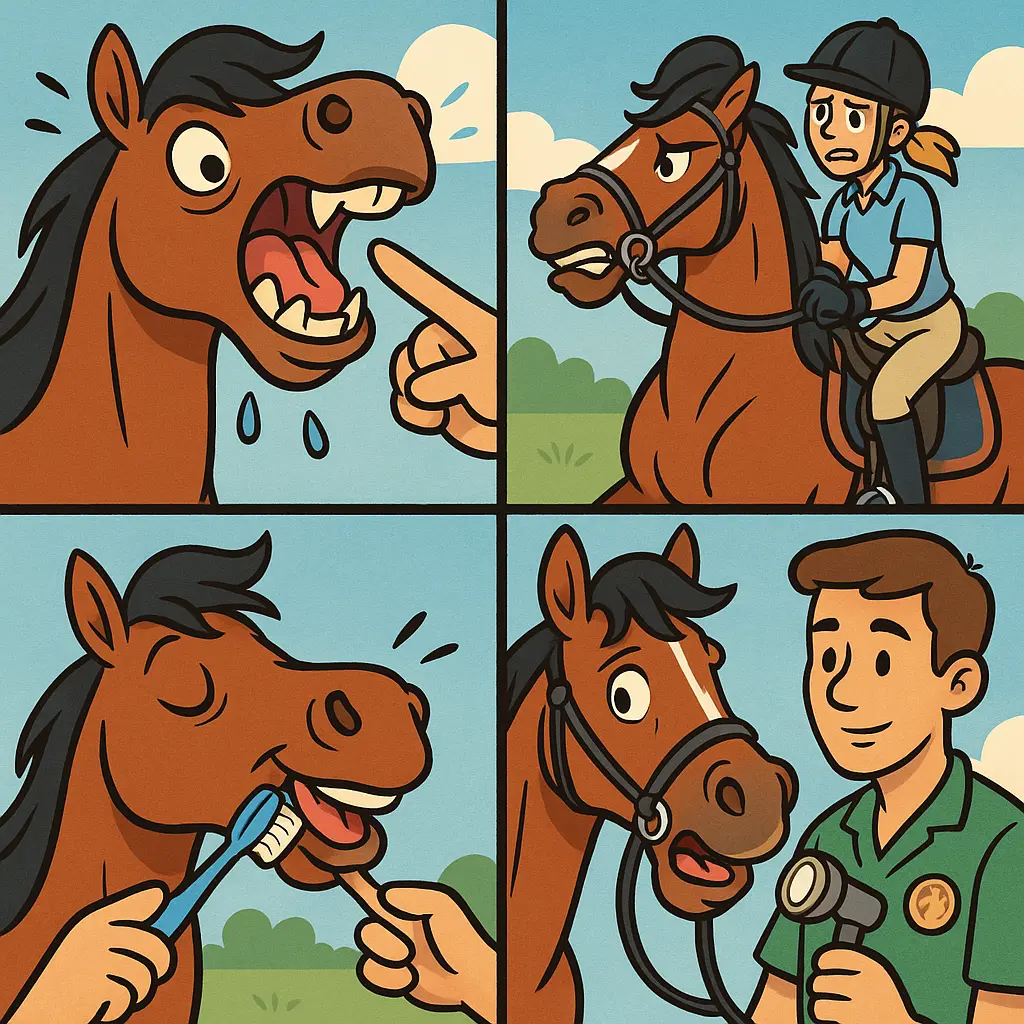
Call a qualified EDT or your RCVS-registered vet if pain signs persist for more than a week of light adjustments, you spot tartar or gum redness on canines, or you suspect a tooth/bit clash. Under UK guidance, routine dentistry 1–2 times yearly is standard, but under‑6s benefit from 6‑monthly checks to track eruption and address caps, wolf teeth or sharp points early.
Two key professional jobs during the canine years:
- Tartar removal and gingivitis prevention. “If left, tartar will lead to gum disease (gingivitis), so a qualified EDT or vet should remove any such build‑up during routine checks,” advises Horse & Hound.
- Balanced floating. Your clinician should smooth sharp enamel points but avoid excessive reduction of erupting or recently erupted teeth, a precaution highlighted by The Horse.
If you’re unsure who to book, look for UK‑registered EDTs and practices aligned with bodies such as BEVA and the RCVS. Always keep a record of findings so you, your trainer and clinician can connect the dots between dental changes and training responses.
A simple weekly care plan and kit
A 10‑minute weekly routine keeps erupting canines clean and comfortable, reducing the risk of bit resentment. Build this into your grooming time so it never gets skipped.
- Handle the lips and interdental space calmly; reward co‑operation with a small treat from our treats range.
- Inspect gums, bars, and canines for heat, swelling, rubs or tartar. Note any changes in a diary.
- After your clinician’s clean, brush canines weekly with a soft brush and gel (budget £5–£15) — keep them with your regular grooming kit.
- Evaluate bit fit and comfort monthly; if in doubt, have a trainer or bitting specialist observe.
- School in a hackamore once in a while to benchmark behaviour without bit pressure; compare outlines, willingness to go forwards, and jaw relaxation.
- Book 6‑monthly dental checks for under‑6s, and sooner if you see head tossing, excess salivation, feed dropping, or resistance that doesn’t ease with lighter work.
Quick tip: Before the spring workload increases, put a dental visit on the yard calendar for all 4–6‑year‑olds. You’ll avoid “mystery” contact issues just as competitions and clinics ramp up.
With these steps, most horses glide through the canine eruption years, and you build a contact the horse trusts for life.
Conclusion: Erupting canines are a normal milestone, not a training failure. Prioritise comfort with regular checks, a gentle brushing routine, thoughtful bitting and smart schooling adjustments. If behaviour improves bitless or worsens with more contact, involve your EDT or vet — you’ll save time, money and your youngster’s confidence.
FAQs
At what age do canine teeth erupt in young horses?
Most males erupt canines at 4–5 years, with some not fully emerging until 6; females often lack them or have very small, short‑rooted versions. See Horse & Hound’s guide for placement and timing.
Can erupting canines cause my young horse to resist the bit?
Yes. Between 4–6 years, the bars and interdental space are sensitive, and horses can show head tossing, extra salivation, or bit‑grabbing. This is supported by the World Bitless Association and behavioural observations collated by The Epic Animal.
How often should young horses have dental checks in the UK?
Every 6 months for horses under 6 years, ideally with appointments before the spring work‑up and after winter stabling. Use qualified UK EDTs or RCVS vets; routine dentistry is typically 1–2 times yearly in adults. Sources: NW Horse Source; Horse & Hound.
Is bit resistance always due to erupting teeth?
No. Poor bit fit (too narrow or wide), sharp cheek teeth, or displaced/wolf teeth can mimic teething discomfort. Test in a hackamore in a school, as suggested by NS Bits; if behaviour improves bitless, review dentistry and bit fit.
What signs of dental discomfort should I watch for in a 4–6‑year‑old?
Increased salivation, head tossing, fussing in the contact, dropping feed, or outright food refusal. Check weekly for rubs, bruising, ulcers (especially under the tongue), or flesh pushed into the teeth by the bit. See rider‑level checks from Online For Equine and behaviour notes from The Epic Animal.
How can I keep erupted canines clean between professional visits?
After a professional clean, brush weekly with a soft toothbrush and horse‑safe gel (£5–£15). This reduces tartar, which, if left, can lead to gingivitis. Guidance via Horse & Hound. Keep the brush with your grooming kit so it’s never missed.
Should I avoid floating during the eruption years?
Don’t avoid it — but ask your professional to be conservative. Excessive floating of incisors or cheek teeth between 2–6 years can create uneven occlusal pressures on new permanent teeth. See the overview from The Horse for why balanced, minimal intervention is best in youngsters.