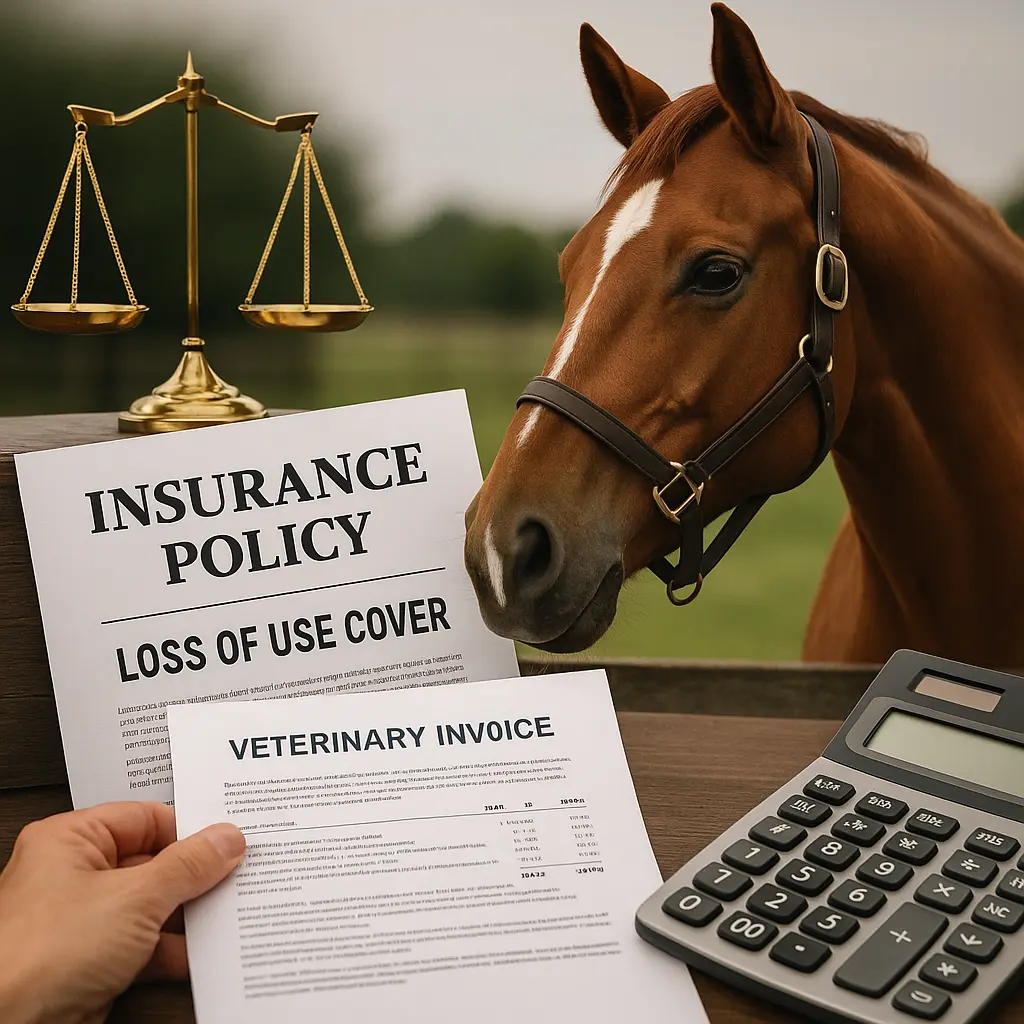
Your horse is your pride and joy — and often one of your biggest investments. When injury ends a career and you’re facing a loss-of-use claim, the last thing you need is a valuation dispute made worse by a missing purchase receipt.
Key takeaway: Even if your horse’s current valuation is higher than what you paid — and you can’t find the receipt — you can still make a strong loss‑of‑use claim by proving ownership and market value with alternative evidence and by aligning everything to your policy’s wording.
What does “loss of use” actually cover in the UK?
Loss of use generally pays out when your horse is permanently unable to perform the specific insured activity, as confirmed by veterinary evidence and accepted by your insurer. The payout is based on your policy terms, usually a percentage of the sum insured and subject to conditions about the horse’s future use.
In practice, an equine loss‑of‑use claim turns on two things: convincing, contemporaneous veterinary evidence that the horse can no longer meet the insured purpose (for example, affiliated eventing, show jumping at a defined height, or advanced dressage), and proof of the horse’s fair market value at the time of loss. Expect your insurer to scrutinise the clinical history, diagnostic reports, and the prognosis from your vet. UK vets familiar with performance horses (including members of BEVA) often provide the detailed assessments insurers look for.
Insurers may also impose post‑payout conditions to prevent financial gain from future resale. These can include taking possession, applying a permanent identifier, or setting written restrictions on ridden or breeding use. Always read your policy’s loss‑of‑use conditions alongside any endorsements.
Does your insurer pay the purchase price or the current market value?
Most UK equine policies aim to indemnify you up to the sum insured but not more than the horse’s fair market value at the time of loss. Whether you’re paid the purchase price, the current value, or a pre‑agreed figure depends on your policy wording.
Three common models exist:
- Market value policies: You’re covered up to the sum insured, but the payout cannot exceed fair market value at the time of loss.
- Agreed value policies: The insurer has agreed a value in advance (usually supported by robust evidence); the payout follows that agreement, subject to the policy’s loss‑of‑use terms.
- Hybrid/endorsed wording: The policy names a sum insured but still references “market value” tests for loss‑of‑use claims.
Quick tip: Review your schedule and endorsements now. If your paperwork mentions “market value at the time of loss” anywhere within the loss‑of‑use section, assume you’ll need to prove that value, regardless of what you originally paid.
What if your horse’s valuation is higher than what you paid?
A higher current valuation doesn’t guarantee a higher payout; insurers typically cap payments at the lower of the sum insured and fair market value at the time of loss. Large jumps in value over the original price will be queried and must be supported with strong, objective evidence.
Plenty of horses appreciate in value after purchase due to training, competition results, and proven rideability. If your insured sum reflects that journey — and you can evidence it — a higher valuation can be upheld. Focus your file on:
- Competition record: Official results with dates, levels, and placings (British Dressage, British Showjumping, British Eventing, Riding Club Championships, showing results).
- Training and production: Invoices and letters from recognised professionals detailing progression, schooling, and mileage.
- Comparable sales: Recent adverts or sale prices of genuinely comparable horses (age, breeding, height, record, temperament).
- Professional valuation: A written valuation from a respected producer, dealer, or coach who routinely sells at that level.
- Media and provenance: Videos, professional photos, and any press that substantiate the horse’s standard of work and temperament.
Pro tip: Update your sum insured annually to reflect progression. A calm, well‑produced amateur horse with mileage and results often commands more than a green youngster — but your policy schedule needs to keep pace with that reality.
Can you claim without a purchase receipt?
Yes. A missing receipt can slow things down but doesn’t automatically block a claim; insurers will accept alternative proof of purchase, ownership, and value if it’s credible and consistent.
Build a paper trail that triangulates the who, when, and how much:
- Bank evidence: Statements showing the transfer to the seller, or cash withdrawal near the date plus corroborating messages.
- Bill of sale or contract: If you have one, even a simple written note signed by the seller helps.
- Passport and ownership records: Passport transfer/over‑stamp and microchip registration updates.
- Pre‑purchase vetting: Reports, X‑rays, and invoices listing the horse’s details and date.
- Advertising trail: Screenshots or PDFs of the original advert, messages with the seller, and viewing or transport bookings.
- Third‑party corroboration: Statements or invoices from transporters, yards, coaches, or vets who saw the horse arrive.
- Insurance history: Your original proposal, inception date, and any mid‑term value increases you requested and documented.
If you paid in cash and can’t evidence a bank transfer, aim for multiple, consistent documents and a brief, dated statement from the seller or intermediary confirming the price and date. The more pieces that align, the stronger your position.
How do you evidence a higher market value credibly?
You evidence a higher value by compiling objective proof of performance, training, and comparables, supported by professional opinions and clear media. Think like an auditor: present clean, cross‑referenced exhibits.
Structure your dossier:
- Cover note: One‑page summary of the horse (name, age, height, breeding, insured use) and a bullet list of your value drivers (e.g., BD Medium scores, BS double clears to 1.20m, BE Novice form, county showing wins, exemplary temperament).
- Performance appendix: Official results printouts with dates and levels; include links or QR codes to governing body pages where possible.
- Training appendix: Invoices and letters from your coach/producer setting out progression and rideability.
- Comparable sales: 4–6 well‑matched adverts with prices and salient features circled; explain why each is a genuine comp.
- Professional valuation: One or two independent written valuations explaining the methodology.
- Media: Recent videos that show exactly the standard and way of going your paperwork claims.
Quick tip: Keep language neutral and factual. Terms like “quiet to hack alone and in company,” “snaffle mouth at shows,” or “uncomplicated amateur ride” are value‑add descriptors when you can back them with footage and third‑party comments.
What happens to the horse after a loss‑of‑use payout?
After a payout, insurers can impose conditions such as taking possession, placing restrictions on future use, or applying identifiers to prevent resale for profit. The exact outcome depends on your policy wording and the agreement reached at settlement.
Some policies provide that the insurer may take ownership of the horse on settlement; others allow the owner to keep the horse on a non‑ridden or restricted‑use basis. In all cases, the intent is to prevent “double recovery” (a payout and later sale proceeds). Expect your horse’s passport and your settlement letter to set out any restrictions in plain terms. Talk to your vet about a realistic long‑term management plan that protects welfare — BEVA‑aligned practice guidance emphasises matching work to soundness and comfort.
Management changes often follow. If your horse moves to lighter work or retirement, consider comfort, turnout routine, and weight management. In colder or wet UK spells, appropriate rugs help maintain condition; browse well‑fitting winter turnout rugs and cosy stable rugs from trusted brands such as WeatherBeeta to keep your horse comfortable while activity reduces.

Step‑by‑step: How to handle a valuation dispute with your insurer
Start by asking your insurer, in writing, to cite the exact clause and valuation methodology they’re applying, then respond with a structured evidence pack that addresses those points. If you still disagree, use the insurer’s formal complaints process and seek independent advice.
Follow this approach:
- Get the wording: Ask for the precise policy clause(s) governing loss of use and valuation; clarify whether “market value” or “agreed value” applies.
- Request their rationale: Ask how they derived their figure and what evidence would change their position.
- Submit your dossier: Provide your performance results, training invoices, professional valuations, and comparables, clearly indexed.
- Invite dialogue: Offer a call with your vet, trainer, or valuer to answer technical questions promptly.
- Escalate formally: If no agreement, follow the insurer’s complaints procedure and consider specialist advice from an equine‑savvy broker, solicitor, or professional body such as the BHS helpline for signposting.
Pro tip: Keep a calm paper trail. Date every submission, save emails as PDFs, and summarise phone calls in follow‑up emails. A tidy file is persuasive.
Practical prep: Paperwork to keep on file for future claims
Keep a simple, up‑to‑date file containing proof of purchase, passport and microchip information, vet records, training invoices, competition results, professional valuations, high‑quality media, and your current policy schedule. Digitise everything and back it up.
Set reminders to:
- Review the sum insured annually and after significant milestones (e.g., first BD Medium scores, BS Foxhunter clears, BE Novice completions, major showing wins).
- Capture media routinely — short schooling clips and competition rounds dated and labelled.
- Retain all vet diagnostics and reports, even for issues that resolved; full clinical history matters.
- Save adverts and prices of comparable horses you view, even if you don’t buy.
Quick tip: A one‑page “value timeline” that shows purchase, key results, and material training investments makes renewal and any future claim far smoother.
Useful kit when your horse transitions to reduced work or retirement
Transitioning to reduced work demands comfort, careful weight control, and safe exercise; consider supportive boots, the right rugging, and joint‑friendly supplements alongside a measured workload.
- Rugging: As workload drops, thermoregulation changes. Choose breathable, well‑fitting turnout rugs for wet UK days and snug stable rugs for cooler nights, with options from WeatherBeeta and Shires.
- Support and protection: For in‑hand exercise or light hacking, use well‑fitting horse boots and bandages to support older joints and protect from knocks.
- Nutrition and comfort: Targeted supplements can support joints, digestion, and overall comfort during routine changes.
- Condition checks: Regular grooming helps you monitor weight, skin, and any pressure points from tack or rugs.
- Visibility and safety: If you’re hand‑walking on verges or quiet lanes, add hi‑vis for you and reflective accessories for the horse; match that with a well‑fitting riding helmet for your own safety.
At Just Horse Riders, we recommend introducing any changes gradually and keeping your vet in the loop so management aligns with the clinical picture behind your loss‑of‑use decision.
FAQs
Can I insure my horse for more than I paid?
Yes, if the current fair market value is higher and you can evidence it; update your sum insured at renewal (or mid‑term if permitted) with results, training records, and a professional valuation to match.
What if my horse improves after a loss‑of‑use payout?
Your settlement letter and policy conditions will govern future use; many insurers impose restrictions to prevent resale for profit. Always seek your insurer’s written consent before changing the horse’s role.
Do I need a five‑stage vetting to make a loss‑of‑use claim?
You don’t need a past vetting to claim, but comprehensive veterinary evidence of current permanent incapacity is essential. A previous vetting, if you have one, can help establish baseline history and value.
How long does a loss‑of‑use claim take?
Timeframes vary with the complexity of the medical work‑up and the evidence provided. Clear diagnostics, a definitive prognosis, and an organised valuation dossier help resolve claims faster.
Can I claim loss of use for behavioural issues?
Policies usually require a veterinary‑diagnosed physical cause and permanent incapacity for the insured activity. Purely behavioural problems without an underlying clinical diagnosis are often excluded — check your wording.
What if I bought my horse in cash and have no paperwork?
Assemble alternative proof: bank withdrawals, messages with the seller, passport transfer, transport invoices, yard records, and signed statements from the seller or professionals who witnessed the sale and arrival.
Will a loss‑of‑use claim affect my future insurance?
It can influence future terms and premiums; disclose accurately when you next insure, and be ready to share the settlement letter and any restrictions recorded on the horse’s passport or file.
If you’re facing a claim right now, organise your evidence first, then talk to your insurer clearly and early. And if your horse is stepping down from work, explore comfort‑focused essentials — from turnout rugs to supplements — to make the transition as smooth and safe as possible.