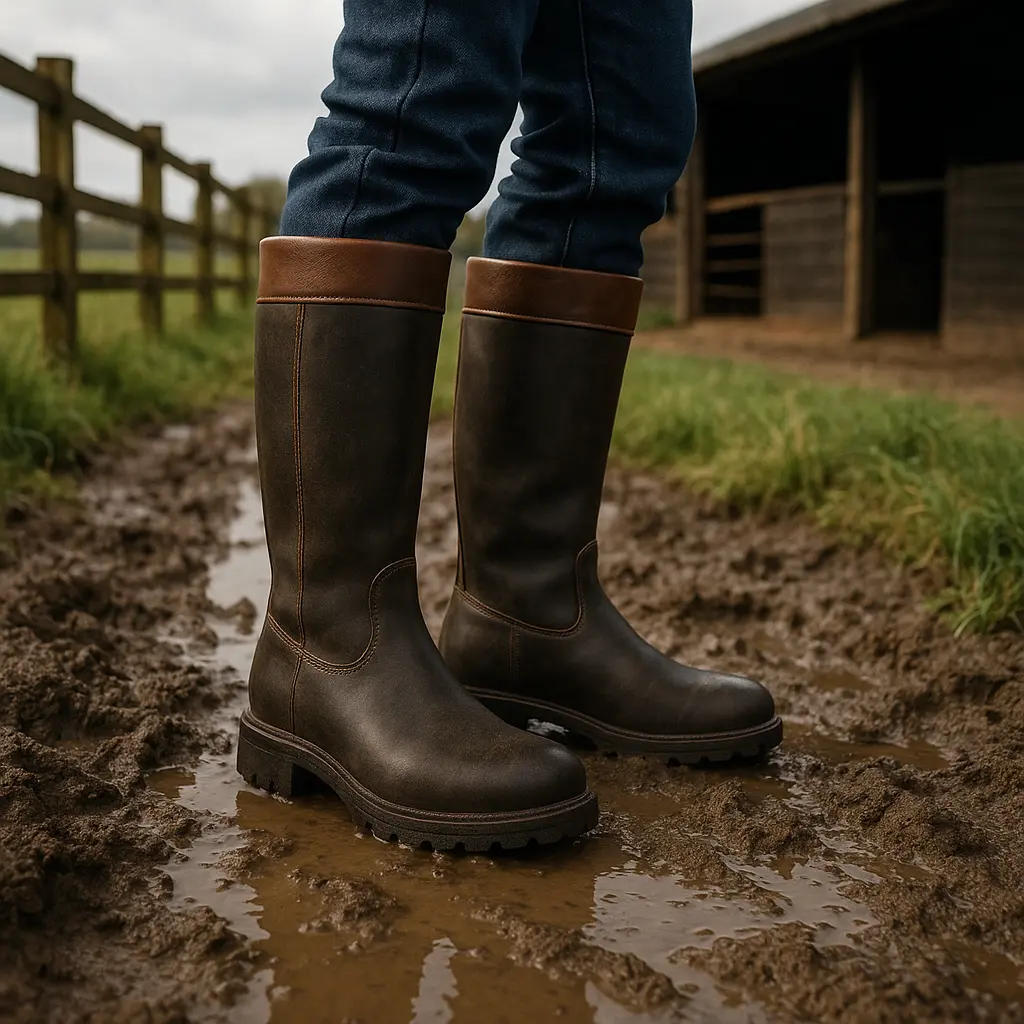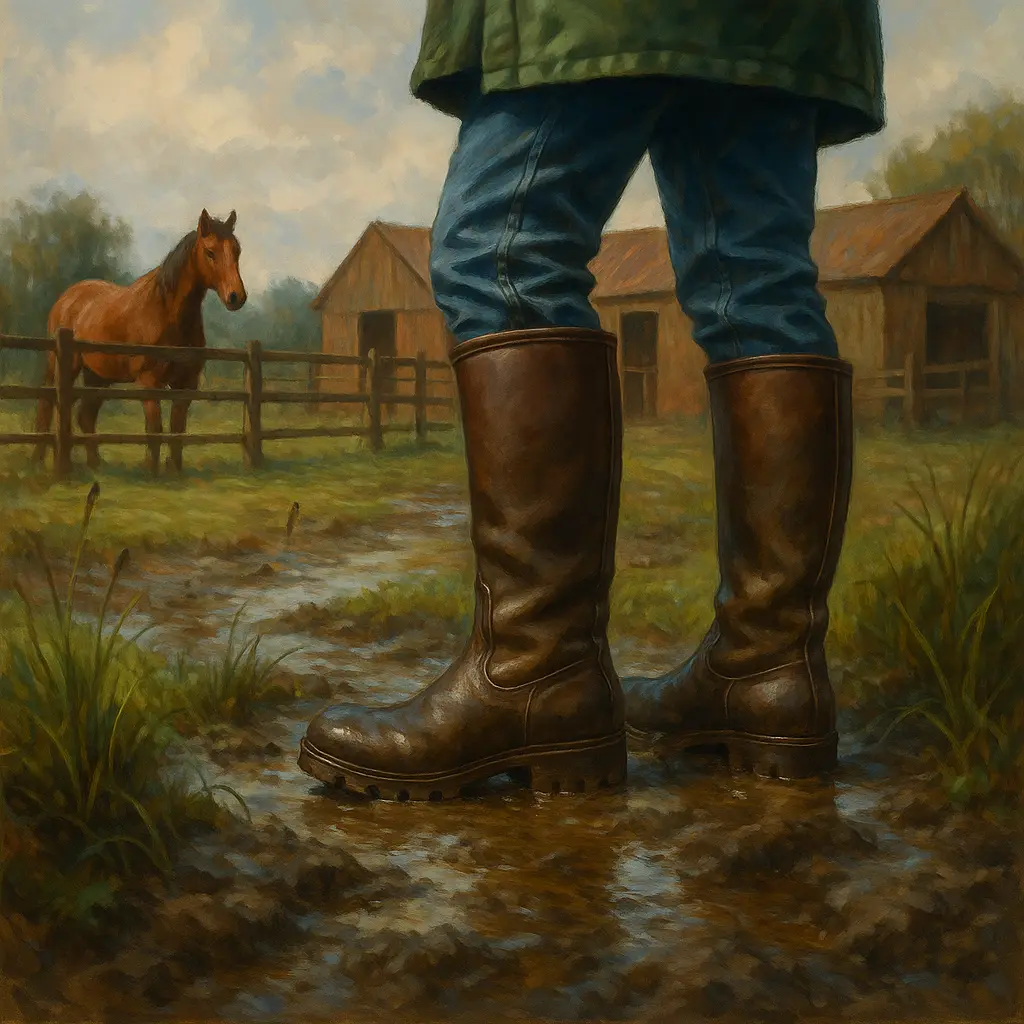
Wet clay, ankle-deep mud and long, drenched grass are a British winter staple on most livery yards. If you’re on your feet from first feed to late-night checks, your boots must be waterproof, supportive and built to last.
Key takeaway: For daily UK yard work, choose leather-lined wellingtons with a deep-tread sole, a secure heel and year-round leather lining (-10°C to 10°C) for the best blend of durability, grip and long-term comfort.
Why leather-lined wellies are the best choice for UK yard work
Leather-lined wellingtons are the most durable, comfortable option for daily UK yard work in wet, muddy conditions. A full leather lining moulds to your feet, resists abrasion and performs reliably across -10°C to 10°C for year-round wear.
Across the UK, persistent rain and clay-heavy soils create boggy gateways and standing water from autumn to spring. Tall, waterproof wellies are essential for turnout, skipping out and pushing barrows through rutted tracks—tasks that quickly expose flimsy footwear. Leather linings, often sourced from premium Italian and French tanneries, elevate wellies beyond basic rubber: they contour to your foot over time, stabilise the fit and stand up to daily scuffing and flexing without breaking down.
Ahume Outfitters summarise it well:
"Renowned for quality and durability, leather lined boots are extremely hard wearing... luxuriously lined completely in leather... provides a superior comfort, for long term wear as it moulds to the wearers foot. Excellent abrasion properties makes a leather lining hard-wearing."
Source: Ahume Welly Boot Buying Guide
For UK horse owners, this means fewer blisters on long winter days, more sure-footed walking on slick concrete or sodden straw, and boots that withstand months of mud without collapsing at the heel or splitting at stress points. When your calendar is ruled by turnout times and rug changes, that comfort and consistency pay you back every single day.
Comfort and warmth: what leather linings actually do
A full leather lining reduces rubbing, improves foot stability and creates a cushioned feel that gets better the more you wear the boot. Unlike thin fabric or bare rubber, leather offers superior abrasion resistance and moulds to the foot for long-term comfort.
In practice, that “glove-like” fit means fewer hot spots across the heel and ankle where many unlined wellies crease and chafe during mucking out or when you’re on and off the tractor. Leather’s natural breathability also helps manage moisture, so your socks and skin stay more comfortable through long shifts—especially useful when you’re clocking 10,000 steps before lunch.
Leather-lined wellies are also suitable for all-season yard use from -10°C to 10°C, as outlined by Ahume’s guide. That’s ideal for the UK’s damp autumns, cold snaps and muddy springs. If you feel the chill during static jobs (e.g. clipping, watching a vet procedure), add insulation rather than sizing up the boot.
Pro tip: On prolonged freezing days, pair your leather-lined wellies with neoprene or thermal socks for extra insulation. Keep fit snug; don’t upsize the boot—bulky socks that compromise heel hold will cause rubbing.
Riders on the ground echo this advantage. Yard users often report that cheap wellies “feel like standing on concrete” after a few weeks, while leather-lined versions keep the footbed feeling supportive month after month. See the discussion on the Horse & Hound forum for real-world experiences.
Safety and fit: BHS-backed boot features to insist on
Choose a boot with a small heel of at least ½in and a secure, through-sole to improve safety on the yard, as advised by the British Horse Society. A heel-holding fit further prevents rubbing and slippage on slopes or slick surfaces.
The BHS guidance, reported by Horse & Hound, is clear:
"Boots should preferably have a smooth, through sole and a small heel (no less than ½in high)."
Source: Horse & Hound – Long or short riding boots: the pros and cons
On the yard, that small heel helps your foot plant securely when you’re wheeling a heavy barrow or moving quickly on wet concrete. While many yard-focused wellies feature deeper treads for mud, you still want a stable, continuous sole underfoot and a defined heel for confidence on mixed surfaces. A heel-holding fit is equally important—if your heel lifts when you stride or climb, you’ll rub and fatigue quickly.
At Just Horse Riders, we also point yard users who split time between paddocks and stable corridors to supportive, everyday yard footwear in our horse riding boots collection. Yard boots are praised by Horse & Hound experts as durable, less stiff than leather riding boots and a great option around stables.
Quick tip: Try boots at the end of the day when your feet are slightly swollen. Walk up and down an incline, check for heel lift and make sure the boot flexes where your foot flexes—particularly important if you crouch to pick out feet or kneel to scrub buckets.
Tall vs short wellies: choose by task and terrain
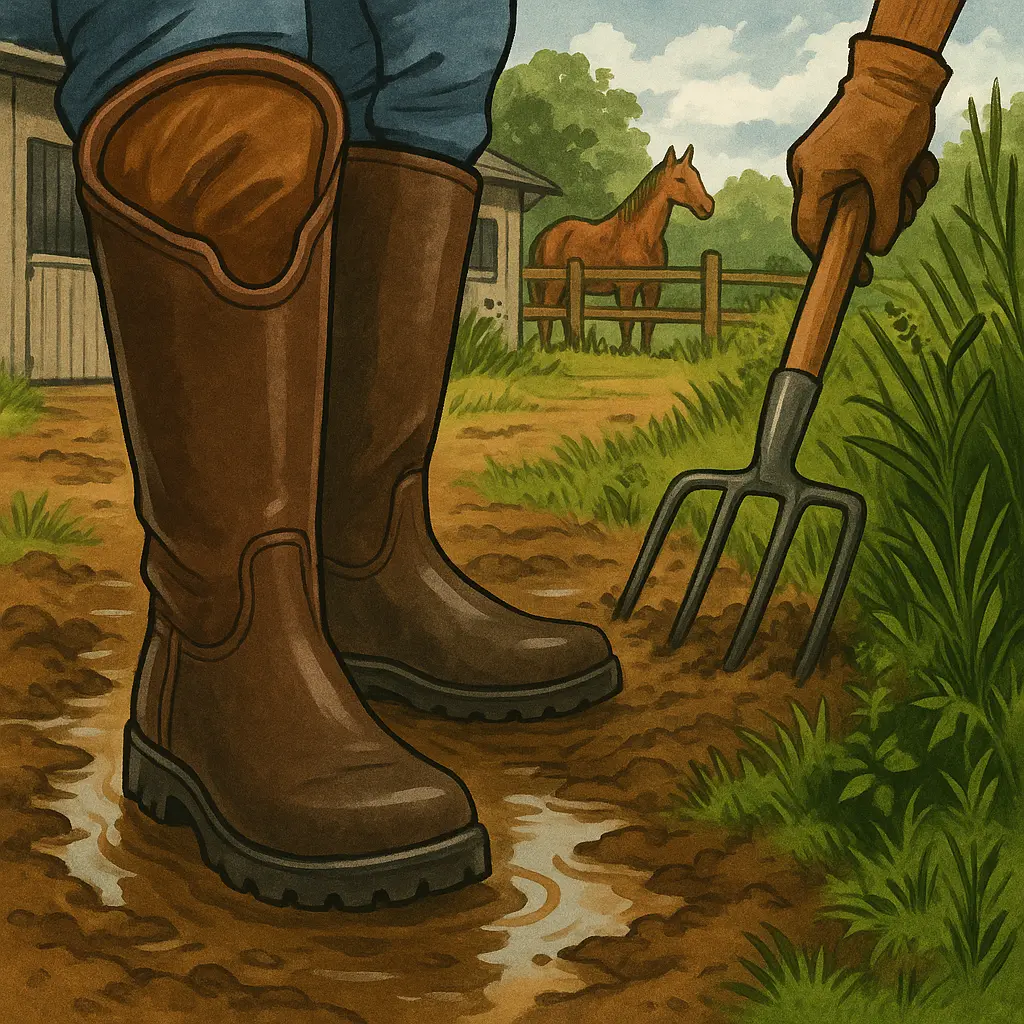
Go tall for deep mud, winter clay, long wet grass, brambles and nettles; short wellies only suit quick, light jobs in relatively tidy conditions. Taller shafts protect your lower legs and keep water and mud out during heavy yard work.
UK gardens and yards with clay soils and persistent rainfall are notorious for sucking boots down in gateways and soaking trouser legs in minutes. Tall wellies keep slurry, wet grass and nettle stings off your calves, and they’re the sensible choice for turnout when fields are at their worst. Short or ankle-height wellies are only a convenience play—fine for fetching a headcollar from the tack room or nipping to the school in summer—but they leave shins unprotected and water ingress is likely in long grass or churned tracks.
As Cherry Tree Country Clothing notes, the ideal boots for muddy, wet conditions combine a deep tread sole, a heel-holding fit and seasonal linings appropriate for the weather. For most UK yards in winter, that’s a tall, leather-lined welly with a proper grip pattern. Source: Cherry Tree Country Clothing – Gardening boots vs wellies
What to look for when buying: tread, materials, and lining ratings
Pick deep-tread soles for grip in mud, a heel-hugging fit to prevent rubs, and a leather lining rated for -10°C to 10°C to cover most UK seasons. Prioritise high-quality linings from reputable tanneries for longevity and comfort.
Use this quick checklist when comparing models:
- Grip: Choose deep, self-cleaning lugs for clay and wet grass. Look for a defined heel to stabilise your foot on slopes and when lifting.
- Lining: Full leather linings from quality tanneries improve abrasion resistance and mould to your foot. Look for all-season suitability (-10°C to 10°C) to get value across autumn, winter and spring.
- Fit: Your heel should sit firm with minimal lift; toes need wiggle room. Calf fit should allow for socks and jods without cutting circulation.
- Shaft height: Opt for tall in winter mud, long grass and bramble-prone hedges; reserve short styles for light, quick tasks.
- Flex: The boot should bend where your foot bends to prevent chafing during kneeling, grooming and filling haynets.
- Insole: A supportive footbed reduces fatigue during long days. Leather-lined models maintain that “underfoot feel” better over time.
Pro tip: If you’re regularly wading through saturated gateways while turning out in winter turnout rugs, prioritise a more aggressive tread and a tall shaft. You’ll thank yourself after the third barrow through the bog.
Real-world durability: why cheap wellies fail and how to avoid it
Budget, unlined wellies tend to collapse at the heel and feel harsh underfoot within weeks of daily yard work, while leather-lined versions hold their structure and comfort for far longer. Spending more initially often saves money across a UK winter.
Daily yard life is punishing: constant flexing under load, slurry that degrades materials, and hours of friction around the ankle. Forum users frequently report that cheap wellies “wear out quickly” with this usage profile, with footbeds going flat (the dreaded “standing on concrete” feeling) and uppers cracking at stress points. In contrast, leather-lined wellies maintain internal structure and underfoot comfort far better, thanks to the lining’s abrasion resistance and its ability to mould to you. See the discussion on the Horse & Hound forum for first-hand comparisons.
At Just Horse Riders, we recommend treating wellies like any other piece of core yard kit: buy once, buy right. For most UK horse owners who work outside daily from October to April, a leather-lined, tall welly is the most cost-effective choice over a season or two.
Fit, break-in, and care: make them last season after season
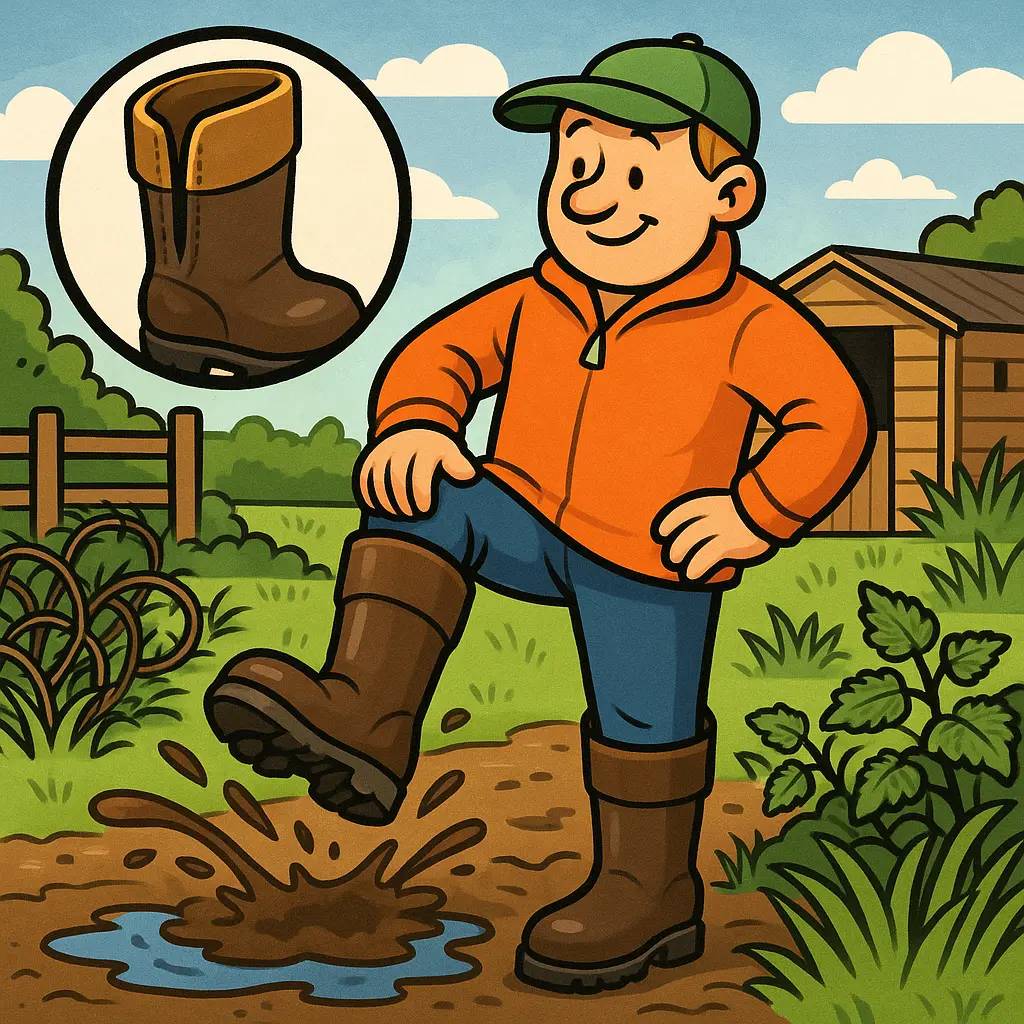
Size for a snug heel with toe wiggle room, break in gradually over a few shorter wears, and rinse and air-dry after muddy shifts to protect the leather lining and outer. Avoid direct heat to prevent cracking and shrinkage.
Follow these steps to maximise comfort and lifespan:
- Measure and try late in the day: Feet swell, so fit when they’re at their largest. Wear your usual yard socks.
- Heel check: Your heel should lock down with minimal lift when striding or climbing. Too much lift = blisters.
- Flex test: Squat, kneel and step up onto a mounting block. The boot should flex without pinching the instep.
- Break-in: Start with a few 1–2 hour wears before committing to a full day. Leather linings mould quickly, but give them time.
- Aftercare: Rinse off mud, especially clay, and let boots air-dry at room temperature. Never place by radiators or fires.
- Lining care: If recommended by the manufacturer, use a light leather conditioner inside occasionally to keep the lining supple. Avoid oils that can weaken adhesives.
- Storage: Keep upright and ventilated. Boot trees or rolled newspaper help maintain shape and absorb moisture.
- Sock strategy: In winter cold snaps, add neoprene or thermal socks; in milder months, choose moisture-wicking fibres to reduce friction.
Quick tip: Keep a doorstep boot brush and a bucket by the tack room. A 30‑second scrub saves hours of dried-on clay that shortens boot life.
Yard-ready kit to pair with your wellies
Match your wellies with durable jodhpurs, hi-vis layers and a protective helmet to stay comfortable and safe from dawn to dusk. Build an outfit that handles mud, rain and low light without fuss.
Here’s a simple, proven yard set-up:
- Legwear that stands up to mud and movement: Choose hard-wearing women’s jodhpurs and breeches that won’t slip inside tall wellies and offer stretch for squatting and lifting.
- Kit for young helpers: Keep children dry and visible in robust children’s jodhpurs and breeches that tuck neatly into short or tall boots.
- Stay seen on dark mornings: Add a vest or jacket from our hi-vis collection for safe yard-to-field walks at dawn and dusk.
- Daily horse care essentials: A well-stocked grooming kit makes quick work of muddy legs and dried sweat after turnout.
- Prep for the season: When fields turn to soup, have the right turnout rugs ready so your horse stays warm while you stay dry in your wellies.
- Footwear rotation: For office runs or schooling, keep a clean pair of yard boots from our riding boots range to switch into quickly—your car mats will thank you.
Horse & Hound’s experts note that yard boots are durable and comfortable for everyday stable wear, being less stiff than formal riding boots—handy if you swap between mucking out and light schooling. Source: Horse & Hound
FAQs
Are leather-lined wellies better than standard rubber ones for daily yard chores?
Yes. Leather-lined wellingtons deliver superior durability, abrasion resistance and moulded comfort for long wear, particularly in wet UK conditions and clay-heavy mud. See guidance from Ahume Outfitters.
Do I need tall or short wellies for mucking out at a livery yard?
Tall. They protect lower legs from long wet grass, brambles and slurry, and keep water out in deep mud. Short wellies suit quick, light jobs in tidy conditions only. Reference: Cherry Tree Country Clothing.
Can wellies cause rubbing during extended yard work?
Poor fit does. Choose a secure heel hold and a flexible, full leather lining to reduce rubbing when you’re walking, kneeling and lifting. Leather linings mould to your foot for better long-term comfort.
Are leather-lined wellies warm enough for UK winter yard duties?
Yes for most conditions: they’re suitable from -10°C to 10°C. Add neoprene or thermal socks for prolonged freezing spells or if you’re standing still for long periods. Source: Ahume.
What sole design is safest for yard use?
The British Horse Society advises a smooth, through sole with a small heel (no less than ½in) for safe everyday use around stables. For muddy fields and tracks, opt for a deeper tread pattern that still offers a stable, continuous platform. Source: Horse & Hound.
How do I stop my wellies feeling like “standing on concrete” by Christmas?
Start with leather-lined wellies for better underfoot comfort and structural integrity, and consider a supportive insole if needed. Rinse and air-dry after shifts to preserve the lining and midsole. Forum users frequently report far better longevity and comfort from leather-lined models compared to cheap, unlined versions: Horse & Hound forum.
What else should I wear with wellies for dark, wet UK mornings?
Pair tall wellies with durable yard jodhpurs, a warm waterproof, and a hi-vis layer for low light. For practical options, see our women’s jodhpurs and hi-vis collection.
Final word: If your day lives in mud and drizzle, leather-lined wellingtons are the yard workhorse—grippy, protective and comfortable enough to carry you from the first feed to the last rug change. Choose deep tread, a secure heel and a tall shaft, and you’ll stride through winter like it’s just another hack across good ground.