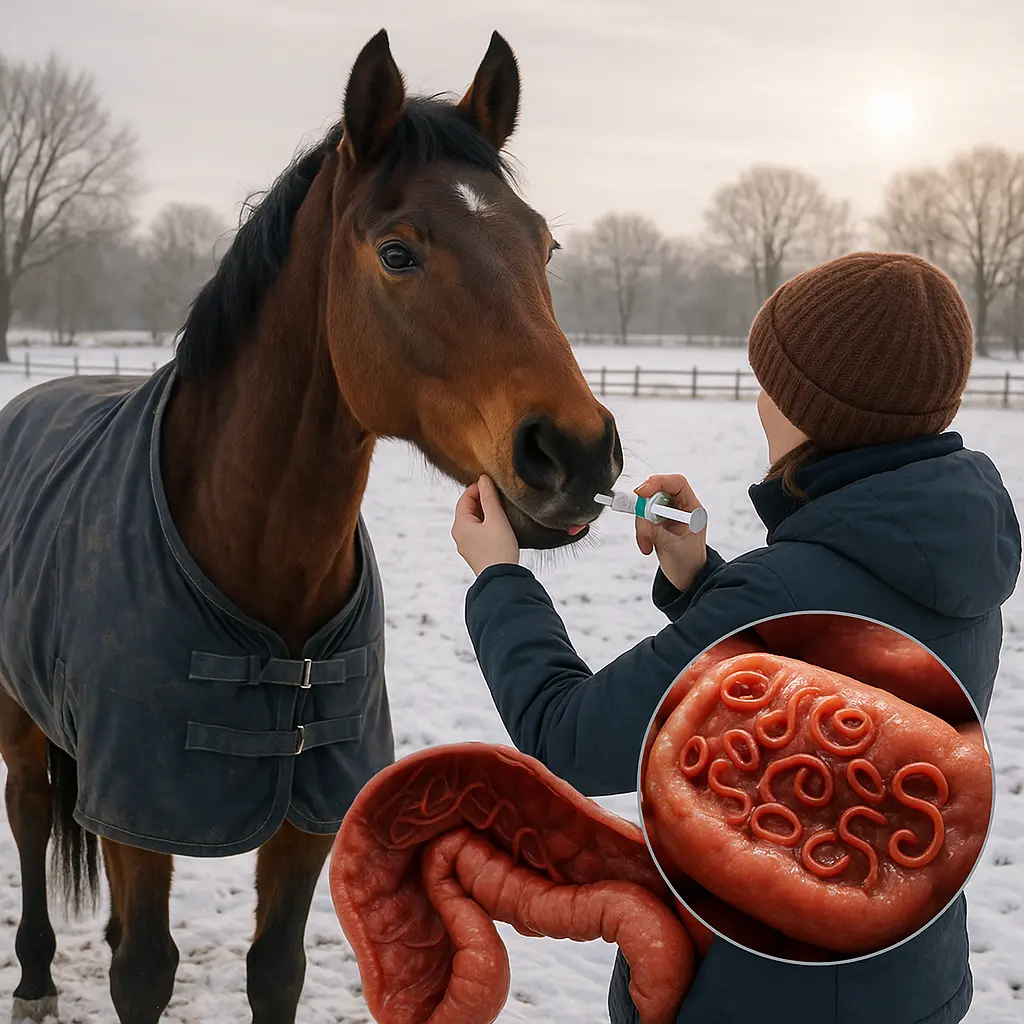
Timing winter worming isn’t about the first frost any more. If you want to protect your horse from encysted redworm and avoid resistance, you need to watch the thermometer and plan for a December–February treatment window.
Key takeaway: Treat encysted redworm in December–February, ideally late December or early January, once daytime temperatures have stayed below 6°C for several days; use moxidectin (or a five‑day fenbendazole course for youngstock).
When should you worm for encysted redworm in the UK?
For UK horses, the optimum window is December to February, with late December or early January ideal when daytime temperatures sit below 6°C for several days. This timing targets redworms once they’ve largely inhibited (encysted) and reduces the risk of reinfection over winter.
Multiple UK sources now recommend shifting “autumn worming” later. As the University of Edinburgh explains, “In most cases, we recommend treatment in December to reduce the risk of encysted redworm, and/or tapeworm, during the winter period.” Equine worm control specialists EFECS put it even more plainly:
“The optimum time to worm for IESR [inhibited encysted small redworm] and Bots is December or January. At Christmas time is ideal because the shortest day is the 21st of December. And then we're pretty much guaranteed cold weather in January.” — EFECS Ltd
Why this matters: small redworm larvae encyst in the gut wall as days shorten and temperatures fall. Treating too early (November/early December) risks missing part of the population as larvae continue to encyst into January, meaning you may need to treat again in spring.
Quick tip: Pencil in worming for the week between Christmas and New Year, then adjust by a week or two if the weather turns unexpectedly mild or cold.
Does frost matter, or is temperature the real trigger?
No. A single frost doesn’t mean your horse has encysted redworm; sustained daytime temperatures below 6°C are the real cue. Frost kills bot flies, but encysting is driven by prolonged cold and short daylight, not one frosty night.
Traditional “worm after the first frost” advice is now outdated in the UK. Warmer autumns mean we often get early frosts followed by weeks of mild weather. Agria notes, “Treatment for encysted redworm was traditionally done in the autumn, but climate change is adjusting our advice around this. Daytime temperatures now persist into plus figures through November and December in many parts of the UK.”
Actionable rule of thumb: wait for several consecutive days when daytime highs stay under 6°C. That’s your green light to treat once, confidently, without having to repeat in spring.
Which wormers work for encysted redworm?
Use a single dose of moxidectin (Equest) or moxidectin with praziquantel (Equest Pramox if you’re also targeting tapeworm). A five‑day course of fenbendazole is an alternative for young horses. Ivermectin and pyrantel do not kill encysted larvae.
Moxidectin is the UK standard for encysted redworm because it’s effective in a single dose and offers persistent activity. Equest Pramox adds praziquantel for tapeworms, allowing you to combine treatments during the same winter window if a saliva or blood test shows tapeworm exposure. If you’re managing yearlings or two-year-olds, discuss the five‑day fenbendazole protocol with your vet.
Important: To limit resistance, reserve moxidectin for the winter encysted redworm treatment. During the grazing season, treat selectively (only when counts are high) with alternatives such as ivermectin or pyrantel that target adult worms but not encysted stages.
Pro tip: Dose accurately to your horse’s weight. If you need a weigh-tape, add it to your yard kit and re-check before dosing. Pair this with good winter management like well-fitted turnout rugs or cosy stable rugs so clipped or older horses maintain condition through the colder months.
Why faecal egg counts miss encysted redworm
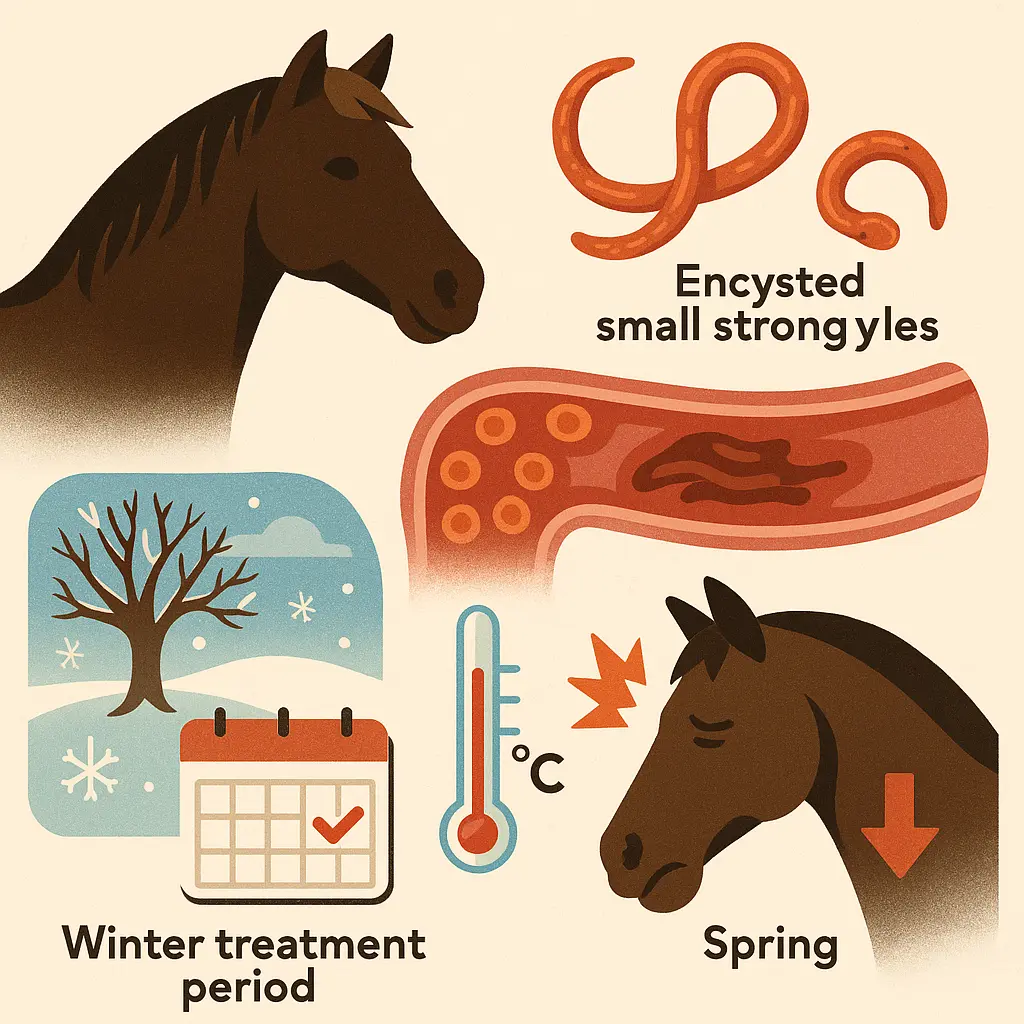
Standard faecal egg counts don’t detect encysted larvae; horses can carry millions yet show low or negative results. That’s why most UK vets advise a routine winter treatment for every horse.
Pilgrims Vets summarise it clearly: “Encysted small redworm won't show up in a faecal worm egg count: Horses can harbour several million larvae yet show negative or low faecal egg counts. Treat every horse for encysted small redworm once a year.” Encysted larvae can line the intestine in their tens of thousands and persist for up to three years, quietly impairing nutrient absorption. The real danger comes in late winter or spring when they emerge en masse, causing severe gut inflammation (larval cyathostominosis), weight loss and colic.
So, keep faecal worm egg counts (FWECs) for the grazing season when you’re targeting adult redworms on pasture. Winter is different: treat proactively for the larval stage that testing can’t see.
How to time winter worming with UK weather
Wait for a sustained cold spell with daytime highs below 6°C, and treat in late December or early January. If the winter stays mild, do not delay beyond the end of February.
Here’s a simple UK-focused plan:
- Watch your local forecast and, ideally, note pasture temperatures. Below 6°C for several days signals it’s time.
- Avoid worming right after the first frost if temperatures bounce back; that increases reinfection risk and can force a spring repeat.
- Mild winter? Treat anyway before the end of February so larvae don’t emerge unchecked as days lengthen.
- If you also need to address tapeworm, consider Equest Pramox in the same window, guided by an Equisal saliva or blood test.
At Just Horse Riders, we recommend pairing winter worming with broader winter-care checks: condition scoring, adjusting rugs, and reviewing diet. Our customers often combine their worming date with a yard “winter MOT” and ensure essentials like grooming brushes and weigh-tapes are to hand.
What to do for the rest of the year (March to October)
From March to October, test every 10–12 weeks and treat only if FWECs exceed 400 eggs per gram. Always follow up high counts with a reduction test two weeks after treating.
The University of Edinburgh now advises a higher treatment threshold of 400 EPG (up from 250 EPG) to help curb resistance while still protecting horse health. During the grazing season:
- Submit a FWEC about every 10–12 weeks (aim for at least three tests through spring–autumn).
- Treat only if the result is 400 EPG or higher, typically using ivermectin or pyrantel for adult worms.
- Run a faecal worm egg count reduction test (FWECRT) two weeks later to confirm the wormer worked. This is essential for very high counts (over 1,000 EPG) and recommended annually for all yards.
- Continue pasture hygiene: poo-pick at least twice a week and avoid overgrazing mixed-age groups.
Quick tip: Keep a simple yard log of FWEC results, treatments, and dates. It makes pattern-spotting and vet conversations much easier, and helps you avoid overusing key molecules like moxidectin.
Practical winter yard checklist to support worming
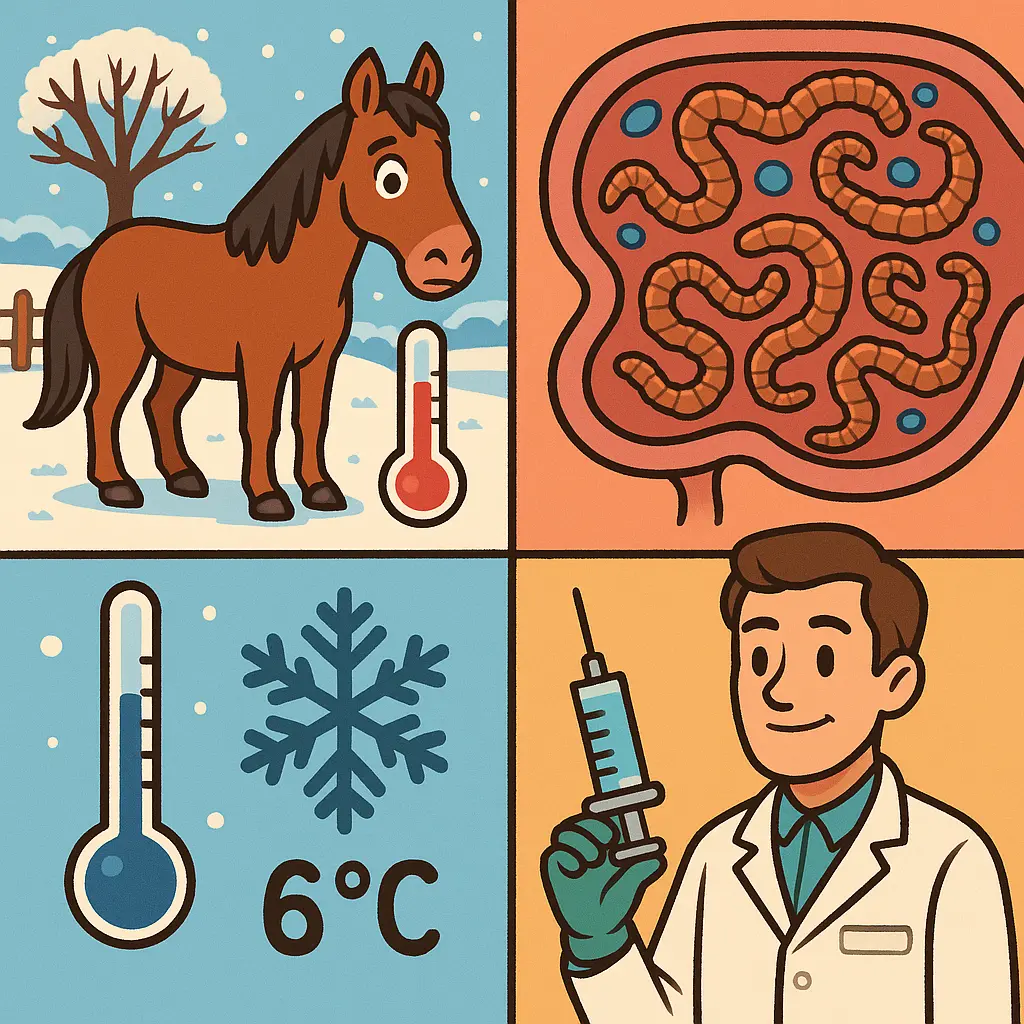
Winter worming works best alongside good horse and rider management. Use this mini checklist to make the season safer and simpler:
- Condition and weight: Body condition score monthly and weigh-tape before dosing. Keep a notebook in your grooming kit. Find essentials in our grooming collection.
- Rugs: Adjust weights promptly as cold snaps hit. Explore reliable winter turnout rugs and warm stable rugs, including trusted brands like WeatherBeeta.
- Short daylight safety: If you’re hacking in low light, upgrade your visibility. Our hi-vis range for riders helps you stay seen on winter roads.
- Helmet check: Winter is a great time to assess your hat’s fit and age. See our selection of certified riding helmets.
- Digestive support: Discuss targeted supplements with your vet if your horse struggles with weight or stresses easily around winter changes. Browse thoughtful options in our supplements collection.
- Seasonal treats and motivation: Keep handling positive on dark evenings with healthy rewards from our treats selection. And if you’re gifting at the yard, take a look at our Christmas gift ideas.
Pro tip: Set a recurring reminder for “Worming + Rug Review” in the last week of December. Knock both jobs out in one yard visit so nothing slips.
Common mistakes to avoid
Avoiding these pitfalls will save you money and reduce resistance while protecting your horse:
- Treating after the first frost: Frost ≠ encysting. Wait for sustained days under 6°C.
- Using the wrong product: Ivermectin and pyrantel don’t kill encysted larvae. Use moxidectin (or five‑day fenbendazole for youngstock) in winter.
- Dosing too early: November or early December may be premature. You could face reinfection and need a spring repeat.
- Skipping tapeworm testing: If you need to combine treatments, use a saliva or blood test first, then consider Equest Pramox in the same winter window.
- Ignoring youngsters: Young horses are more vulnerable; discuss the five‑day fenbendazole option and tighter monitoring with your vet.
- Forgetting FWECRT in summer: Always verify that wormers still work on your yard after treating high FWECs.
As a reminder, climate change is pushing UK worming timing later. Monitor your local temperatures, not just the calendar, and you’ll get the timing right without over-treating.
What about bots and tapeworm?
You can address bots and, if needed, tapeworm during the same winter window as encysted redworm. Bot fly activity tails off once daytime temperatures sit below roughly 10°C, and moxidectin-based products will clear bots alongside redworm.
If tapeworm is on your to-do list, test first with an Equisal saliva kit or a blood test and, if positive, opt for a combination product (moxidectin + praziquantel). This maximises efficiency and avoids unnecessary dosing.
Quick tip: Keep a simple “winter parasite plan” pinned in the tack room: the product to use, your horse’s weight, the date to dose (late Dec/early Jan), and a note to reassess rugs the same week. If you also need any yard upgrades, browse our dependable winter ranges, from turnout rugs for wet weather to durable WeatherBeeta layers.
What happens if you don’t treat?
Untreated encysted larvae can emerge together in late winter/spring, triggering larval cyathostominosis — a serious inflammatory condition that can cause diarrhoea, colic, rapid weight loss and even be life-threatening. Given that faecal counts can’t see this stage and larvae can persist for up to three years, a single, well-timed winter treatment is a simple, evidence-led safeguard.
Signs to watch for include dull coat, dropping condition despite adequate feed, loose droppings, and colicky behaviour. If you suspect a heavy burden or your horse becomes unwell, speak to your vet immediately.
FAQs
Does a frost mean my horse has encysted redworm, and should I worm immediately?
No. A single frost doesn’t equal encysting. Wait for sustained daytime temperatures below 6°C over several days, then treat in December–January. This reduces reinfection and avoids needing a second spring dose.
Can I test for encysted redworm before treating?
Standard faecal egg counts can’t detect encysted larvae. A blood test may indicate exposure risk but isn’t definitive. Most UK vets advise treating all horses once each winter specifically for encysted redworm.
Which product should I use for encysted redworm?
Use moxidectin (Equest) as a single dose, or moxidectin with praziquantel (Equest Pramox) if a tapeworm test suggests treatment is needed. For young horses, discuss the five‑day fenbendazole alternative with your vet.
What if winter stays mild with no hard frosts?
Treat before the end of February regardless. If temperatures never dip under 6°C, larvae may not fully inhibit; delaying risks higher burdens as days lengthen.
How often should I worm for encysted redworm?
Once a year in winter (December–February). If you dose too early (November/early December), you may need a second dose in spring because larvae continue to encyst into January.
What should I do from March to October?
Run faecal egg counts every 10–12 weeks and treat only if results exceed 400 EPG. After treating high counts, submit a reduction test two weeks later to confirm efficacy.
Any yard tips to make winter worming easier?
Weigh-tape before dosing, write the plan on the tack-room wall, and pair it with a rug review the same week. For winter essentials, explore our stable rugs, visibility gear in hi‑vis, and reliable riding helmets for safer short-day hacks.