Livery is often the single biggest ongoing cost of horse ownership in the UK, and the choice you make will shape your daily routine, budget, and your horse’s lifestyle. Before you sign a contract, it pays to run the full numbers — including fuel and time — and match facilities to how you actually ride year‑round.
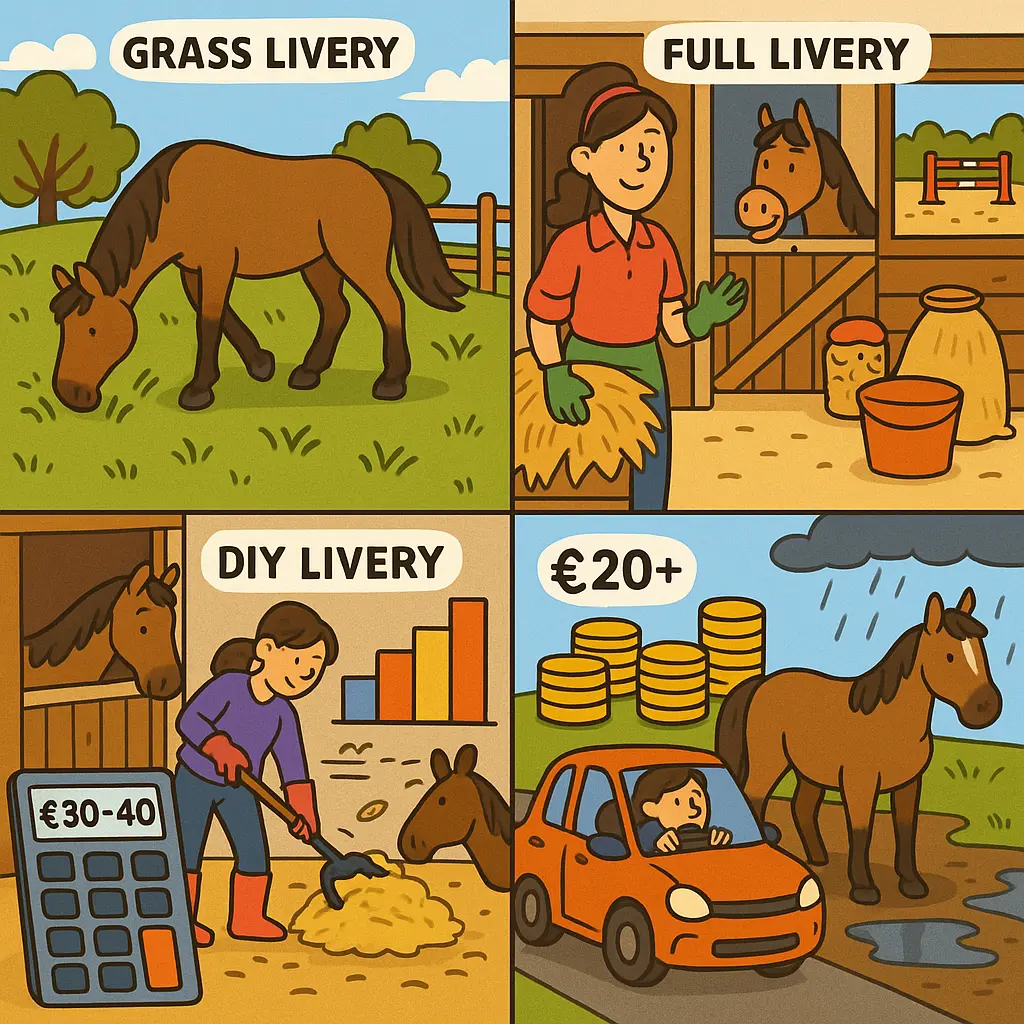
Key takeaway: Grass livery averages £20–£25 per week, DIY stabled livery £30–£40, and full livery £100–£150 — but fuel and time can push DIY over a serviced package by £100+ per month in realistic UK scenarios.
What does livery really cost in the UK?
Typical UK prices are £20–£25 per week for grass livery, £30–£40 for DIY stabled livery, and £100–£150 for full livery, equating to roughly £1,040–£1,300, £1,560–£2,080, and £5,200–£7,800 per year respectively. These are base fees and exclude feed, bedding, vet bills, and insurance.
These figures, drawn from Equine World UK, reflect broad UK norms; location, facilities, and packages will shift the price. At the budget end, community reports show occasional outliers — for example, a DIY yard offering year‑round grazing, stables in a barn, a sand school, jumps, storage, and a lockable tack room at £13 per week — but these deals are rare and usually involve trade‑offs in travel or availability. At the premium end, serviced packages add labour (mucking out, turnout, bringing in, exercising) that DIY owners otherwise provide themselves.
“Grass livery is often the cheapest type of horse livery because it’s essentially a rented field and nothing else; use of a stable is unlikely and the owner bears most of the day‑to‑day management.” — KBIS: The Complete Guide to Horse Livery
DIY vs full livery: which is cheaper overall?
DIY isn’t always cheaper overall; once you include fuel, time, and labour, the monthly spend can exceed a serviced package by over £100 in realistic examples. A 10‑mile round trip, twice daily for DIY care, can add about £20.86 per week (~£90 per month) in fuel alone.
Yard Owner Hub breaks down the hidden costs that regularly surprise owners:
- Fuel: Two daily trips (10‑mile round) ≈ £20.86/week; a serviced livery visitor going four times weekly ≈ £5.96/week.
- Time and labour: Mucking out, turning out/bringing in, rug changes, grooming, and exercising are all on you with DIY.
- Logistics: Transporting bedding and forage, and arranging holiday cover or emergency help, adds both cost and complexity.
In other words, if your yard is not on your doorstep — or your schedule is tight — DIY’s lower weekly fee can be offset quickly by commuting and the value of your time. Conversely, if you live next to a well‑priced DIY yard and enjoy the routine, it can still be the best fit.
Quick tip: Track a week of yard visits with your phone’s mileage app before committing. Multiply the round‑trip fuel by your expected weekly visits, then add the yard’s weekly fee for a true “cost per week”.
Grass livery and sole-use fields: when do they make sense?
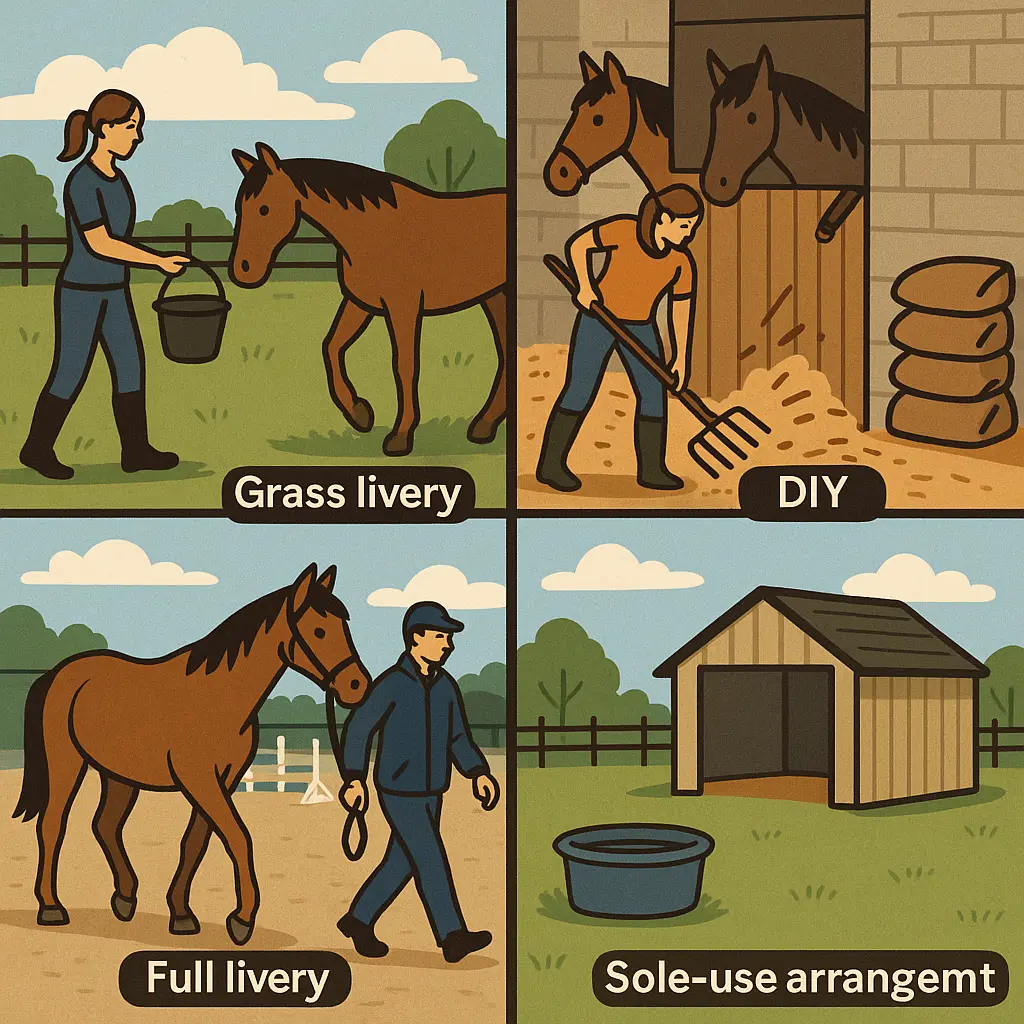
Choose grass livery or a sole‑use field when your horse is comfortable living out and you’re prepared to manage turnout, shelter, and winter routine yourself. Expect around £20–£25 per week for grass livery, or from roughly £10 per week for a basic rented field plus all maintenance responsibilities.
Grass livery suits hardy types and owners who prefer maximum turnout and minimal stabling. As KBIS notes, you’re essentially paying for the field; everything else (from fencing checks to daily monitoring) is your job. A sole‑use field can look even cheaper upfront — Equine World UK cites around £10 per week for a simple rented field — but you must budget for muck removal, fencing repairs, water access, field maintenance and, in winter, significant mud management.
Because UK winters are wet and daylight is short, plan your horse’s comfort and welfare realistically: adequate natural or man‑made shelter, reliable drainage, and rugging suited to your horse’s coat and condition. If your horse lives out year‑round, ensure you have appropriate weather protection ready — many owners rely on robust, well‑fitting winter turnout rugs for cold, wet spells, with popular technical options available from brands like WeatherBeeta.
Facilities to prioritise for UK weather and welfare
Prioritise floodlit or indoor arenas, reliable drainage, secure storage, and efficient muck‑removal systems to cope with UK rain, mud, and dark evenings. For stabled horses, aim for UK‑recommended stable sizes: at least 10 ft × 10 ft for ponies and 12 ft × 12 ft for horses.
Facilities shape both your riding and your horse’s daily life. As Yard Owner Hub explains, “most, but not all, DIY yards will have basic facilities”; serviced yards are more likely to add extras like indoor schools, horse walkers, and wash bays. Equine World UK highlights that most yards share fields in small herds for natural interaction, though some offer individual turnout for horses that need it — ask how turnout groups are managed and how grass is rested in winter.
Essential checks for the UK climate:
- Arena with a surface that holds up in winter, ideally with floodlights for safe schooling after work.
- Yard drainage and hardstanding where you tack up, to reduce winter mud and thrush risks.
- Secure tack rooms, fire safety measures, and clear yard rules for turnout and routine.
- Hay, bedding, and storage access without dragging heavy bales across boggy ground.
If you’ll be wading through winter mud to catch and bring in, reliable footwear is non‑negotiable; our customers swear by waterproof, grippy horse riding boots for daily yard chores. And whenever you ride at a busy yard, protect your head with a properly fitted, safety‑standard riding helmet.
Pro tip: Visit at dusk on a wet, windy weekday in winter. If the arena is still rideable, the lighting adequate, and the yard efficient, you’ve likely found a setup that works when conditions are at their worst.
How to choose a safe, reputable yard
Opt for yards inspected under the British Horse Society (BHS) Livery Yard Approval Scheme wherever possible; UK livery yards aren’t statutorily licensed, so BHS approval provides a meaningful safety and welfare benchmark. Approved yards carry public‑liability insurance and undergo yearly inspections against health‑and‑safety and welfare standards.
According to Equine World UK, BHS approval is a strong indicator of good practice, especially if children or novices use the yard. When you visit, use this checklist:
- Welfare: Clean, well‑bedded stables; correct stable sizes (10 × 10 ft ponies, 12 × 12 ft horses); safe fencing; fresh water access.
- Safety: Fire procedures, first‑aid kits, yard rules; supervised handling for novices.
- Turnout: Clear policy on winter turnout and field rotation; herd management that suits your horse.
- Facilities: Arena surface and lighting; secure tack storage; wash areas and tie‑up points.
- Paperwork: Contract terms, notice periods, services included; proof of insurance and approvals.
Quick tip: Talk to existing liveries without the yard owner present. Ask about winter turnout, how quickly issues are resolved, and whether advertised services actually happen on time.
A realistic monthly budget example
On DIY livery at £35/week with a 10‑mile round trip twice a day, expect roughly £242 per month for yard fee plus fuel alone (£35 × 52 ÷ 12 ≈ £151.67, plus ~£90 fuel). On full livery at £120/week, expect about £520 per month (£120 × 52 ÷ 12 ≈ £520) before extras.
These comparisons use mid‑range figures within the bands cited by Equine World UK and the fuel analysis from Yard Owner Hub. They exclude feed, bedding, farriery, vet/insurance and any paid services (like holiday cover). If you secure an ultra‑budget DIY yard (e.g., £13/week), your base fee may be far lower — but fuel and time remain the great levellers. Yard Owner Hub’s worked examples show that when you factor realistic travel and ad‑hoc services, DIY can finish more than £100 per month above a serviced package for some owners.
Quick tip: Use “cost per visit” as a sanity check. Add your fuel per round trip to the portion of the weekly yard fee that day represents; then ask if doing that twice daily still beats a part‑ or full‑livery package for your schedule and goals.
Time, travel and routine: what your day will look like on DIY
Plan for two daily visits if your horse is stabled: morning turnout and muck out, then evening bring‑in, hay, water, and rug changes. With grass livery, you’ll still need daily checks and extra time in winter for mud management and feeding.
Typical DIY daily jobs include:
- Morning: Check health, turn out/bring in (season dependent), hay/water, muck out and bed down.
- Evening: Reverse turnout routine, top up forage and water, rug adjustments, quick groom and pick out feet.
- Weekly: Deep clean, poo‑picking if on individual turnout or sole‑use, field checks and fencing repairs.
Dark, wet evenings are a UK reality from late autumn to early spring. If you’re hacking from a yard without floodlights, be visible and safe with high‑visibility riding gear and a reliable head torch. At Just Horse Riders, we also recommend scheduling regular “yard buddy” check‑ins so someone always knows your expected return time on winter rides.
Kit that makes yard life easier
For DIY and sole‑use owners, smart kit saves time and keeps you safer and drier through winter. Prioritise waterproof layers, robust footwear, efficient grooming tools, and organised storage so you can work quickly in the dark and rain.
- Feet first: Invest in waterproof, supportive yard and riding boots with good grip for gateways and tracks.
- Rugs that work: Reliable, seam‑sealed turnout rugs keep horses comfortable through wet spells; brands like WeatherBeeta are popular for durability.
- Daily care: A well‑stocked grooming kit speeds up mud removal, mane/tail care and hoof checks.
- Safety on every ride: Always wear a certified riding helmet; replace it after a fall or if it’s past manufacturer guidelines.
- Wellbeing support: Seasonal changes, increased workload, or stabling can justify targeted horse care supplements (e.g., electrolytes post‑work, joint support for older horses) — speak to your vet if unsure.
Pro tip: Keep a “grab‑and‑go” winter caddy by the stable door: waterproof gloves, head torch, hoof pick, quick‑tie leadrope, reflective bands, and spare rug straps. Five minutes saved at each visit adds up across a UK winter.
FAQs
Here are clear, up‑to‑date answers to common UK livery questions based on current guidance and published price ranges.
Is DIY livery always cheaper than full livery?
No. While DIY’s weekly fee (£30–£40) is lower than full livery (£100–£150), fuel for frequent visits, your time, and paid help can make DIY costlier overall; Yard Owner Hub shows DIY finishing over £100 per month above a serviced package in realistic scenarios.
How much does grass livery cost?
Grass livery is commonly £20–£25 per week (£1,040–£1,300 per year), excluding feed, vet, and insurance costs, according to Equine World UK.
What facilities should I expect at a typical UK livery yard?
Most yards offer secure tack storage, feed storage, and turnout; many add an arena, jumps, and hacking access, and some provide premium extras (horse walkers, wash bays). See Equine World UK for a full overview.
Is a sole‑use field cheaper than shared livery?
It can be from around £10 per week for a simple rented field, but you must budget for muck removal, fencing, drainage, and your labour; when these are included, the gap with livery narrows considerably (Equine World UK).
Do I get a stable with grass livery?
Usually not. As KBIS explains, grass livery is essentially rented grazing; you manage day‑to‑day care and typically won’t have a stable included.
How big should a horse’s stable be in the UK?
UK guidance recommends at least 10 ft × 10 ft for ponies and 12 ft × 12 ft for horses, influencing both yard choice and any sole‑use arrangements (Equine World UK).
How do I check a yard’s standards and safety?
Favour yards in the British Horse Society Livery Yard Approval Scheme; livery yards aren’t legally licensed, so BHS approval provides annual inspections, welfare checks, and verified insurance (Equine World UK).
At Just Horse Riders, we recommend you run the full “commute + care” calculation, visit your short‑list yards in peak winter conditions, and kit yourself out for dark, muddy evenings. With the right yard — and the right gear — you’ll enjoy more saddle time and fewer surprises on your bill.