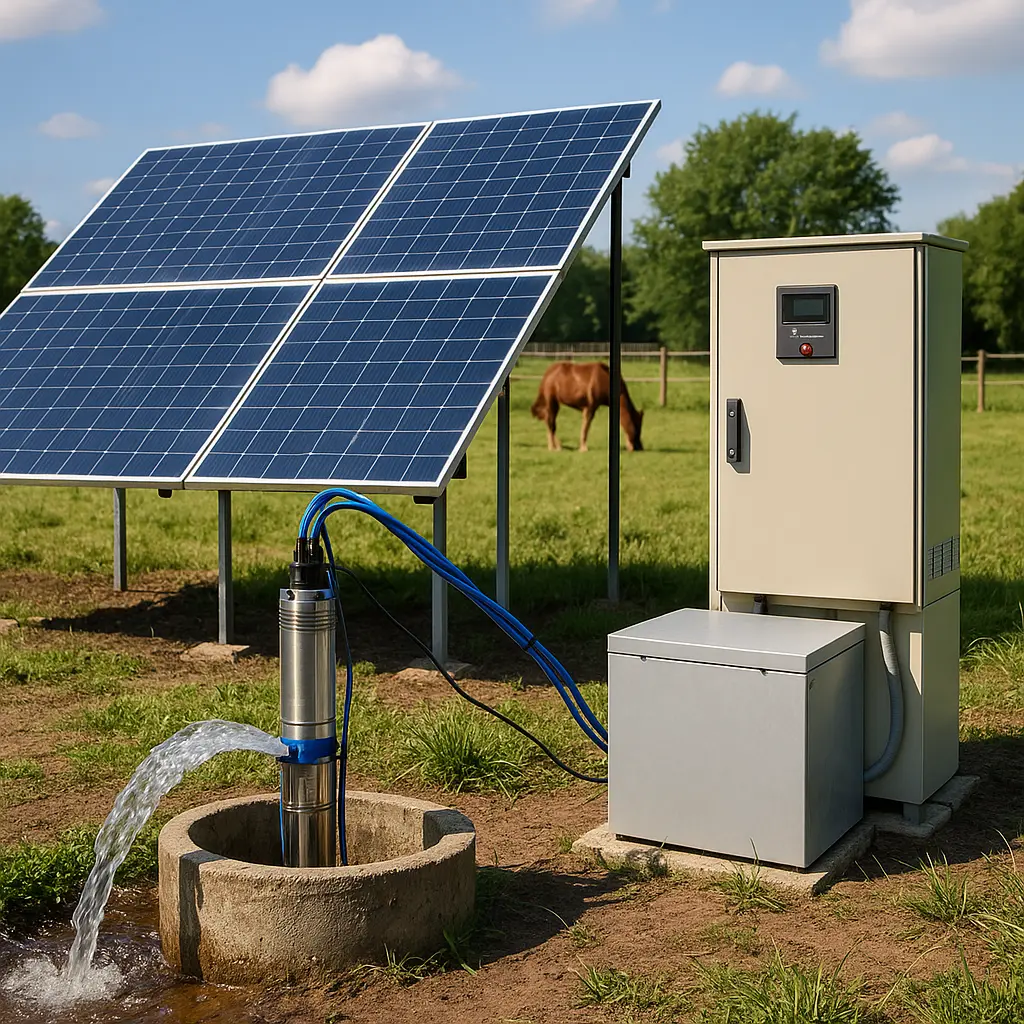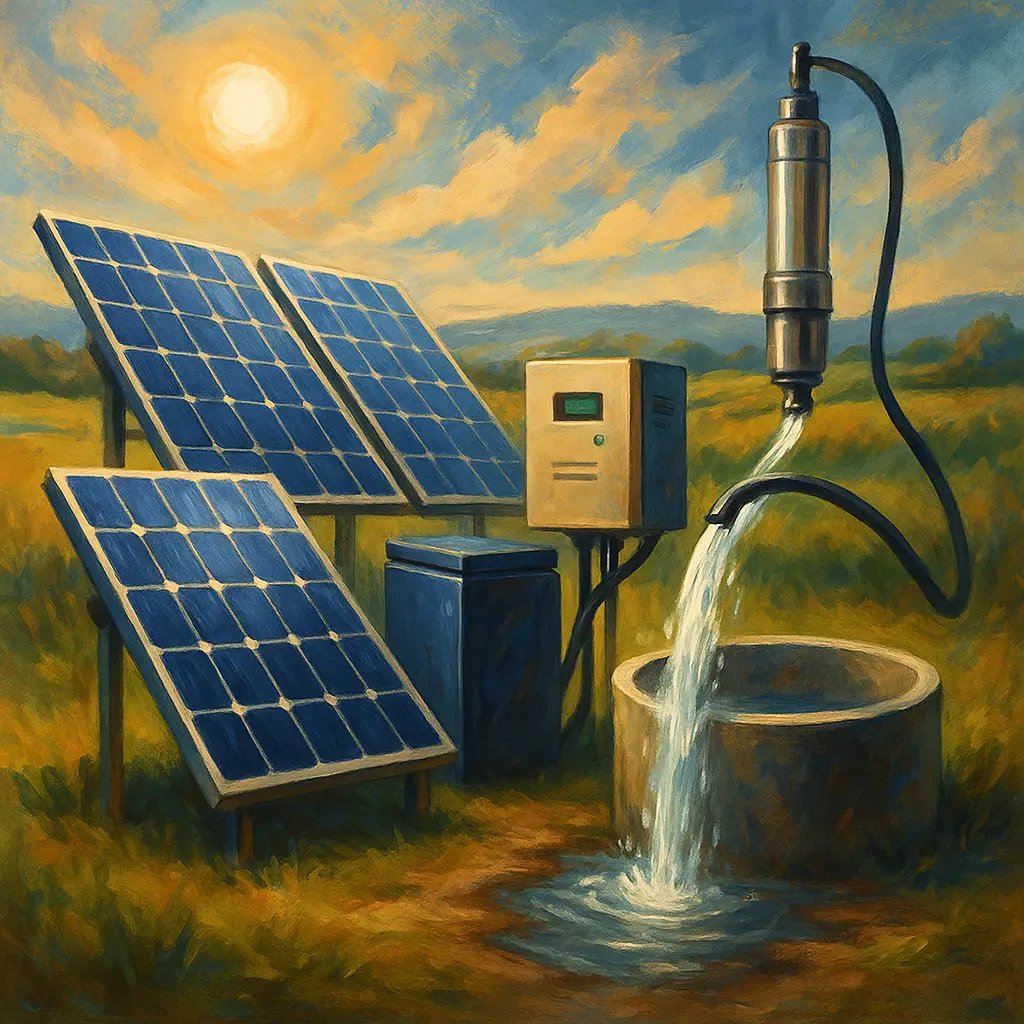
Keeping clean, unfrozen water flowing to troughs and stables is non-negotiable — but many UK yards are far from mains power. A well-sized solar borehole pump can give you reliable, low-running-cost water all year, even in a cold, grey winter.
Key takeaway: A 1 horsepower (HP) borehole pump needs roughly 1,200W of power, 1,200W+ of solar panels and 10–20kWh of LiFePO4 battery storage for dependable UK winter operation alongside essentials like a kettle and LED lights.
Is a solar borehole pump realistic for a UK livery yard?
Yes — a solar borehole pump is viable in the UK when you size for winter sun and include battery storage. A typical 1HP pump draws around 1,200W, which you can cover with 6–12 × 100W panels and a 10–20kWh LiFePO4 battery bank.
In practice, solar water pump systems for boreholes span about 250–1,500W depending on depth, lift height and litres per hour. A 1HP submersible commonly runs at about 1,200W, while smaller pumps can be far lower — some 0.5HP models can run around 100W with 400W at start-up. Panel count then follows: plan around 12 × 100W panels for a 1HP pump, and roughly 6 × 100W for some half-horsepower units. The controller is crucial: it matches panel output to the pump and provides dry-run protection.
For many rural UK yards, solar is simply the practical option. Running mains out to a remote borehole can cost thousands per kilometre, while diesel gensets cost roughly £0.50–£1.00 per kWh to run. By contrast, after installation, solar’s running cost is near-zero with light maintenance. If your yard’s daily water pumping averages 35kWh, that indicates a 1.5–2kW draw — exactly the kind of steady load that solar-plus-battery handles well when correctly sized.
What size solar array and battery do you need?
For a 1HP pump, a kettle and LED lights in winter, plan for at least 1,200W of solar PV and 10–20kWh of LiFePO4 battery storage with 20–50% headroom for surges and cold weather.
Here’s a simple way to size your system for UK yard realities:
- Pump: 1HP ≈ 1,200W running. Smaller 0.5HP models can be much lower (as little as ~100W running, ~400W starting on specific efficient units). Choose the actual rating from your pump’s specifications.
- Kettle: 1,500–3,000W momentary surge; keep usage short and never boil while the pump is starting.
- LED yard lighting: 50–200W total for safe, efficient night checks around stables and gateways.
Select a solar generator/inverter with a continuous output rating above your combined running loads, plus 20–50% margin. Likewise, ensure peak/surge output can comfortably cover the pump’s start-up and the kettle if both overlap briefly. For pumps below 500–600W, a compact solar generator with at least 1,000W peak can suffice; 1–2kW pumps need a more substantial inverter and battery.
Battery capacity is your winter lifeline. Typical home batteries span 0.25–20kWh; for yard essentials (pump + lights + quick kettle) across short winter days, 10–20kWh LiFePO4 is a proven sweet spot. Aim to keep at least 20% reserve to protect battery life, and use expandable packs (3.6–25kWh+) if your yard’s demand grows or you want coverage for multiple grey days.
Solar array sizing must reflect UK winter irradiance. With only 2–3 peak sun hours per day Dec–Feb, panels deliver roughly half their summer output. As a rule of thumb, 6–12 × 100W panels suit many 0.5–1HP pumps for winter reliability. If your yard needs around 35kWh per day for pumping alone, consider stepping up to 1.5–2kW of panels and matching storage to buffer cloudy spells.
“A 1 horsepower water pump generally uses 1200 watts; half-horsepower needs 6×100W panels — factor in smooth interior pipes to reduce flow resistance.” — Jackery UK buying guide
Quick tip: Use an energy monitor with an app to learn your real run times per day — you’ll quickly see the ideal battery size for your routine fills and ad-hoc trough top-ups.
How to choose the right pump for your borehole
Choose a helical (progressing cavity) pump for deep bores over ~50m, and a centrifugal pump for shallower bores; always include a controller with dry-run protection.
Start with borehole facts: total depth, static and dynamic water level, and the lift height to your tanks or troughs. Then match the pump curve (flow vs head) to your required litres per hour. Helical pumps excel at maintaining flow against higher heads, making them the go-to for deep rural bores. Centrifugal units are efficient for shallow lifts and higher flow at lower pressures.
Measure the borehole’s internal diameter so you buy a pump that fits, and specify smooth-bore delivery pipework to minimise friction losses. For yards, a modest flow sustained over more hours is often better than very high flow for short bursts — it’s kinder to batteries and avoids oversized inverters.
“Solar borehole pump systems consist of solar PV panels, submersible pump, and controller with dry run protection; size the array based on water demand, sunlight, borehole depth, and lift height.” — Solar-Wind.co.uk technical overview
At Just Horse Riders, we recommend specifying the controller early. A good PV pump controller optimises panel power, protects the motor, and will shut down safely if the water table drops (vital during summer abstraction limits and peak yard usage).

Plan for UK winter: panels, batteries and cold
Size for winter: expect just 0.5–1.5kWh/m²/day of solar irradiance and 2–3 peak sun hours, so oversize panels and double battery capacity for off-grid reliability.
UK winters are dark, damp and cold — and cold affects batteries. LiFePO4 cells hold up far better than lead-acid when temperatures drop, but still allow for a 10–20% efficiency hit below 5°C. Counter that with extra capacity (e.g., spec 15–20kWh instead of 10kWh if you can) and a sheltered, ventilated location for your battery bank. The good news: PV panels actually like cool air, but the limited daylight means you need more of them to meet winter demand.
For yards reliant on borehole water for multiple horses, double the storage you first think you need. That ensures 24/7 access if two or three cloudy days hit back-to-back, and it handles evening filling runs after the sun’s gone down. A 1,200W array is a sensible baseline for a 1HP pump; go higher if your daily pumping extends or your yard uses power for other tasks.
Pro tip: Schedule major water moves (topping large header tanks or troughs) in the middle of the day to use live solar. Save battery for night checks, frost management, and emergency kettle boils when you’re breaking ice.
When the mercury drops, keep your horses comfy and safe while you handle yard water. Warm, waterproof layers help you work efficiently, and many of our customers pair their off-grid setups with quality winter rugs for their horses — see our curated winter turnout rugs and cosy stable rugs from trusted brands for cold snaps.
Installing and wiring: controllers, protection and pipework
Use an MCS-certified installer to connect PV panels to a dedicated pump controller with dry-run and overcurrent protection, and choose smooth-bore pipe to cut friction and energy use.
A clean, robust install pays you back for years:
- Array: Mount panels with winter tilt to shed rain and maximise low sun. Keep cable runs short and correctly sized to minimise voltage drop.
- Controller: Place the PV controller close to the pump feed. Enable dry-run protection and, if available, soft-start to tame inrush current.
- Pump: Submersible pump depth should clear the bore bottom while sitting well below the dynamic level to prevent cavitation.
- Pipework: Use smooth interior pipe and sweeping bends to lower friction losses, just as the Jackery guidance highlights.
- Protection: Fit isolators, fuses/MCBs and RCDs appropriate to your inverter system. Weatherproof enclosures are essential on yard installs.
In England and Wales, make sure your abstraction complies with Environment Agency rules and seasonal restrictions (including the Water Use (Temporary Bans) Order 2010 during drought measures). Off-grid solar avoids the need for a grid connection application, but we strongly recommend working with MCS-certified professionals for design, commissioning and safety.
Quick tip: If you’re often moving around the yard after dark, wear high-visibility layers on every water run. Our range of rider hi-vis keeps you seen by vehicles and other yard users on gloomy afternoons and late checks.
Daily operation: run order, monitoring and maintenance
Start the pump first to handle surge, then boil the kettle briefly, and keep LED lights on low-wattage circuits; monitor via app, clean panels monthly and test dry-run protection regularly.
Sequence matters with off-grid power. The pump has the highest surge: bring it online first, then use the kettle for short bursts, and leave efficient LED lighting running continuously as needed. Many modern solar generators and inverters offer Bluetooth/Wi‑Fi apps — use these to track wattage live, spot inefficiencies, and plan water moves to daylight hours.
Maintenance is simple but important:
- Panels: Inspect for frost/ice in cold snaps. Brush off debris and bird mess monthly to protect winter output.
- Controller: Test dry-run protection at the start of each season so the pump can’t cook itself if the water level drops.
- Battery: Keep above 20% state of charge to protect lifespan, and avoid prolonged deep discharges in freezing weather.
- Pipework: Check for splits, leaks and crushed hoses after hard frosts or vehicle passes.
Yard-friendly kit helps you keep going whatever the weather. Waterproof yard footwear grips on wet concrete and frozen ground — explore our durable horse riding boots for secure footing on winter rounds. And because hydration matters for horses working in cold, consider electrolytes from trusted brands: our horse supplements include options from NAF that pair well with consistent access to fresh water.
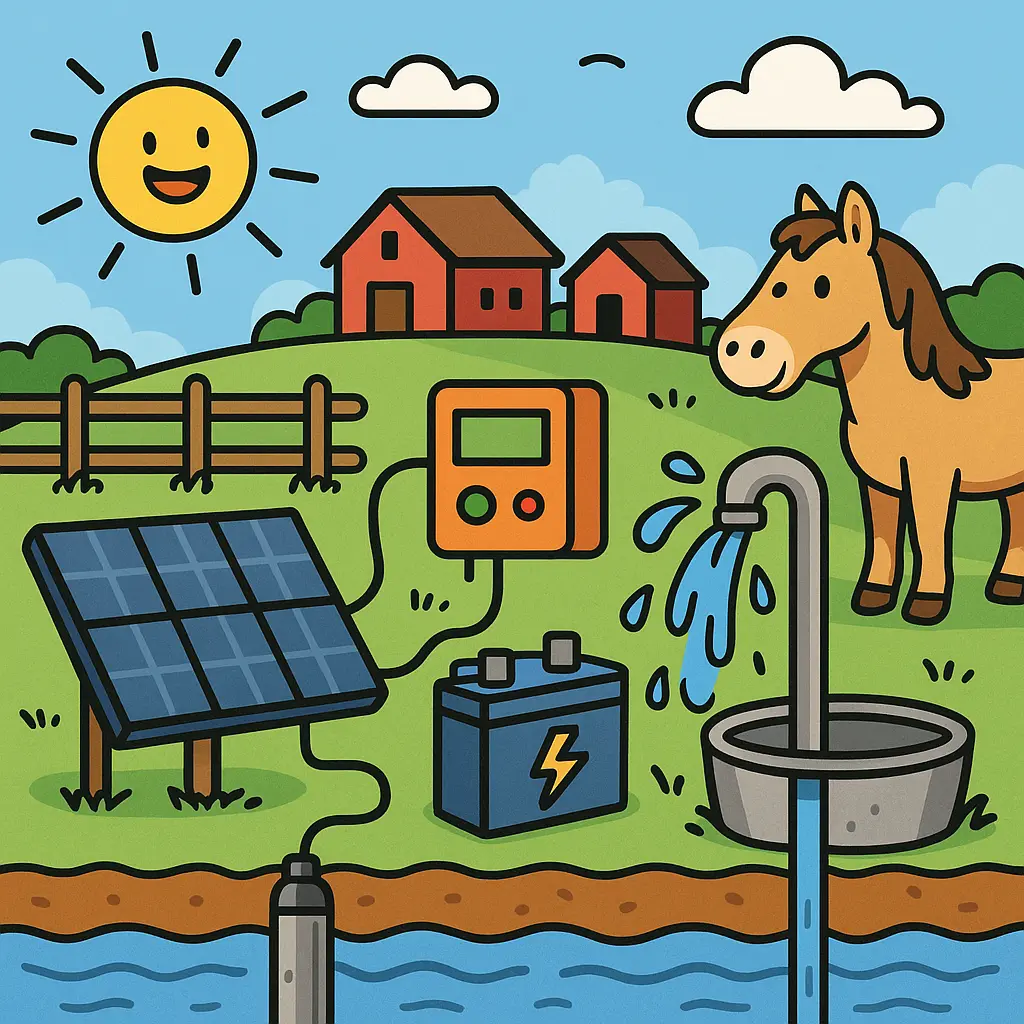
Costs, payback and when solar wins
Solar’s running cost is near-zero after install, with typical UK payback in 3–5 years versus diesel at roughly £0.50–£1.00/kWh and expensive mains extensions to remote boreholes.
If your yard is 500m–2km from the nearest viable grid connection, trenching, ducting and cabling can rapidly outstrip the price of a solar borehole system — with none of the ongoing fuel bills. Energy price rises between 2022–2025 only sharpened the economics in solar’s favour. Compared with a diesel genset’s per‑kWh cost and maintenance, a solar array plus LiFePO4 storage often pays itself back in a handful of winters, especially if you’re pumping daily for multiple horses and livestock.
Beyond pounds and pence, solar improves resilience: no refuelling runs, no generator starts at 5am, and reliable, quiet water whenever you need it. That’s a welfare win for your horses and a time-saver for you.
Essential kit for winter yard reliability
Pair your power system with practical yard kit: low-watt LED lighting, warm rugs, sturdy yard boots and hi-vis for dark run-outs.
Reliable water is only part of a winter-ready yard. Keep horses warm and dry while you refill troughs with proven rugging from brands riders trust — browse WeatherBeeta rugs and accessories within our turnout rug selection, and add a snug stable rug for overnight comfort. For you, warm, grippy yard boots make icy trips safer, and hi-vis is essential for short winter days.
Pro tip: Keep a small “winter water kit” by the solar system — torch, gloves, spare fuses, hose repair connectors, and electrolyte supplements from trusted names like NAF — so you can solve minor issues quickly and support horse hydration when it’s bitterly cold.
FAQs
Can a solar generator power a 1HP borehole pump, a kettle and yard lights in UK winter?
Yes, if you size it correctly. A 1HP pump needs around 1,200W; add a 2,000–3,000W kettle surge and 50–200W of LEDs, and you’re looking at a system with 1,200W+ of panels and a 10–20kWh LiFePO4 battery, sized for low winter sun and surges. See guidance from Jackery UK and Aferiy UK.
How many panels do I need for a yard borehole pump?
Most 0.5–1HP pumps are well served by 6–12 × 100W panels when you allow for UK winter conditions (2–3 peak sun hours). A 1HP pump often lands around 12 × 100W; smaller, efficient 0.5HP units can run on as few as 6 × 100W. Depth, lift height and daily litres all affect the final count.
Will cold weather stop the solar system working?
No. Panels actually prefer cool air, but short days reduce output, so oversize the array and double battery capacity for off-grid reliability. LiFePO4 batteries perform better than lead-acid in the cold, but expect 10–20% reduced efficiency near 0–5°C and protect state of charge above 20% in winter.
What’s cheaper to run: solar or diesel for yard water?
Solar is near-zero cost after installation, with minimal maintenance. Diesel gensets typically cost £0.50–£1.00 per kWh in fuel alone, plus servicing — so solar often pays back in 3–5 years in UK conditions, especially with 2022–2025 energy prices.
Can a small solar generator run a submersible well pump?
Yes, for efficient pumps under ~500–600W, paired with a generator rated for at least 1,000W peak and sufficient battery capacity. For 1–2kW pumps or heavy daily use, step up to a larger inverter and expandable battery bank.
Which pump type should I choose for my borehole depth?
Use a helical (progressing cavity) pump for deeper bores over ~50m because it holds flow against high head. For shallow bores and lower lifts, a centrifugal pump is efficient and often cheaper. Always include a controller with dry-run protection.
Do I need permissions or certifications for a solar borehole system?
You must comply with the Environment Agency’s abstraction rules and any local drought restrictions (e.g., Water Use (Temporary Bans) Order 2010). Off-grid solar typically avoids grid permissions, but use an MCS-certified installer for safe design and commissioning. See system design guidance from Solar-Wind.co.uk.
With the right sizing and sensible winter planning, a solar borehole system can keep your horses’ water supply steady and affordable. If you’re refreshing your yard kit at the same time, we’re here to help — from winter turnout rugs to sturdy yard boots and hi‑vis for those dark evening checks.