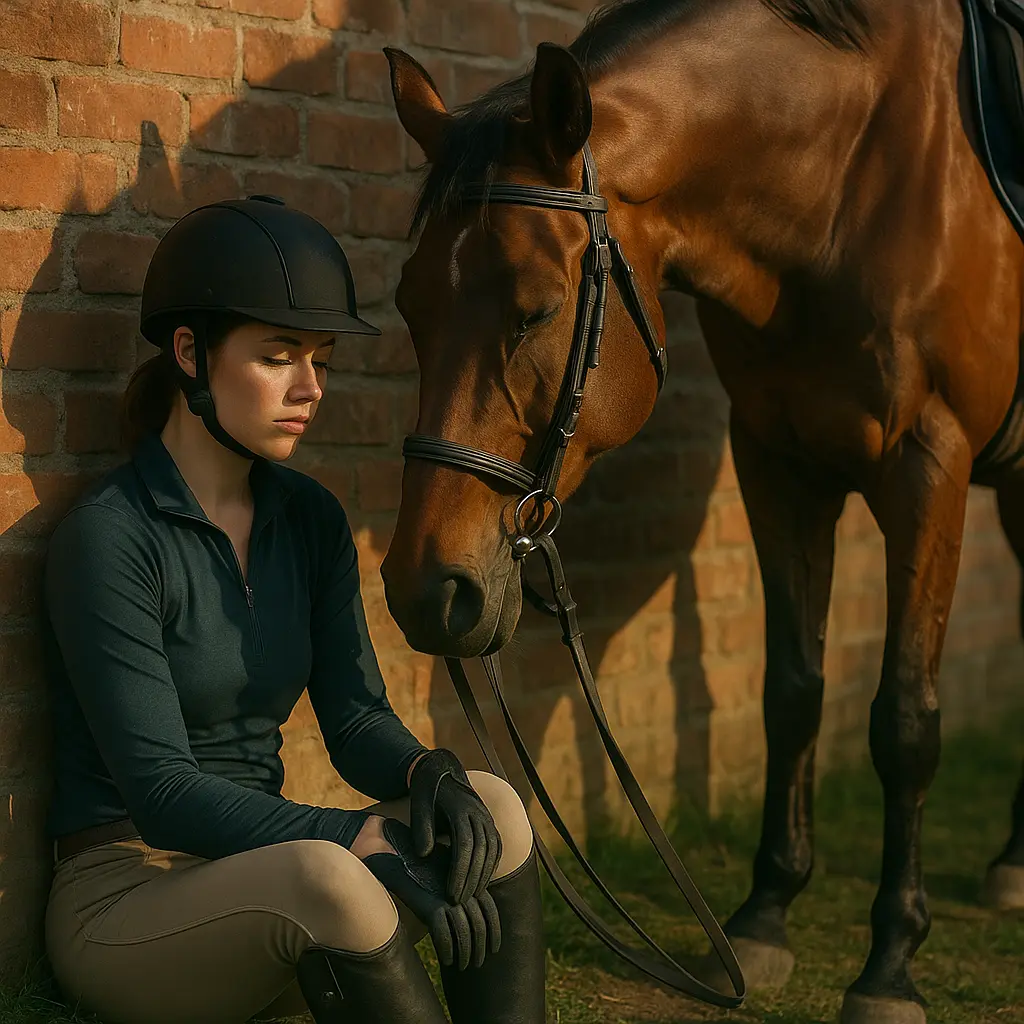
Some days, harmony deserts you both — a spook that snowballs, a schooling session that unravels, or a hack that turns tense. The important thing is not to “win the ride”, but to reset quickly and protect confidence on both sides.
Key takeaway: When a ride goes wrong, stop the spiral early, end with one small success, and plan the next session to rebuild clarity, comfort, and calm.
Why rides go wrong
Most “off” rides come from discomfort, unclear communication, or environmental triggers. That means the fastest reset is to reduce pressure, simplify the task, and check for pain before you try again tomorrow.
Start by considering comfort. Ill-fitting saddles, a tight noseband, a harsh or unstable bit, back soreness, sharp teeth, or low-grade lameness can turn a willing horse defensive in minutes. If tension is new, persistent, or out of character, ask your vet or a qualified professional to assess pain first; in the UK your vet and a BHS Accredited Professional Coach will help you triage what to check and in what order.
Communication matters too. Mixed messages, unbalanced aids, or asking for too much too soon often look like “naughtiness”. Simplifying the question almost always improves the answer.
Finally, factor in triggers: wind, midges, herd separation, heavy traffic, or a busy arena. Adjust expectations to the day you have — not the plan you wrote.
Stop the spiral in the moment
Break the cycle immediately by pausing, breathing, and picking one easy, achievable task. A short reset beats a long fight every time.
As soon as you feel the wheels wobble, do three things:
- Halt or walk on a long, elastic rein and exhale slowly to lower your own heart rate.
- Pick one simple request (e.g., one clear step of leg-yield at walk, or a big circle with a soft inside bend) and reward promptly when you get it.
- Change the picture: ride large, make patterns predictable (serpentines, shallow loops), or hop off and do 2–3 minutes of calm in-hand work to reset attention.
Quick tip: If you’re out hacking and tension rises near roads, prioritise visibility, space and safety. Wear and carry high-visibility gear so drivers see you early and you can take a wider, less pressured line back to calm. Explore our rider hi-vis essentials.
Build an after-ride reset ritual
Finish every ride with a calm, consistent routine your horse can predict. Predictability lowers arousal and teaches your horse that cooperation leads to comfort.
End on the first good answer, then make the cool-down generous: 8–12 minutes of marching walk on a long rein, with a few soft stretches down in both directions. Back in the yard, go through the same gentle steps each time:
- Loosen tack promptly, check for rubs, and give a slow, thorough groom to release muscle tension. A rhythmical curry or massage mitt helps; see our curated grooming collection.
- Pick out feet, sponge sweat-prone areas, and offer a drink or a short hand-graze if safe.
- Use simple carrot stretches and a few in-hand steps of yielding to finish with soft, easy movement.
- Reinforce the good moment with a small food reward if appropriate; our best-selling horse treats make positive reinforcement straightforward.
- If legs ran warm or you schooled on deep footing, cool and protect as needed; browse supportive boots and bandages.
At Just Horse Riders, we recommend treating this ritual as non-negotiable on “iffy” days: it’s how you both remember that work ends kindly, even when the middle was messy.
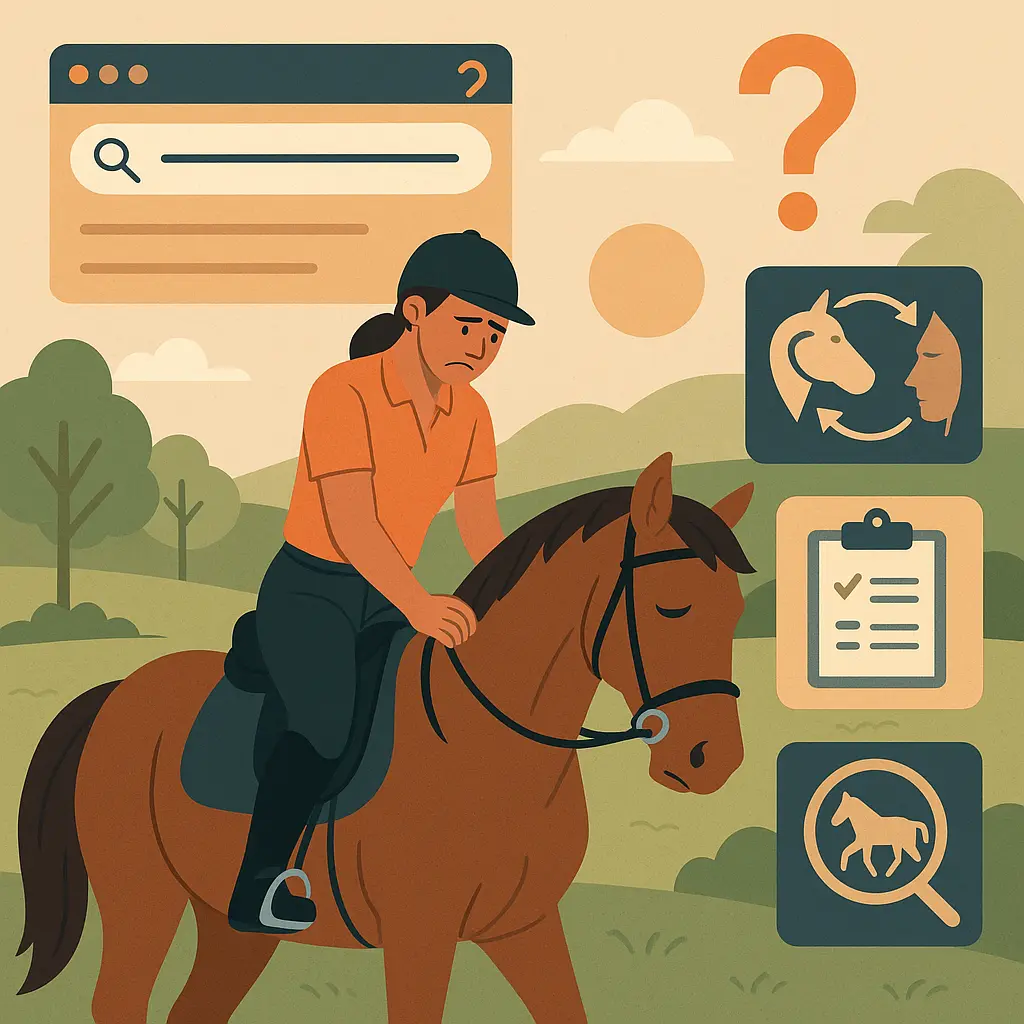
Check tack and rider fit before the next ride
Prioritise comfort: assess saddle balance, bit and bridle fit, girth and pad choice, and ensure your kit lets you sit softly and evenly. Comfort-first checks prevent repeat tension.
Run a quick checklist after a tricky ride and again before the next one:
- Saddle: Check panel contact, clearance, and balance; look for uneven sweat marks, ruffled hair, or sore spots under the tree points and along the back.
- Girth and pads: Avoid over-tightening; use smooth, clean pads and a girth that sits in the natural groove without pinching.
- Bridle and bit: Confirm two-finger spacing on nosebands, a stable bit height, and tongue/width suitability; swap to a milder, well-understood setup for reset rides.
- Hooves and shoes: Consider whether a recent trim, lost shoe, or thrush could explain reluctance to go forward or bend.
- Rider kit: If your own balance or security slipped, upgrade for stability and comfort. A secure hat and comfortable breeches reduce tension in your body that your horse feels — shop our certified riding helmets and supportive women’s jodhpurs & breeches.
Quick tip: Photograph your saddle’s sweat pattern after a normal, good ride to create a benchmark. If a bad day coincides with a radically different pattern, that’s a pain clue worth prioritising.
Restart from the ground
Groundwork clarifies the rules in a low-stress way and quickly restores connection. Ten focused minutes on the ground can turn a tense partnership into a listening one.
Pick simple, binary tasks with immediate release:
- Lead with rules: halt, back up one step, walk on from a light cue, halt again. Praise the first soft try.
- Yield forehand and hindquarters: one step away from your hand or line, then stand.
- In-hand poles: slow, rhythmic stepping builds focus and proprioception.
- Lunge for looseness, not miles: a couple of large, relaxed circles, transitions voice-led, and frequent “good” breaks.
Choose tack that minimises noise and maximises clarity. A well-fitting pad and simple cavesson or snaffle keep messages clean; our community loves the quality and consistency of LeMieux pads and schooling essentials for this kind of reset work.
Plan the next ride with a win-first structure
Keep the next ride short, specific, and finish the moment you get a good answer. Stacking small wins reboots trust faster than grinding through an agenda.
Build a 25–35 minute “reset ride” template:
- Warm-up (8–10 minutes): free walk, big figures, gentle lateral flexions, and up/down transitions mostly at walk.
- Core set (10–15 minutes): two or three micro-goals such as “three prompt walk–trot transitions”, “one straight centre line”, or “two calm, rhythmical pole passes”. Reward the first honest try.
- Cool-down (8–10 minutes): long rein, stretching, and loose, happy steps.
At Just Horse Riders, we recommend reducing variables on reset day: pick your quietest arena slot, avoid new tack experiments, and ride the line you know brings relaxation first.
If over-arousal is a theme, speak to your vet about management changes and whether a legal, competition-safe calmer suits your horse. Explore proven options in our supplements and trusted formulations from NAF, and only use alongside good training and turnout routines.

Manage your mindset and body
Your breathing, posture and tone set your horse’s rhythm and confidence. Ride the horse you have today by staying soft, consistent and present.
Use these fast resets for you:
- Box breathing: in 4, hold 4, out 6–8; repeat three times before asking again.
- Neutral pelvis: feel both seat bones, let your thigh hang, and keep your shoulders over your hips.
- Ride the rhythm: count “one-two” in trot and “one-two-three-four” in walk to stabilise your tempo.
- Soft eyes: look where you’re going, not at the problem; it releases tension through your neck and hands.
Small comfort upgrades help you hold that shape longer; many riders report fewer fidgets and stronger balance once they’re not fighting their clothes. Browse supportive, grippy and breathable women’s jodhpurs and breeches to keep your position relaxed and consistent.
Quick tip: Journal three positives and one focus after every ride. You’ll spot patterns (e.g., “windy days need longer walk warm-ups”) and gain perspective fast.
When to seek professional help
Call your coach or vet when tension is persistent, new, or unsafe. Early assessment prevents small issues becoming big behaviours.
Escalate promptly if you notice:
- Sudden changes: napping, rearing, bucking, head-shaking, unusual ear-pinning, tail swishing, or grinding teeth.
- Reluctance to go forward, bend to one side, or strike off on a specific lead.
- Back sensitivity, girthiness, or saddle-area flinching.
- Weight loss, poor coat, or changes in droppings that could indicate ulcers or other health issues.
A BHS Accredited Professional Coach can rebuild your plan and sharpen your timing, while your vet, physio, dentist and farrier can rule out pain sources. Also review comfort in the stable and field: midges in summer, cold rain, or tight rugs will fray tempers. Choose season-appropriate coverage, from breathable turnout rugs to cosy stable rugs, and adjust daily to UK changeable weather.
Bring it all together by thinking “calm, clear, comfortable” at every stage. Resetting isn’t a step back — it’s smart training that protects confidence and makes the next good ride arrive sooner.
FAQs
How long should I cool my horse down after a difficult ride?
Allow 8–12 minutes of purposeful walk on a long, elastic rein, adding a few gentle stretches down and easy figures. In winter, keep the walk active enough to stay warm; in summer, sponge sweat-prone areas promptly once you dismount.
Should I give treats after a bad ride, or will that “reward” poor behaviour?
Reward the behaviour you want at the moment it appears. End on a small success (a soft halt, one step of yield), then mark that success with a scratch, voice, or a small treat. This teaches your horse which answer earned the reward; our selection of horse treats makes timing easy.
How many easy days should I plan to reset?
Most pairs benefit from 1–3 “win-first” sessions focused on simple tasks, short durations, and high clarity. If you need more than this regularly, investigate pain, environment, and coaching support.
Should I change the bit or check the saddle first?
Check saddle comfort and back soreness first, then bridle and bit fit. Pressure from the saddle or girth often drives the behaviours people attribute to the mouth, so rule out back and balance issues before changing bitting.
What should I do if a hack goes wrong on the road?
Prioritise safety: increase distance from the trigger, face traffic where appropriate, use voice and breathing to settle, and choose the calmest route home at walk. Hi-vis for rider and horse makes space and patience more likely — see our hi-vis range.
Are calming supplements worth trying?
They can help some horses as part of a wider plan that includes turnout, forage-first diets, and good training. Discuss options with your vet and choose reputable formulations from our supplements and trusted NAF range.
Could rugs or weather be part of the problem?
Yes. Horses made irritable by midges, cold rain, or being too warm often struggle to focus. Match coverage to the day’s conditions with breathable turnout rugs in the field and appropriate stable rugs inside, and adjust as UK weather shifts.