

How Effective Are Bog Mats in Protecting Grazing Fields from Vehicle Damage?
In the wide-open spaces frequented by horse riders and farmers alike, protecting grazing fields from vehicle damage is of paramount importance. Enter the humble yet remarkable bog mat, a solution that offers a stable grounding amidst soft terrains without compromising the health of your pastures.

What Are Bog Mats and How Do They Work?
At their core, bog mats are interlocking wooden panels that provide temporary ground protection on soft, wet, or uneven ground. Typically crafted from renewable timber slats, they are organized in a way to form a sturdy platform for tractors, trucks, and all-terrain vehicles (ATVs) to traverse easily. This brilliance lies in the concept of load distribution [1].
Load Distribution Mechanism
Imagine a single tractor tire possibly exerting over 50 psi on soil, leading to compaction and damage. Bog mats redistribute this weight over larger areas—up to 200-300 square feet per mat—effectively reducing this ground pressure to safe levels under 10 psi [2].
Why Grazing Fields Need Protection from Vehicles
Grazing fields endure continuous vehicle pressure for tasks like feeding, fencing, and manure spreading, especially during wet seasons. The resultant soil compaction can decrease pore space by 20-30%, leading to reduced root growth and impaired water infiltration [3]. This scenario can drastically cut grass yields, sometimes by as much as 50% in extreme cases.

The Impact of Vehicle Traffic
In climates where riparian-wetland areas coexist with pastures, vehicle traffic aggravates erosion and alters water flow, jeopardizing soil fertility. Studies indicate that unmanaged grazing and trampling lead to changes in channel geomorphology and reduced soil moisture [4]. However, protective measures like bog mats enhance recovery and pasture sustainability.
Evidence of Effectiveness: Facts and Field Results
Field results and market data narrate the tale of bog mats' excellence in agriculture. These mats transform uncertain fields into reliable access routes:
- Soil Protection: By reducing compaction and erosion, bog mats promote robust root growth and vegetation thrive post-use.
- Traction and Stability: Staggered designs enhance grip, preventing slips on mud or ice—a critical feature for safe vehicle movement.
- Environmental Wins: Unlike plastic counterparts, bog mats are biodegradable, chemical-free, and sustainable [5].
Real-World Applications in Farming
Impressive case studies reflect the positive impact of bog mats, serving multiple purposes:
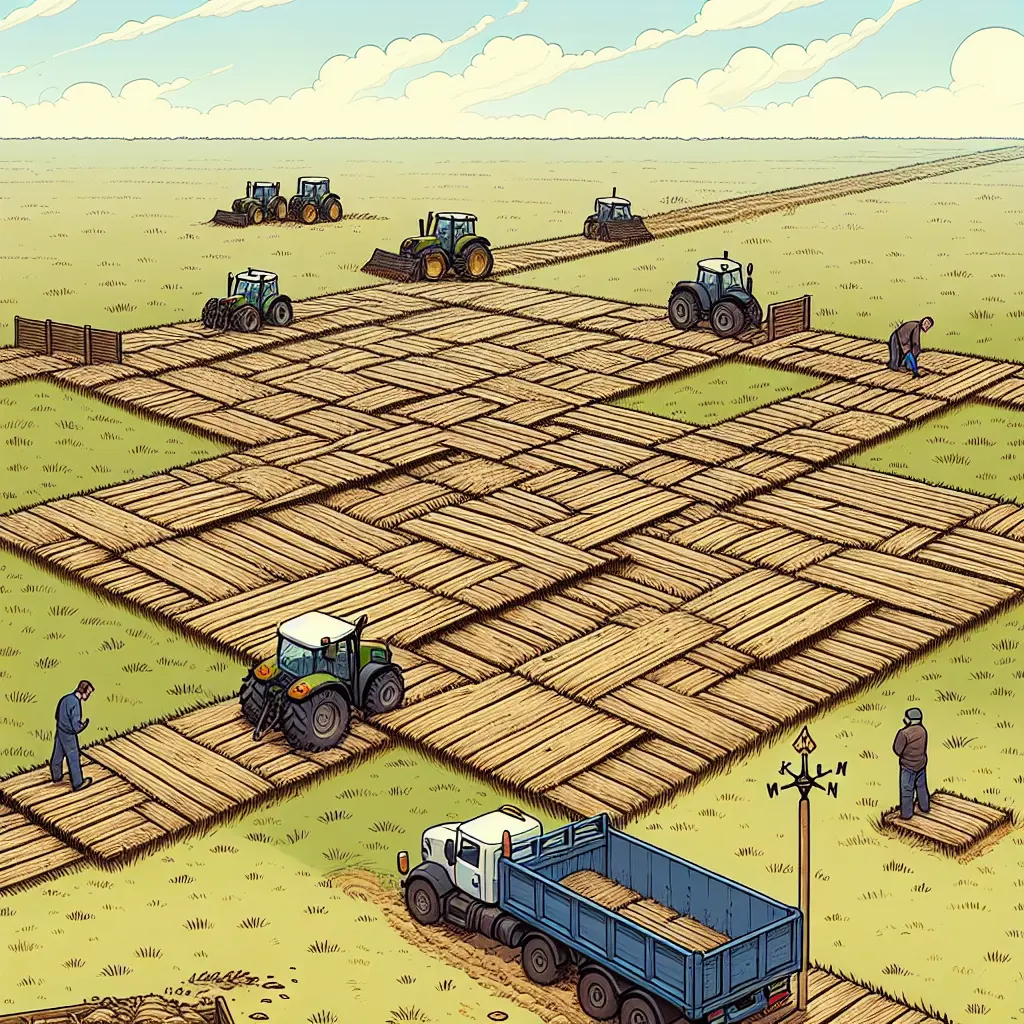
- Establishing temporary tracks during silage or feed delivery to avoid permanent damage.
- Preserving wet pastures near entryways or feeding areas.
- Supporting community events such as livestock markets, where vehicles might otherwise ruin the ground.
Pros and Cons of Using Bog Mats
Pros
- Heightened durability on mud and grass, with reusability across several years.
- Economical through rent or purchase to avoid repair costs.
- Highly versatile for uneven ground, customizable, and interlocking for diverse path designs.
Cons
- The initial investment can seem costly, though it yields long-term benefits.
- They are comparatively heavier than plastic alternatives but more eco-friendly [6].
Maximizing the Use of Bog Mats on Farms
Strategies for effective bog mat usage can enhance protection while minimizing environmental disruption:
- Assess the terrain: Ideal for wet, soft soil; consider 4-6 mats for a full tractor path.
- Install correctly: Ensure interlocking and anchoring, especially on slopes.
- Monitor and remove: After wet weather, lift mats to allow grass to recover—fields bounce back in 2-4 weeks.
- Choose quality: Customized slat spacing and high-grip designs offer the optimal solution.

Cost Savings and Long-Term Value
Investing in bog mats is financially prudent. Prevented repair costs of ruts alone can surpass $500 per acre, not to mention yield losses. Their reusability throughout seasons significantly increases ROI, making them a preferred choice within the growing market aligned towards durable and compliant solutions [7]. By protecting pastures efficiently, bog mats sustain productivity, safe water pathways, and foster regenerative farming practices.
Final Thoughts on Choosing Bog Mats
With evidence backing their functionality, bog mats deliver compelling protection for grazing fields. They represent a remarkable combination of stronger pastures, safer vehicle operations, and a greener ecological footprint. For farmers grappling with vehicle-induced damage, they stand as a simple upgrade to existing practices. Begin your journey towards sustainable farming today with a visit to Just Horse Riders.