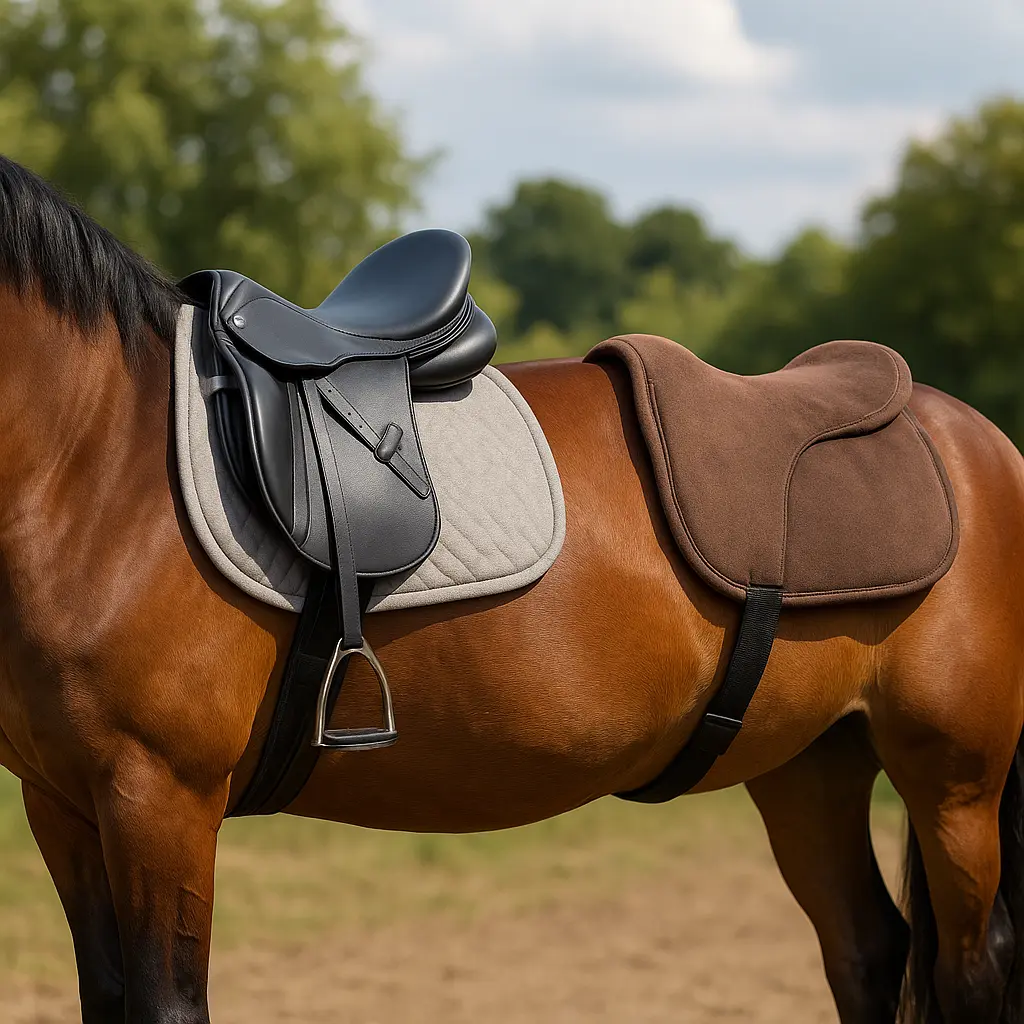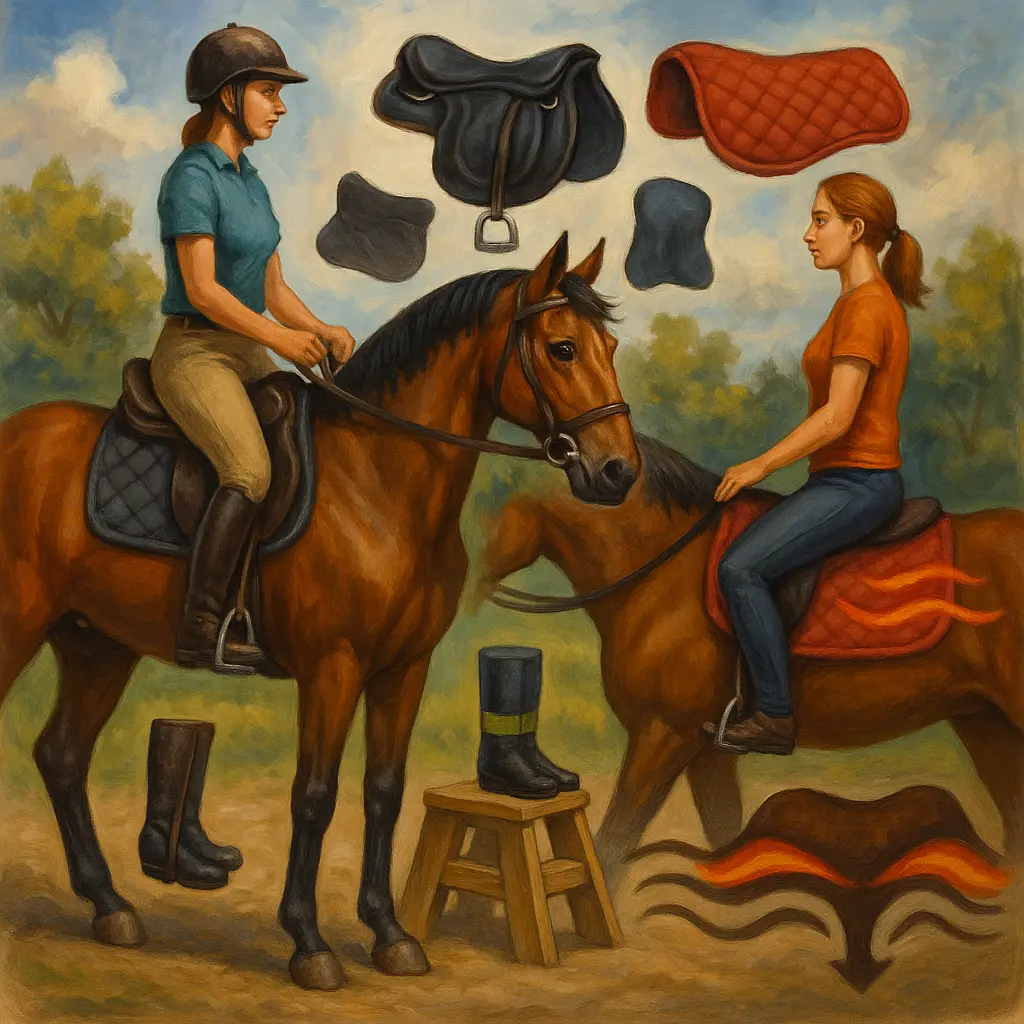
If your saddle doesn’t fit or your horse has changed shape, it’s tempting to reach for a bareback pad or try treeless for your next hack. The right choice can keep your horse comfortable and your riding secure — the wrong one can concentrate pressure over the spine.
Bottom line: for hacks with stirrups on UK bridleways, choose a well-designed treeless saddle with the correct pad; keep bareback pads for very light, no-stirrup rides only.
Treeless vs bareback: what’s the real difference?
Treeless saddles are not just glorified bareback pads — they add spinal protection, stirrup attachments and rider support, while basic bareback pads do not. High-quality treeless designs are used successfully in demanding disciplines, whereas bareback pads are for short, light, no-stirrup sessions.
As Julie from Action Rider Tack puts it:
“Isn’t a treeless saddle just a glorified bareback pad? The simple answer is, ‘No.’ A treeless saddle is made to protect the horse’s spine, comes with stirrups, provides rider support, and is used in disciplines like 100-mile endurance rides.” — Action Rider Tack expert video
That added protection comes from structure and materials: broad stirrup and girth attachments that spread load, flexible panels and mandatory use of a purpose-designed pad. By contrast, many bareback pads are little more than a grippy cover with minimal foam — fine for balance work and young handlers on the lead rein, but not for weight-bearing with stirrups.
It’s worth acknowledging a different view from master saddler Jochen Schleese, who argues that without a rigid tree you can’t fully protect the spine or the rider’s posture:
“Without a tree, a bareback pad/treeless saddle cannot protect the horse’s spine, support the curvature of the rider’s spine, and be comfortable for both... The result is that all the weight is on the forehand.” — Schleese Saddlery
In practice, UK riders report good results with carefully chosen treeless setups for hacking — particularly on wide, round types where treed options are tricky — but it’s crucial to choose well and pad correctly.
Who should ride treeless — and when to choose bareback
Pick a treeless saddle if you need stirrups and better spinal protection for general hacking; reserve a grippy bareback pad for very light riders, no stirrups and short, easy rides.
For everyday UK pleasure riding on varied bridleways, a treeless design with proper stirrup bars and a channelled pad gives the horse’s spine a fighting chance on uneven ground. UK forum users often note freer movement in horses who were previously sore in traditional saddles, especially over rolling, rutted tracks and in stop–start traffic work typical of British hacking.
Bareback pads come into their own for very light use — for example, five-minute cool-downs, balance sessions in walk, or tiny riders (3–6 years old) on the lead rein. For youngsters, choose a small, grippy pad without stirrups to avoid the hazard of dangling leathers and hard stirrups around little legs. In wet UK winters, grippy surfaces also help stability when you’re nipping round the fields at the livery yard.
Quick tip: Whatever you choose for hacking, prioritise visibility. Pair your setup with hi‑viz riding wear so drivers and cyclists can see you in our changeable British weather.
Weight limits and safety
Most treeless saddles cope best with rider weights under 80 kg; heavier riders risk compressing materials and creating pressure over the backbone, especially in rising trot or over fences.
Natural Horse World summarises it clearly:
“The main thing to look for in any treeless design is that the stirrup attachment... is broad enough to spread the weight... Always use a treeless saddle pad that has a channel down the centre... Most treeless saddles can only cope with a rider weight of less than 80kg.” — Natural Horse World
There is more conservative advice out there suggesting as low as around 45 kg (c.100 lb) for some pleasure-riding treeless or bareback setups. The practical takeaway is the same: check the manufacturer’s stated weight rating, ride sympathetically, and inspect your horse’s back after every ride. Avoid prolonged rising trot, schooling sessions or jumping in minimal or highly compressible set‑ups — that’s when materials pack down and pressure peaks.
Pro tip: If you’re close to the upper weight guidance or doing longer hacks, spread force further with a pad that has high-density foam inserts and a defined spinal channel. It’s cheap insurance for your horse’s back.
Pads and fit: how to protect the spine
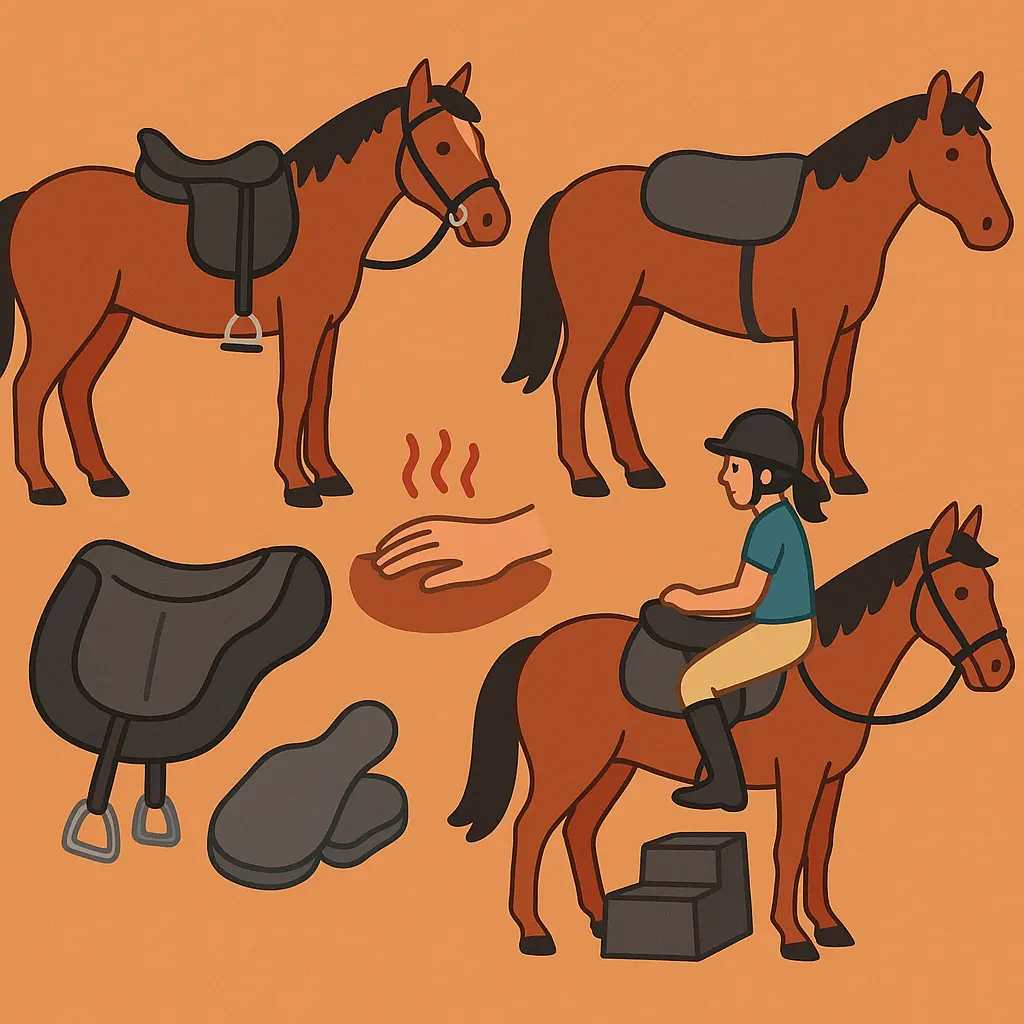
Use a treeless pad with a central channel and firm foam shims, and choose saddles with broad stirrup and girth attachments to distribute load away from the backbone.
Treeless protection lives or dies on contact area. Look for:
- Broad stirrup attachment plates that sit over a wide area of the back, not a narrow webbing point that can dig in under your seat bones.
- A girth system that spreads pressure laterally, not two tiny billets pulling from a single, central point.
- A purpose-designed pad with a clearly defined centre channel (no pressure on spinous processes) and high-density foam or similar inserts. Shims let you fine-tune to your horse’s current musculature.
For horses that change shape through the UK seasons — we see this constantly when turnout increases in spring or rugs come off after winter — those shims are invaluable. Add or remove to keep the saddle level, the channel clear, and the panels bearing evenly. If you’re not sure, take a photo before and after your ride and check sweat patterns: symmetrical, even dampness is your friend; random dry spots can flag pressure points.
Quick tip: Make back checks part of your grooming routine. A soft brush over the loins and along the longissimus helps you spot heat, swelling or flinching early. Keep a well-stocked kit from our grooming collection in the tack room so it’s easy to do every time.
Managing slide and stability on round backs
On wide or round horses, mount from a block and use correct pad shimming to reduce saddle slip, especially in wet British field conditions.
Even well-designed treeless saddles can twist or slide on a very round barrel. Help yourself (and your horse’s skin) with:
- Mounting from a block rather than the ground — you’ll reduce lateral torque on the girth and keep the pad centred.
- Checking girth symmetry and firmness after you’ve walked a few minutes; treeless materials settle and may need a second tweak.
- Using shims to stabilise the front or rear if the saddle wants to tip. Tiny changes can make a big difference.
- Choosing a grippy bareback pad for very light, stirrup-free hacks when a saddle just won’t sit still — but keep durations short and surfaces safe.
Pair your setup with footwear that won’t slip on wet mounting blocks or yard surfaces. Our range of horse riding boots offers secure tread and ankle support for safe mounts and dismounts, and well-fitted women’s jodhpurs and breeches add grip in the saddle without bulk.
Spotting problems early: checks after every ride
Check the back after every ride for heat, tenderness, ruffled hair or dry spots, and adjust or stop use at the first sign of soreness.
Both treeless saddles and bareback pads can cause trouble if padding is inadequate or compressed. Make these quick checks standard practice when you hack out:
- Run flat fingers along the spine and muscles either side. Watch for flinching, heat or raised skin.
- Lift hair to look for rubs, ruffled patches or bald spots forming under stirrup attachment areas.
- Observe your horse walking off: short or rushed steps, head-tossing when you touch the back, or reluctance to be girthed again can all signal discomfort.
- Log what you find. If the same spot is warm or dry after several rides, change shims, swap pads, shorten your rides or stop using that setup.
Our customers often tell us that a simple post-hack brush-down catches issues a week earlier than they’d otherwise notice. Keep that brush handy in your grooming kit and you’ll save a lot of guesswork.
Hacking out in the UK: practical kit and prep
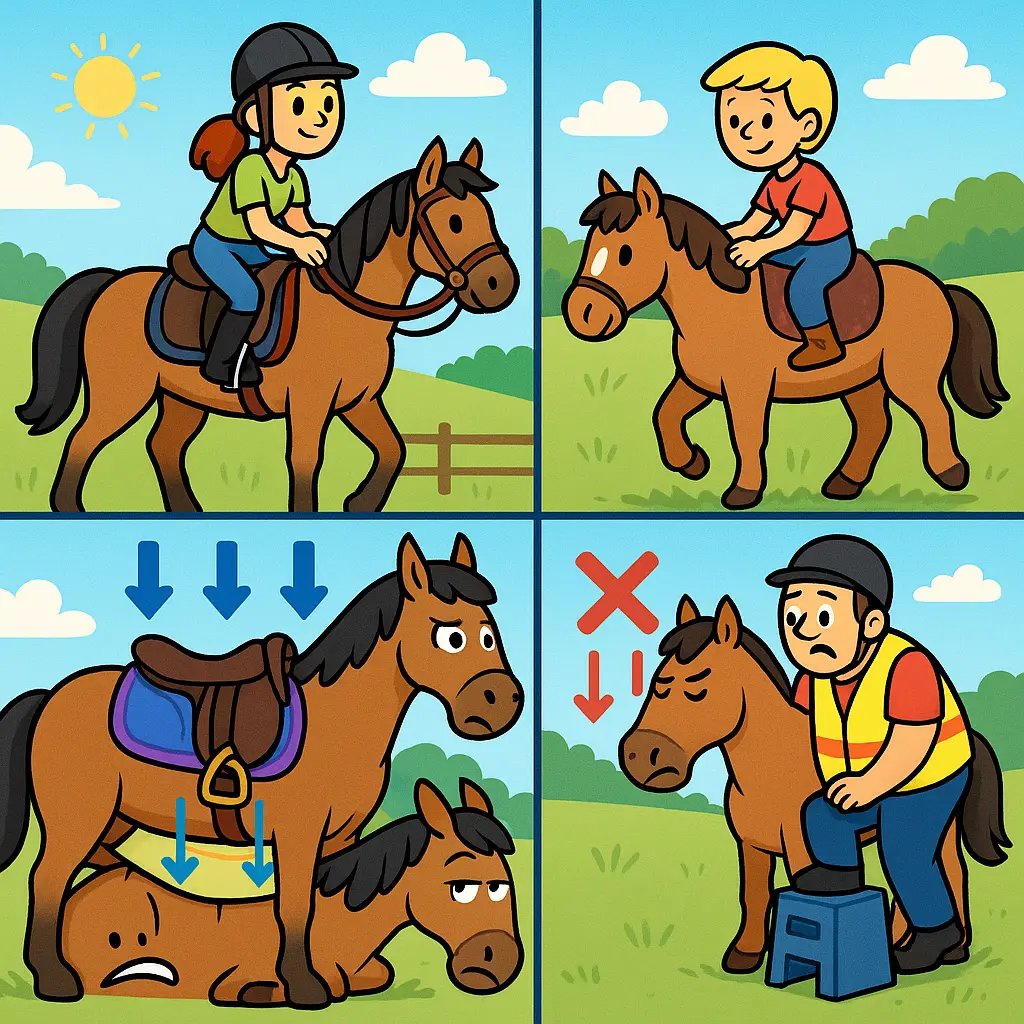
For UK bridleways, combine a treeless or bareback setup with hi‑viz, an approved helmet and grippy clothing and boots for safe, visible riding in variable weather.
Visibility matters on twisting lanes and shared tracks. Equip yourself with high‑visibility gear front and back, and always wear an up‑to‑standard riding helmet. Choose supportive riding boots with defined heels for stirrup safety, and comfortable, non-slip legwear like our women’s jodhpurs and breeches.
For little riders on the lead rein using a bareback pad without stirrups, kit them out in well-fitting children’s jodhpurs for extra grip and comfort. Keep hacks short, flat and fun.
Seasonal note: When winter rolls in and your horse is living out, backs and girth areas stay healthier when you manage coat and rain scald. A correctly weighted rug from our range of turnout rugs helps keep the back dry and clean, improving pad contact and reducing rub risk on wet days.
At‑a‑glance recommendations
Choose treeless for stirrup use, keep rider weight under 80 kg, always use a channelled pad with shims, and mount from a block to protect your horse’s back.
- Pick treeless (not a basic bareback pad) for hacking with stirrups; look for broad stirrup/girth attachments that spread load.
- Stay within weight guidance — aim under 80 kg for most treeless designs, ride sympathetically and avoid long rising‑trot sets or jumping.
- Use a treeless pad with a centre channel and firm shims; adjust for seasonal changes in condition.
- Mount from a block and recheck girth after a few minutes, especially on round types and in wet conditions.
- Keep rides short and stirrup‑free if you’re using a bareback pad; check the back every time.
- Make safety non‑negotiable: wear an approved riding helmet and hi‑viz on all roadwork.
At Just Horse Riders, we recommend building these checks into your grooming routine so nothing gets missed — your tack, your pad and your horse’s back all evolve through the year.
FAQs
Is a treeless saddle just a bareback pad?
No. A treeless saddle adds structure to protect the spine, provides stirrup attachments and rider support, and is used successfully in endurance. See the Action Rider Tack expert explanation.
Are treeless saddles safe for heavier riders?
Most are designed for riders under 80 kg; above that, materials can compress and create pressure over the backbone, particularly in rising trot or over fences. Follow the maker’s rating, ride considerately, and check the back after every ride.
Can bareback pads cause back issues?
Yes — without adequate padding they can create pressure points and rubs, especially under your seat bones. Keep bareback pads for short, light, no‑stirrup sessions and inspect for heat, tenderness or ruffled hair afterwards.
What pad should I use under a treeless saddle?
Use a purpose-made treeless pad with a central channel and high-density foam inserts or shims to keep pressure off the spine and fine‑tune balance. Natural Horse World’s guidance on treeless saddle features is a good checklist.
Do treeless saddles slide on wide or round horses?
They can. Mount from a block, tighten girth in stages, and adjust shims for front/rear balance. In very slippery UK winter conditions, keep rides sensible and recheck girth after a few minutes.
Are treeless saddles good for horses with sore backs?
Many UK riders report improved freedom of movement when switching to a well‑set‑up treeless on horses that were sore in traditional saddles. The key is correct pad choice, weight management and diligent back checks.
What should I wear for safer hacking with treeless or bareback?
Wear an approved riding helmet, bright hi‑viz, supportive riding boots and comfortable, grippy jodhpurs. For children on lead‑rein bareback pads, choose well‑fitting kids’ jodhpurs and keep sessions short.
With the right setup and routine checks, treeless saddles can be a comfortable, practical option for UK hacking — and bareback pads can be a fun, light‑use tool. Equip yourself well, listen to your horse, and enjoy the ride.