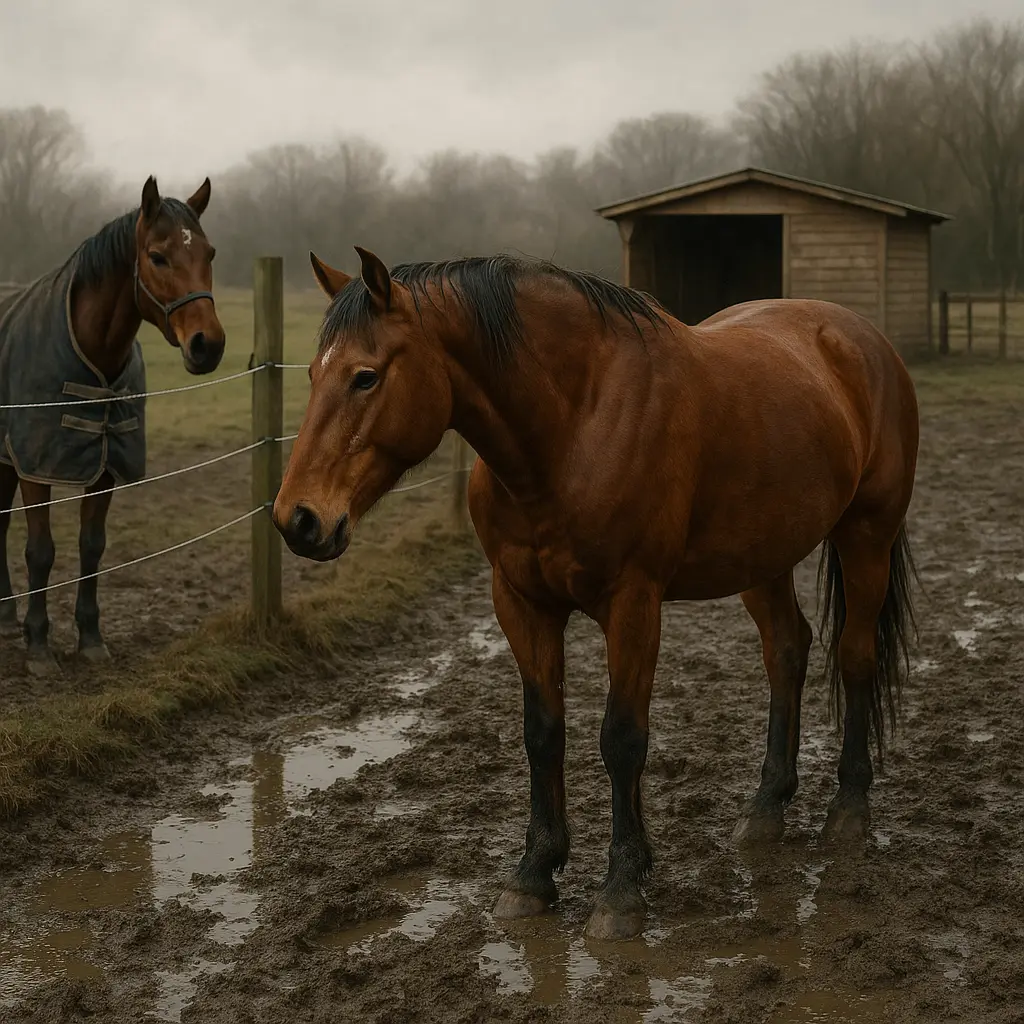
Wet, windy, muddy – UK winters are rarely pretty, but your horse can still thrive outside. Done well, winter turnout delivers healthier joints, calmer minds, and happier lungs than prolonged stabling.
Key takeaway: Regular winter turnout is healthier than long-term stabling; if group dynamics are risky, use individual or paired turnout in adjacent paddocks so horses keep social contact without injury.
Why winter turnout matters
Regular turnout in UK winters keeps horses moving, supports digestion, and protects respiratory health better than long-term stabling. Even in constant rain, turnout gives fresh, moist air that reduces the risk of Equine Asthma.
Movement in the field naturally maintains joint flexibility, muscle tone, circulation, and gut motility. That reduces stiffness and the chance of colic compared with standing on a dry bed for hours. Crucially, turnout air is cleaner than a stable: dust, spores and ammonia build up in enclosed spaces, increasing respiratory irritation, while outdoor air is fresher and typically more humid through a UK winter.
“Regular turnout gives them access to fresh air, visual stimulation, and the chance to interact with other horses, expressing normal behaviours... Turnout, even in wet conditions, ensures horses have access to fresh, moist air, which is better for their lungs.” — Northwest Equine Vets
Most of the UK faces months of grey, wet conditions rather than deep snow. That mud brings its own challenges, but they are manageable with good planning. In almost every case, the welfare gains from time out of the stable outweigh the weather.
Individual vs group turnout in winter
Individual or paired turnout is often safer in UK winters due to slippery ground, poor pasture, and increased injury and bullying risk; group turnout still works for genuinely compatible herds with enough space.
Herd turnout can be brilliant for social needs, but it is not risk-free. Winter often magnifies tension: scarce, muddy forage patches and boggy gateways create flashpoints, and horses can slip or collide when play escalates. Fights, kicks and “resource guarding” around hay are common reasons horses end up on box rest in January. This is why many UK livery yards have shifted policy: in some regions, around 95% of yards now offer only individual or paired turnout through winter.
That trend isn’t about making horses live in isolation. It’s about managing risk when footing is poor, daylight is short, and fields are under pressure. Group turnout can still succeed if the herd is stable and truly compatible, fields are spacious with multiple hay points, and you’re not seeing chasing, guarding, or bites and kicks. If you are, split the group fast to protect welfare and fields.
How to make individual turnout social
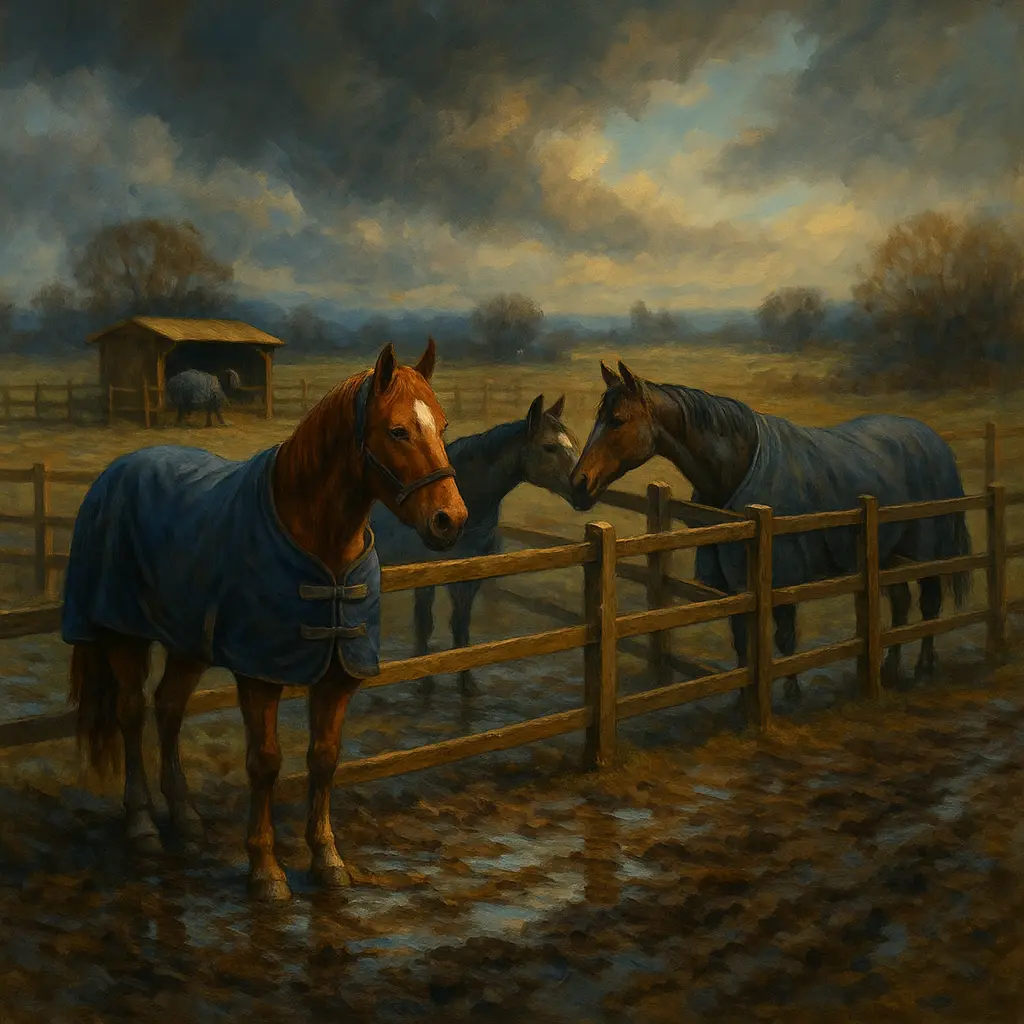
Place individual paddocks side-by-side so horses can see, smell and even safely touch each other over the fence, delivering the herd feeling without the injury risk of fights or bullying.
Horses are herd animals; many that have lived in groups initially find solo paddocks unsettling. You can keep them content by siting individual pens next to one another, using safe fencing, and making sure neighbours can groom over the top rail where appropriate. This preserves social interaction while removing the risk of kicking or trapping at gates and hay nets.
“Although turned out alone, popping your horse in a field next to other horses can help him get that much-needed herd feeling – and if he’s within touching distance of these horses, even better, because they can safely enjoy social interaction and a good groom over the fence.” — Horse & Rider UK
“Horses generally prefer to be out together. A horse that is used to group turnout struggles to adjust to life on it’s own. They will feel safer in a herd.” — Hunters Stables
Practical steps that work:
- Build or tape individual paddocks side by side so neighbours are within sight and, where safe, within gentle touch.
- Feed hay/haylage in separate, sheltered spots to avoid guarding and soggy forage piles.
- Start with a neighbour your horse already knows; monitor for a few days for calling, pacing, or fence testing.
- Use clear electric fencing lines for respect without the risk of entanglement; keep gateways wide and uncluttered.
Quick tip: If your horse becomes stressed when first moved from group to individual turnout, begin with shorter sessions alongside a favourite field-mate in the next paddock, and increase duration as calling and pacing settle.
Managing mud, wet and wind
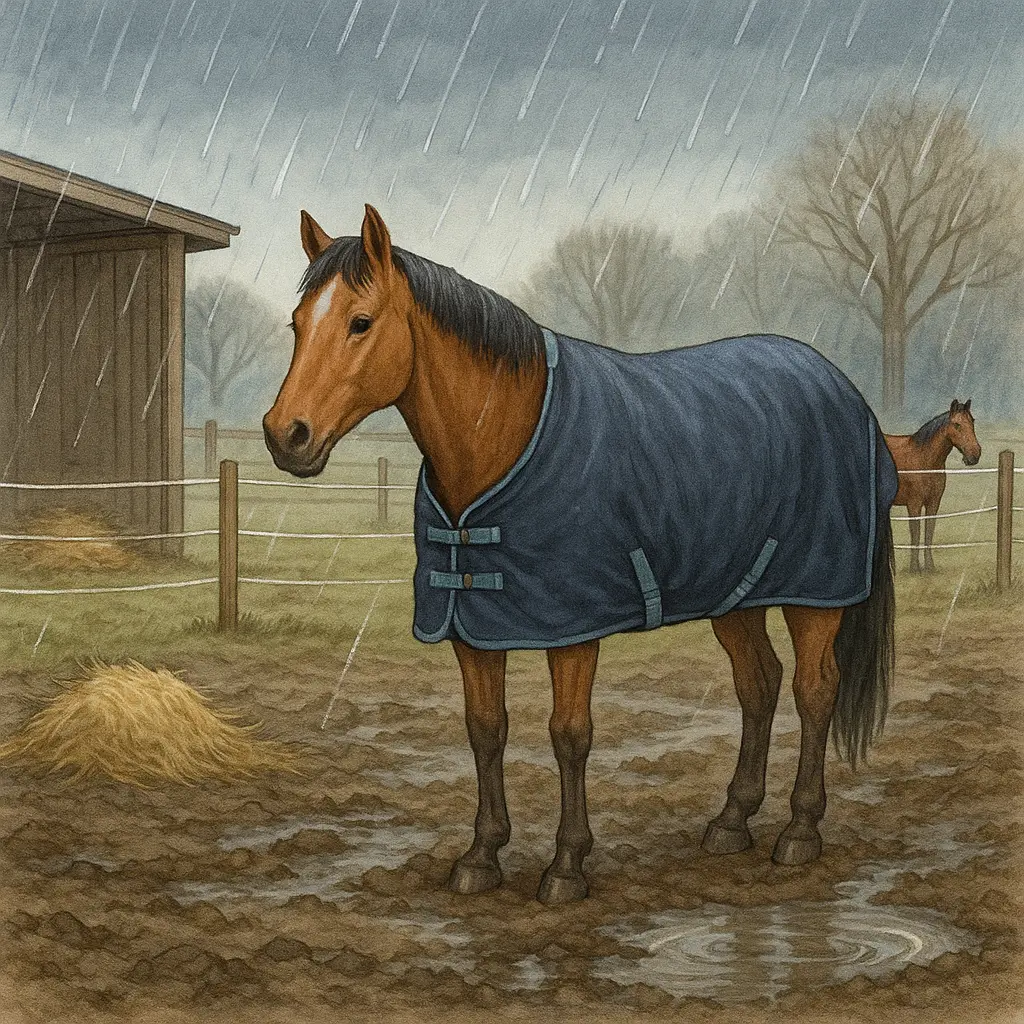
Provide hard standings, shelter, and simple track systems so horses keep moving without living knee-deep in bog; this protects legs and skin and preserves fields for spring.
UK winters mean mud. You won’t beat it, but you can outsmart it:
- Gateways: Lay stone, rubber mats, or hardcore at gates and water points. It prevents deep churn where horses congregate and makes handling safer on dark, windy evenings.
- Track systems: Use electric tape to route movement around the perimeter, leaving the centre to rest. Tracks keep horses walking for forage while sparing the field.
- Shelter: A natural hedge, trees, or a field shelter gives respite from driving rain and wind-chill. Position hay nearby but not inside to reduce respiratory dust and slippy floors.
- Daily leg checks: Mud softens skin; minor scalds can turn into mud fever. Rinse or brush off mud, dry thoroughly, and monitor heels and pasterns for heat, scabs, or swelling.
Products that help:
- For protection during turnout and support on slippery ground, see our horse boots and bandages.
- A regular clean-and-check routine is easier with the right kit — browse our grooming essentials to keep mud at bay and skin healthy.
Pro tip: Don’t wash legs every day. Over-washing strips natural oils and softens skin. Instead, let mud dry and brush off, washing only when necessary and drying completely before turnout.
Feeding and watering on poor winter pasture
UK winter grass is nutrient-poor, so provide constant forage (hay or haylage) and check water troughs daily for freezing; site hay under shelter to reduce mould in persistent rain.
Through our mild, wet winters, grass quality and quantity drop, but your horse’s energy needs go up for thermoregulation. Ad-lib forage helps them stay warm via hindgut fermentation and protects against ulcers and boredom. In rain-lashed paddocks, keep hay off the ground and under a simple shelter or windbreak to minimise waste and mould; wet, mouldy forage can irritate airways and upset guts.
Water is just as critical: clear ice from troughs daily and check ball-cocks and pipes. Dehydration in winter is a hidden colic risk. If your horse is reluctant to drink cold water, offer buckets alongside troughs and encourage slurpy mashes as appropriate.
At Just Horse Riders, we also see winter diets benefit from targeted support such as gut, joint, or hoof balancers. Explore our curated range of horse supplements to round out forage-based feeding in winter.
Quick tip: Space multiple small hay stations along your track to keep horses walking and reduce squabbles. In paired turnout, provide at least one more pile than the number of horses.
Rugs for UK winter turnout
Most horses living out in rain and wind need a waterproof, breathable turnout rug correctly fitted to prevent rubs; adjust weight to your horse’s clip, condition, and the day’s weather.
Rugging is about comfort and consistency. A well-fitted, waterproof outer keeps the back dry, the topline supple, and reduces energy spent battling wind-chill. If your horse is unclipped, in good condition, and has shelter, you may use lighter weights on milder days; finer, clipped or older horses often need more protection. Always check under the rug daily — if the skin is damp, the rug is leaking or too heavy for the conditions.
Choose reliable hardware, generous shoulder gussets for freedom to graze and play, and tail flaps for driving rain. Swap out soaked rugs promptly and dry thoroughly before reuse. For proven winter protection, see our latest waterproof winter turnout rugs and shop trusted brands such as WeatherBeeta and Shires.
Remember: stable rugs are not waterproof. If you’re rotating in and out, change to a stable rug only once your horse is in and dry.
Retraining gate-chasers and yard fixations
Break the gate habit by making the area near the gate a place of brief, easy work and rewarding relaxation away from it, then dismount in the centre and lead out calmly.
Winter stress and herd tension can produce “gate magnets”: horses that rush to, nap towards, or lunge for the gate under saddle. Reframe the gate. In a schooling session, ride small, balanced circles near it or ask for one or two transitions, then move away and let your horse rest or stretch in the centre. Repeat until the gate loses its pull. Finish by dismounting centrally and leading out, so the gate isn’t the reward. Avoid downward transitions or long pauses at the gate for several rides.
If the arena layout encourages fixation, fit a secondary gate or screens so horses don’t anchor to a single exit. Keep your aids clear and forward: if needed, reinforce the leg with a light tap of the crop as you pass the gate.
Safety first when handling fresh horses in wind and rain: wear a properly fitted riding helmet, solid yard or riding boots with good grip, and if you lead to fields along lanes in low light, add hi-vis for riders and handlers.
Health checks and red flags during winter turnout
Check weight, skin, limbs, feet and breathing at least weekly; act fast on coughing, nasal discharge, warm swollen legs, pastern scabs, reluctance to move, or pacing and bullying.
Turnout reduces respiratory challenges versus dusty stables, but winter still tests resilience. Keep a simple routine:
- Body condition: Feel ribs and topline weekly; adjust forage and rugging before weight slips.
- Skin and legs: Examine heels and pasterns for mud fever scabs; note any heat, puffiness or tenderness after rough play in slippery fields.
- Feet: Pick out daily; mud packs can hide bruises or pulled shoes.
- Breathing: Listen for coughs or wheezes; turnout’s moist air helps, but any persistent signs warrant veterinary advice.
- Behaviour: Watch for bullying, guarding hay, or a horse standing alone shivering; consider splitting groups or moving to side-by-side individual paddocks if needed.
At Just Horse Riders, we recommend logging quick weekly photos and notes. Small changes caught early keep horses comfortable and in steady work through the darkest months.
FAQs
Does winter gate-chasing mean I should split herd turnout?
Yes, if chasing leads to field trashing, slips or rising tension, move to individual or paired paddocks sited next to one another. You’ll protect legs and keep social contact over the fence while the stress settles.
Is individual turnout cruel for herd animals?
No — not when individual paddocks are adjacent so horses see and touch neighbours. This approach reduces fights and bullying while preserving the mental and respiratory benefits of turnout over 24/7 stabling.
How do muddy UK fields change the group vs individual decision?
Mud magnifies risk. Groups can damage gateways, crowd hay, and slip while playing. Individual or paired turnout with shelters, hard standings and tracks protects fields and legs while keeping movement up.
What causes gate-chasing in winter and how do I fix it?
Stress from confinement, herd dynamics, or habit. Retrain by making near-gate zones slightly “work” and away-from-gate zones “rest”, then dismount centrally and lead out. Avoid halts or rewards at the gate for a few sessions.
Can a horse used to herd turnout adapt to being alone?
Yes. Start with individual turnout next to a familiar horse so they can see and touch over the fence. Increase time as calling and pacing diminish; most settle when they still feel part of a group.
What should I feed on winter turnout when grass is poor?
Provide ad-lib hay or haylage in sheltered spots to prevent soaking and mould, and check water daily for freezing. Consider targeted support from our range of horse supplements if your horse needs help with gut, joints, or hooves.
Which rugs suit constant rain and wind?
A waterproof, breathable turnout rug with good shoulder freedom and a tail flap. Check fit daily, swap out soaked rugs, and browse our dependable turnout rugs for winter from brands such as WeatherBeeta and Shires.
Winter in the UK is a management challenge, not a welfare compromise. Prioritise turnout, reduce risk with side-by-side individual paddocks where needed, feed plenty of forage, and keep a close eye on legs, lungs and behaviour. With smart set-up and a few tweaks, your horse will roll into spring sound, sane and fit to enjoy the better weather.