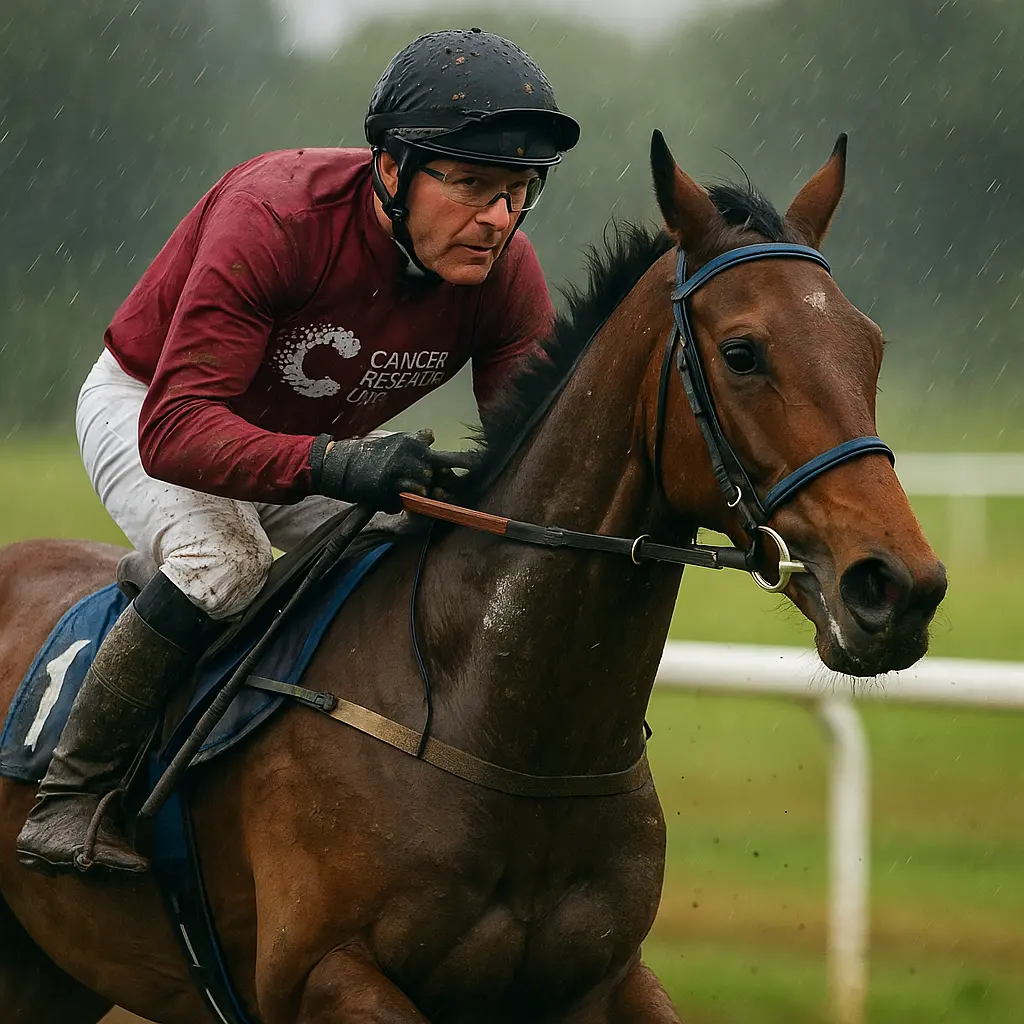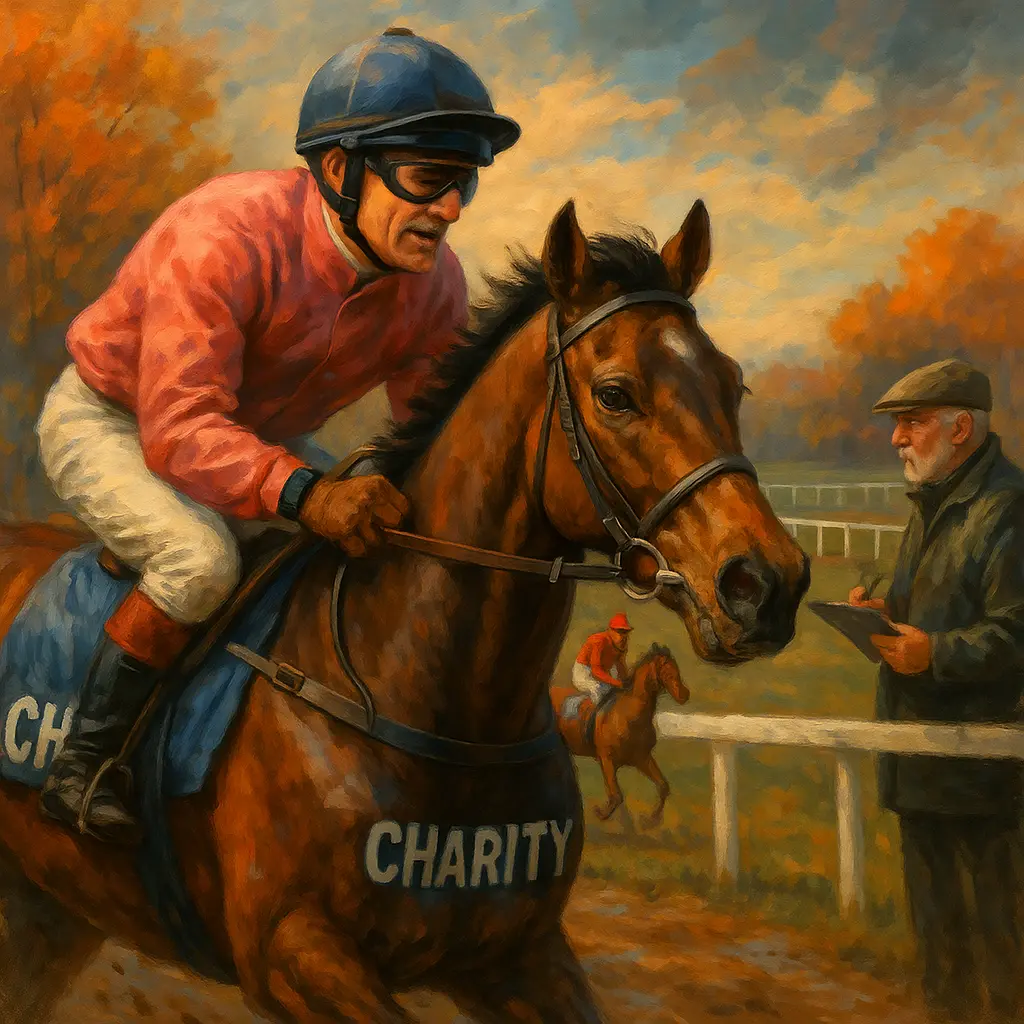
Imagine thundering down the home straight, crowd roaring, and every stride raising money for a cause you care about. UK charity races make that a reality for competent amateur riders — and the entry route is clearer than you might think.
Key takeaway: You don’t need a jockey licence to ride in a UK charity race, but you must be 16+ (often 18), pass a riding and fitness assessment, and meet British Horseracing Authority (BHA) safety guidelines.
Who can ride in a UK charity race?
Riders must be at least 16 years old (some events set 18), no jockey licence is required, and every rider must be competent, race-fit, and pass a riding and fitness assessment.
Charity races are deliberately inclusive: you’ll find riders from varied backgrounds, ages (16+), shapes and sizes taking part, all competing on the Flat. However, former professional jockeys who retired due to injury are not permitted to enter. Organisers complete risk assessments and may raise the minimum age to 18, especially where safeguarding under-18s is concerned, in line with BHA guidance.
The Amateur Jockeys Association of Great Britain (AJA) confirms you don’t need a jockey’s licence, but you do need to prove your competence and fitness via assessment. Over recent years, AJA-affiliated charity riders have raised more than £1,250,000 for Cancer Research UK — an impressive reminder of the difference you can make from the saddle.
“You do not need a jockey’s licence to ride in a charity race but it is essential that jockeys must be competent and race fit to take part.” — Amateur Jockeys Association of Great Britain
How to apply for a charity race place
Email sph.oliver@icloud.com to request the AJA application form and be ready for a mandatory riding assessment and fitness test.
The AJA manages many charity race entries and will guide you through the process, from initial paperwork to your on-horse assessment and fitness check. Alongside AJA races, the British Horse Society (BHS) runs training-linked fundraising races; for 2025, dates include 31 October at Wetherby and 6 November at Newbury — ideal targets if you’re planning an autumn campaign. See the BHS schedule and eligibility on the BHS race days page.
Racecourses must notify the BHA’s Racecourse Operations Department at least two months before a charity race. While that paperwork is handled by organisers, riders should apply early to secure time for assessments, fundraising, and training. If a replacement rider is needed, that new rider must also pass the assessment before being allowed to line up.
Quick tip: When you enquire, include your riding background, current fitness, recent work-riding or equivalent experience, and any fundraising connections — it helps organisers match you to a suitable event and trainer.
What fitness and competence do organisers look for?
You must pass a mounted riding assessment and a fitness test, and organisers will only accept riders they deem safe and capable for Flat racing pace and conditions.
The BHA is clear that racecourses should use “reasonable endeavours” to ensure horses and riders are fit for purpose. That includes objective assessments and, if necessary, declining entries from riders who don’t meet the standard.
“The Racecourse should use reasonable endeavours to ensure that all horses and riders taking part in the race are fit for that purpose and that the participants are of sufficient ability... It is strongly recommended that any rider who fails the assessment is not allowed to participate, unless they are reassessed and subsequently passed.” — British Horseracing Authority
What does “fit” look like in practice? The BHA recommends that riders considered fit to race are at least 16, currently employed at a training yard and regularly riding work, under 12 stone (76 kg), and free from any injury that could impair riding. Not every charity rider will be yard-employed, but this benchmark shows the level of conditioning expected. You’ll need:
- Strong core and leg endurance for sustained gallop positions
- Balance and control at speed, especially in a crowd of horses
- Cardiovascular fitness for 6–8 furlongs at pace
- Clean bill of health from a pre-race medical check
At Just Horse Riders, we recommend you train specifically for the “hold a two-point position at speed” test, with intervals on the gallops or an equine simulator if available, plus off-horse strength and cardio (cycling, rowing, squats, deadlifts, planks). A supportive, moisture-wicking base layer will help you maintain form through hard sessions; on race day, you’ll need a compliant helmet and secure boots for your assessment and the event itself. Explore our curated riding helmets and race-ready horse riding boots to tick the safety boxes early.
Pro tip: Choose a skull cap to PAS 015/BETA 2018 standard and keep it for assessments — familiarity reduces fidgeting and improves focus when the whistle blows.

What rules and safety standards apply to charity races?
Charity races run outside the BHA Rules of Racing but require two months’ BHA notification and strict fitness and safeguarding checks; all races are on the Flat.
Being “outside the Rules” doesn’t mean “anything goes”. The BHA framework still governs safety expectations, horse welfare, and rider suitability, and the racecourse has the final say on participation. Key points you should know:
- Flat only: No hurdles or fences; races are run on the level.
- Assessment is mandatory: Riders who fail must not compete unless reassessed and passed.
- Safeguarding matters: If riders under 18 are allowed, organisers must reflect that in risk assessments; some races set a blanket 18+ minimum.
- Two months’ notice: Racecourses notify BHA in advance; if a rider changes, the replacement must also pass assessment.
- No retired-through-injury ex-jockeys: To protect welfare, these applicants are not permitted.
For the full safety guidance, read the BHA’s document on Charity Races and Equine Events, and keep an eye on the AJA’s process page for updates on charity race requirements.
Preparing your kit for race day (and UK autumn weather)
You’ll need a compliant helmet, close-fitting breeches, secure boots, and breathable layers suited to 5–15°C and frequent rain typical of UK October–November meetings.
Kit that passes assessments and keeps you comfortable in UK autumn conditions is non-negotiable. Focus on safety certification, fit, and weather management:
- Head protection: A race-appropriate skull cap or helmet to PAS 015/BETA 2018 is a must. Shop proven options in our riding helmets collection.
- Legwear: Close-contact, non-slip breeches maximise stability in the irons. Try supportive fits from our women’s jodhpurs and breeches collections to keep seams and bulk to a minimum.
- Footwear: Slim, grippy soles and secure heels matter for fast work. Choose from lightweight long or short boots in our horse riding boots range.
- Layers: A thin, breathable base plus a windproof outer gets you through 5–15°C and showers. Warm up in a showerproof shell and strip down to your silks for the race.
- Visibility for training: If you’re doing roadwork to build stamina, wear hi-vis rider gear so motorists see you in dim autumn light.
Don’t forget your horse’s comfort. Cooler, wetter weather means you may need the right rug for travelling and sheltering on course. Our turnout rugs help manage rain and mud at the lorry park, while a quick brush and hoof pick from our grooming collection keeps presentation sharp. If your vet recommends it, targeted supplements can support conditioning during your build-up.
Quick tip: Test-ride all kit at speed several times before assessment day. Even a slightly loose boot or a helmet hot-spot feels ten times worse in a 7-furlong gallop.
Training plan: 8 weeks to the tapes
Most competent riders need 6–8 weeks of focused work to reach race fitness and pass assessments confidently.
Tailor this template to your current level and the horse you’ll ride, and always prioritise safe access to gallops or an equine simulator under experienced supervision.
- Weeks 1–2 (Base + Position): 3 rides/week with 2–3 x 3-minute canter intervals; off-horse conditioning 2–3 days (core, squats, deadlifts, rowing). Practise two-point for 2 minutes, building to 4.
- Weeks 3–4 (Strength + Speed): Introduce 4–5 x 2-minute strong canters, 1-minute recovery; gym add-ons (lunges, single-leg RDLs, planks). One session on gallops if possible.
- Weeks 5–6 (Race Simulation): 2–3 race-pace efforts at 5–6 furlongs; practise starting, passing, and holding a line. Ride work at a training yard if permitted to sharpen reactions.
- Weeks 7–8 (Sharpen + Taper): Two quality fast works in Week 7; in Week 8 reduce volume, keep legs fresh, and rehearse kit and routine. Book your formal assessment now if not already done.
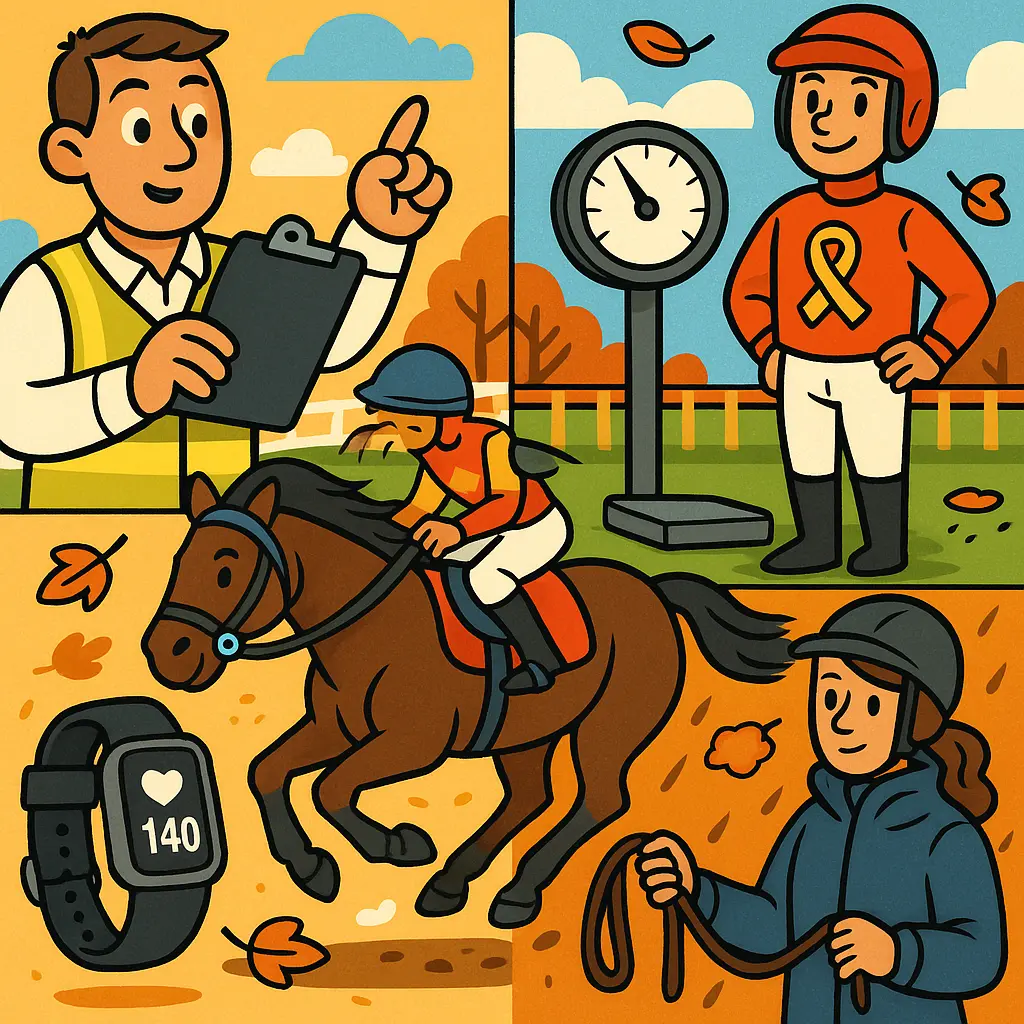
Breathing, balance, and still hands win assessments. Use video feedback to trim excess movement, and check your fitness with a standard push-up, plank, and VO2-style cardio benchmark so you can show measurable progress at your medical.
Common mistakes that get riders turned down
The main reasons riders are declined are failing the riding/fitness assessment, turning up with unsuitable kit, or not meeting organiser safety criteria.
Avoid the pitfalls we see most often:
- Skipping the formal assessment: Unassessed riders won’t be allowed to compete; if you fail, you must be reassessed and pass before entry is confirmed.
- Underestimating fitness: A solid hack fitness base isn’t enough; you need race-level stamina and two-point endurance.
- Poorly fitted helmet or boots: Turn up in compliant, broken-in kit. Our helmet range and boots are chosen for secure, assessment-ready performance.
- Ignoring injury history: If you have a condition that compromises your riding, step back; and note that former jockeys retired through injury are not eligible.
- Weight and work-riding benchmarks: Organisers lean on BHA guidance; yard-employed riders regularly riding work are expected to be under 12 stone (76 kg) and fully sound.
- Paperwork timing: Racecourses need two months’ BHA notice; last-minute entries or rider swaps still require assessments, so apply early.
Pro tip: Treat your assessment like race day. Warm up properly, wear your intended kit, and ride the test course or an analogue at speed the week before.
Where and when can you race in 2025?
The BHS is running charity race days on 31 October 2025 (Wetherby) and 6 November 2025 (Newbury) for trained fundraisers.
Both fixtures sit in the heart of the UK autumn: expect 5–15°C, slick ground, and sudden showers. Build your wardrobe for wet-and-windy warm-ups, then strip to silks for the race. Check BHS entry requirements and training support on the official BHS charity race page. If you’re aiming for an AJA-affiliated race, start by emailing sph.oliver@icloud.com for the application form and current opportunities.
Beyond 2025, the pattern of late-season charity races is likely to continue, and with AJA riders having raised over £1.25 million for Cancer Research UK in the last five years alone (including £230,000 in 2015 for the Injured Jockeys Fund), your entry genuinely matters to people well beyond the winner’s enclosure.
Bringing it all together
If you’re competent, over 16, and hungry for the challenge, a UK charity race is within reach. Email for your application, plan 6–8 weeks of targeted training, pass the assessment, and arrive with compliant kit and a fit, well-prepared horse. At Just Horse Riders, we’re here to equip you for every fast work, assessment, and race-day moment — from certified helmets to secure boots, weather-ready layers, and the turnout rugs your horse will thank you for.
FAQs
Do I need a jockey licence for a UK charity race?
No. A licence isn’t required, but you must be competent, race-fit, and pass a formal riding and fitness assessment as set out by the AJA and supported by BHA guidance. See the AJA’s explanation here: AJA charity races.
What’s the minimum age to enter?
16 years old, though organisers may set the minimum at 18 following a risk assessment, especially where safeguarding under-18s applies. Full details are in the BHA’s Charity Races & Equine Events guidance.
Is there a weight limit for riders?
The BHA recommends that riders considered race-fit — particularly those employed at training yards and regularly riding work — are under 12 stone (76 kg). Organisers use this as a benchmark alongside medical and riding assessments.
How do I apply for a place?
Email sph.oliver@icloud.com to request the AJA application form and current opportunities. For structured fundraiser races, check the BHS dates (e.g., Wetherby 31 Oct 2025; Newbury 6 Nov 2025) on the BHS race days page.
Are charity races “official” BHA races?
No. They run outside the BHA Rules of Racing but still require two months’ BHA notification, robust safety standards, and mandatory rider assessments. Races are on the Flat only.
Can older riders (e.g., 60+) take part?
Yes, provided you meet the fitness and competence standards and pass the assessment. There’s no stated upper age limit, but you must be safe, race-fit, and medically cleared.
What kit is essential for assessments and race day?
A certified helmet (e.g., PAS 015/BETA 2018), close-fitting breeches, secure riding boots, and breathable layers for 5–15°C autumn conditions. Build your kit from our riding helmets, breeches, and boots, and add hi-vis for training on the roads.