From floods and hard frosts to viral videos and public scrutiny, 2025 will test every UK horse owner’s readiness to protect horses, land and our sport’s reputation. The good news: with clear priorities and practical steps, you can get ahead of both the climate curve and the court of public opinion.
Key takeaway: In 2025, climate resilience and social licence are the two forces that will define UK equestrian life—prioritise pasture and water security, update disease prevention, and make your welfare standards visible to maintain public trust.
What will define equestrian life in 2025?
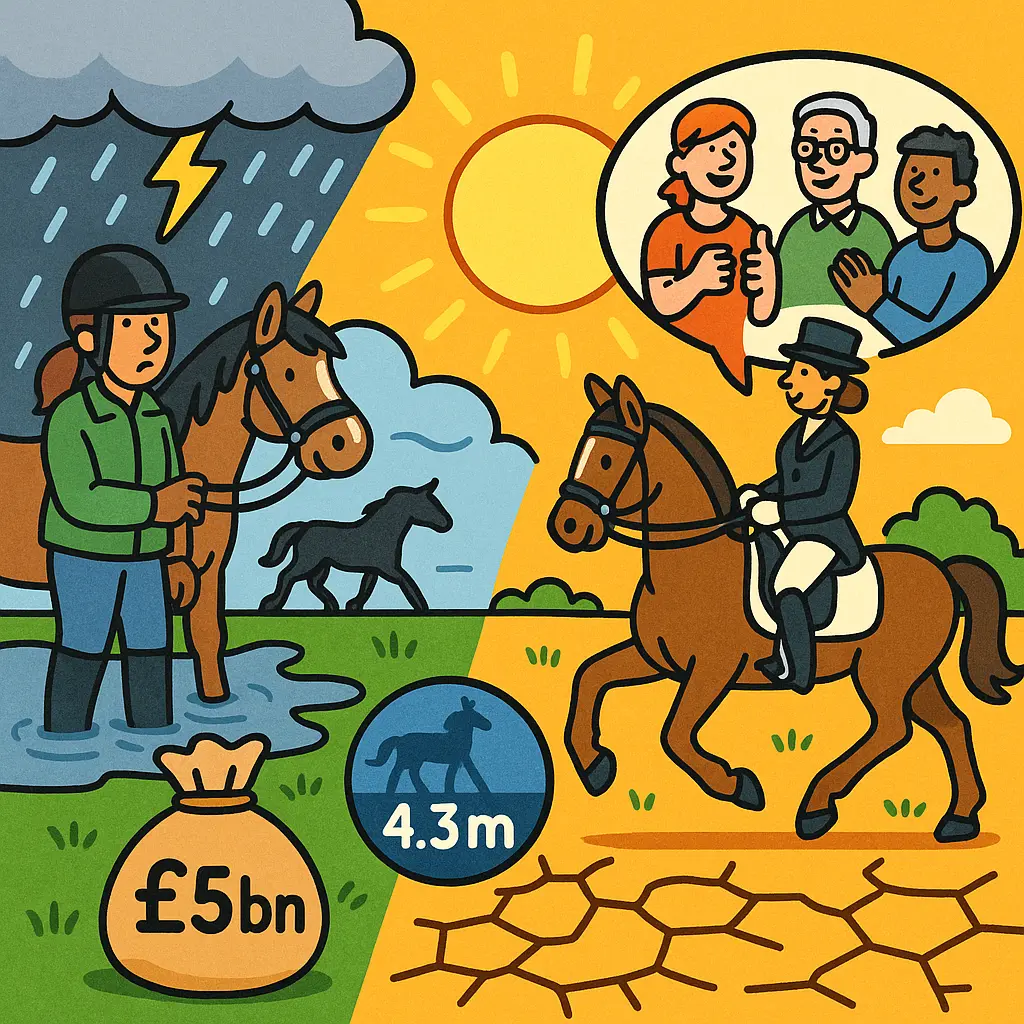
Climate resilience and social licence to operate will define UK equestrian life in 2025. With the sector worth an estimated £5 billion and 4.3 million people in Britain’s equestrian community, how we manage welfare, land, and public trust matters more than ever.
British Equestrian has set out a federation-wide environmental sustainability strategy to 2030, developed with White Griffin, aligning with UK Sport and Sport England’s commitments. That gives owners and yards a national framework to follow. At the same time, sport-specific pressures are intensifying: the FEI has created a Dressage Strategic Action Planning Working Group to address media scrutiny and retain equestrianism’s social licence, and in 2025 formed an Equine Welfare Advisory Group to keep welfare firmly at the centre of decision-making.
For everyday horse keeping, the signals are equally clear. Severe winter weather is already damaging grazing and reducing turnout windows across the UK, while hotter summers and intense rain events challenge water security, forage production and surfaces. The stakes are high: resource shortages in hay, feed and bedding can ripple through livery yards and home setups alike, while disease-carrying insects benefit from warmer, wetter swings. Your response in 2025 should balance immediate yard-level action with a commitment to visible welfare standards that the public can see and trust.
What is social licence to operate—and why does it matter to your yard?
Social licence is society’s approval of horse sport and equine activities, and without it, formal restrictions or bans become more likely. In practice, it means every owner must both prioritise welfare and demonstrate it clearly, on the yard, at competitions, and online.
Put simply, social licence is public permission. When people outside our community look in, they judge by what they see—handling, training methods, kit fit, turnout time, recovery practices, and how riders communicate about welfare. That’s why transparency and competency are non-negotiable in 2025.
“Social licence is society's approval and acceptance of horse sport. Public trust is crucial. Maintaining it requires transparency, competency and confidence.” — Animal Welfare Intergroup
“The welfare of the horse must be put first AND be seen to be put first, all of the time, and it is the responsibility of everyone who is involved with horses to demonstrate this.” — Pony Club HQ
World Horse Welfare underscores this point: demonstrating that horses truly come first is essential to maintaining our social licence. As they note, ensuring welfare and showing its importance publicly are key to keeping equestrianism accepted by wider society. See their guidance here: World Horse Welfare on SLO.
Learning from other industries, denial is dangerous. Hanoverian GB highlights that ethical, proactive, and holistic welfare protection helps maintain social licence—while refusing to acknowledge issues accelerates decline.
“Evidence from other industries suggests that an ethics-based, proactive, progressive, and holistic approach to the protection of equine welfare should be taken… Denial of the problem is a key contributor to an industry's demise.” — Hanoverian GB
Action this year: publish your yard welfare commitments, log routine welfare checks (fit, footing, forage, farriery, veterinary plans), and be open about how you handle challenges. Visible welfare earns trust.
How is climate change already changing UK horse keeping?
Extreme weather, water shortages, degraded grazing, and the spread of vector-borne diseases are now concrete risks for UK horse owners. UK surveys show mounting owner concern about severe winter weather damaging pasture and cutting turnout opportunities.
Climate change isn’t a far-off problem; it is changing daily management. Comparative data from Australia show the direction of travel: 90% of horse owners there have felt the impact of droughts, heatwaves, or heavy rainfall in the last 10–20 years. In Britain, we’re seeing more erratic rainfall, harder winter frosts followed by prolonged wet, and summer spikes that stress horses and grass alike. Pastures waterlog, poach and then struggle to recover; gateways and tracks break down without prompt reinforcement; and water storage becomes a weak point on too many yards.
These conditions compound supply issues in hay, feed and bedding, pushing prices and availability into new territory. Warmer, wetter spells also extend the active seasons for midges, flies and ticks, raising the risk of insect-borne and parasite-related disease. None of these trends are insurmountable—but they do demand a more resilient yard plan than many of us carried a decade ago.
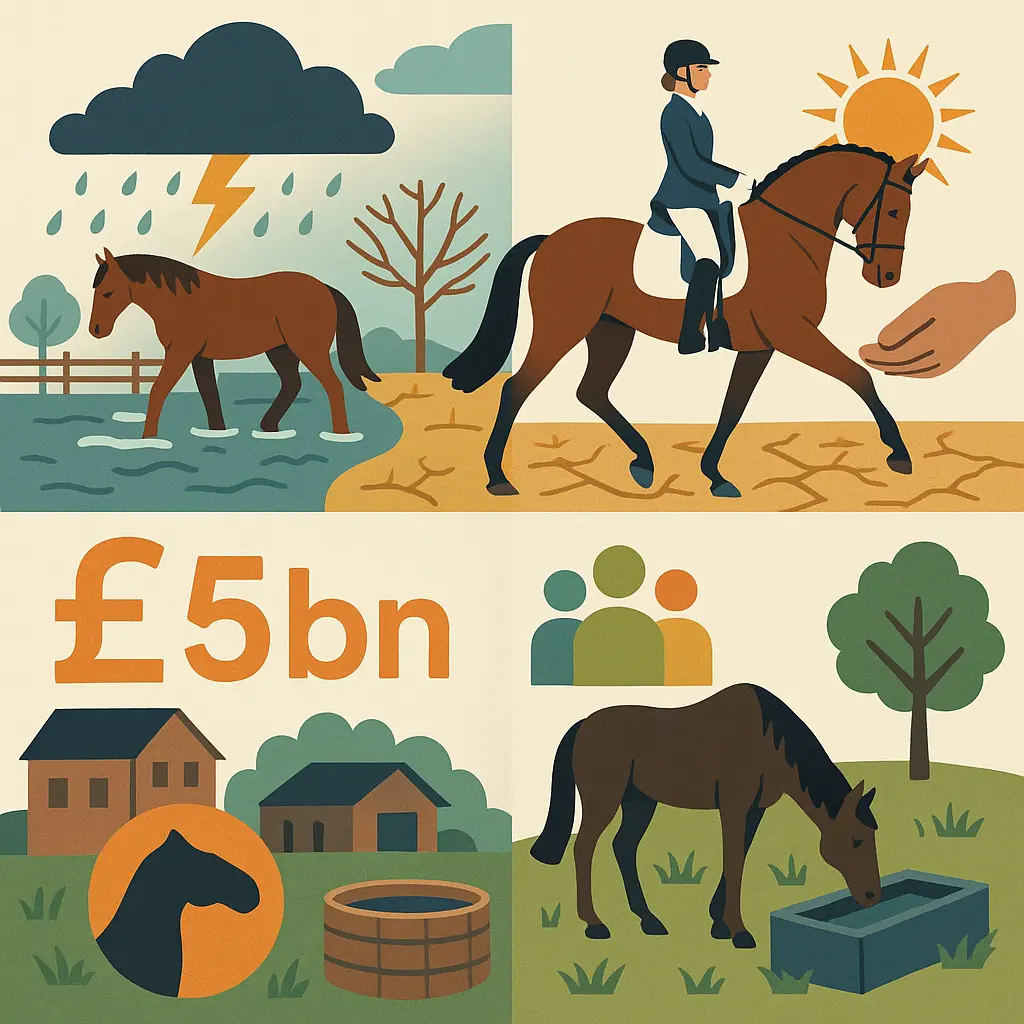
What should you do this year? A practical climate adaptation checklist
Prioritise pasture resilience, water security, drainage and surfaces, temperature management, and emergency planning. These five areas deliver the biggest welfare and cost benefits for most UK yards in 2025.
Use this focused checklist to guide upgrades and daily routines:
- Pasture and turnout
- Rotate small sacrifice areas to protect main fields and reseed hard-hit patches in spring and late summer.
- Install hardcore or mats at gateways and water points to reduce poaching and mud fever risk.
- Plan rest periods and track systems to keep horses moving without destroying swards.
- Water security
- Increase storage with additional tanks and check guttering to capture rainfall off stables and barns.
- Insulate exposed pipes and use trough heaters or ball covers to reduce winter freezing.
- Surfaces and drainage
- Clear ditches and drains before the autumn rains; add French drains where water collects.
- Top up arena surfaces and check base layers for free-draining performance after heavy rain.
- Temperature and weather protection
- Use breathable, appropriately weighted rugs based on real weather, not calendar dates; for winter wet, consider durable turnout rugs and for stabling in cold snaps, reliable stable rugs.
- Provide shade and airflow in summer and stable fans where safe; increase salt access and hydration on hot days.
- Feed and bedding resilience
- Secure hay early, diversify suppliers, and store off the floor with good ventilation to reduce spoilage.
- Keep a small emergency buffer of bedding to ride out brief supply issues.
- Health planning
- Update parasite control with your vet; prepare for longer fly and tick seasons with physical protection and daily checks.
- Support skin and gut through seasonal changes with targeted nutrition from trusted ranges such as NAF and our curated supplements selection.
Quick tip: Keep a weather-led yard diary. Note actual rug weights used, turnout days, water use, and pasture condition. In six months you’ll have hard data to fine-tune decisions.
At Just Horse Riders, we recommend choosing long-lasting kit that stands up to repeated wet/dry cycles to minimise waste and cost—hard-working layers like WeatherBeeta and Shires are perennial customer favourites for reliable fit and durability.
How should you adjust disease prevention as seasons shift?
Warmer, wetter spells can extend midge, fly and tick activity, so update prevention, monitoring and stabling routines now. Combine physical barriers, daily skin checks, and evidence-based parasite control with your vet.
Climate-driven changes in temperature and humidity alter the distribution and prevalence of disease-carrying insects and parasites. That means some regions will see earlier spring activity and later autumn persistence. To stay ahead:
- Physical protection: fit breathable fly rugs and sheets during high midge pressure and use fly masks where appropriate.
- Daily inspections: incorporate skin, mane and tail checks into your grooming routine; our grooming collection helps you spot rubs, scurf and bites before they escalate.
- Parasite plans: work with your vet on strategic worming, faecal egg counts, and pasture hygiene; expect to tweak timing if seasons lengthen.
- Recovery basics: maintain clean, dry legs after turnout in muddy fields, and consider protective horse boots and bandages during exercise on variable ground.
- Nutritional support: skin, coat and immune support from proven brands like NAF can complement good management, especially during peak insect periods.
Pro tip: Set reminders tied to day-length and temperature thresholds (not just dates) to switch on fly protection earlier and extend it later if the weather warrants.
How do you build public trust—at home, at shows and online?
Public trust is earned through visible welfare standards, transparent communication, and consistent competency in handling and safety. Make the good you do obvious: document it, share it, and invite scrutiny.
Start with what people can see. Correctly fitted tack, considerate training, appropriate turnout, and calm loading all communicate priorities without a word. Safety signals matter too: wearing certified, well-fitted riding helmets and using hi-vis for roadwork demonstrate professionalism and care for both horses and riders.
Publish your yard’s welfare commitments and complaints procedure; invite questions at clinics and shows; and respond to online concerns with facts and empathy rather than defensiveness. The FEI’s recent steps—the Dressage Strategic Action Planning Working Group and the Equine Welfare Advisory Group (2025)—reflect the level of scrutiny facing equestrian sport; mirroring that transparency at yard level strengthens our collective position.
“Ensuring the welfare of horses is truly put first and demonstrating the importance of their well-being are key to maintaining equestrianism's social licence to operate.” — World Horse Welfare
Quick tip: Create a simple monthly “welfare round-up” for your noticeboard or social channels—turnout days achieved, footing improvements made, dental/farriery updates completed, and any training changes to improve comfort.
How can you align with the 2030 sustainability roadmap?
Follow British Equestrian’s federation-wide environmental sustainability strategy to 2030 and engage with your member bodies’ action plans. Aim for incremental, measurable changes across energy, water, waste and land management.
Take the national framework and scale it to your yard. Priorities typically include reducing water waste (fix leaks, capture rain, reuse wash water where safe), cutting single-use plastics, recycling hard-wearing kit, and improving biodiversity with hedgerow management and native planting. Track a few simple metrics—litres of water stored, bales wasted, gateways reinforced, and days of turnout protected—to prove progress over time.
Align with respected UK bodies and guidance. While research-led organisations like BEVA and the BHS focus on welfare and safety standards, British Equestrian’s strategy—developed with White Griffin and inspired by UK Sport and Sport England—offers the environmental backbone. Practical, transparent steps at yard level are what sustain social licence and the sport’s future.
What kit really supports welfare and resilience this year?
Choose durable, climate-appropriate gear and proven nutrition to protect horses, reduce waste and keep you riding safely. Prioritise breathable weather protection, fly barriers, and high-visibility safety.
Thoughtful purchases can make a measurable difference to welfare and sustainability because well-made kit lasts and performs across volatile weather:
- Weather protection: layer dependable turnout rugs for wet, windy days and switch to insulating stable rugs for cold, dry nights.
- Summer defence: reduce insect stress with our breathable fly rugs and sheets.
- Daily care: elevate checks and comfort with yard-ready tools from our grooming collection.
- Injury prevention: support legs on variable surfaces with appropriate horse boots and bandages.
- Nutrition you can trust: shop welfare-focused brands such as NAF within our curated supplements.
- Rider safety and visibility: choose certified helmets and year-round hi-vis to signal professionalism and care in public.
- Durable brands that go the distance: explore WeatherBeeta, Shires and LeMieux for quality kit that stands up to UK weather.
At Just Horse Riders, we see the longest-lasting kit delivering the best welfare outcomes and the least waste—buy once, fit well, and maintain it.
Conclusion: act now, show your work, protect our future
2025 rewards owners who plan for weather extremes and who make welfare visible. Secure water and pasture, adjust disease prevention to longer insect seasons, and communicate your standards openly. The outcome is better horse welfare, lower long-term costs, and a stronger social licence for all of us who ride, care and compete.
FAQs
What exactly is “social licence to operate” in equestrianism?
It’s society’s approval of horse sport and equine activities. Without it, public pressure can translate into tighter rules or even bans. As the Animal Welfare Intergroup notes, public trust depends on transparency, competency and confidence.
Why is climate resilience urgent for UK yards this year?
UK owners are already seeing severe winter weather damage grazing and reduce turnout, while hotter, wetter swings pressure water, feed and bedding. These changes also extend insect seasons and disease risks—so resilience planning protects horses and budgets.
How can I show the public that my horse’s welfare comes first?
Publish simple welfare commitments, keep visible records (turnout, farriery, dental, training changes), and model best practice at shows. As Pony Club HQ says, welfare must be put first—and be seen to be put first—at all times.
What are the top yard upgrades to tackle first?
Reinforce gateways and high-traffic areas, increase water storage, schedule pasture rest and reseeding, and update drainage before autumn. Fit breathable turnout rugs for persistent rain and plan shade/airflow for summer peaks.
How should I adjust parasite and fly control in a warmer, wetter year?
Start earlier, finish later if weather dictates, and combine physical barriers like fly sheets with daily skin checks and vet-led parasite plans. Expect to tweak timing according to actual temperatures and insect pressure.
Where does British Equestrian’s 2030 strategy fit into my day-to-day?
Use it as a roadmap for water, waste and land improvements, and track a few simple metrics to prove progress. Incremental, measurable steps at yard level underpin the sport’s wider sustainability goals.
What role do reputable brands and kit play in welfare and sustainability?
Durable, well-fitting gear reduces rubs, stress and waste. Trusted ranges like WeatherBeeta, Shires and targeted nutrition from NAF support consistent, horse-first care through volatile UK weather.