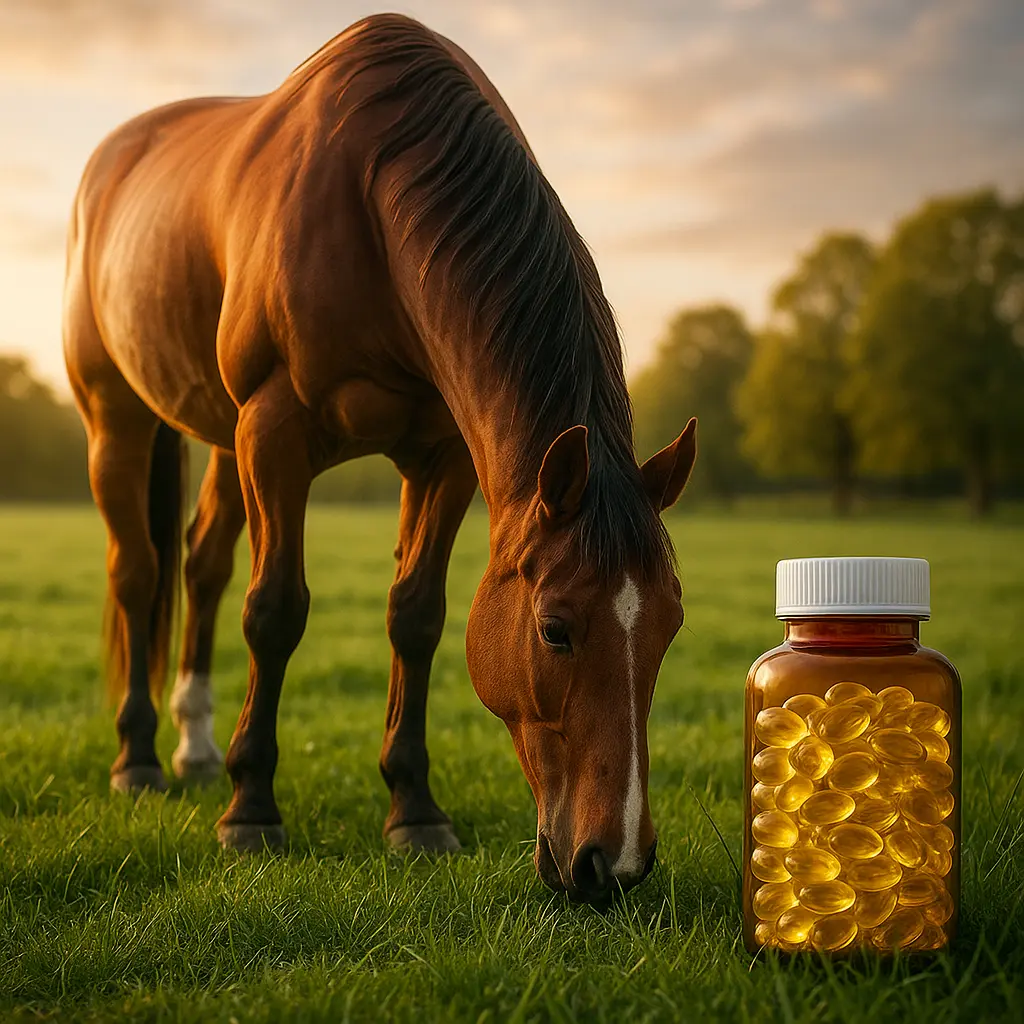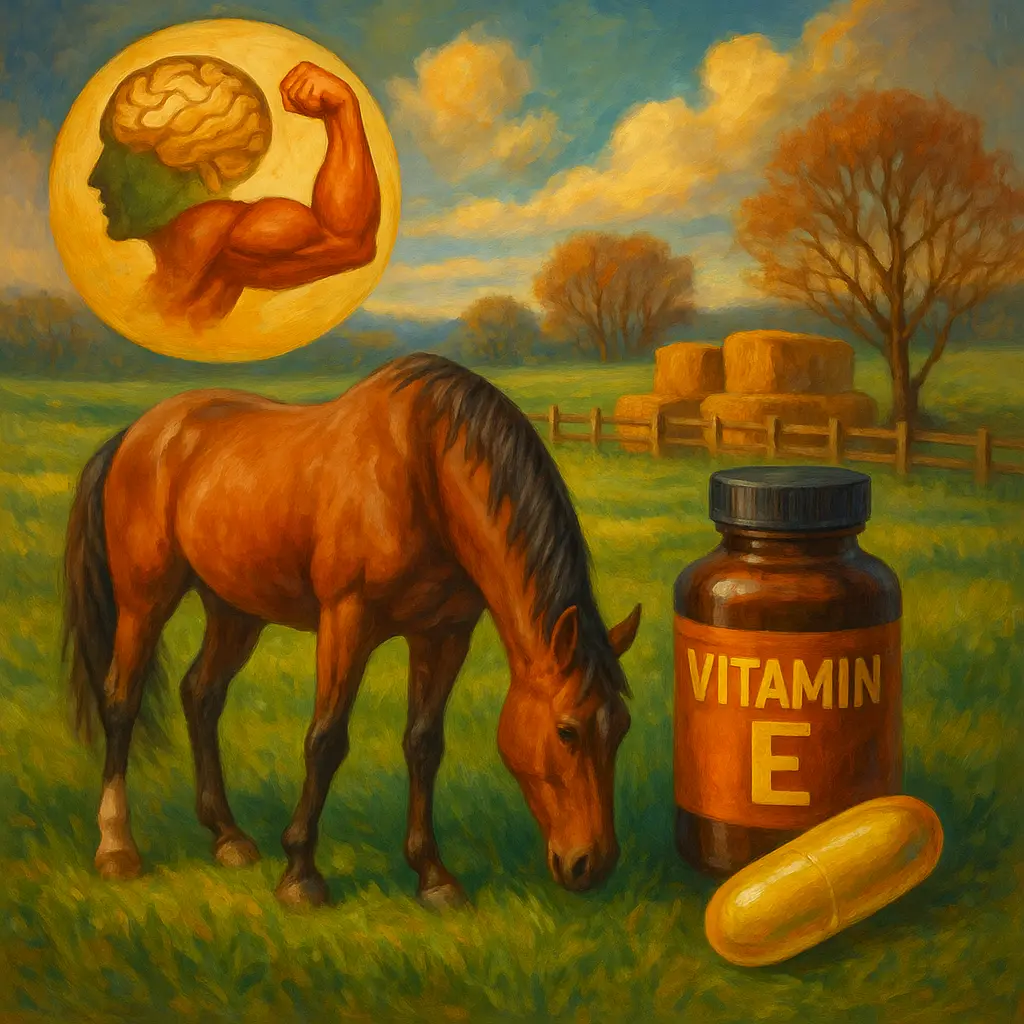
Short daylight, wet fields and more time on the yard mean your horse’s vitamin E intake can plunge just when their muscles and immune system need it most. The right form and dose make a big difference — and the science is clear on what actually works.
Key takeaway: Most UK horses stabled or on hay October–March should receive 2,000 IU/day of vitamin E, rising to 3,000–5,000 IU/day for horses in work, using natural or nano-encapsulated alpha-tocopherol for best results.
Why vitamin E matters for UK horses
Vitamin E is an essential antioxidant that horses mainly get from fresh pasture, so UK winters and hay-based diets commonly leave horses short. Plasma vitamin E concentrations are 63% higher in horses grazing fresh pasture than in those fed harvested, dried or pelleted feeds, and levels peak May–August during maximum grass growth [1].
Vitamin E (especially alpha-tocopherol) protects muscle and nerve tissue from oxidative damage, supports recovery after work, and underpins immune function. When grass growth slows and many horses move onto hay/haylage, vitamin E in forage degrades during harvesting and storage, so intakes fall. The result can be sluggish post-exercise recovery, tightness or stiffness, dull coats, and, in deeper deficits, neuromuscular problems. That’s why proactive supplementation is standard practice for UK horses through the colder, wetter months.
At Just Horse Riders, we see the seasonal pattern every year: owners wintering on hay report horses feel “flatter” under saddle until they add an effective vitamin E source. Using the right form — and enough of it — is what turns that around.
How much vitamin E does your horse need?
For a 500 kg horse, 2,000 IU/day covers maintenance on a hay-based diet, 3,000–5,000 IU/day suits horses in regular work, and 5,000–10,000 IU/day is used short-term under veterinary guidance for unwell or stressed horses [2][3].
These practical targets reflect both modern workloads and the reality of hay-only rations in the UK. They sit above the National Research Council’s minimums of 1–2 IU/kg bodyweight for maintenance (about 500–1,000 IU/day for a mature horse) and 3,000 IU/day for moderate work or breeding stock [6]. In other words, NRC figures prevent frank deficiency; the higher ranges better support performance, recovery and immune resilience in real-world conditions.
“Vitamin E should be added to the diet based on the individual horse’s needs. An average horse that weighs 1,100 lb (500 kg) needs approximately 1,000 IU of vitamin E per day. When considering the addition of dietary fat and with increasing amounts of exercise, it may be necessary to supplement additional vitamin E, from 1,500–2,000 IU daily.” — Kathleen Crandell, Ph.D., Kentucky Equine Research (KER)
Performance horses need more due to higher oxidative stress from training and, often, higher-fat rations. Research in sport horses indicates 3–5 mg vitamin E per kg bodyweight per day increased serum concentrations during training [4]. If you suspect muscle issues or your horse is on an oil-rich diet, aim to the upper end of the performance range and discuss blood testing with your vet.
Quick tip: If you’re using a synthetic form (dl-alpha-tocopherol), you’ll need roughly double the IU to match natural vitamin E uptake [2][5].
Natural vs synthetic: which form works best?
Natural vitamin E (d-alpha-tocopherol; RRR-alpha-tocopherol) is about twice as bioavailable as synthetic dl-alpha-tocopherol, and nano-encapsulated natural forms can be roughly three times better than standard natural oil/acetate preparations [2][5].
Why it matters: vitamin E labels all list “IU”, but horses don’t absorb all forms equally. In equine studies, after a 5,000 IU dose, natural vitamin E produced significantly higher plasma alpha-tocopherol than synthetic, and nano-encapsulated natural outperformed both by a large margin. This means you can feed less, or achieve a faster correction of low levels, with the right form.
“The natural acetate has about twice the bioavailability of synthetic vitamin E... you would have to feed double the quantity of synthetic vitamin E to have the same bioavailable uptake as natural vitamin E.” — Forageplus summary of KER research (Forageplus)
“The most bioavailable form of vitamin E for horses is alpha‑tocopherol... Since alpha‑tocopherol is also the most potent.” — Finno & Valberg 2012, via UK Vet Equine (UK Vet Equine)
Best-in-class for absorption: nano-encapsulated natural alpha-tocopherol (often delivered in a liquid). Strong option for most horses: natural d-alpha-tocopherol in powder or oil, including natural acetate forms. Use with caution if you need rapid correction: esterified acetate forms absorb more slowly than nano-encapsulated liquids and offer little real-world stability advantage compared with good natural oils. If you can only source synthetic dl-alpha-tocopherol, feed approximately double the IU to compensate for lower uptake [2][5].
Pro tip: Check the label for “d‑alpha‑tocopherol” or “RRR‑alpha‑tocopherol” for natural, and “dl‑alpha‑tocopherol” for synthetic. For maximum impact per scoop, choose natural — ideally nano-encapsulated if you’re supporting a performance programme or addressing low blood levels.
When to supplement through the UK year
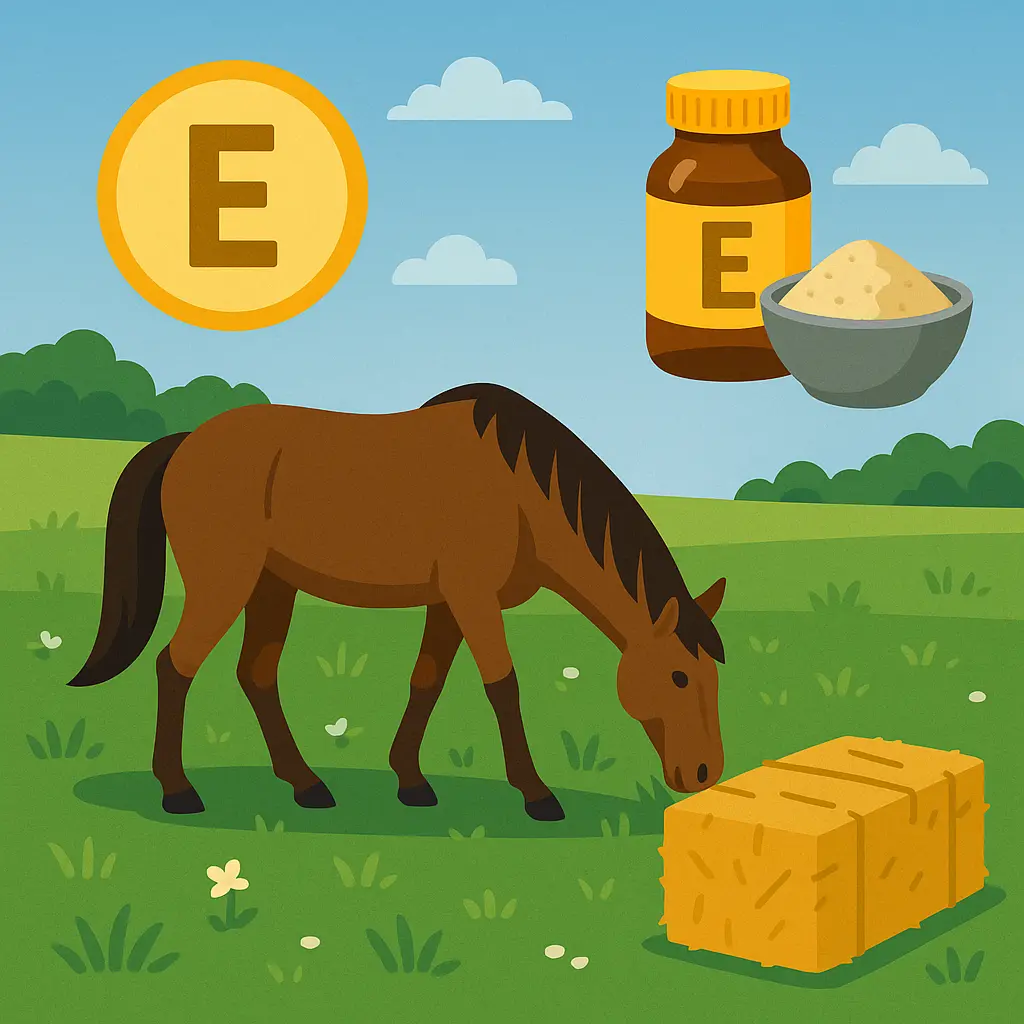
Supplement vitamin E whenever grazing is limited — typically October to March in the UK — and during any period of stall confinement, heavy work, or reliance on hay/haylage. Natural vitamin E from pasture peaks May–August, so most horses need help outside that window [1].
Seasonal guide for UK owners:
- Autumn (Sept–Oct): Start supplementation as nights draw in, pasture quality drops, and rugs come out. If your horse is moving from 24/7 grazing to time in a stable and on hay, begin at 2,000 IU/day.
- Winter (Nov–Feb): Keep stabled or yard-based horses on 2,000–5,000 IU/day depending on workload. Wet UK winters, short hacking windows and high-starch/forage rations increase oxidative stress.
- Spring (Mar–Apr): Maintain supplementation until grass growth is sustained. Introduce turn-out gradually and reassess dose once your horse is on consistent daytime grazing.
- Summer (May–Aug): Many good-doers on quality pasture may not need extra vitamin E. Horses in intense work, on high-fat feeds or limited turnout may still benefit from 2,000–3,000 IU/day.
Practical add-ons for wintering well: a comfortable rugging plan and safe hacking gear keep horses moving, which helps muscle health alongside vitamin E. Explore warm, breathable stable rugs for long nights in and weatherproof winter turnout rugs for precious field time. With darker commutes, a set of hi‑vis essentials helps you keep up steady, low-stress work that pairs perfectly with your supplement routine.
How to feed vitamin E for best absorption
Feed vitamin E daily with some dietary fat, and avoid large one-off boluses; oil-based or nano-encapsulated liquids deliver the best uptake in horses. Consistency matters more than timing, so pick a daily feed your horse never skips.
Vitamin E is fat‑soluble. Diets with very low oil can blunt absorption, while higher‑fat performance rations both increase need and help transport vitamin E in the gut. Add a splash of oil to low‑fat feeds or select a supplement that includes an oil carrier to improve uptake. Nano‑encapsulated natural liquids are ideal when you need maximum bioavailability per millilitre — for example in performance horses or if you’re correcting low blood levels quickly [2][3].
Good feeding habits:
- Split daily vitamin E into one or two regular feeds; don’t “front-load” at the weekend.
- Pair with selenium only under veterinary guidance, especially if you already feed a balancer fortified with selenium.
- If you must use synthetic vitamin E (dl-alpha-tocopherol), double the IU to match natural uptake [2][5].
- Re-test bloods after 4–6 weeks if you’re targeting a deficiency or muscle disorder under vet care.
At Just Horse Riders, we stock proven forms in our curated horse supplements collection, including natural d‑alpha‑tocopherol powders for maintenance and high‑absorption liquids for horses in work. Popular UK brands like NAF supplements make it simple to match the format to your horse’s routine.
Spotting deficiency and when to call the vet
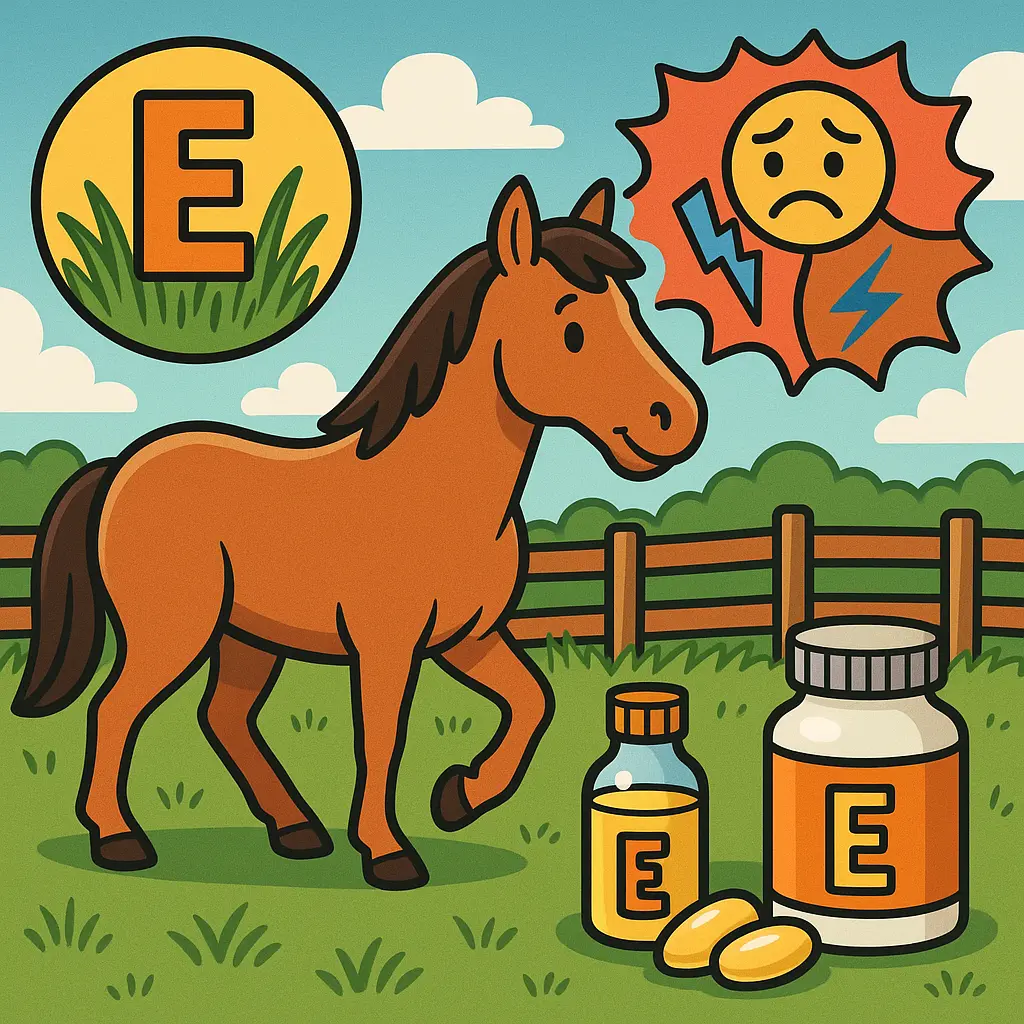
Muscle stiffness, weakness, poor topline, slow recovery, and neuromuscular signs are key red flags; confirm status with a blood test via your vet and consider selenium alongside vitamin E. BEVA and RCVS guidance supports vet‑monitored supplementation where myopathy is suspected.
Common signs to watch for in pasture‑restricted horses include:
- “Tight” or crampy feel under saddle, reluctance to go forward, or longer warm‑up times
- Poor recovery from routine work, muscle soreness on grooming, or fasciculations/tremors
- Lowered immunity, dull coat, or general lethargy
- In severe, long‑term deficiency: neuromuscular conditions such as equine motor neuron disease
If you suspect a problem, speak to your vet about plasma alpha‑tocopherol testing and a tailored plan; this is especially important in young, rapidly growing horses and those with muscle disorders where higher short‑term intakes (5,000–10,000 IU/day) are often recommended [2][6][7]. Combine vitamin E with balanced selenium only when advised; both nutrients work together in antioxidant defence, but excess selenium can be harmful.
Quick tip: If in doubt, start with 2,000 IU/day of a natural form while you await test results — then fine‑tune with your vet. Keeping exercise gentle but regular (poles, long hacks) and using supportive gear like horse boots and bandages can help comfort while you replete levels.
Practical product picks and how to choose
Choose a natural vitamin E powder for maintenance, a nano‑encapsulated liquid for performance or known low levels, and E + selenium balancers only under vet guidance. Shop by form first (bioavailability), then match dose to workload.
What to pick and why:
- Natural vitamin E powder (d‑alpha‑tocopherol): Ideal for stabled leisure horses needing 2,000–3,000 IU/day. Easy to mix into daily feed. Find options in our supplements range.
- Nano‑encapsulated vitamin E liquid: Highest bioavailability; perfect for performance horses or rapid support when you’re chasing a blood result. A small daily measure goes a long way.
- Vitamin E + selenium balancer: Useful where both are low, particularly in young or stressed horses, but always cross‑check total dietary selenium and involve your vet.
- High‑fat supplements with added vitamin E: Helpful for horses on oil‑rich diets; the extra E helps neutralise free radicals generated by fats in work.
Our customers often pair winter supplementation with turnout solutions from trusted brands to keep horses moving and muscles supple. For durable protection in UK rain and mud, browse WeatherBeeta rugs and our broader selection of technical turnout rugs. If you’re stabling more, a breathable stable rug and a thoughtful grooming routine from our grooming collection support circulation and recovery day‑to‑day.
Pro tip: Make compliance easy. Many horses take liquids straight from a syringe or with a handful from our healthy treats selection, so you never miss a day.
Sample dosing plans for real UK scenarios
For a 500 kg leisure horse on hay, feed 2,000 IU/day of natural vitamin E; for an eventer in regular work, 3,000–5,000 IU/day; for a deficient or unwell horse, 5,000–10,000 IU/day short‑term under veterinary supervision [2][3][6]. If using synthetic vitamin E, double the IU to match natural uptake [2][5].
Scenario 1: Leisure gelding, stabled nights Oct–March, hacking 3x/week
- Target: 2,000 IU/day natural vitamin E powder
- Why: Hay‑based ration, moderate oxidative load, no red‑flag signs
- Add‑ons: Low‑dose oil for absorption; maintain light work in daylight with hi‑vis and a weather‑appropriate turnout rug for field time
Scenario 2: Novice eventer, 5 days’ work, on added oil
- Target: 3,000–5,000 IU/day, ideally nano‑encapsulated liquid
- Why: Higher exercise stress and dietary fat increase vitamin E requirement and benefit from superior absorption
- Check‑ins: Consider baseline and follow‑up bloods if recovery is slow or muscles feel tight
Scenario 3: Mare recovering from illness, limited turnout
- Target: 5,000–10,000 IU/day short‑term under vet guidance
- Why: Illness and confinement increase oxidative stress; rapid correction often needed
- Notes: Discuss selenium status with your vet; choose liquid natural vitamin E for faster uptake
Scenario 4: Young warmblood in growth spurts, on haylage
- Target: 2,000–3,000 IU/day natural vitamin E
- Why: Rapid growth raises antioxidant demand; haylage provides variable vitamin E
- Monitoring: Watch for muscle soreness as workload increases; adjust dose during training blocks
Quick tip: Reassess dose in May–August if your horse is on good grazing; many can step down, but keep 2,000–3,000 IU/day if in consistent work or on higher‑fat rations.
For more targeted help, our team can talk you through formats and feeding alongside other essentials. Start with our curated vitamin and antioxidant supplements and build a winter plan that also covers rugging, safe hacking and consistent work.
Reference highlights:
- Fresh pasture boosts plasma vitamin E by 63% versus dried/pelleted feeds; levels peak May–August [1].
- Natural vitamin E has about twice the bioavailability of synthetic; nano‑encapsulated natural is around three times better than standard natural forms [2][5].
- Maintenance 2,000 IU/day for a 500 kg horse; 3,000–5,000 IU/day for performance; 5,000–10,000 IU/day when unwell/stressed [2][3].
- Alpha‑tocopherol is the most potent and bioavailable form for horses [7].
FAQs
Why do UK horses need vitamin E supplements in winter?
Fresh pasture — the primary natural source of vitamin E — is limited from October to March, and vitamin E degrades in hay and haylage. Horses on yard‑based routines over winter therefore receive much less vitamin E than in summer, when levels peak with grass growth [1].
Is natural or synthetic vitamin E better for horses?
Natural d‑alpha‑tocopherol (RRR‑alpha‑tocopherol) is roughly twice as bioavailable as synthetic dl‑alpha‑tocopherol in horses, so you’d feed double the IU of synthetic to get similar uptake. Nano‑encapsulated natural forms can be about three times better than standard natural preparations [2][5].
How much vitamin E should I feed a 500 kg riding horse?
Use 2,000 IU/day for maintenance on a hay‑based diet, and 3,000–5,000 IU/day for horses in regular work. If your horse is unwell, stressed or showing muscle issues, 5,000–10,000 IU/day is used short‑term under veterinary guidance [2][3][6].
What are the signs of vitamin E deficiency?
Common signs include muscle stiffness or weakness, poor recovery after work, a dull coat, lowered immunity, and in more serious cases, neuromuscular issues. Pasture‑restricted horses are at particular risk; speak to your vet about a blood test if you notice these signs [6][7].
Does fat in the diet affect vitamin E absorption?
Yes. Vitamin E is fat‑soluble, so adding a little oil to low‑fat feeds can improve uptake. High‑fat performance diets increase both the need for and the transport of vitamin E — plan doses accordingly [3][4].
Powder, oil, or water‑soluble — which is best?
Nano‑encapsulated natural liquids deliver the best bioavailability, especially for performance horses or when you’re correcting low levels. Natural powders and oils are strong everyday options; avoid relying on synthetic forms unless you adjust the dose to compensate [2][3].
Can I combine vitamin E with selenium?
Only under veterinary guidance. Vitamin E and selenium work together for neuromuscular support, but over‑supplementation of selenium carries risks. BEVA/RCVS encourage vet‑monitored plans where myopathy is suspected.
Ready to build your winter plan? Start with bioavailable vitamin E in our supplements collection, keep muscles comfortable with reliable stable rugs and turnout rugs, and maintain safe, steady work through shorter days with high‑visibility rider gear.