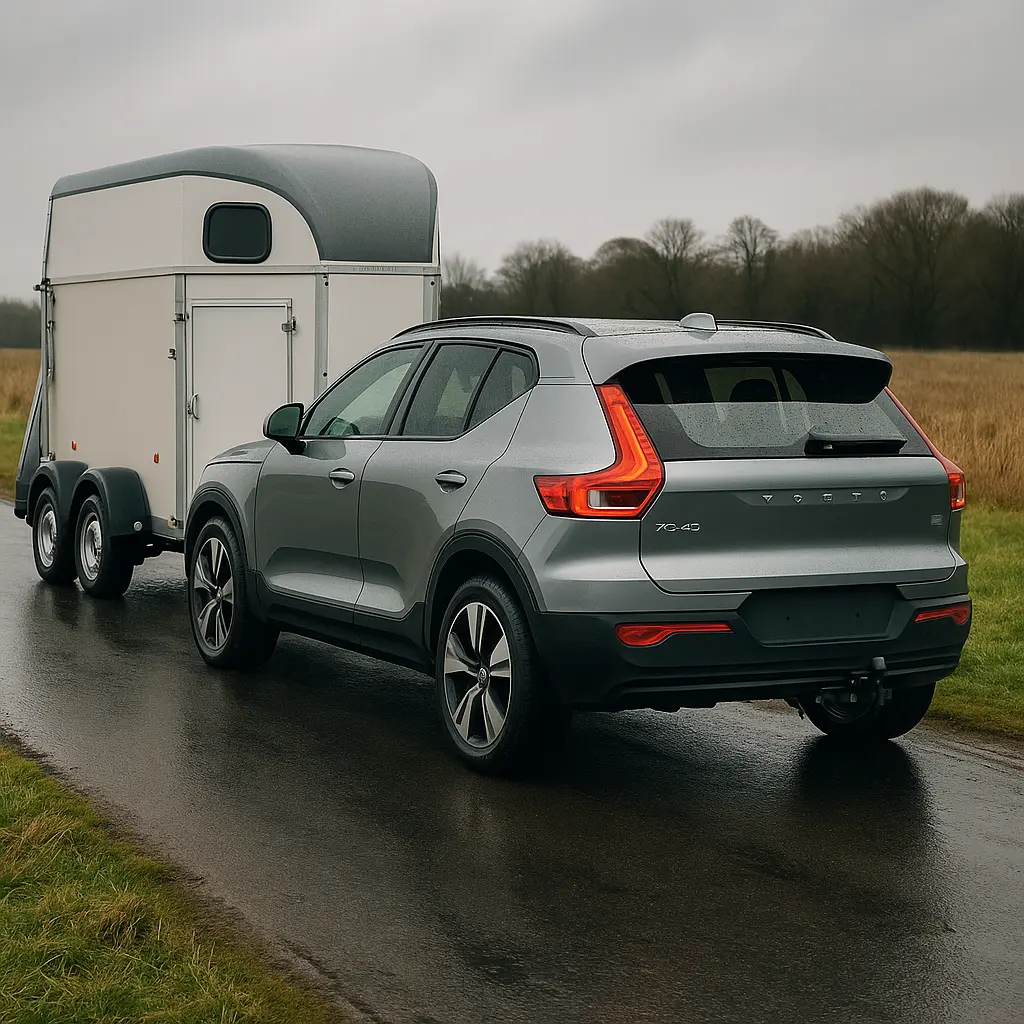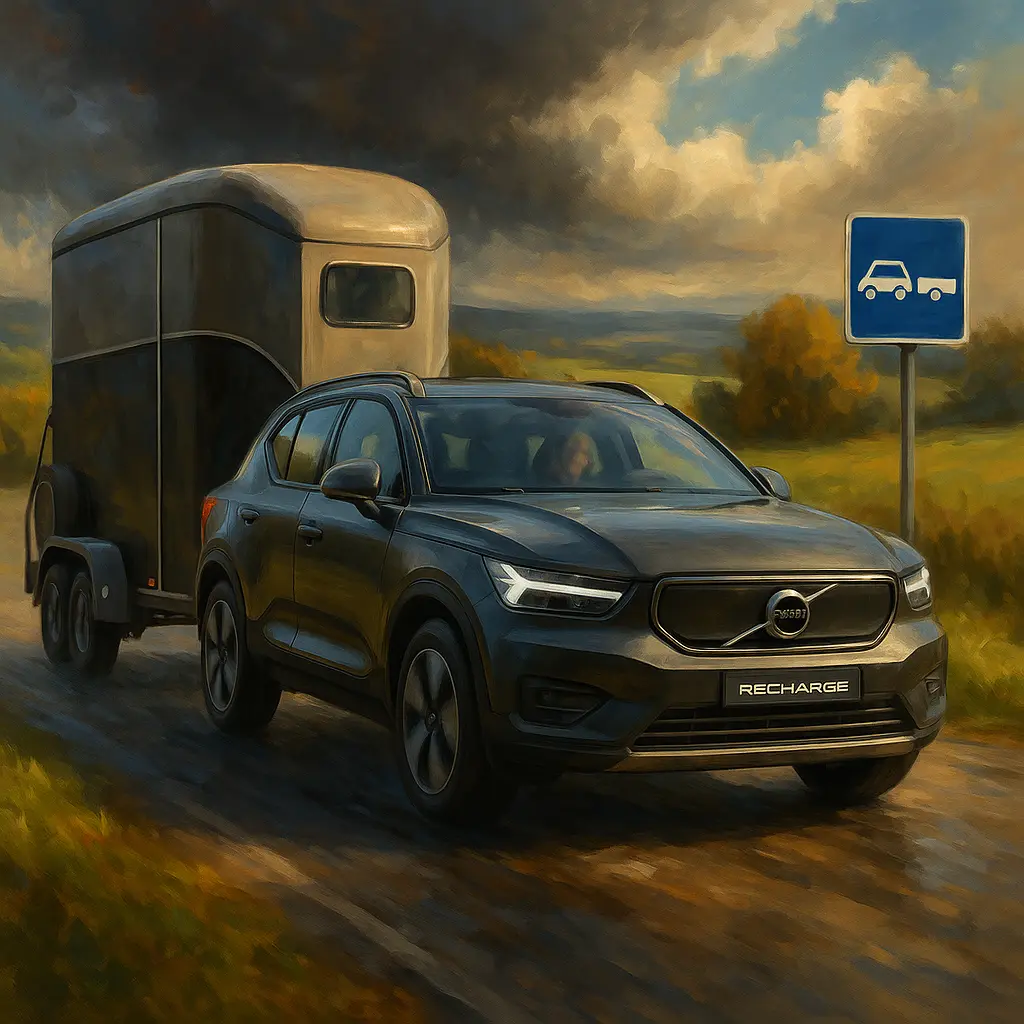
Thinking of towing your horse to clinics and shows with a Volvo XC40 Recharge? Good news: both the Recharge plug‑in hybrid and the Twin Motor EV are rated to tow serious weight — but you must manage payload, towball load and range to keep your horse safe and your journey stress‑free.
Key takeaway: The Volvo XC40 Recharge can tow up to 1,800kg (braked) with a 100kg towball limit — enough for a single‑horse Ifor 510 setup around 1,150–1,250kg — but expect less than 100 miles of range when towing and plan your route and charging accordingly.
Can a Volvo XC40 Recharge tow a horse trailer?
Yes — the XC40 Recharge Plug‑in Hybrid (T4/T5) and Twin Motor EV are rated to tow up to 1,800kg braked (750kg unbraked), with a maximum towball load of 100kg for braked trailers (50kg unbraked).
Those figures, taken from Volvo’s UK specifications, put the XC40 Recharge firmly in “serious tow car” territory. In practical equestrian terms, it’s suitable for many single‑horse trailers so long as you stay within the 1,800kg braked limit and keep the noseweight (towball load) under 100kg. If you’re using an unbraked trailer (rare for horseboxes), the 750kg cap rules it out for horses, so choose a braked horse trailer every time.
The Recharge’s kerbweight (around 1,812kg for the PHEV quoted in testing) also matters for stability. Using the widely adopted UK “85% rule” for safe matching, that gives an advisory trailer limit of roughly 1,540kg for best manners — well within the 1,800kg legal maximum.
What weight combinations are safe with an XC40 Recharge?
Keep your fully loaded trailer under about 1,540kg for an 85% kerbweight match, and always under the absolute 1,800kg braked limit.
For many UK riders, a common outfit is an Ifor Williams 510 (typically around 500–600kg empty) carrying a 650kg horse. That puts you at roughly 1,150–1,250kg — a sensible, stable match for the XC40 Recharge and under both the 85% guideline and the 1,800kg maximum. Add tack, water and partitions carefully and keep your noseweight under the 100kg towball cap to maintain stability.
Pro tip: Don’t guess the numbers. Weigh your trailer empty and then fully loaded (horse, tack, water, hay, boots and bars) on a public weighbridge before your first longer run. Note the measured noseweight as well — a simple scale and jockey wheel method will tell you if you’re creeping over that 100kg towball figure.
Across the UK, experienced caravan testers use the 85% match because it correlates with calmer towing on motorways, rural A‑roads, crosswinds and on/off slip roads. Practical Caravan paired the XC40 with a 1,536kg caravan and reported excellent composure, matching what many riders feel when they keep their horsebox within that 85% window.
How far can you tow on electric with the XC40 Recharge?
Expect a dramatically reduced range when towing — often less than 100 miles — and plan charging stops on longer trips.
Independent tests and real‑world reports consistently show that towing can double (or more) the energy consumption of electrified cars. In the UK, that’s compounded by cold, wet weather and headwinds. For the XC40 Recharge Twin Motor, reviewers have demonstrated it can manage heavy loads up to its 1,800kg limit, but with greatly reduced range. In winter, the impact is even steeper: cold weather can halve WLTP‑quoted range even when driving solo, so towing in January or February will demand very conservative planning.
Experienced tow judges from the Caravan and Motorhome Club noted the XC40 Recharge’s impressive grunt when pulling a caravan, but you should still plan your route with realistic stop spacing and charge speeds. At moderate speeds and with a heavy trailer, think in the region of 120–150km between reliable fast charges — and less than 100 miles is a fair rule of thumb on tougher routes or in winter. Forum feedback from UK equestrians echoes this: range when towing can be “abysmal” compared with solo driving, so plan early and allow extra time for safe stops.
Quick tip: Precondition the battery and cabin while plugged in at home or the yard to preserve range, then set off with a warm pack. In winter, leave a bigger margin to your first scheduled stop.
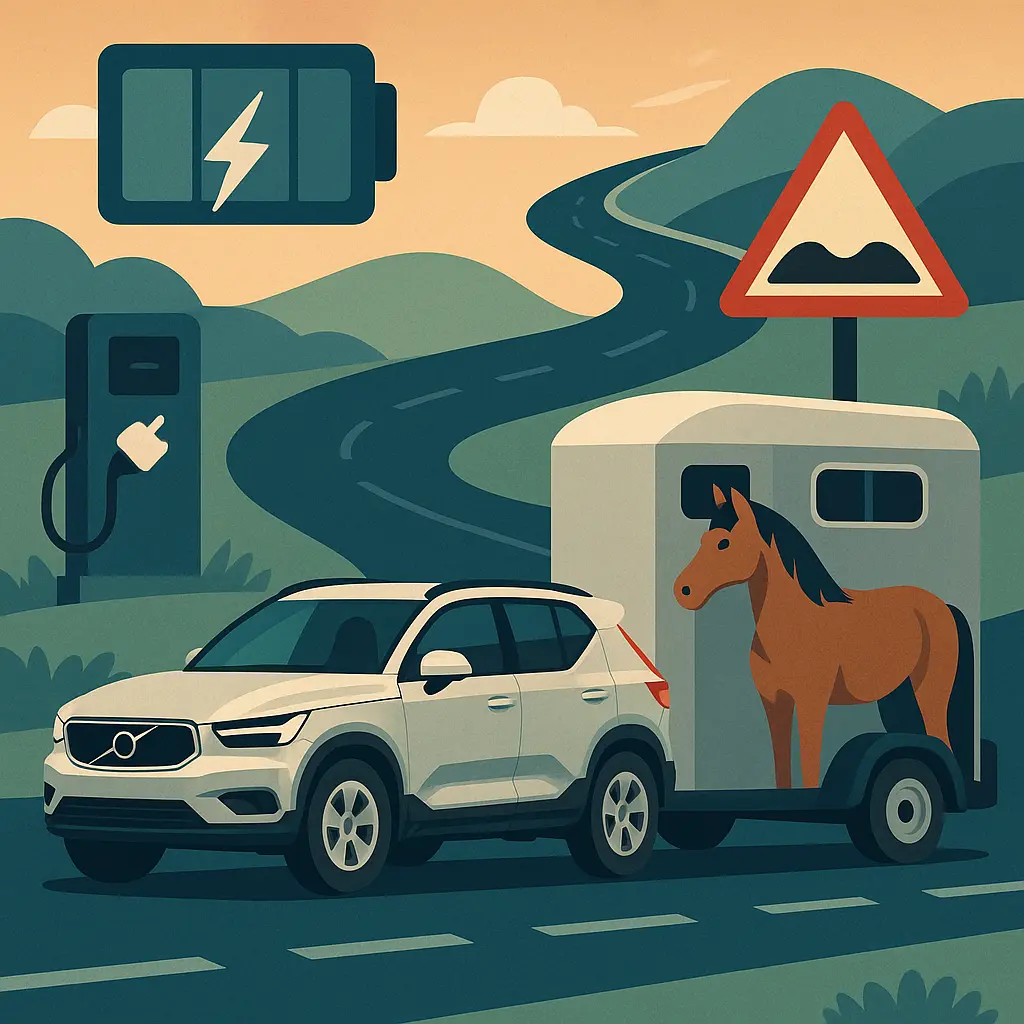
Which XC40 Recharge models and equipment do you need for towing?
Both the Recharge Plug‑in Hybrid (T4/T5) and the Twin Motor EV are rated to tow 1,800kg braked — fit a Volvo‑approved towbar, use a braked horse trailer, and keep noseweight under 100kg.
A factory or dealer‑approved towbar ensures the car’s stability and assistance systems (including Trailer Stability Assist) behave exactly as designed. For heavier horseboxes near the limit, Volvo advises using the correct accessories and checking for any recommended vibration damping in the towbar system. Always choose a braked horse trailer above 750kg; unbraked is not appropriate for horses.
Beyond the tow hardware, fit appropriate towing mirrors to maintain clear rearward visibility, secure your breakaway cable correctly, and pack equine travel protection. For the horse, we recommend well‑fitted travel boots and tail protection — browse our curated range of horse travel boots and bandages to keep legs protected on UK roads. Given how changeable British weather is, a waterproof rug kept within reach is also wise; see our selection of winter turnout rugs for cold, wet conditions and lighter options for spring showers.
For roadside stops or if you’re managing the load at dawn/dusk, stay seen: our riders’ hi‑vis essentials improve visibility around lay‑bys, events and service areas.
UK towing rules you must follow with a horse trailer
Use a braked trailer for any load over 750kg and obey UK speed limits for cars towing trailers; DVSA enforces these rules and the Highway Code covers trailer speeds and braking requirements.
For the XC40 Recharge, that means your horse trailer must be braked, and your combined setup must stay within all plated limits (car, trailer, axle, towball). In the UK, cars towing trailers are limited to lower speeds than solo cars; always observe those limits, including 60mph on single carriageways when towing. The UK Highway Code (Rules 90–94) outlines the core requirements around trailer braking and safe loading, and DVSA actively enforces compliance at the roadside and at events.
There’s also a helpful allowance specific to towing: per Volvo’s UK guidance, your vehicle’s gross weight (including towball load) may be exceeded by up to 100kg if you restrict speed to 100km/h (62mph), provided national regulations permit it. This is not a target — it’s a narrow tolerance for specific conditions — so plan your payload to remain within normal limits wherever possible and always respect axle loads and the maximum train weight.
Quick tip: Weigh right, drive right. Visit a public weighbridge with your fully loaded trailer and record individual axle weights if possible. Keep a copy of your readings with your vehicle documents in case you’re asked by DVSA at the event gate.
Real‑world towing: performance, stability and comfort for your horse
The XC40 Recharge tows confidently up to 1,800kg with brisk acceleration and stable manners, with the PHEV often moving on electric power and the petrol engine assisting when needed.
Two respected UK sources back this up. Practical Caravan’s test team paired the XC40 with a caravan very close to the 85% match and reported quiet, composed towing, much of it on electric power:
“We matched the Volvo to a Swift Fairway Platinum 880 [MiRO 1536kg]... the Volvo largely towing on electric power alone, with the petrol engine briefly waking up... Neither noisy nor thirsty constraints apply.” — Practical Caravan review team
Northern Life Magazine, with input from 2022 Tow Car of the Year judges (Caravan and Motorhome Club), was similarly impressed by capability and control:
“With a towing capacity of 1,800kg, the XC40 Recharge Twin Motor has serious credentials... Even when towing a caravan the XC40 Recharge feels brisk; instantly responding... pulling up even the steepest inclines with ease.” — Northern Life Magazine
For horses, smoothness is safety. The XC40’s instant torque gets you off roundabouts and slip roads without drama, while Trailer Stability Assist helps damp oscillation. Keep your loading balanced, partitions set correctly, and drive progressively — steady throttle, gentle steering, and early braking — to minimise sway and keep your horse calm.
At Just Horse Riders, we also suggest a short local test tow before a long haul, especially on UK routes with hills, crosswinds or tricky junctions. Use this shakedown to confirm range, charging stops, tyre pressures, mirror visibility and noseweight.
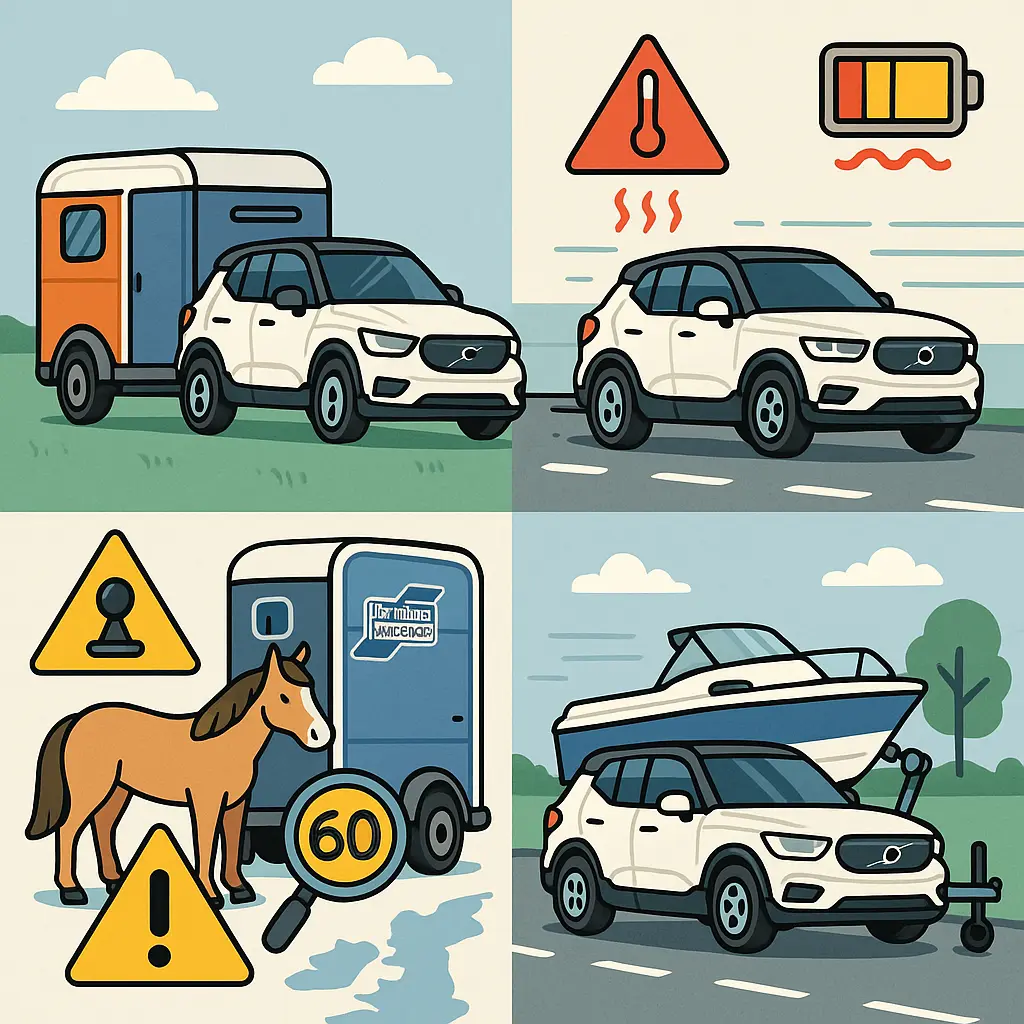
Trip planning for UK shows and events
Precondition your battery, plan charging stops with a generous buffer, and assume at least double the energy use versus solo driving when towing.
The UK’s show calendar peaks in spring and summer, but rain and wind are frequent year‑round. Before you hitch up, precondition the cabin and battery while plugged in to preserve range, then set off with a warm pack. Plot chargers along A‑roads and motorways with space to park your rig, and prefer reliable rapid networks near services with wide bays and clear trailer access.
Build a smart kit list that keeps you and your horse comfortable without overloading the trailer:
- Horse protection: well‑fitted travel boots and tail guards to protect legs and dock.
- Weather‑ready rugs: a packable waterproof from our turnout rug range for downpours; a cooler for summer returns.
- Rider safety and compliance: if you’re unloading near traffic or in poor light, carry hi‑vis. For competition days, check your venue’s hat rules and travel with a compliant riding helmet and your competition clothing.
- Grooming and comfort: a light grooming kit, water, hay, and a familiar headcollar/lead rope for calm handling at stops.
- Support: some riders like routine supplements around travel and competition; explore trusted options from NAF as part of your horse’s established management plan.
Pro tip: In winter, pad your plan even more. Cold weather can halve solo EV range before you even hitch the trailer; with a loaded horsebox, you’ll need extra charging stops and more time to avoid rushing.
Common mistakes to avoid when towing with an XC40 Recharge
The biggest pitfalls are overloading the trailer or towball, ignoring the 85% matching guideline, and underestimating how much towing slashes EV range.
- Exceeding the 100kg towball limit. A heavy nose makes the car feel stable… until it doesn’t. Measure and adjust load position to stay under 100kg.
- Dismissing the 85% rule. While not law, keeping your loaded trailer near or under 1,540kg (on a 1,812kg kerbweight) pays dividends on windy UK routes.
- Using an unbraked trailer above 750kg. For horses, always use a braked trailer — it’s safer and required by UK rules.
- Forgetting the “100km/h when up to +100kg” tolerance is an emergency exception, not a plan. Keep within normal plated limits wherever possible.
- Failing to plan charging. Real‑world feedback from UK equestrians shows towing range can drop below 100 miles; map chargers with trailer‑friendly access.
- Not trialling locally. A 30–50 mile shakedown tow reveals noseweight, stability assist behaviour, and realistic energy consumption before show day.
- Neglecting weather prep. Pack rugs and hi‑vis, and precondition the battery to blunt winter range loss.
Quick tip: Keep a simple pre‑departure checklist on your phone: towbar pin/lock tight, electrics connected, breakaway cable fitted, jockey wheel up and locked, doors/ramps latched, mirrors set, noseweight confirmed, lights checked and charger stops saved.
FAQs
Can the XC40 Recharge tow a 650kg horse in an Ifor 510 safely?
Yes. A typical Ifor 510 at roughly 500–600kg plus a 650kg horse totals around 1,150–1,250kg — under the 1,540kg “85% match” guideline and well within the 1,800kg braked limit. Keep the towball load under 100kg for stability and compliance.
What range should I expect when towing with the XC40 Recharge?
Plan for significantly reduced range — often less than 100 miles between charges on tougher routes, or around 120–150km at steady speeds with a heavy trailer. Cold UK weather makes this worse, so add more margin in winter. UK testers and equestrian forum users consistently report “abysmal” range compared with solo driving when towing heavy loads.
Is the XC40 Recharge a good tow car for horseboxes in the UK?
Yes. With a 1,800kg braked rating and strong stability, it’s capable for many single‑horse setups. UK tow judges praised its performance and composure, noting brisk response and easy hill work. Independent caravan tests also found the PHEV could often tow largely on electric with the engine assisting when needed.
Can I legally exceed the car’s weight slightly when towing?
Per Volvo’s UK guidance, you may exceed the vehicle’s gross weight (including towball load) by up to 100kg if you cap speed at 100km/h (62mph), subject to national rules. Treat this as a narrow tolerance, not a target; respect axle, towball and train limits at all times.
Do I need a braked trailer for my horse?
Yes. UK rules require braked trailers for loads over 750kg, and that’s the only safe option for horses. Your XC40 Recharge is rated for 1,800kg braked with a 100kg towball cap.
Does cold weather affect towing with the XC40 Recharge?
Yes — cold UK conditions can halve solo EV range and reduce it even further when towing. Precondition the battery and cabin, drive smoothly, and plan more frequent charging stops in winter.
Where can I read trusted UK tests of the XC40 Recharge towing capability?
See the Practical Caravan quick test for matched‑weight towing impressions and Northern Life Magazine’s test drive for judge‑level feedback on towing performance. For equestrian owner insight, this Horse & Hound forum thread discusses real‑world range when towing.
At Just Horse Riders, we’re here to help you set off prepared — from protective travel boots and weatherproof rugs to show‑day essentials and rider hi‑vis. If you’re unsure what to pack for your next trip, our team will help you build a safe, streamlined kit for you and your horse.