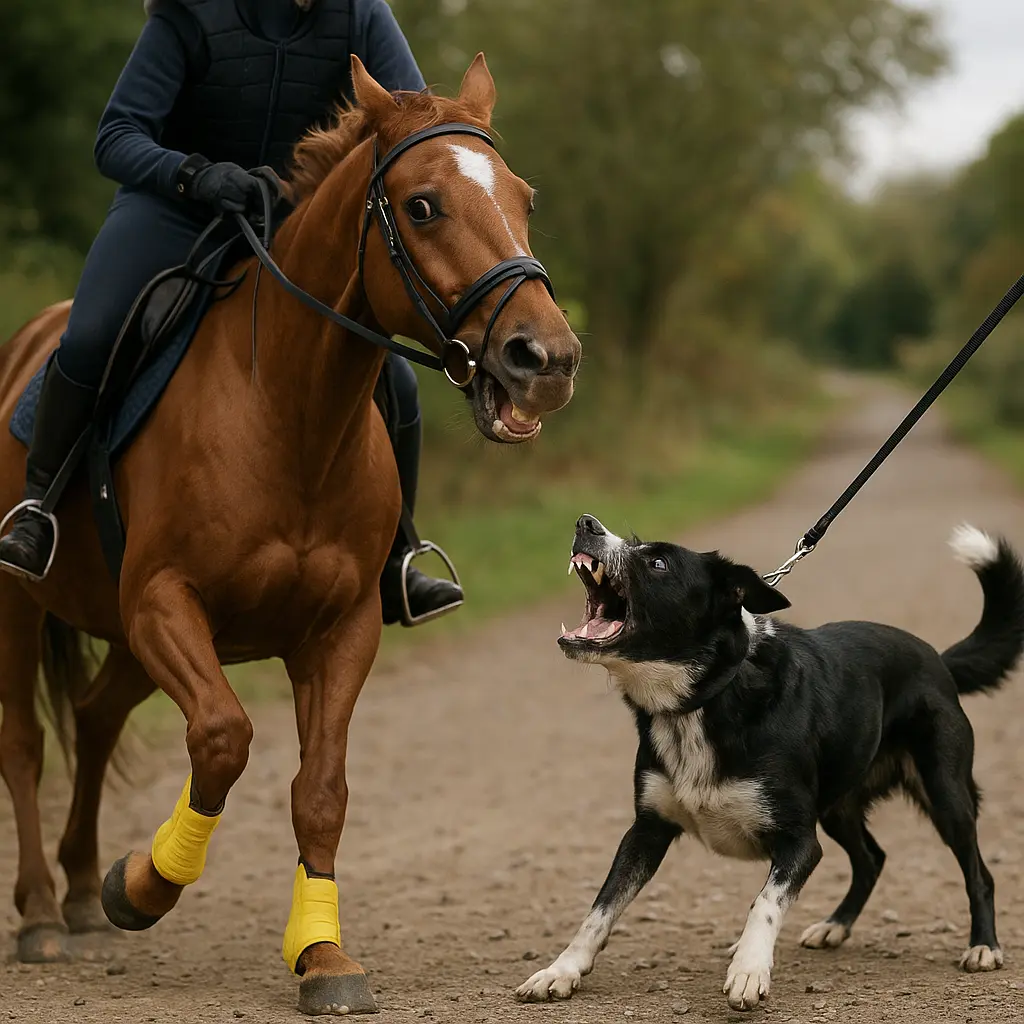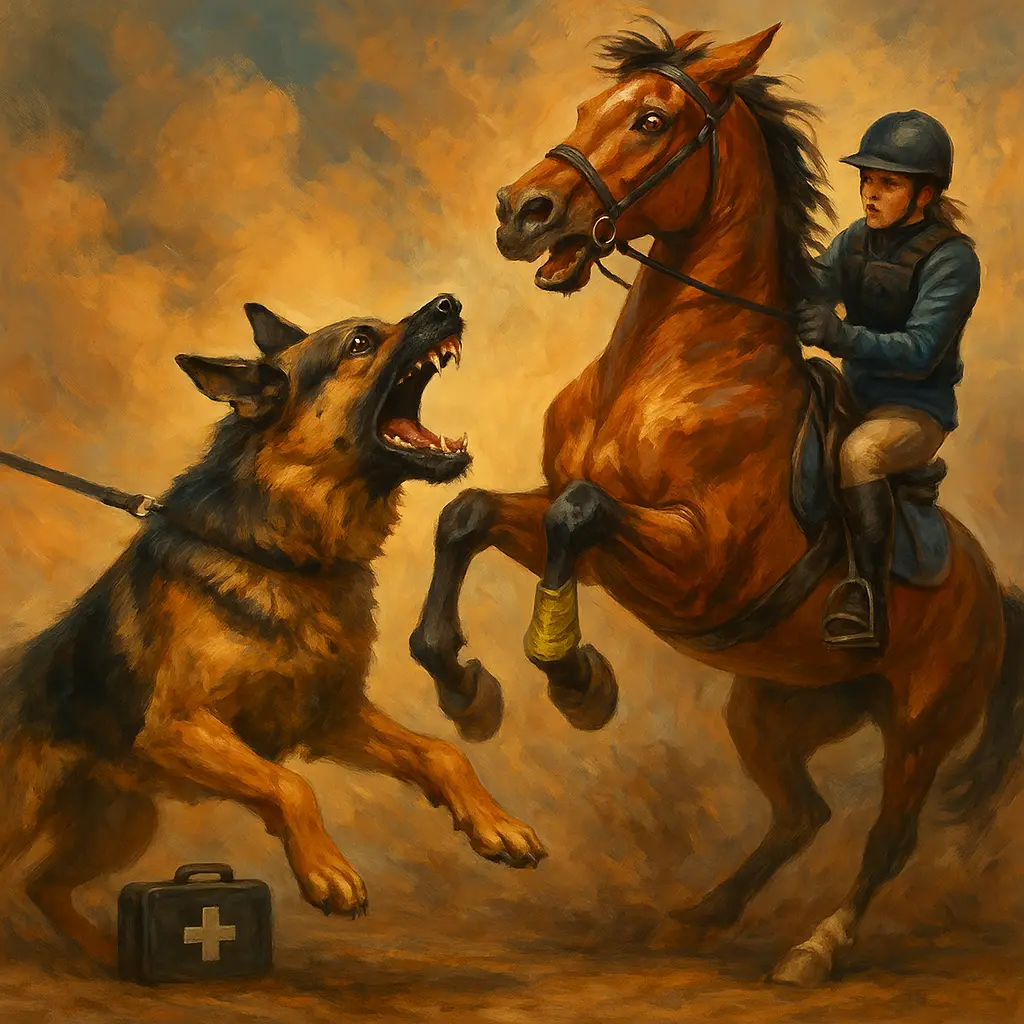
Sharing bridleways, fields and country lanes with dogs is part of everyday riding in the UK — but when a dog chases or attacks, seconds count. Knowing the law, what to do, and how to protect your horse can make the difference between a near miss and a serious injury.
Key takeaway: If a dog attacks or worries your horse, call 999 if it’s ongoing, gather clear evidence, and report to police — UK law protects horses as livestock and holds both dog owners and walkers liable, with strict civil liability and strong criminal penalties.
What UK law says when a dog attacks or scares your horse
In the UK, dog attacks and worrying of horses are criminal offences, and civil law makes keepers of dogs strictly liable for damage caused to horses and riders. Section 3 of the Dangerous Dogs Act 1991 applies anywhere, and the Dogs (Protection of Livestock) Act 1953 (as amended in 2023) confirms horses are “livestock” with police seizure powers and unlimited fines.
Here’s what that means for you on the ground:
- Dangerously out of control: Any breed can be “dangerously out of control” under the Dangerous Dogs Act 1991, in public or private places. Penalties include up to 2 years’ imprisonment, a £5,000 fine, destruction, disqualification from owning dogs, and muzzling/lead orders.
- Worrying livestock (including horses): The 2023 amendment to the Dogs (Protection of Livestock) Act increased the maximum penalty from £1,000 to an unlimited fine and gave police greater powers to seize dogs suspected of worrying. This protection extends to horses on agricultural/grazing land and on roads/paths while being moved.
- Strict civil liability: Under the Animals Act 1971, both the dog’s owner and the person in charge are “keepers” and can be strictly liable for damage a dog is likely to cause, based on its known characteristics — you do not have to prove negligence.
“Defra recognises that dog attacks can have horrific consequences and takes this issue very seriously, confirming that ‘livestock’ includes horses.”
— UK Department for Environment, Food & Rural Affairs, via Horse & Hound
The British Horse Society recorded 168 dog–horse incidents in 2019, including three equine fatalities, 45 injured horses and 43 injured people. Riders have pursued damages as high as £5 million after dog-related falls — a clear sign courts take these incidents seriously.
What to do immediately during and after an incident
Call 999 if the attack is ongoing; otherwise report as soon as possible to 101 with full details. Prioritise safety — create space, control your horse, and avoid confronting the dog or handler.
Use these steps in order:
- Get safe and visible: Move away calmly if you can. Dismount only if it makes you safer. Ask the handler to put the dog on a lead — “close control” is required in law if recall is unreliable.
- Call police: 999 if danger is immediate, 101 to report. Give the exact location, description of the dog and owner/handler, any injuries, and whether livestock worrying is involved (triggers seizure powers).
- Avoid confrontation: Do not argue or make threats — this risks escalation and potential offences under the Offences Against the Person Act 1861.
- Get your vet: Even small puncture wounds can infect quickly. Call your vet, send clear photos and follow their advice.
- Record evidence: Photograph injuries to horse and rider, the dog, the handler, and the scene. Ask witnesses for names and contact details.
- Log everything: Time, weather, route, GPS track, descriptions, and all costs (vet, transport, lost lessons/competition entries).
Quick tip: Save 101 and your local rural crime team number in your phone. On bridleways near yards, council action can be triggered if dogs deter public use — reporting builds a pattern officers can act on.
How to gather evidence that stands up
Take contemporaneous photos/video, collect witness details, and obtain a prompt vet report; keep a clear timeline and receipts. Good evidence helps both criminal prosecutions and civil claims.
Capture the essentials:
- Photos/video: Your horse’s wounds and mud/blood on legs or tack; the dog (size, colour, collar, tags); the handler; the location, gates and signage; damaged clothing or equipment.
- Witnesses: Names, mobiles, brief statements while memories are fresh. Ask if anyone had a dashcam or helmet camera.
- Vet evidence: Written report, treatment notes, and prognosis. Keep invoices and medication labels.
- Timeline: Start a note on your phone with times from incident to reporting, vet arrival, and police reference numbers.
- Other sources: Request nearby CCTV, doorbell video, or yard cameras. Preserve your GPS ride log for speed and location data.
“Dog attack cases are always fact-sensitive, and the retention of contemporaneous evidence such as video footage will always be helpful to secure a prosecution.”
— Kim Ayling, Head of Public Affairs, World Horse Welfare, via Horse & Hound
Quick tip: Use your phone’s voice notes to dictate what happened while it’s fresh, then email it to yourself so the timestamp is saved.
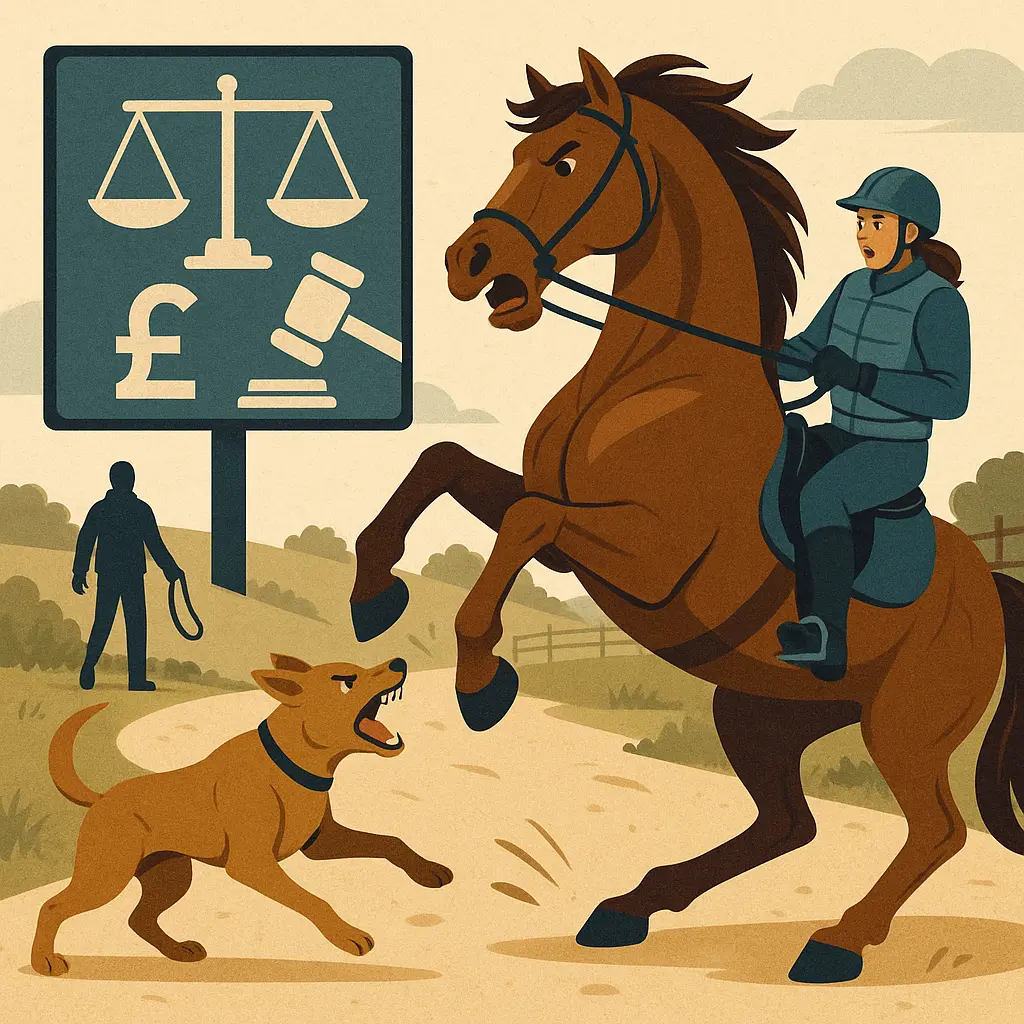
Liability and penalties: who pays and what police can do
Both the dog’s owner and the person in charge are “keepers” and can be jointly liable under the Animals Act 1971; criminal penalties range up to 2 years’ imprisonment for a dangerously out of control dog and unlimited fines for livestock worrying.
Civil liability (Animals Act 1971):
- Strict liability applies to keepers if the damage is of a kind the dog is likely to cause due to characteristics known to the keeper — you don’t need to prove negligence.
- Liability can extend to injuries from spooking and falls, not just bites, if the dog’s behaviour caused the damage.
- Claims for personal injury must be brought within 3 years from the date of injury. Keep all receipts, records and reports.
Criminal powers and penalties:
- Dangerous Dogs Act 1991: Applies anywhere. Penalties include imprisonment up to 2 years, fines up to £5,000, control/destruction orders, and muzzling/lead requirements.
- Dogs (Protection of Livestock) Act 1953, amended 2023: Horses are treated as livestock; worrying includes chasing without contact. Police can seize suspect dogs and the maximum penalty is now an unlimited fine.
- Dogs Act 1871: Magistrates can order control or destruction of a dangerous dog regardless of where the incident happened, including private land such as livery yards.
On farmland, owners have long-held rights to protect livestock; in certain circumstances, dogs worrying livestock may lawfully be destroyed without compensation. The British Horse Society welcomes stronger police powers but notes the livestock-worrying law primarily covers agricultural/grazing land and movement along “roads and paths.”
In practice, well-documented cases are more likely to see action. Provide police with all evidence you’ve gathered and ask for the crime reference number. If council rights of way are being compromised by aggressive dogs (even from private gardens), report this to your local authority too.
Reduce risk on hacks and at the yard
Keep distance from off-lead dogs, communicate early and clearly with handlers, and choose routes with good visibility; dog walkers should use a lead if recall isn’t reliable as “close control” is required in law.
Practical steps that help:
- Scan ahead: Slow down when you see dogs, especially near gateways, blind bends or water. Position your horse between you and the hedge/ditch to create space.
- Use your voice: A calm “Please pop your dog on a lead — thank you” works better than shouting. Many owners will comply if asked early.
- Ride company: Pair up on busy routes so one rider can engage the owner while the other gives the dog a wide berth.
- Choose timing: Avoid peak dog-walking times if your horse is green. After school and early weekends are the busiest.
- School for stillness: Practise standing quietly while a helper walks a dog past on a lead at a safe distance, building up gradually.
Gear that meaningfully reduces risk and consequences:
- Be seen: High-contrast kit gives dog owners time to react. Explore our high-visibility rider gear for jackets, hat bands and exercise sheets tailored to UK roads and bridleways.
- Protect the rider: A well-fitted helmet and body protection reduce injury if a spook unseats you. Check our range of properly fitted riding helmets.
- Grip matters: Winter mud and leaf litter are slip hazards. Choose supportive, grippy winter riding boots that keep you secure in the stirrup.
- Support the horse: Leg protection can reduce cuts from claws or undergrowth during a spook. See our horse boots and stable bandages for brushing, tendon and overreach options.
- Dress for control: Well-fitting breeches with good knee patches improve stability. Our women’s jodhpurs and breeches include insulated and full-seat styles for winter hacks.
Pro tip: Agree a yard protocol for dog encounters on shared driveways — speed limits, signage and giving way rules reduce flashpoints.
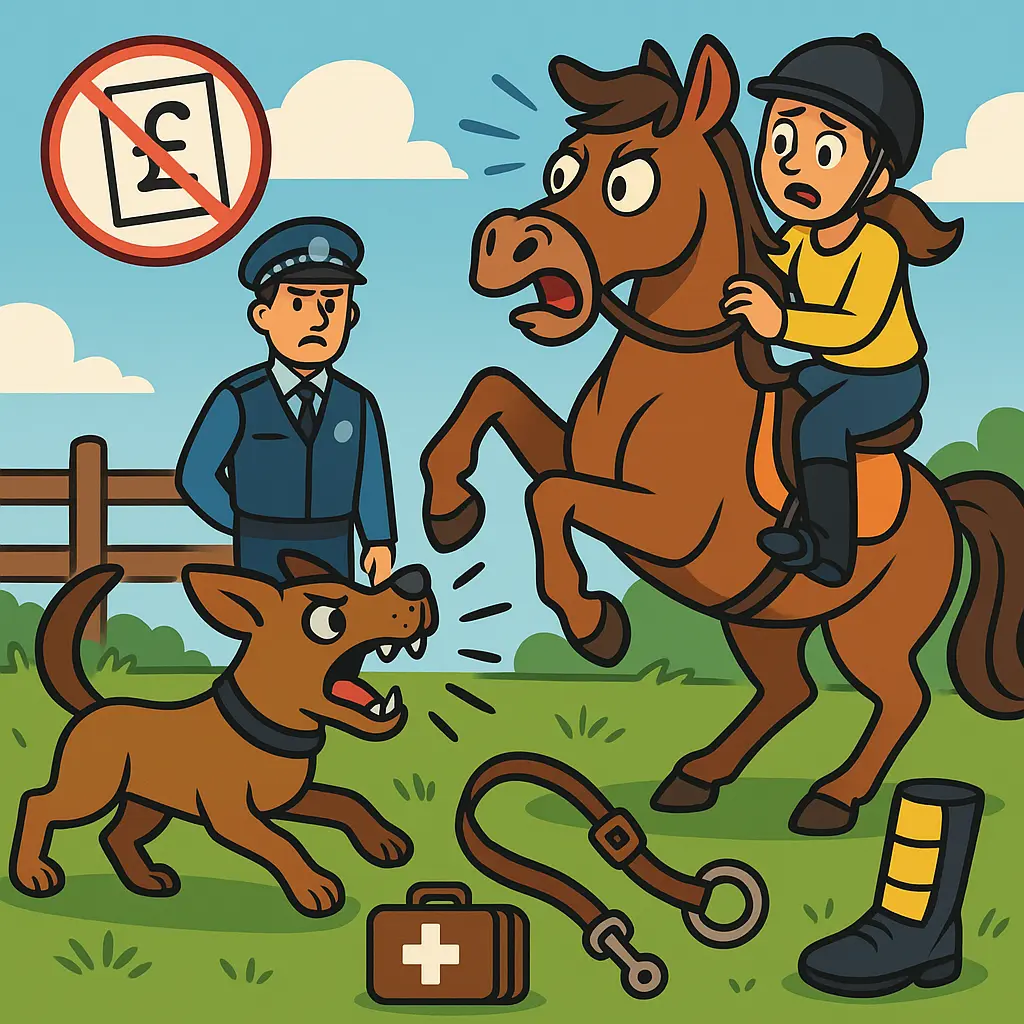
Treating wounds and aftercare for your horse
Clean wounds promptly with saline or an appropriate antiseptic, control bleeding, call your vet, and monitor closely for heat, swelling, discharge or lameness. Even mild-looking punctures can become serious infections within 24–48 hours.
Immediate first aid:
- Stop bleeding: Apply firm, even pressure with a clean dressing. Elevate a limb if practical.
- Clean around the wound: Flush gently to remove dirt and hair; avoid scrubbing into the puncture track.
- Bandage if advised: Use a sterile pad and supportive bandage on limbs to limit swelling until your vet assesses.
- Keep the horse calm: Box rest initially; avoid turnout where running could widen the wound.
At Just Horse Riders, we recommend keeping a stocked kit ready to go so you’re not scrambling after an incident. You’ll find antiseptic washes, saline, clean pads and cohesive wraps across our grooming and first-aid essentials, plus trusted NAF first-aid staples for wound care. For ongoing support, choose breathable wraps from our horse boots and bandages selection that suit ponies through to thoroughbreds.
Aftercare checklist:
- Vet follow-up: Request a written report and treatment plan (crucial for claims). Ask about pain relief and infection risk.
- Monitor twice daily: Temperature, lameness level, swelling, discharge, and appetite. Photograph progress.
- Tack check: Inspect boots, girth, bridle and saddle for stress or breaks after a spook or fall.
- Return to work gradually: Start with in-hand walking, then short hacks with a steady nanny horse once the vet approves.
Quick tip: Bag and label any damaged gear and bloodstained clothing — they’re useful evidence of force and injury.
When and how to pursue compensation
You have three years from the date of injury to bring a personal injury claim; speak to a solicitor experienced in Animals Act 1971 cases as soon as practical. Keep your evidence bundle organised and continue logging costs until the case is resolved.
Your claim can include:
- Vet fees and rehabilitation: Consults, medications, bandaging, transport, and livery/box rest changes.
- Rider injury losses: Treatment, physio, time off work, damaged clothing/tack, and future care if applicable.
- Performance loss: Missed competitions or lessons, and any diminution in value if your horse’s career is affected.
Under the Animals Act 1971, strict liability for keepers can make recovery more straightforward than general negligence claims. Do not negotiate at the scene; exchange details, report to police, and let your insurer or solicitor handle communications. Keep every receipt — even mileage to the vet adds up and is usually recoverable.
FAQs
Does “livestock” include ponies or horses on bridleways?
Yes. The Dogs (Protection of Livestock) Act 1953, as amended in 2023, confirms horses are livestock. Protection covers agricultural/grazing land and extends to movement along roads and paths, which includes bridleways used for moving horses.
Can I claim compensation if my pony is injured but not bitten?
Yes. Under the Animals Act 1971, chasing, barking or jumping up can cause damage, and keepers can be strictly liable if that damage is of a kind the dog is likely to cause given its known characteristics. Spooks, falls and soft-tissue injuries can all be compensable.
Who is liable if the dog was with a walker, not the owner?
Both the owner and the person in charge are “keepers” under the Animals Act 1971 and can be jointly liable. You don’t need to choose between them to pursue your claim.
What if the attack happens on private land like a livery yard?
The Dangerous Dogs Act 1991 and the Dogs Act 1871 apply regardless of public or private location. Magistrates can impose control requirements or order destruction, and police can act where a dog is dangerously out of control.
Can police destroy a dog that attacks my pony?
Police can seize dogs under the 2023 livestock-worrying amendments and courts can order destruction in dangerous dog cases. On farmland, long-standing provisions allow destruction of a dog worrying livestock in specific circumstances.
Is a rider’s fall from a spooked pony compensable?
Potentially yes. If a dog’s behaviour caused your horse to spook and you fell, this can fall under the Animals Act 1971 — riders have brought high-value claims (up to £5 million has been sought in past cases) for such injuries.
What penalties can a dog owner face after an attack?
Under the Dangerous Dogs Act 1991, penalties include up to 2 years’ imprisonment, fines up to £5,000, control or destruction orders, and muzzling/lead requirements. For livestock worrying, the maximum penalty is now an unlimited fine, with police seizure powers.
If you ride in areas with regular dog traffic, preparing now pays off later. Save emergency numbers, keep a compact first-aid kit in your grooming box, and equip yourself and your horse with visible, protective gear. When incidents do happen, act quickly, document thoroughly, and lean on the protections UK law gives you — and if you need kit that works as hard as you do, explore our curated ranges of rider hi-vis, helmets, boots, horse boots and bandages, first-aid grooming essentials, and trusted NAF care products.