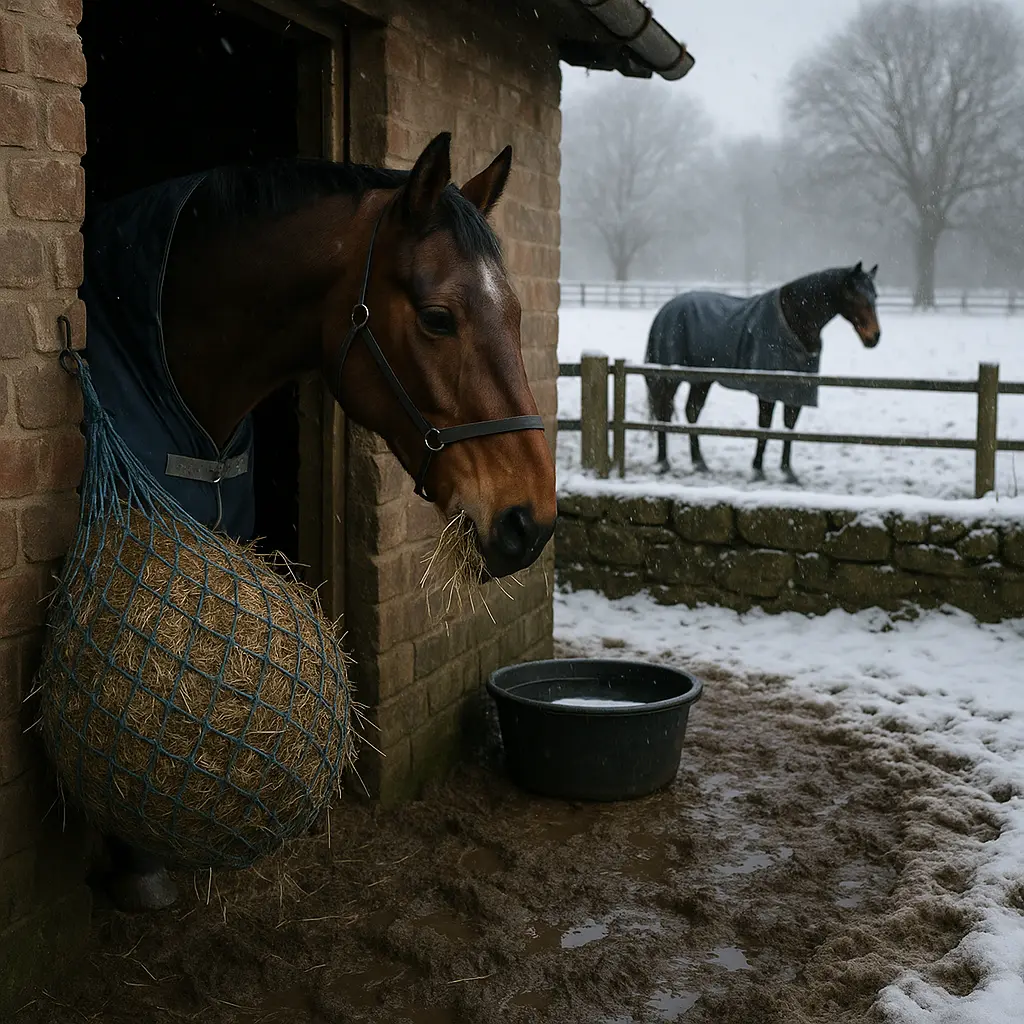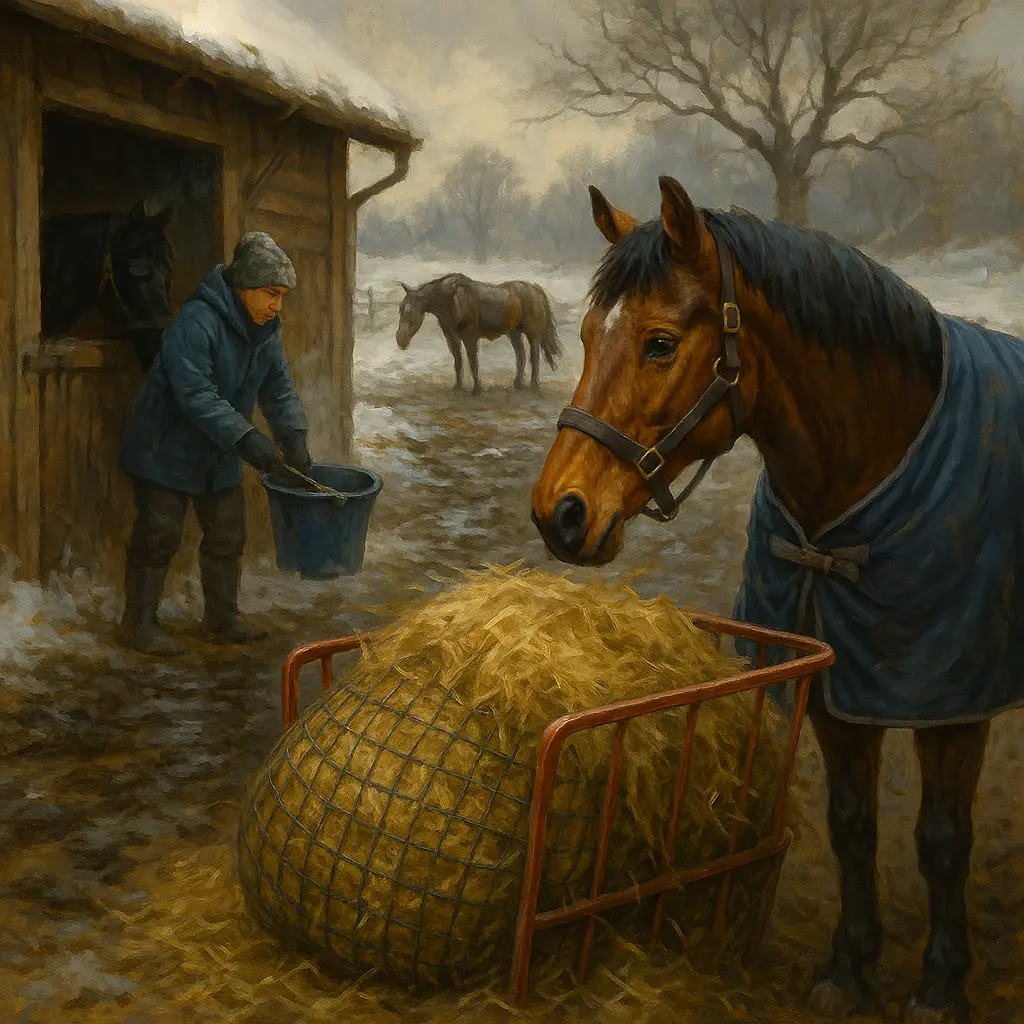
Short days, mud, and tightening forage supplies are testing UK yards this winter. With hay yields hit hard by 2025’s dry spring and more horses stabled for longer, a smart, welfare-first plan is essential.
Key takeaway: Prioritise fibre and hydration, keep changes gradual, and use low-dust management in the stable — then fine-tune rugs, turnout and hoof care to ride out the UK hay crisis safely.
What UK horse owners are facing this winter
UK hay yields plummeted after an exceptionally dry March–May 2025, pushing up forage prices and forcing early use of winter reserves. At the same time, 60.7% of horses spent 12–18 hours a day stabled over winter 2025/26, increasing respiratory risks.
According to Your Horse’s March 2026 update, reduced rainfall through spring 2025 coupled with poor autumn growth meant many owners dipped into winter forage months early and are now facing high prices as winter ends. Dr Katie Williams, Technical Manager at Dengie Horse Feeds, summarised the pressure at the 2026 National Equine Forum:
“In March, April and May [2025], we were experiencing significantly reduced levels of moisture, rainfall... Yields plummeted, meaning that when producers came to harvest, there was not much to go for... people are really starting to struggle, having to pay a huge amount for forage.”
In parallel, the Bedmax Equine Health & Bedding Survey 2026 found over half of owners reported equine health problems, with respiratory issues topping concerns; 45.51% had horses with health problems needing treatment or stopping riding, and one in three owners reported their own respiratory symptoms linked to stables. With more time indoors and hay harder to source, winter 2025/26 demands careful, evidence-led management.
How to feed through the UK hay crisis
Base the diet on forage (chewing up to 18 hours a day) and stretch supplies safely using slow feeding, smart turnout, and early purchasing. Forage is your horse’s internal heating system, so don’t compromise fibre even when hay is tight.
The British Horse Society (BHS) stresses the thermogenic value of fibre:
“Forage acts as an in-built heating system and keeps horses warm by creating heat as it breaks down the fibre in their digestive system.”
Practical steps to ride out shortages:
- Plan fibre first: Keep ad-lib forage for good doers by slowing intake rather than cutting quantity. Use double-netting or small-hole nets to extend eating time and reduce waste.
- Buy early where possible: As Your Horse reports, prices rise as winter ends; secure consistent batches to avoid abrupt dietary changes.
- Section winter grazing: Fence off areas early and rotate to preserve swards, hand-graze when conditions allow, and always provide a forage source if grass is sparse.
- Keep changes gradual: Any shift in forage type or amount should be phased over 10–14 days to reduce colic risk (BHS and SRUC).
- Support the gut: Where workloads or forage types vary, consider targeted digestive supplements to help maintain condition and consistency through winter management changes.
Quick tip: Lay down rubber mats in hay areas, use tidy corner feeders, and sweep up daily — reducing wastage can save a surprising number of bales across a yard.
On a budget? Keep an eye on our rotating deals in The Secret Tack Room clearance for yard essentials.
How to keep your horse drinking 20–70L/day in winter
Check water at least twice daily, break ice, and add hot water to boost temperature; aim for roughly 10 litres per 100 kg body weight (20–70 L/day for most horses). Soak forage or make feeds sloppy to raise fluid intake in cold snaps.
The RSPCA warns water intake often drops in freezing weather even though horses still need 20–70 litres a day; the SRUC adds that horses dislike very cold water and recommends warming it:
“Horses do not like to drink very cold water; add some hot water daily to water buckets to raise the temperature... Soak forage to increase water intake.”
Make it routine:
- Morning and evening checks: Remove ice, top up, and raise temperature safely with hot water (tepid, not hot).
- Encourage drinking: Floating a few apple slices, adding a pinch of salt, or feeding slightly sloppier mashes can help; confirm with your vet for horses on restricted diets.
- Stable-side solutions: Use insulated buckets or safe heaters where permitted; place buckets away from draughts to reduce icing.
Quick tip: Keep a dedicated, food-safe kettle and a winter “hydration kit” by the yard tap so you don’t skip warming water when it’s bitterly cold.
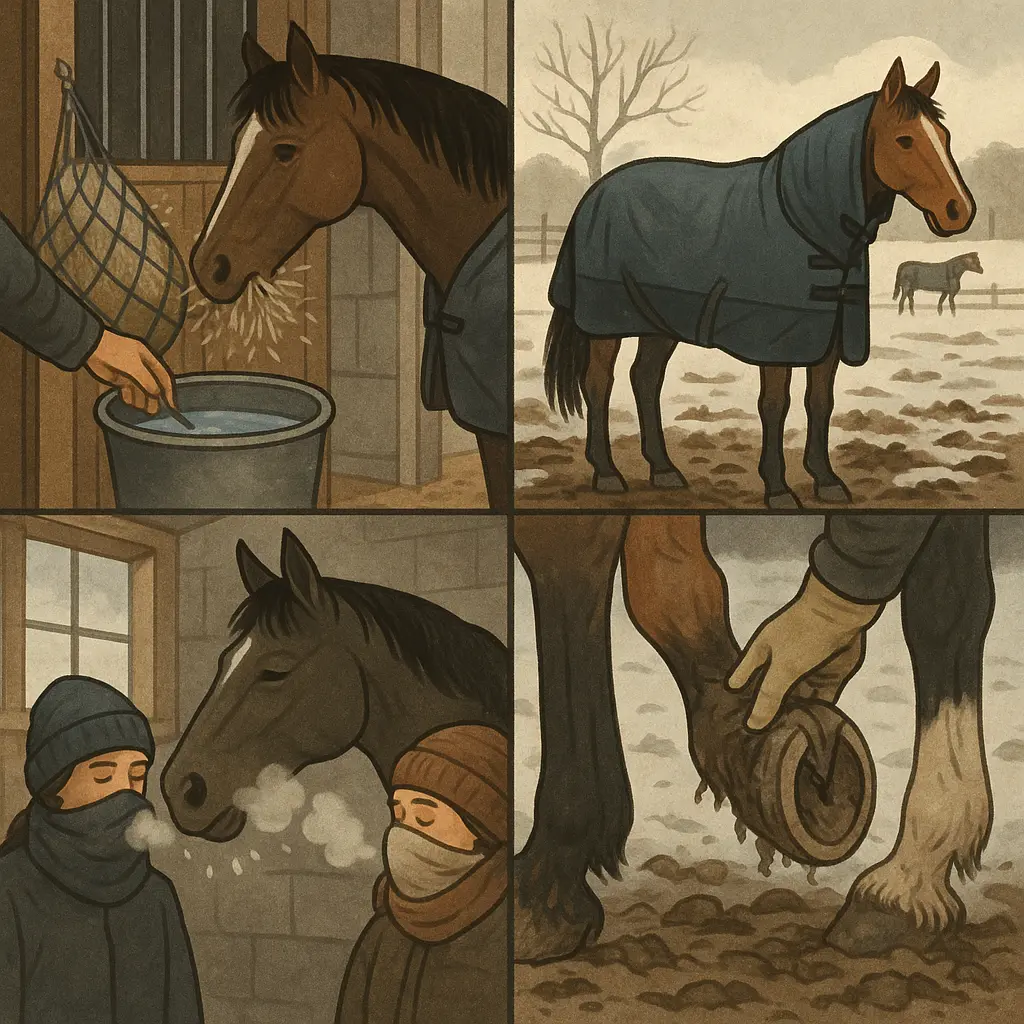
How to cut stable dust and protect respiratory health
Switch to low-dust, highly absorbent bedding and maximise ventilation to reduce respiratory problems in stabled horses. Daily, thorough mucking out and dry floors limit ammonia and spores that irritate airways.
Respiratory problems were the top health concern in the 2026 Bedmax survey, with over half of owners reporting equine health issues and one in three owners affected themselves. With 60.7% of horses stabled 12–18 hours a day, bedding choice matters more than ever. Surveyed owners prioritised absorbency, low dust, hygiene, and quality — and 70% preferred supporting local retailers.
What good practice looks like:
- Ventilation first: Keep upper doors open where safe, avoid blocking grills, and skip storing hay directly overhead in tight spaces.
- Low-dust management: Choose low-dust bedding and remove wet patches daily. Avoid shaking out hay in the stable; prepare forage outside.
- Stable routine: Muck out before bringing horses in and allow dust to settle. Sweep aisles to keep the whole block cleaner.
At Just Horse Riders, we recommend pairing low-dust bedding with consistent yard hygiene and suitable grooming tools to reduce coat dust before rugging or riding. Where extra support is needed, carefully selected respiratory supplements can complement management.
When to clip and what rugs to use in UK winter
Clip horses in regular work to prevent sweating and chills, then use an exercise sheet and appropriate turnout or stable rugs to protect from wet and cold. Avoid over-rugging unclipped horses, who often stay warm if well-fed and sheltered.
The BHS advises clipping working horses to reduce sweat and post-ride chills, adding that an exercise sheet helps where the coat is removed over the back and hindquarters:
“If your horse’s coat is removed from their back and hindquarters, an exercise sheet may be beneficial in wet or very cold conditions.”
Rugging pointers for UK conditions:
- Outdoors: Choose waterproof, breathable turnout rugs sized correctly to prevent rubs and to allow free movement. Use shelter in fields to reduce windchill.
- Indoors: Match stable rug weight to temperature, condition score, and clip pattern. Well-ventilated stables reduce condensation under rugs; consider layering rather than one heavy rug to fine-tune warmth.
- After exercise: Use an exercise sheet in wet, windy, or very cold weather for clipped horses, especially when warming up, cooling down, or hacking.
At Just Horse Riders, we recommend building a small, flexible rug wardrobe: a lightweight and a mediumweight stable rug, plus at least one reliable turnout rug for the British drizzle-to-downpour spectrum.
Quick tip: Reassess daily. If ears are hot and your horse is sweaty at the shoulder or girth line indoors, step down a rug weight. If he’s tucked up and cold behind the elbow, step up gradually.
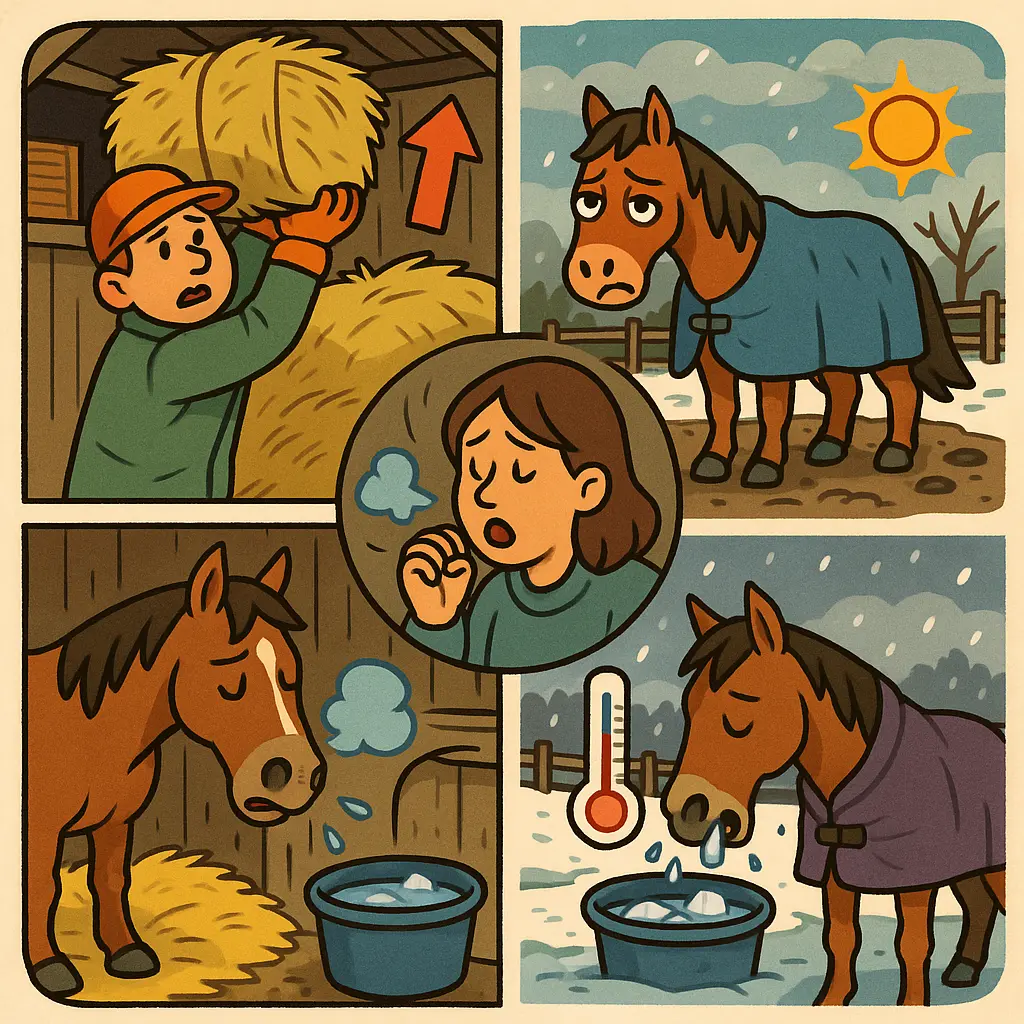
How to manage mud, hooves and turnout safely
Maintain daily turnout or exercise with shelter provided, rotate fields to prevent poaching, and check legs/hooves daily for mud fever and abscesses. Choose better-drained paddocks in wet spells and bring in if conditions become unsafe.
Both the RSPCA and SRUC emphasise the importance of turnout and movement, even when reduced, to prevent boredom, stress, and colic. With UK meteorological winter bringing relentless damp, protect your fields by rotating and resting sections; use hardstanding around gates and feeders where possible to minimise mud build-up.
Daily checks that pay off:
- Legs: Rinse or brush off heavy mud, dry thoroughly, and look for scabs or heat consistent with mud fever. Apply suitable barrier creams as advised by your vet or hoofcare professional.
- Feet: Pick out hooves at least once daily. Watch for a strong digital pulse, heat, or sudden lameness that could signal an abscess.
- Protection: Consider well-fitted turnout boots or bandages for horses prone to mud fever, ensuring they’re kept clean and dry between uses.
For clean-up and skin care, a well-stocked grooming kit makes the job faster and more thorough in winter light.
How to adjust routines without risking colic
Make any management or dietary changes over 10–14 days, keep some daily turnout or exercise, and track condition monthly with fortnightly weight checks. Allow modest winter weight loss in good doers but watch overweight horses for laminitis risks.
The BHS and SRUC both recommend gradual change to protect gut health and reduce colic risk, especially when shifting from grass to hay or altering stabling hours. Combine this with simple monitoring habits:
- Body condition scoring: Check monthly using a consistent method; record crest fat and girth changes.
- Weight tracking: Use yard weighbridges where available or a weigh tape every two weeks.
- Workload: Keep regular low-impact exercise if turnout is limited to support motility and behaviour.
Quick tip: Set calendar reminders for condition and weight checks. Small, regular notes help you spot trends before they become problems.
Where diets become more static indoors, targeted supplements for digestive or joint support can help maintain condition and comfort through the colder months.
What UK riders should do to stay safe and efficient this winter
Wear hi-vis for every hack in low light, keep your feet dry and supported with robust riding boots, and agree an emergency plan with your yard and vet. Consistent routines help you and your horse cope with short days and wet weather.
With limited daylight and more roadwork between showers, make yourself visible and comfortable:
- See and be seen: Equip yourself with hi-vis gear and ensure your phone is charged before leaving the yard.
- Footing matters: Choose waterproof, grippy horse riding boots for stable chores and wet yard surfaces.
- Emergency-ready: Keep your vet’s number on the stable door, ensure your horse is registered, and discuss contingency plans for frozen pipes, power cuts, and transport.
Given the Bedmax finding that one in three owners reported respiratory issues, your own health counts too. Good ventilation, low-dust bedding, and mucking out before horses come in will help protect you as well as them.
FAQs
How much forage does my horse need in winter?
Forage should form the basis of the diet, with horses spending up to 18 hours a day chewing; increase fibre when grass is scarce because it also helps keep them warm. The BHS highlights that fibre breakdown generates heat, acting like an in-built heating system — essential in cold, damp UK weather.
When should I clip my horse?
Clip if your horse is in regular work to avoid heavy sweating and post-exercise chills. Per BHS guidance, if you’ve clipped the back and hindquarters, use an exercise sheet in wet or very cold conditions to protect those areas while riding.
How do I prevent low water intake in freezing weather?
Check and refresh water twice daily, break/remove ice, and add hot water to make it tepid. Aim for roughly 10 litres per 100 kg body weight (about 20–70 L/day), and increase moisture by soaking forage or making feeds sloppier as advised by RSPCA and SRUC.
Is full winter turnout still common in the UK?
No — more horses are spending longer stabled due to mud, field preservation, and management practicality. The 2026 Bedmax survey reported 60.7% of UK horses were stabled 12–18 hours per day in winter 2025/26.
What early signs of winter-related respiratory issues should I watch for?
Look for persistent coughing, nasal discharge, flared nostrils or increased breathing effort at rest, and reduced performance. Reduce dust in the stable, improve ventilation, and consult your vet promptly if signs persist; respiratory problems were the top concern in the 2026 Bedmax survey.
How can I manage hay shortages safely?
Secure forage early, slow feeding with small-hole nets, and rotate/section winter grazing to protect pasture. The 2025/26 hay crisis followed extremely dry spring months and poor autumn growth, so planning and consistency are critical this year.
What rugs do I actually need?
For most yards, a reliable waterproof turnout rug plus one or two stable rugs lets you layer according to clip, condition, and temperature. Reassess daily and avoid over-rugging — fibre intake and shelter contribute significantly to warmth.
Ready to streamline your winter routine? Build a dust-smart stable, keep fibre and water flowing, and fine‑tune rugs and turnout to suit your horse. For tried-and-tested gear that makes winter easier, explore our curated ranges, from turnout rugs to grooming essentials — and check The Secret Tack Room for smart savings.