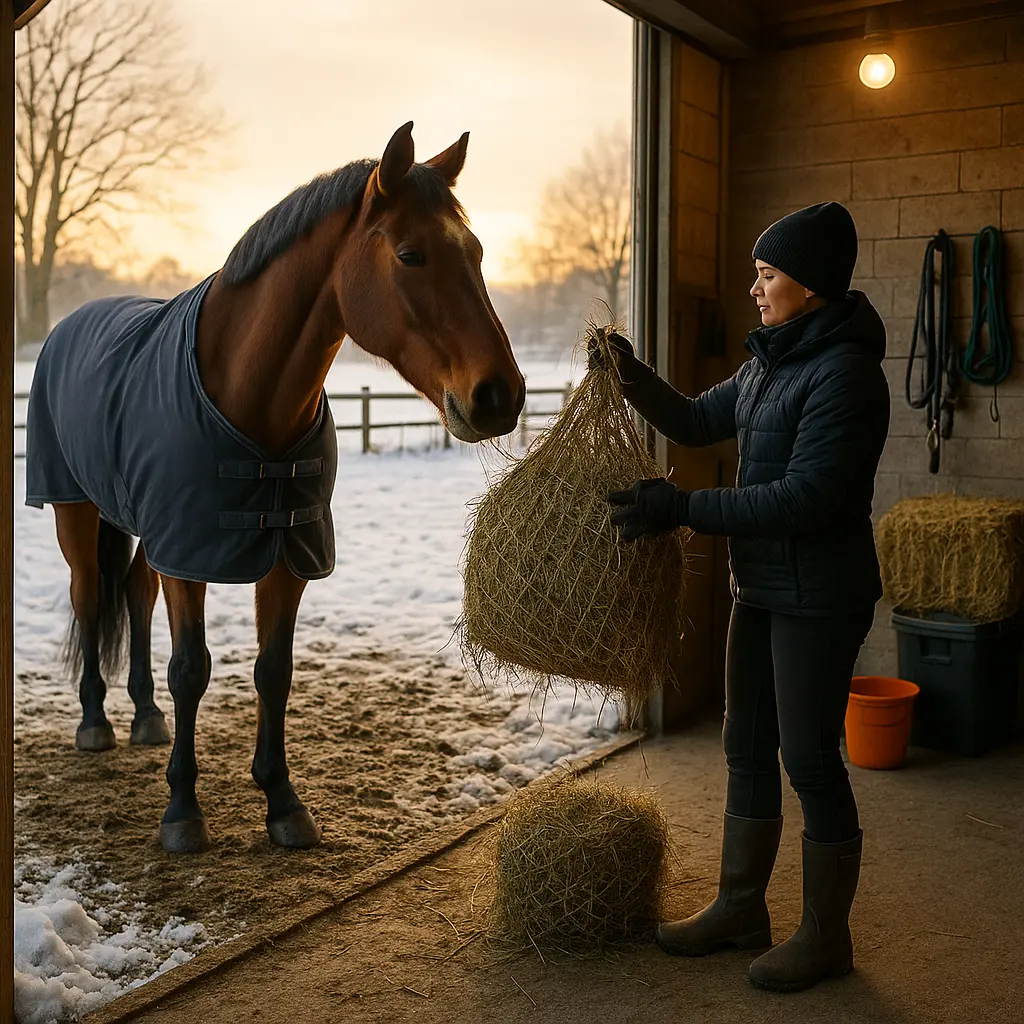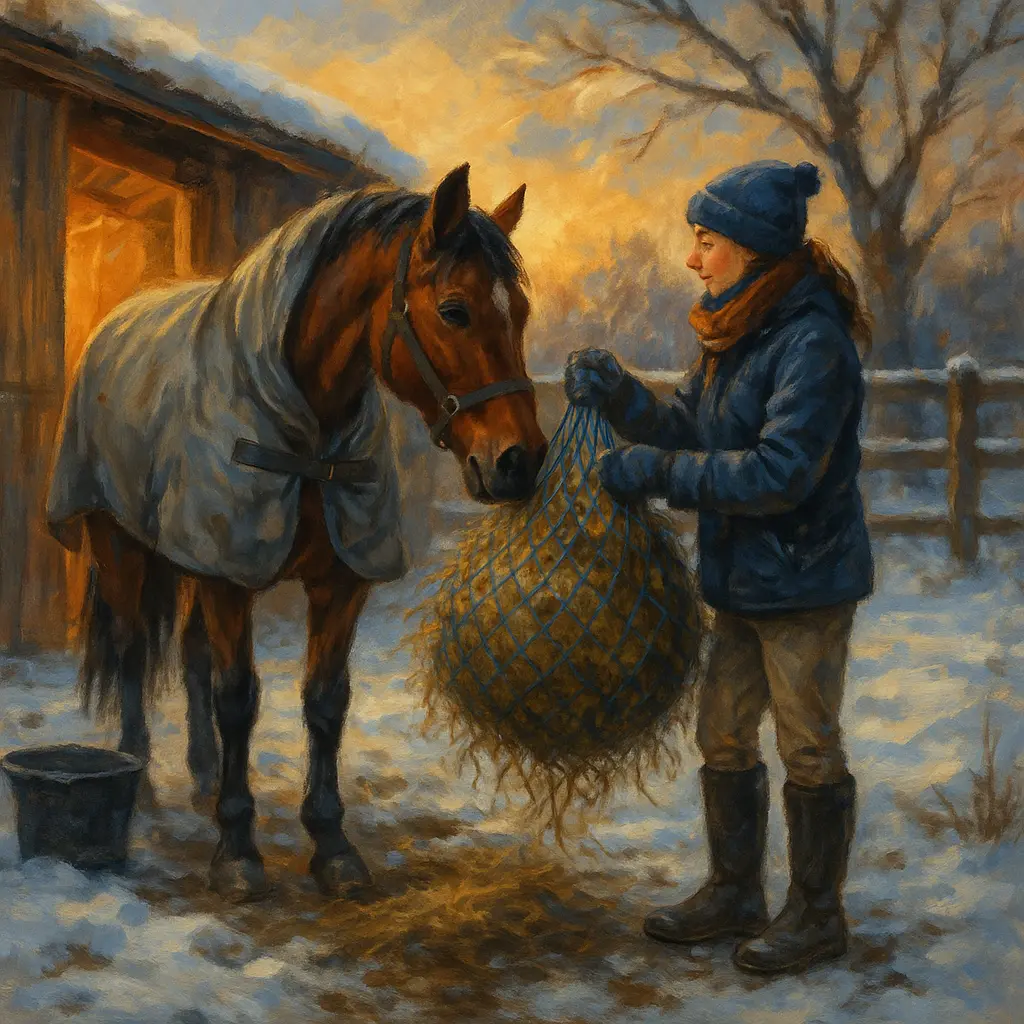
Short days, mud, and shift patterns don’t have to derail your horse care. With a few smart systems, you can keep your horse healthy, moving and content all winter — even when you’re out of the house for 12 hours.
Key takeaway: Build your winter around three non‑negotiables — forage 24/7, fresh water checked twice daily, and daily movement — then use time‑saving systems to make the rest fit your work week.
What does a sane winter routine look like?
A workable winter routine for full‑time workers centres on three non‑negotiables: forage 24/7, fresh water checked twice daily, and daily movement. Everything else — grooming depth, ride length, exact feed time — can flex within sensible limits.
Your horse’s digestive system is designed to trickle‑feed on fibre for up to 18 hours a day. In winter, that fibre also acts as a built‑in heater, generating warmth as it ferments in the hindgut. Prioritise ad‑lib hay or closely spaced small‑holed nets to avoid long “empty stomach” periods, which raise the risk of ulcers and stable vices. If your schedule is unpredictable, slow hay feeders or double‑netting can extend forage time between visits.
Consistency is the backbone of winter care, especially when daylight and footing are against you. As the Star Milling equestrian care team put it:
“Owning a horse isn’t just a hobby but an important daily responsibility… Being flexible in minor areas (like slightly shifting feeding times or shortening turnout) is reasonable. Cutting corners on inspections, water, or overall cleanliness is not.” (Star Milling Co.)
Make peace with “good enough” on busy days (a quick body brush, a brisk hand‑walk) and plan one or two higher‑quality work sessions per week when time and weather align.
How much hay does my horse need in winter?
Most horses need 2.5–3% of bodyweight in forage per day in winter, compared with 1.5–2% the rest of the year. For a 500 kg horse, that’s roughly 12.5–15 kg of hay daily when it’s cold, versus 7.5–10 kg in milder months.
This increase reflects the extra calories your horse burns to stay warm. Rather than adding lots of cereal meals, meet the demand primarily with forage to protect gut health and behaviour. Use small‑holed nets or slow feeders to stretch intake safely over many hours, particularly if you’re away all day.
Quick tip: If your horse loses condition despite increased hay, rule out dental issues and check actual hay weights — “a big net” can vary from 4 to 8 kg depending on hay type and packing. A simple luggage scale helps you calibrate at the start of winter.
Rug choice can also influence forage need. A well‑fitted rug reduces the calories your horse uses to keep warm, allowing more of that forage to maintain weight. For field‑kept horses in typical UK cold, wind and rain, look at reliable winter turnout rugs; for stabled time, ensure an appropriate layer from our range of stable rugs. Brands such as WeatherBeeta offer proven weather protection that helps you spend less time grooming and more time moving your horse.
How far can I shift feed and turnout times on shifts?
You can safely shift feed times by about one hour, but avoid 3–4 hour gaps without hay and transition routine changes over 10–14 days. This reduces colic risk and helps the gut and mind adapt smoothly.
When switching from summer turnout to more stable time, take 10–14 days to adjust forage amounts, turnout hours, and stabling. Edge feed times earlier or later in 15–30 minute steps if your rota changes. The real red flag is not a slightly later breakfast — it’s a long period without forage or a sudden diet change.
For grain or balancer meals, keep them small and consistent, and ensure hay is always available either side of the bucket. If your horse can’t have hay for a medical reason, seek vet or nutritionist guidance before making timing changes. The principle stands: fibre first, little and often.
Pro tip: Pre‑prepare evening and morning nets plus feed tubs on your day off. In the morning rush you’ll only tie up a net, drop a bucket, check water, legs and rugs, and go — a five‑minute routine that still meets the essentials.
What’s the minimum movement my horse needs daily?
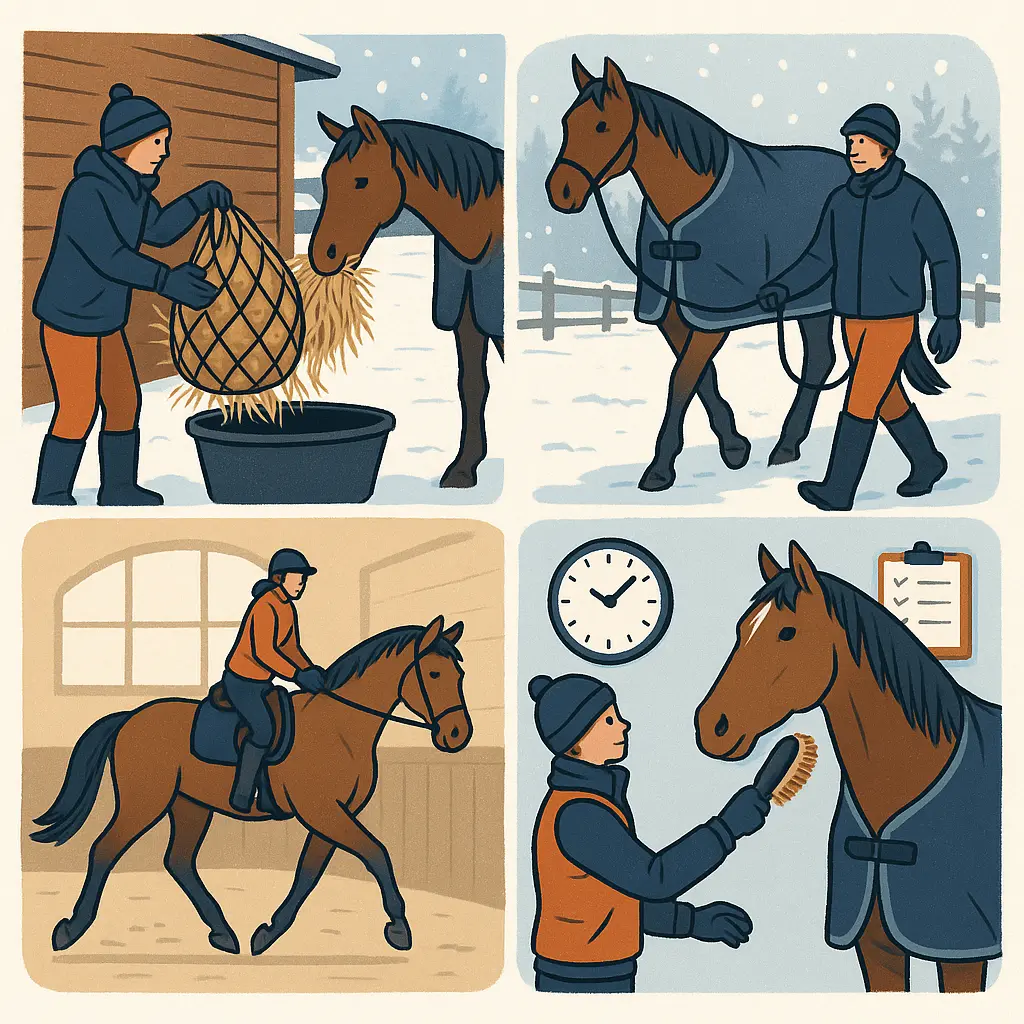
Your horse needs outdoor time every day; if turnout is limited, 10–15 minutes of hand‑walking is still far better than none. The British Horse Society (BHS) stresses that daily opportunities to move, forage and socialise are critical for health and behaviour in winter.
Many UK yards reduce turnout to protect fields in wet months. Plan alternatives: hand‑walking around the yard, using a safe track, or a brief lunge can diffuse excess energy and prevent stiffness. Even a short in‑hand graze at the verge gives mental decompression. As the BHS cautions:
“Spending long hours in the stable can limit your horse’s natural behaviours like moving around freely, foraging and socialising. This can lead to boredom, stress and even unwanted habits.” (British Horse Society)
For in‑hand or lunge sessions, protect legs appropriately and build time gradually. Our selection of horse boots and bandages can help support tendons and prevent knocks during brisk walk work, pole work, or short lunges — ideal when you need a quick but useful session.
Safety note for dark hours: choose well‑lit areas and wear visible kit. A hi‑vis waistcoat and reflective hat cover dramatically increase driver detection distances in dim light; browse our hi‑vis rider gear and well‑fitted riding helmets for safe, seen winter routines.
How do I keep fitness up in just 20–30 minutes?
Interval training once or twice weekly maintains fitness efficiently in winter, improving VO2max, power and lactate threshold. Alternating short efforts with recovery is a proven way to make limited saddle time count.
Here’s a simple 25–30 minute template you can ride, lunge, or long‑rein, adjusting to your horse’s level and footing:
- Warm‑up: 8–10 minutes marching walk, adding bending lines and a few 20–30 second jog/trot lifts.
- Work block (repeat 3–4 times): 2 minutes working trot or forward canter, then 2 minutes easy walk/trot to recover.
- Cool‑down: 8–10 minutes long‑rein walk, finishing dry and settled.
This approach lets you deliver meaningful cardiovascular work without an hour in the saddle. Mad Barn’s conditioning team highlights why a plan matters when weather and daylight bite:
“A winter training plan serves as a roadmap… Rather than outlining specific workouts, this plan helps you set realistic goals, anticipate limitations, and decide how to adapt when conditions change.” (Mad Barn)
Quick tip: Prioritise footing quality over ambition. Swap ridden intervals for in‑hand hill walks or raised pole marches if the school is frozen or the field is deep. The goal is controlled effort, not slips.
What time-saving systems actually work?
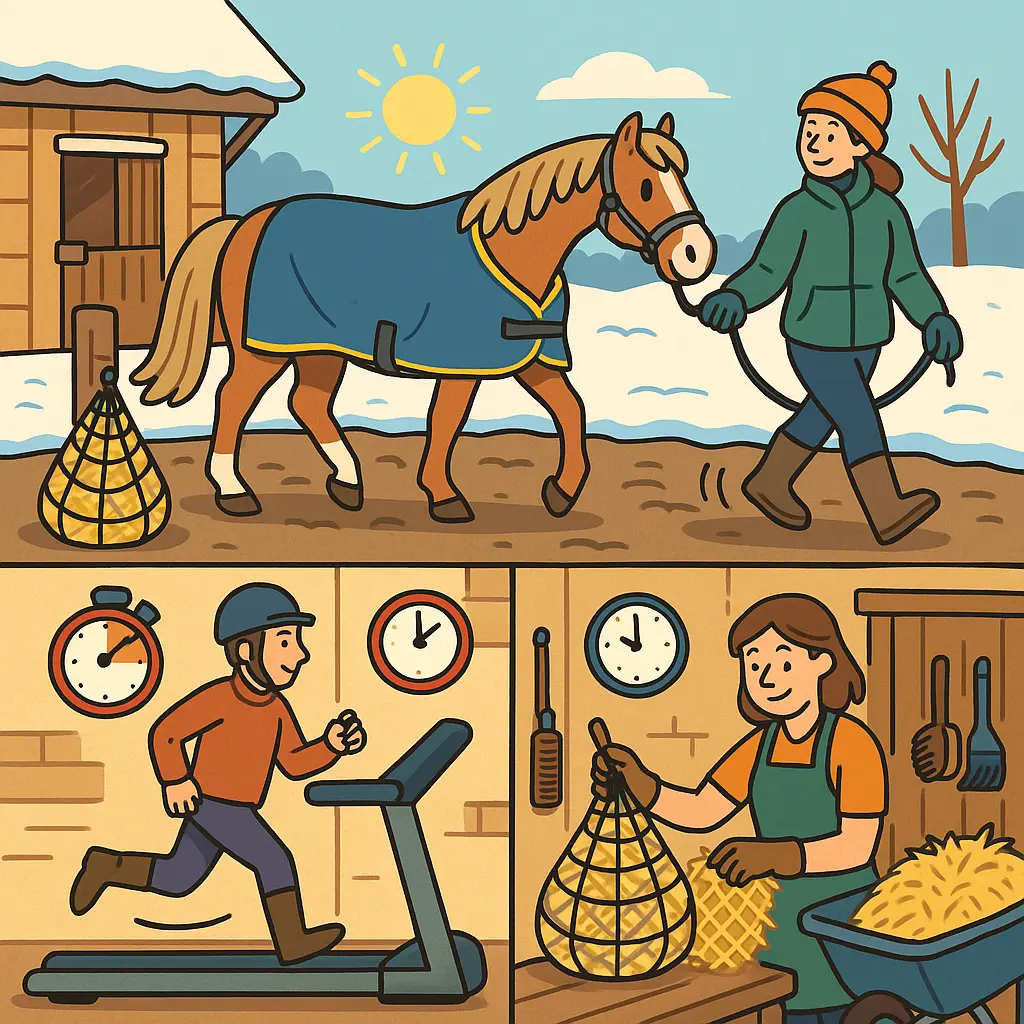
Pre‑preparing feeds, batching haynets and organising your kit typically saves 20–30 minutes per visit. Combine pre‑made nets (night before), a logical “pro kitchen” yard layout, and a timer app to stay focused and you’ll claw back meaningful time.
Use your weekend window to make a week’s worth of bagged feeds and stacked haynets. Position forks, brooms, headcollars and spare gloves where you use them, not “back in the tack room”. A simple task app with time blocks keeps you moving — 6 minutes for muck out, 2 minutes for water, 2 minutes for rugs, 5 minutes for a brisk in‑hand march. When the timer ends, you’re on to the next job.
Groom smarter, not longer. For stabled coats, a quick body brush on busy days is fine; keep deeper de‑mud sessions for the weekend so you don’t strip natural oils. For field‑kept mud monsters, a plastic magic brush, rubber mitt and a long‑bristled dandy brush whisk off dried mud fast without a bath. See our curated grooming tools that make five‑minute tidy‑ups doable on workdays.
Rugs can be time‑savers too. A clean, well‑fitted turnout with a neck cover keeps your horse drier and cleaner, reducing weekday grooming. If your horse splits time between stable and field, set consistent layers with clear labels so anyone helping can rug correctly. Explore our durable turnout rugs for UK weather and comfortable stable rugs for cosy nights — and if you favour trusted designs, our WeatherBeeta range is yard‑proof and winter‑ready.
Pro tip: Keep a “grab and go” hook by the stable door with headcollar, lead rope, reflective tabard and gloves. You’ll shave minutes every dark morning.
What must I check every visit in winter?
Daily welfare checks are non‑negotiable in winter: water, legs, feet, rugs, and ventilation must be inspected at every visit. Cutting corners here risks dehydration, injuries and respiratory issues.
Run this quick, repeatable checklist morning and evening:
- Water: Full and unfrozen, with a clean bucket or drinker. Break ice and top up; horses drink less when water is very cold, so frequent checks matter.
- Forage: Net safely hung and never fully empty; if the horse vacuums hay, double‑net or add a second small net to extend time.
- Legs and feet: Run hands over tendons, heels and fetlocks; pick out feet and check frogs and thrush risk in muddy periods.
- Rugs: Check fit, rub points, wetness, and straps. If soaked through or heavy with mud, swap promptly to prevent chills or rubs.
- Ventilation and bed: Ammonia smell means open up airflow and remove wet patches — respiratory comfort is vital during longer stable hours.
- Behaviour and droppings: Sudden changes in appetite, demeanour or manure output warrant a closer look.
When working in the dark, make yourself highly visible and protect your head. Choose reflective layers and a certified hat every time — our hi‑vis range and well‑fitting riding helmets are winter essentials for safe checks, hand‑walks and road crossings to the arena or field.
What does a realistic week look like on 12-hour shifts?
A consistent, pre‑planned week balances your longest shifts with yard support and two quality work sessions. Aim for daily movement, even if one or two days are fully delegated.
Example winter week for a 500 kg gelding on part livery (adjust to your circumstances):
- Monday (early shift): AM five‑minute essentials (water, hay, legs, quick brush). PM 15‑minute in‑hand power walk with a few halt‑to‑walk transitions; check rugs for the night.
- Tuesday (late shift): Yard turns out/in. You prep 4–5 haynets and bag feeds for Wed–Fri. 10 minutes of pole‑in‑hand walking if time allows.
- Wednesday (day off or shorter shift): 25–30 minute interval schooling or lunge (3–4 work bouts). Hands‑on groom and tack clean if possible.
- Thursday (long shift): Delegate turnout or arrange a “yard buddy” hand‑walk. Your job: quick PM check, swap nets, legs, feet, lights out.
- Friday (standard day): 20 minutes hack or in‑hand hill walk with reflective wear; set weekend nets.
- Saturday: Longer ride (45–60 minutes) with some interval blocks if footing allows; adjust rug layers and review body condition/weight tape.
- Sunday: Active recovery — 30 minutes turnout in a well‑drained pen plus a field walk for mental reset; pre‑load Monday nets and feeds.
Note how essentials are never skipped, but “nice‑to‑haves” slide to the weekend. This mirrors expert advice to protect consistency in welfare while flexing the rest for weather and work realities.
And remember: dark mornings and evenings are a UK reality from roughly November to February. Headtorches, reflective kit and planned safe routes to school or pen make winter workable. If you’re routinely away 12‑plus hours, formalise help on two days — most UK livery yards or a reliable “barn friend” can cover turnout or a check‑and‑walk on those heavy shifts.
FAQs
Can I manage a horse on a 12-hour shift schedule?
Yes, with organisation and clear non‑negotiables. Keep hay available at all times, check water morning and evening, and provide daily movement. Minor feed time shifts of up to one hour are acceptable, but avoid long gaps without forage. Batch nets/feeds, use a timer, and arrange help on the hardest days. This aligns with guidance from Star Milling Co.
How much extra hay does my horse need in winter?
Plan for 2.5–3% of bodyweight in forage daily (versus 1.5–2% in milder months). For a 500 kg horse, that’s roughly 12.5–15 kg of hay a day in winter. Slow down intake with small‑holed nets or slow feeders if you’re away for long stretches.
What’s the minimum turnout time if I’m short on time?
Even 10–15 minutes of hand‑walking is better than none. The BHS recommends daily opportunities to move, graze and socialise — use hand‑walks, brief paddock time, lungeing or riding to meet this need when fields are restricted in winter. See BHS winter guidance here.
How can I maintain my horse’s fitness during winter with limited riding time?
Use 20–30 minute interval sessions once or twice a week: short, purposeful efforts with equal recovery. This improves cardiovascular fitness and endurance efficiently in winter. Mad Barn offers a solid overview of winter training principles here.
Is it acceptable to occasionally skip grooming during winter?
Yes — if your horse is stabled, a quick body brush on rushed days is fine; save deep grooming for weekends. For horses living out, a magic brush, rubber mitt and long‑bristled dandy brush remove mud fast without stripping protective oils. Stock up from our grooming collection.
How gradually should I transition my horse from summer to winter routines?
Make changes over 10–14 days. Increase hay and stable time in steps, adjust feed timing in 15–30 minute increments, and keep forage constantly available to reduce colic risk and stress.
What gear genuinely helps busy owners in winter?
Small‑holed haynets/slow feeders, a reliable headtorch, and reflective kit for dark hours are invaluable. Well‑fitted rugs reduce grooming time and help weight maintenance — see our turnout rugs, breathable stable rugs, and proven WeatherBeeta options. For safe, quick hand‑walks and lunges, add supportive boots and bandages, plus visible, protective rider kit: hi‑vis and certified helmets.
At Just Horse Riders, we help thousands of UK owners ride out the winter with practical kit that saves time without compromising care. Build your system once, stick to the non‑negotiables, and let the rest flex with the weather — your horse will tell you it’s working in calm behaviour, consistent droppings and steady condition all season long.