Healthy paddocks are the backbone of sound, happy horses — and the right harrow can make the difference between a rough, mossy field and resilient, even grazing. If you’re weighing up chain versus spring tine harrows for your UK yard, here’s the no-nonsense guidance you need.
Key takeaway: For most UK horse paddocks, choose spring tine harrows for aeration, moss and thatch removal; use chain harrows for light surface scratching and dung spreading.
Which harrow suits UK horse paddocks?
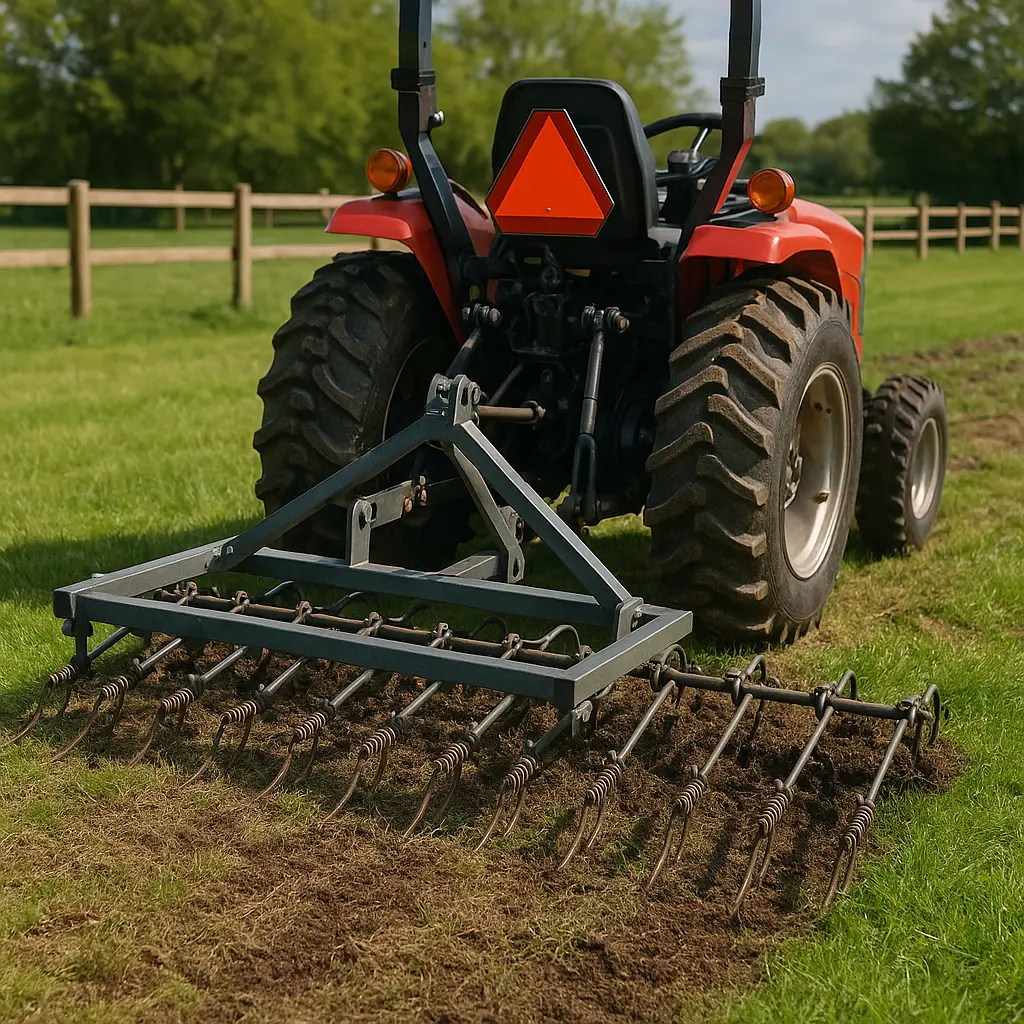
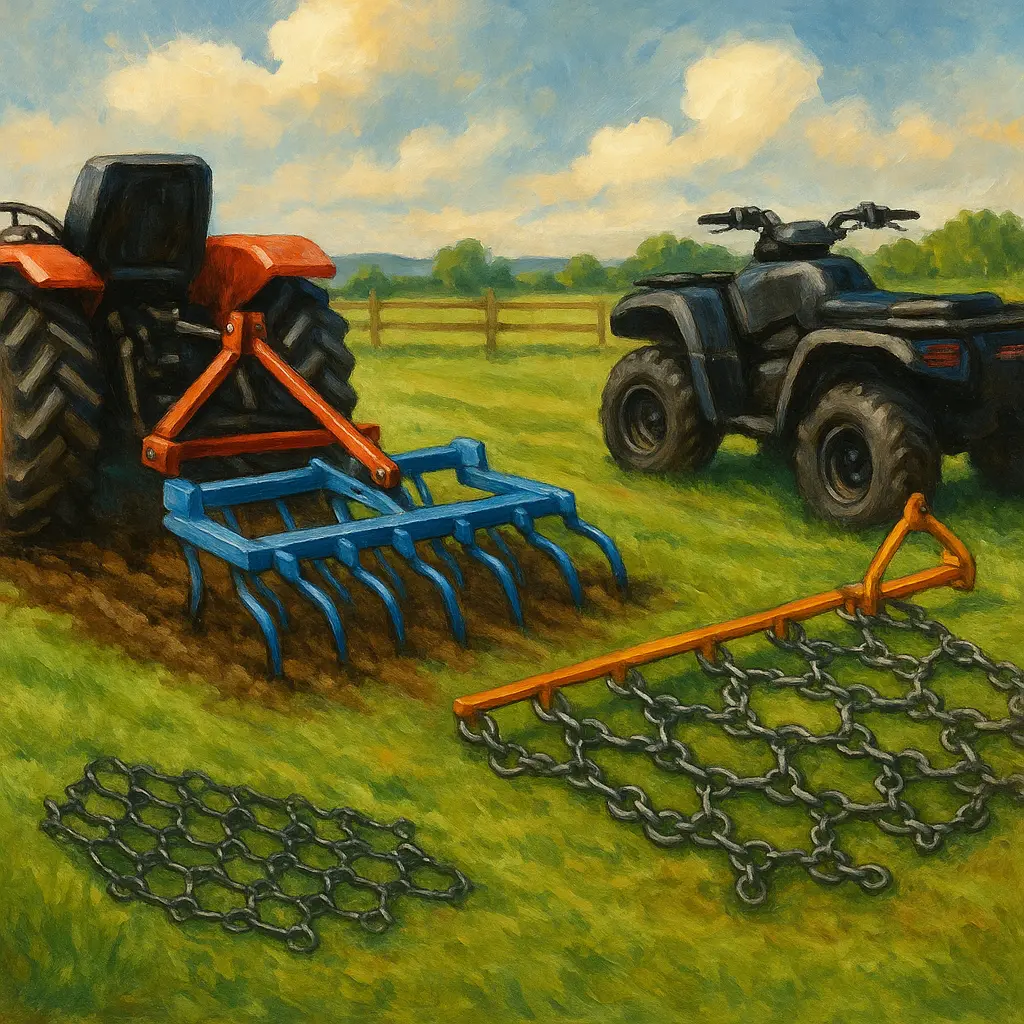
Spring tine harrows are best for aeration, moss and thatch removal on UK grass; chain harrows suit light scratching and dung spreading. This matches both practice and owner consensus: spring tines penetrate and lift debris for healthier swards, while chains mainly scuff the surface.
UK operators consistently find spring tine harrows more effective on horse ground. Mayo Groundcare confirms spring tines rip out moss and thatch while aerating, whereas chains largely scratch. Smallholder consensus backs this up: “spring tine harrows are far more effective than a chain harrow” (Accidental Smallholder Forum). On horse yards too, the upgrade is decisive: “the spring tine harrows win hands down” (Horse & Hound).
At Just Horse Riders, we recommend spring tines for the UK’s damp spring conditions and heavy clay areas, reserving chain harrows for quick, light jobs like spreading dung on flatter ground.
What size and setup works for an 8‑acre yard?
Use 4–6ft implements on small equestrian properties: 4ft suits lighter ATVs, while 6ft+ suits compact tractors; mount via ATV hitch or Cat 1/2 three‑point linkage, and favour strong 50mm frames. On chain harrows, 13mm tines are recommended for longevity and some UK suppliers back them with three‑year warranties.
For an 8‑acre horse property, a 4ft spring tine harrow behind a quad is a practical starting point; step up to 6ft with a compact tractor to reduce passes. Chain harrows are commonly sold in 4–6ft sizes with 13mm tines and can carry multi‑year warranties (Chain Harrows UK), but remember their role is surface work. For paddocks that need structure improved, spring tines with adjustable aggression (e.g., Logic Pro‑Harrow using Einböck tines; Logic Today) give you the control to suit soft or compacted areas.
Quick tip: If you’re accessing fields via lanes, wear high‑visibility layers and sturdy yard footwear. Our rider hi‑vis and supportive horse riding boots are made for safe, grippy, all‑weather yard work.
When should you harrow in the UK calendar?
Harrow paddocks March–May after winter turnout, once the surface has dried enough to avoid poaching; spring tine harrows excel at lifting moss and thatch in the UK’s damp grass before summer grazing. Rotate horses to a drier paddock first so the ground can recover.
Post‑winter is when grassland suffers: hoof damage, compaction and moss thrive in our wet seasons, especially on clay. Tine harrowing at this stage lets air and light reach the base of the sward, evens hoof marks and preps the field for growing season. In drier windows later in summer, a light pass can still refresh swards, but avoid harrowing on saturated ground at any time — you’ll worsen poaching and smear the soil. If your horses were in heavier rugs over winter and you’re moving them onto fresh, cleaned grass, now’s also a good moment to review kit like winter turnout rugs and tidy up the shedding coat with a good grooming session before they head back out.
Pro tip: Avoid single‑pass harrowing in spring. Two lighter, cross‑pattern passes reduce clogging, lift more thatch and leave a better finish.
How do you harrow for the best results?
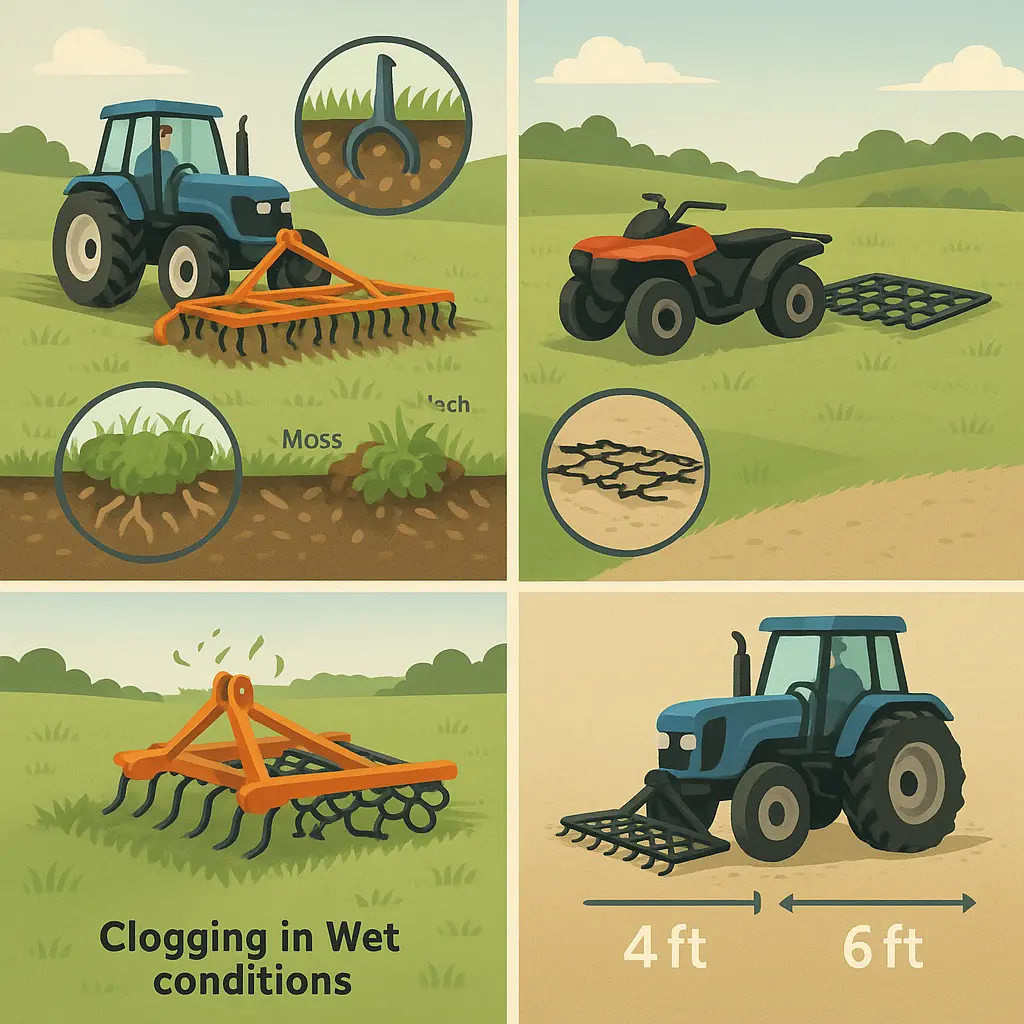
Make two passes at right angles with spring tines, set aggression to suit the sward, and stop to clear any ‘balling’ of straw/thatch. Work when the surface is dry on top but still has moisture below, and remove horses during and after until the field has settled.
Here’s a practical sequence for UK horse paddocks:
- Preparation: Move horses to a different paddock. Check the field for wire, rope and large stones. Hitch securely to your ATV or compact tractor (Cat 1/2 linkage for mounted frames) and test lift/transport.
- Set aggression: Start medium; increase on mossy areas or reduce on thin swards to protect new growth. Spring tine systems with central levers make this quick (Logic Today).
- First pass: Work in straight runs following the field’s longest edge. Keep a steady speed so tines vibrate and ‘comb’ the sward — not so fast you bounce, not so slow you drag.
- Second pass: Cross the first at 90°. This lifts remaining thatch, evens hoof prints and leaves a consistent tilth (Mayo Groundcare).
- Monitor clogging: Spring tines can bung up in fibrous thatch; pause and shake/clear tines to prevent ‘balling’ that just drags debris.
- Edges and gateways: Go gentler near gateways and on thin patches. On heavy clay, one lighter pass may be kinder in the wettest corners.
Aftercare: Keep horses off for a short period to let the surface settle and avoid re‑poaching, especially in soft gateways. If your horse is exuberant on first turnout back, consider protective horse boots & bandages for peace of mind.
What does harrowing cost if you hire versus own?
Professional spring tine harrowing typically runs about £50 per hour and covers roughly 2 acres per single pass; two passes are recommended. Travel is commonly charged at £3 per mile outside a 25‑mile radius of Clee Hill (DY14 0QU) in one UK example (Mayo Groundcare).
Worked example for an 8‑acre paddock: at ~2 acres per hour per pass, one full pass takes about 4 hours; two recommended passes take about 8 hours or roughly £400, plus any applicable travel. That two‑pass standard is what leaves the surface aerated and even, with moss and thatch properly lifted rather than just skimmed. If you’re weighing up ownership, look for durable frames and reputable tine systems; chain harrows with 13mm tines and multi‑year warranties indicate better value over time (Chain Harrows UK).
Quick tip: After a good harrow and spring growth, rich grass may spike energy and weight gain. Review diet and consider targeted support from our horse supplements range if you’re managing weight, hooves or digestion through the spring flush.
How should you harrow arenas on horse properties?
Use a multi‑process spring tine arena harrow with levellers and rollers to loosen, level and reconsolidate surfaces without scuffing the boards; side/guide wheels help protect kickboards and track edges. Match aggression to footing type to avoid over‑digging.
For schooling surfaces, dedicated arena harrows beat field kit. Systems like the Logic Pro‑Harrow use quality spring tines (Einböck) with adjustable settings for depth and vibration, followed by levellers and rollers to leave an even, supportive surface (Logic Today). Side wheels keep the implement off walls, and a finishing roller prevents the surface riding ‘deep’. Keep speeds even, adjust for wet/dry patches and tidy the track edge every few passes.
Operator safety matters when towing on the yard or lane. If you’re using a quad, many riders choose to wear a protective hat; see our selection of modern, ventilated riding helmets suited to yard and hacking use.
Chain vs spring tine: what are the real-world pros and cons?
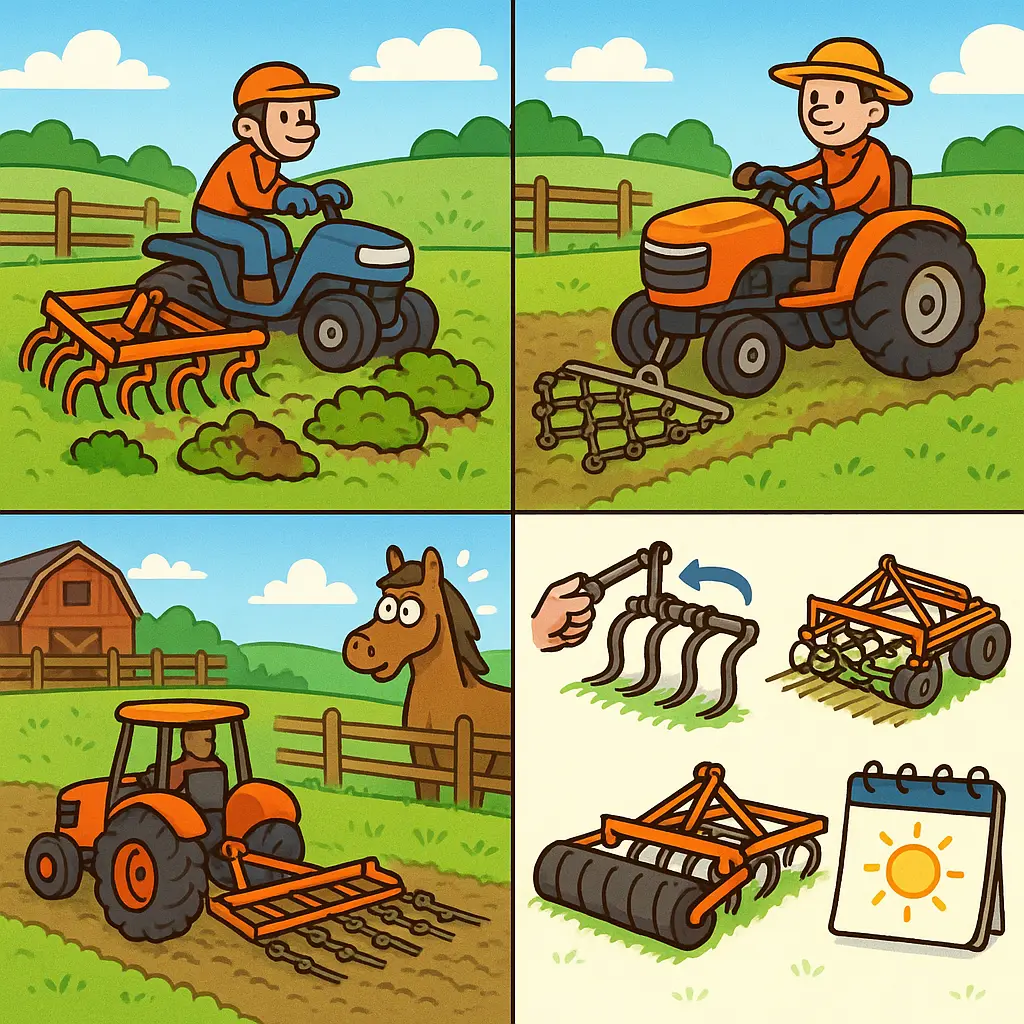
Spring tines generally outperform chains for UK paddocks because they bite, lift and aerate; chain harrows are ideal for lighter, quick surface jobs. Choose spring tines for recovery after winter, and chain harrows for simple scratching and dung spreading on flatter, drier ground.
- Spring tines: Adjustable aggression, create a tilth, pull moss/thatch, aerate compacted areas and level hoof marks. Forum users note they can still “bung up” in fibrous material and need clearing:
“Spring tine harrows are much better at creating a tilth and have more settings on how aggressive they are, but they can still bung up and ‘ball’ up straw and thatch.” — Deere342, experienced operator (The Farming Forum)
- Chain harrows: Simpler, good for breaking up droppings and lightly scuffing thatch on drier days, but “just scratch the surface” compared with spring tines (Mayo Groundcare). For many yards, the upgrade is decisive:
“We’ve upgraded after many years with a basic set of 6' chain harrows to a set of spring tine harrows, and the spring tine harrows win hands down.” — H‑horse, yard owner (Horse & Hound Forum)
The smallholder community’s verdict mirrors equestrian yards:
“The general consensus seems to be that spring tine harrows are far more effective than a chain harrow.” — Accidental Smallholder Forum (read the thread)
If you still want chain harrows for quick jobs, look for 13mm tines and a decent warranty (Chain Harrows UK). Otherwise, a spring tine system with a robust frame and central aggression control is the better long‑term paddock tool for UK conditions.
FAQs
Here are clear answers to the most common UK paddock‑harrowing questions, based on current pricing and yard experience.
Chain or spring tine for general paddock maintenance on a horse property?
Choose spring tines for aeration, moss and thatch removal; keep chain harrows for light scratching and dung spreading. Spring tines bite into the sward and lift debris for healthier regrowth (Mayo Groundcare), while chain harrows largely skim.
What size harrow for an 8‑acre field with a quad bike?
Use 4ft behind lighter ATVs for manageable towing and multiple passes; upgrade to 6ft on compact tractors to reduce time. Chain harrows commonly come in 4–6ft widths; for longevity look for 13mm tines and multi‑year warranties (Chain Harrows UK).
Do spring tines clog in wet UK grass?
They can. In fibrous thatch or damp conditions, spring tines may ‘ball up’. Reduce aggression, lift briefly to shake clear, or stop and clear by hand to restore performance. As one operator puts it, they’re superb at creating a tilth but can bung up if you push them too hard in heavy thatch (The Farming Forum).
What’s the best time to harrow horse paddocks in the UK?
Harrow in spring (March–May) once the surface has dried to avoid poaching, ideally after rotating horses to another field. Spring tines are particularly effective in our damp grasslands for lifting moss and thatch before summer use.
How many passes should I plan, and how long will it take?
Plan two passes at right angles for a quality finish. As a guide, a compact tractor with spring tines covers about 2 acres per hour per pass; for 8 acres, budget around 8 hours for two passes (Mayo Groundcare).
How much does it cost to hire someone to harrow my paddocks?
Expect around £50 per hour for spring tine harrowing at roughly 2 acres per hour per pass, with two passes recommended. Some providers charge travel at about £3 per mile outside a 25‑mile radius of Clee Hill (DY14 0QU) (Mayo Groundcare).
Any quick yard tips for a smooth harrowing day?
Move horses first and have a helper to check gates and dogs. Wear hi‑vis when towing between fields, and use proper yard boots for grip. A few horse treats make catching and rotating herds quicker when you’re working to a weather window.
At Just Horse Riders, we’re here to help you get more from your ground and your season. From safe yard kit like hi‑vis and boots to thoughtful supplement support after the spring flush, we’ve got you and your horses covered. If you’re unsure which harrow best suits your setup, use this guide as your checklist — then plan those two tidy passes when the first good spring week arrives.