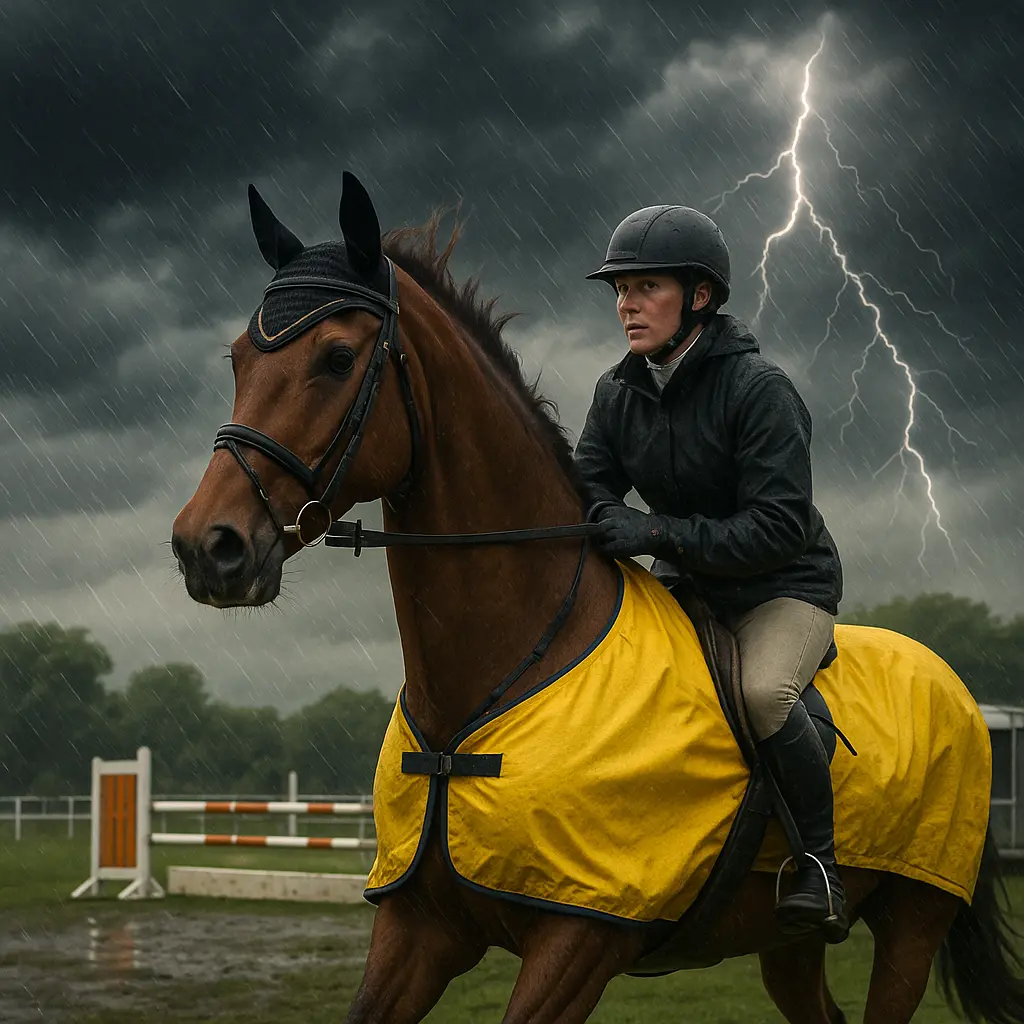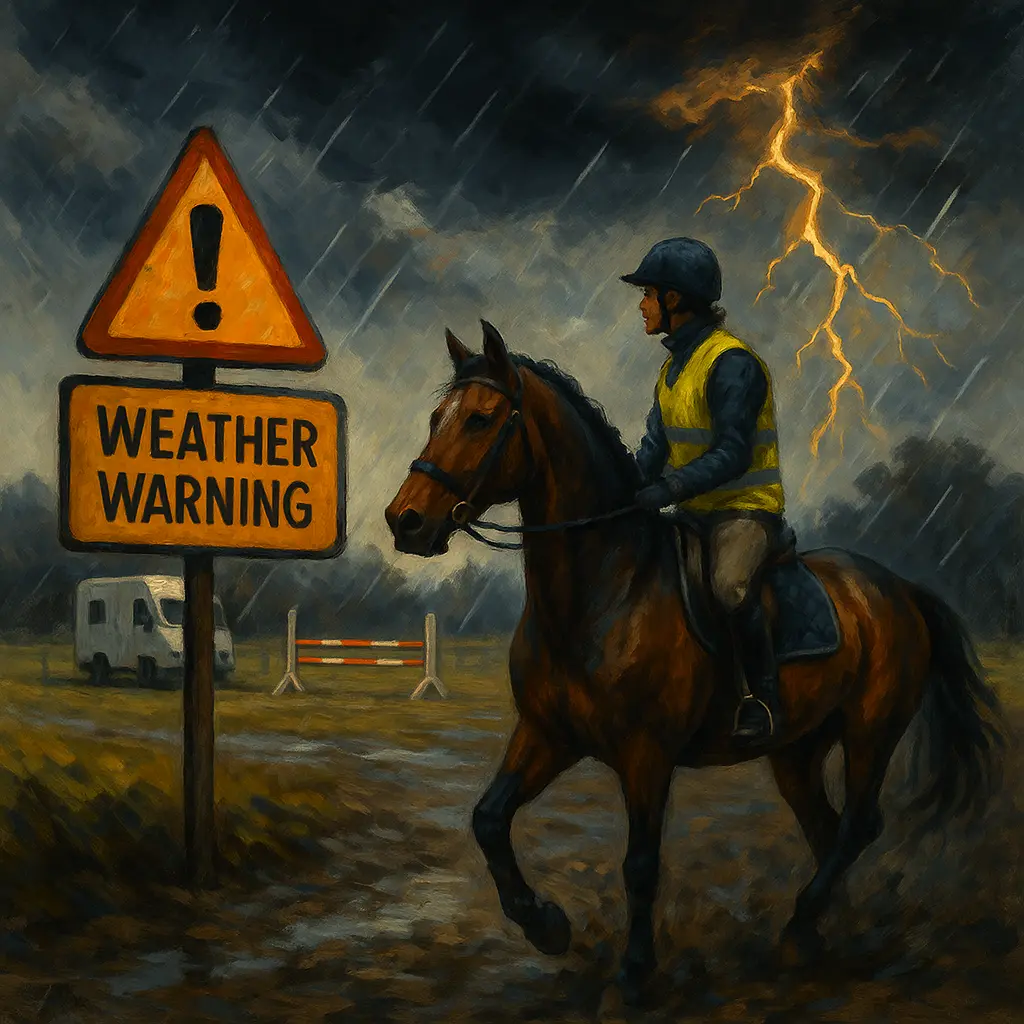
British weather can turn on a sixpence — blazing sunshine at breakfast, a squall by lunch, and gale‑force gusts for the drive home. When you’re riding, travelling, or competing, those swings aren’t just inconvenient; they can be dangerous if you don’t plan decisively.
Key takeaway: Cancel, delay or downscale plans whenever Met Office warnings or ground conditions threaten safety, keep horsebox temperatures below 25°C with water every 4.5 hours in heat, and read your horse’s behaviour as your most reliable on‑the‑day barometer.
When should you cancel riding, travel or competing for UK weather?
Cancel or postpone if the Met Office issues a red warning, or if local footing, wind or visibility make it unsafe for your horse or you. UK event teams and racecourses use structured inspections to make that same safety‑first call.
We’ve already seen how fast things can escalate: Storm Éowyn — the first named storm of 2025 — brought yellow, amber and red warnings on 24 January, prompting British Dressage cancellations at Kelsall Hill and British Showjumping classes being called off at Aintree’s International Winter Classic (Horse & Hound). British storms often combine gusty winds, heavy rain and poor visibility — precisely the conditions that undermine transport safety, course control and fair competition.
Racing and many larger fixtures follow a formal process. The Racecourse Association explains that an Inspection Panel — including stewards, course representatives, trainers, jockeys and veterinary/medical teams — assesses conditions and uses a clear decision‑making chart to determine if a fixture can proceed (RCA explainer).
“The decision to cancel is never taken lightly and, should it be required, is done so with the safety of humans and equines firmly in mind... The Inspection Panel will be tasked with reviewing the situation and providing their objective thoughts as guided by a set decision-making chart.” — Racecourse Association
For non‑racing outings, mirror that approach: check the Met Office forecast and warnings; walk the course, track or hacking route; and be prepared to call it off at the last minute if wind strength or surface conditions cross your red lines.
Quick tip: Dress for changeable conditions so you can keep options open. Lightweight waterproofs and a breathable exercise sheet let you try a warm‑up safely and reassess without committing to a full schooling session.
How does UK weather change footing and safety?
Wet, heavy going is slower and more slippery, making horses tire faster and raising the risk of slips; firm going is faster but increases concussion risk for speed and jumping. You should always walk the surface and adapt your plan to what you find.
Persistent rain softens turf and arenas, reducing traction. According to The Horse Exchange, “wet conditions turn tracks heavier and slippery,” which is why you see slower times and more visible fatigue on heavy ground; conversely, “firm ground allows faster racing,” but elevates impact loads (The Horse Exchange). In practice, that means:
- On grass: check for shear (turf sliding underfoot), poaching and greasy cambers; downgrade speeds, widen turns, and shorten sessions.
- On arenas: dig a heel in — if you hit a hard base with a slippy top, reconsider jumping lines and height.
- On cross‑country: organisers often use spotters to flag tiring horses quickly; if your horse feels laboured earlier than usual, pull up before form dips into risk.
Kit can help, but it’s not a substitute for judgement. For extra stability and strike protection on soft or variable going, many riders use supportive legwear from our horse boots & bandages range; pair with secure, grippy horse riding boots for yourself to keep your base solid at the mounting block and in the stirrup.
What are the safest travel rules for heat, wind and rain?
Keep the horse compartment below 25°C (ideally around 18°C), offer water every 4.5 hours, ventilate well and avoid rugging unless essential; postpone travel under red Met Office warnings for storms or heat.
The British Horseracing Authority’s Hot Weather Policy is a gold‑standard reference for any discipline: it targets a maximum of 25°C inside the horsebox and recommends aiming for around 18°C when possible, with water offered at least every 4.5 hours and strict ventilation throughout (BHA policy). In practice for mixed UK conditions:
- Plan travel for early morning or late evening in summer, or between fronts during unsettled spells. Build in extra time for diversions or lane closures.
- Park in shade, open upper vents and windows where safe, and use fans or reflective covers to stabilise temperatures.
- Avoid rugging for transport in warm or humid weather unless medically required; in cold, choose breathable layers that won’t trap sweat.
- Carry more water than you think you’ll need for horses and people; offer at every stop and monitor drinking.
- In wind and driving rain, reduce speed, increase stopping distances, and skip exposed routes if gusts risk trailer stability.
At Just Horse Riders, we recommend a “comfort check” at every pause: nose flaring or fast breathing, dull demeanour, and flaring nostrils plus sweat patches are your cue to cool down, offer water and reassess timings. If your horse travels hot, a breathable waterproof layer over the loins for loading, then off once on the move, strikes a good balance; browse lightweight options in our waterproof turnout rugs and technical brands like WeatherBeeta and LeMieux.
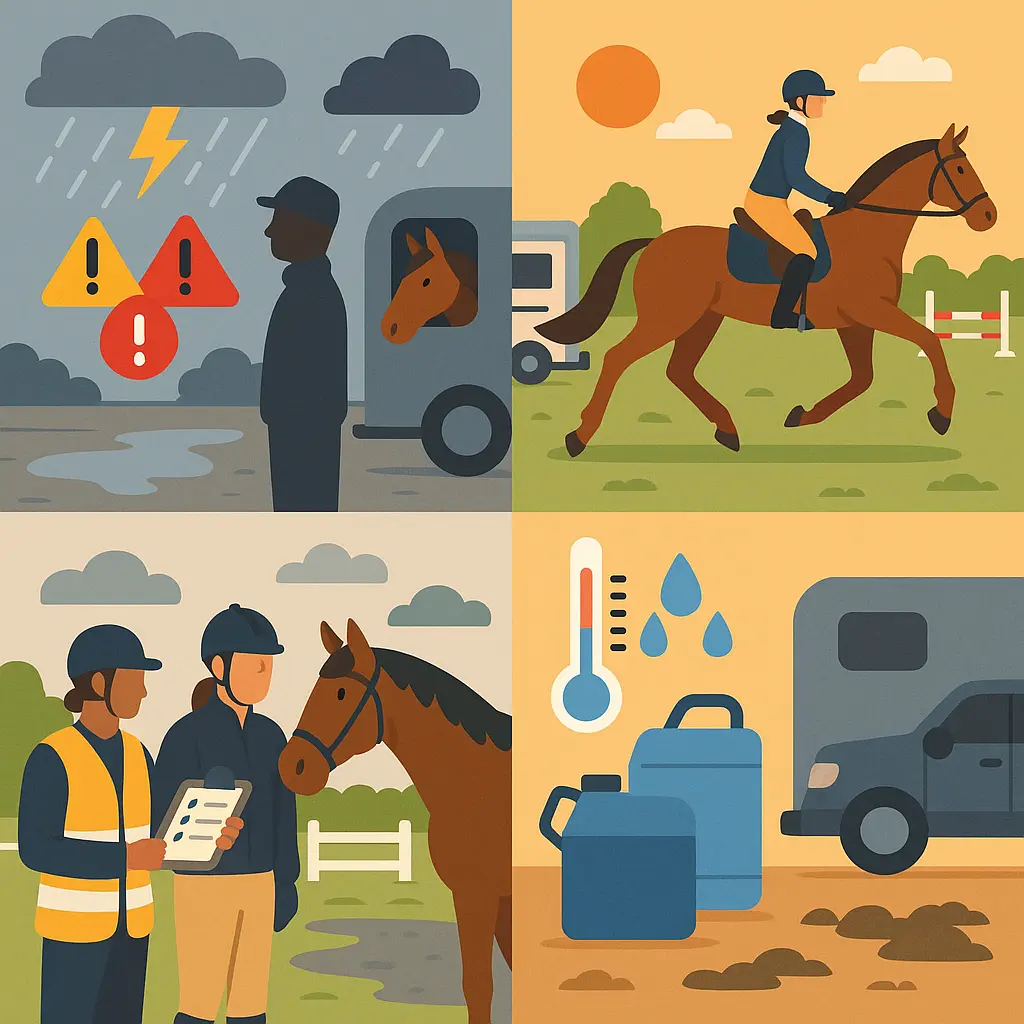
How do you ‘read’ your horse in wild weather?
If your horse becomes unusually tense, spooky or reluctant to go forward, treat it as a red flag and dismount or reschedule. Behaviour changes are often your earliest and most reliable warning that conditions aren’t right.
Equi‑Box advises checking detailed forecasts before riding and paying attention to how your horse feels on the day: if he’s more alert, sticky off the leg, or spinning at flapping hedges, he may be picking up on wind, static, pressure changes or sudden downpours (Equi‑Box guide). In strong wind or squally showers:
- Shorten the session to simple, confidence‑building work; save sharp transitions, new questions, and big fences for calmer days.
- Choose sheltered arenas and hedge‑lined tracks; avoid open ridges or forestry edges where gusts funnel.
- Visibility matters. Use high‑visibility equipment on horse and rider so you can be seen by vehicles and other yard users; our hi‑viz collection includes leg bands, tail guards and rider vests that cut through murk and rain glare.
- If he starts to feel unsettled, hop off, hand‑walk and reassess. A calm horse tomorrow is always worth more than a fraught session today.
Quick tip: Wind multiplies noise. Secure flapping straps, adjust stirrups and reins before you mount, and choose a well‑fitting, certified riding helmet for maximum focus and protection.
What kit and yard prep make the biggest difference in bad weather?
Use waterproof breathable layers, hi‑viz, good hoof and leg protection, and secure shelter with reliable drainage and year‑round fresh water. Small upgrades here meaningfully reduce risk and post‑ride issues.
Before the weather breaks, run a quick readiness audit:
- Turnout and shelter: Ensure field shelters and hedges provide windbreaks; clear debris and check roofing. Keep troughs unfrozen and topped up — fresh water matters in winter gales as much as in heat.
- Rugs and sheets: Opt for breathable waterproofs that won’t overheat on the move or during light work. Our curated turnout rug selection includes lighter deniers for milder wet spells and tougher options for deep winter.
- Hooves and legs: Wet ground softens hooves and encourages mud‑related skin issues; protective boots from our horse boots & bandages range can add grip and shield against knocks. Pick out feet after every ride and stable on clean, dry bedding.
- Rider gear: Secure footing starts with you — pair supportive riding boots with weather‑ready jodhpurs or breeches for comfortable, non‑slip contact.
- Grooming and drying: After wet work, dry under the saddle area and girth first to prevent rubs. Keep quick‑dry towels and scrapers in your kit; our grooming collection is packed with yard‑proof tools that make light work of sodden coats.
Post‑ride, check legs and heels for softening or rubs, then offer shelter to prevent chills. In storm cycles, a little extra diligence each day prevents bigger problems later.
How should you manage training and events in hot weather?
Ride early or late, avoid intense work and travel in peak heat, and plan for a 500kg horse to drink 50–70 litres per day, more with exercise. Cool promptly and keep shade and airflow non‑negotiable.
The British Horse Society notes a 500kg horse may require 50–70 litres of water daily in hot weather — four to six buckets — with needs rising during exercise (BHS guidance). British Equestrian adds that whether to train or compete in heat depends on your horse’s age, fitness and health — some cope better than others (British Equestrian).
“Whether or not you choose to exercise or compete your horse in hot weather is a personal decision... consider his age, fitness and whether he has any health conditions. Some horses are also better able to cope with heat than others.” — British Equestrian
SEIB’s welfare advice is clear: avoid intense exercise or travelling in the heat, and schedule work for cooler parts of the day (SEIB). On arrival at a venue, minimise warm‑up duration, and if your horse overheats, the BHA recommends prompt cooling with water cooler than 15°C, scraping and repeating until respiration normalises (BHA policy).
Pro tip: Pack a “heat box” — spare buckets, scoop, electrolytes if advised by your vet, a thermometer, scrapers and multiple towels. Our customers often add a spare lightweight sheet and a small battery fan for stables without fixed ventilation.
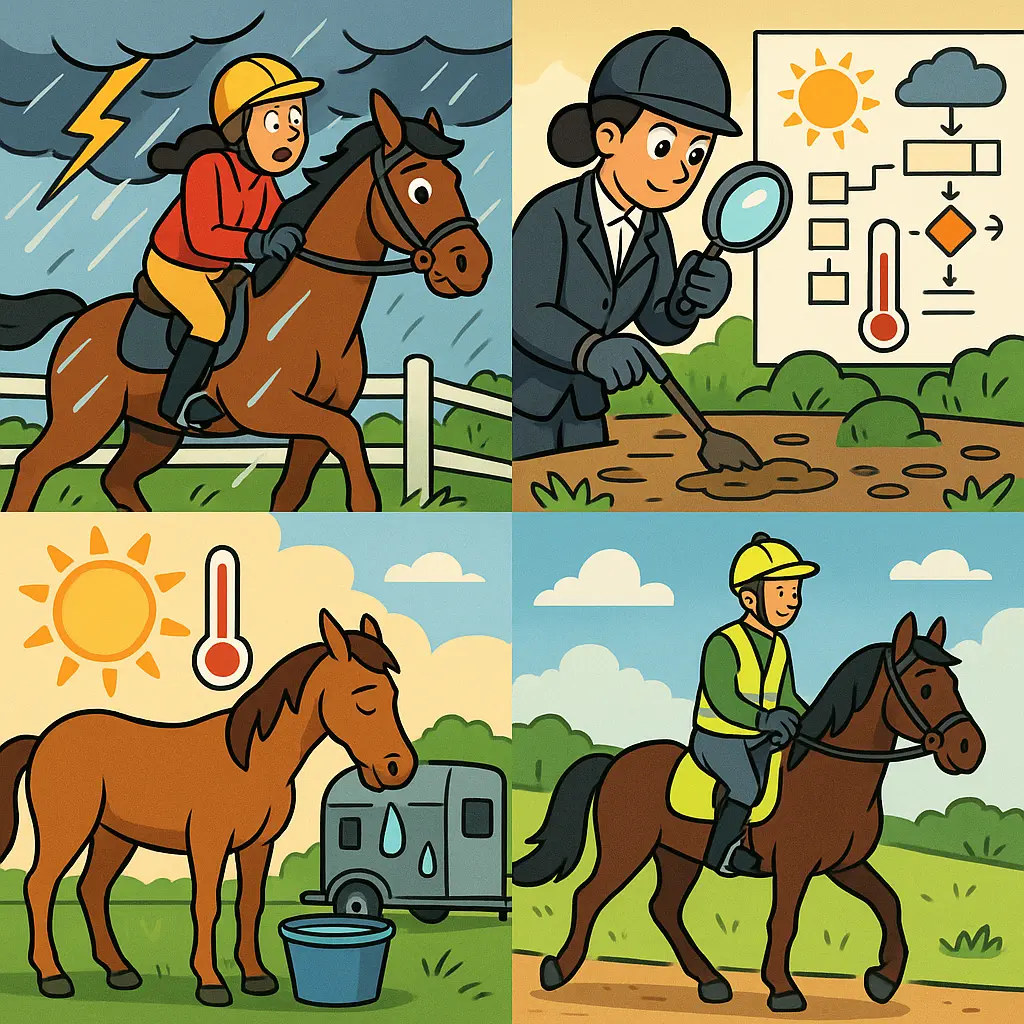
Who cancels fixtures and when is the call made?
In UK racing, an Inspection Panel makes the final decision using a structured chart, typically after on‑course checks in the hours before racing; other disciplines follow similar safety‑led reviews, often informed by Met Office warnings.
Per the Racecourse Association, the panel draws on stewards, course officials, trainers, jockeys and veterinary/medical teams to weigh human and equine safety, fairness and logistics before issuing a go/no‑go decision (RCA explainer). This explains why calls can come close to start times — conditions and forecasts can change materially even within a couple of hours.
Outside racing, British Dressage, British Showjumping, British Eventing and unaffiliated shows commonly conduct similar inspections, consulting ground staff and officials and applying organisation‑specific thresholds. Storm Éowyn’s cancellations illustrate how warnings escalate decision‑making quickly when risk crosses acceptable limits (Horse & Hound).
At yard level, adopt the same mindset: nominate a small “weather panel” — you, your coach and yard manager — and agree your own decision chart in advance. If wind exceeds your set limit, visibility drops, or the surface fails your walk test, the answer is simple: not today.
Your quick decision checklist for UK weather
Make or move plans based on warnings, footing, transport conditions and your horse’s behaviour. Run this 60‑second checklist before you load, mount or set off:
- Warnings: Any amber/red Met Office alerts? If red, do not travel or ride.
- Footing: Walk, twist, and dig — is it greasy, poached or jarring? If unsafe, cancel or modify.
- Wind and visibility: Are gusts strong enough to unbalance a trailer or spook a steady horse? Is rain reducing sight lines?
- Transport: Can you keep the box under 25°C with ventilation and shade? Do you have water for every 4.5 hours, plus contingency?
- Horse check: Is he tense, spooky or backing off the leg? If yes, scale back or reschedule.
- Kit: Hi‑viz on, boots fitted, waterproofs ready, and a suitable helmet on your head?
If you answer “no” to any non‑negotiables, change the plan. Remember: firm decisions today protect confidence, legs and enjoyment tomorrow.
Conclusion: Decide early, adapt fast, and kit up smart
UK weather will always test your planning, but clear thresholds, quick inspections and the right kit keep you on the right side of safety. Check warnings, read the ground, manage heat inside the horsebox, and let your horse’s behaviour guide the final call. For reliable, weather‑ready gear — from breathable rugs and leg protection to hi‑viz and performance breeches — our team at Just Horse Riders is here to help you ride, travel and compete with confidence.
FAQs
When do UK equestrian events get cancelled for storms?
Events are cancelled when conditions threaten safety — typically when the Met Office issues significant warnings (yellow/amber/red) and on‑site inspections confirm unsafe footing, wind or visibility. In racing, an Inspection Panel makes the final call using a decision chart; similar processes are used across other disciplines (RCA; Horse & Hound).
Is it safe to travel horses in heavy rain or high winds?
Avoid travelling under red warnings. If conditions are marginal, slow down, choose sheltered routes, park in shade at stops, maintain ventilation and carry extra water. In heat, keep the horse compartment below 25°C and offer water every 4.5 hours (BHA policy).
How do I know if the ground is too slippery to compete?
Walk the surface: if turf shears, the top slides over a hard base, or cambers feel greasy, downgrade or withdraw. Wet going is slower and more injury‑prone, while very firm going is faster but concussive for speed and jumping (The Horse Exchange).
What signs show my horse can’t handle today’s weather?
Unusual tension, spooking, reluctance to go forward, or a “looky” way of going are red flags. Dismount, hand‑walk, and call it for the day if behaviour doesn’t settle (Equi‑Box). After rain, dry under tack and check for rubs.
Should I rug my horse for travel in bad weekend weather?
In warm or humid conditions, avoid rugging for travel unless essential; prioritise airflow and temperature control below 25°C. In cold, choose breathable layers that won’t trap sweat once moving (BHA policy). See breathable, waterproof options in our turnout rugs.
What gear helps most when it’s wet, windy or murky?
Hi‑viz for horse and rider, supportive legwear, and waterproof breathable layers make the biggest difference. Explore high‑visibility essentials, protective horse boots, weather‑ready riding boots, and fast‑dry tools in our grooming collection. Brands like Shires and WeatherBeeta are proven favourites with UK riders.
How does hot weather change my warm‑up and cool‑down?
Shorten warm‑up, avoid peak heat, seek shade and airflow, and cool promptly with repeated applications of cool water (ideally under 15°C) and scraping until breathing normalises (BHA). Expect a 500kg horse to need 50–70 litres of water per day, more with exercise (BHS).