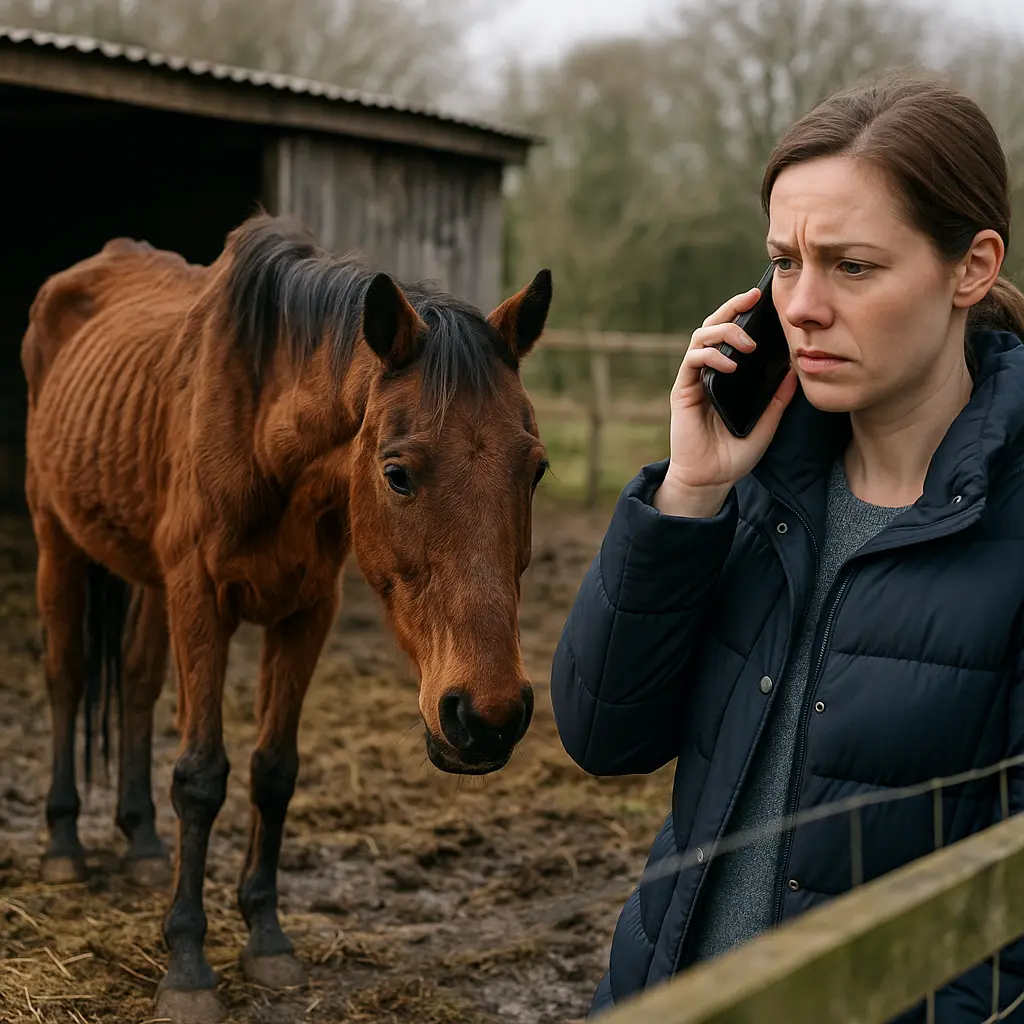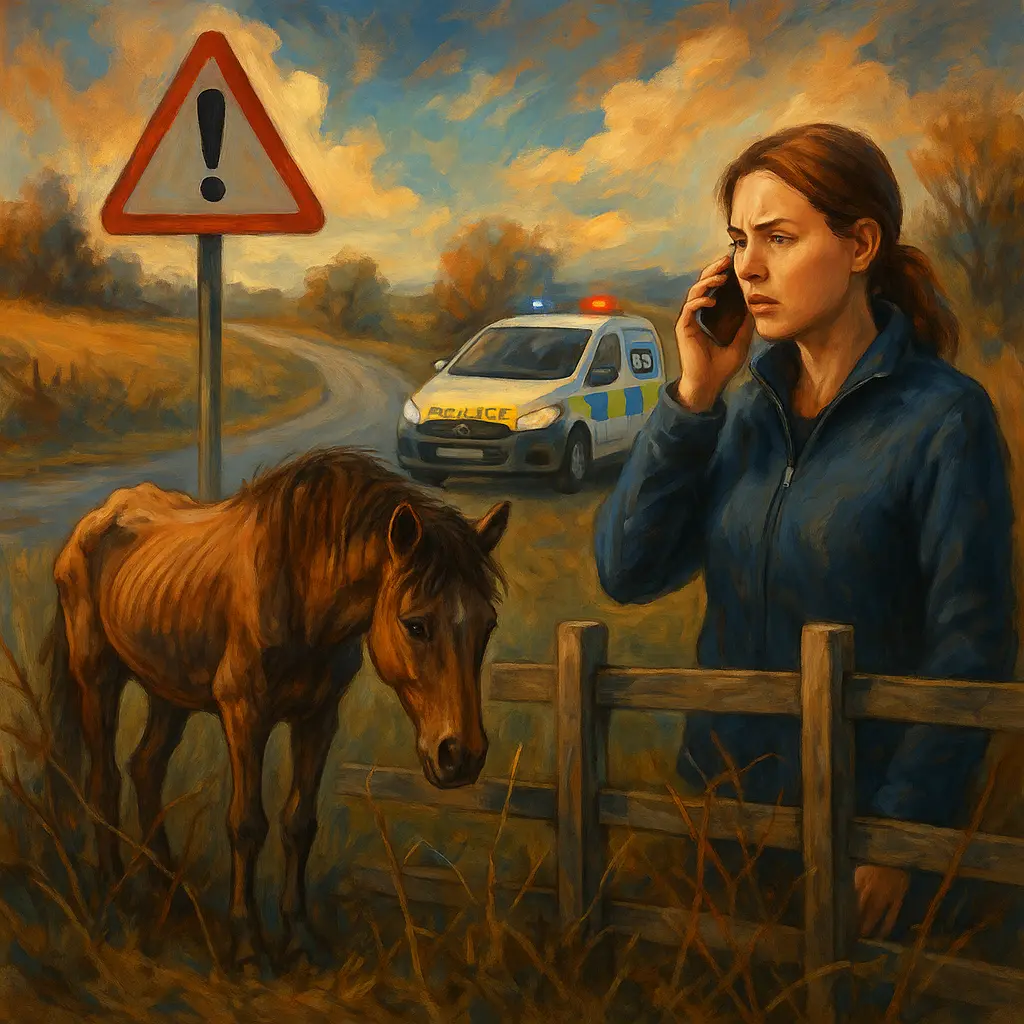
If you’re worried about a horse you’ve seen, speed and accuracy matter. The UK has a clear pathway for reporting equine neglect and emergencies — and the right call can save a life.
Key takeaway: For urgent cases (collapsed, trapped, unable to weight bear), call the RSPCA 24/7 on 0300 1234 999. For non-urgent concerns, contact World Horse Welfare, The British Horse Society, Redwings, or other NEWC members during office hours.
Who to contact about a neglected horse in the UK
Call the RSPCA on 0300 1234 999 for urgent cases; otherwise, report to World Horse Welfare (0300 333 6000), The British Horse Society, Redwings, Bransby Horses, HAPPA (North of England only), or Retraining of Racehorses (ex-racehorses) during office hours.
The UK’s equine welfare bodies work together through the National Equine Welfare Council (NEWC) to route each case to the right team. For emergencies in England and Wales, the RSPCA National Cruelty Helpline operates 24/7. In Scotland, call the Scottish SPCA on 03000 999 999; in Northern Ireland, call the USPCA on 028 3025 1000. For non-urgent concerns (e.g., poor fencing, prolonged tethering without immediate distress), contact:
- World Horse Welfare (0300 333 6000) – 8am–5pm Monday–Friday, UK-wide.
- The British Horse Society – 8:35am–5pm Monday–Thursday, 8:35am–3pm Friday.
- Redwings Horse Sanctuary – 9am–5pm Monday–Friday (or via email).
- Bransby Horses – welfare reports accepted; hours vary by weekday.
- HAPPA – North of England only.
- Retraining of Racehorses – former racehorses only.
All major organisations keep your details confidential and will not share them with the horse’s owner. If you’re unsure who to call, start with World Horse Welfare or the RSPCA and they’ll direct you.
What counts as an emergency vs a non-urgent welfare concern?
Emergencies are situations causing immediate suffering or risk to life (collapsed, trapped, unable to weight bear, severe distress) and require an immediate call to the RSPCA or emergency services; non-urgent issues can be reported during office hours.
Examples of emergencies:
- Collapsed horses unable to rise
- Horses trapped in ditches, fences, or tangled tethers
- Inability to weight bear on a limb
- Obvious severe pain or acute distress
Examples of non-urgent concerns:
- Long-term poor body condition without acute distress
- Unsuitable or dangerous fencing where no immediate harm is occurring
- Inadequate shelter, dirty water, or prolonged confinement
“Anything which is obviously causing serious pain or distress to the horse should be reported as an emergency. Please give us a call on 0300 333 6000.” — World Horse Welfare
If the horse is loose on a road or creating an immediate public safety risk, call the police on 101 straight away (999 if there’s an active danger to life).
What to prepare before you call
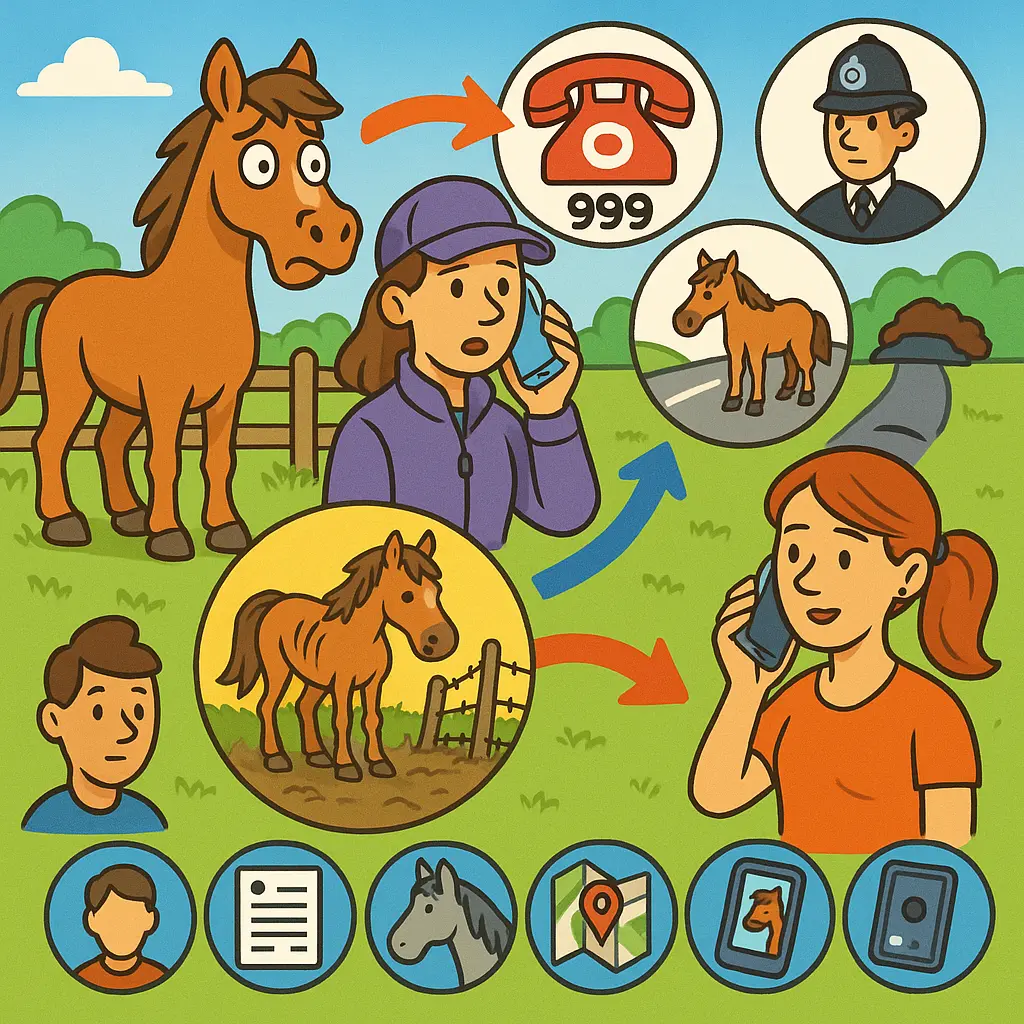
Have your contact details, the precise location (What3Words if possible), a clear description of the horse(s), and safely obtained photos or video; the more detail you provide, the faster an inspector can find and assess the horse.
Before you report, gather:
- Your name, phone number, and address (kept confidential by welfare organisations)
- Why you’re concerned (specific behaviours, injuries, or conditions you’ve observed)
- Horse details: number of horses, colours, sex, approximate ages, markings
- Location: full address and postcode if known; if not, landmarks, road numbers, field access points, and a What3Words reference
- Owner/landowner details if known
- Photos or short video captured safely from a public place and without trespassing
“The more information we have the easier our inspectors will be able to find you and the animal. If you have any photos or videos of the incident or the animal please let us know.” — RSPCA
Quick tip: If you’re stopping near a road to take a location reference, wear high-visibility riding gear and stand well off the carriageway. Sensible footwear such as sturdy riding boots and, if you’re close to traffic, a riding helmet improve your personal safety while you get accurate details.
Do not confront owners or enter private property. Your role is to observe, record, and report; trained welfare officers and vets will handle assessment and intervention.
How to report during and outside office hours
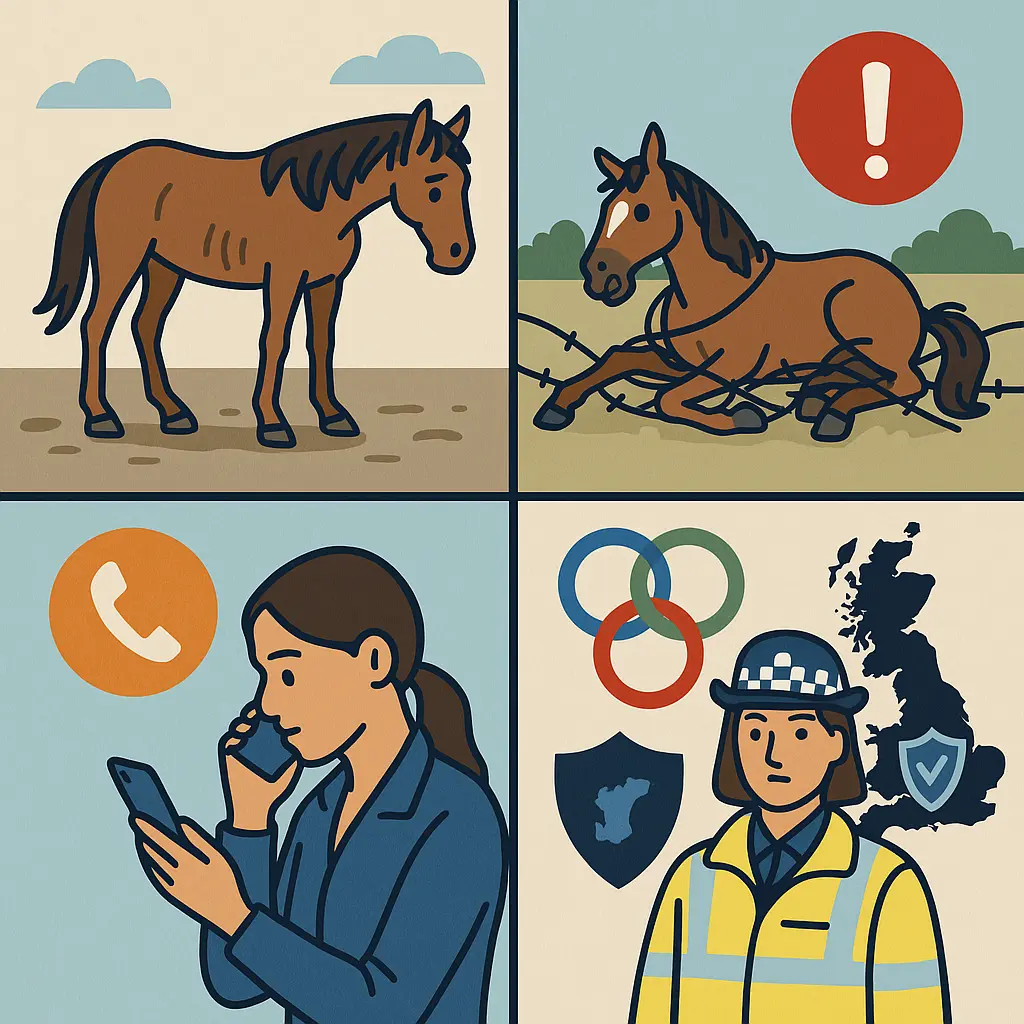
During office hours, contact World Horse Welfare (8am–5pm Mon–Fri), the BHS (8:35am–5pm Mon–Thu; 8:35am–3pm Fri), or Redwings (9am–5pm Mon–Fri); outside office hours, call the RSPCA 24/7 or your local police/veterinary practice for emergencies.
Use this simple flow:
- Urgent (immediate suffering/risk): RSPCA 0300 1234 999 (24/7). Scotland: Scottish SPCA 03000 999 999. Northern Ireland: USPCA 028 3025 1000.
- Non-urgent (no immediate risk): World Horse Welfare 0300 333 6000 (8am–5pm Mon–Fri), The British Horse Society (8:35am–5pm Mon–Thu; 8:35am–3pm Fri), or Redwings (9am–5pm Mon–Fri).
- Outside welfare organisation hours (but urgent): contact police or your local veterinary practice for immediate guidance if you cannot reach a welfare officer.
For loose horses on highways, always call the police on 101 and give road numbers, direction of travel, and exact location. Save these numbers in your phone now so you’re not searching in the moment.
What happens after you report
Your report is logged confidentially, triaged for urgency, and routed to the most appropriate organisation; an officer or inspector then assesses the horse, often coordinating with vets and police under the Animal Welfare Act framework.
NEWC member organisations work together to avoid duplication and ensure the right expertise attends. Depending on the assessment, outcomes may include:
- Advice and support to the owner (e.g., feeding plans, turnout improvements)
- Monitoring visits and welfare checks
- Veterinary attendance if clinical issues are identified
- Police involvement if there’s a public safety risk or suspected criminal offence
- Seizure or rehoming in severe cases where legal thresholds are met
Your identity is not shared with the owner. If an organisation needs clarification, they may contact you (unless you have requested anonymity and called a body that can process your report without follow-up, such as World Horse Welfare by phone).
Loose horses on roads: what to do
Report loose horses on roads to the police on 101 immediately (999 if there’s an active danger), giving the road number, precise location, and direction of travel; do not put yourself at risk by attempting to herd them.
If it’s safe and you’re competent, you may warn oncoming traffic from a safe position while wearing high-visibility clothing. Never step into live traffic, and don’t attempt to catch unfamiliar horses without appropriate equipment or experience. If you’re riding when you encounter a loose horse, a properly fitted riding helmet and visible clothing significantly improve your safety as you call for help and position yourself out of harm’s way.
Proactive yard measures to prevent welfare issues
Good management prevents many reportable situations: safe fencing, appropriate rugs, fly control, and routine health care reduce risk and improve welfare year-round.
At Just Horse Riders, we see the same preventable triggers for welfare calls each season. Tackle them before they escalate:
- Weather protection: Choose season-appropriate rugs. For wet, chilly UK winters, waterproof turnout rugs help keep horses warm and dry in the field; stable-kept horses benefit from correctly weighted stable rugs.
- Summer fly management: Prevent rubbing, sores, and distress with breathable fly rugs and sheets and regular grooming.
- Injury prevention: Support legs on challenging ground or during turnout changes with protective horse boots and bandages.
- Daily checks: Build a routine that includes hoof picking, body scoring, and skin checks. Our range of grooming tools makes it easy to spot issues early.
- Nutritional support: Where advised by your vet or nutritionist, targeted supplements can help maintain condition and joint comfort, especially through winter.
- Trusted brands: Waterproofing, fit, and durability matter. Explore proven options from WeatherBeeta, Shires, and LeMieux for reliable yard and horsewear essentials.
Pro tip: Photograph field entrances and notable landmarks now, in good weather, and save a What3Words location for each paddock. If you ever need to report quickly, you’ll have precise references ready.
Keep key numbers handy: a quick-reference checklist
Save these numbers in your phone and post them on your yard noticeboard so anyone can act fast.
- RSPCA (England & Wales, 24/7): 0300 1234 999 — emergency guidance
- World Horse Welfare (Mon–Fri 8am–5pm): 0300 333 6000 — report a concern
- The British Horse Society (Mon–Thu 8:35am–5pm; Fri 8:35am–3pm): report welfare concern
- Police (loose horses/road safety): 101 (999 if danger to life)
- Scottish SPCA (Scotland): 03000 999 999
- USPCA (Northern Ireland): 028 3025 1000
- Your veterinary practice (emergency line): add number here
At Just Horse Riders, we recommend keeping a laminated yard card with these contacts by every main exit and in the glovebox of the yard vehicle.
FAQs
Should I approach the owner first or report directly?
Report directly to the appropriate organisation rather than approaching the owner. For urgent situations, call the RSPCA (0300 1234 999) immediately; for non-urgent concerns, contact World Horse Welfare, the BHS, or another NEWC member during office hours.
What exactly is “urgent” vs “non-urgent” equine neglect?
Urgent: collapsed horses, trapped animals, inability to weight bear, or obvious severe distress — call immediately. Non-urgent: concerns like poor fencing, unsuitable shelter, or gradual weight loss without acute suffering — report during office hours.
Will my details be kept confidential?
Yes. The RSPCA, World Horse Welfare, and the BHS state that reporter details remain confidential and are not shared with owners or third parties.
What if I find a horse outside office hours?
For emergencies outside office hours, call the RSPCA (0300 1234 999, 24/7). If you need immediate guidance and cannot reach a welfare officer, contact the police or your veterinary practice.
What information do I need when I report?
Your name and number, the precise location (using What3Words if possible), horse descriptions (number, colour, sex, age if known), owner/landowner details if known, and photos/video captured safely without trespassing.
Can I report anonymously online?
Anonymous reports are best made by phone. World Horse Welfare asks anonymous reporters to call 0300 333 6000 so they can gather everything in one conversation without needing to contact you later.
How do I report a loose horse on the road?
Call the police on 101 immediately (999 if there’s an active danger). Give the road number, exact location, and direction of travel. Wear hi-vis if you’re near traffic, and don’t put yourself at risk.