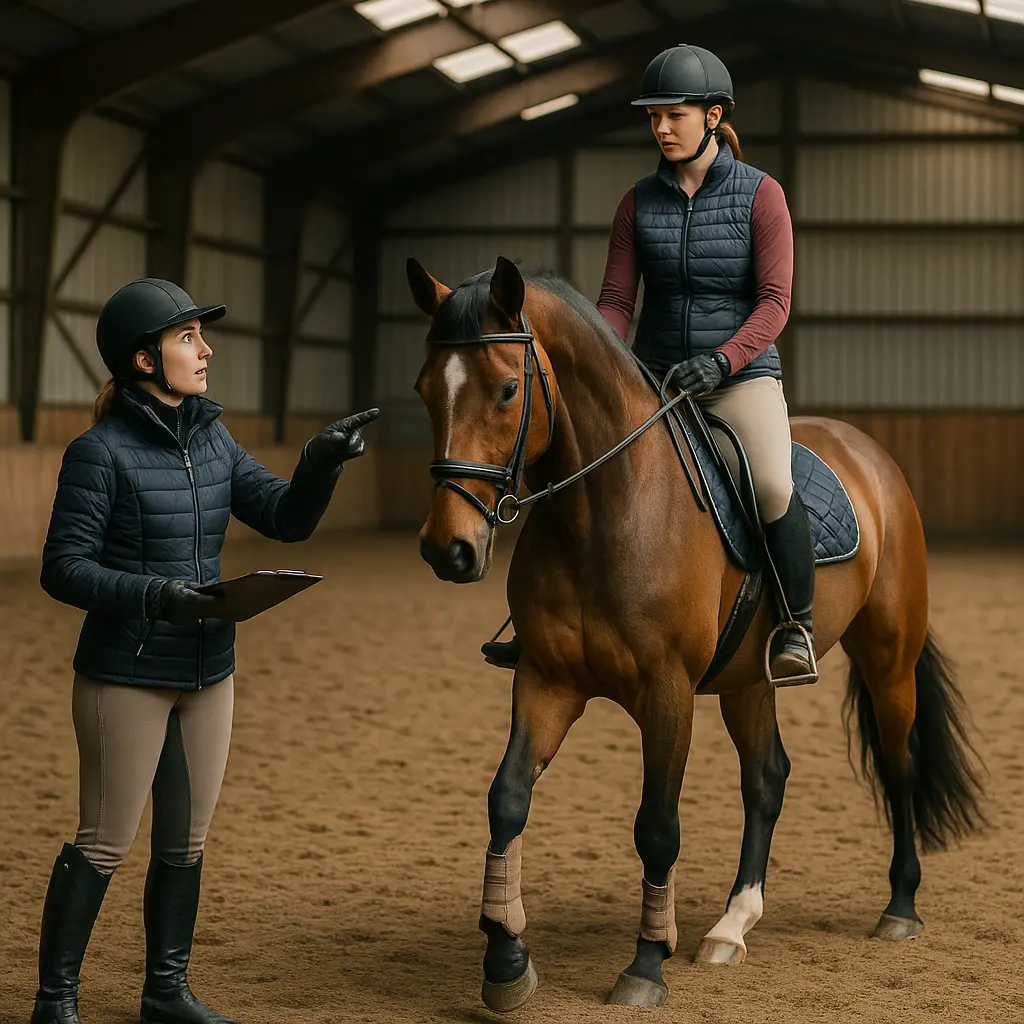
You and your horse deserve coaching that’s safe, progressive and aligned with your goals — whether that’s your first trot off the lead or polishing changes at Elementary. In the UK, the quickest way to choose well is to understand BHS and UKCC qualifications and verify a coach’s current status before you book.
Key takeaway: For independent lessons in the UK, choose a coach with at least BHS Stage 3 Coach (formerly BHSAI) or UKCC/Equestrian Coaching Certificate Level 2 — then match higher levels (BHSI/Fellow) to advanced aims.
What qualification should your riding instructor have?
The minimum for independent coaching in the UK is BHS Stage 3 Coach (formerly BHSAI), UKCC Level 2, or RDA Coach for RDA settings.
This threshold is recognised by British Equestrian: “Coaches need a minimum of a BHS Stage 3 Coach qualification, a Coaching Certificate Level 2 qualification or an RDA Coach qualification to be able to coach independently.” You can read their guidance here: British Equestrian: Choosing a Coach. For professional registration, the British Horse Society’s Accredited Professional Coach (APC) scheme also sets the entry bar at Stage 3 Coach in Complete Horsemanship (the modern title for BHSAI): BHS APC Code of Conduct.
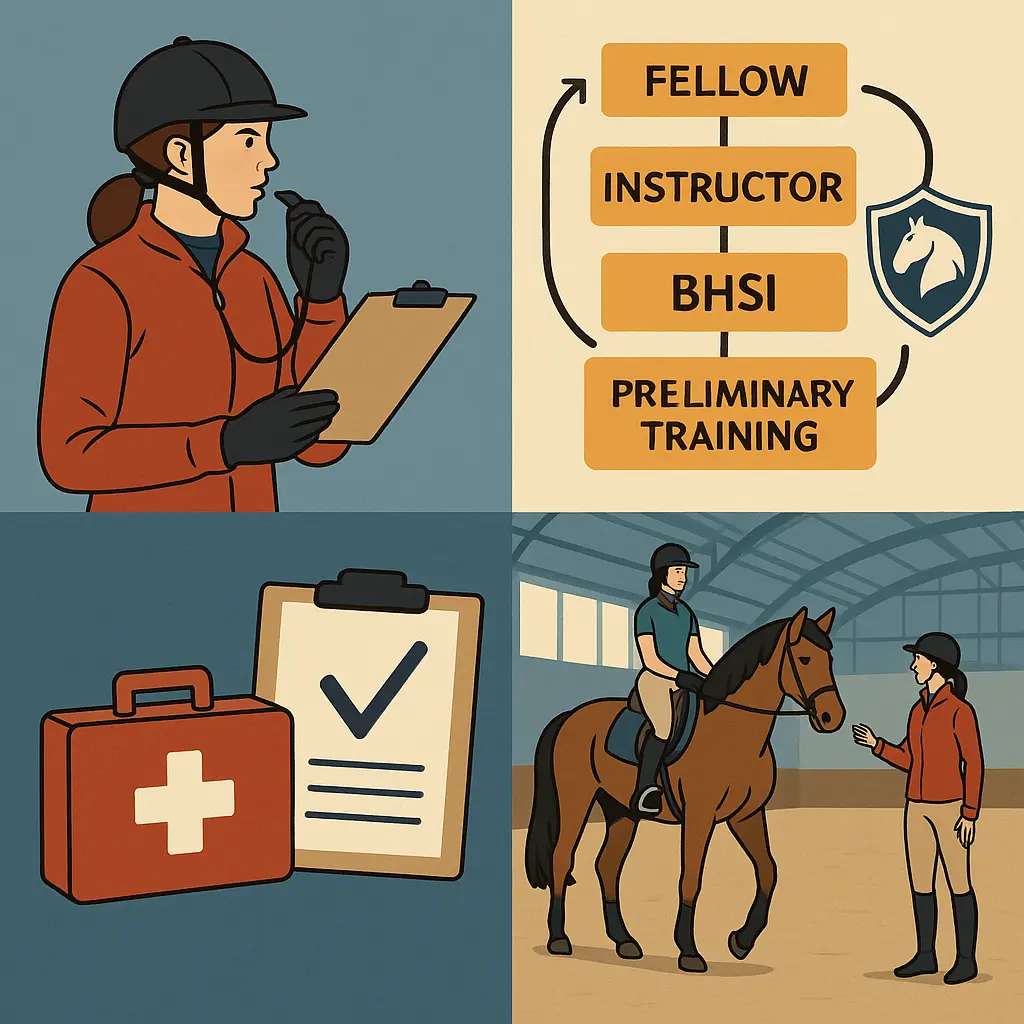
The BHS pathway progresses from supervised teaching (Preliminary Teaching Test) through Assistant and Intermediate Instructor levels to BHS Instructor, BHSI (capable of managing large establishments) and Fellowship (the internationally recognised pinnacle). The higher the level, the broader and deeper the coach’s ability across care, riding and training — invaluable if you’re working at advanced flatwork, jumping or managing a yard team.
“Choosing a qualified instructor ensures safe, effective training and helps you develop confidence and skills appropriately. Ask specifically about their BHS grade to ensure the teaching quality meets your needs.” — British Horse Society, via Pets4Homes: BHS Riding Instructor Grades Explained
Quick tip: If a coach says “I’m on the APC register,” ask for their exact BHS stage. It helps you match their scope to your riding goals.
How BHS and UKCC levels compare
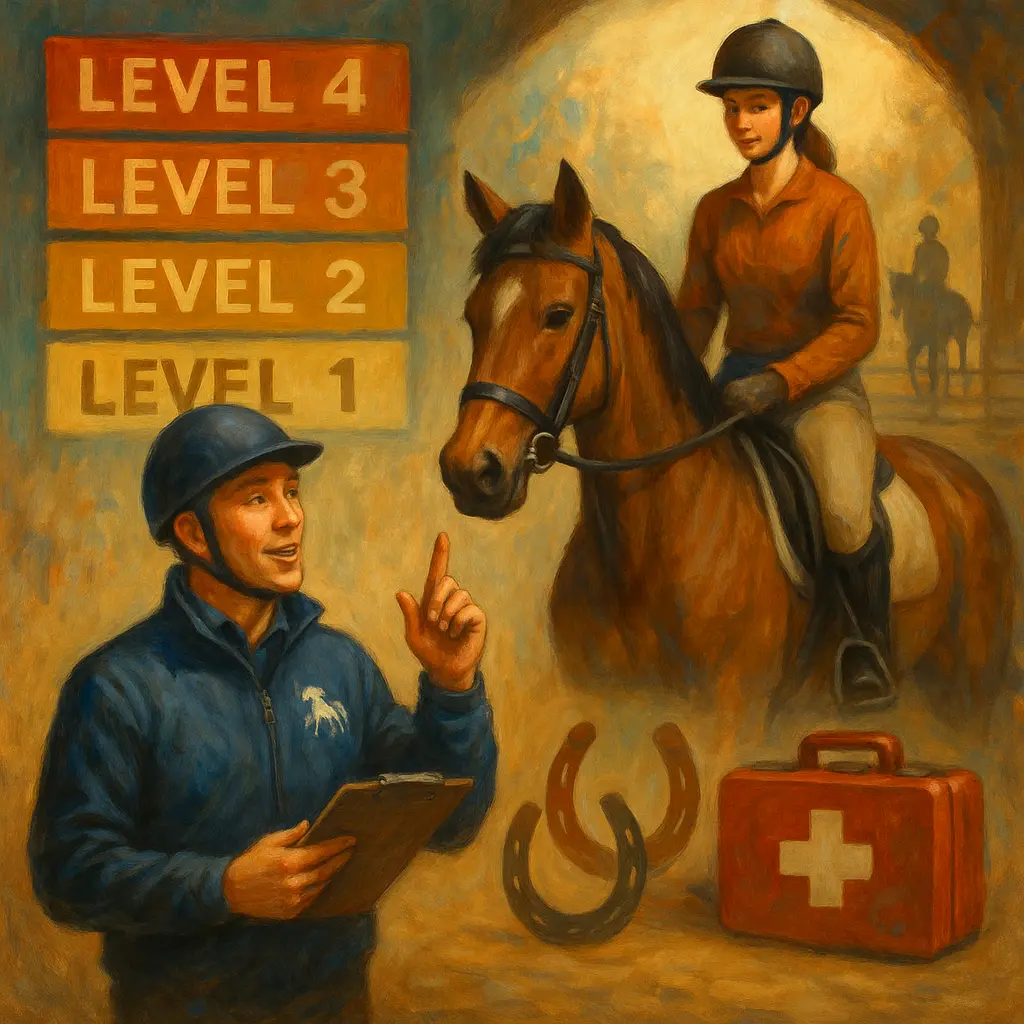
BHS qualifications cover complete horsemanship (riding, care, management), while UKCC/Equestrian Coaching Certificate focuses on the craft of coaching with Levels 1–4 across disciplines.
In practice, UKCC Level 1 coaches assist under supervision, Level 2 coaches plan and deliver sessions independently, Level 3 coaches lead long-term programmes, and Level 4 coaches operate at high performance with an advanced academic syllabus. Many of the UK’s best coaches hold both BHS stages and UKCC levels; the combination signals hands-on horsemanship plus robust coaching methodology. If you’re choosing a dressage specialist, for example, look for UKCC Level 2+ in dressage alongside a BHS Stage 3–4 riding and care background for independent, progressive lessons.
Pro tip: Ask, “Which discipline pathways do you hold UKCC in?” A jumping coach with Level 2+ in showjumping will bring sharper gridwork progressions and competition preparation.
How to verify a coach’s credentials and safety
Ask for their exact BHS grade, confirm APC registration or BHS Approved Centre status, and check they hold current first aid (HSE First Aid at Work or BHS Equine Specific).
Evidence matters. Intermediate-level BHS assessments historically required 500+ logged teaching hours and up-to-date first aid, with the ability to coach to British Dressage Elementary standards. That level of rigour is what keeps lessons safe and purposeful. Ask to see:
- Exact qualification titles (e.g., “BHS Stage 3 Coach in Complete Horsemanship” or “UKCC Level 2 Showjumping”).
- First aid certificate dates (HSE First Aid at Work or BHS Equine Specific First Aid).
- Professional insurance specific to teaching, not just general public liability.
- Membership of BHS, ABRS+ or British Equestrian, which signals CPD and adherence to codes of conduct.
Observing a lesson is invaluable. Look for a clear safety briefing, tack and hat check, an individualised plan, and adaptive coaching if horse or rider needs change mid-session. The BHS APC Code of Conduct sets expectations on integrity, horse welfare and safe environments: BHS APC Code of Conduct.
“Coaches need a minimum of a BHS Stage 3 Coach qualification, a Coaching Certificate Level 2 qualification or an RDA Coach qualification to be able to coach independently.” — British Equestrian
At Just Horse Riders, we recommend booking a trial session and asking the coach to outline short- and medium-term goals. A professional will welcome the conversation.
Which qualification matches your riding goal?
Beginners do best with supervised coaches or Stage 2–3, intermediates with Stage 3+ independent coaches, and advanced riders with BHSI/BHS Instructor/Fellowship.
Use this simple match-up:
- New or nervous riders: Preliminary Teaching Test coaches (teaching under supervision) or Stage 2–3 in approved riding schools, where structured oversight supports safety.
- Confident novice to Elementary: BHS Stage 3 Coach (BHSAI) or UKCC Level 2 for independent lessons at home or yard arenas; they can progress you through flatwork basics, poles and lower fences.
- Competing at Elementary/1m+: BHS Stage 4 Coach (formerly BHSII) or UKCC Level 3 for stronger technical development and long-term planning.
- Advanced/yard leadership: BHS Instructor/BHSI or Fellowship for high-level riding, training multiple horses, and stable management expertise.
If your target is British Dressage Elementary, ask whether the coach can demonstrate and teach movements at that standard — Intermediate-level BHS assessment criteria reference coaching at this level. For children, ensure the coach has suitable safeguarding and choose centres where hats and body protectors are checked before every lesson.
Quick tip: If your preferred coach is fully booked, BHS Approved Riding Centres in Oxfordshire offer consistent welfare and safety standards plus in-house supervision — ideal while you wait for a one-to-one slot.
What do riding schools and insurers expect?
Most riding schools require independently teaching instructors to hold BHS Stage 3 Coach and Yard Managers to hold BHS Stage 4 Coach (formerly BHSII) or equivalent UKCC.
This is driven by insurance and risk management: “For insurance purposes alone… riding schools will usually require all of their independently teaching horse riding instructors to hold their BHS Stage 3 Coach (formerly BHSAI) and Yard Managers to hold their BHS Stage 4 Coach (formerly BHSII) or equivalent level UKCC qualification.” Source: The Grooms List. When trainers deliver Ride Safe or assess candidates, the BHS requires them to be qualified at least one level higher than the level assessed, with relevant coaching credentials — another layer that safeguards riders.
For you as a client, these standards mean a safer, more consistent lesson experience, particularly in group settings or when riding unfamiliar school horses. If you’re booking at a new centre, ask which BHS or ABRS+ approvals they hold and how they supervise junior instructors in peak times.
Coaching in Oxfordshire’s seasons
From October to March, Oxfordshire’s wet, muddy conditions make coaches with indoor arenas and all-weather plans essential for consistent progress.
Reliable coaching in winter means fewer cancellations, better footing, and horses staying tuned to a routine. Prioritise centres with indoor or well-drained arenas and coaches experienced in adapting sessions: more groundwork and polework on poor days; fitness and suppling when footing is sound. For hacking-based lessons, visibility and warmth matter: choose high-quality hi-viz, waterproofs and horses kept comfortable between efforts.
Gear that helps you keep lessons on track through winter:
- A properly fitted hat meeting current standards: see our curated range of riding helmets and hats.
- Warm, grippy legwear: our women’s jodhpurs and breeches and children’s jodhpurs keep you secure in the saddle.
- Waterproof footwear with traction: explore horse riding boots suitable for muddy yards and arena edges.
- Visibility for dull afternoons: choose from our rider hi-vis collection for lessons that include roadwork or farm tracks.
- For your horse, swap between winter turnout rugs and stable rugs to keep muscles warm before and after sessions.
At Just Horse Riders, we see Oxfordshire customers pair WeatherBeeta turnouts with breathable quarter sheets for warm-up on frosty mornings; browse our WeatherBeeta selection if you’re refreshing winter layers.
What to look for in a first lesson
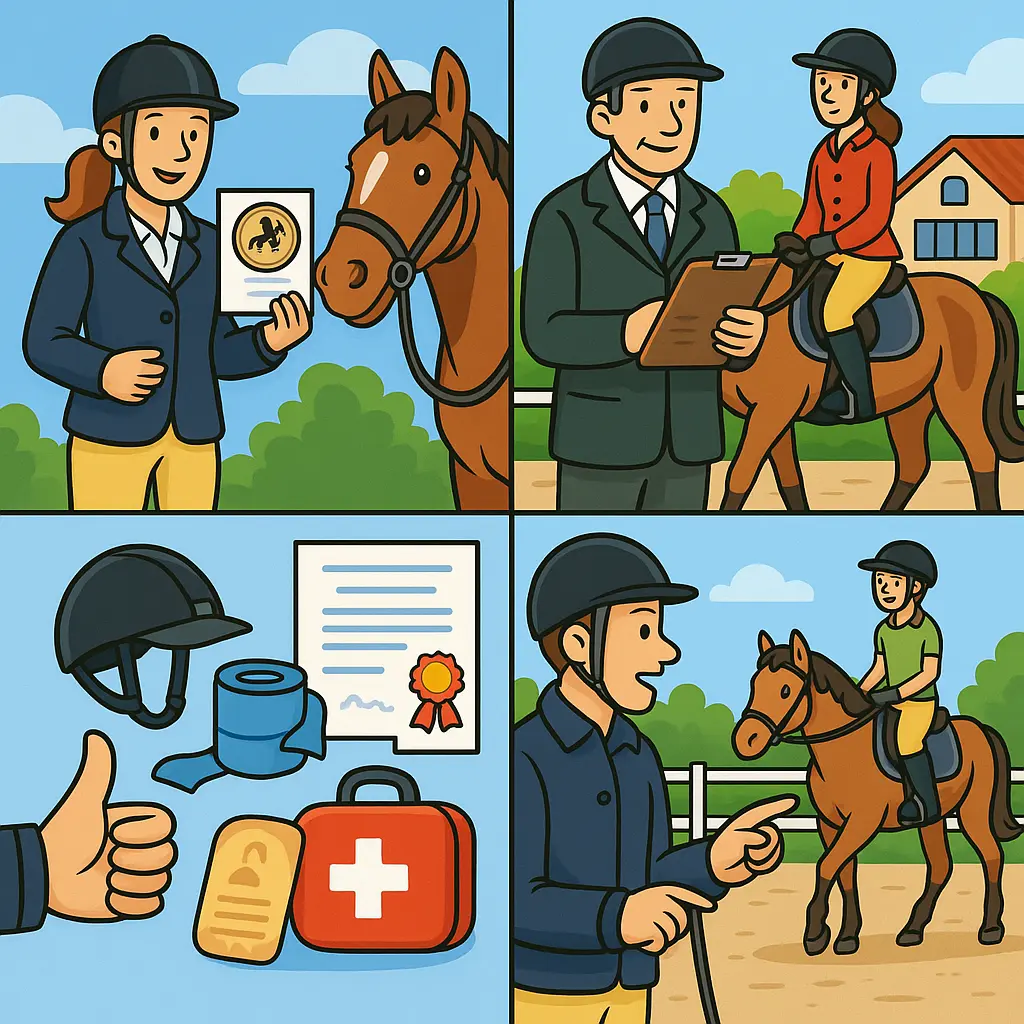
Expect a clear safety briefing, tack and hat check, structured warm-up, and progressive exercises matched to you and your horse.
A professional first session typically includes:
- Quick chat to define goals, your and your horse’s history, and any physical considerations.
- Pre-ride checks: girth, stirrups, bit fit, booting, hat and footwear — you should feel invited to ask questions.
- Observed warm-up assessing straightness, rhythm and contact, followed by targeted exercises (e.g., transitions within paces, pole lines).
- Constructive feedback and a simple homework plan.
Signs you’re in good hands: the coach notices when your horse loses balance and resets the exercise; they change the plan when the going is deep; they keep language calm and precise. If your coach recommends welfare interventions (physio, saddle refit, vet check) before pushing on, that’s alignment with the BHS emphasis on horse welfare.
Pro tip: Take a short video (with permission) and jot three bullet points afterwards. Reviewing with your coach at the next session accelerates progress.
Essential kit for safe, productive lessons
A certified helmet, suitable boots with a defined heel, grippy gloves and weatherproof layers are non-negotiable for safe lessons year-round.
Here’s a concise checklist we recommend:
- Hat: current-standard helmet from our riding helmets range; instructors at approved centres will insist on this.
- Boots: supportive, yard-proof footwear from horse riding boots to keep your lower leg stable.
- Legwear: secure-seat breeches such as our women’s breeches with silicone grip for flatwork and gridwork.
- Gloves: better feel and safety on the reins, especially for beginners; browse options within our apparel ranges.
- Horse protection: schooling boots or bandages for lateral work or poles — see horse boots and bandages.
- Grooming and prep: a quick brush-off before tacking prevents rubs; restock with our grooming essentials.
- Seasonal layers: swap between turnout rugs and stable rugs to keep muscles warm around sessions.
Quick tip: Keep a compact human/equine first aid kit in your car or tack room for clinics and remote hacking lessons — this mirrors the first aid readiness expected of qualified coaches.
Conclusion: your next steps
Book with a coach who can prove their BHS Stage 3 Coach/UKCC Level 2 (or higher), holds current first aid, and teaches at the level you aspire to. Observe a lesson, trial a session, and choose a venue that works in all weathers — especially through an Oxfordshire winter. Kit yourself and your horse for comfort and safety, and you’ll see confident progress, faster.
FAQs
What is the minimum qualification for an independent riding instructor in the UK?
BHS Stage 3 Coach (formerly BHSAI), UKCC/Equestrian Coaching Certificate Level 2, or an RDA Coach (for RDA settings) is the minimum for independent coaching. See British Equestrian’s guidance and the BHS APC criteria in the APC Code of Conduct.
How do I know if an instructor is qualified to teach advanced levels?
Look for BHS Instructor, BHSI or Fellowship — these signal high-level riding, teaching across all stages, and often the ability to manage large establishments. Ask specifically about their experience coaching to British Dressage Elementary or above if that’s your target.
Do instructors need first aid training?
Yes. Current HSE First Aid at Work or BHS Equine Specific First Aid is expected for intermediate and advanced BHS levels and is standard practice for insured professional coaches.
What’s the difference between BHS and UKCC qualifications?
BHS stages cover complete horsemanship (riding, care, management), while UKCC (Levels 1–4) focuses on coaching skills across disciplines. Level 2 is the independent coaching threshold; Levels 3–4 indicate senior and high-performance coaching capability.
Can unqualified instructors teach safely?
It’s not recommended. Without recognised qualifications and the insurance/CPD that comes with them, you risk inconsistent safety standards and slower progress. Responsible riders choose certified professionals.
Where can I find qualified instructors in Oxfordshire?
Search BHS Approved Riding Centres and the British Equestrian coach directories for Stage 3+ coaches at local schools and livery yards. If your preferred coach is booked, approved centres provide structured supervision and consistent welfare standards.
What kit do I need for my first lesson?
A certified hat, heeled boots, gloves, and comfortable jodhpurs are essential. Start with our helmet selection, riding boots, and women’s breeches, and add hi-vis for any roadwork.