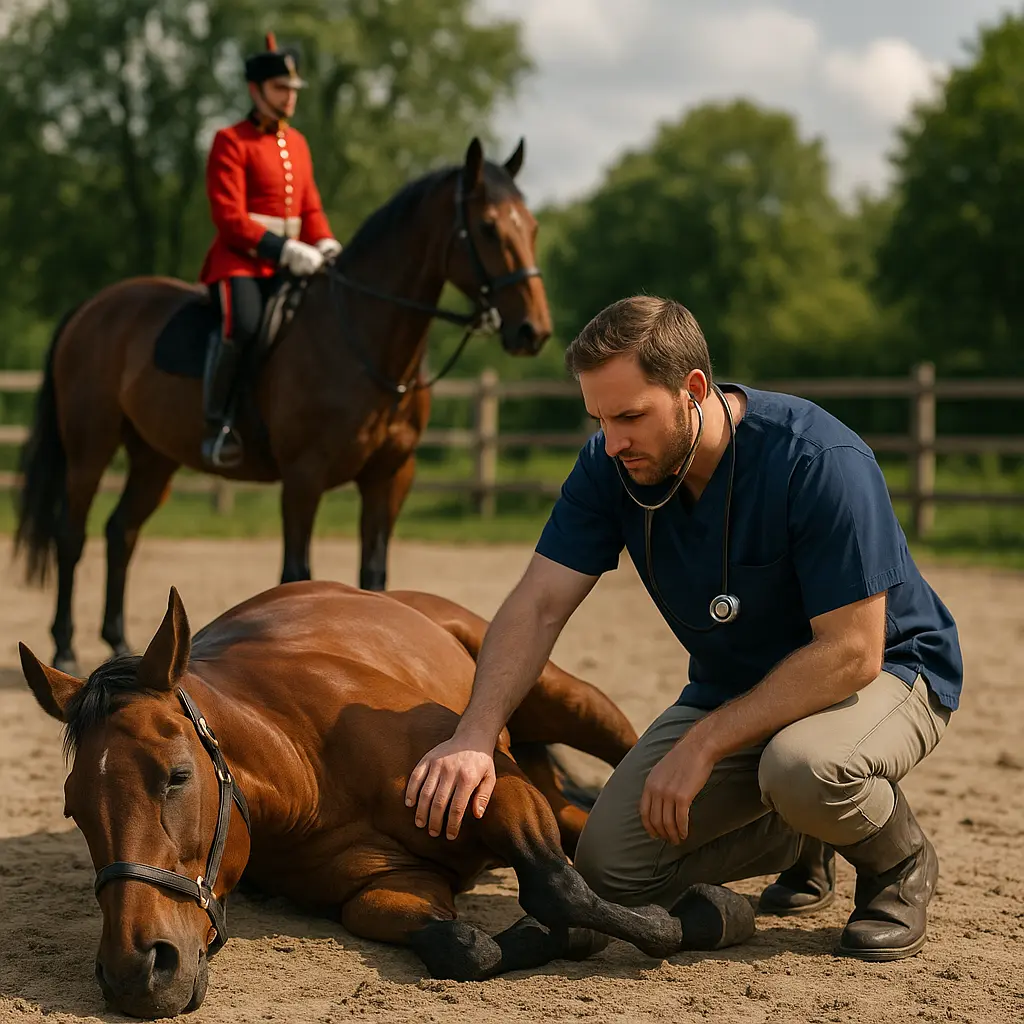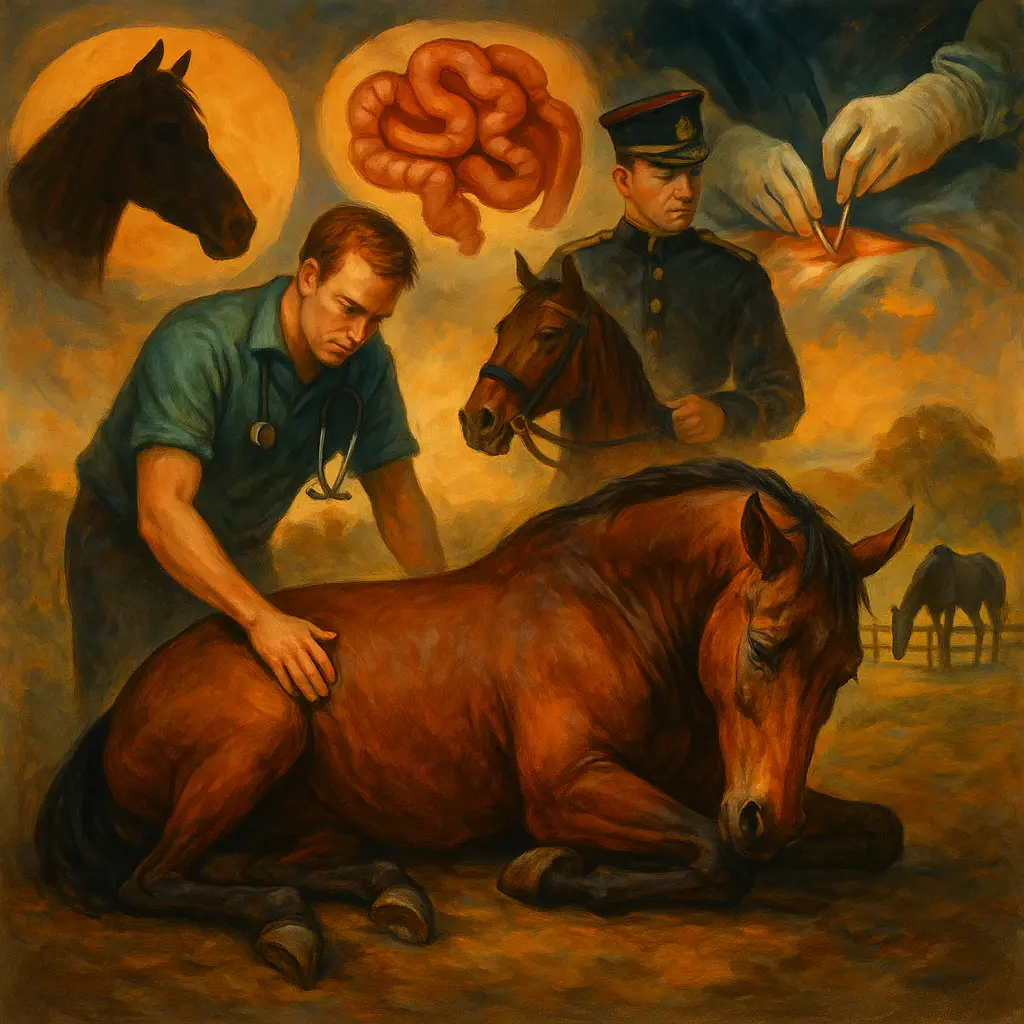
Colic remains the emergency UK horse owners are most likely to face, yet reliable numbers can turn panic into a plan. Recent UK data show how common colic really is, which horses are most at risk, and what practical steps give your horse the best chance.
Key takeaway: In UK-managed horses, colic occurs at 11.1 episodes per 100 horse‑years and causes 0.5 deaths per 100 horse‑years; most mild cases resolve with medical treatment, but early veterinary assessment is critical.
How common is colic in UK horses?
Colic occurs at about 11.1 episodes per 100 horse‑years in UK-managed horses, with 0.5 deaths per 100 horse‑years. In a four‑year study of 717 British military working horses, 22.7% experienced 267 colic episodes and 1.8% died from colic, figures the study authors state are similar to the general UK horse population.
This military herd is managed under strict, consistent routines, making it a useful benchmark for UK owners. The data show that even in highly controlled settings, colic risk persists. Of note, only 3% of episodes (8/267) in that population required surgery, underlining that most cases are medical rather than surgical emergencies. That aligns with everyday UK practice, where many mild spasmodic colics respond to veterinary-administered analgesia and antispasmodics.
“The incidences of colic and colic-related deaths within the British military working horse population are similar to those of the general horse population.” — Study authors, British Veterinary Association–affiliated researchers (PubMed)
What are your horse’s chances of survival with medical or surgical colic?
UK referral hospitals report 68% overall short‑term survival in colic referrals, with 87% survival when cases are managed medically and roughly three in four horses surviving to discharge after surgery. In a large retrospective UK study of 1,588 referred cases, 31% required surgery; however, 32% of those recommended for surgery were euthanised before surgery, and intra‑operative mortalities were influenced by owner decisions.
The headline for owners is this: if your vet thinks the colic can be managed medically, short‑term survival is high. If surgery is advised, early, honest discussion about prognosis, likely costs, transport, and aftercare improves decision‑making. The authors from Rossdales Equine Hospital and the University of Cambridge emphasised the role of euthanasia decisions in mortality statistics:
“Euthanasia was the single largest risk for mortality, with 59% of horses recommended for surgery euthanized either before or on the operating table.” — UK referral study authors (PMC)
Quick tip: Keep your insurer’s emergency number and policy details in your phone and tack room. Pre‑authorisation and transport arrangements can save vital minutes if surgery is on the table.
Which horses are at higher risk of colic or recurrence?
Horses sourced from mainland Europe had 4.6 times higher odds of colic and 6.0 times higher odds of recurrent colic than Irish‑sourced horses in the UK military study. Across that population, 35% of horses that had colic went on to have more than one episode, confirming that recurrence is common and needs active management.
Age and workload matter. Colic incidence is lowest under two years of age, but colic accounts for a higher proportion of deaths in this group (up to 28% of deaths), so prompt veterinary assessment for youngsters is essential. Incidence rises in horses aged two to ten, particularly during periods of training and competition stress (often peaking in UK spring and summer). Yard moves, travel, changes in routine, and feed alterations add to the risk profile.
At Just Horse Riders, we recommend proactively flagging higher‑risk horses on your yard diary: recently imported, on intensive training plans, or with a prior colic episode. This is the group where extra vigilance pays off.
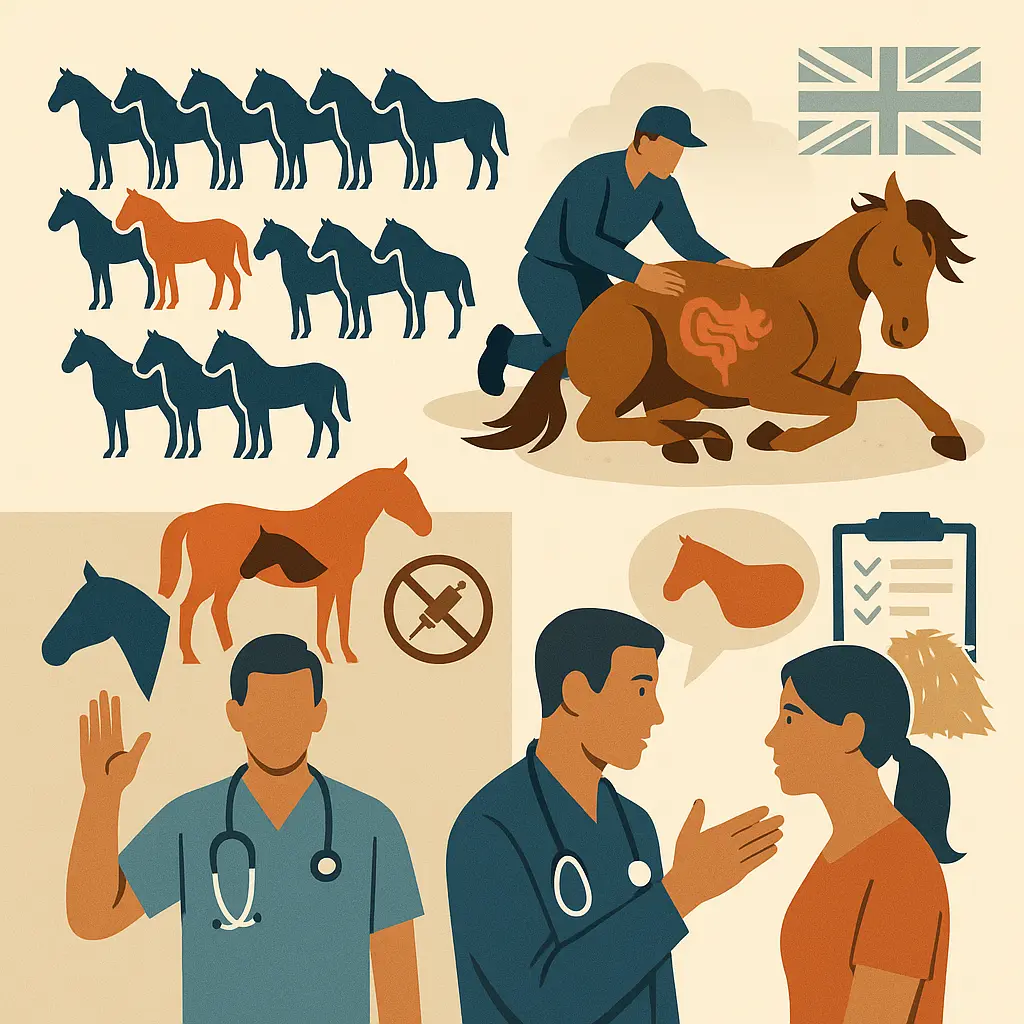
What should you do in the first hour of suspected colic?
Call your vet immediately, remove feed, and monitor your horse closely while keeping them calm and walking briefly if safe. Early veterinary input matters because many mild cases resolve with prompt medical treatment, often after a single visit and administration of appropriate drugs.
Use the first 60 minutes to gather decision‑making information for your vet:
- Time‑stamp the first signs (e.g. pawing, flank watching, reduced droppings, lying down and getting up repeatedly).
- Remove hard feed and restrict hay until your vet advises.
- Check water access and observe drinking; do not force water.
- If safe, hand‑walk in short stints to prevent rolling; avoid exhausting the horse.
- Note any recent changes: feed, turnout, travel, yard move, worming, dentistry, workload, weather/heat.
- Do not give medications unless your vet instructs you.
Because 75% of mild colic cases are managed medically and achieve 87% short‑term survival in UK data, fast, accurate reporting of signs and changes helps your vet tailor treatment at the first visit. If you need to walk the horse after dark or along the lane while waiting for the vet, prioritise visibility with hi‑vis for riders and handlers so everyone stays safe.
Pro tip: Keep a clean bucket, thermometer, torch, and yard notebook by the stable door. Having them to hand reduces stress and speeds up assessment when every minute counts.
How can you reduce colic risk through daily management?
Consistent routines, forage‑first low‑starch diets, gradual changes, and good hydration are the biggest levers to cut colic risk on UK yards. These fundamentals directly target the management factors linked to higher incidence and recurrence in the UK literature.
Build your yard plan around the following:
- Forage first: Prioritise ad‑lib forage where appropriate and avoid sudden concentrate increases, especially in horses in eventing or higher workloads.
- Make changes slowly: Introduce new feeds or hay over 7–10 days; adjust turnout and work in small, planned increments.
- Hydration: Encourage drinking before, during, and after transport or hard work. In warm UK weather, young, training horses benefit from electrolytes post‑exercise and during recovery under veterinary guidance. Explore targeted options in our horse supplements and care collection, including trusted brands like NAF.
- Travel smart: Plan frequent water stops, avoid fasting, and bring familiar forage; travel can be a trigger for at‑risk horses such as recent imports.
- Routine healthcare: Keep dentistry, worming (faecal egg counts), and vaccinations current; gut discomfort from sharp teeth or heavy parasite burdens can mimic or trigger colic signs.
- Comfort and warmth: Horses recovering from colic or prone to stiffness are often more comfortable in a stable rug during cooler months; see our breathable stable rugs for steady temperatures overnight.
Quick tip: Spring and early summer in the UK bring training increases, richer grass, and more travel — the perfect storm for colic risk. Mark your calendar to slow any changes in March–June and monitor droppings and drinking closely.
How should you plan for recurrent colic?
Because 35% of affected horses have repeat episodes, log every sign, time, feed, and treatment detail and share patterns with your vet. A simple, consistent record is one of the best tools to prevent recurrence.
Build a “recurrent colic toolkit”:
- Tracking: Keep a stable journal or app record for each episode — onset time, behaviours, droppings, urination, feed intake, travel, yard moves, weather, medication, and veterinary findings. This helps identify triggers like hay changes or specific training loads.
- Yard protocol: Post a short “colic action plan” on the stable door with your vet’s number, who calls whom, and where the headcollar and transport documents are kept.
- After‑care: Agree a step‑down plan with your vet (feed reintroduction, hand‑walking, rugging if needed, electrolyte and hydration support). For horses that drop condition or feel cold post‑episode, controlled warmth with a light turnout rug by day or a stable rug by night can aid comfort, especially during changeable UK weather.
- Grooming and observation: Daily grooming is a quick welfare check — assess gut sounds, demeanour, hydration (skin tent), and droppings while you brush. Keep your kit tidy and ready with our curated grooming essentials.
At Just Horse Riders, we often hear from owners that the simple act of journalling episodes led to a breakthrough — from spotting that the problem followed abrupt haylage changes to recognising that long weekend competitions were the common denominator.
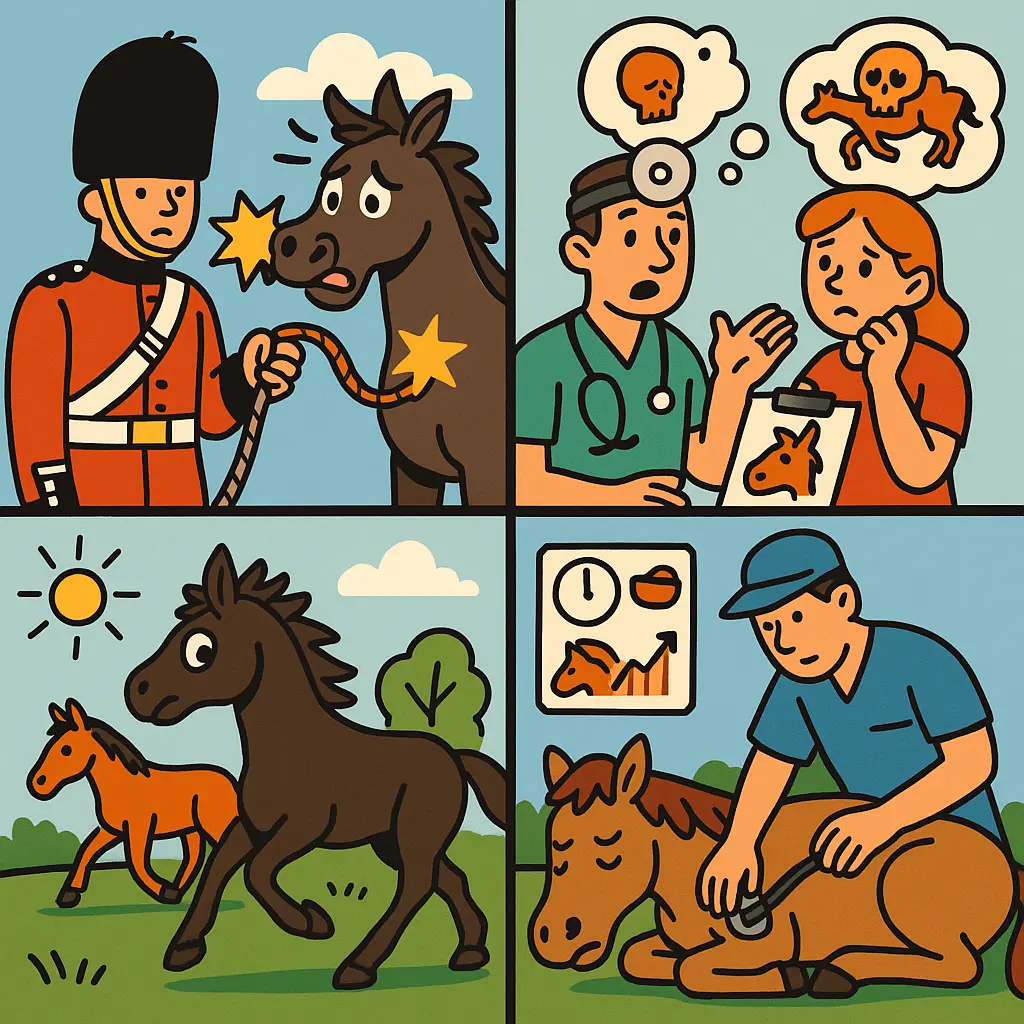
When is euthanasia considered in colic cases?
Euthanasia is most often considered when surgery is recommended but the prognosis or welfare outlook is poor, or when humane grounds and owner circumstances make surgery unsuitable. UK referral data show that 32% of horses recommended for surgery were euthanised before surgery, and many intra‑operative losses reflect welfare‑based decisions rather than failure of care.
This is one of the hardest decisions in horse ownership. Discuss it early and frankly with your vet: surgical options, expected survival (around three in four to discharge in UK series), pain control, likely complications, box‑rest duration, aftercare capacity, and financial cover. If the projected suffering is high and the chance of recovery low, timely euthanasia can be the kindest path. The British Equine Veterinary Association (BEVA) and the British Veterinary Association (BVA) support transparent, welfare‑first conversations guided by clinical findings and the owner’s ability to meet aftercare requirements.
Pro tip: Pre‑plan. Note your horse’s insurance cover for colic surgery, preferred referral centres, and transport options. In an emergency, minutes matter.
What kit helps you prepare for colic and support recovery?
Stock basic monitoring tools and post‑colic recovery aids so you can act fast and support the gut once your vet has treated. While most colic episodes are medical, preparation smooths the path whether your horse is at home, on livery, or away competing.
Build your yard checklist:
- Monitoring basics: Thermometer, torch, a clean bucket, and a stable journal to log times, signs, and advice. A simple log is invaluable if colic recurs (remember the 35% recurrence rate).
- Hydration and electrolytes: Support fluid balance after veterinary treatment or summer work with targeted electrolyte supplementation — explore options in our supplements and horse care range, including top picks from NAF.
- Comfort rugs: After an episode, steady warmth and a calm routine help recovery. Choose breathable, well‑fitting stable rugs and reliable turnout layers from trusted brands like WeatherBeeta for changeable UK conditions.
- Grooming and observation: Keep an organised grooming kit so you can check hydration, gut noises, and demeanour daily without fuss.
- Be seen after dark: If you need to hand‑walk while waiting for your vet, wear high‑visibility gear to stay safe on lanes and yards.
- Budget savers: Stock up during sales — our Secret Tack Room clearance often includes seasonal yard essentials at great prices.
Quick tip: Keep your colic kit in a labelled box by the stable door with a laminated one‑page action plan taped inside the lid.
FAQs
How common is death from colic in UK horses?
In a large UK military herd, colic caused 0.5 deaths per 100 horse‑years; across four years, 1.8% of horses died from colic. Study authors noted these figures mirror the general UK horse population (PubMed).
Do young horses have a higher risk of colic?
Horses under two show lower colic incidence, but colic accounts for a higher proportion of deaths in this group (up to 28% of deaths). Risk rises from ages two to ten, especially with training and competition stress.
What increases the odds of recurrent colic?
In the UK military study, horses sourced from mainland Europe had 6.0 times higher odds of recurrent colic than Irish‑sourced horses. Overall, 35% of horses that had colic experienced recurrence.
How often is colic surgery needed in the UK?
Only about 3% of colic episodes required surgery in the British military population. In referral hospital data across the UK, 31% of referred colic cases needed surgery.
What is the survival rate after colic surgery?
Approximately 75% of horses that undergo colic surgery in UK studies survive to discharge, while 25% die or are euthanised post‑operatively. Euthanasia decisions before or during surgery also influence overall mortality.
What should I do while waiting for the vet?
Remove feed, keep the horse calm, walk briefly if safe, and monitor signs every 10–15 minutes. Note recent changes (feed, travel, workload) and do not administer medication unless your vet instructs you.
Which products genuinely help with colic preparedness?
Focus on monitoring tools and recovery support: a stable journal, thermometer, and torch; hydration and electrolytes from our supplements (including NAF), appropriate stable rugs or turnout rugs for comfort, organised grooming for daily checks, and hi‑vis for safe hand‑walking.
Colic is both common and beatable with preparation. Prioritise fast veterinary assessment, steady routines, hydration, and meticulous record‑keeping — and use UK‑specific data to guide choices when the pressure is on. If you’d like help choosing recovery‑friendly rugs or electrolyte support, our team at Just Horse Riders is here to help.