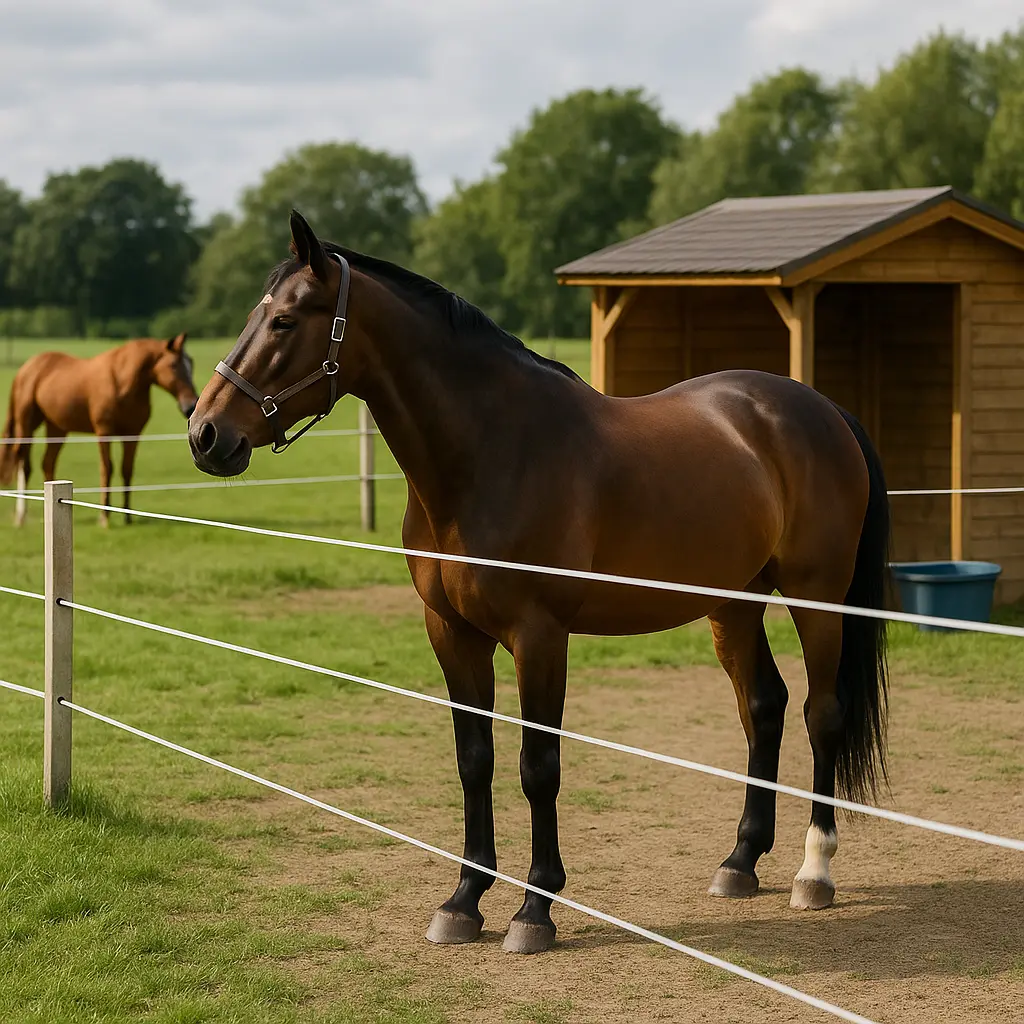
Your horse is herd-bonded and anxious, but yard rules or safety mean you’re considering solo turnout. Done right, individual turnout can calm nerves, reduce injury risk, and still meet UK welfare law.
Key takeaway: UK law requires daily turnout that lets horses choose how they move (including canter); for nervous horses, individual turnout works best when it’s consistent, socially enriched, and safely set up next to other horses.
What UK law requires for daily turnout
UK welfare codes require that horses have daily freedom to exercise in a space large enough for their natural gaits, not just ridden work, and they must not be confined to a stable all day. Group turnout is ideal, but individual turnout is legal if welfare needs are met and the space allows free movement, including canter.
The Animal Welfare Act 2006 and associated codes of practice make it clear that horses need daily turnout for movement, social contact, grazing, and choice. As equine welfare expert Melanie explained via Horse & Hound:
“The regulations on horses’ needs are clear – they need to move around, should not be confined to a box for the whole day, and perhaps most important is that it is not simply about horses needing to move, otherwise it would be enough to require them to be ridden or exercised by a human. The choice is the element that needs to be appreciated.” Source
The British Horse Society (BHS) reinforces this in the government’s Codes of Practice: “All stabled horses, apart from those on box rest for veterinary reasons, will benefit from daily turnout in the field to allow them to graze and socialise.” BHS Code of Practice.
When individual turnout is the kinder choice
Choose individual turnout if your horse is being bullied, is the aggressor, has a medical need, or your licensed yard requires separation; you can still protect welfare by siting the pen beside others so the horse sees and, if safe, touches herd mates over the fence.
In many UK areas, livery yards now offer mostly individual or pairs turnout, with true group fields limited. Licensing guidance expects yards to provide individual pens where health, temperament, or hierarchy demands it. For nervous or highly herd-bound horses, adjacency matters: place the pen along a shared fence line with a compatible neighbour so the horse benefits from visual and (if safe) tactile contact. This reduces anxiety without exposing horses to kicks or bites.
Quick tip: If your horse panics when fully isolated, don’t place the pen in a remote corner. Start in a socially “busy” spot (near water points or gateways) and move to a quieter edge once the horse settles.
How long and how often for nervous horses
Provide daily turnout, every day, and keep the routine predictable; research shows longer, consistent turnout lowers stress and injury risk far more effectively than intermittent access.
A literature review synthesised by equine welfare researchers concludes that daily turnout, for longer durations, produces more stable behaviour and lower stress markers, with social contact amplifying the benefits. Crucially, it’s inconsistency—not turnout itself—that’s linked with soft-tissue injuries due to stress and “rebound” exuberance when horses finally get out. Review summary.
There’s no fixed UK minimum hour count in law, but the welfare principle is clear: turnout must allow free movement in the horse’s gait of choice (including canter). For nervous horses transitioning to solo turnout, prioritise regularity over big jumps in duration. Examples:
- Winter (short days): Start with 2–4 consistent daytime hours, build to half-day or full-day once settled.
- Summer (heat and flies): Aim for cooler night turnout with a consistent window (e.g., 8pm–6am), adjusting as temperatures and midges change.
Pro tip: Track turnout times, ridden work, and any “spooks” or fence-line pacing. If the horse explodes on release, make the session daily and slightly longer—not rarer and shorter.
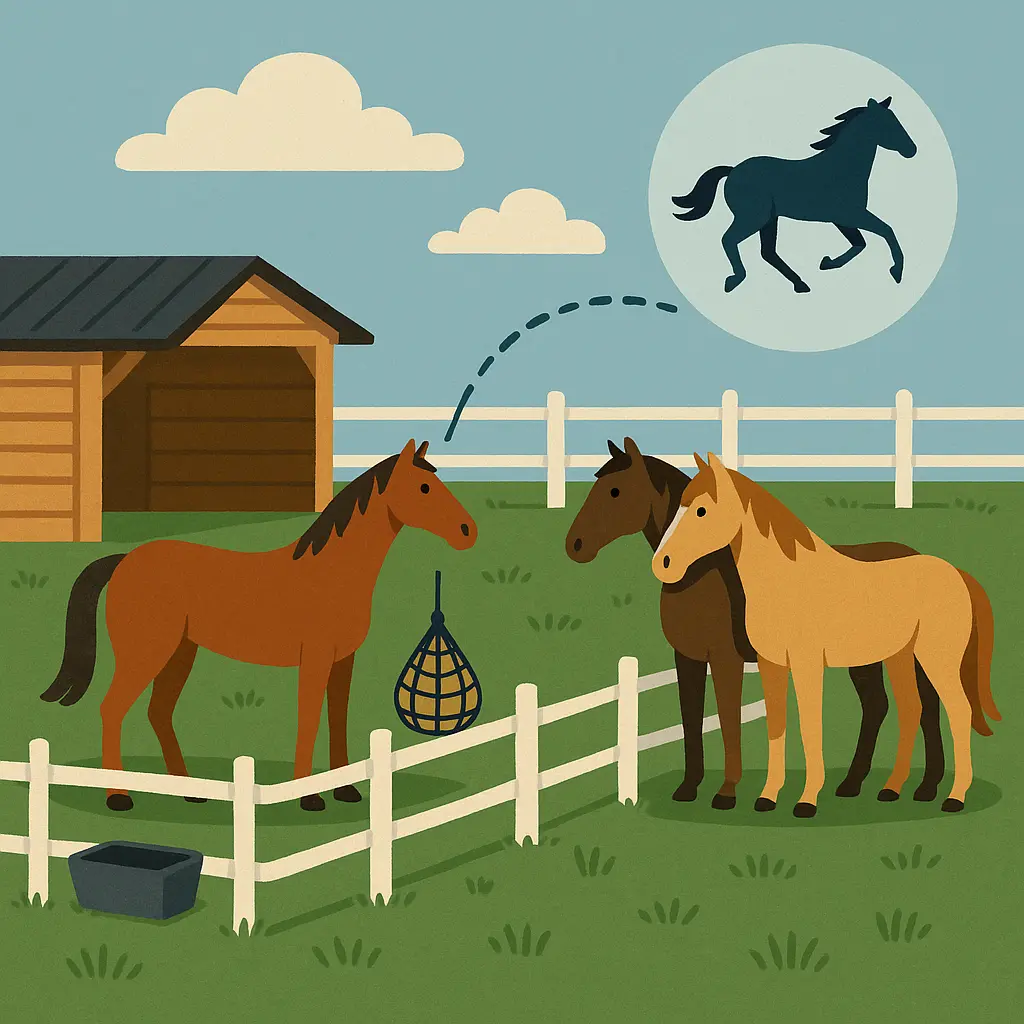
Designing a safe, enriched individual paddock
An effective solo paddock is big enough for canter, securely and visibly fenced, adjacent to other horses, and equipped for weather, forage, and mental stimulation.
Use these UK-specific welfare benchmarks and setup keys:
- Space to move: The area must allow free movement at a chosen gait (e.g., canter). Long, track-style pens encourage forward motion and reduce fence-line spinning.
- Fencing visibility and height: Maintain solid, visible boundaries; aim for 1.2–1.38m for most horses (ponies 1.0–1.3m; stallions 1.38m). Keep the lower rail at least 0.5m above ground to prevent limbs getting trapped.
- Shared boundary: Position the pen alongside a calm neighbour for mutual grooming over the fence if safe; use double fencing or offset posts where needed to stop kicking/biting.
- Surface and drainage: Avoid boggy corners that become slip hazards in UK rain. Rotate areas to protect turf and reduce “horse-sick” patches.
- Weather protection: Provide a natural hedge break or a shelter so your horse can get out of wind and persistent rain.
- Forage and enrichment: Offer slow feeders, hay nets, or a hay box to mimic grazing; mirrors or a safe equine “company” ball can ease isolation stress.
At Just Horse Riders, we recommend planning kit to match British weather swings:
- Rugs for wet and windy spells: Consider winter-ready turnout rugs (many of our Weatherbeeta rugs balance waterproofing with breathability for UK showers).
- Lower-risk movement: Add overreach or brushing boots from our horse boots & bandages range if your horse is exuberant or forging on release.
Cost guide: Field-safe rugs typically range £50–£150; slow feeders/hay nets £20–£60; mirrors or equine balls £15–£40; paddock shelters £200–£800.
A step-by-step transition plan
Transition in small, predictable steps: keep the same field, neighbours, and time slots, and extend durations gradually.
Use this five-step framework for nervous or herd-bound horses:
- Start beside friends: Day 1–3, turn out next to the calmest “buddy” at the same time each day. Keep sessions short enough that your horse comes in before anxiety spikes.
- Enrich, then extend: Add forage via a slow feeder and a safe toy or mirror. Extend turnout by 15–30 minutes every few days if the horse remains settled.
- Keep the pattern: Same gate, same headcollar and route, same order of horses going out/in. Predictability lowers arousal and fence-line calling.
- Adjust the neighbours: If one neighbour paces, swap them for a quieter pairing across the fence. The goal is visible herd contact without fireworks.
- Stabling in-between: When stabled, meet BHS minimums—12ft x 12ft (3.65m x 3.65m) for most horses; 12ft x 14ft (3.65m x 4.25m) for 17hh+—and provide ad-lib forage and visual contact.
Quick tip: Inconsistency drives rebound behaviour. If weather disrupts turnout, compensate with in-hand grazing laps around the yard at the same time of day until turnout resumes.
Common mistakes to avoid:
- Abruptly switching from group to full-time isolation—introduce solo turnout gradually.
- Tethering or hobbling—these restrict natural movement and introduce severe entanglement and injury risks.
- Putting a nervous horse out alone, out of sight and sound of others—move the pen where herd contact is obvious.
Seasonal strategies for the UK
In the UK, aim for daytime turnout in cold winters for warmth and sunlight, and night turnout in hot, fly-heavy summers; adjust rugs and fly protection to conditions.
Winter: Cold, wet, and windy conditions can increase anxiety if horses are chilled or standing in mud. Provide shelter, good drainage, and an appropriate rug. Build turnout gradually on short days to prevent pent-up energy.
Summer: Flip to night turnout to avoid heat and insects, and manage grass intake to match body condition. Provide shade or a field shelter for any daytime sessions, plus fresh water on longer nights.
Flies and midges: Protect sensitive horses with fly masks and consider a breathable sheet from our fly rugs and sheets range. If your horse becomes agitated by insects, move the pen to a breezier spot.
Pasture management: UK fields can become “horse-sick” if overgrazed. Rotate areas, top ragwort, and match turnout time to your horse’s fat score and the season so you’re not forced to strip grass suddenly (a major stressor).
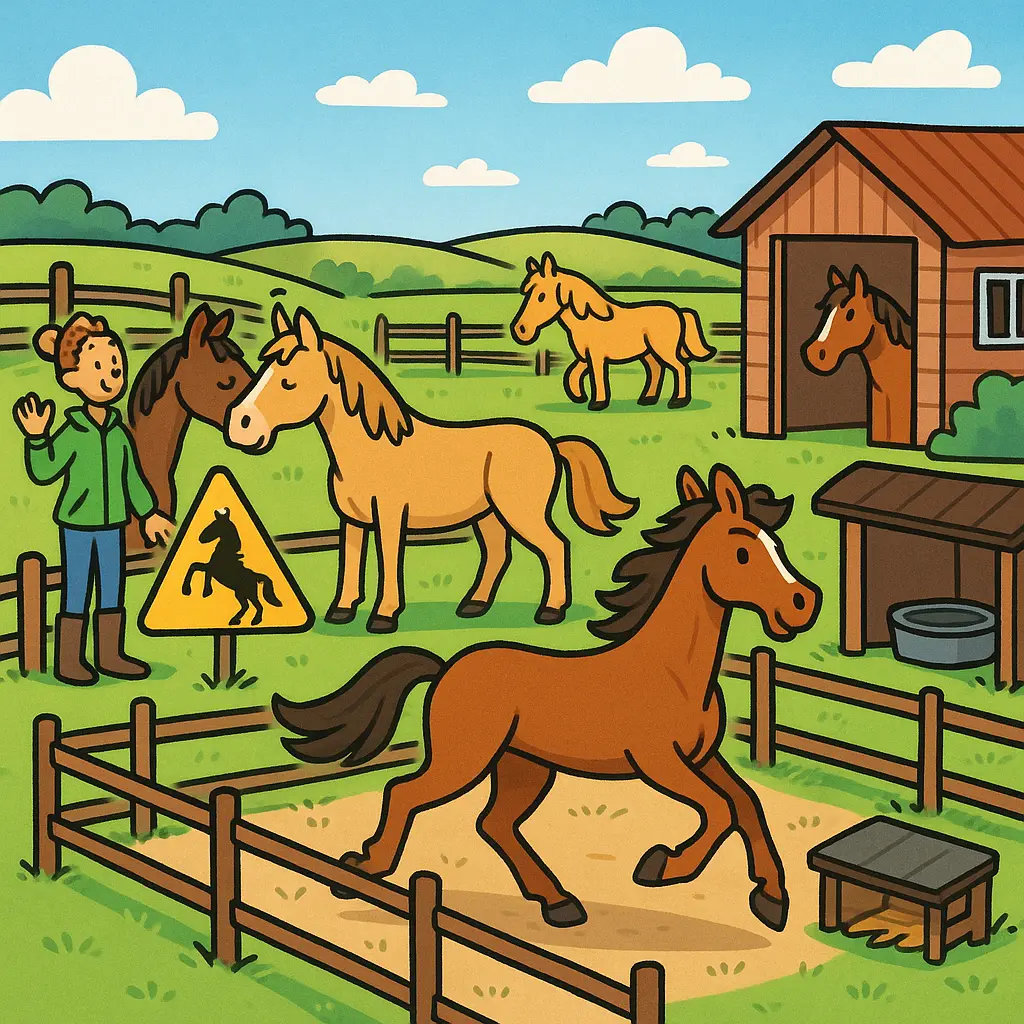
Spotting and solving stress
Watch for rebound activity, pacing, fence-walking, calling, or frustration behaviours, and act early by improving social contact, routine, and enrichment.
Evidence links inconsistent turnout to spikes in stress hormones and overexuberance on release. If your horse escalates, intervene:
- Move the pen for better herd visibility or auditory contact.
- Add a second hay station to reduce “empty moments” that trigger pacing.
- Place a mirror safely or add a company ball for focus and confidence.
- Increase daily predictability (same time, same neighbour, same route).
- Consider supportive nutrition if appropriate; many owners use targeted products from our supplements range—always introduce gradually and track behaviour.
- Keep your horse relaxed around you: unhurried grooming can be bonding and grounding—browse our grooming brushes and kits to create a calming routine before and after turnout.
Quick tip: If your horse panics on the walk to and from the field, wear hi-vis in low light and practise quiet “stop, graze, step” repetitions. Our hi-vis rider gear boosts safety on short road verges and dim evenings.
The essential kit and costs
Budget for secure fencing, weather protection, forage delivery, and calm-inducing enrichment; smart kit choices improve welfare and reduce vet risk.
- Boundary and safety: Highly visible fencing or electric tape with proper posts and insulators; safe gates; regular fence checks.
- Weather protection: Field-safe rugs £50–£150; paddock shelters £200–£800. Explore durable options in our turnout rugs selection and proven brands like Weatherbeeta.
- Forage and grazing: Slow feeders/hay nets £20–£60 to stretch forage and reduce fence-walking.
- Insect control: Fly masks and breathable sheets—see our fly rug and sheet collection for summer comfort.
- Movement protection: Overreach/brushing boots from our horse boots & bandages to manage exuberant movement on release.
- Enrichment: Mirrors or equine “company balls” £15–£40 for mental stimulation.
- Wellbeing add-ons: Quiet pre- and post-turnout grooming with kits from our grooming range and, where appropriate, targeted support from supplements.
- Brand staples: Practical yard and field solutions from trusted makers like Shires help you build safe, visible paddock lines and durable daily kit.
Pro tip: Keep a simple turnout log (date, neighbours, duration, behaviour, weather, kit). Patterns make it easy to tweak what works—before stress hardwires.
Bringing it all together
Daily turnout is non-negotiable in UK welfare law, and for nervous horses, individual pens can be the calmer, safer option when they’re consistent, socially enriched, and big enough for a canter. Start beside friends, extend steadily, and equip the pen for British weather and genuine choice. If you’d like help picking the right rug weight or boots for your routine, our team at Just Horse Riders is here to help.
FAQs
Is individual turnout legal in the UK?
Yes, provided it allows free movement (including canter) and meets welfare needs. Group turnout is preferred, but individual pens are required in some licensed settings for bullying, health, or temperament cases. See Horse & Hound’s report and the BHS Code of Practice.
How many hours should my nervous horse get alone each day?
There’s no fixed legal minimum, but daily access is essential and longer, consistent durations reduce stress. Start with a predictable daily window and extend as your horse settles—consistency is more important than clocking a specific hour count.
How can I tell my herd-bonded horse is unhappy alone?
Watch for pacing, calling, fence-walking, sudden overexuberance on release (“rebound” activity), or difficulty settling to eat. Address it by improving herd visibility, routine, forage availability, and enrichment.
Can ridden exercise replace turnout?
No. Turnout provides choice, foraging, and social contact that ridden work can’t fully replicate. As Melanie notes, choice is the key welfare element, not just movement.
When is solo turnout safer than group turnout?
If your horse is being bullied, is causing fights, or has a medical or temperament need for separation. Minimise isolation stress with adjacent pens that allow safe social contact across the fence.
How do I reduce injury risk during the switch to solo turnout?
Be consistent. Inconsistency increases soft-tissue injury risk through stress and exuberance. Keep the same time, same neighbours, same route, and extend durations gradually, not sporadically. See the research synthesis via Jelka’s literature review.