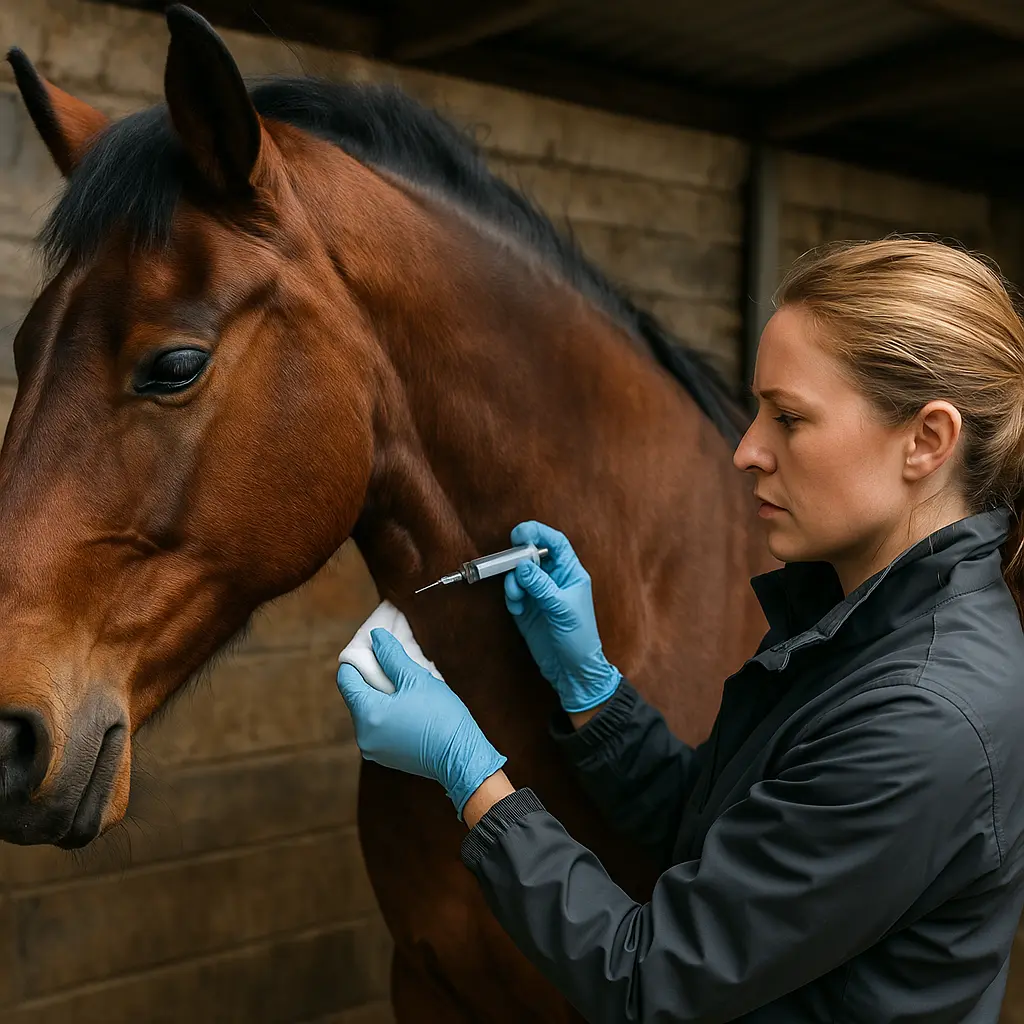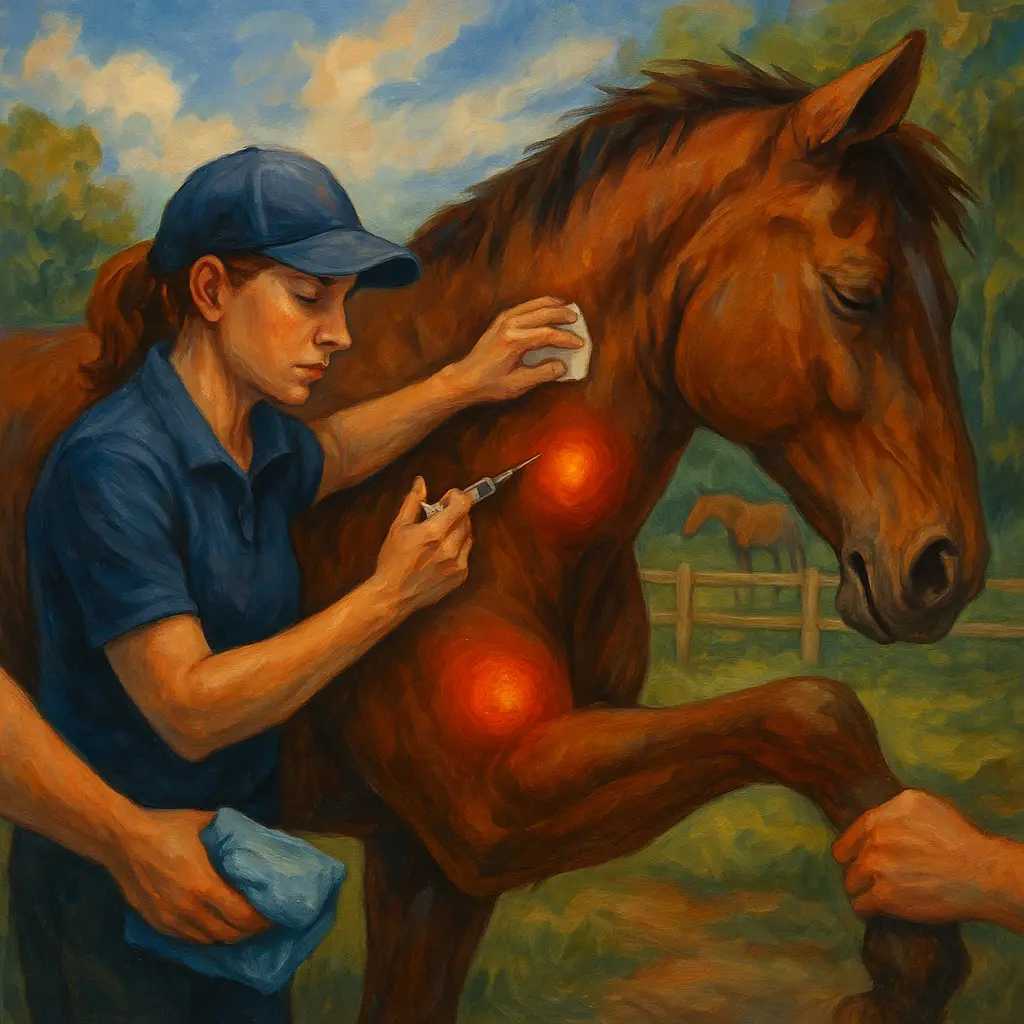
Your horse feeling a bit wooden, short-striding or unsteady after a flu or tetanus jab? That’s a normal, short-lived reaction in many horses — and it usually settles within a couple of days with simple care.
Key takeaway: Mild stiffness and unsteadiness for 48–96 hours after vaccination are common and self-limiting; the risk of flu or tetanus in the UK vastly outweighs the rare chance of a serious vaccine reaction.
What to expect after vaccination
Mild stiffness or unsteadiness for 48–96 hours is normal after equine flu or tetanus vaccination, due to local muscle inflammation at the injection site. Most horses recover fully with rest and simple care.
Vaccines are given into the neck or chest muscle to minimise complications and aid drainage if any local reaction occurs. A small, tender swelling at the injection site, slight warmth, and a horse that feels a bit “off” to ride are all well-recognised, short-term effects. As our own vet-informed guide explains, post-jab lameness “commonly results from localised reactions at the injection site… leading to temporary lameness in some horses” — these effects are generally mild and not systemic. You can read more in our health guide: Understanding lameness in horses after tetanus vaccination.
“Of these reactions, most are either a local soft tissue reaction to some of the components of the vaccine or mild muscle stiffness. The risk of your horse contracting flu or tetanus vastly outweighs the risk of your horse developing a reaction to a vaccine.” — Cinder Hill Equine Clinic vets
In practice, most horses bounce back within 2–4 days. If your horse is significantly sore, many respond well to a short course of vet-prescribed NSAIDs, and cold therapy on the site can ease tenderness.
Why vaccination matters in the UK
In the UK, tetanus bacteria are widespread in soil and equine flu continues to circulate; fewer than 40% of horses are vaccinated, leaving a large at-risk population. The disease risks far exceed the rare chance of a significant vaccine reaction.
Tetanus (Clostridium tetani) lives in soil across the UK and enters through wounds — particularly punctures and foot injuries — which are common in muddy autumn and winter conditions. Unvaccinated horses are extremely vulnerable. Equine flu spreads quickly where horses mix, such as livery yards and winter housing; outbreaks can put horses out of work for weeks and recovery can be prolonged, especially in the colder months when close contact increases transmission pressure.
“Occasionally horses may have a reaction to a vaccination resulting in a localised swelling around the vaccination site. Reactions such as these will usually resolve in a few days without need for further treatment.” — Tyrrells Equine Clinic, UK
Keeping vaccinations up to date protects individual horses and helps reduce community spread. It also protects competition eligibility and yard biosecurity policies that increasingly insist on regular boosters during high-risk seasons.
Post-vaccination care checklist
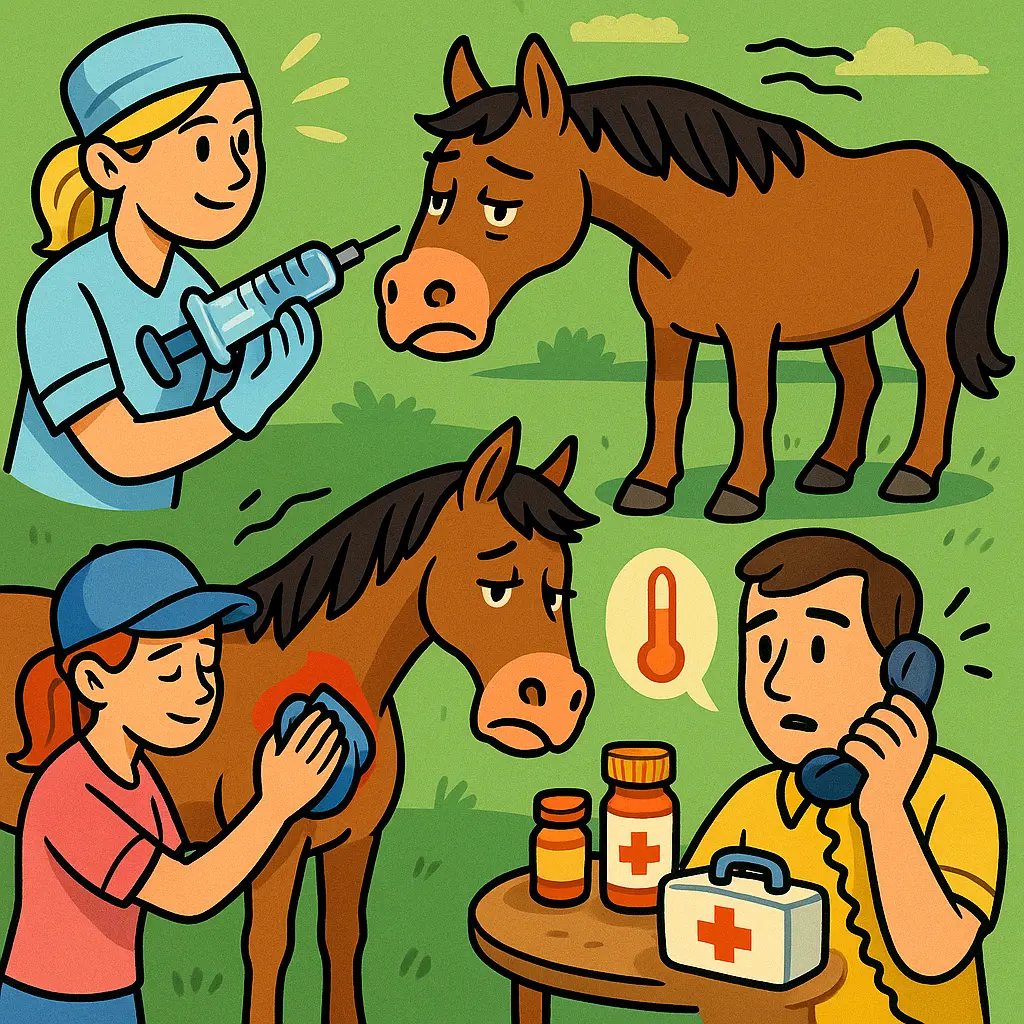
Monitor your horse closely for 24–48 hours, allow gentle exercise but avoid hard work, use cold therapy for tenderness, and call your vet if symptoms worsen or persist beyond 96 hours.
Here’s a practical, step-by-step plan UK owners can use after a flu or tetanus jab:
- Observe for 24–48 hours. Check for stiffness, unsteadiness, heat or swelling at the site, fever, lethargy or reduced appetite. Take a temperature if your horse seems “off.”
- Keep them lightly moving. Turnout or a quiet hack helps lymphatic drainage and eases muscle soreness, but skip schooling, jumping or long hacks for 24–48 hours.
- Apply cold therapy. Ten to 15 minutes of cold hosing or a cold compress on the injection site 1–2 times on day 1 can soothe local inflammation.
- Use pain relief only if needed and under vet advice. Many horses respond to a low dose of phenylbutazone or flunixin if they’re notably sore, as noted by veterinary guidance.
- Feed and water as normal. Offer a soft haynet height if neck stretch is uncomfortable.
- Re-check at 48–72 hours. Most horses should be back to normal. If not, or if anything worsens, speak to your vet.
Helpful yard kit for post-jab days includes a digital thermometer and simple first-aid items. You’ll find yard-friendly options in our thermometers and first-aid essentials. For horses that benefit from nutritional support around inflammatory challenges, browse our anti-inflammatory supplements range. If your horse is a little unsteady, well-fitted stable bandages and leg supports can provide extra reassurance while they mooch about the stable.
“Such reactions are often transient, usually resolving spontaneously within 48–96 hours. Many horses respond well to one or two treatments with a low dose of an NSAID such as phenylbutazone or flunixin.” — Stable Management
When to call the vet
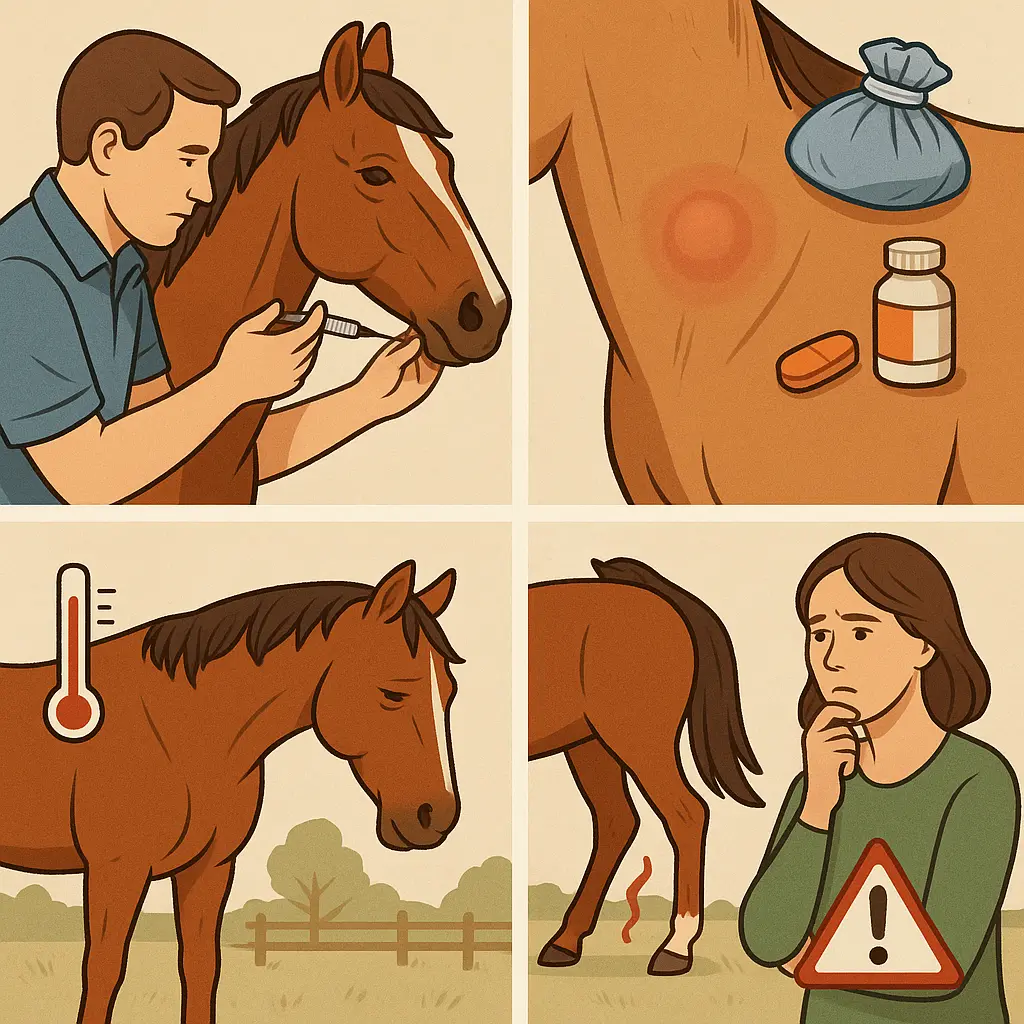
Call your vet immediately for hives, facial swelling, breathing difficulty, colic signs, high fever, or severe and escalating lameness; routine post-jab stiffness and a small local swelling usually settle within 2–4 days.
It’s essential to distinguish normal, self-limiting reactions from rare but serious events:
- Normal responses: mild stiffness or short-striding, low-grade fever, a small warm lump at the injection site, slightly reduced appetite for a day.
- Seek urgent veterinary help: hives (urticaria), marked facial or throat swelling, wheezing or laboured breathing, colic signs (pawing, looking at the flank, rolling), persistent high fever, profound lethargy, or lameness that prevents weight-bearing.
True anaphylaxis is exceedingly rare in horses, but it demands immediate intervention. If in doubt, phone your vet — prompt advice can prevent complications and provide peace of mind. If your horse becomes lame post-tetanus jab, remember that this is most often due to local site soreness rather than a systemic problem; rest, cold therapy and vet-advised anti-inflammatories are usually sufficient.
Quick tip: Note the vaccine brand, batch number and injection site in your yard diary. If you ever need to report a reaction, your vet will have everything to hand.
How to reduce the chance of soreness next time
Ask your vet to use the neck or chest muscle (not the gluteals), avoid hard work on the day, consider pre-medicating known reactors with a short NSAID course, and book vaccinations when you can monitor for 48 hours.
Good technique and planning go a long way in minimising stiffness:
- Site choice matters. UK veterinary guidance favours the neck or sometimes the chest; the gluteal region is avoided because if an abscess forms it can drain poorly and heal slowly. Discuss the best site for your horse with your vet — chest placement is an option if neck stiffness has been an issue previously, as many owners report.
- Workload. Keep the day’s work easy; gentle movement is fine but skip intense sessions for 24–48 hours.
- NSAID pre-med for history of soreness. If your horse has previously been reactive, ask your vet about giving a low-dose NSAID just before and after the jab.
- Yard routine. Book vaccinations when you won’t be away at a show the next day, and when you can check temperatures and demeanour that evening and the following morning.
At Just Horse Riders, we also suggest having a soft, slightly higher haynet for the first evening if your horse’s neck feels tight, and ensuring the stable is set for a quiet night — no need to stretch for hay on the floor if that’s uncomfortable.
A simple 48–96 hour recovery plan
Most horses do best with light movement, cold therapy on day one if tender, and progressive return to normal work over 2–4 days; worsening signs or issues beyond 96 hours warrant a vet check.
Use this day-by-day guide:
- 0–24 hours: Light turnout or a short in-hand walk. Check temperature in the evening. If the site is warm or puffy, apply 10–15 minutes of cold hosing or a cool compress. Offer water and usual feed.
- 24–48 hours: Gentle stretching hack or a loose-school potter; keep it easy. Recheck the injection site. If your horse is still sore, speak with your vet about a short NSAID course.
- 48–72 hours: Most are sound and comfortable now. Resume light schooling if your horse feels normal.
- 72–96 hours: Return to normal work if all signs have resolved. If stiffness or swelling persists, call your vet.
Comfort tweaks can help: on colder days, a well-fitted stable rug with a neck can keep muscles warm overnight and reduce stiffness when they step out. If you prefer a compatible outdoor option during daytime turnout, explore our proven WeatherBeeta neck covers and rugs that balance warmth with movement.
UK vaccination schedule and lapses
The typical UK schedule is a primary flu/tetanus course of three doses (second dose around 21 days after the first, third at 12 months), followed by annual boosters; if you lapse, you’ll need to restart, and a tetanus anti-toxin gives about three weeks’ protection after a wound.
While individual yard and competition rules can differ on intervals, the core veterinary approach mirrors this framework, as outlined by UK equine practices. If your horse sustains a wound and the vaccination programme has lapsed, your vet can administer tetanus anti-toxin to bridge immediate risk for roughly three weeks while you restart the full course. This is vital in muddy seasons when punctures and foot abscesses are more frequent.
Ask your vet to align boosters with your calendar so they don’t clash with competitions or peak workload, and set reminders well ahead of expiry to avoid inadvertent lapses.
Winter, mud, wounds and tetanus: practical field protection
Clean and protect wounds promptly in muddy months, keep tetanus vaccines current, and call your vet for punctures or deep cuts, as tetanus risk from UK soil is high.
In autumn and winter, wet fields and gateways increase the risk of puncture wounds, pulled shoes and small cuts that can harbour Clostridium tetani. A simple, prepared routine makes all the difference:
- Daily legs-and-feet check during turnout season; don’t miss the frog and sulci where debris packs in.
- Immediate wound care: flush dirt, trim ragged edges if appropriate and apply a suitable antiseptic. We stock trusted NAF wound care sprays ideal for the yard first-aid kit.
- Vet assessment for punctures, deep lacerations or anything near a joint/tendon sheath.
- Keep boosters up to date; ask your vet about an anti-toxin if vaccination has lapsed and a wound occurs.
- Turnout planning: in very wet spells, rotating fields and using well-fitting turnout rugs helps keep skin healthy and reduces mud-related skin trauma.
For stabled days or aftercare, a calm environment and supportive routine are key. If your horse is a bit clumsy from post-jab soreness, consider protective bandages or boots while they are in, and keep grooming sessions gentle — our grooming range includes soft brushes that are kind over a slightly tender neck.
Conclusion
Short-lived stiffness or unsteadiness after flu or tetanus vaccination is common and usually settles within 48–96 hours with rest, light movement and simple care. Serious reactions are very rare — and the protection vaccines provide against flu and soil-borne tetanus in the UK is invaluable.
Keep an eye on your horse for two days post-jab, manage any local soreness, and call your vet if signs persist or escalate. To make aftercare easy, stock up on a thermometer and first-aid basics (yard essentials), supportive supplements, and comfort-forward stable rugs with necks. A little preparation goes a long way.
FAQs
How long does stiffness or unsteadiness last after a flu or tetanus jab?
Most horses are back to normal within 48–96 hours. Mild local swelling and short-striding typically resolve on their own with rest and light movement; speak to your vet if signs persist past 96 hours or worsen at any point.
Is it safe to ride my horse the day after vaccination?
Yes — gentle exercise is fine and often helpful, but avoid hard schooling, fast work and jumping for 24–48 hours. Monitor how your horse feels and shorten the session if they seem uncomfortable.
What if my horse goes lame after the tetanus shot?
This is usually a local injection-site reaction causing temporary soreness. Apply cold therapy, allow easy movement, and ask your vet about a short NSAID course if needed. Severe or non-weight-bearing lameness needs prompt veterinary advice.
My horse reacted before — should I still vaccinate?
Yes. UK vets emphasise that the risk of flu or tetanus far outweighs the rare chance of a significant reaction. Discuss pre-medicating with a low-dose NSAID and consider chest rather than neck injection if neck stiffness has occurred previously.
What are signs of a serious vaccine reaction versus normal stiffness?
Normal: mild stiffness, a small warm swelling, slight lethargy or low fever. Serious: hives, facial swelling, breathing difficulty, colic signs, high fever or rapidly worsening lameness — call your vet immediately.
Do I need tetanus anti-toxin if vaccinations have lapsed and my horse gets a cut?
Yes — your vet can administer anti-toxin to provide about three weeks of protection following a wound, then restart the full vaccination course to restore ongoing immunity.
Where should my horse be injected to minimise stiffness?
The neck or chest muscle is preferred by UK vets; the gluteal area is generally avoided due to poorer drainage if a reaction occurs. If neck soreness is a pattern, discuss chest injection with your vet.