Your horse feels rideable in a Dutch gag at home, but you’ve entered a dressage test — now what? If you’re transitioning from showjumping or schooling a strong cob in rehab, understanding what’s legal (and what rides similarly) will save you time, penalties, and your horse’s mouth.
Key takeaway: Dutch gags are not dressage‑legal under British Dressage rules; switch to a dressage‑legal snaffle such as a hanging cheek or Baucher to retain mild poll influence without leverage.
Is a Dutch gag legal for dressage in the UK?
No — Dutch gags are not permitted in British Dressage; only simple snaffles are allowed to promote harmonious communication between horse and rider.
British Dressage (and British Eventing for the dressage phase) restricts competitors to snaffle bits without shanks or multiple rein rings. Industry guidance summarises this clearly: dressage-legal bits exclude gags, pelhams and other leverage designs that act on the poll via mechanical advantage. See the Houghton Country bitting guide for a plain-English overview and always check the latest British Dressage Rulebook before you compete.
“This bit is not legal in dressage competitions, but is often seen in showjumping as it offers a variety of ‘brake’ strengths. The lower down the bit the rein is attached, the more leverage on the poll and therefore the more control the rider has.” — Stef Eardley, Dressage rider, via Horse & Hound
What does a Dutch gag do — and why does it feel so different?
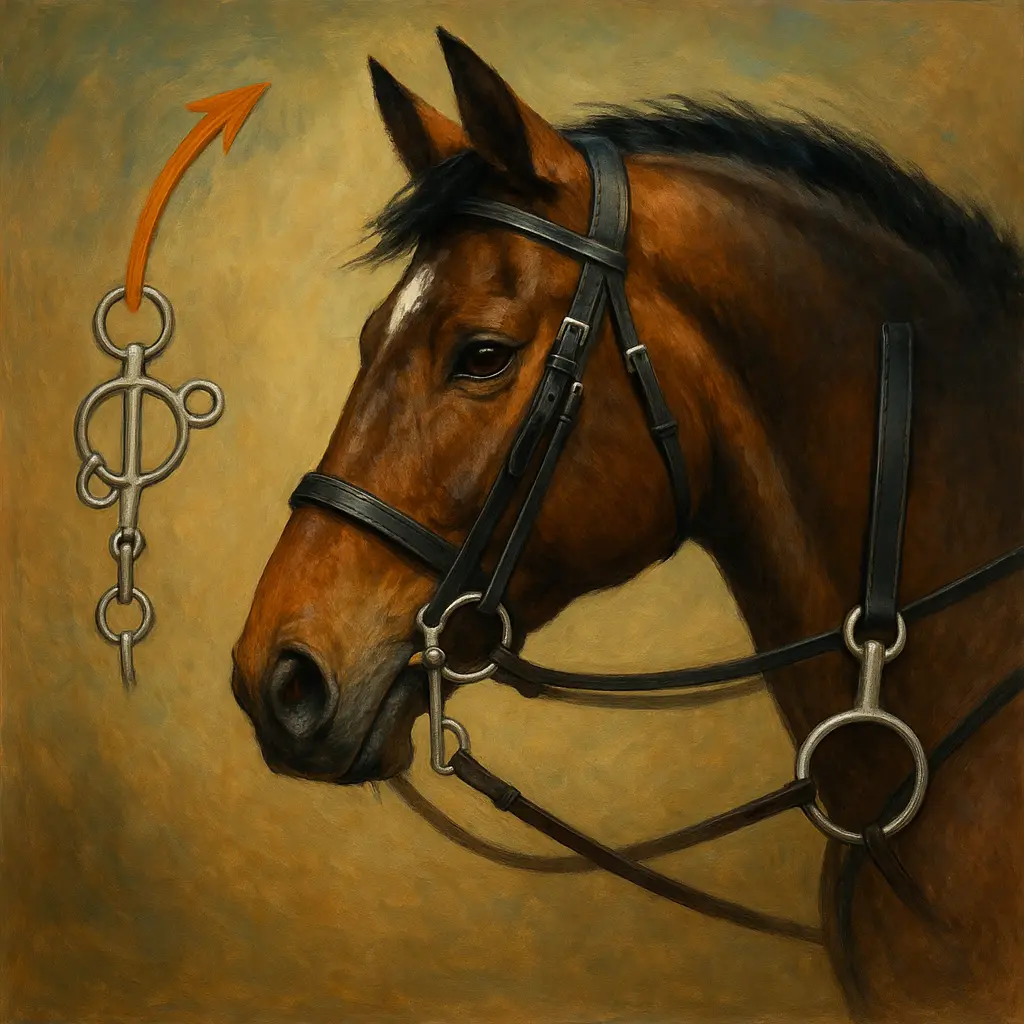
A Dutch gag offers variable leverage via multiple rein rings; the lower you attach the reins, the greater the poll pressure and the stronger the “brake.”
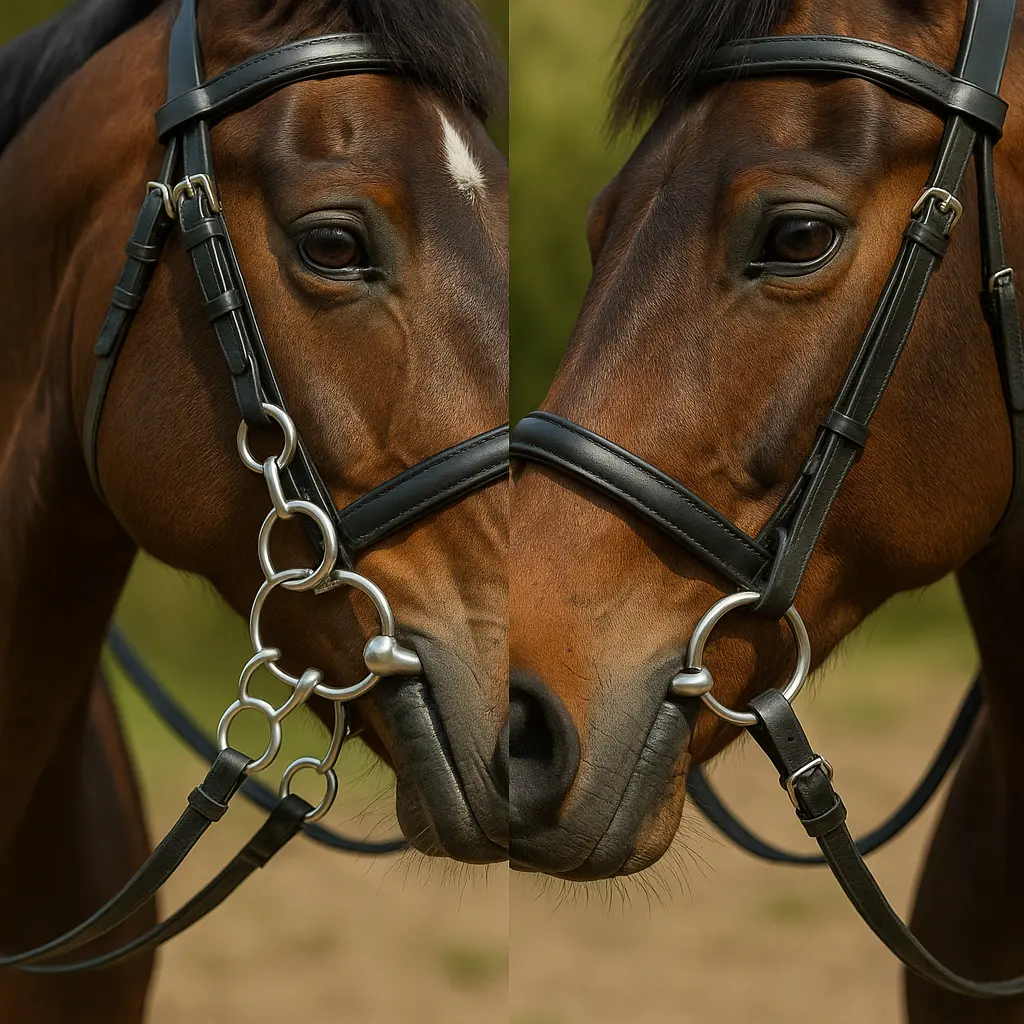
Typically, a Dutch gag has four rings: one top ring for the cheekpieces and three lower rein options. On the bottom ring, the cheek tilts, the poll comes under pressure, and many horses raise the head/shorten the frame, giving a powerful half‑halt feel compared with a plain snaffle. This can be attractive for showjumpers on a hot line or riders of strong cobs — but that same leveraged action is exactly why it’s not dressage‑legal.
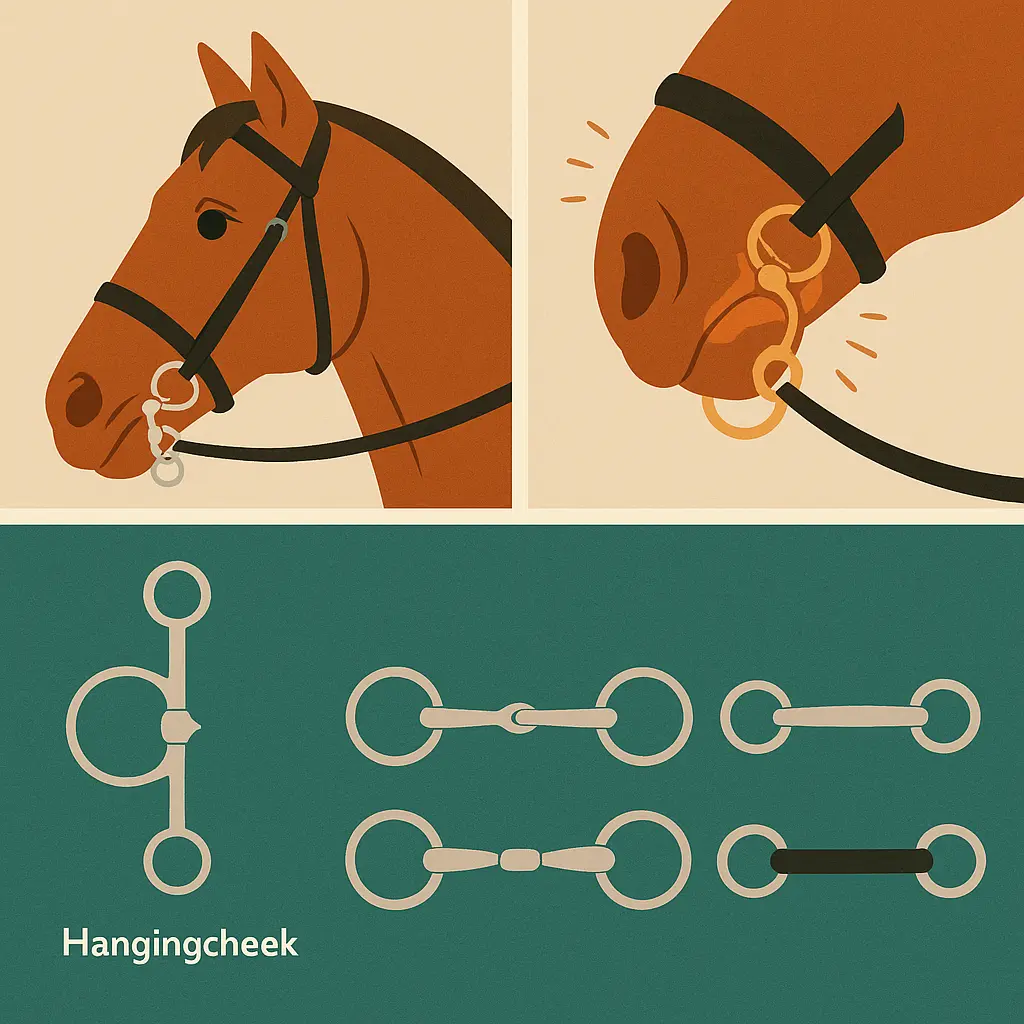
“The long flat cheek can cause problems for some horses depending on facial conformation as, when it tilts, the top ring travels forward and can squash the face which can cause the horse to toss its head to avoid the pressure. Horses that find this cheek and mouthpiece action too strong, will sometimes lean into it.” — Gail Johnson, Horse Bit Hire expert, via Horse & Hound
If your cob has generous cheeks, be alert to this tilting-and-squashing effect; persistent head‑tossing or leaning isn’t “naughty” — it’s feedback that the cheek or mouthpiece isn’t right for that horse.
Dressage‑legal alternatives to a Dutch gag
Choose a hanging cheek (also called Baucher) or similar dressage‑legal snaffle to retain mild poll influence and steadier contact without true leverage.
While nothing dressage‑legal will exactly copy a gag’s mechanical advantage, you can replicate the feel you like — clearer half‑halts, a little poll influence, and less leaning — with these options:
- Hanging cheek snaffle: Attaches higher on the cheekpiece and the rein at the ring, creating a steadier feel and a whisper of poll pressure. Riders on the Horse & Hound forum often recommend this for gag-to-snaffle transitions. Straight bar (mullen) versions reduce “nutcracker” action, though can be trickier to source.
- Baucher snaffle: Dressage‑legal and loved by riders of heavy leaners; it offers a tiny uplift and very consistent contact — a mild, gag‑like feel without leverage. See discussion on the Chronicle of the Horse forum.
- Lozenge (double‑jointed) mouthpieces: Reduce the nutcracker effect and often improve acceptance for horses who resent a single joint.
- Waterford mouthpiece: Under BD guidance summaries, a Waterford snaffle is permitted when used with a simple cheek (for example, eggbutt or full cheek). This can discourage leaning by making it harder for horses to take a solid hold.
- Full cheek or eggbutt snaffles: Offer lateral steering support and a stiller feel at the corners of the mouth — useful for green or wobbly horses.
Industry advice is realistic about expectations:
“If your horse will only go well in a gag or pelham, you are likely to struggle to see the same effect from a dressage‑legal snaffle, as these bits act on very different areas of the horse.” — Houghton Country bitting guide
That’s why a staged, sympathetic transition plan is key (see below) — not a last‑minute swap the week of your test.
How to transition from Dutch gag to dressage snaffle
Make the change over several weeks: reduce leverage first, then school in your chosen snaffle in short, positive sessions while you educate the aids.
Use this straightforward plan to keep your horse confident and your contact consistent:
- Step down the leverage: If you’ve been on the bottom ring, move to a higher ring for a week or two, or use roundings to soften the effect. The aim is to do more with less before you remove leverage entirely.
- Introduce your dressage‑legal snaffle for 10–20 minutes at the start or end of schooling, then lengthen as the horse relaxes. Keep the work structured: transitions, large circles, and clear half‑halts.
- Choose your mouthpiece wisely: For cobs and horses that curl or lean, a lozenge or mullen (straight bar) often gives a kinder, more stable feel than a single joint.
- Check acceptance: A good sign is a quieter jaw, steadier poll, and the ability to lengthen and shorten strides without a tug‑of‑war. Test a few half‑halts at trot and canter; you should feel response without bracing.
- School for self‑carriage: Use transitions within the pace, shoulder‑fore, and simple lateral work to put the balance on the hindleg — where “brakes” truly live.
- Protect and prepare: Rehabbing or strengthening horses benefit from lower‑impact, frequent sessions and leg protection. Consider supportive schooling boots and bandages for flatwork and poles.
Quick tip: UK autumn and winter bring damp arenas and chilly air. Stainless steel or rubber‑covered mouthpieces are practical, corrosion‑resistant choices for regular schooling, and they’re easy to keep hygienic. For comfort on cold days, keep your horse warm before and after work with appropriately weighted turnout rugs for travel and cool‑down.
Safety first: Whether you’re hacking to the arena or schooling at home, wear a properly fitted riding helmet. At Just Horse Riders, we also see riders book a bit‑fitting consultation when changing from leverage to snaffle — it pays off in softer, clearer rides.
Fit and comfort: getting the cheek and mouthpiece right for a cob
Fit the bit to your horse’s facial conformation and choose mouthpieces that prevent pinching, nutcracker action and cheek squash.
Cobs can be sensitive to cheek shape due to fuller faces. With long‑cheeked bits (like a Dutch gag), tilting can push the upper ring into the face, provoking tossing or resistance. In a snaffle, avoid sharp corners, ensure adequate width (a fraction wider than the mouth), and pick a thickness your horse can comfortably close around — too thick can be as uncomfortable as too thin.
- Try a hanging cheek or Baucher for a steadier contact if your horse dislikes loose rings.
- Swap a single joint for a lozenge or straight bar if you see mouth‑opening, head‑shaking, or snatching on the half‑halt.
- Watch the corners: Foam, rubs or lipstick‑like staining can reveal pinching. Regular face checks during grooming make a difference — keep a soft brush and cloth in your grooming kit to spot early signs.
- Note any rubbing from winter whiskers or damp — maintain good hygiene around lips and bars in wet weather.
Pro tip: If your horse leans in a Dutch gag, don’t chase “more control” with a stronger mouthpiece; address posture. Leaning often disappears as the horse finds balance behind and confidence in a steadier, kinder contact.
Competition prep: rules, tack check and what to wear
Check the current British Dressage Rulebook: you must present in a simple snaffle (no gags, pelhams, shanks or multiple rings) for affiliated dressage, and British Eventing follows similar snaffle rules for the dressage phase.
Before show day:
- Tack audit: Confirm your bit model, cheek type and mouthpiece are listed as permitted. Keep a spare legal snaffle in the lorry in case of a steward query.
- Bridle fit: Cavesson or permitted noseband, adjusted to avoid pressure on sensitive facial nerves. Keep everything clean and correctly assembled.
- Rider kit: Present smartly and comfortably. Explore our curated women’s competition clothing for jackets, shirts and show essentials that ride as well as they look, and pair with a certified riding helmet that fits securely.
- Warm‑up plan: Prioritise balance and responsiveness in the snaffle you’ll compete in — not the one you jumped in last week.
If you compete across disciplines, remember: showjumping often allows gags, but switching back and forth will ride very differently. Build a routine that develops self‑carriage in the snaffle so the “brakes” live in the training, not the metalwork.
Troubleshooting: signs your bit choice isn’t working
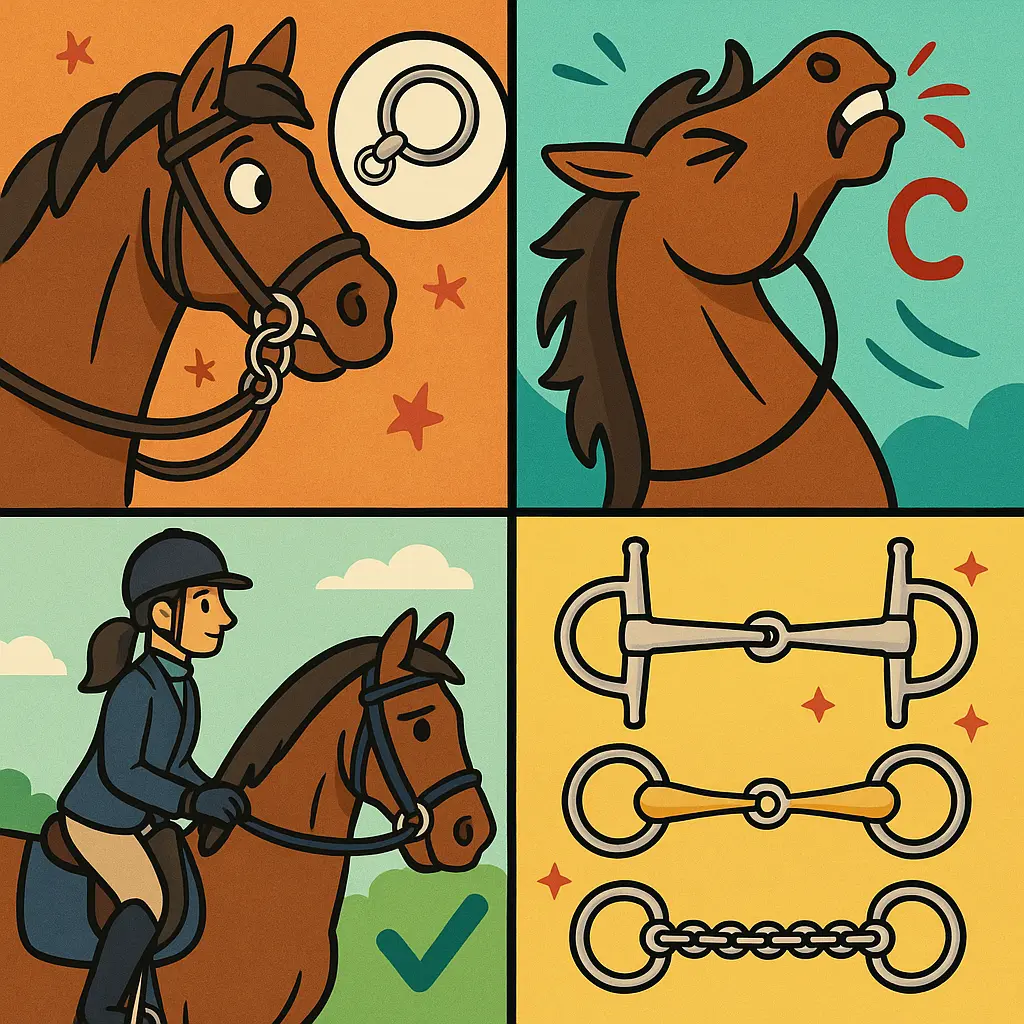
Persistent head‑tossing, leaning, evasion or a tight jaw indicate discomfort or an unsuitable action, especially with long‑cheeked or single‑jointed bits.
Use this checklist to course‑correct quickly:
- Head‑tossing or face‑rubbing after riding: Check cheek tilt, ring position and noseband interference; try a Baucher or eggbutt to stabilise.
- Leaning or water‑skiing: Test a Waterford snaffle in a permitted cheek, or a lozenge mouthpiece, and prioritise transitions for balance.
- Mouth open or tongue over: Reassess thickness and joint; a mullen or anatomically curved lozenge may improve comfort.
- Inconsistent half‑halts: Practise clear, quick aids and consider a hanging cheek for a touch more poll influence without leverage.
- Behaviour changes in cold, damp weather: Keep the mouthpiece warm before bridling; maintain routine dental checks and consider joint support if stiffness affects contact. Our supplements range includes options for joints and calmer focus when appropriate.
Positive reinforcement helps: reward the moments of soft, balanced contact. Keep a pouch of low‑sugar horse treats handy to mark good efforts as you reshape habits.
FAQs
Why is a Dutch gag not dressage‑legal in the UK?
Because it applies leverage and poll pressure via multiple rings, which conflicts with British Dressage rules that require simple snaffles for harmonious, non‑leveraged communication. See the Houghton Country bitting guide for a clear summary.
What dressage‑legal bit helps with a leaning cob?
A hanging cheek or Baucher snaffle offers mild poll influence and a steadier feel without leverage. Choose a lozenge or straight bar mouthpiece to reduce the nutcracker effect that can trigger leaning; riders frequently recommend these on the Horse & Hound forum.
Can I use a Waterford mouthpiece in dressage?
Yes, a Waterford can be dressage‑legal when used in a permitted simple cheek (for example, eggbutt or full cheek). Always cross‑check the latest British Dressage Rulebook before you compete.
Is a Baucher snaffle similar to a gag?
Not mechanically, but a Baucher gives a mild, gag‑like uplift and very consistent contact that many riders of heavy leaners find helpful — and it’s dressage‑legal. See discussion on the Chronicle of the Horse forum.
How do I know if the bit is the cause of resistance?
Look for head‑tossing, face‑squashing marks, leaning, mouth‑opening or tongue evasions. Long‑cheeked bits like Dutch gags can tilt and press into the face on some conformations, prompting these signs — as noted by Horse Bit Hire expert Gail Johnson via Horse & Hound.
What’s the best alternative for moving from showjumping to dressage?
Switch to a hanging cheek or Baucher snaffle for a touch of poll influence while staying dressage‑legal, and transition over weeks to educate self‑carriage and responsive half‑halts.
Are rubber Dutch gags milder for rehab?
Rubber can soften the mouthpiece feel, but a Dutch gag remains illegal in dressage regardless of material. Use rubber‑covered lozenge or mullen snaffles instead for a milder, legal option.
At Just Horse Riders, we help riders pair kind, dressage‑legal bitting with smart training, safe kit and seasonal comfort. As you refine your contact, gear up with a certified riding helmet, supportive schooling boots, weather‑savvy winter turnout rugs, competition‑ready show clothing, and everyday grooming and supplements to keep your horse feeling their best.