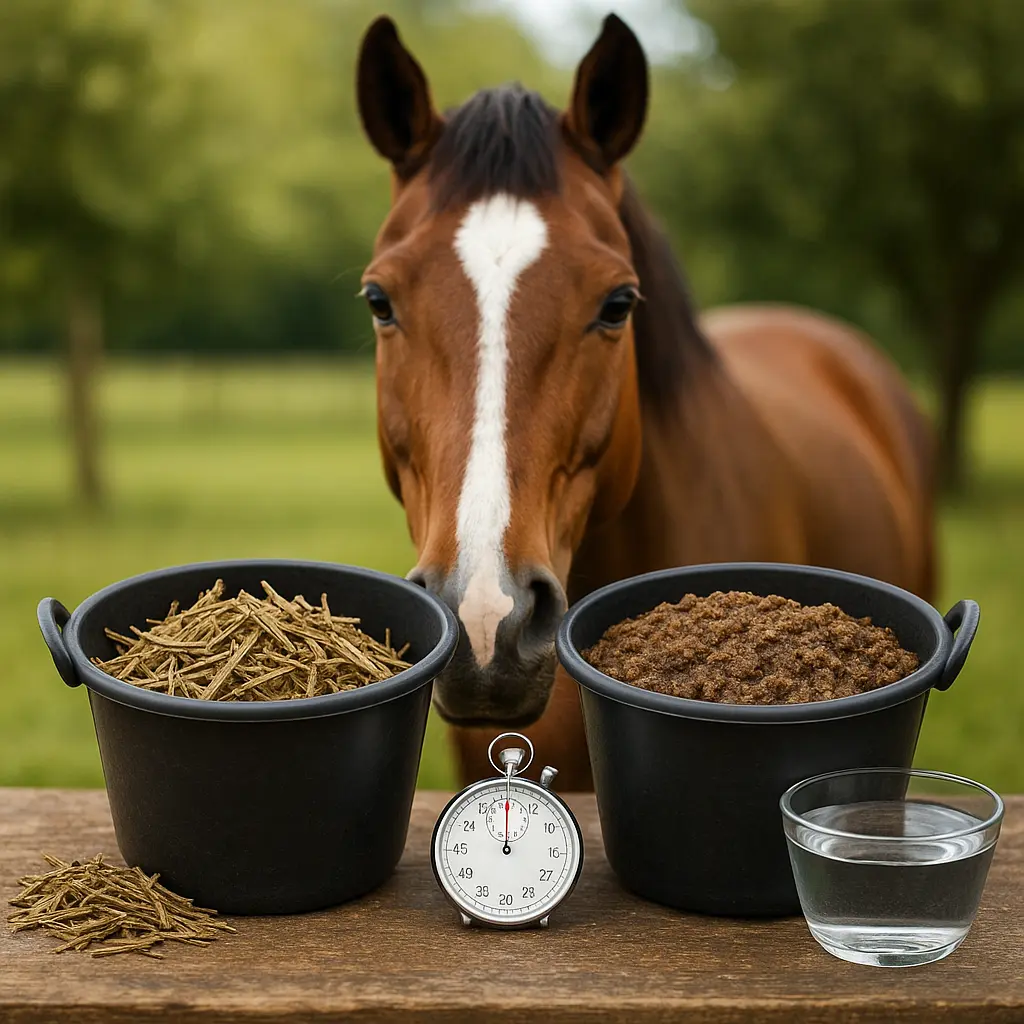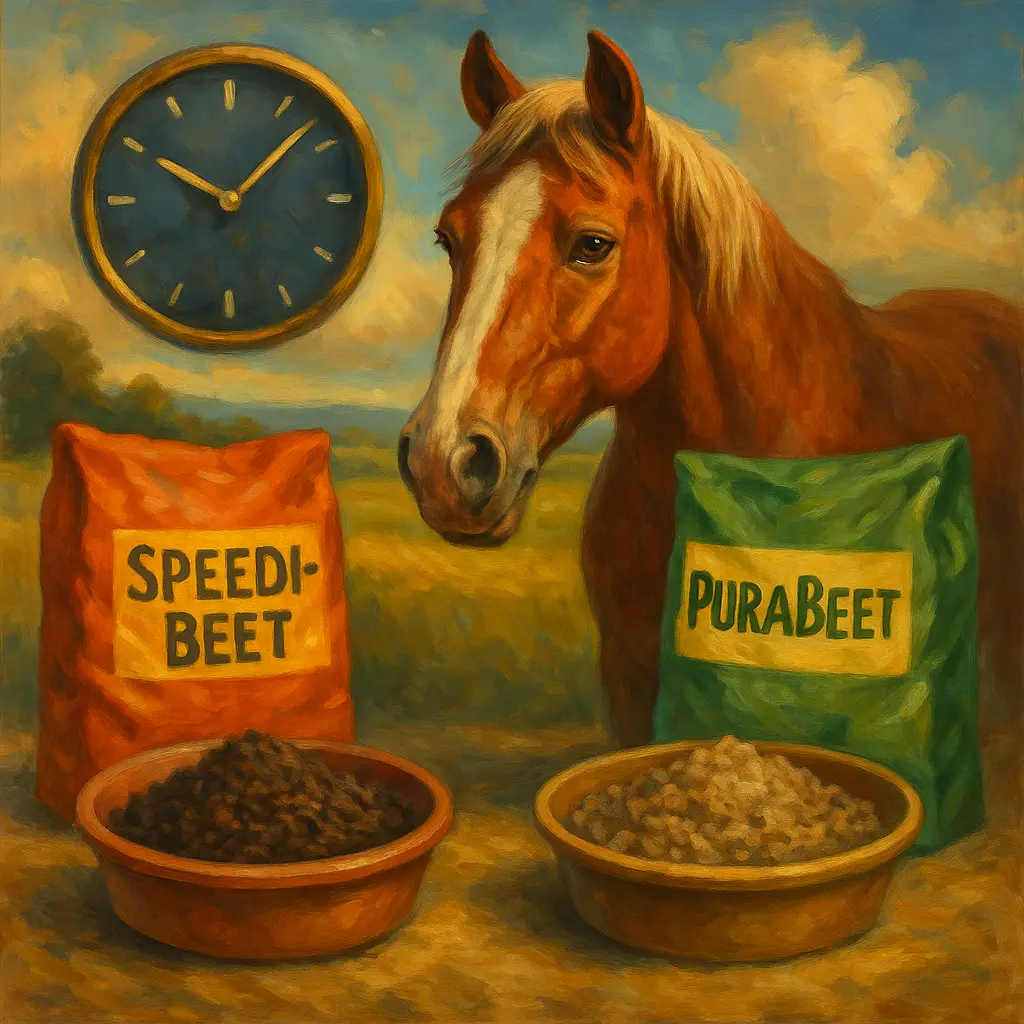
Pressed for time but need a safe, low‑sugar, high‑fibre feed for a metabolic pony or an older horse that struggles to chew? Unmolassed beet pulp is hard to beat for hydration, gut health and practicality — if you choose the right format and prepare it correctly.
Key takeaway: For UK owners, Speedi‑Beet suits busy yards thanks to a 10‑minute soak and a 1:5 water ratio, while PuraBeet is cheaper per bag but needs a full 12‑hour cold soak (or hot‑tap quick soak, fed once cool). Both are suitable for laminitis‑prone and senior horses when fed by dry weight and soaked well.
Speedi‑Beet vs PuraBeet: the short answer
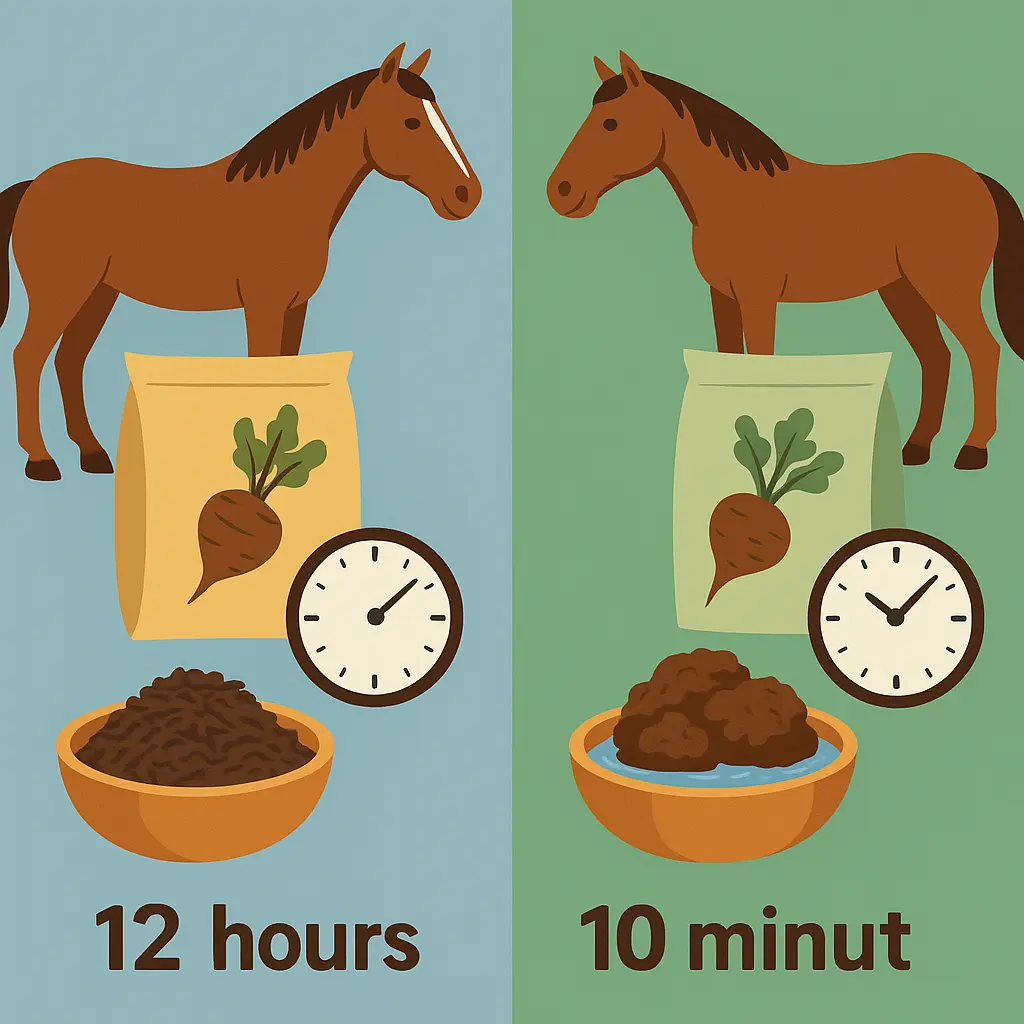
Speedi‑Beet is ready in 10 minutes with a 1:5 water ratio by weight; PuraBeet needs a 12‑hour cold soak or can be prepared with hot tap water and fed once cool, absorbing roughly five times its volume of water.
Both are unmolassed, low in sugar and high in digestible fibre, making them suitable for horses with metabolic concerns or laminitis risk. Speedi‑Beet retains about 5–6% residual sugar and is manufactured to “open up” the fibre, which speeds water uptake and softening. As British Horse Feeds explain of their patented process:
“With Speedi‑Beet the manufacturing process forces the fibres apart, allowing greater accessibility to water. It’s like cardboard converted to blotting paper.” — British Horse Feeds Technical FAQs
PuraBeet (EQUIGLO) is also unmolassed with sugar removed as much as possible during processing, but it behaves like traditional shreds in the bucket — brilliant value if you can plan ahead, less convenient if you can’t. For both, weigh the dry product first, then add water. The maximum recommended feeding rate for unmolassed beet pulp is 6 g/kg body weight per day (3 kg dry max for a 500 kg horse).
Soaking times, water ratios and how to prep safely
Speedi‑Beet uses 1 part beet to 5 parts water by weight and is ready in 10 minutes; PuraBeet takes 12 hours in cold water or can be soaked in hot tap water and fed once cool, swelling to roughly five times its volume.
For day‑to‑day use, stick to the manufacturer’s ratios and times so your horse gets consistent nutrition.
- Speedi‑Beet: 1:5 water ratio by weight. Example: 250 g dry + 1.25 kg (≈1.25 litres) water, ready in about 10 minutes. Some owners choose to soak longer to maximise water uptake for satiety.
- PuraBeet: 12‑hour cold soak, or hot tap water for a faster swell, then feed once cool. It will take up about five times its volume of water.
Warm water (not boiling) can improve palatability and speed softening in winter. Always feed completely soaked beet pulp and discard any that has dried out or fermented.
Quick tip: The most important step is weighing the beet pulp before soaking. EQUIGLO’s own guidance is unequivocal: weigh first to realise the benefits. Measuring by bucket leads to errors because soaked volume varies by product.
If you’re prepping multiple feeds at a busy livery yard, Speedi‑Beet’s fast soak is a genuine time‑saver. At home with regular routines, PuraBeet’s overnight method is easy to build into your schedule and saves money per bag.
Is beet pulp safe for laminitis‑prone or metabolic horses?
Yes — both Speedi‑Beet and PuraBeet are unmolassed, low in sugar, and high in fibre, making them suitable options for laminitis‑prone and metabolic horses when fed by dry weight and fully soaked.
Speedi‑Beet is around 95% sugar‑free (5–6% residual sugar), while PuraBeet has had sugar removed extensively during factory processing, providing a low‑NSC base for restricted diets. This makes beet pulp a smart way to add fibre and moisture without starch spikes. As independent equine nutritionist Clare MacLeod MSc Rnutr notes:
“Unmolassed sugar beet pulp is a highly versatile and useful horse feed. It’s palatable, rich in fibre and minerals, low in sugar, almost free of starch, provides bulk, has moderate energy content and helps to rehydrate because of its water content after soaking.” — Clare MacLeod MSc Rnutr, via EQUIGLO
For metabolic horses, it’s essential to control total intake: the maximum recommended dry weight is 6 g/kg body weight per day, split into meals and balanced with forage. Salt provision also matters because the wet mash contributes water; ensure free access to a salt lick or add plain salt as advised by your nutritionist or vet. You can find salt, electrolytes and digestion support in our curated range of horse supplements and care products.
Owners focused on agricultural provenance may also appreciate that UK‑grown Speedi‑Beet is produced under stricter herbicide regimes than many US options (though not certified organic). The key takeaway: both products fit laminitis‑aware diets when you weigh, soak, and balance the ration correctly.
Feeding seniors and poor chewers: mash that hydrates and nourishes
Soaked beet pulp makes a soft, easy‑to‑swallow mash that adds moisture and bulk, supporting seniors or horses with worn or missing teeth.
Older horses often struggle to process long‑stem forage; a soaked beet mash provides fermentable fibre and water in a form that’s comfortable to eat. Both Speedi‑Beet and PuraBeet create a pliable, palatable consistency, and you can customise the wetness to your horse’s preference. In colder months or after dental work, use warm (not boiling) water for extra comfort and aroma appeal.
Need a little more “oomph” for poor hay doers? Consider a formulated blend such as Fibre‑Beet (a mix of Speedi‑Beet, alfalfa, oat fibre and biotin), which soaks in 45 minutes with cold water or 15 minutes with warm water. This approach keeps sugar low but layers in quality fibre and key nutrients to support condition without the starch hit of many mixes.
At Just Horse Riders, we frequently help owners of golden oldies choose the right winter set‑up: a warm stable, a consistent bucket‑feed routine, and the right rugging. If your senior tends to drop condition in rough weather, pairing a soaked beet mash with appropriate stable rugs for steady barn temperatures and well‑fitted winter turnout rugs can help maintain appetite, comfort and hydration.
Iron in beet pulp: when to worry and how to reduce it
Initial iron levels in Speedi‑Beet have tested at 611 ppm, but a thorough rinse‑and‑soak protocol reduces this to around 211 ppm — a level many owners of iron‑sensitive horses consider more manageable.
While not every horse is sensitive to higher iron, some metabolic horses and those with specific veterinary guidance benefit from lower‑iron rations. If you wish to reduce iron in beet pulp, use this simple method:
- Rinse the dry product briefly to remove dust and fines.
- Soak in hot water from the tap (not boiling) to encourage leaching.
- Drain, then perform four post‑soak rinse cycles (fill with fresh water, stir, drain) without further soaking.
This step‑down procedure has been shown to bring the iron content from 611 ppm to about 211 ppm. Combine this with a balanced mineral plan (guided by forage analysis where possible) and ensure adequate salt provision. If you’re adding electrolytes after work or in winter, our NAF collection includes trusted UK‑formulated options owners rate highly.
How much to feed: work it out by weight, not by bucket
The maximum for unmolassed beet pulp is 6 g per kg bodyweight per day — that’s 3 kg dry weight for a 500 kg horse, always weighed dry before soaking.
Because different products take up water differently, feeding by soaked volume is unreliable. Weigh the dry product first, then add the correct water ratio for a consistent result. Here are useful benchmarks:
- 500 kg horse: up to 3.0 kg dry beet pulp/day (split into multiple meals).
- 300 kg pony: up to 1.8 kg dry/day.
- 250 kg native or mini–cob: up to 1.5 kg dry/day.
Converting dry to soaked using Speedi‑Beet’s 1:5 ratio gives a practical sense of bucket volume. For example, 500 g dry Speedi‑Beet becomes about 3 kg (≈3 litres) of wet mash; 1 kg dry becomes around 6 kg (≈6 litres). PuraBeet’s soaked volume is similarly generous, swelling to roughly five times its original volume.
Pro tip: Consistency matters more than perfection. Use a simple digital scale in the feed room, label buckets with dry weights, and keep a note of your horse’s body condition score every two weeks so you can adjust calmly and early.
Costs and convenience: which offers better value?
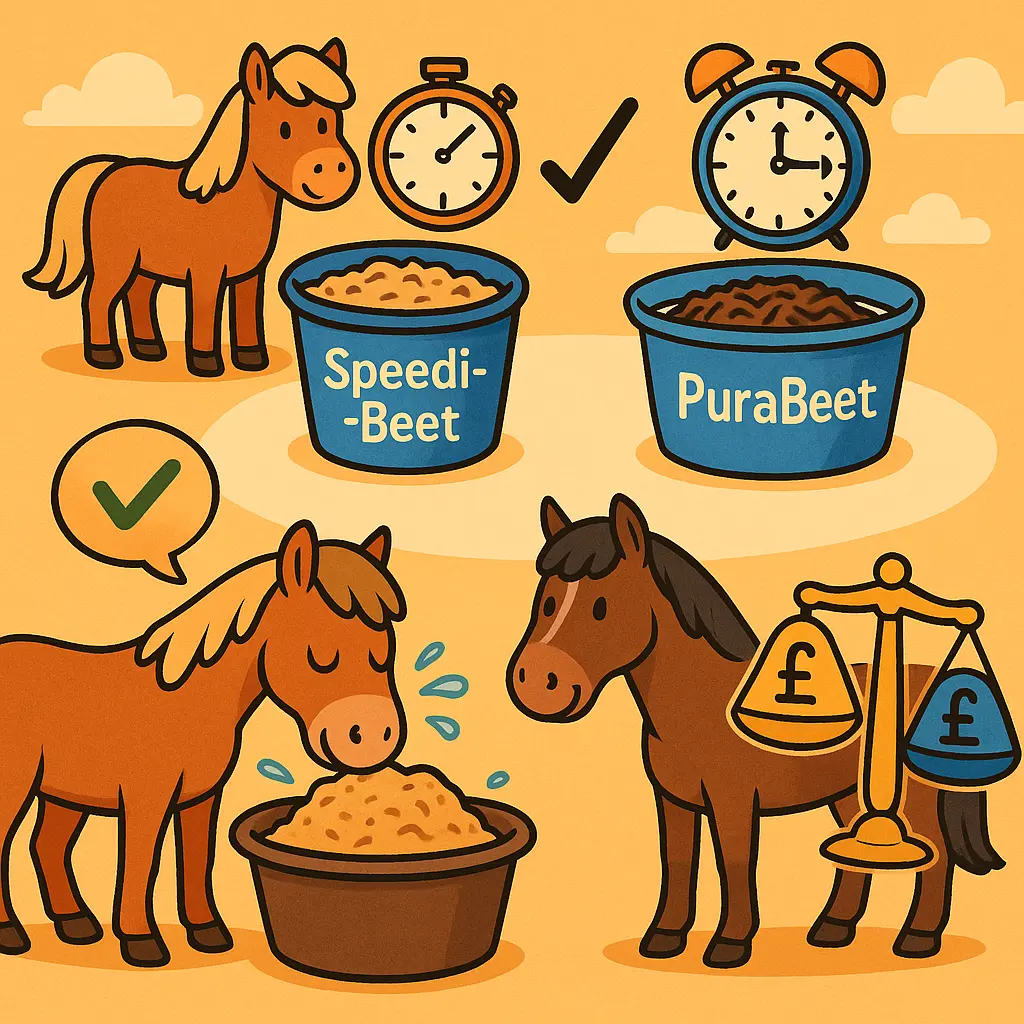
Speedi‑Beet typically costs around £20.93 for 20 kg, while unmolassed alternatives like Equibeet sit near £13 for 20 kg; Speedi‑Beet wins on speed and convenience, PuraBeet/Equibeet win on price if you can plan ahead.
For hard keepers needing substantial calories, standard grain feeds may be more cost‑effective per calorie than Speedi‑Beet. If budget is tight and you’re home daily, PuraBeet or traditional shreds can be soaked overnight in batches. If time is tighter than money, Speedi‑Beet shines — especially on busy livery yards juggling multiple feeds, unexpected late‑finishes, and cold nights when warm water soaks are a bonus.
Trying to stretch your winter budget further? Keep an eye on our rotating deals in The Secret Tack Room clearance — ideal for picking up yard essentials and winter layers alongside your feed routine.
Winter in the UK: using beet pulp to support hydration
Beet pulp’s pectin helps retain water in the gut, supporting hydration during UK winters when grass is sparse and water may freeze — a practical advantage for every horse, not just endurance types.
Research cited by EQUIGLO highlights that beet pulp’s pectin content helps hold a gut fluid reservoir, which is particularly useful for horses exercising for longer periods and during cold snaps when drinking can drop. In real‑world UK conditions — frosty mornings, shortened turnout, and reduced grass moisture — a daily soaked beet mash helps maintain gut motility and overall water intake. As EQUIGLO summarises from Moore‑Colyer et al.:
“Beet pulp – because of its rich pectin content – holds water in the gut, making it a useful way to encourage a good gut fluid reservoir for horses exercising for long periods of time, such as those in endurance.” — via EQUIGLO
Practical winter tips:
- Soak with warm (not boiling) water to increase palatability and speed softening.
- Offer free‑choice salt or add a small daily measure of plain salt to encourage good drinking habits.
- Rug appropriately so your horse isn’t burning excess calories to keep warm; a well‑fitted, breathable turnout rug or snug stable rug helps maintain appetite and condition.
At Just Horse Riders, we see winter hydration plans work best when they’re simple, consistent and tailored: the right rugging, reliable soaked fibre, and regular monitoring of droppings and water buckets.
FAQs
Is Speedi‑Beet suitable for horses prone to laminitis or metabolic issues?
Yes. Speedi‑Beet is unmolassed and around 95% sugar‑free (5–6% residual sugar), and PuraBeet has sugar removed during factory processing. Both are low‑sugar, high‑fibre options suited to laminitis‑aware diets when weighed dry and fully soaked.
How much time does Speedi‑Beet actually save compared to regular beet pulp?
A lot. Speedi‑Beet soaks in about 10 minutes using a 1:5 water ratio by weight, while traditional shreds need around 12 hours in cold water. Some owners still soak Speedi‑Beet longer to maximise water uptake, but the quick‑soak option is ideal for busy yards.
Is the higher cost of Speedi‑Beet justified for hard keepers?
Not always. For significant weight gain, some grain feeds can deliver more calories per pound spent. If you can plan ahead, traditional unmolassed shreds or PuraBeet are cheaper per bag; if your schedule is tight, Speedi‑Beet’s time savings are often worth the premium.
Should I be worried about iron in beet pulp?
It depends on your horse. Initial iron readings around 611 ppm have been reported for Speedi‑Beet, but rinsing first, soaking in hot tap water, and performing four post‑soak rinses can reduce this to roughly 211 ppm. Discuss total dietary iron with your nutritionist if your horse is sensitive.
Can I feed beet pulp to senior horses with poor teeth?
Yes — that’s one of its best uses. A well‑soaked mash is soft, easy to swallow, and adds water and fermentable fibre. Consider blends like Fibre‑Beet if you need extra fibre variety and biotin support, and use warm water in winter to tempt fussy appetites.
How do I know I’m feeding the right amount?
Weigh the dry product every time. The maximum guideline is 6 g per kg of bodyweight daily (e.g., up to 3 kg dry for a 500 kg horse), split across meals. Don’t eyeball soaked volume — different products absorb water differently.
Any simple add‑ons that make a real difference?
Yes: a reliable set of feed scales, labelled buckets, and a salt plan. For salt and digestive support, browse our supplements and horse care collection. Keeping your horse warm and comfortable with well‑fitting turnout rugs and stable rugs also helps maintain appetite and hydration through winter.