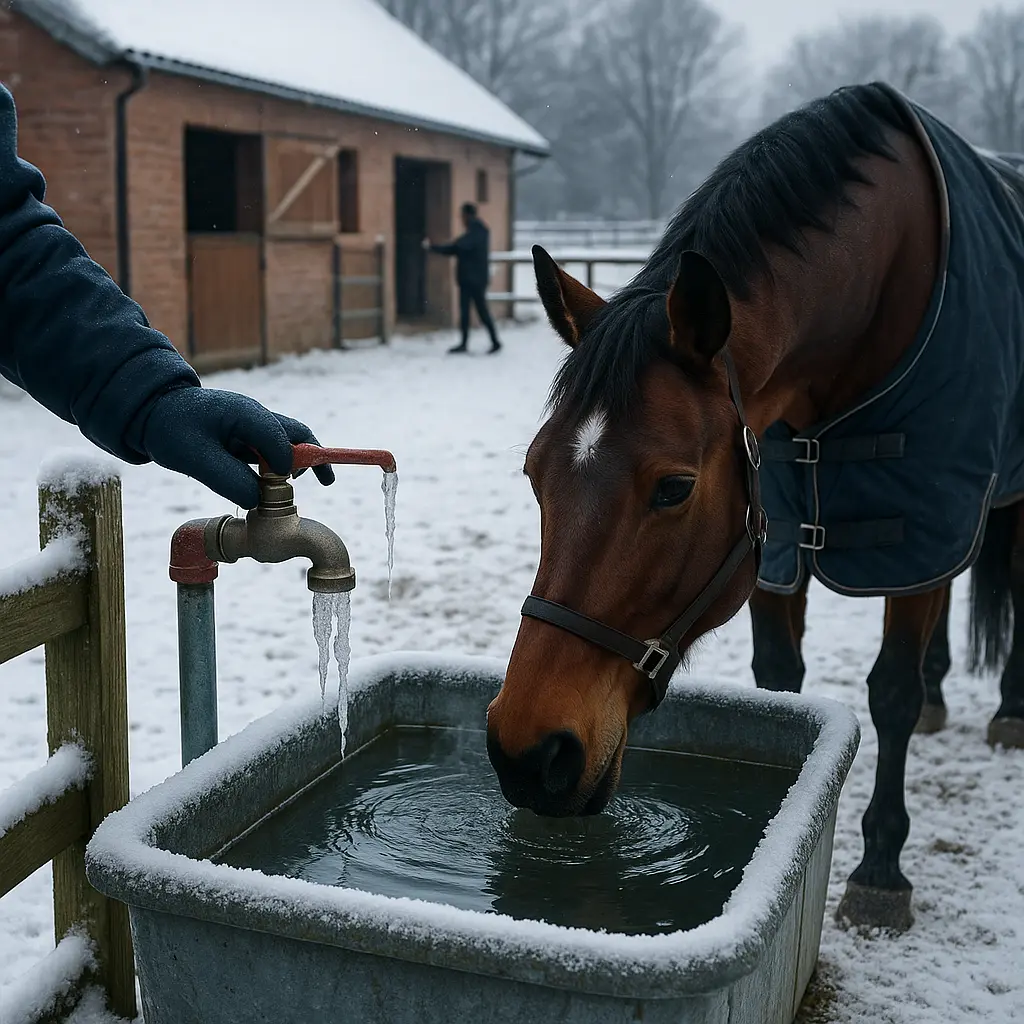
First hard frost, burst morning routine. If your yard tap seizes, everything slows: buckets, troughs, feeds, turnout. A few smart fixes now will keep water flowing and your horses drinking when the temperature plunges.
Key takeaway: Insulate, cover and drain your taps and pipes, organise a cold‑weather water routine, and line up simple backups so your horse never goes without fresh water in a freeze.
Why frozen yard taps risk horse welfare
Frozen taps can quickly reduce your horse’s water intake and raise the risk of health issues, including digestive upsets in cold weather. Horses still need plentiful fresh water through winter; dry forage, cold air and less pasture moisture can all nudge intake down just as pipes and taps are most likely to freeze. That’s why winterising your water system and your routine is as much a welfare job as a yard job.
Watch for early signs that water intake is slipping: drier droppings, darker urine, slower eating, or mild lethargy. Quick, reliable access to unfrozen water and a plan for the coldest mornings prevents these small red flags becoming bigger problems.
Pro tip: Make “water first” your yard mantra on freezing days. Check and refresh every trough and bucket before any other jobs.
Winter-proof your yard tap: fast fixes that work
Fit an insulated outdoor tap cover, lag any exposed pipework, and make sure you can isolate and drain the line before the first frost. These three steps solve most frozen-tap headaches.
Here’s a simple, reliable approach you can fit in an evening:
- Insulated tap cover: Use a waterproof, padded cover that encloses the entire tap body and the first section of pipe. Fit it snugly and keep it on all season.
- Lag exposed pipework: Wrap any visible pipes with closed-cell foam insulation and secure the joins with weatherproof tape. Pay attention to elbows, joints and standpipes.
- Install or service an isolation valve: A working stopcock just inside the building lets you turn off and drain the external run. In deep freezes, isolate the supply and leave the external tap open to let water escape and relieve pressure.
- Remove hoses after use: Hoses trap water and act like an ice baton. Disconnect, drain and hang vertically to dry, or store coiled indoors.
- Protect the tap location: A simple windbreak or small enclosure around a standpipe reduces wind chill and helps the insulation do its job.
Quick tip: Label the outdoor stopcock clearly and keep a dedicated tap key or spanner next to it so anyone on the yard can turn off and drain the line in seconds.
Protect exposed pipes, hoses and standpipes
Insulate every exposed metre, drain removable lines daily, and use heat where it’s safe and available to prevent ice forming. The aim is to reduce cold exposure and eliminate trapped water.
Work methodically from your supply point to the furthest outlet:
- Box-in vulnerable runs: Where feasible, enclose pipes in a simple insulated boxing along walls or fences to shield from wind and contact frost.
- Standpipes: Fit a robust insulated jacket around standpipes and secure it against curious noses and rubbing.
- Self-regulating heat cable: If you have safe power, a self-regulating heat cable under the insulation can keep problem sections above freezing. Always use an RCD and follow manufacturer guidance; keep cables out of reach of horses.
- Bury where possible: If you’re upgrading, route new lines underground and bring them up as close to the outlet as you can. Shorter exposed sections are easier to protect.
- Hose discipline: After the last fill each day, walk the hose from one end to the other to purge water, leave connectors open, and store off the floor.
Keep troughs and buckets ice-free safely
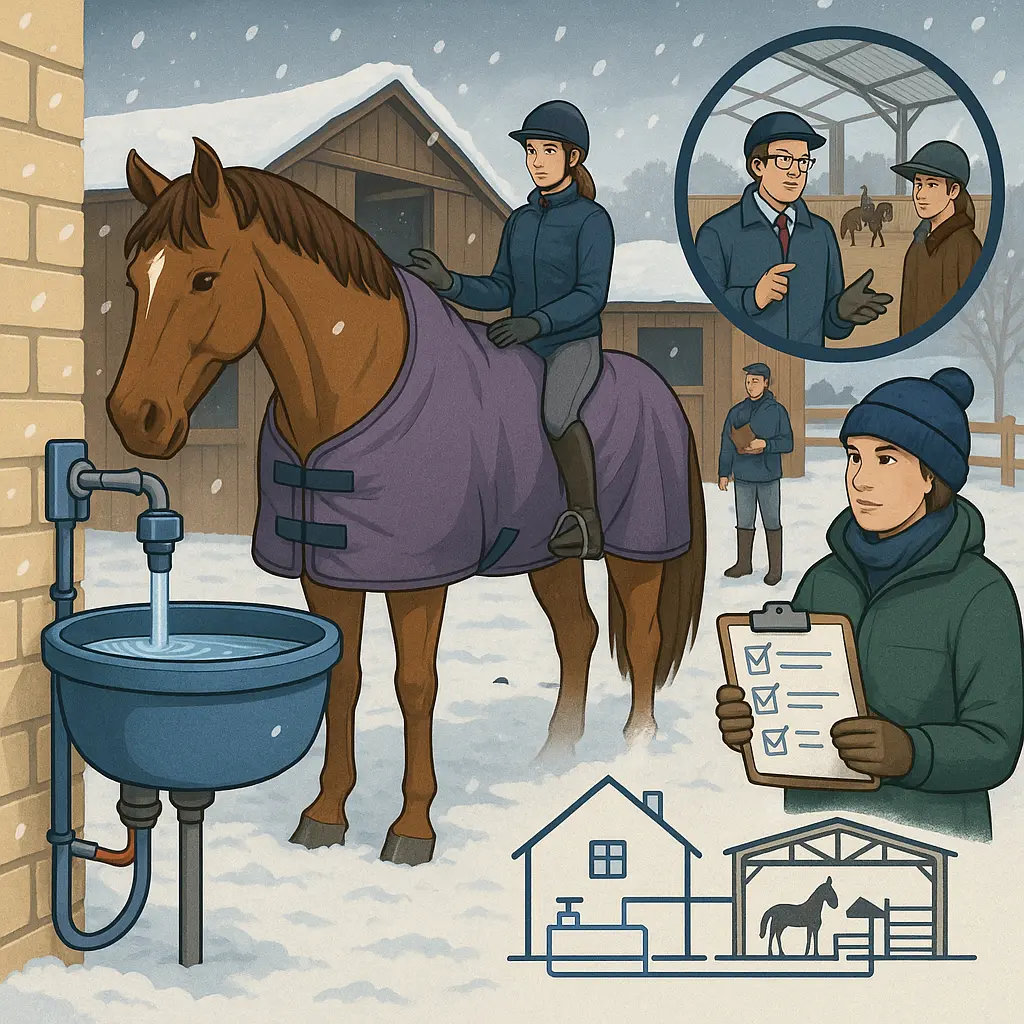
Use insulation, movement and warm water—not additives—to keep drinking water accessible. Additives like salt or molasses don’t reliably prevent freezing and can put horses off drinking.
Practical, horse-safe methods that work on UK yards:
- Insulate troughs: Line exposed sides with rigid insulation boards or fit a simple insulated cladding. A floating, insulated lid with a drinking aperture slows heat loss in open fields.
- Choose black, deep containers: Dark, deeper tubs absorb more winter sun and freeze slower than shallow, light-coloured buckets.
- Reduce wind chill: Position troughs out of prevailing wind or add a windbreak. Even a small shelter can cut icing dramatically.
- Movement matters: Floating a light ball can break the surface skin in a breeze, but don’t rely on it in still, heavy frosts. Use it as a supplement to insulation, not a substitute.
- Warm water top-ups: Add warm (not hot) water to break ice and encourage drinking during the coldest spells. Keep a kettle or insulated flask handy on the yard.
- Heated solutions: Heated buckets or low‑watt de-icers can be effective where power and safe installation are available. Cables must be protected, RCD‑protected and routed so horses cannot chew or entangle.
Pro tip: Store spare buckets upside down off the floor to keep rims ice‑free. Rotate them in immediately if a bucket ices over.
Build a cold-weather water routine
Check and refresh water at least twice daily, pre‑fill reserves before a freeze, and record intake changes so you can act early. Consistency is the difference between coping and catching up.
A simple winter routine that keeps you ahead:
- Night-before prep: Before a hard frost, fill spare buckets or lidded tubs and store somewhere sheltered. Have a dedicated ice mallet, scoop and gloves ready.
- Morning priority: Water first, everything else second. Break ice, remove shards completely, and top up with warm water if needed.
- Track intake: Make a quick note of what each horse drinks. If a good drinker suddenly leaves water, investigate.
- Hydration through feed: Soak beet or mash feeds and consider soaked hay or haylage to add moisture. If you use electrolytes or specific hydration supplements, follow the manufacturer’s guidance and your vet’s advice.
- Share the load: If you’re on a livery, post a frost plan and rota. Everyone should know where the stopcocks are and how to operate backups.
At Just Horse Riders, we see time and again that small preparation steps save hours on icy mornings. Many customers pair their water plan with the season switch to sturdy winter turnout rugs and reliable stable rugs so horses stay comfortable while you work the plan.
Yard logistics, safety and time-savers
Stage water points, use wheels not wrists, and kit yourself out for grip and warmth so you can move water safely on ice. Good logistics keep you efficient and injury‑free.
Make your yard do the heavy lifting:
- Water staging: Place intermediate tubs with lids along long routes so you can shuttle water in shorter, safer hops.
- Wheeled carriers: Use a barrow or sledge for heavy tubs to protect your back and avoid slips.
- Grip underfoot: Grit key paths in the evening. Keep a dedicated bucket of grit and a scoop beside the yard door.
- Personal kit: Waterproof, grippy footwear and warm layers keep you sure‑footed and focused. Our range of waterproof riding boots and winter‑friendly women’s jodhpurs & breeches help you stay warm while you work. For early starts and late finishes, add hi‑vis for dark mornings round the yard and lanes.
- Helmets in the yard: If you’re leading sharp horses over icy ground, consider wearing your riding helmet for extra protection.
Quick tip: Keep a “frost box” by the tap: insulated cover spares, weather tape, gloves, a small torch, and a thermos. You’ll thank yourself at 6 a.m.
Backup plans for deep freezes and power cuts
Store emergency water, keep manual ice‑busting tools ready, and know how to isolate and drain your system quickly. Redundancy is your winter safety net.
What to have ready before the next cold snap:
- Reserve water: Food‑grade containers with lids stored in a frost‑sheltered spot. Rotate to keep fresh.
- Manual tools: A rubber mallet or wooden club for breaking ice, a plastic colander or scoop for removing shards, headtorch and insulated gloves.
- Mobility aids: A cheap sledge or flatbed trolley to move water with less spillage on ice.
- Spare parts: Extra insulated tap covers, hose connectors, a short “winter hose” for quick fills, and weatherproof tape.
- Contact list: Plumber details, electrician for heated kit, and yard frost rota pinned up.
- Drain-down drill: Practise isolating and draining the external line so anyone can do it in under a minute.
Pro tip: If a pipe freezes, turn off the supply, open the nearest taps to relieve pressure, and thaw slowly from the warm side with gentle heat (never naked flame). Check thoroughly for leaks once flow returns.
Winter essentials from Just Horse Riders
Small upgrades make a big difference when you’re battling frost. We’ve picked yard‑proof kit that our customers rate for cold snaps.
- Stay warm, stay steady: Waterproof, insulated riding boots and grippy soles for icy surfaces.
- Layer up smart: Cosy base layers under winter jodhpurs & breeches keep you mobile without bulk. For little helpers, see children’s jodhpurs & breeches.
- See and be seen: Early starts and late finishes call for hi‑vis essentials.
- Horse comfort: Reliable turnout rugs and yard‑favourite brands such as WeatherBeeta and Shires to keep them snug while you sort water.
- Hydration support: Thoughtful supplements and mashes can help encourage drinking when it’s bitterly cold—always follow product directions.
- Stock up and save: Check our Secret Tack Room clearance for winter bargains, and pick up morale‑boosting horse treats for after the ice is cracked.
At Just Horse Riders, we recommend setting your winter plan before the first frost and doing a five‑minute check each evening. It’s the easiest way to keep taps running, troughs drinkable and mornings calm.
Put this plan to work tonight: fit the tap cover, drain the hose, prep spare buckets and mark the stopcock. Tomorrow morning will already feel easier.
FAQs
Should I leave a yard tap dripping overnight to stop it freezing?
No. A dripping tap wastes water and doesn’t guarantee the body of the tap or pipe won’t freeze. Insulate the tap, lag the pipe, and isolate and drain the external line in severe cold instead.
Is it safe to add salt or anything else to troughs to lower the freezing point?
No. Don’t add salt, molasses or other additives to drinking water to prevent freezing—they can put horses off drinking or change intake in unhelpful ways. Use insulation, wind protection and warm water top‑ups instead.
How often should I check water in freezing weather?
At least twice daily. In hard frosts, check more frequently and remove ice completely rather than just breaking the surface.
What’s the best way to stop hoses freezing?
Drain them fully after use, leave connectors open, and store coiled indoors or off the ground. Keep a short “winter hose” for quick jobs and reduce the time water is standing inside it.
Can I use heated buckets or trough de‑icers around horses?
Yes, if they are designed for equine use and installed safely. Always use an RCD, route and protect cables so horses can’t chew or tangle, and follow the manufacturer’s instructions. If in doubt, consult a qualified electrician.
My outdoor tap is already frozen—what should I do?
Turn off the supply at the nearest isolation valve, open the external tap to relieve pressure, and thaw the pipe slowly from the warm side with gentle heat. Never use an open flame. Once thawed, check carefully for leaks before repressurising.
What simple yard upgrades give the biggest win in a cold snap?
An insulated tap cover, properly lagged pipes, disciplined hose draining, and a “water first” routine. Pair that with warm layers and grippy boots for safe, efficient winter chores.