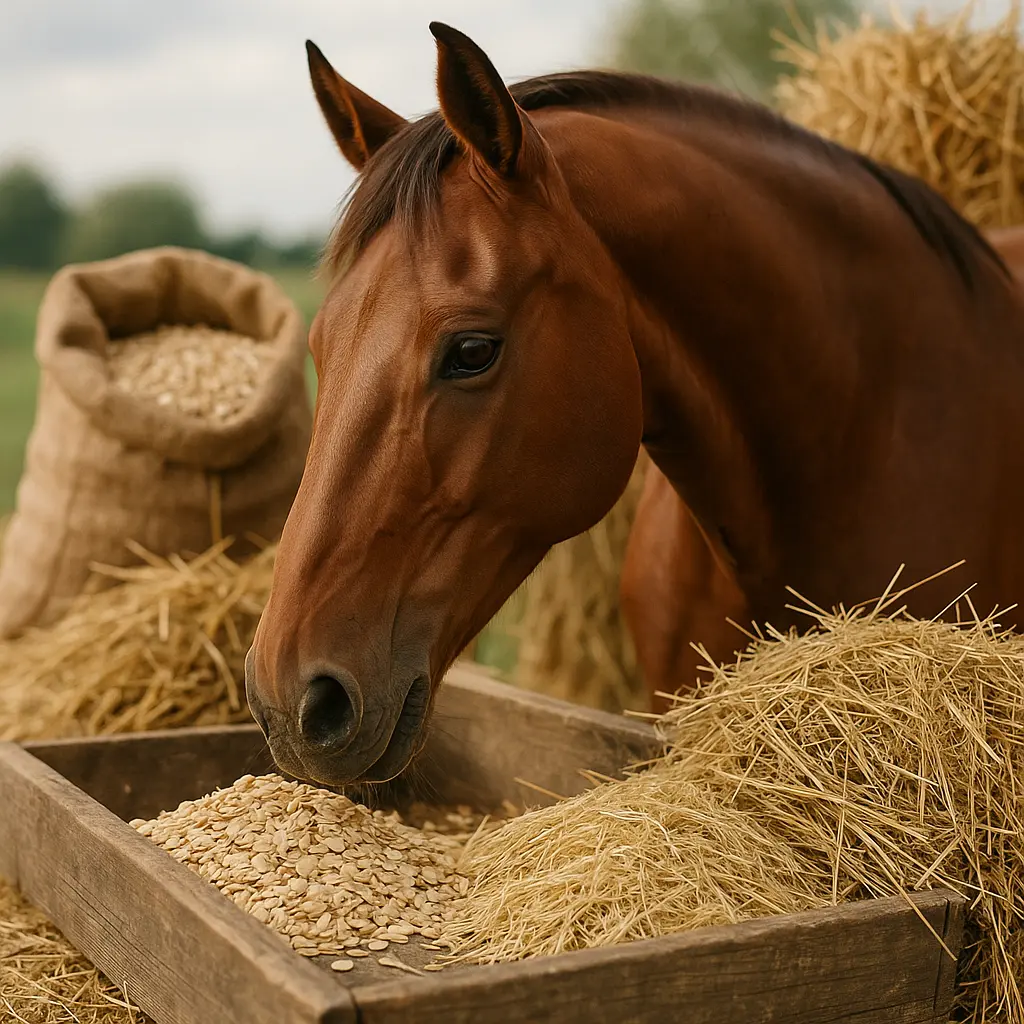
If your horse feels flat one week and fizzy the next, oats are probably in the conversation. Done right, they’re a useful, safe energy source; done wrong, they can unbalance the diet or tip a good-doer into weight gain.
Key takeaway: Oats can be a safe, quick-release energy feed for UK horses when limited to around 2–3 kg/day for a 500 kg horse, kept below 50% of total dry matter, and balanced for calcium and lysine — with any changes phased in over 7–14 days.
Are oats good for horses?
Yes — oats are a proven source of quick-release energy with a safer fibre profile than many other cereals, provided you balance calcium and lysine and keep them under 50% of daily dry matter. Whole oats typically contain 23–35% fibrous hulls and around 53% starch, which helps moderate the starch “hit” compared with grains like maize/corn, reducing digestive upset risk when fed appropriately (Kentucky Equine Research).
This makes oats a practical choice for horses needing more spark, while most good-doers and laminitis-prone types are better managed with forage-first diets and very modest or no oats through winter. Do not feed plain oats as a complete ration: they’re often low in lysine (the first-limiting amino acid) and have an inverted calcium:phosphorus ratio that must be corrected to protect bone and muscle health (UGA Extension; KER).
“Oats are a great way of adding quick-release energy into the diet for horses who can be lethargic or lacking in energy, but this should not be seen as a substitute for ensuring adequate fitness.” — Katie Grimwood, Nutrition Advisor, Baileys Horse Feeds (Horse & Hound)
How much oats should you feed a 500 kg horse?
For a 500 kg horse, cap oats at roughly 2–3 kg/day (dry matter) alongside ample forage, and never exceed 50% of total daily dry matter from oats or any single concentrate (Journal of Animal Science, PMC). Hull-less (naked) oats supply 20–30% more calories than traditional hulled oats, so you’ll typically feed 7–8 lb instead of 10 lb to deliver similar energy (KER).
Keep portions small and regular to support hindgut health. Weigh feeds rather than “scooping by eye”, and adjust to workload and body condition. For accurate daily rationing, a simple weigh system pays for itself in reduced waste and a healthier topline. Pair any energy increases with a fitness plan — calories without conditioning will show up as fat, not performance.
At Just Horse Riders, we advise owners to reassess rations every two weeks during workload or weather changes. Through cold, wet UK spells, many good-doers manage well on forage-only or low-oat inclusion, with warmth provided by appropriate rugs rather than extra cereals; see our range of winter turnout rugs and stable rugs to help horses hold condition without overfeeding.
Do oats make horses fizzy or fat?
They can — quick-release starch can increase excitability in some horses, and excess calories from oats will promote fat gain if work is insufficient. However, balanced daily inclusion supports energy without weight gain in fit horses, and research shows that a 50:50 forage:oats ration over 29 days did not change body condition score versus forage-only, remaining around 2.8–3.0 (PMC).
“Fizzy” behaviour often follows sudden starch hikes or large pre-exercise meals. Behaviour aside, the bigger risk with abrupt change is digestive upset:
“An abrupt dietary change [to oats] can increase the risk of colic, plus during exercise horses use stored energy sources not energy directly from their previous meal; this ‘instant’ energy may also cause behavioural issues.” — Yvonne Judith, Equine Nutritionist (Horse & Hound)
Quick tip: Spread daily oats across two to three feeds, feed at the same times each day, and give at least three hours between a hard feed and fast work. For horses that tip into the “buzzy” camp, consider reducing oats and meeting energy via fibre and oil, or switch to a balanced competition mix designed to moderate fizz.
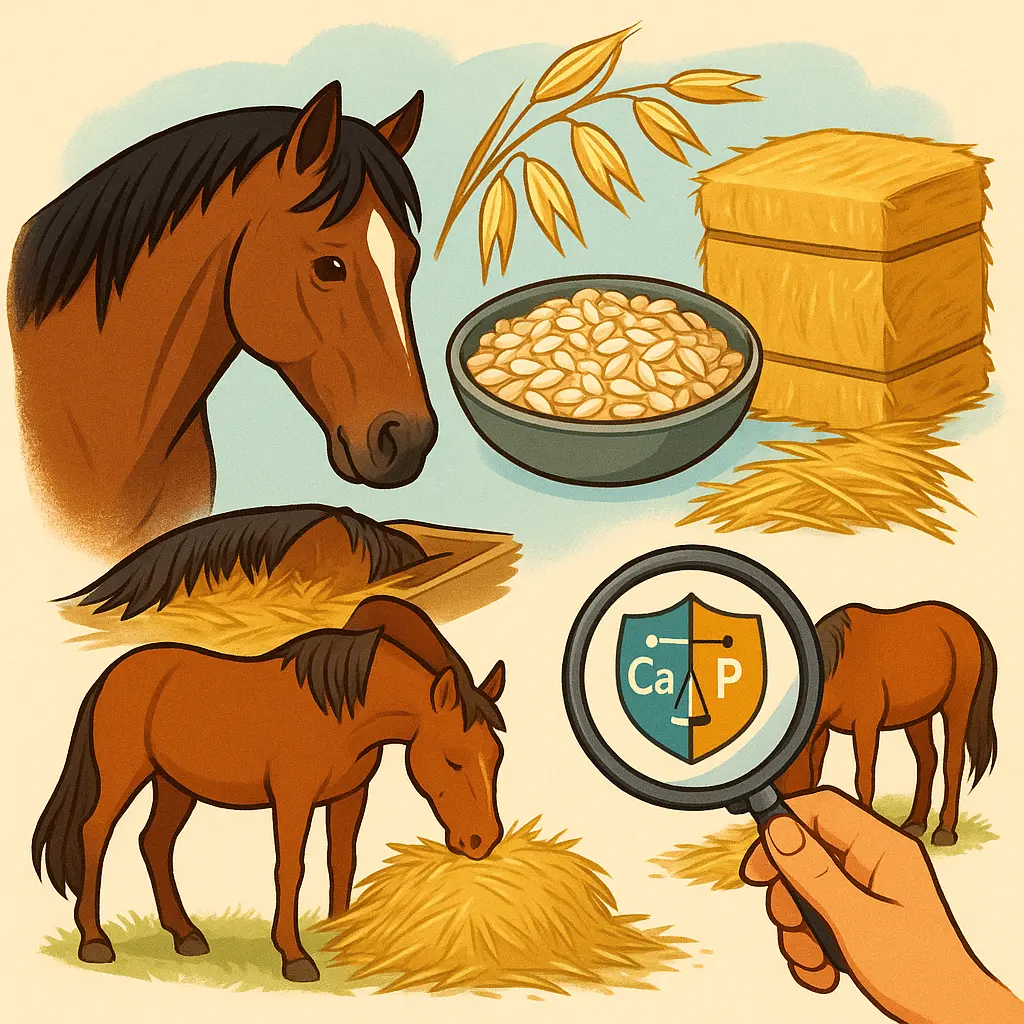
Which oats should you choose — and how do you balance the diet?
Whole (hulled) oats average about 53% starch and 5% fat; hull-less oats deliver 9–12% fat and 20–30% more calories per kg, so you feed less for the same energy (KER; KER). Both types can be useful — select based on your horse’s temperament, workload and weight goals, and remember that higher-energy hull-less oats demand tighter portion control.
Balancing is non-negotiable. Plain oats have an inverted calcium:phosphorus ratio (too much phosphorus, too little calcium) and variable protein quality with low lysine, making them unsuitable as a complete feed for growing, working or breeding horses without correction (UGA Extension; KER). Here’s how to fix it:
- Pair oats with calcium-rich forage such as legume hay (e.g., alfalfa) to bring Ca:P closer to 2:1.
- Add lysine to meet the first-limiting amino acid requirement, supporting muscle repair and topline.
- Use a broad-spectrum balancer or targeted supplements to cover vitamins and trace minerals.
For simple, safe correction, many owners choose a performance balancer or use targeted additions from our equine supplements selection, including trusted options from NAF supplements. If you already feed a balanced commercial mix, avoid tipping the nutrient ratios off-kilter by adding extra oats on top — keep any as occasional handful treats only (KER).
Pro tip: If you’re feeding plain oats for a specific reason (e.g., cost control or a known ingredient list), ask your vet or an independent nutritionist (BEVA or BHS Accredited Professional) to run the numbers on lysine and Ca:P so you know your correction amounts, not guesses.
How do you introduce oats safely in the UK?
Introduce oats gradually over 7–14 days and keep the diet consistent for 3–4 weeks before competitions to minimise colic and behaviour swings. Abrupt changes, especially around travel and show season stress, are well-known colic risks; consistency wins from spring to summer when many UK horses’ routines are in flux (PMC).
Follow a simple ramp-up: start with a small handful in week one, step to 0.5–1 kg/day in week two if needed, and only progress if droppings stay normal and behaviour is appropriate. If you see loose manure, gassiness, or a sharp uptick in sharpness, pause or step back. Many leisure horses maintain beautifully on forage-first diets in UK winters (0–10°C); this also aligns with BHS welfare guidance on trickle-feeding and weight control.
Keep the rest of management steady. Buffer cold snaps with rugs rather than feed: our turnout rugs and stable rugs help horses maintain temperature without resorting to extra starch.
Can oat straw help manage good-doers and laminitis-prone horses?
Yes — replacing up to 50% of forage with oat straw slows intake and promotes satiety without adding energy, which is ideal for overweight horses. At 50% inclusion, researchers recorded a significantly slower consumption rate by Day 7 (p=0.018) and altered chewing behaviour, useful tools when you need to reduce calories while preserving chew time and gut comfort (International Journal of Equine Science).
In practical UK terms, this is gold for winter yard routines and wet springs where turnout is limited and “good-doers” pile on condition. Swap part of haylage for clean, good-quality oat straw to extend eating time and reduce energy density. Monitor closely for cough risk from dusty bales and ensure adequate vitamin/mineral coverage via a balancer or targeted supplements from our horse supplement range. Body condition scoring (aim 5–6/9 for most leisure horses) every fortnight keeps you honest; add a weigh-tape routine and note girth holes, too.
Quick tip: Straw is lower protein; pair with appropriate amino acid support to maintain topline while you whittle fat. Keep treats sensible — if you like to hand-feed, swap “extra oats” for measured, lower-calorie options from our healthy horse treats.
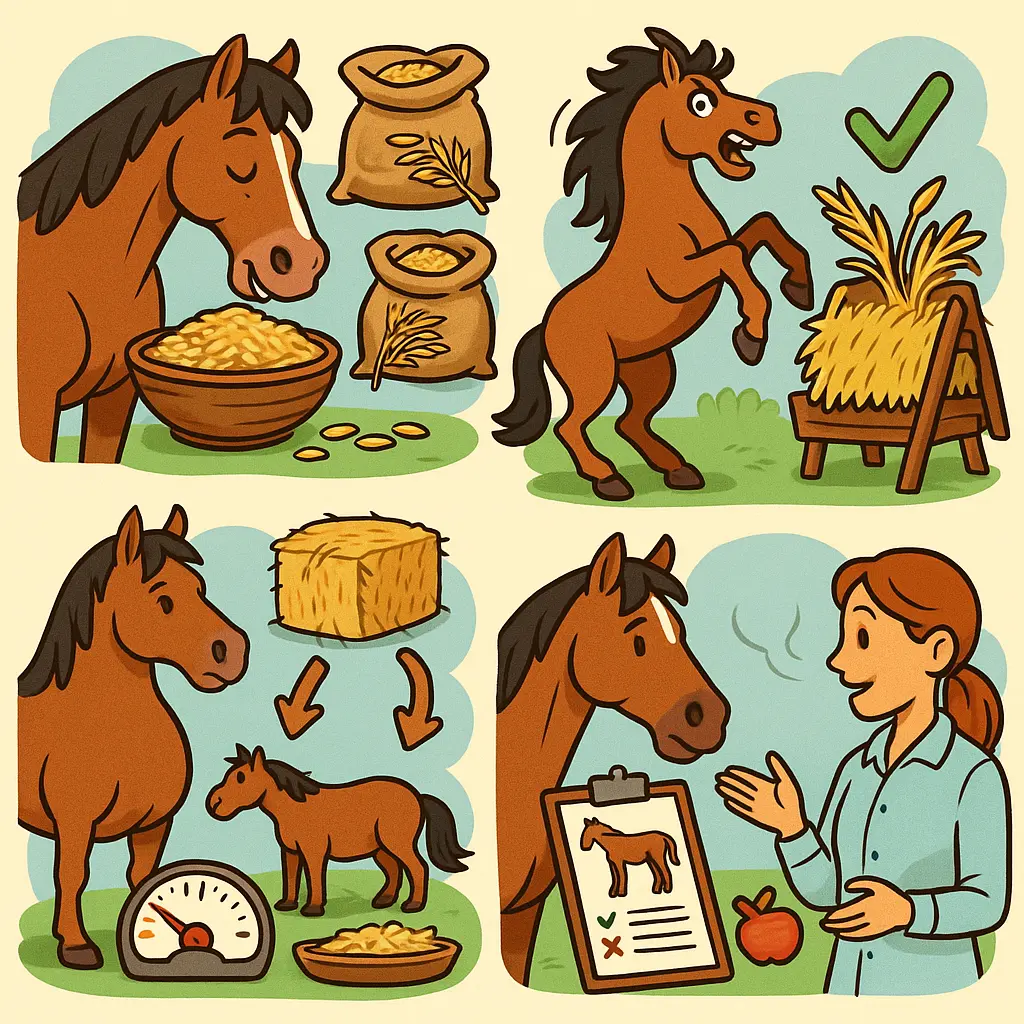
Should competition horses get oats for energy?
Yes for lethargic types — but oats must be part of a daily, balanced ration, not a last-minute boost before a class. Horses work off stored fuels, and “pre-test scoops” risk both colic and behaviour spikes; build oats in consistently across training (Horse & Hound).
“Calories are just units of energy, so high energy feeds [like oats] are also high in calories... if used they should be incorporated as part of a fully balanced diet and in combination with a suitable fitness regime.” — Katie Grimwood, Baileys Horse Feeds (Horse & Hound)
For many sport horses, a formulated performance mix that includes oats can deliver the same quick-release edge with the correct Ca:P and amino acid profile already balanced. If your horse gets sharp, split feeds, use smaller pre-ride amounts, or push more energy from fibre and oil while keeping oats modest. During summer shows and stay-aways, plan feed deliveries and keep the ration identical to what you’ve run for the previous 3–4 weeks to protect the gut and form.
Heading to a championship? Sort your wardrobe early so you can focus on feed timing and warm-up on the day — browse our competition clothing and pack a light fly rug for warm-ups on fly-heavy showgrounds.
Your practical toolkit: weighing, scoring and seasonal tweaks
Accurate weighing and regular body condition scoring (target 5–6/9 for UK leisure horses) beat guesswork every time. Weigh your horse monthly, your feeds weekly, and your rugs seasonally; then adjust forage and oats with a plan.
- Weigh feeds: Use scales for oats and forage nets. Log daily intakes so you can correlate behaviour and droppings with ration changes.
- Score fortnightly: Keep BCS notes and photos; remember many native types carry undetected neck crest fat into spring flushes.
- Seasonal shifts: In cold, wet spells, add warmth with rugs instead of extra cereal calories; in warm, buggy months protect energy use with fly rugs so horses aren’t burning fuel swishing and stomping.
- Fitness first: Increase workload before increasing starch. If your horse is still flat after a fortnight of structured work, consider a modest oats addition or a balanced competition mix.
- Health checks: If your horse has a history of colic, ulcers or laminitis, discuss any starch increases with your vet (BEVA member) or a registered nutritionist first.
At Just Horse Riders, we help owners match feed to management. If you’re streamlining calories for a native good-doer over winter, browse cost-effective turnout rugs to keep the cold off without reaching for extra oats.
Putting it all together: a simple decision framework
Start with forage, fitness, then add oats only if the job demands it and the temperament tolerates it. Limit to 2–3 kg/day for a 500 kg horse, keep under 50% of dry matter, and balance for calcium and lysine. Introduce slowly over 7–14 days and maintain a consistent plan for at least 3–4 weeks ahead of any competition (PMC).
For overweight or laminitis-prone horses, prioritise lower-energy chew time with up to 50% oat straw in the forage mix to slow intake and support satiety; research shows this significantly reduces consumption rate by Day 7 (International Journal of Equine Science). Balance the rest of the ration with a balancer or targeted additions from our supplements range, and keep treats measured via our curated treats selection.
If you’re unsure, ask — our team can help you pick the right feed strategy and the right kit so calories go to work, not to waist.
FAQs
Yes — most owners’ top questions on oats revolve around energy, weight, safety and practical amounts. Here are clear answers you can use today.
Do oats make horses gain weight?
They can. Oats are calorie-dense, especially hull-less types that deliver 20–30% more energy than traditional oats (KER). Overfeeding or feeding without matching workload leads to fat gain; balanced daily use in a fit horse maintains weight while providing spark. In a 29-day study, a 50:50 forage:oats diet did not raise body condition score versus forage-only (~2.8–3.0) (PMC).
Why do oats make my horse fizzy?
Oats supply quick-release starch that can heighten excitability in some horses, particularly if introduced abruptly or fed in large meals close to work. Introduce over 7–14 days, split feeds, and consider reducing pre-ride starch. As Yvonne Judith notes, abrupt change also raises colic risk (Horse & Hound).
Are oats safe as the only concentrate?
No. Plain oats have an inverted calcium:phosphorus ratio and are low in lysine, so unbalanced oat-only rations risk bone and muscle issues, especially in growing or working horses (UGA Extension; KER). Balance with legume forage and targeted supplements, or use a formulated mix/balancer.
Can I feed oats for competition energy?
Yes for lethargic types, but include them daily rather than as a pre-class boost. Horses perform on stored energy, not the last feed; abrupt starch changes also risk colic (Horse & Hound). Many riders find oat-inclusive, balanced performance mixes more reliable than plain oats.
How much oats per day for a 500 kg horse?
Typically up to 2–3 kg/day (dry matter) alongside ad-lib forage, keeping total oats below 50% of daily dry matter (PMC). If using hull-less oats, cut the quantity by about 20–30% to deliver similar energy (KER).
Are hull-less oats better than whole oats?
They’re more energy-dense (9–12% fat vs ~5% in hulled; 20–30% more calories), so you feed less for the same energy (KER). That can help hard-working horses, but it also raises overfeeding risk for good-doers. Either way, you must balance Ca:P and lysine.
Can I replace hay with oat straw if my horse is obese?
Yes, up to 50% of the forage ration as oat straw can slow consumption and support satiety without adding energy; consumption rate reductions were significant by Day 7 in research (International Journal of Equine Science). Ensure quality straw, adequate minerals, and steady weight monitoring.