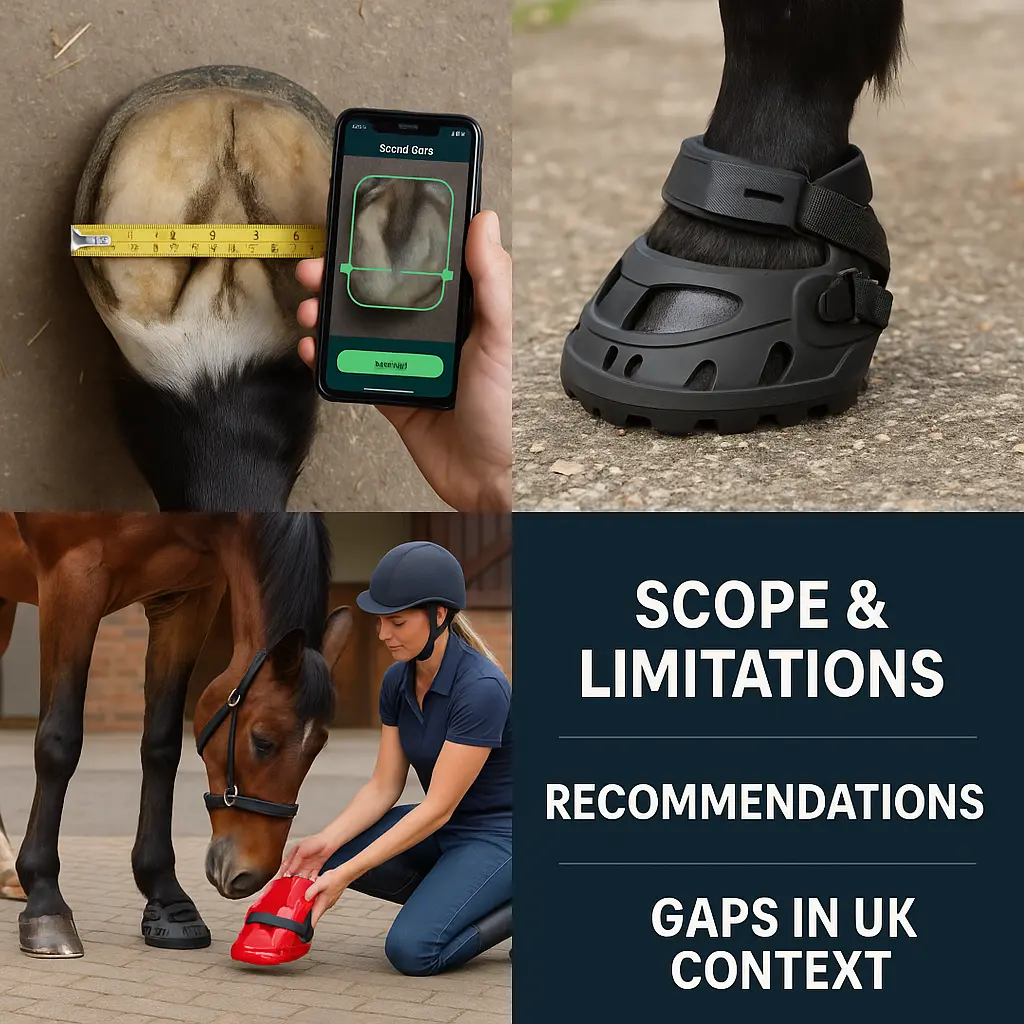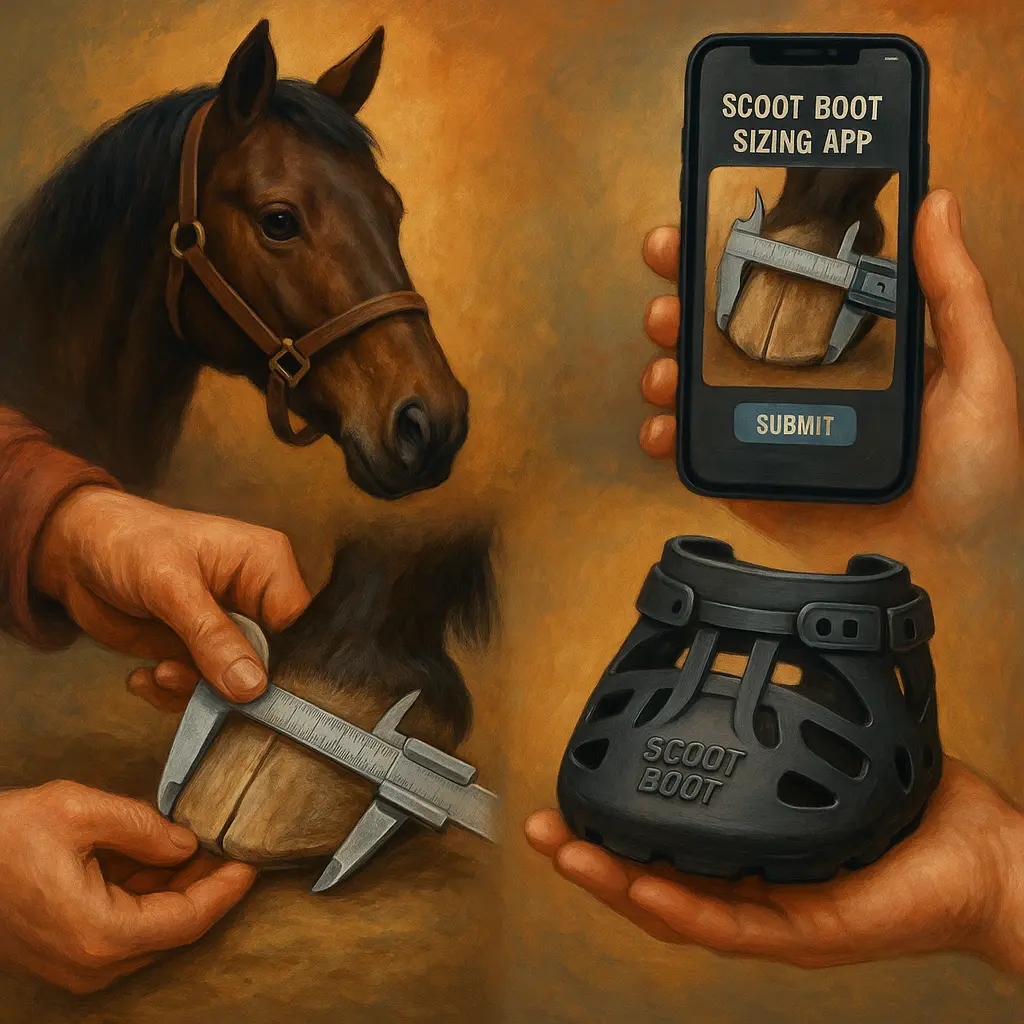
You want your horse confident over flint, forestry tracks and UK roads without compromising hoof health — but do you really need a professional fitting to get Scoot Boots right? Here’s the clear, step-by-step guidance you can trust.
Key takeaway: Most UK riders can size and fit Scoot Boots accurately at home using the official sizing tools and a recent trim; book professional help for atypical hooves, rehabilitation, or if test rides show twisting, rubbing or persistent loss.
Do you need a professional fitting for Scoot Boots?
You can usually fit Scoot Boots yourself if you measure correctly within 14 days of a fresh barefoot trim and use the official sizing resources. Professional fitting or guidance is advisable for rehab, unusual hoof shapes, or if your trial rides show problems.
Scoot Boots are designed to be owner-fit friendly. Manufacturer guidance confirms sizes increase in 5mm increments, making precise measurement vital. Where hooves are healthy and reasonably symmetrical, the combination of accurate measurements, the Scoot Boot sizing app and (ideally) a Fit Kit hire is sufficient for most UK riders. If your horse is coming out of shoes, recovering from laminitis, or has flares, underrun heels or asymmetry, involve your registered farrier or vet and consider the brand’s photo-based sizing advice service to avoid costly mistakes.
For UK conditions — from chalky downs to boggy bridleways — a secure, snug fit is non-negotiable to prevent twisting in mud and loss on stony climbs. If you’re unsure, err on the side of getting a second opinion from a registered farrier or a BEVA-member vet for rehab cases.
How to measure for Scoot Boots step-by-step
Measure each hoof in millimetres within 14 days of a fresh barefoot trim, then match the figures to the Scoot Boot chart, which increases in 5mm increments.
Follow this quick, reliable process:
- Book a fresh trim first. Accuracy drops if you measure beyond two weeks post-trim, as hooves grow and distort. The manufacturer specifies measuring within 14 days of a fresh trim.
- Clean the hooves thoroughly. Pick out and brush the sole so you can see the true perimeter and widest point. A tidy hoof makes all the difference — a quick once-over with kit from our grooming collection helps.
- Use millimetres. Convert inches to mm before you start; the Scoot Boot chart is in mm and sizes move in 5mm steps. A steel ruler or calipers with mm markings improves accuracy.
- Mark the widest point. Looking at the sole, identify the true widest point (usually across the middle third) and measure width at that point, heel to heel line excluded.
- Measure length. From the toe to the back of the trimmed hoof (not including any frog or soft tissue), staying flush to the sole.
- Measure all four feet. Fronts and hinds often differ; it’s common to need different sizes.
- Match to the chart. If you’re between sizes, choose the smaller size rather than rounding up, per Scoot Boot guidance. A snug fit is essential.
- Watch proportions. If hoof width exceeds length by more than 10mm (about 3/8"), or length exceeds width by more than 10mm, standard Scoot Boots may not suit without trying sizing shells or a Fit Kit. See the manufacturer’s notes: Scoot Boot sizing chart.
Quick tip: Photograph each hoof directly from the front and sole level, with a ruler visible. You can send clear photos to the Scoot Boot team’s free service for confirmation at sizing@scootboots.com, or submit via the Scoot sizing app for guided feedback.
When to book a professional fitter or farrier
Book expert help if your width/length differ by more than 10mm, your horse is in rehabilitation, hooves are distorted or asymmetric, or if a test hack shows rubbing, twisting or losses.
While Scoot Boots are owner-fit friendly, some situations warrant a skilled eye:
- Rehab and therapeutic use. For laminitis, abscess recovery or caudal heel pain, involve your vet (ideally a BEVA member) and registered farrier. You may be advised towards Scoot TheraRide and pads, with a stricter fit protocol.
- Complex hoof shapes. Under-run heels, flares, high/low syndromes, clubby or sheared heels, and significant mismatches between width and length often benefit from on-yard fitting or a Fit Kit hire before purchase.
- Persistent problems on trial. If your boots twist at trot, rub heel bulbs, or come off in deep going, stop and reassess with a professional rather than “making do”.
- High-mileage roadwork. If you regularly hack on tarmac, ensure the fit is exact to minimise friction and movement under repetitive load.
Pro tip: Before you pay for a yard visit, use the brand’s own pathways — the sizing app, photo submission (sizing@scootboots.com), and a Fit Kit via UK stockists — so your professional arrives with data in hand.
Choosing the right Scoot Boot model
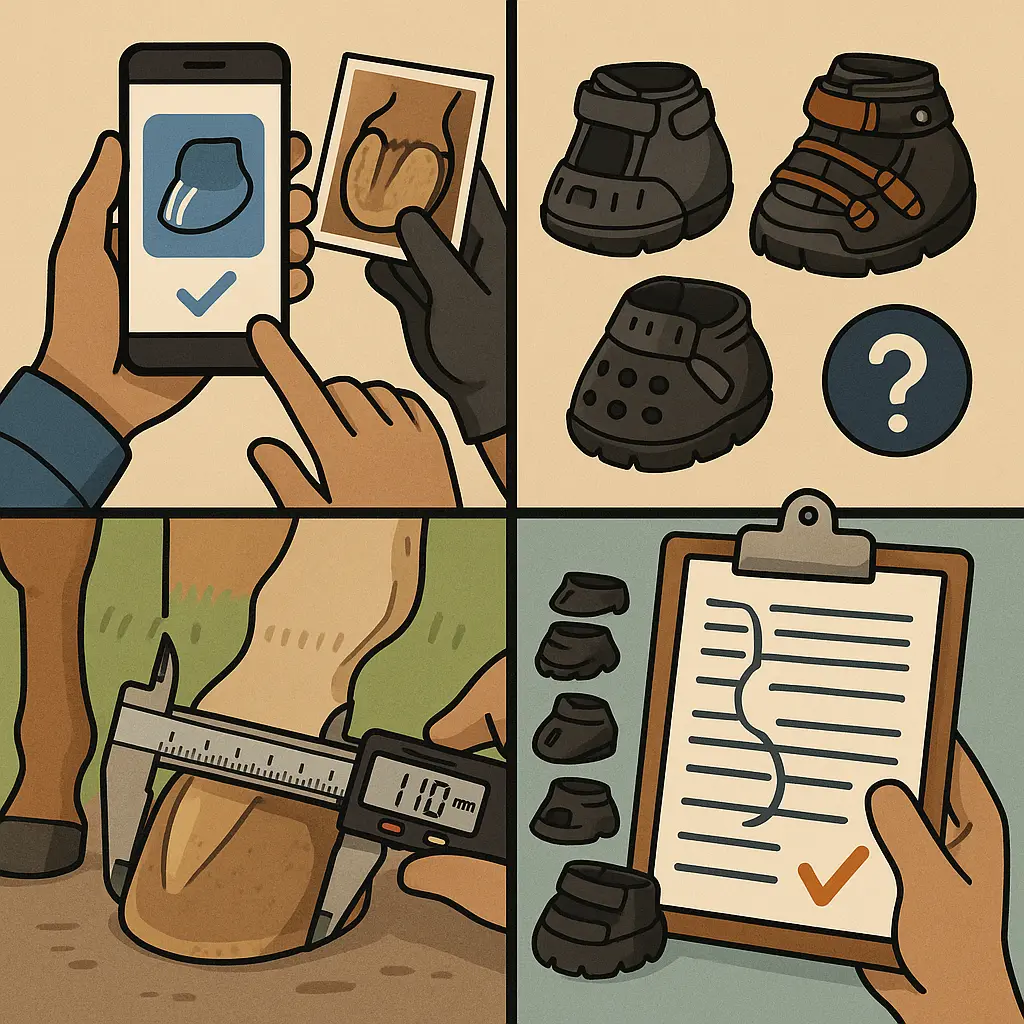
Use Classic for healthy, symmetrical hooves, Adjust for fitting challenges, and TheraRide for veterinary-guided rehabilitation.
Different horses, different needs:
- Classic: A good choice for balanced, healthy hooves needing protection on stony or mixed terrain.
- Adjust: Designed to accommodate fitting challenges, offering more adjustment options when your horse doesn’t slot neatly into a standard shell.
- TheraRide: Intended for therapy and rehab scenarios, typically chosen with veterinary or farriery input.
For an overview of the range from a specialist UK boot retailer, see Hoof Bootique’s Scoot Boot models page. When in doubt, discuss your measurements and photos via the official sizing app first, then confirm with your farrier if your horse is in any remedial program.
Fit checks: what ‘right’ looks like in the yard and out hacking
A correct fit is snug with the heel bulbs comfortably seated, no gaping at the quarters, and no twisting at walk or trot on firm and soft ground.
Run through these checks before your first proper hack:
- Seat and coverage. The boot should “hug” the hoof wall with even contact; quarters shouldn’t flare out and the toe shouldn’t bulge.
- Heel bulb security. The back of the boot should cradle the bulbs without pinching; no red marks after a short in-hand walk.
- Movement test. Walk, trot and do a few circles on the yard. No twisting, shuffling or clacking.
- Terrain test. Step through shallow mud and gravel if available. Boots should remain aligned and quiet.
- Post-ride inspection. Remove boots and check for heat, rubs or trapped grit. Early detection prevents sore spots.
Build mileage gradually. Start with 15–20 minutes, then increase. In winter, thick clay and boggy gateways test any hoof boot — if you see rotation or loss, pause and re-check fit before venturing further. For safer roadwork, pair your set-up with a certified helmet from our riding helmets collection and high-visibility layers from our hi-vis range.
If you’re not using hoof boots on a given day but still want lower-limb protection, explore our horse boots and bandages for brushing, support and travel options.
Common sizing mistakes (and how to avoid them)
The big errors are measuring too long after a trim, rounding up sizes, and assuming fronts and hinds match.
Avoid these frequent pitfalls:
- Waiting too long after trimming. Hoof shape changes quickly. Measure within 14 days post-trim as the manufacturer recommends.
- Rounding up. If you fall between sizes, Scoot Boot guidance is to pick the smaller shell. Up-sizing often creates movement, rubs and losses. li>Measuring in inches (or eyeballing). Use millimetres. Size steps are 5mm; rough conversions invite errors.
- Ignoring width–length proportion. If one exceeds the other by more than 10mm, standard sizing may not be ideal without shells or an Adjust model; seek guidance via the sizing app or a Fit Kit.
- Not photographing properly. Blurry, angled photos lead to poor advice. Shoot square-on with a ruler visible.
- Skipping the test stage. Go in-hand first, then short ridden sessions. Increase gradually and re-check fit after each outing.
- Dirty hooves and debris. Grit between the boot and hoof causes rubs. Clean hooves and boots every ride. Stock up on essentials from our grooming collection.
Quick tip: Good hoof health underpins good boot fit. Work with your farrier on a consistent trim cycle and consider supportive nutrition where appropriate; explore our horse care supplements and trusted brands like NAF to discuss with your vet or nutritionist.
Practical kit list for stress-free Scoot Boot fitting in the UK
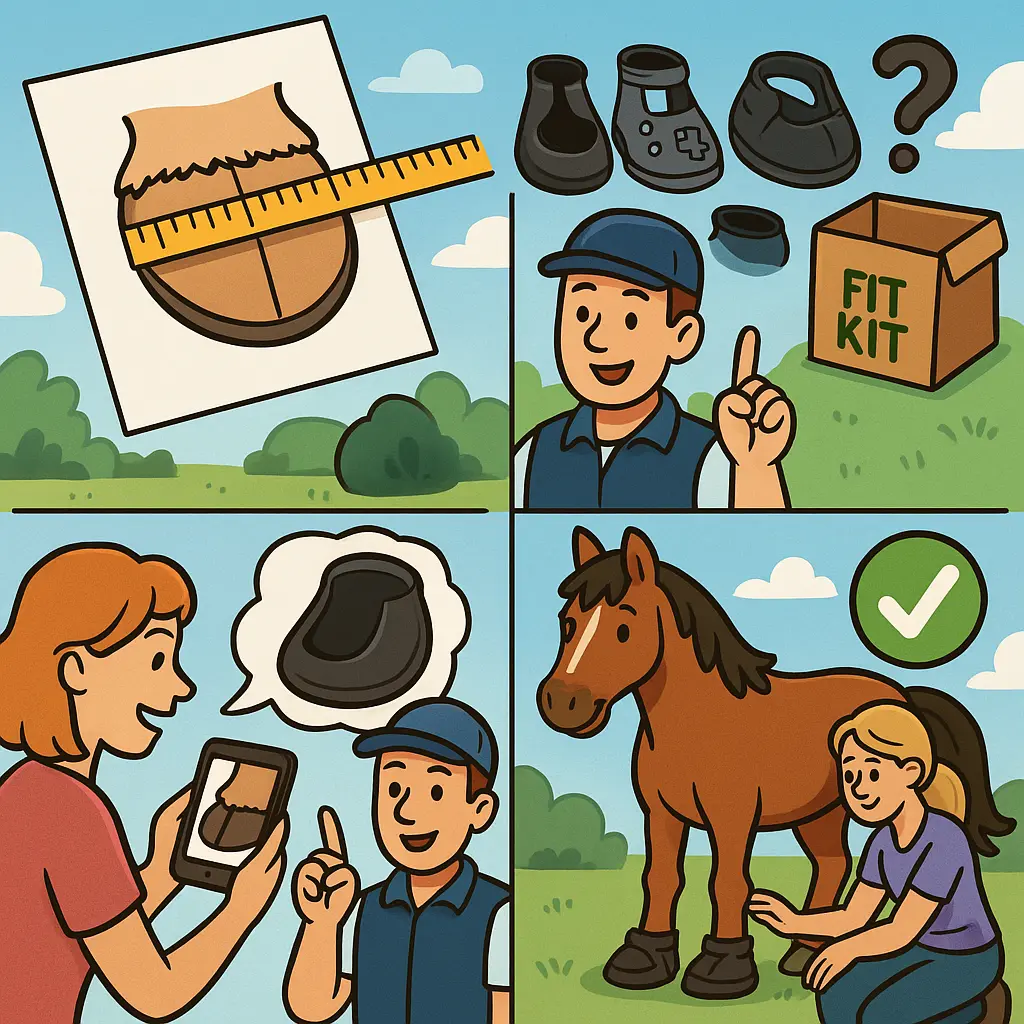
You’ll need a hoof pick, a ruler or calipers marked in millimetres, a smartphone for the sizing app and photos, and a safe hacking setup for test rides.
Make your first fit as smooth as possible with:
- Hoof pick and stiff brush for spotless soles (see our grooming collection).
- Steel ruler or digital calipers in millimetres.
- Smartphone with good camera and the Scoot Boot sizing app installed.
- Electrical tape and a marker to label left/right trial shells from a Fit Kit.
- Comfortable, grippy footwear for you from our riding boots collection and weather-appropriate layers.
- Hi-vis and a certified hat for safe roadwork while testing fit: browse hi-vis and riding helmets.
- Seasonal comfort for your horse if you’re schooling before/after hacks — if they’re clipped or feel the chill, our turnout rugs and stable rugs keep muscles warm around work.
Pro tip: Keep a small field kit with a towel and spare socks for you — UK weather loves a surprise shower during first-fit days.
What Just Horse Riders recommends
Measure within 14 days of a fresh trim, use the Scoot Boot sizing app and free photo service, and test with a Fit Kit before you buy.
At Just Horse Riders, we see the best results when riders:
- Book the trim, then measure in mm the same day while hooves are clean and dry.
- Submit clear photos with a ruler to the official service (sizing@scootboots.com) or via the app for confirmation against the 5mm increment chart.
- Choose the smaller shell if you sit between sizes, as the brand advises.
- Hire a Fit Kit from a UK stockist to validate your choice on the yard.
- Start with short, progressive test rides and re-check for rubs, twisting or losses after each step.
If your horse is in rehab or has complicated hoof conformation, loop in your registered farrier and, for clinical issues, your vet (ideally a BEVA member). For day-to-day essentials around your fitting sessions — from grooming tools to hi-vis and helmets — we’ve got you covered.
FAQs
Do I really need a professional fitting for Scoot Boots?
Not always. Most riders achieve a reliable fit at home by measuring within 14 days of a fresh trim, using millimetres, and following the official chart and app. Book professional help if your horse is in rehab, has atypical hooves, or if trial rides show twisting, rubbing or boot loss.
How soon after a trim should I measure?
Within 14 days of a fresh barefoot trim for accuracy, per the manufacturer. Hooves change shape and size as they grow, so measuring later leads to poor fit.
What if my horse’s width and length differ a lot?
If width exceeds length by more than 10mm, or length exceeds width by more than 10mm, standard sizing may not suit without trying sizing shells or a Fit Kit. Use the Scoot Boot sizing app and consider the Adjust model or professional guidance.
Front and hind feet — same size or different?
Measure each hoof separately. It’s common to need different sizes front and back, and sometimes even left to right.
I’m between sizes on the chart — which should I pick?
Choose the smaller size. The brand advises sizing down when between sizes because a snug fit prevents movement, rubbing and losses.
Where can I get help confirming my size?
Use the official Scoot Boot sizing app and submit clear photos with a ruler visible. You can also email sizing@scootboots.com for the free photo-based sizing service, and many UK retailers offer Fit Kit hire.
Which Scoot Boot model should I choose?
Classic suits healthy, symmetrical hooves; Adjust helps with fitting challenges; TheraRide is intended for rehabilitation under veterinary or farriery guidance. For an overview, see the UK retailer summary at Hoof Bootique.
For safe, comfortable fitting days and hacking, don’t forget your rider essentials — browse helmets, hi-vis, and weather-ready turnout rugs, or treat your horse to something special from our treats collection when they ace their first booted hack.