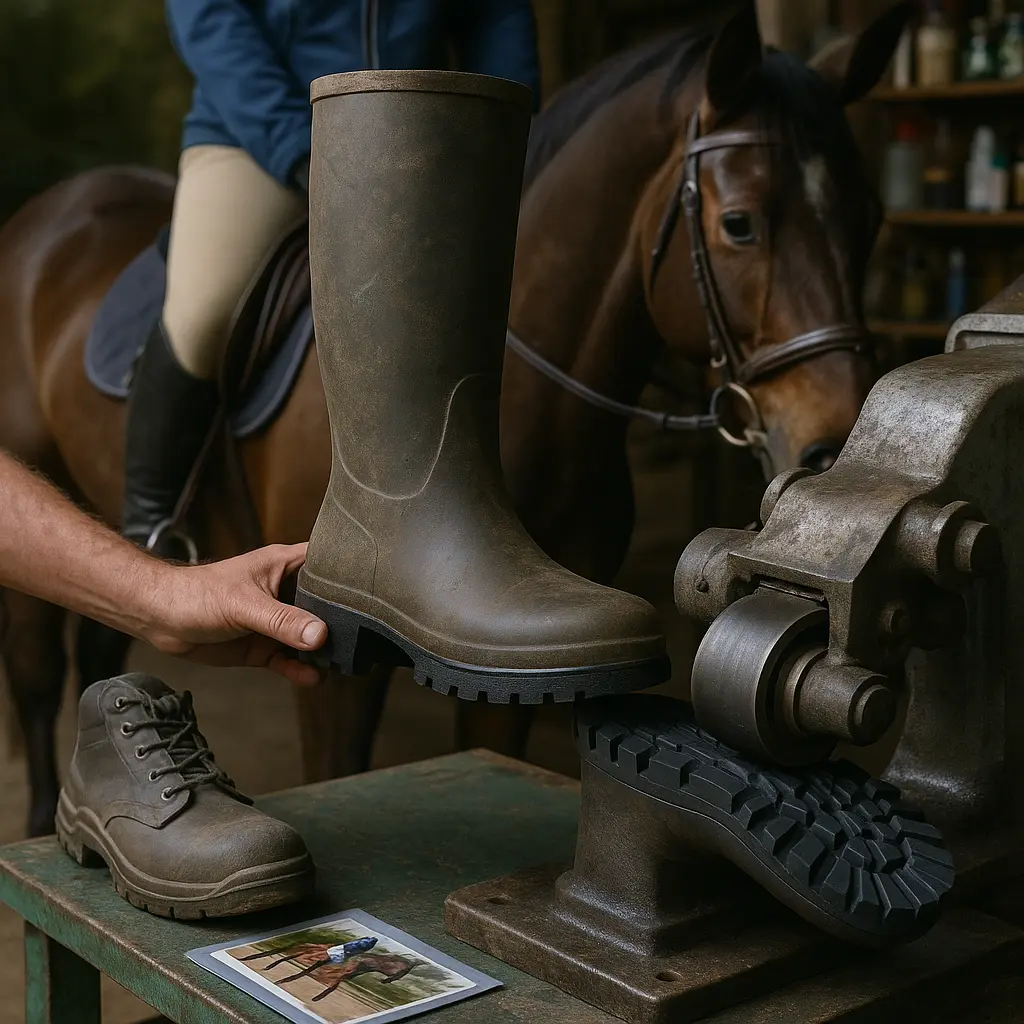
Your wellies do hard graft on the yard — from mucking out to throwing hay in sideways rain. When the soles go bald, it’s tempting to ask if you can simply re-tread them and carry on. Here’s the straight answer UK riders need, plus practical ways to stay safe, save money, and make your boots last longer.
Key takeaway: You cannot re-tread wellington boots; once the tread is worn, replace them or switch to safer, purpose-made yard and riding footwear.
Can you re-tread wellington boots for equestrian use?
No — wellington boots are moulded as a single piece, so their soles cannot be removed and re-treaded like tyres or welted leather boots. The outsole, midsole and upper are bonded as one (typically PVC, neoprene/rubber blends or natural rubber), which means there’s no stitched welt to unpick and no separate sole unit to swap out. Any attempt to glue a new tread layer on top rarely adheres long-term, shifts underfoot, and can be dangerously slippery around horses. In equestrian settings — wet concrete, slimy stable mats, muddy gateways and icy yards — failed “DIY re-treads” are a liability you don’t need.
That’s why most manufacturers and cobblers won’t offer resoling for wellies. Once the original tread blocks are flattened or the heel edge is rounded off, stopping distance, sideways grip and stability suffer. Around a 600 kg horse, you need predictable traction and ankle support, not a sticking-plaster sole that could shear off mid-turn while you’re leading, loading or sweeping the feed room.
What repairs are realistic for tired yard wellies?
Small punctures and minor splits can be patched; worn soles cannot be replaced or meaningfully “re-treaded.” If your boots only leak at a pinhole or a tiny crack (often along flex points or where the upper meets the sole), a rubber or urethane repair can buy time for light yard use. Look for flexible, waterproof adhesives designed for rubber/neoprene. The basic process is:
- Clean and dry thoroughly. Degrease the area (inside and out) and let it dry completely.
- Lightly roughen the surface with fine sandpaper to help adhesion.
- Apply the adhesive or patch per the product instructions, avoiding thick blobs that can peel.
- Clamp or tape the area so it cures under light pressure, then leave it alone for at least 24 hours.
- Water-test in a bucket before going back to the yard.
Quick tip: If a split runs into a seam, flex line, or the heel/ball area, consider the boot finished. Those are high-stress zones the glue will struggle to hold in real-world use.
Is repairing wellies worth it compared with buying new?
For tiny leaks, a DIY patch is worth the few minutes and a small tube of adhesive; for worn tread, heel roll or delamination, replacement is the safer, better-value choice. By the time you’ve paid postage and labour for any professional intervention (and most cobblers won’t touch wellies), you’re still left with an old upper and a compromised sole. Add the risk factor — slips, trips and loss of footing on the yard — and the sensible call is to retire them.
If budget is tight, shop end-of-line and deals in our clearance — you’ll often find last-season gems in The Secret Tack Room clearance. And if you’re doing any amount of riding, invest that money in proper riding footwear instead of trying to eke out another winter from slick wellies. Your ankles (and your horse) will thank you.
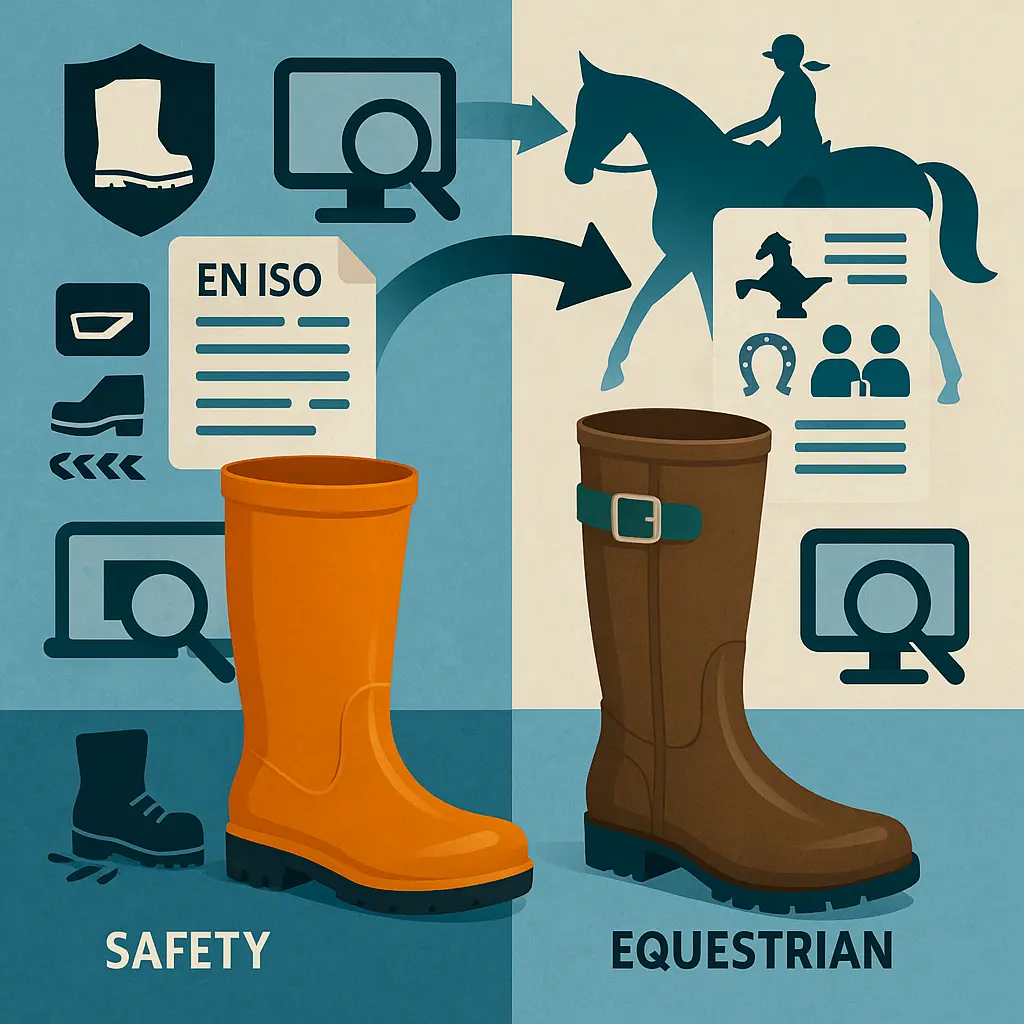
Are wellies safe to ride in?
No — ride in proper riding boots with a defined heel; use wellies for yard work only. The British Horse Society advises that footwear for riding should have a small heel and a smooth, fairly flat sole to stop your foot sliding through the stirrup. Many wellies either have no heel at all, or they have deep, sticky treads that can catch in the stirrup, which is just as risky. Add in soft shafts with little ankle support and you’ve got poor feel and poor security in the saddle.
At Just Horse Riders, we recommend purpose-designed footwear for the job. For the saddle, browse our curated selection of horse riding boots — from everyday jodhpur boots to smart long boots — all chosen with proper stirrup safety in mind. Keep your wellies for mud, muck and hose-down duties, and switch footwear when you tack up. It’s a two-minute swap that meaningfully improves safety and comfort.
How to make your wellies last longer on a busy yard
Clean them, dry them naturally, and store them away from sunlight and heat; ammonia and UV degrade rubber fast. Yard life is brutal on materials: urine and slurry attack rubber compounds, while winter mud ground in with grit acts like sandpaper. A simple routine will add months to a boot’s useful life:
- Rinse after use. A 30-second hose-down prevents mud from drying and abrading the surface. Keep a stiff brush by the tap — you’ll find handy options in our grooming tools collection.
- Air-dry upright. Avoid radiators, stoves and hot-air cupboards that can crack, split or warp rubber; stuff with newspaper to wick moisture and swap it after an hour.
- Condition occasionally. A silicone-based rubber conditioner helps keep uppers supple. Wipe off any excess to avoid attracting dust.
- Don’t fold the shafts. Creasing creates weak points that split later.
- Rotate footwear. Alternate wellies with yard boots so foam insoles rebound and linings fully dry between uses.
- Use a boot jack. Don’t stand on the heel with the other foot — it stresses the heel counter and encourages separation.
- Mind the muck heap. Prolonged standing in ammonia-rich wet bedding is tough on any boot. Do the job, then rinse.
Pro tip: Fit supportive insoles if you’re in wellies for hours. They won’t add tread, but they’ll reduce foot fatigue and help keep your stance stable when leading or lifting.
Grip and winter safety: better options than ‘re‑treading’
Use traction aids and choose boots with winter-ready tread; don’t glue new tread onto old soles. On icy or compacted snow days, removable ice grips or overshoe cleats can add confidence when you’re walking horses to the field or hauling water. These are for walking only — remove them before you get anywhere near a stirrup. For typical UK winter wet, the real win is switching to footwear with a modern, deep-lug outsole that sheds mud and bites into soft ground.
Visibility and head protection also matter in winter gloom and slippery conditions. If you’re hacking to loosen up after yard chores, throw on a piece from our rider high-visibility range and, of course, ride in a properly fitted helmet — browse current models and sizes in our riding helmets collection. Good grip underfoot and good sense over the top are a smart combination when the clocks change and surfaces get unpredictable.
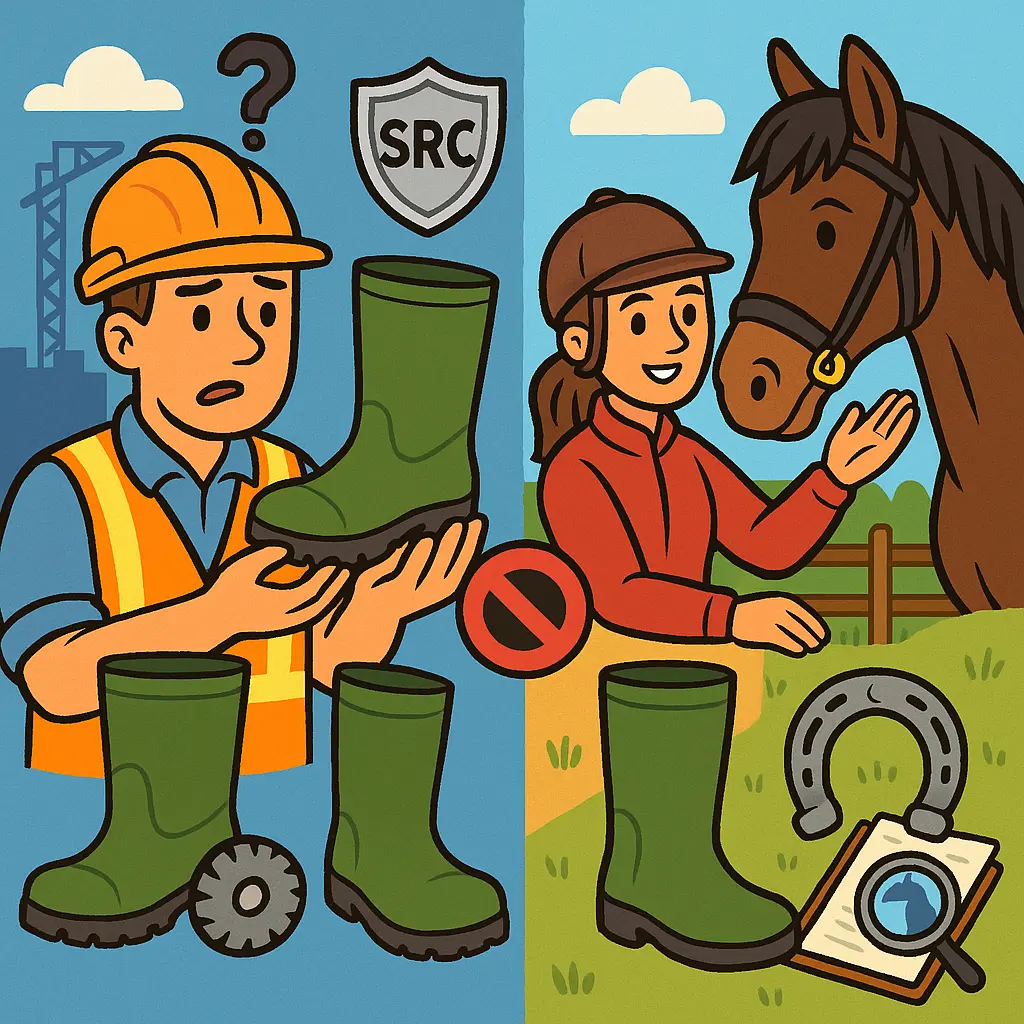
What to wear instead: yard, country and riding boot recommendations
Choose yard boots for groundwork and dedicated riding boots for the saddle; both outperform wellies for grip, support and safety. Yard or “muck” boots often pair supportive ankle-height uppers with hard-wearing, agricultural-style outsoles that resist slurry and provide confident traction on wet concrete. Many are warmer than standard wellies, with better footbeds for long hours on your feet.
For riding, opt for footwear with a defined heel and the right sole profile to sit securely in the stirrup. Our selection of horse riding boots covers everyday schooling boots, smart show options and insulated winter styles. Pair them with comfortable, grippy legwear — you’ll find durable, yard-friendly breeches in our women’s jodhpurs & breeches collection that wash well and dry quickly after a muddy morning. Switching between yard and riding footwear offers the best of both worlds: traction and warmth for chores, feel and security when you pick up the reins.
At Just Horse Riders, we test and stock what UK riders actually need: boots that shrug off rain and mud, stand up to daily mucking out, and keep you secure in the stirrup when it’s time to ride. If you’re unsure where to start, drop us a line — our small, horsey team is happy to help.
Bottom line: You can’t re-tread wellies; once the sole is worn, retire them. Patch tiny leaks to squeeze out a little more yard life, but for serious grip and safety, step into purpose-made yard and riding boots instead.
FAQs
Can a cobbler re-sole my wellies?
No. Wellies are moulded as one piece, so there’s no separate sole to remove and replace. Most cobblers don’t take them in for that reason. Patch minor leaks if you like, but treat worn tread as end-of-life.
Is it safe to ride in wellies?
No. For riding, you need a defined heel and a smooth, fairly flat sole that won’t catch or slide through the stirrup. Follow best practice and ride in proper boots — explore options in our horse riding boots range — and keep wellies for yard work.
How can I add grip to my wellies in winter?
Use removable ice cleats or overshoe traction for walking only, and choose boots with winter-friendly tread patterns. Do not glue “treads” onto a worn sole — they’re unreliable and can shear off. If your soles are bald, replace the boots.
How long should a pair of wellies last on a busy yard?
Lifespan varies with use and care. Daily mucking out, ammonia and UV will shorten life; quick rinses, natural drying and occasional conditioning will extend it. When tread is flat or the heel edge rounds, retire them for safety.
My wellies leak at a seam — can I fix them?
Sometimes. Clean, dry and lightly roughen the area, then apply a flexible rubber-friendly adhesive and let it cure fully before water-testing. If the split runs along a flex point or into the heel/ball area, the repair is unlikely to hold under yard stress.
What should I wear instead of wellies for full yard days?
Sturdy yard boots with supportive ankles and aggressive, self-cleaning outsoles are warmer, grippier and more comfortable for long hours. When you ride, change into purpose-designed boots; add comfort with quality legwear from our women’s jodhpurs & breeches selection and stay visible with our hi‑vis essentials.
Do I really need a helmet if I’m only hopping on after chores?
Yes. Slippery yards and fresh horses are a risky mix. Always ride in a correctly fitted helmet — find yours in our riding helmets collection — and switch to appropriate riding boots before you mount.