

Creative Solutions for Feeding Soaked Hay in the Field
Feeding soaked hay to horses is a common practice, particularly for those with specific dietary needs or respiratory issues. This article explores creative solutions to simplify the process of feeding soaked hay, making it more efficient and stress-free for both caretakers and horses.
Why Soak Hay?
Soaking hay helps reduce its sugar content, which benefits horses with metabolic issues or those prone to laminitis. Additionally, it decreases dust content, aiding horses suffering from respiratory problems [5]. Careful management ensures the hay is properly soaked without waste.
Challenges in Feeding Soaked Hay
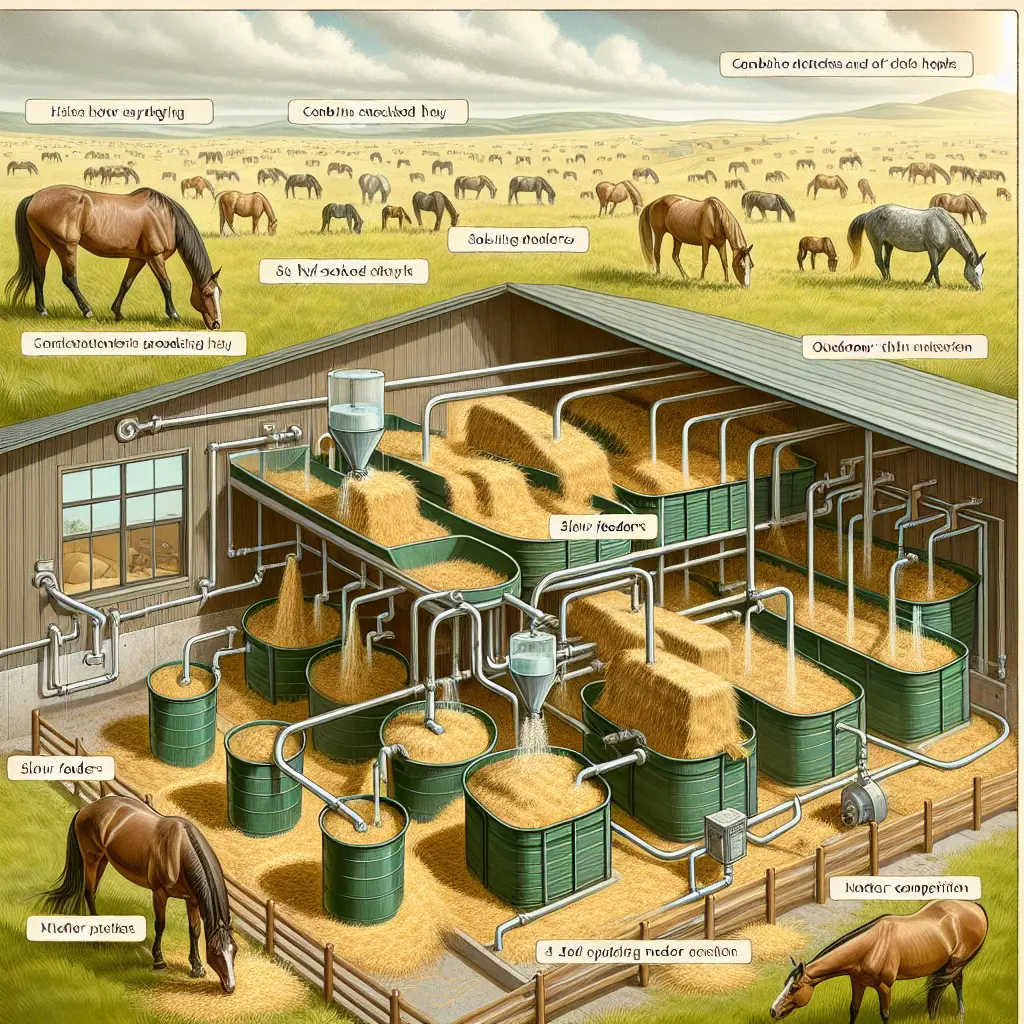
Handling large quantities of water for soaking and the labor intensity involved is a major challenge, especially when managing multiple horses. Transport and storage of soaked hay without it getting soggy or wasted presents additional difficulties [1].
Creative Solutions
1. Hay Cubes and Containers
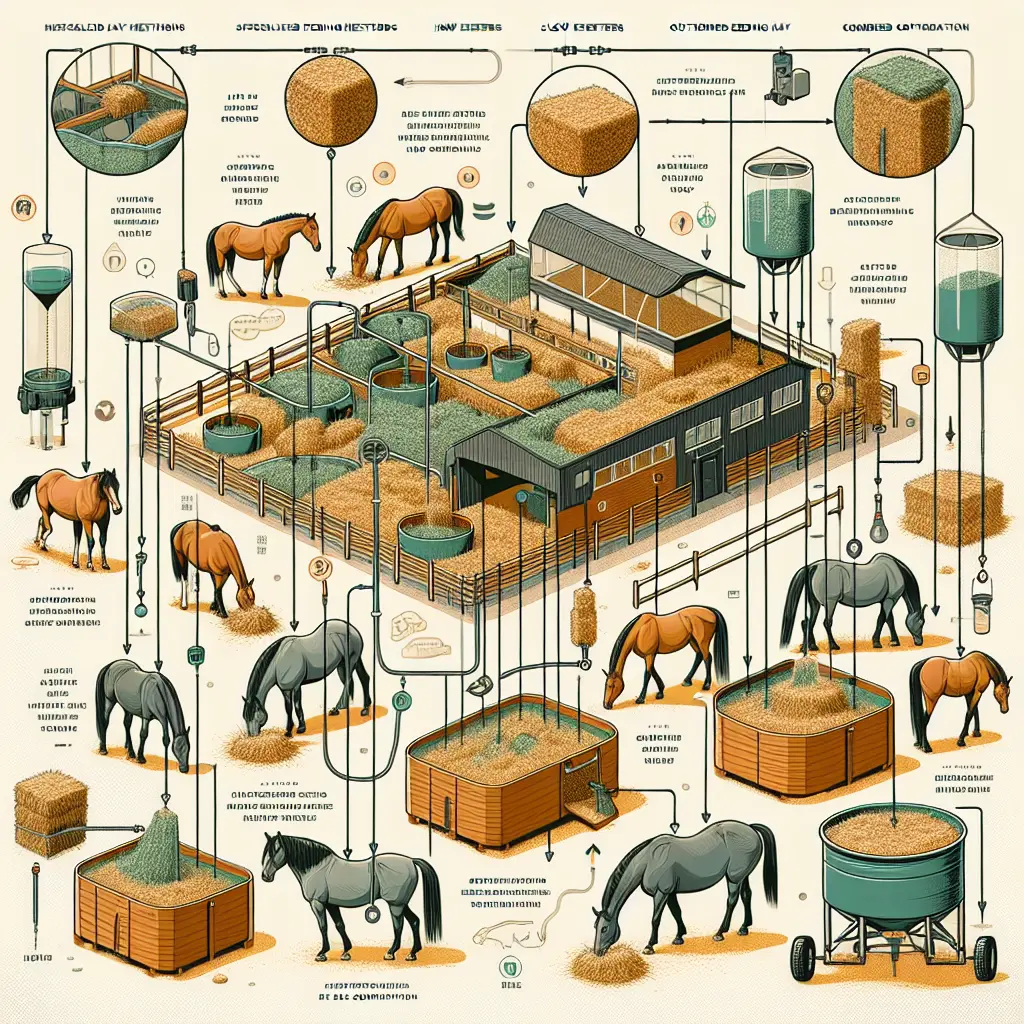
Using a Hay Cube can simplify the process. These units usually hold half a small bale and include a plug for easy drainage. Once soaked, the cube can be easily wheeled into the stable or field [5]. A large wheeled container with a drainage plug offers a budget-friendly alternative.
2. Slow Feeders with Hay Nets
Slow feeders paired with hay nets control consumption rates and reduce waste. These systems require horses to work for their hay, extending eating time and mimicking natural grazing behaviours [4].
3. Large Soaking Containers
Limited space or difficulty handling large nets can be remedied using a large tubtrug or similar container. These can be demanding physically, but using smaller fillable containers multiple times a day makes the job easier [1].
4. Automated Soaking Systems
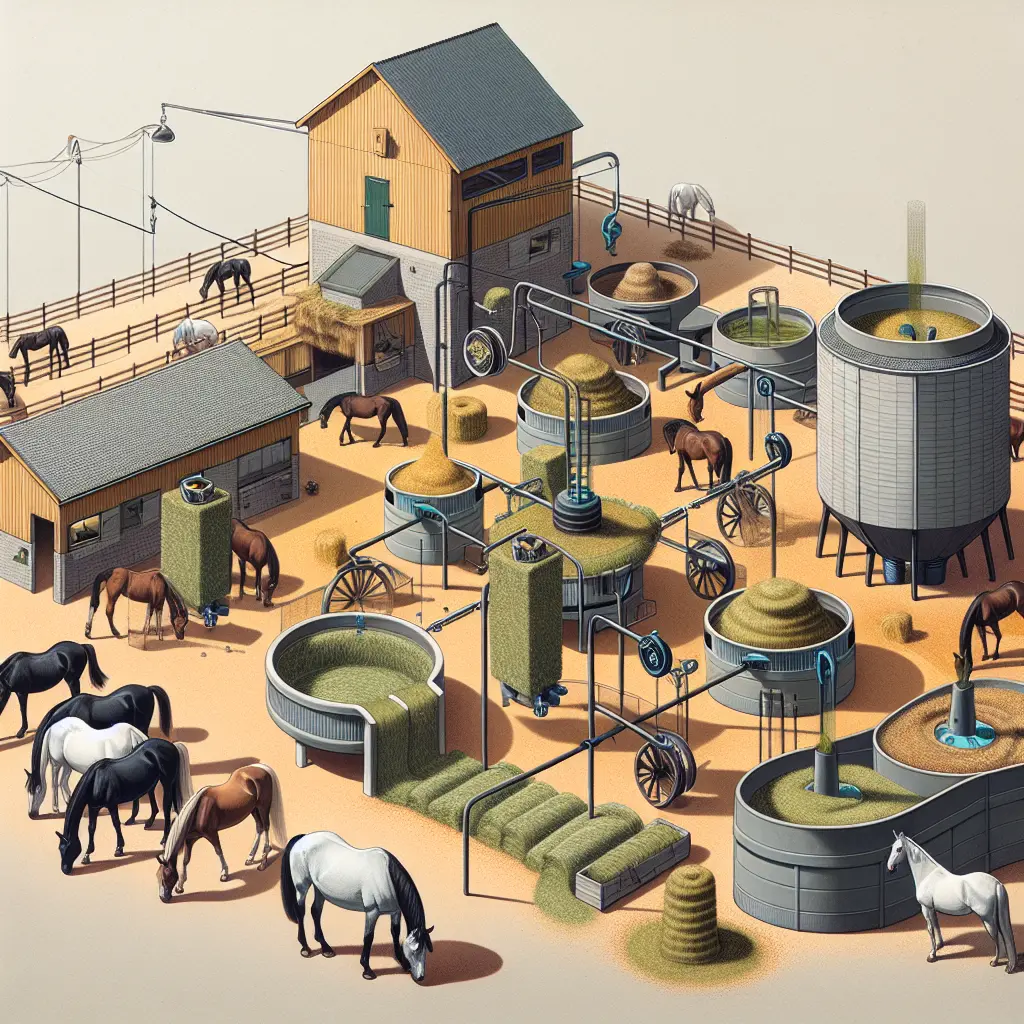
Though not widespread, automated systems for soaking and distributing hay are being explored. These systems can integrate water piping to remote areas and employ simple transport methods such as a pulley system [2].
5. Outdoor Feeding Stations
Outdoor feeding stations could efficiently manage soaked hay. Designing these stations to keep hay dry while accessible to horses is crucial. Elevated platforms or covered areas help protect hay from the elements and minimize waste [1].
6. Combining Methods
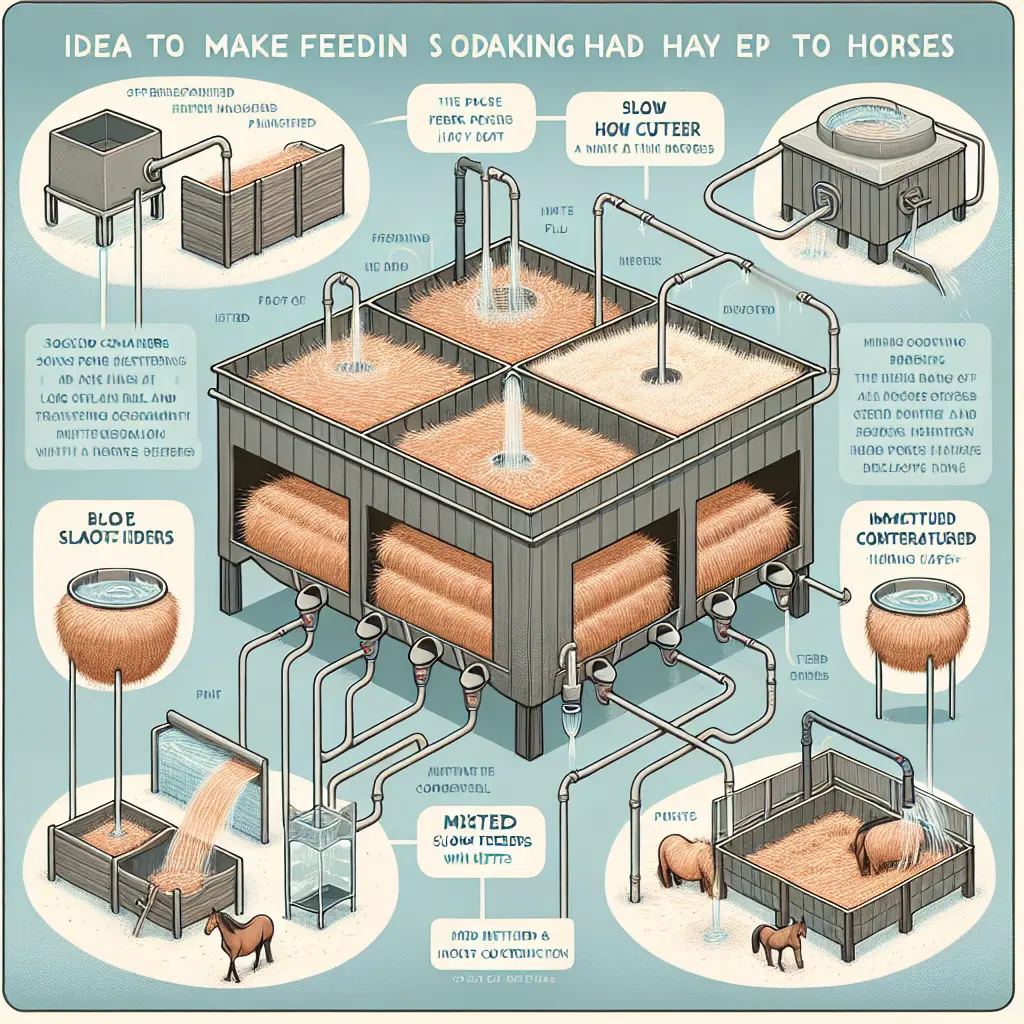
Combining different methods can accommodate multiple horses with varying needs. For instance, using both slow feeders and hay nets can cater to each horse's individual needs while reducing food competition [4].
Tips for Efficient Feeding
- Plan Ahead: During winter, when grass is scarce, planning hay supply and soaking schedules is crucial to prevent feeding interruptions.
- Use Technology: Explore automated solutions to enhance efficiency in soaking and feeding processes.
- Space and Accessibility: Ensure feeding stations are accessible and strategically spaced to minimize competition and stress.
Conclusion
Feeding soaked hay requires creativity and planning. By adopting innovative solutions like specialized containers, slow feeders, and automated systems, horse caretakers can simplify processes, ultimately enhancing horse care. The key lies in finding methods that efficiently serve both horses and their caretakers.
For more brilliant ideas or suggestions, consider exploring discussions on platforms such as the Horse and Hound Forum or the Chronicle Forums.