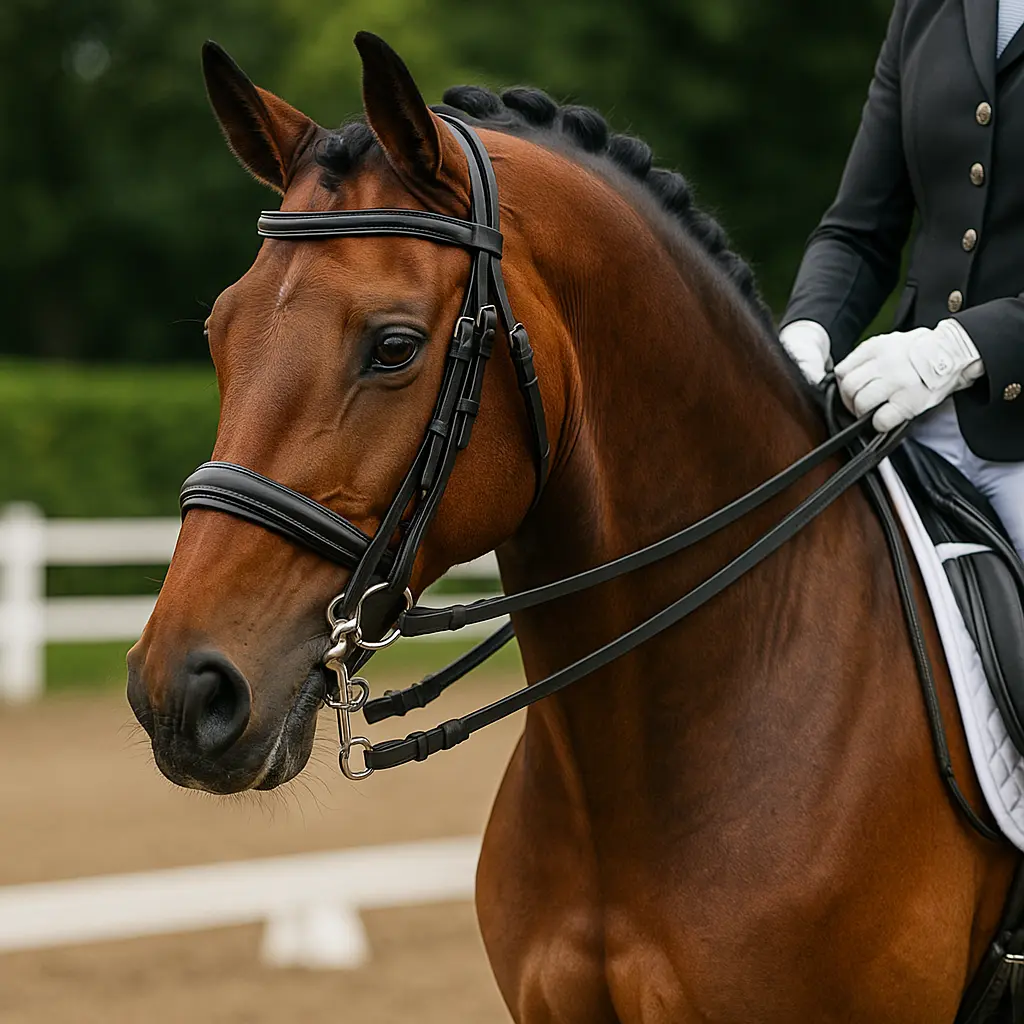
Dressage rules and bridle fit are changing fast, and what you put on your horse’s head has direct consequences for both scores and welfare. Here’s the up-to-date, UK-focused guidance you can act on today.
Key takeaway: In UK dressage, a snaffle is required at Preliminary and Novice, with snaffle or double allowed from Elementary upwards nationally; FEI still mandates doubles at Prix St Georges and Grand Prix, while a proposed FEI trial would make doubles optional up to CDI3* to prioritise welfare and rider choice.
The rules at a glance (UK and FEI)
At UK national level, snaffles are mandatory at Preliminary and Novice; snaffle or double is permitted from Elementary to Grand Prix, while FEI Prix St Georges and Grand Prix require doubles.
That’s your baseline for planning training and competition tack. Internationally, the FEI currently mandates double bridles at CDI3*, CDI4*, CDI5* and World Cup events. However, a formal FEI proposal would allow riders to choose either a snaffle or double at grand prix level up to and including CDI3* and CDIO3* as part of a data-gathering welfare trial. As the FEI Dressage Technical Committee put it:
“The dressage technical committee (DTC) and the working group have considered the level of expertise required to use the double bridle and conclude that the choice of using either a snaffle or double bridle at grand prix level should be permitted up to and including CDI3* and CDIO3* events.”
Source: Horse & Hound reporting on the FEI proposal. Feedback on these changes is due in 2025, with practical implications for UK riders targeting international qualifiers.
For eventers, British Eventing permits double bridles in the dressage phase from Intermediate Novice upward. Always cross-check your specific level in the current rulebook before you load the lorry.
Snaffle or double — which, and when?
Use a snaffle at Preliminary and Novice; from Elementary to Grand Prix nationally you may choose either, but expect a double for FEI Prix St Georges and Grand Prix unless the FEI’s CDI3* trial is adopted.
Practically, most UK riders introduce the double around Elementary–Medium once the horse is reliably accepting the contact, straight, and through. If you’re schooling toward FEI classes, plan a gradual, well-supervised transition so the curb isn’t compensating for gaps in basics. This is about clarity and welfare as much as compliance.
At Just Horse Riders, we recommend you map bridle choice to your competition calendar. If your next 6–12 months are national classes to Medium, a well-fitted snaffle may keep training honest. Preparing for PSG? Build the double in slowly at home first, then at training shows, monitoring your horse’s poll and ear comfort week by week.
Nosebands and padding: what is legal?
In dressage, a noseband is compulsory: cavesson, drop or flash with a snaffle; cavesson only with a double; grackles are not allowed in dressage but are permitted in eventing.
That single sentence covers many queries on the warm-up track. If you move from a snaffle with a flash to a double, you must swap to a plain cavesson. For eventers, British Eventing allows grackle nosebands in the dressage phase, and it explicitly permits discreet padding on the headpiece/poll area, while padding on cheek pieces and the front of the noseband is not allowed. This distinction matters for horses with fine skin at the poll or those who become sensitive in cold, wet weather.
Two more essentials:
- Reins must make direct contact with your hands — no pelham roundings or couplings in dressage, and no bit guards.
- Choose legal, plain decoration: a simple, non-contact leather browband is always safe and smart.
Quick tip: If you’re transitioning to a double and your horse goes better with a broader headpiece, consider anatomical headpieces with discreet poll padding to spread pressure — legal in eventing and a sensible welfare choice for everyday schooling.
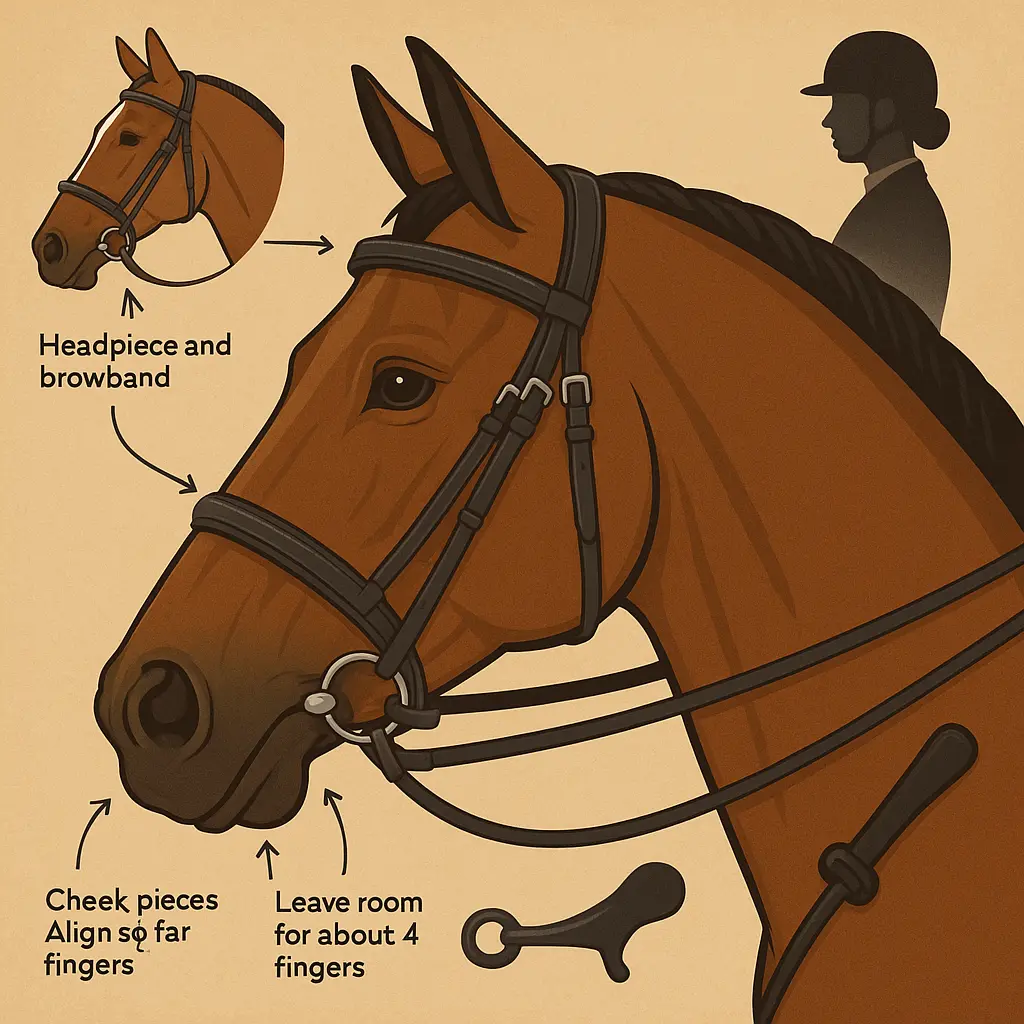
How to fit a bridle correctly: poll, browband, cheeks, throatlatch
Fit the headpiece so the split with the browband sits just below the ears, keep two fingers between browband and forehead, align cheek piece buckles with the eye corner, and allow four fingers under the throatlatch.
Those are the quick checks that prevent most pressure problems. The poll and ears are among the most sensitive areas of your horse’s head, and UK welfare guidance is unequivocal about how to protect them. Dr Rachel Murray (formerly Animal Health Trust), who helped develop evidence-based bridle fit resources, sums up the goal:
“Bridle fit guidelines emphasise the two main aims of good bridle design and fit: Minimising pressure; Maximising stability.”
Source: World Horse Welfare: Bridles — how to choose and fit them correctly.
Here’s the fit sequence we coach riders to use in the yard:
- Headpiece and browband: Sit the browband about an inch below the base of the ears so it doesn’t pull the headpiece forward. If your horse objects to having ears threaded, “build” the bridle on the head — place the headpiece, then attach browband and cheek pieces in situ.
- Cheek pieces: The straps should run parallel to the facial crest without twisting; aim to have the buckles level with the outer corner of the eye for both stability and neatness.
- Throatlatch: Looseness matters. You want four fingers’ clearance between strap, cheek and throat so the horse can flex and breathe easily.
- Stability test: Slide two fingers between browband and forehead; it should neither pinch nor gape. Check there’s no pinching under the narrow “sliphead” sections on a double.
As Horse & Country’s fitting guide puts it, “If it’s too low, it will put pressure on the back of the ears... Browband should sit around an inch below the ears.” Source: Horse & Country TV — bridle types and fitting. This aligns neatly with British dressage turnout standards and the comfort-first ethos shared by the BHS and BEVA-aligned welfare advice in the UK.
Pro tip: Do your final fit check with your competition plaits in. A raised crest can slightly alter browband tension and cheek piece alignment.
Switching to a double: step-by-step
Introduce the double gradually at Elementary and above, use a cavesson noseband only, and monitor for poll or ear sensitivity such as head-tossing, head-shyness, or ear pinning.
Here’s a simple four-week plan you can adapt with your coach:
- Week 1: Ride one or two short schools in the double, mostly on the bridoon; keep curb rein neutral. Check poll and ear comfort immediately after, and again the next day.
- Week 2: Add transitions within the pace on light curb contact. Reassess headpiece position to ensure the split still sits just behind the ears without pressure.
- Week 3: Introduce lateral work you’ll need for your target tests. If you see early signs of resistance to flexion, drop back to snaffle schooling for a ride or two and reassess fit.
- Week 4: Replicate a test at home. Keep the curb influence subtle; the double refines, it doesn’t replace basics.
Signs to pause and review fit include head-shyness when bridling, reluctance to lower the poll, ear pinning, and a sudden change in contact acceptance. These are classic red flags for poll pressure or pinch points — fix the cause, don’t fight the symptom.
Remember, the FEI’s active discussion on making doubles optional to CDI3* is rooted in rider choice and horse welfare. You can read the FEI-sourced summary via Horse & Hound; use that context to choose the bridle that truly supports your horse’s way of going, not just convention.
Welfare first: spot and prevent pressure points
Prioritise poll and ear comfort by minimising pressure and maximising stability, and watch for behavioural signs like head-shyness, resistance to flexion, and ear pinning.
UK winters are hard on thin-skinned areas: cold rain, clipped coats, and thicker turnout rugs can make the poll region extra sensitive. World Horse Welfare’s guidance — developed with input from Dr Rachel Murray — emphasises a design-and-fit approach that spreads load and avoids movement that rubs. Read more here: World Horse Welfare bridle fit advice.
Apply these welfare-led checks weekly:
- Run fingers under the headpiece and sliphead after schooling; no heat, swelling or flinching is acceptable.
- Lift the browband gently: if the headpiece moves forward, it’s too tight or the browband is too short.
- Observe bridling behaviour: if ears are harder to thread in winter, build the bridle on the head to avoid tugging sensitive cartilage.
- Swap to discreetly padded anatomical headpieces if your horse is narrow behind the ears; in eventing, this is permitted on the poll area but not cheek pieces.
Quick tip: Keep the bridle clean and supple to reduce friction. A weekly routine with the right leather care tools pays for itself in comfort and longevity — you’ll find all the essentials in our grooming and leather care collection.
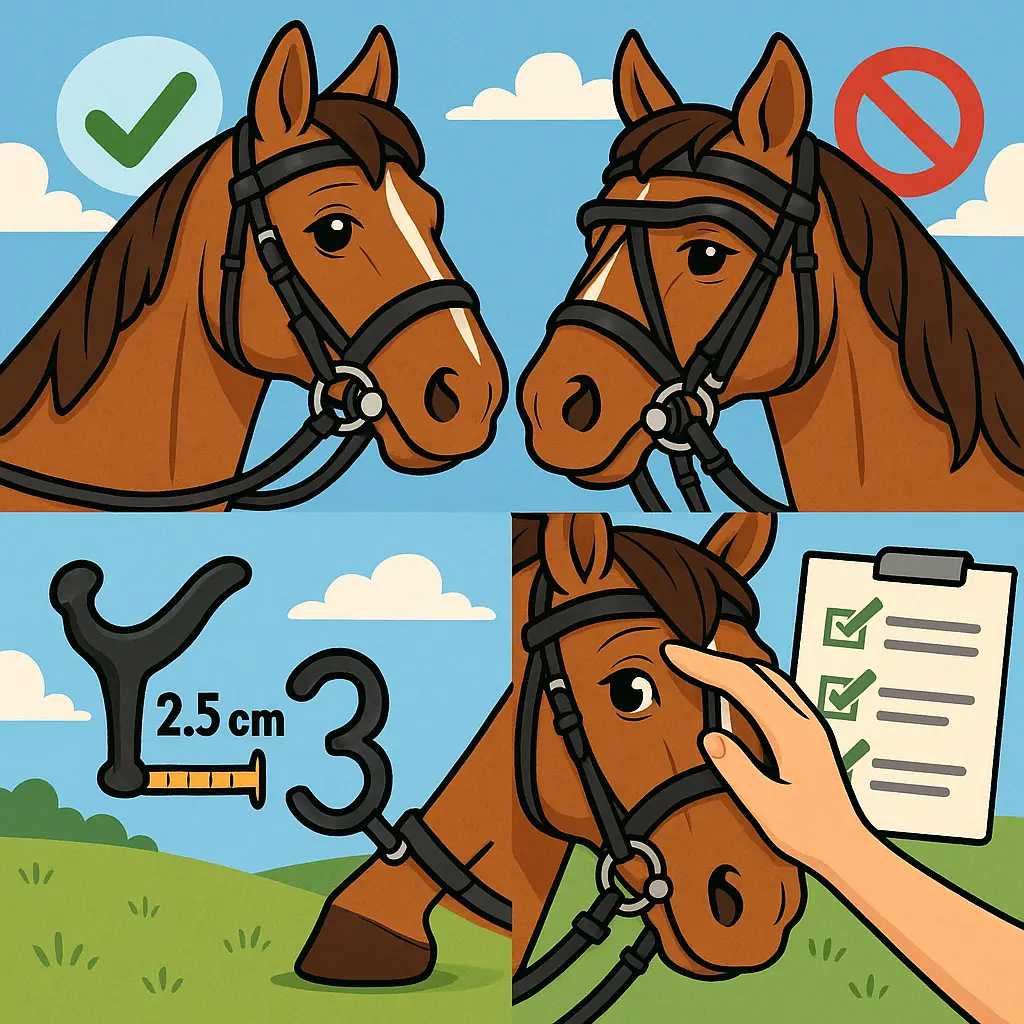
Kit that keeps you compliant and comfortable
Choose an anatomical headpiece for poll relief, a FEI-legal double with cavesson for advanced work, a versatile snaffle for early levels, and measuring tools to nail fit first time.
Here are smart, rule-aware picks our UK customers rate highly:
- Anatomical headpieces (poll relief): Ideal when moving from snaffle to double or for fine-skinned horses, typically £50–£150. Look for discreet padding over the poll, wide ear cut-outs, and stable cheek strap angles. Many popular models from brands like LeMieux balance pressure well without bulk.
- Double bridles with cavesson nosebands: For FEI-compliant advanced dressage, expect £100–£300. Confirm you can remove any flash attachments when you switch to the double to stay legal.
- Snaffle bridles (with flash or drop options): Perfect through Novice and into Elementary if you’re keeping things simple and correct, around £40–£120.
- Fit aids: Simple measuring tools and poll protectors (£10–£50) help you set the headpiece height accurately and spot asymmetry between left and right cheek pieces.
- Competition-safe browbands: Plain leather or modest, non-contact designs (£20–£80) keep you inside the rules while adding a tidy finish.
Round off your turnout so the only thing judges notice is your horse’s way of going:
- Safety first with a PAS-compliant hat from our curated riding helmets collection.
- Stay comfortable in the saddle with supportive riding boots and polished, functional competition clothing.
- Protect legs in schooling with correctly fitted horse boots and bandages that won’t interfere with movement.
- If winter’s closing in, keep muscles warm before and after work with the right layers from our winter turnout rugs range to maintain comfort around the poll and neck between sessions.
At Just Horse Riders, we hand-pick kit that respects British Dressage, British Eventing, and FEI expectations while putting welfare first — because comfortable horses go better, full stop.
Competition-day checklist (UK dressage and eventing)
Check spur length (no more than 2.5cm), confirm reins run directly to your hands with no couplings or bit guards, and ensure the correct noseband for your bridle choice.
Run this rapid pre-ring check so you can focus on the job:
- Bridle choice: Snaffle for Prelim/Novice; snaffle or double at Elementary+ nationally; double required at FEI PSG and GP (watch FEI updates on optional doubles to CDI3*).
- Noseband legality: Snaffle — cavesson, drop, or flash. Double — cavesson only. No grackles in dressage; grackles allowed in eventing.
- Padding placement: Discreet poll/headpiece padding OK in British Eventing; not on cheek pieces or front of noseband.
- Reins: Direct contact only; no pelham roundings, no bit guards in dressage.
- Spurs: Max 2.5cm from the boot, shanks pointing backward, no sharp edges.
- Fit: Two fingers at browband, four under throatlatch, cheek buckles level with the eye. Headpiece/browband junction just below the ears.
- Weather tweaks: In cold, wet UK conditions, loosen the throatlatch a hole for thicker necks under rugs, and recheck poll comfort if your horse has been wearing heavier layers.
Pro tip: Warm up in a cooler or neck rug if it’s raw outside, then remove before you go in — a comfortable topline reduces tension through the poll and contact. Keep a clean rub-free coat with a pre-competition tidy-up from our grooming essentials.
FAQs
When must I switch from snaffle to double in UK dressage?
At UK national level, you don’t “have” to switch — snaffles are required at Preliminary and Novice, and you can choose snaffle or double from Elementary to Grand Prix. FEI Prix St Georges and Grand Prix currently require doubles.
Are double bridles becoming optional in international dressage?
The FEI has proposed allowing riders to choose a snaffle or a double up to CDI3* and CDIO3* to gather data on welfare and rider choice. Read the summary via Horse & Hound. National UK rules are unchanged as of now.
What are the signs my bridle is causing poll pressure?
Look for head-shyness when bridling, ear pinning, head-tossing, reluctance to flex, heat or sensitivity under the headpiece, and sudden changes in contact. Refit so the headpiece sits just behind the ears, adjust browband length, and consider an anatomical headpiece to spread pressure.
Can I use an anatomical bridle like a Micklem with a double?
No. With a double bridle you must use a cavesson noseband only; no Micklem, grackle, flash, or drop in dressage. For eventing, check your level-specific rules.
Is padding allowed on the bridle?
British Eventing allows discreet padding on the headpiece/poll but not on cheek pieces or the front of the noseband. This can help distribute load at the poll, especially on fine-skinned horses.
How tight should the throatlatch be?
Allow four fingers between the throatlatch, cheek and throat to preserve breathing and flexion. In winter, when necks are fuller under rugs, double-check you haven’t over-tightened it.
What else should I check before I go down the centre line?
Ensure spurs are no longer than 2.5cm with shanks pointing backward, your reins run directly to your hands without couplings, and your browband and cheek piece placement pass the two-fingers/four-fingers fit tests. Don’t forget your compliant hat and tidy turnout — both easy wins via our helmet range and competition clothing.