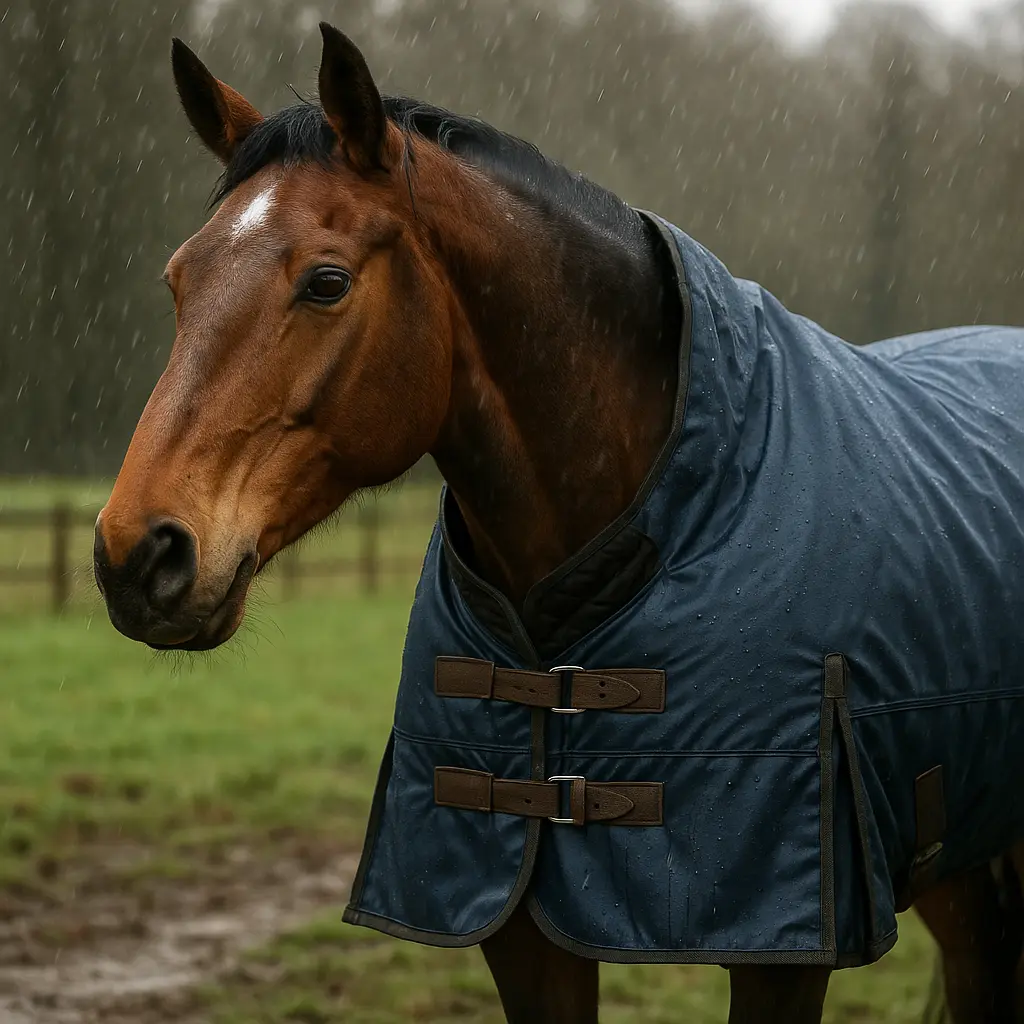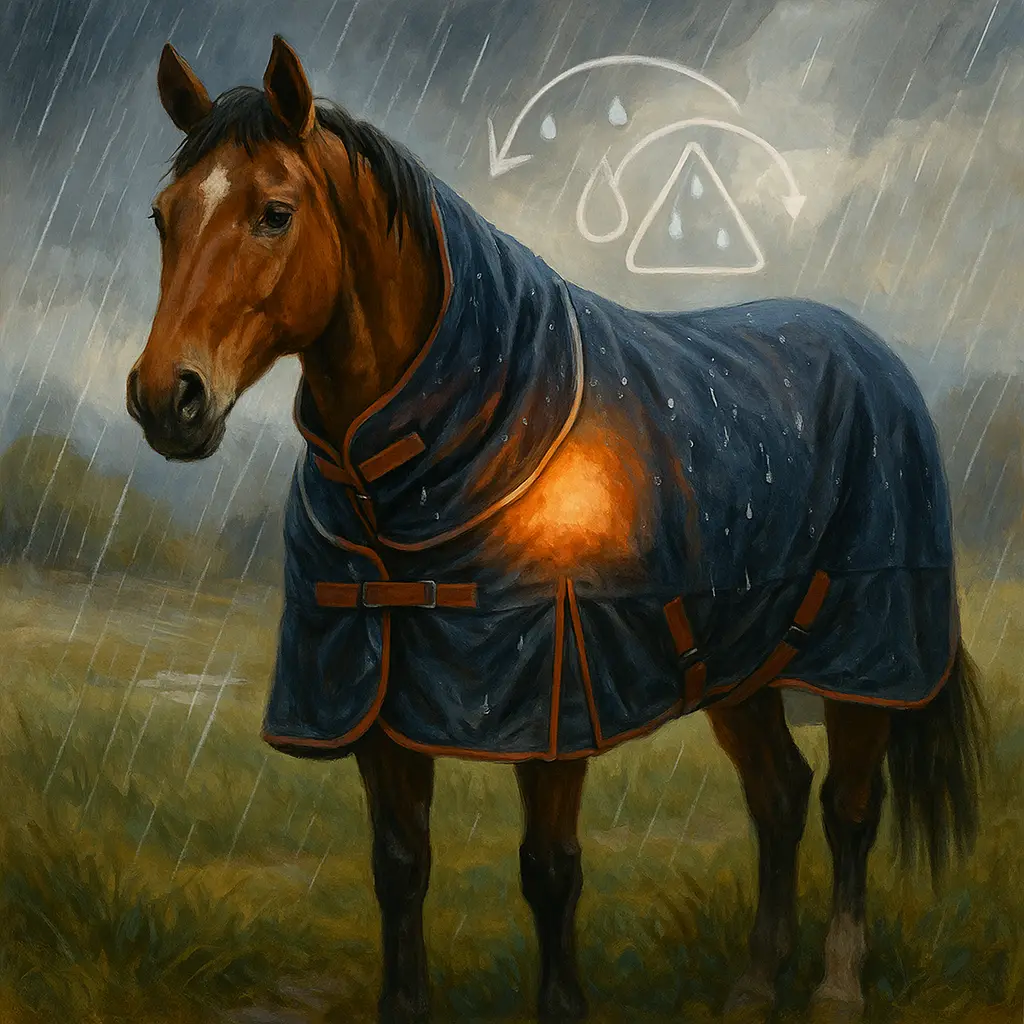
Wet UK weather can leave your horse’s rug soaked inside even when your horse feels dry — and it’s not always a leak. In most cases, you’re seeing condensation caused by trapped warmth and moisture meeting cold, damp air.
Key takeaway: In British rain and 0.5–8°C conditions, choose waterproof rugs with proven breathability (3,000g/m²+), check the withers daily for damp at 31–33°C, and dry rugs with a dehumidifier — not heaters — to prevent condensation, skin issues, and mould.
Why is my horse’s rug wet inside?
It’s usually condensation, not a leak: warm moisture from your horse meets a cold rug surface and turns to water on the liner when breathability is insufficient. Breathability ratings matter — 3,000g/m² means up to 3kg of vapour can pass through one square metre in 24 hours, helping prevent that internal “sweat rain.”
Think of a horse as a steady heat source. When body heat and moisture can’t escape fast enough, they move outward and condense on the cool inner face of the rug. This is common with 0g rain sheets in heavy or prolonged rain, where the British Horse Society warns that cold air meeting body heat forms condensation under the sheet and can even lower skin temperature if rain seeps through poor waterproofing. See the BHS’s guidance on rugging for detail: Types of rugs and rugging a horse.
Inappropriately rugging also flattens the hair, reducing your horse’s natural air-trapping insulation. If the rug gets wet, the hair can’t stand up, skin oils wash away, and the microclimate under the rug swings from too warm to chillingly damp — a perfect recipe for condensation, discomfort and skin issues.
“A 0g rain sheet can be a great choice in light rain, however, be conscious that in very poor weather, the rain is likely to seep through. When this happens, cold air meets heat from the horse’s body forming condensation under the rain sheet.” — British Horse Society (BHS Rugging Guidance)
What the science says about rug heat and moisture
Rugs significantly raise skin surface temperature, increasing the risk of condensation in cold, damp air. Fleece rugs increased skin temperature by 11.2°C at 0.5–4.5°C ambient; light quilted rugs raised it by 15.8°C in the same conditions, which can compromise natural thermoregulation.
Research on rugging has quantified how much heat accumulates beneath different materials in cool weather. In one study, horses wearing fleece or light quilted rugs recorded the jumps above (compared to unrugged horses at 12.5–18.5°C conditions), underscoring how quickly a rug can trap warmth when the air is cold and wet outside. Fly and sweet itch rugs increased skin temperature by an average 4.2°C even within the horse’s thermoneutral zone (5–21°C ambient). Those rises don’t automatically mean harm — but they do prime the liner for condensation when the outer fabric is cold and the air is humid.
“Although this study found sweet itch rugs had no impact on thermoregulation, I feel further research with a larger number of horses, in hotter weather conditions, with a mix of dark and light coloured sweet itch rugs is required before we can be certain there are no negative impacts on equine welfare.” — Kim McGilvray, researcher (Horses and People)
At 6–8°C — typical for UK late autumn to early spring — clipped, stabled horses wearing a fly rug plus 1–2 fleeces showed moisture accumulation under the rug when withers temperature reached 31–33°C. Importantly, no sweat was detectable on palpation and rectal temperature and respiratory rate didn’t change, so you won’t always “see” sweat, yet dampness is already forming at key pressure points like the withers. That’s the condensation sweet spot to watch.
How to check for condensation and sweat daily
Lift the rug and feel the withers and shoulders at least once a day; any dampness or warmth creeping up to 31–33°C means moisture is accumulating — remove and dry the rug immediately. Even if your horse feels dry to the touch, a wet liner will flatten the coat and can irritate skin.
Follow a quick daily routine during wet, cool spells:
- Slide your fingers over the withers and top of the shoulders — the earliest “hot spots” — and check for clamminess or a film of moisture.
- Lift the rug edges after rain; if the coat is dry but the liner is wet, you have condensation from insufficient breathability, not a leak. Swap to a more breathable, higher-denier rug.
- If you can, use a moisture/temperature sensor (e.g., Orscana-type under-rug devices) to track under-rug conditions in real time, especially for clipped or competition horses in variable UK weather.
- Hang any damp rug to dry straight away; don’t re-rug a warm horse with a wet liner.
“When a horse is left in the cold with a wet rug, their natural temperature regulation can be put out of sync. The weight of the rug will prevent their hair standing up to create their insulated layer, and the natural oils that protect their skin from moisture can be washed away.” — Dantherm Group experts (Master the art of horse rug drying)
Pro tip: At Just Horse Riders, we recommend noting the time of day you check. Many UK yards see early-morning damp under rugs because night air is coldest and most humid — that’s when condensation peaks.
Choose the right rug for wet UK weather
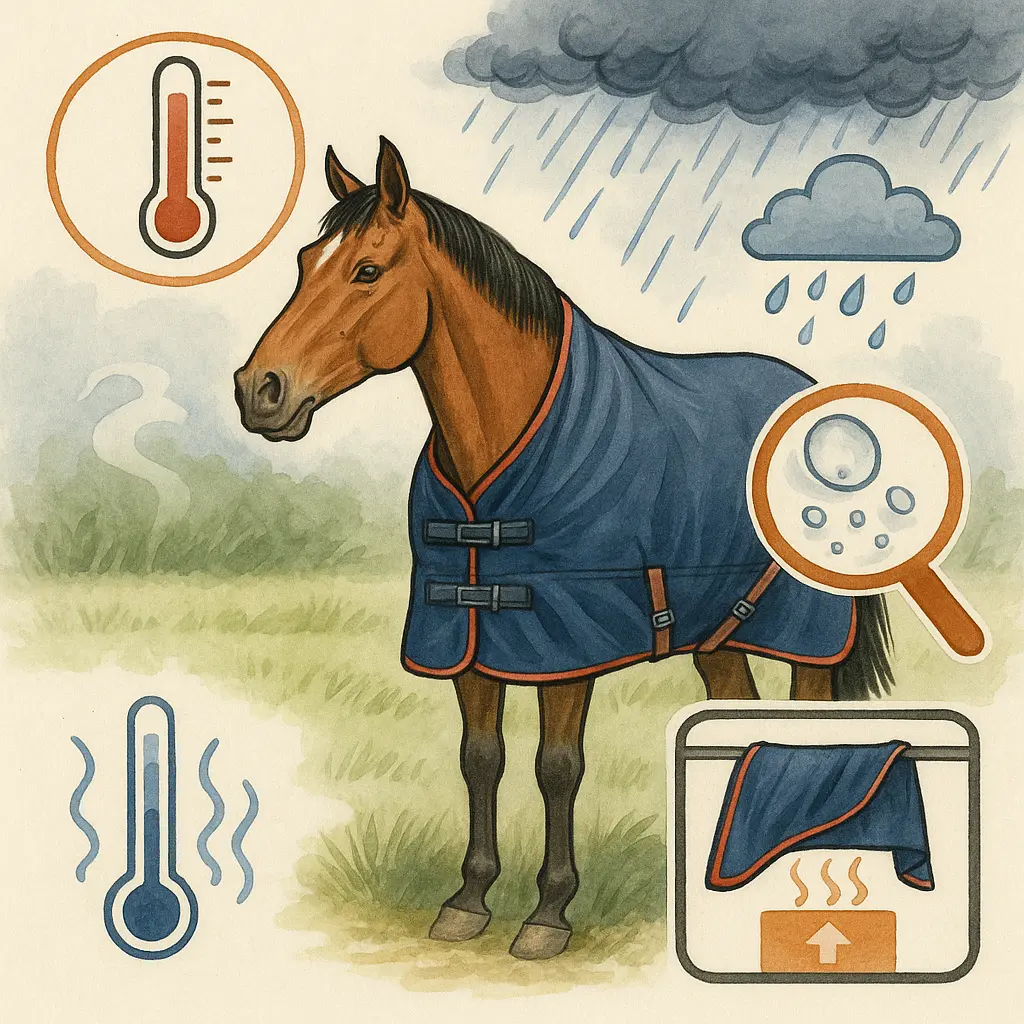
Pick waterproof, breathable turnout rugs rated at least 3,000g/m² with higher-denier outers (ideally 1680D+) to block rain while letting heat and vapour out. Use 0g rain sheets only for light rain and short stints; in prolonged or heavy rain, step up denier and maintain breathability.
In the UK’s cold-and-damp months, you need a rug that resists saturation from the outside but breathes from the inside. Breathability ratings are your friend: 3,000g/m² means up to 3kg of moisture can move through a square metre of fabric over 24 hours, reducing the risk of a “sauna then drizzle” effect under the liner. Higher-denier fabrics (the BHS recommends robust options for wet weather) also stand up better to driving rain and abrasion without choking off airflow.
Start light and build only if your horse shows they need more warmth. Many horses do well in a medium-weight waterproof with proper breathability through 0.5–8°C, but clipped or elderly horses may need careful layering. If you’re shopping, explore our curated range of breathable waterproof turnout rugs for winter, and consider a stable option for dry indoor spells from our cosy stable rugs collection. For itchy types or mild days in the thermoneutral zone (5–21°C), browse sweet itch and fly rugs with good airflow.
Quick tip: If the horse is dry but your liner is soaked after a rainy hack or turnout, the rug didn’t breathe enough for the conditions. Move to a higher-denier, breathable design and monitor the withers closely on the next wet day.
Layering that works (not wets)
Use the minimum number of layers needed and avoid stacking non-breathable fabrics; over-rugging drives the under-rug temperature up and encourages condensation. After exercise, wick first with a cooler, then change to your turnout once the coat is dry.
Layering strategy for UK cold-and-wet:
- After work in the rain: use a wool or polar fleece cooler to wick moisture, then switch to your turnout once the coat is fully dry to prevent post-exercise chill from evaporation.
- In 0.5–8°C with clipped horses: favour one well-designed, breathable waterproof over multiple fleeces beneath. Studies showed moisture forming under light layers at this temperature band once the withers hit 31–33°C.
- In persistent drizzle: a 0g sheet can be fine for short turnout if the horse runs warm, but change promptly if the liner feels clammy; in sustained rain, move to a breathable medium-weight waterproof.
At Just Horse Riders, our customers often pair a breathable winter turnout with a purpose-made cooler for post-ride routines. Explore LeMieux coolers and fleeces for efficient wicking, and check out proven outer layers from WeatherBeeta rugs and versatile Shires turnout options for changeable British weather.
Drying rugs properly in British conditions
Dry rugs in a dehumidified space rather than over direct heaters; removing moisture from the air prevents mould and preserves waterproof membranes. In damp British stables, this is the fastest, safest way to keep multiple rugs serviceable.
Heaters can bake and crack coatings, while still leaving the room humid so rugs re-wet from the air. Dehumidifiers extract moisture and reheat it, speeding drying without stressing the fabric — a method used at UK yards and centres to maintain rug rooms in winter.
“When this happens, cold air meets heat from the horse’s body forming condensation under the rain sheet.” — British Horse Society (BHS Rugging Guidance)
Keep a simple rotation: one rug in use, one drying, one spare. Brush off mud before drying to speed the process and maintain breathability — a good rug cleaning and grooming kit pays for itself by extending rug life. Avoid storing even slightly damp rugs; they’ll encourage mildew and can spread ringworm spores from one horse to another.
Signs your horse is overheating or chilled under a rug
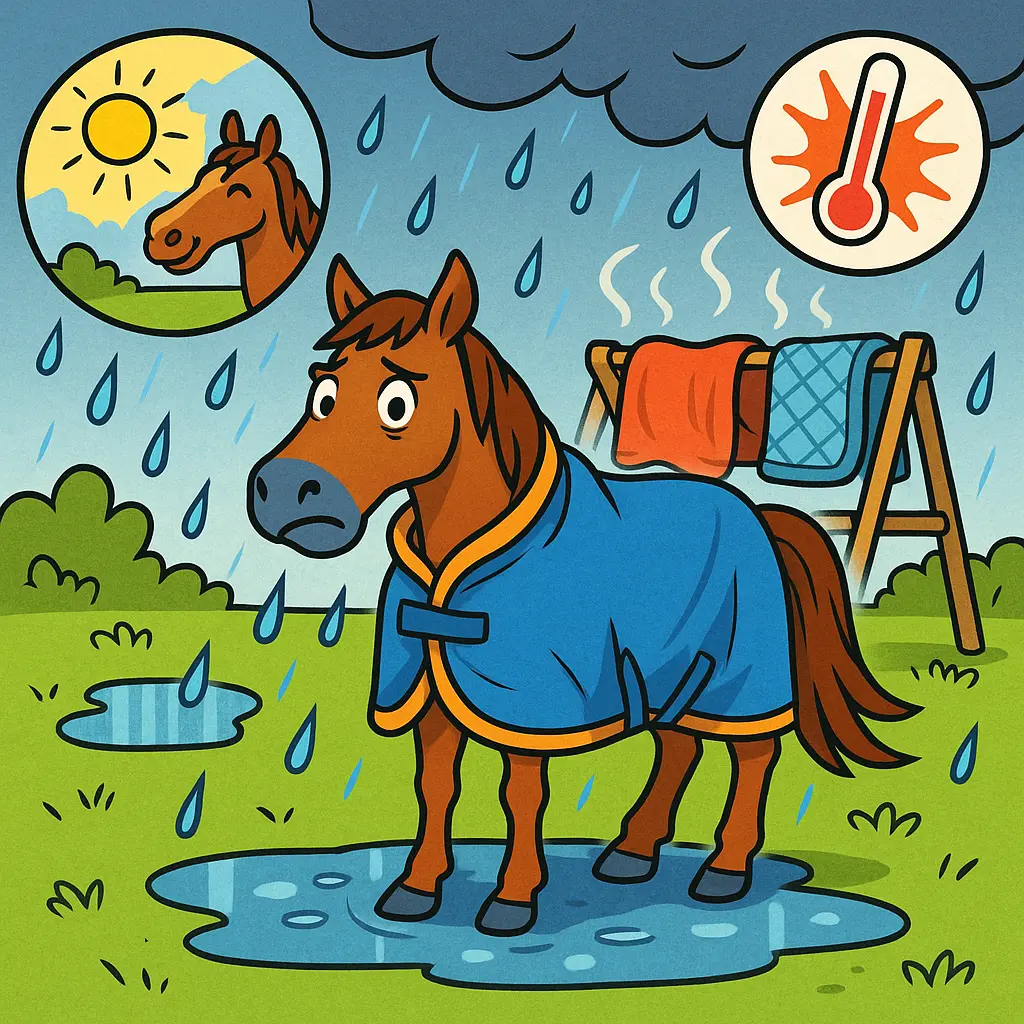
Early moisture build-up at the withers and shoulders is your first warning; withers skin at 31–33°C in 6–8°C ambient signals condensation is starting. If not corrected, you may see patchy damp, skin irritation, or a horse that’s alternately restless (too hot) and tucked up (chilled).
Watch for:
- Clammy withers/shoulders, even when the rest of the coat feels dry.
- Subtle behaviour changes: fidgeting, rug rubbing, reluctance to stand quietly (too warm) or tucked abdomen and reluctance to move (chilled).
- Shallow fast breathing or elevated heart rate during rest can indicate heat stress even without visible sweat in cold air.
- Flaky skin or hair loss under pressure points — a sign the microclimate has been wrong for days.
Quick tip: If your horse is clipped and stabled, be extra vigilant on nights forecast at 6–8°C — that’s the band where studies saw moisture appear under light layers before obvious sweating.
Your practical shopping checklist
Choose features that balance waterproofing with real-world breathability for UK rain and humidity. Here’s what to prioritise.
- Breathability: 3,000g/m² or higher. This lets several kilograms of vapour per square metre escape daily, preventing that wet-liner surprise.
- Denier: tough outers (1,200D–1,680D+) to fend off driving rain and yard wear without stifling airflow.
- Fit: pressure-free withers and good shoulder freedom reduce hot spots where condensation starts.
- Liners: favour thermoactive, wicking liners (fleece/wool) during cool-downs; avoid stacking multiple non-breathable layers.
- Purpose: match the rug to the job — turnout vs stable vs fly/sweet itch — and the horse’s clip, condition, and workload.
- Monitoring: if you manage multiple horses or one sensitive horse, consider an under-rug sensor to learn their personal “condensation threshold.”
- Brands and ranges to explore: winter-ready breathable waterproof turnout rugs, dependable indoor options from stable rugs, airflow-friendly fly and sweet itch rugs, and proven kit from WeatherBeeta, Shires and LeMieux.
Pro tip: Buy for the worst weather you actually ride or turn out in, not the coldest temperature on the forecast. In the UK, water resistance plus breathability beats raw insulation most days from November to March.
Conclusion
A wet liner with a dry horse is nearly always condensation. In the UK’s damp winters, stop it at the source: breathable waterproof rugs (3,000g/m²+), vigilant withers checks around 31–33°C, and proper drying with a dehumidifier. Fine-tune layers to your horse’s clip and workload, and you’ll avoid the cycle of clammy rugs, skin flare-ups and mouldy tack rooms.
Need help choosing? Our team at Just Horse Riders is happy to recommend the right setup from our turnout, stable and fly rug ranges for your horse and yard conditions.
FAQs
Why is the liner soaked but my horse is dry after rain?
That’s condensation. Warm moisture from your horse hits the cold inner surface of a not-breathable-enough rug and condenses. Breathable fabrics rated 3,000g/m² or higher help vapour escape before it turns into water droplets.
Does a wet rug harm my horse if they’re not shivering?
Yes. Wet rugs flatten the coat so it can’t insulate, wash away protective skin oils, and increase the risk of ringworm and mould. Even without shivering, your horse can be uncomfortable and at risk of skin problems. See the Dantherm guidance used by UK yards: rug drying best practice.
At what temperature under the rug should I worry?
Withers/skin at 31–33°C in 6–8°C ambient is a red flag for early moisture accumulation. You may not feel obvious sweat yet, but condensation is likely starting under the rug.
Can 0g rain sheets cause problems in heavy UK rain?
Yes. The BHS notes that prolonged or heavy rain can seep through light 0g sheets; where cold air meets body heat, condensation forms under the rug and can reduce skin temperature. Use robust, breathable waterproofs in bad weather.
How do I dry rugs quickly in a damp stable?
Use a dehumidifier to extract moisture and gently reheat the air. This prevents mould and protects waterproof membranes better than direct heaters, which can damage coatings and leave the room humid.
What breathability rating should I look for?
At least 3,000g/m² for typical UK winter rain and humidity. That allows up to 3kg of vapour per square metre of fabric to pass in 24 hours, reducing the risk of internal condensation during cold, damp spells.
Do fly or sweet itch rugs overheat horses?
They raised skin temperature by about 4.2°C in the thermoneutral zone (5–21°C), but one study reported no impact on overall thermoregulation. Researchers, including Kim McGilvray, advise more data in hotter weather and different colours before calling them risk-free (read more).