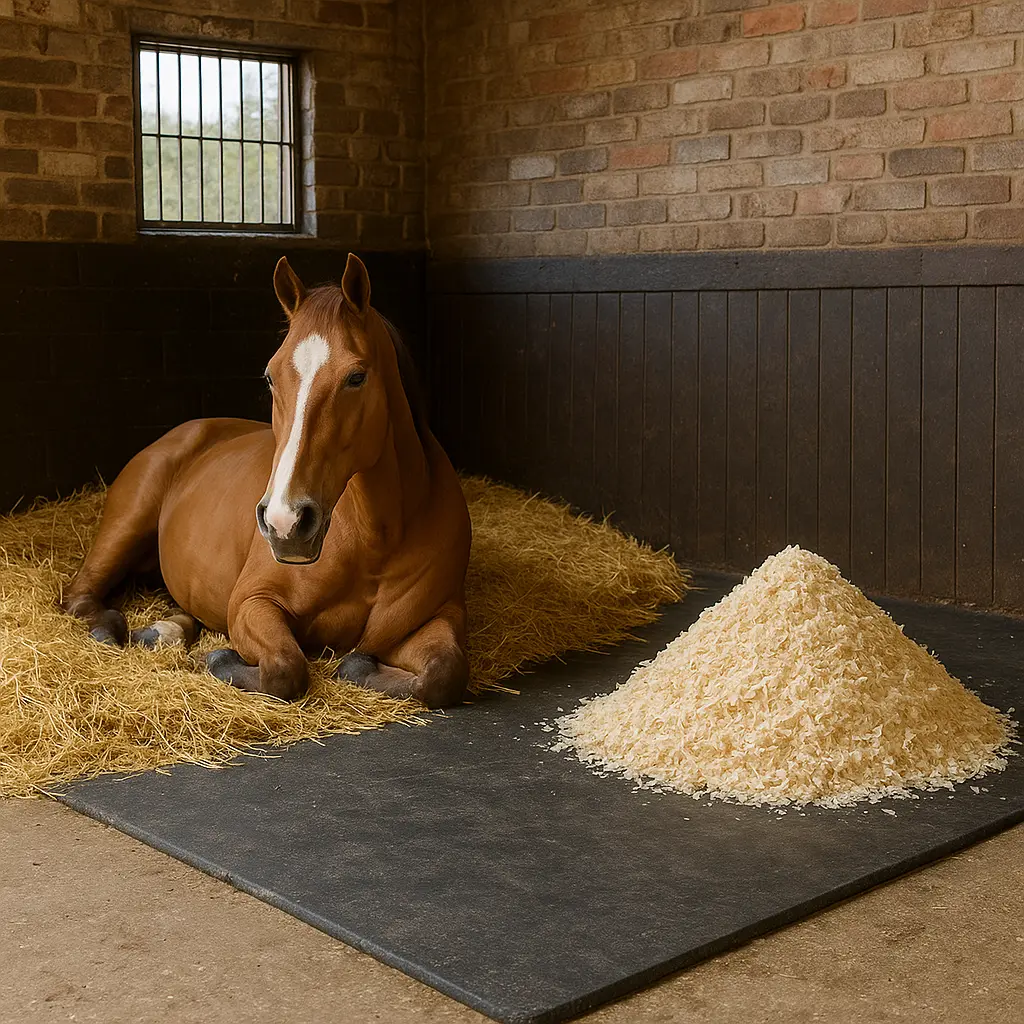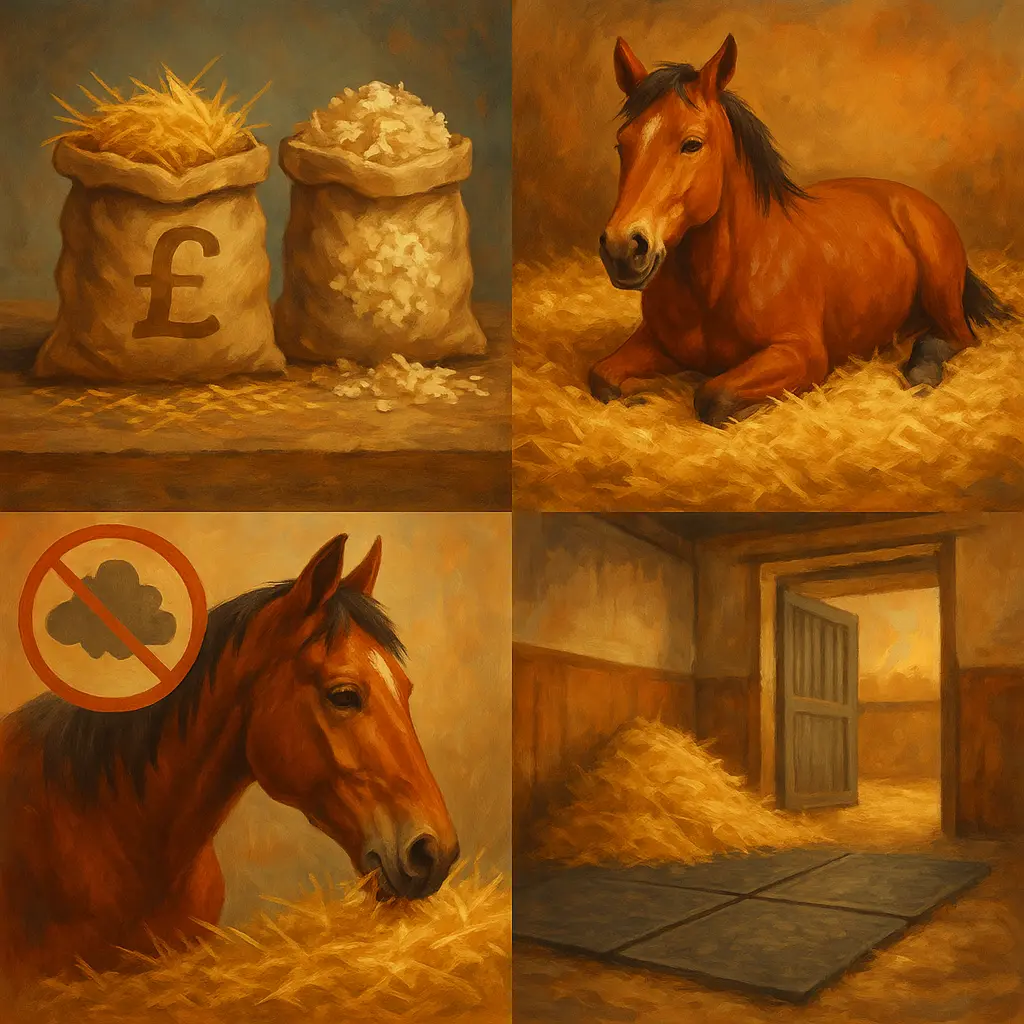
When you’re bedding down for another wet UK winter, the choice between straw and shavings hits your wallet, your mucking-out routine, and—most importantly—your horse’s health and behaviour. Here’s the clear, UK-focused guidance you need to pick confidently and manage your stable like a pro.
Key takeaway: In the UK, straw is the cheaper, welfare-friendly option for many horses, but shavings (or chopped, dust-extracted options) suit wet, allergic or overweight horses—and BETA NOPS-certified bedding is essential if you compete.
Straw vs shavings: what’s cheapest in the UK?
Straight answer: Straw is generally cheaper than shavings in the UK, with straw bales around £1.20–£2.50 and shavings £7+ per bale (Horse & Hound forum, Horse & Hound forum).
If your horse is sensible on straw, the savings add up fast—especially over long stabled periods. Many yards deep-litter straw to stretch the budget further, while shavings are often easier for very wet or messy horses but cost more up front. Straw also breaks down faster than shavings, so your muckheap is smaller and rots sooner (Gower Granary), which can reduce disposal headaches. Expect to reinvest some of those savings into other winter essentials like well-fitting winter turnout rugs that keep horses out longer and stabled less—another cost win.
Welfare: why many horses rest better on straw
Straight answer: Straw bedding encourages longer lying times and natural foraging behaviour, which supports horse welfare, especially when beds are 15 cm deep (BHS, Petplan Equine).
The British Horse Society (BHS) advises that bedding choice can influence behaviour: straw increases time spent lying down and offers more to do via foraging, which is linked to calmer, more content horses. Petplan Equine notes horses prefer thicker straw beds—15 cm vs 5 cm—for longer, better sleep. That depth, plus supportive banks, also helps prevent casting. For many performance and leisure horses alike, a big, fluffy straw bed is both physically comfortable and mentally settling.
“Straw is a cost-effective way of providing good quality bedding for our four horses... it makes nice big beds and is easy to deep litter.” — Katherine Kirby, Harry Hall Ambassador (Harry Hall)
“Generally, straw is cheaper... horses can constantly graze if they want to, plus the beds are fluffier.” — Alice Oppenheimer, dressage rider, Headmore Stud (Your Horse)
Quick tip: If your horse stands in at night, consider soft stable boots to protect legs from knocks around the bed; explore our horse boots & bandages to pair with your chosen bedding.
Respiratory health: dust, quality and safer choices
Straight answer: For horses with respiratory issues (e.g., COPD), choose dust-extracted straw or dust-extracted shavings, and always check any bedding for low dust and no mould before use (BHS, Your Horse).
Quality matters more than material. Low-grade straw and poor shavings can both be dusty; mould spores and chaffy fines are the problem. Wheat straw is typically less palatable than oat straw (so horses are less likely to eat it), but either can irritate airways if dusty. The BHS recommends low-dust bedding, well-ventilated stables, and regular wet-spot removal to keep ammonia down. If you love straw but your horse is sensitive, consider chopped, dust-extracted straw or a straw–miscanthus mix for better absorbency and fewer fines.
Pro tip: Groom daily to lift dust from coats and manes that can get stirred up on the bed—our grooming range has the brushes and mitts that make quick work of it. Some owners also support respiratory comfort with targeted products; explore our broad supplements selection to discuss options with your vet or therapist.
Management in UK weather: wet winters and mucking out
Straight answer: Straw is less absorbent than shavings, so in wet UK winters you’ll skip out more often or blend straw with more absorbent materials like miscanthus or chopped straw (Your Horse, Gower Granary).
On clay-heavy ground and during prolonged rain, urine loads rise and stable humidity increases. Straw beds stay warm and inviting, but they do need diligent spot removal to prevent ammonia and odour. A deep-litter approach on straw can be cost-effective if you cap and contain wet layers properly, then perform a full clean every 12 weeks—an approach echoed by experienced owners who find the rhythm efficient and budget-friendly (Harry Hall).
- Daily: Skip out droppings and obvious wet patches to control smell and dust.
- Weekly: Pull back the top, check for damp spread, and top up banks to maintain a 15 cm depth over the core area.
- Seasonally: Deep clean and disinfect around every 12 weeks (or sooner for very wet horses).
On heavy-wetter horses, mixing straw with miscanthus or a chopped, dust-extracted straw improves drainage and saves time. Rubber matting underneath reduces the bedding volume you need while supporting hooves and giving grip when your horse lies down and gets up.
Yard logistics also matter. If you process used bedding (e.g., into briquettes), UK rules currently limit storage of waste straw or woodchip bedding to 50 tonnes at any time, and treatment to 50 tonnes per 7 days (GOV.UK). Plan muckheap siting and collections accordingly to remain compliant.
Comfort for the human crew counts too. Muck out in supportive footwear and hard-wearing legwear—our practical yard and riding boots and durable women’s jodhpurs & breeches keep you steady and comfortable through winter shifts.
Competition and contamination: choose BETA NOPS-certified bedding
Straight answer: If you compete, choose BETA NOPS-certified bedding to minimise the risk of naturally occurring prohibited substances (NOPS) contaminating your stable routine (BETA NOPS Bedding Code).
BETA’s new Bedding Code brings the same contamination controls seen in feed to straw and shavings, reducing doping risks for FEI and BHA horses. Practical management matters too: avoid feeding hay on the floor when using ingestible bedding like straw to prevent both extra calories and potential indirect NOPS exposure. When a new or visiting horse arrives, refresh stable bedding as part of good biosecurity (aligned with British Equestrian guidance) to minimise cross-contamination.
Heading out to compete? You’ll find breathable show gear alongside your stable management favourites here—explore women’s competition clothing and stay protected with certified riding helmets for the season ahead.
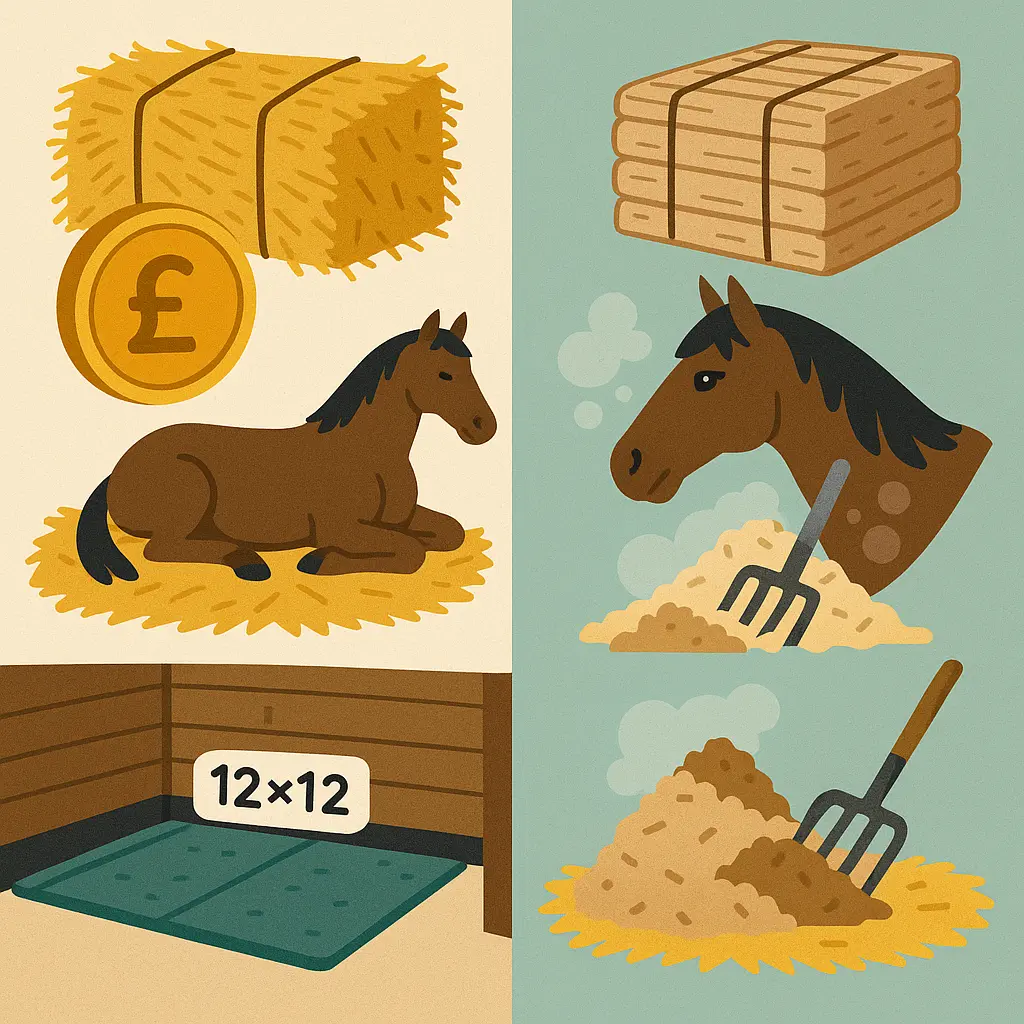
Costing up a 12x12 stable: how much straw and how often?
Straight answer: For a 12x12 stable, start with 1–2 small square bales of straw to achieve a 15 cm bed with banks, then top up as needed; many deep-litter systems are fully cleared about every 12 weeks (Harry Hall, Petplan Equine).
As a setup guide, lay rubber mats, put down a base layer, then build deep banks and a 15 cm central bed. Maintain by capping wet areas and topping up lightly through the week; the top layer stays springy and clean for lying. On some yards a round-bale equivalent of straw can sustain a deep-litter bed for around three weeks before needing a substantial refresh, but wetness varies by horse and season. If your horse is very wet, expect heavier weekly top-ups or consider adding a more absorbent bedding into the mix.
Remember shavings last longer per bag but cost more; straw is cheaper per bale and breaks down faster, reducing muckheap volume. If you’re still uncertain, try straw through autumn and switch to shavings or miscanthus during the rainiest weeks—flexibility often delivers the best cost-to-care balance.
Foaling, safety and stable set-up
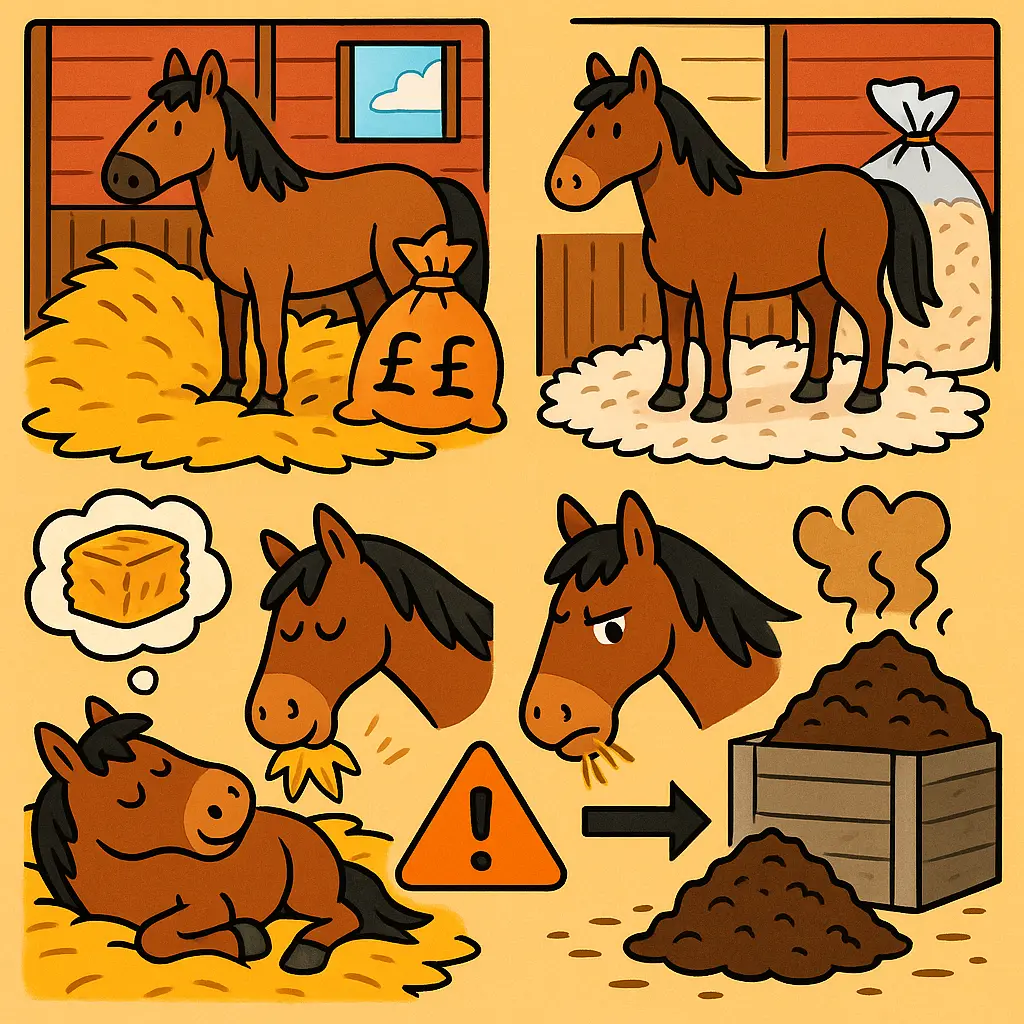
Straight answer: Use straw for foaling because it doesn’t stick to a wet foal, and pair it with rubber matting and deep banks to aid grip, warmth and anti-cast support (Your Horse).
A clean, dust-checked wheat straw is ideal for the foaling box; it’s less palatable than oat straw, helping keep mares from overeating the bed. Keep hay off the floor to discourage ingesting bedding and manage calories. Good ventilation, daily spot checks, and periodic full disinfecting remain essential. In colder snaps, comfortable layering helps stabled horses rest better between turnout windows—browse performance turnout rugs to keep time outside maximised even when the weather turns.
How to choose: a simple decision framework
Straight answer: Choose straw if you want a low-cost, fluffy bed and your horse has no respiratory or weight issues; choose dust-extracted shavings or miscanthus for wet, allergic or overweight horses, and opt for BETA NOPS-certified bedding if you compete.
- Pick straw when: you need to control costs (£1.20–£2.50/bale); your horse benefits from foraging and longer lying; you can maintain a 15 cm bed; and you want a muckheap that rots quickly.
- Pick shavings (dust-extracted) or miscanthus when: your horse is a heavy wetter; you have respiratory sensitivities on the yard; or you want faster daily muck-outs with less ammonia smell.
- Health first: for COPD or cough-prone horses, prioritise dust-extracted materials and good ventilation; test any new batch for dust and mould before full use.
- Competing? Insist on BETA NOPS-certified bedding and avoid feeding on the floor over ingestible bedding.
- UK winter management: consider a straw–miscanthus mix for absorbency; plan deep cleans roughly every 12 weeks; and keep to waste-bedding rules if processing or storing on site (GOV.UK).
At Just Horse Riders, we recommend you assess your horse’s wetness, respiratory history and time stabled across the week, then trial your top two options for a month each. Keep simple notes on cost per week, time to muck out and how your horse rests and behaves—you’ll have your answer quickly.
FAQs
Is straw cheaper than shavings for a standard stable?
Yes. Typical UK prices put straw at £1.20–£2.50 per bale and shavings at £7+ per bale, though shavings can last longer for very wet horses (Horse & Hound, Horse & Hound).
How many straw bales do I need for a 12x12 stable?
Start with 1–2 small square bales to build a 15 cm bed with banks, then top up as needed. On deep litter, many yards fully clean out about every 12 weeks; a round-bale equivalent may last roughly three weeks depending on wetness (Harry Hall).
Can horses eat straw bedding safely?
Monitor closely. Wheat straw is less palatable than oat straw, but some horses will still eat it. Overeating adds calories and can raise colic risk, so manage forage carefully and avoid feeding hay on the floor over ingestible bedding (Your Horse, BHS).
What’s best for respiratory health—straw or shavings?
Whichever is low-dust and good quality. Choose dust-extracted straw or shavings and check for mould before use. For COPD/allergies, dust-extracted shavings or chopped, dust-extracted straw are sensible choices (BHS, Your Horse).
How often should I muck out on straw vs shavings?
On straw, skip out daily and deep clean about every 12 weeks if you’re deep littering; shavings are often quicker to spot-bed for wet horses but cost more overall (Harry Hall).
Is straw suitable for competitions and doping rules?
Yes—if it’s BETA NOPS-certified to reduce contamination risk. For FEI/BHA horses, choose certified bedding and refresh for new arrivals as part of good biosecurity (BETA NOPS Bedding Code).
Are there UK rules on storing used horse bedding?
Yes. If you store or treat waste straw/woodchip for briquettes, you’re limited to 50 tonnes in storage at any time and 50 tonnes treated per 7 days (GOV.UK).
Ready to refine your set-up? Keep your horse comfortable this season with thoughtful bedding choices—and kit yourself out for winter chores with supportive yard and riding boots, durable women’s jodhpurs & breeches, show-ready competition clothing and certified riding helmets. If you’d like tailored advice, our Just Horse Riders team is here to help.