Your horse’s poll is small, but it drives big behaviours — from soft, swinging relaxation to head tossing, tail swishing and even stopping at fences. The difference often comes down to how you ride the poll, how you fit your tack, and how you warm up in UK conditions.
Key takeaway: Keep ridden poll flexion around 85° to encourage relaxation, fit padded headpieces and pressure-relieving bits, and build a winter-friendly warm-up plus daily poll releases to prevent conflict behaviours.
The poll angle that keeps your horse relaxed
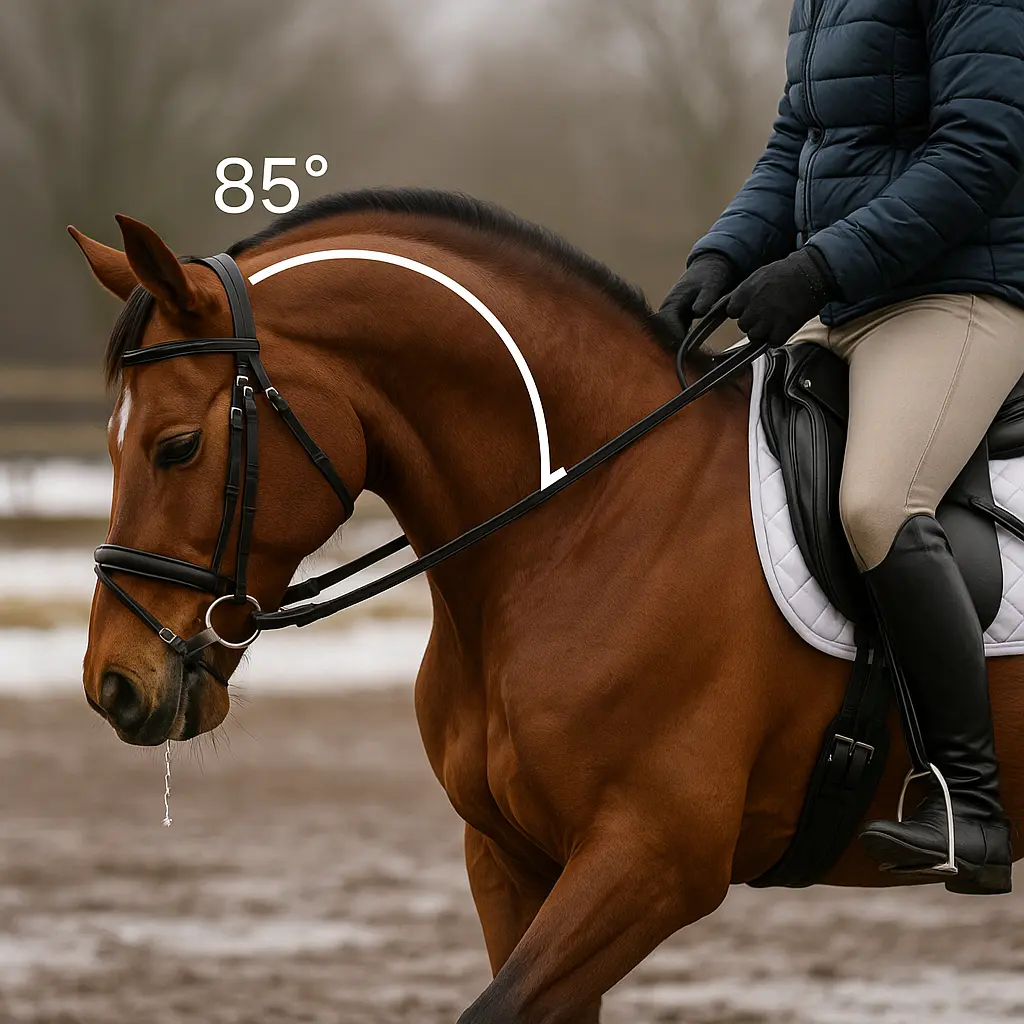
Riding with the poll at roughly 85° to the ground promotes relaxation, whereas 100° markedly increases conflict behaviours. In a University of Lisbon study approved by a veterinary ethics committee, dressage horses shown at 100° flexion displayed more tail swishing, head shaking, mouth opening, teeth grinding, jaw movement and excessive salivation, while relaxation signals such as ear play decreased (full paper).
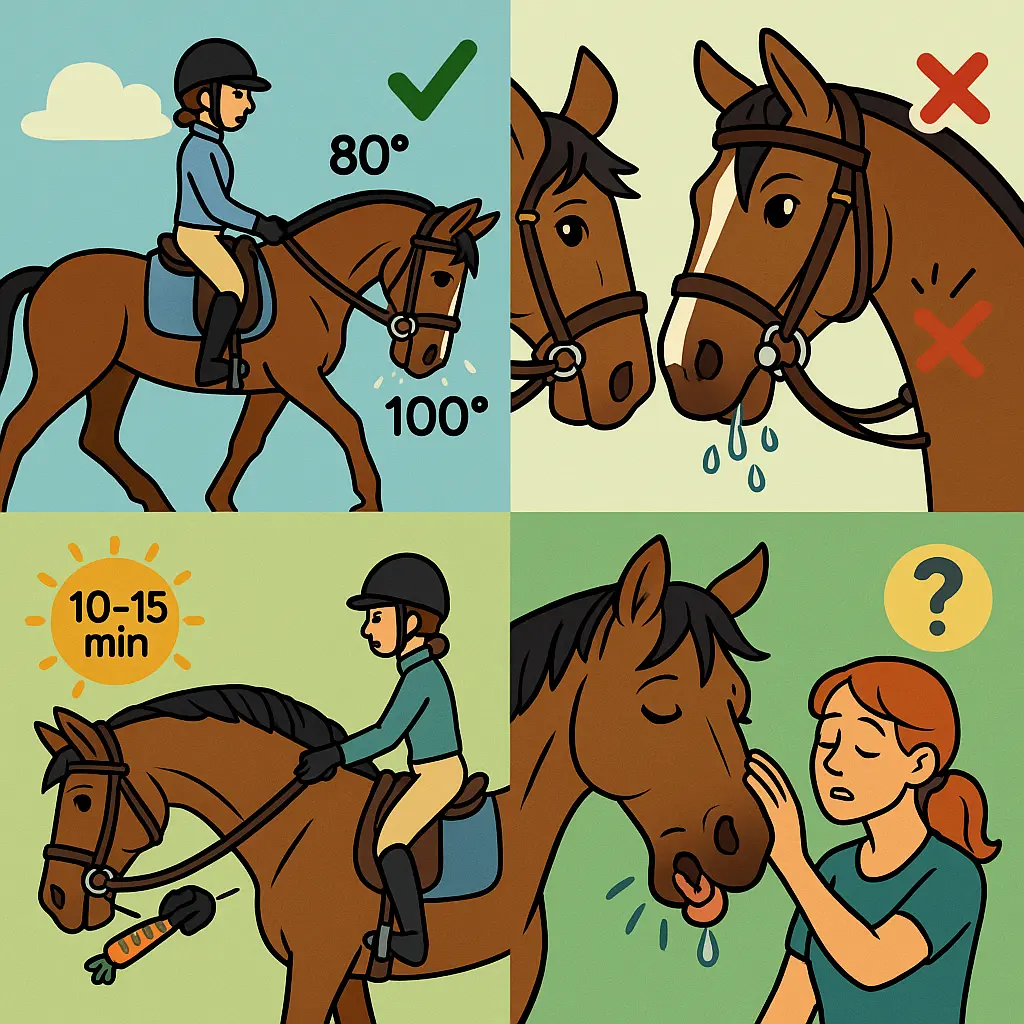
Show-jumpers at 100° also needed more rider “encouragement” (whip, legs, noises) than at 85°, underlining that over-flexion is a welfare and performance issue, not a style choice. If you’re aiming for self-carriage to BHS standards, the evidence-based target is clear: maintain a soft, elastic contact and a poll flexion of about 85° (withers 80–82°) and avoid closing the angle to 100°, which raises conflict by a meaningful margin (5%+ effect size reported). Watch your horse’s “dashboard” in real time — ear play, forward ears, steady foam and quiet chewing are your green lights; tail swishing, jaw grinding and drooling beyond normal work foam are red flags.
“For the dressage horses, the conflict behaviours that were significantly more common at 100° of poll flexion were tail swishing, head shaking, mouth opening, teeth grinding, mouth opening/closing (jaw movement) and excessive salivation/drooling.” — University of Lisbon Veterinary Medicine Faculty
Quick tip: If you ride with mirrors or have a helper, use a phone inclinometer once to calibrate your eye to ~85°. Then train your feel — the horse should feel like he’s telescoping his neck forward, not folding it back toward his chest.
How to check for poll tightness today
Poll tightness shows as rock-hard tension on palpation, head-raising/avoidance, jerkiness during lateral bending and, for jumpers, stopping after landing. Start with gentle palpation around the nuchal crest and behind the ears; if your horse flinches, braces, raises the head or steps away, you’re feeling protective sensitivity rather than healthy tone (Practical Horseman).
Check range of motion:
- Flexion-extension: Place a hand lightly on the jaw and another at the poll, inviting a small nod forward and up — it should be smooth and unhurried.
- Lateral bend: Using the halter nosepiece, ask the nose toward each shoulder. Healthy lateral poll flexibility allows roughly 45° with fluid, coordinated motion; jerkiness or step-aways indicate restriction (The Horse).
Under saddle, note any increase in head tossing, grinding, excessive salivation, or reluctance to work into the bridle when you shorten the frame. For jumpers, tight poll muscles can block head/neck extension on landing and contribute to sudden stops, especially on damp UK ground (Practical Horseman).
Quick tip: If your horse tests “more sore” on one side, recheck the other. True poll issues often show some degree of bilateral sensitivity; a single-sided response may also flag dental or TMJ involvement, so plan a coordinated check with your vet/dentist if needed.
A UK warm-up that prevents poll bracing
In cold, wet UK weather, extend your walk warm-up to 10–15 minutes and ride long-and-low before any stronger flexion. Chilled muscles brace, and asking for quick collection in November–February rain and sleet can trigger exactly the conflict behaviours you’re trying to avoid.
Build your warm-up:
- 5 minutes in-hand or on a long rein to raise core temperature and loosen the topline.
- Large figures and gentle changes of bend with the nose slightly in front of the vertical.
- Only introduce moments of 85° flexion after you feel swing through the back and free shoulder, then release again to long-and-low to keep the poll supple.
If your horse lives out or comes in damp, ensure he’s dry and comfortable first. Appropriate rugging keeps muscles warm and decreases the risk of bracing as you start work; see our curated winter turnout rugs and cosy stable rugs for consistent comfort between sessions.
Quick tip: UK verges and lanes can be slippery; include 5 minutes of active road walk in your hi-vis for roadwork before schooling. The rhythmic march warms the neck-poll junction without forcing flexion in the school too soon.
Bits, bridles and poll pressure: what actually helps
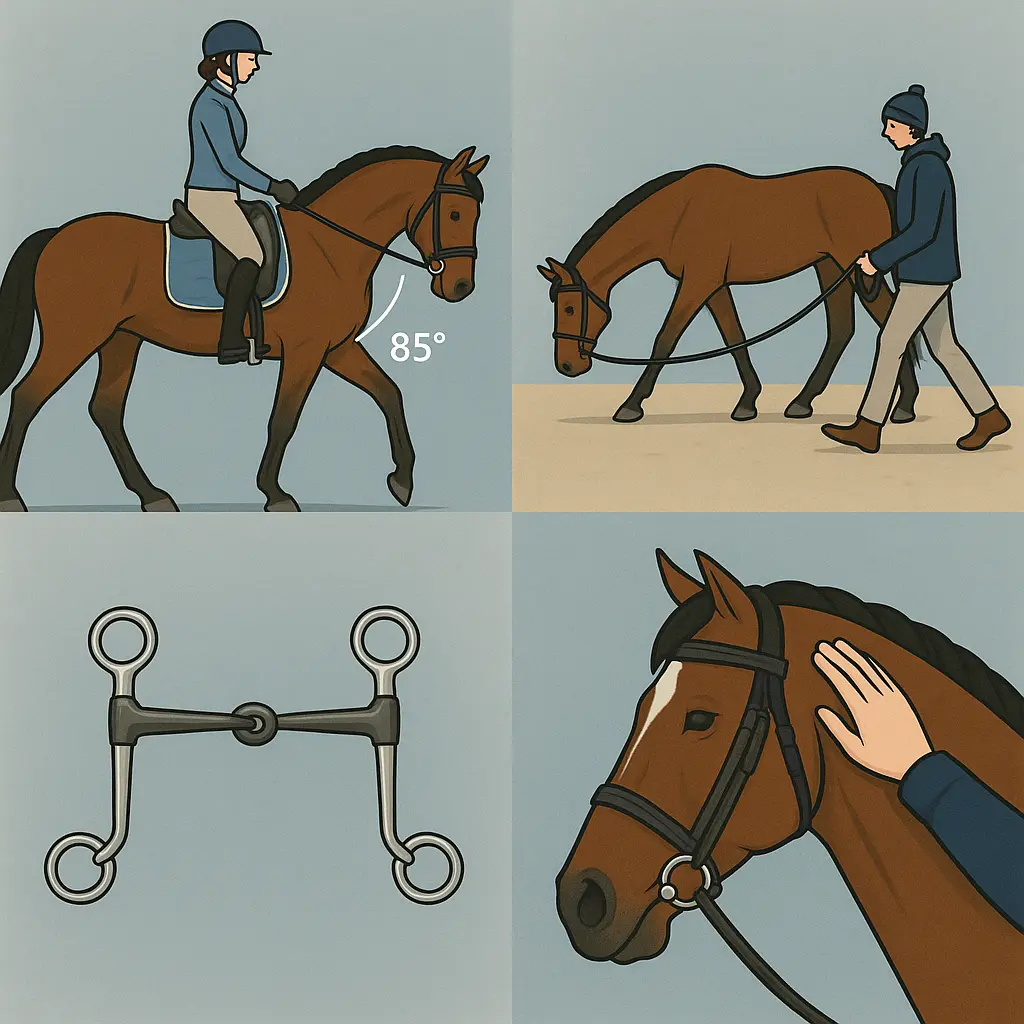
A Baucher cheekpiece shows a poll-relief effect at 0–3 kg rein tension, adding little or no extra poll pressure beyond pre-tension at common flatwork loads of 2–4 kg. Independent testing also shows that a poll pressure index of 1 equates to about 10% of rein force transferred to the poll — roughly 400 g at 4 kg tension (Neue Schule Poll Pressure Guide).
What this means in practice:
- For flatwork, a well-fitted snaffle or Baucher helps distribute pressure more evenly and avoids stacking extra load onto the poll at typical rein tensions (2–4 kg). This can encourage softer, more consistent contact around the 85° “sweet spot.”
- Contoured and padded headpieces can reduce focal pressure at the nuchal crest. In an initial study cited by Sue Dyson (RCVS Specialist in Equine Orthopaedics), a padded, anatomical bridle showed positive effects — but only when correctly fitted (The Horse).
“A contoured and padded bridle designed to reduce poll pressure showed positive effects in a small initial study... A bridle must fit correctly to minimize undue forces on the poll.” — Sue Dyson, RCVS Specialist, via The Horse
Fit pointers that matter:
- Choose a broad, padded crownpiece that clears the ears and disperses load over a wider surface area.
- Check that the browband isn’t tight (which can pull the headpiece into the ears and nuchal crest).
- Keep nosebands moderate; cranked or over-tightened nosebands increase jaw and poll guarding and will spike conflict signs at 100° flexion.
At Just Horse Riders, we recommend booking a qualified bit/bridle fitter and then maintaining comfort with appropriate conditioning and warm-ups. For supportive lotions pre-ride, explore massage tools and liniments, including options from trusted brands like NAF.
Quick tip: If your horse consistently leans or you need louder aids as you close the frame, revisit the bit/bridle fit and return to 85° flexion with frequent stretch breaks. The aim is self-carriage, not sustained poll load.
Daily exercises that release the poll
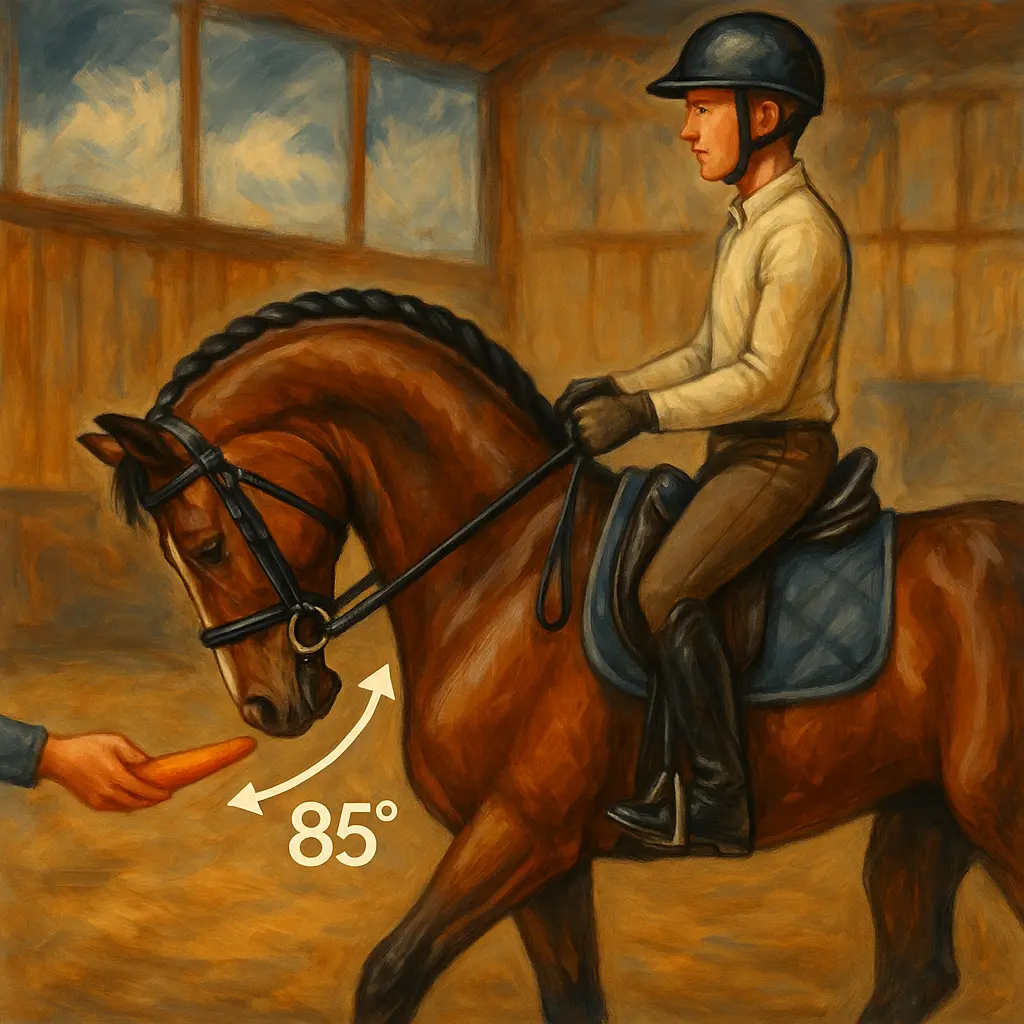
Hand-walk for 5 minutes, then use carrot stretches to the chest and toward each shoulder, aiming for smooth, unhurried motion and a 45° lateral bend. These easy, daily releases build suppleness at the poll and jaw without force (The Horse).
How to structure a mini-routine:
- Warm tissue first (walk, light grooming, or a warming liniment).
- Lure the nose to the midline chest and then to each side, staying just inside your horse’s comfortable range. Stop if you feel a jerky motion or resistance.
- Repeat short sets between hands-on treatments (minimum three sessions, spaced three days apart) to consolidate gains.
For hands-on release, use gentle fingertip pressure around the nuchal crest and behind the ears, then soften and wait for the “let-go.”
“If he begins to yawn, chew and/or drool, however, those are signs of a release and relief.” — Practical Horseman
Make it easy to do every day by keeping rewards and tools in your tack room. Stock up on carrot treats for stretches and keep your favourite massage tools and liniments to hand for pre-ride softening, especially in chilly months.
Quick tip: Always reward softness. The goal is a curious, confident reach — not maximum range on day one. Consistency beats intensity.
Jumping performance and the poll
Tight poll muscles can block head and neck extension on landing, leading to sudden stops in hunters and jumpers. Practical palpation findings include rock-hard tension and sensitivity that correlates with reluctance to land and go (Practical Horseman).
Management for jumpers:
- Warm up longer on cold, wet days and keep the neck telescoping before and after efforts.
- Alternate small fences with stretching canter to avoid accumulating tension at the poll.
- Keep poll flexion modest (85°) when schooling lines to promote honest, forward reactions without the need for stronger aids.
If you need more leg or whip to maintain a canter after landing, that’s a prompt to downshift the effort, re-establish stretch, and reassess your tack setup and range of motion off the horse.
Quick tip: Protective boots are sensible for polework and grids while you’re rebuilding a more elastic topline. Browse our selection of horse boots and bandages to safeguard limbs without adding poll stress.
When to seek professional help in the UK
Call your vet or chartered physio if you see persistent head shaking, mouth grinding, excessive salivation, or you can’t achieve about 45° lateral poll bend without jerkiness. These signs can indicate pain rather than simple stiffness and warrant a clinical work-up (The Horse).
Who to involve and why:
- Veterinary assessment (BEVA-member practice) to rule out dental/TMJ issues, ear discomfort, or cervical pain.
- BHS Accredited Coach to refine your approach to 85° flexion and self-carriage, avoiding welfare risks under the Animal Welfare Act 2006.
- Qualified bit/bridle fitter to optimise pressure distribution, especially if you’re using higher rein tensions in competition.
- Farrier (Worshipful Company of Farriers regulated) to review hoof balance. Imbalances can travel up the chain and bias poll posture on UK livery yard terrain.
Meanwhile, ride long-and-low on a looser rein, keep sessions short, and choose a comfortable bridle set-up. If you hack on roads in poor light, wear certified riding helmets and high-visibility layers from our hi-vis collection.
Your poll-friendly kit list
Invest in a few smart pieces to keep the poll happy through UK seasons.
- Rugs for warm muscles: Choose breathable, weatherproof turnout rugs and insulating stable rugs to prevent chill-induced bracing.
- Bits and bridles: Consider a well-fitted snaffle or Baucher to minimise additional poll load at 2–4 kg rein tension; opt for contoured, padded crownpieces for pressure diffusion.
- Massage and maintenance: Keep massage tools and liniments ready to loosen tissue pre-ride; look for trusted formulations from NAF.
- Training aids and rewards: Use carrot treats to make daily stretches a habit you’ll both enjoy.
- Safety essentials for winter hacks: Combine up-to-standard helmets with hi-vis layers so you can log the warm-up miles that keep the poll supple.
At Just Horse Riders, we handpick kit that supports correct biomechanics and welfare. If you’re unsure which piece will best suit your horse, our team is happy to guide you.
Conclusion: Ride the sweet spot, care for the tissues
Keep your horse’s poll around 85°, not 100°, build a winter-savvy warm-up, choose pressure-conscious tack, and prioritise daily releases. Do this consistently and you’ll see more ear play, softer foam, quieter mouths — and better work with fewer “louder” aids. If red flags persist, involve your UK vet, coach and farrier early and keep welfare front and centre.
FAQs
What poll angle promotes self-carriage without welfare issues?
About 85° to the ground (with withers at 80–82°) supports relaxation and self-carriage, while 100° increases conflict behaviours and rider “encouragement” needs (University of Lisbon).
How do I spot poll tightness quickly?
Feel for rock-hard tension and sensitivity at the nuchal crest, watch for head-raising or step-aways on palpation, note jerkiness during 45° lateral bends, and under saddle look for head tossing, grinding and excessive salivation (Practical Horseman; The Horse).
Does gentle jaw flexion help release the poll?
Yes — soft chewing and subtle jaw movement often accompany relaxation at correct flexion. In contrast, teeth grinding and drooling beyond normal foam are conflict signs seen with over-flexion at 100° (study link).
Which bit reduces poll pressure for UK flatwork?
A well-fitted snaffle or Baucher at 2–4 kg rein tension helps distribute load; the Baucher shows a poll-relief effect at 0–3 kg, adding little additional poll pressure beyond pre-tension (Neue Schule Poll Pressure Guide).
How long should I warm up in UK winter?
Walk 10–15 minutes in cold, wet weather, then build long-and-low before asking for moments of 85° flexion. Chilled muscles brace, raising the risk of conflict behaviours; appropriate turnout rugs and stable rugs help keep tissues warm.
When should I call a vet or physio?
If conflict behaviours persist, if you can’t achieve ~45° lateral bend without jerkiness, or if there’s asymmetric sensitivity. Engage a BEVA-member vet, a BHS Accredited Coach, and a WCF-regulated farrier as needed.
Can hoof balance affect the poll?
Yes. Poor hoof balance can cascade up the chain and bias poll posture. Regular checks with a Worshipful Company of Farriers–regulated farrier help maintain even loading, especially on variable UK yard terrain.