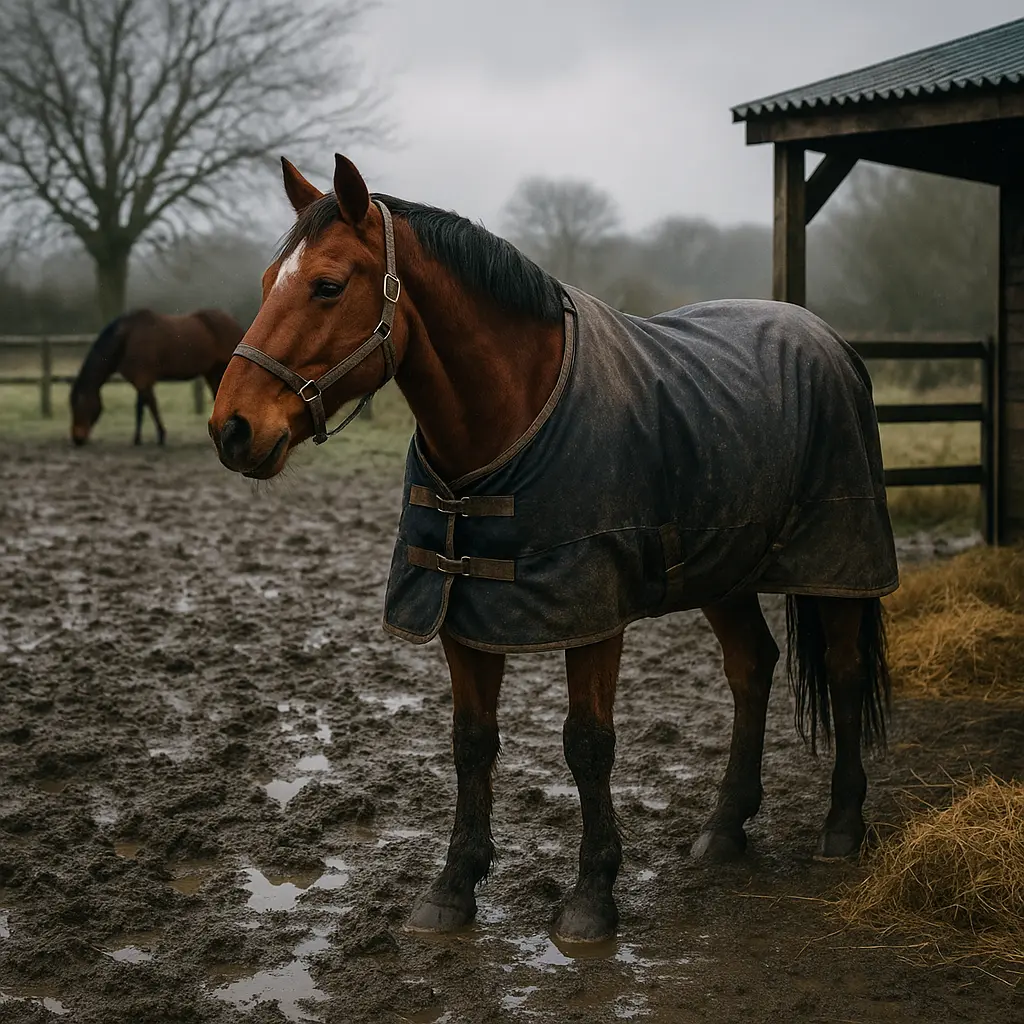
Grey skies, wet fields and seesaw temperatures: UK winters challenge even the best-managed yards. The question isn’t “turnout or stabling?” — it’s how to balance both safely for your horse’s body and mind.
Key takeaway: Most UK horses do best with daily winter turnout for mental wellbeing and soundness, but you must avoid ice and deep mud, transition routines over 10–14 days, and rug appropriately for age, clip and weather.
Is winter turnout right for UK horses?
Yes — daily turnout supports mental health, gut function and soundness, but UK winters demand careful management of mud, rain and freeze-thaw to prevent slips and field damage. Long-term stabling without turnout increases risks of colic, behavioural problems, reduced fitness and lower bone mineral content.
Across the UK, winter turnout is hampered more by wet, mild conditions than extreme cold. Frequent rain, mud and fluctuating temperatures increase the risk of slipping injuries and poached fields, especially during freeze-thaw cycles (Northwest Equine Vets). But the welfare gains of outdoor time are significant. Veterinary and welfare bodies including the British Horse Society (BHS) stress that regular turnout reduces stress and dust exposure, supports respiratory health, and allows natural behaviours like movement, foraging and social contact (BHS winter care advice).
“Mental Well-Being: UK winters can be long and grey, and keeping horses confined... can lead to boredom and stress. Regular turnout gives them access to fresh air [and] social interaction.” — Northwest Equine Vets
Horses turned out frequently are also less likely to explode with “bucking on ice” behaviours that raise fall risks during sudden cold snaps (Mad Barn). At Just Horse Riders, we see that small, consistent turnout windows — even 1–3 hours on poor days — help keep horses sane, supple and safer.
When should you avoid turnout in winter?
Avoid turnout on ice, during high winds with freezing rain, or when fields are deep mud that risks tendon strains and pulls off shoes. Use indoor arenas, a walker, or hardstanding pens as alternatives on risk days.
UK freeze-thaw cycles are the classic hazard: waterlogged ground freezes overnight, then thaws by lunchtime, leaving skating-rink gateways and slick slopes. Conservative calls on marginal days prevent injuries and preserve fields for the rest of winter. As one UK editor put it, grounded in BHS and veterinary guidance:
“Turn out when it’s safe. Don’t gamble on ice... Turnout helps bodies and brains, but winter also brings the UK’s classic hazard: freeze-thaw.” — Western Horse UK
When turning out after weather holds, keep sessions short and frequent at first to discharge energy safely. If you must skip turnout, replace it with 20–30 minutes of riding, hand-walking or lunging to mimic natural movement (supported by BHS guidance).
How do you transition from summer turnout to winter routines?
Make the switch over 10–14 days: gradually reduce turnout hours, increase stable time, and step up forage to match dropping grass. This slow change lowers colic risk and helps the gut adapt to winter diets.
The BHS recommends phased routine changes every autumn to avoid digestive upset and stress (BHS winter care). Practical steps include:
- Stage the timetable: shave 1–2 hours of turnout every few days rather than a sudden stabling-only switch.
- Increase hay/forage as pasture sugars and growth fall; aim for near-constant fibre access using small-hole nets or multiple hay stations.
- Keep social contact through adjacent turnout or shared fencing to reduce stress when herd time drops.
- Rug or shelter appropriately if your horse is clipped or older, and monitor for weight or coat changes weekly.
- For metabolic horses, consider night turnout when grass sugars are naturally lower, with daytime stabling to protect fields and manage intake.
Quick tip: Place water and forage at opposite ends of a paddock to encourage gentle movement and warmth through walking.
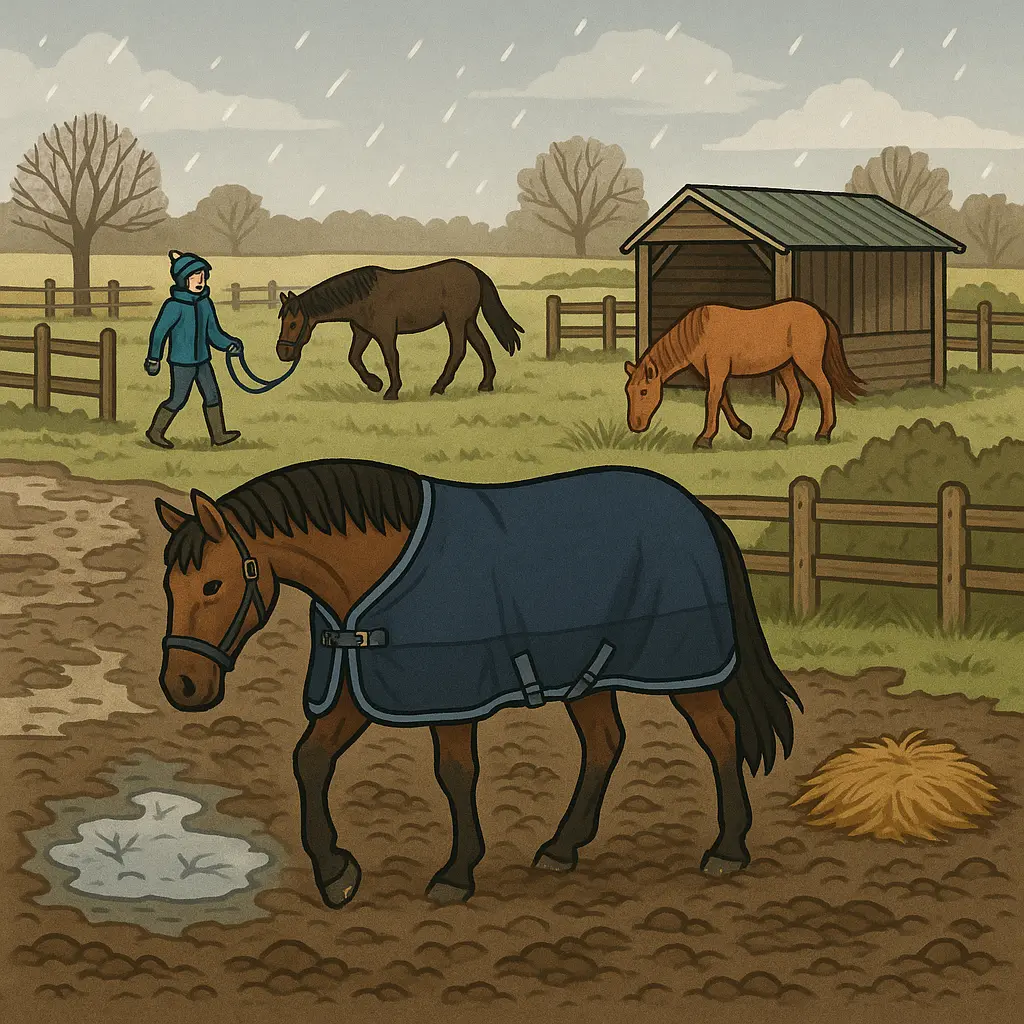
What weight turnout rug does your horse need in UK winter?
Clipped or older horses generally need a medium-weight turnout rug when temperatures sit around -1°C to 4°C, while healthy, unclipped horses often cope well with just shelter and forage. For severe cold snaps around -15°C, a 400–500g fill is appropriate, and choose 600+ denier for herd durability.
UK winters are usually wet and windy rather than Arctic-cold. Healthy horses with full winter coats often regulate well with hay and shelter alone, but clipped, aged or hard-keeping horses benefit from insulated, breathable turnout rugs. As stable management expert Jon Williams notes, “Healthy horses with fully grown winter coats usually do not need additional protection... However shorn horses, older horses [need rugs for safe turnout]” (Jon Williams Stables). Practical rug rules:
- Fill: Medium weight for -1°C to 4°C; step up to 400–500g during sub-zero spells or for very vulnerable horses.
- Outer strength: 600+ denier for herd settings to resist bites and hedges.
- Fit and breathability: Check shoulders, withers and gussets weekly to avoid rubs as weight and coat change.
- Clipped/older horses: Rug earlier and monitor body condition closely; they lose heat faster and may shiver even at 4°C.
Shop breathable, waterproof winter turnout rugs with proven UK fit from brands our customers love, including Weatherbeeta turnout rugs. For guidance on thermal comfort ranges, see the UK-focused guidance from Paddock Blade.
Pro tip: Always feel under the rug at the girth line rather than the shoulders; your horse should feel warm, not hot. Overheating under rugs is more common than under-dressing in our damp climate.
How do you manage footing, mud and field health?
Assess footing daily and skip turnout on ice or deep mud; rotate paddocks, use sacrifice areas, and provide shelter lines to reduce poaching. On marginal days, use an arena, hardstanding pen, or walker to keep horses moving without wrecking fields.
UK yards battle gateways first. Lay hardcore or grass mats at entries, move feeders away from high-traffic areas, and string a track system around the perimeter to distribute wear. Provide field shelters, hedges or natural windbreaks so unrugged horses can turn their backs to the weather. In herds, higher-denier rugs reduce snagging and tears, saving you money and keeping horses protected.
Consider hoof protection on slick days and for horses prone to overreach in mud. Support legs with boots during exercise and schooling to reduce knocks from exuberant post-stable energy; see our horse boots and bandages selection. And remember: frequent, shorter turnout windows lower the risk of explosive behaviours that cause slips (Mad Barn).
Quick tip: Move water daily by a few metres if possible; small shifts prevent deep pugging and keep a safer standing area.
What should you check daily in winter?
Check water intake, droppings, appetite, and back/coat warmth every day, plus body condition weekly; add 20–30 minutes of exercise whenever turnout is reduced. These simple checks catch dehydration, colic risk and cold stress early.
Horses tolerate cold surprisingly well with fibre and shelter — many cope down to around -1°C to 4°C — but clipped or older horses chill fast and need extra cover. Feel for cold, damp patches under rugs, observe for shivering or tucked abdomens, and watch for weight loss as temperatures dip. Daily movement matters: lunging, hand-walking or ridden sessions maintain gut motility and joint comfort, protecting against stabling downsides like stiffness and boredom.
Round out your routine with targeted care:
- Groom thoroughly to lift dirt and check for rubs, scurf and rain scald; browse grooming essentials that make winter coat care easier.
- Provide near-constant forage to buffer the stomach and generate heat; slow feeders and multiple nets reduce bolting and boredom.
- Use simple enrichment (licks, stable toys, foraging nets) to reduce stress on low-turnout days.
- Consider vet-advised additions from our supplements range to support overall health during the winter workload.
- Reward calm handling and good manners during pent-up periods with healthy horse treats — ideal for positive reinforcement.
Pro tip: Log water bucket levels each morning; sudden drops in drinking, paired with dry droppings, are early red flags for impaction risk.
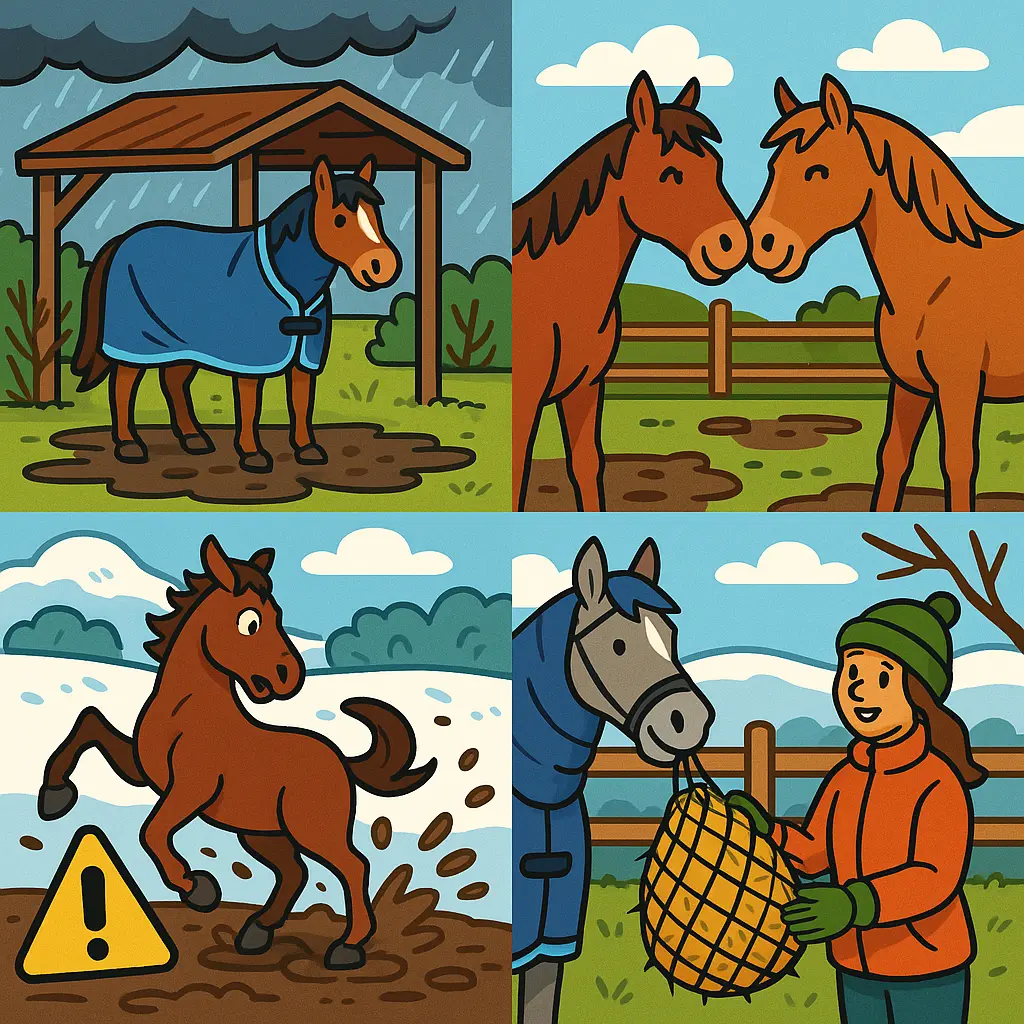
What if your yard restricts turnout?
Replace lost turnout with daily, structured exercise and social contact, and use arenas or walkers to keep horses moving. The BHS stresses that horses must not be kept on 24/7 box rest for management convenience alone.
Many modern UK livery yards prioritise high-spec stabling, ventilation and bedding, especially in winter, which has contributed to a decline in full-time outdoor access. That’s fine if you preserve welfare pillars: movement, forage, and social interaction. Build a simple framework:
- Movement: 20–30 minutes minimum of riding, hand-walking or lunging daily on low-turnout days.
- Air time: Use an arena for in-hand graze-and-walk if fields are shut.
- Social: Stable-view neighbours, shared grooming time, and safe fence-line touch when possible.
If you do hack when fields are closed, stay visible and protected with certified riding helmets and winter-ready hi-vis for riders. Structured routines reduce stress, protect respiratory health by lowering dust exposure time, and keep behaviour safer when the weather breaks.
What does good winter turnout cost, and how do you choose a yard?
Expect full livery with strong winter facilities to cost around £400–£800 per month, while turnout-heavy yards typically range from £300–£600, varying by region and extras like rugging. Choose yards that offer daily outdoor access, safe alternatives in bad weather, and clear, BHS-aligned welfare practices.
In the UK there’s no legal requirement for daily turnout as in Sweden, but DEFRA’s Codes of Practice expect opportunities for movement, foraging and social contact. Many yards now market specific “winter turnout hours” as a selling point. When viewing, ask:
- How are ice days handled? Is there arena or walker access as an alternative?
- Are sacrifice paddocks or track systems used to protect fields and keep horses moving?
- What’s the rugging policy and who checks fit and comfort?
- How is hay fed outside (multiple points, nets, racks) to reduce squabbles and mud?
- What’s the protocol for restricted turnout — is daily exercise guaranteed?
Pro tip: Visit in bad weather. You’ll immediately see drainage, gateway management and whether horses out in the rain look settled, sheltered and appropriately rugged.
FAQs
UK owners ask seven core questions about winter turnout; the answers below reflect BHS and veterinary guidance for our mild, wet climate.
Is 24/7 winter turnout safe in the UK?
Sometimes, but not always; it benefits mental health and fitness but raises risks of mud fever, slips during freeze-thaw, and field poaching. If you opt for full-time turnout, rotate paddocks, provide shelter, feed ample forage, and pull horses in during ice or severe wind-and-rain events (Northwest Equine Vets).
When should I avoid winter turnout?
Avoid on ice, in high winds with freezing rain, or when fields are deep mud. Use arenas, walkers, or hardstanding pens on those days to keep horses moving safely (Mad Barn).
Do unrugged horses need rugs for UK winter turnout?
Healthy, unclipped horses with full winter coats often cope with just shelter and forage, but clipped or older horses should wear a medium-weight rug around -1°C to 4°C. In harsher snaps (around -15°C), 400–500g fill is appropriate (Jon Williams Stables; Paddock Blade).
How fast should I switch from summer turnout to winter stabling?
Over 10–14 days. Gradually reduce turnout hours, increase hay to replace grass, and maintain social contact to lower colic and stress risks (BHS winter care).
What’s the best way to prevent slips and falls?
Turn out frequently to avoid pent-up energy, skip icy days, and use arenas or walkers when footing is unsafe. Consider appropriate hoof protection and support legs with boots during exercise in slippy conditions (Mad Barn).
What if my yard restricts turnout?
Provide 20–30 minutes of daily exercise via riding, lunging, or in-hand work, plus enrichment and forage. The BHS emphasises avoiding 24/7 box confinement for management convenience (BHS).
Which turnout rugs are best for muddy UK winters?
Choose breathable, waterproof rugs with 600+ denier outers for herd durability and the right fill for your horse’s age, clip and temperature range. Explore our curated turnout rug collection for proven UK fits and weather protection.
At Just Horse Riders, we recommend planning winter like a campaign: daily footing checks, flexible turnout windows, and the right rug for the day’s weather. For kit that works as hard as you do, browse our winter turnout rugs, build safer schooling days with horse boots and bandages, and keep care consistent with grooming tools, supplements and treats. Stay seen on dark hacks with hi-vis and protect your head with certified riding helmets. Winter is workable — and with the right plan, your horse can thrive.