

Dressage Dilemmas for Beginners: Navigating Attire Choices on a Budget
If you're new to dressage, you've probably discovered a painful truth: riding clothes are expensive. Between helmets, boots, jackets, and breeches, it can feel like you need a second mortgage just to ride a 5-minute Intro test.
The good news? You don’t have to buy everything at once, and you definitely don’t need the most expensive brands to look correct and ride well. What you do need is:
- A clear understanding of what’s required by the rules
- Smart budget priorities (where to spend, where to save)
- Reliable sources to check dress codes before you buy
This guide breaks down each part of dressage attire, shows you how to stay within the rules, and gives you practical ways to build your wardrobe on a budget.
Start With the Rule Book, Not Instagram
Before you buy anything, check the official rules for the level and organization you're showing under. That’s what judges use—not social media.
For example, in the US:
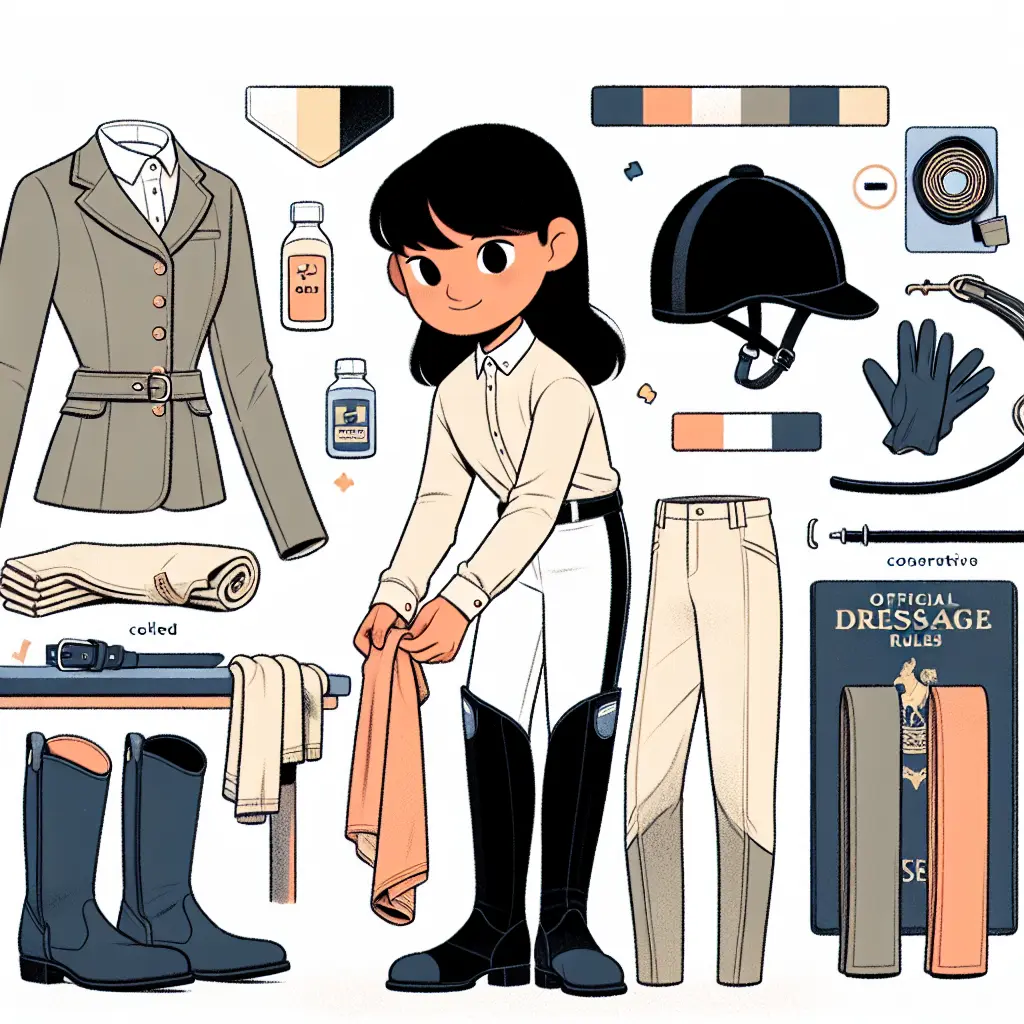
- USEF Dressage rules (DR120) state that for tests through Fourth Level, the basic dress code is a short riding coat of conservative colour, white or light-coloured breeches or jodhpurs, boots or jodhpur boots, a shirt with stock tie/tie/choker or stand-up collar, and protective headgear.
- A 2022 USDF visual attire guide makes it clear that:
- Any single-color jacket (not just black/navy) is allowed, with subtle pinstripes or tweed.
- White, light, or dark breeches/jodhpurs are permitted, but bright colors and loud patterns are not.
- Vests of any type are permitted under or in place of a jacket when jackets are waived.
- Boots or paddock boots with matching half-chaps in leather or leather-like material are allowed at lower levels.
Key takeaway: Do not assume you must have a black jacket, white full-seat breeches, and top-of-the-line boots for your first few shows. Many rule books and schooling shows allow much simpler, cheaper outfits.
Safety First: Helmet Decisions on a Budget
If there’s one place not to cut corners, it’s your helmet.
What the rules say
- Most recognized dressage and eventing organizations require an ASTM/SEI–approved riding helmet whenever mounted.
- Discover Eventing specifies a helmet that meets or surpasses ASTM/SEI standards for equestrian use in dressage, show jumping, and cross-country.
Budget tips
- Price ≠ safety level. All ASTM/SEI certified helmets meet the same minimum safety standard; you often pay more for brand, style, or ventilation, not basic protection.
- Look for:
- An ASTM/SEI label inside the helmet
- A proper fit (snug, level, doesn’t rock, doesn’t press painfully)
- Replace:
- After any fall where your head hits the ground, or
- Around every 5 years, depending on manufacturer guidelines
You can absolutely save money with a mid-range or entry-level certified helmet and still be fully compliant and safe.
Tackling the Big-Ticket Items: Boots and Breeches
Boots: Tall vs paddock, and what’s allowed
Dressage boots are famously expensive, but beginners have more options than they think.
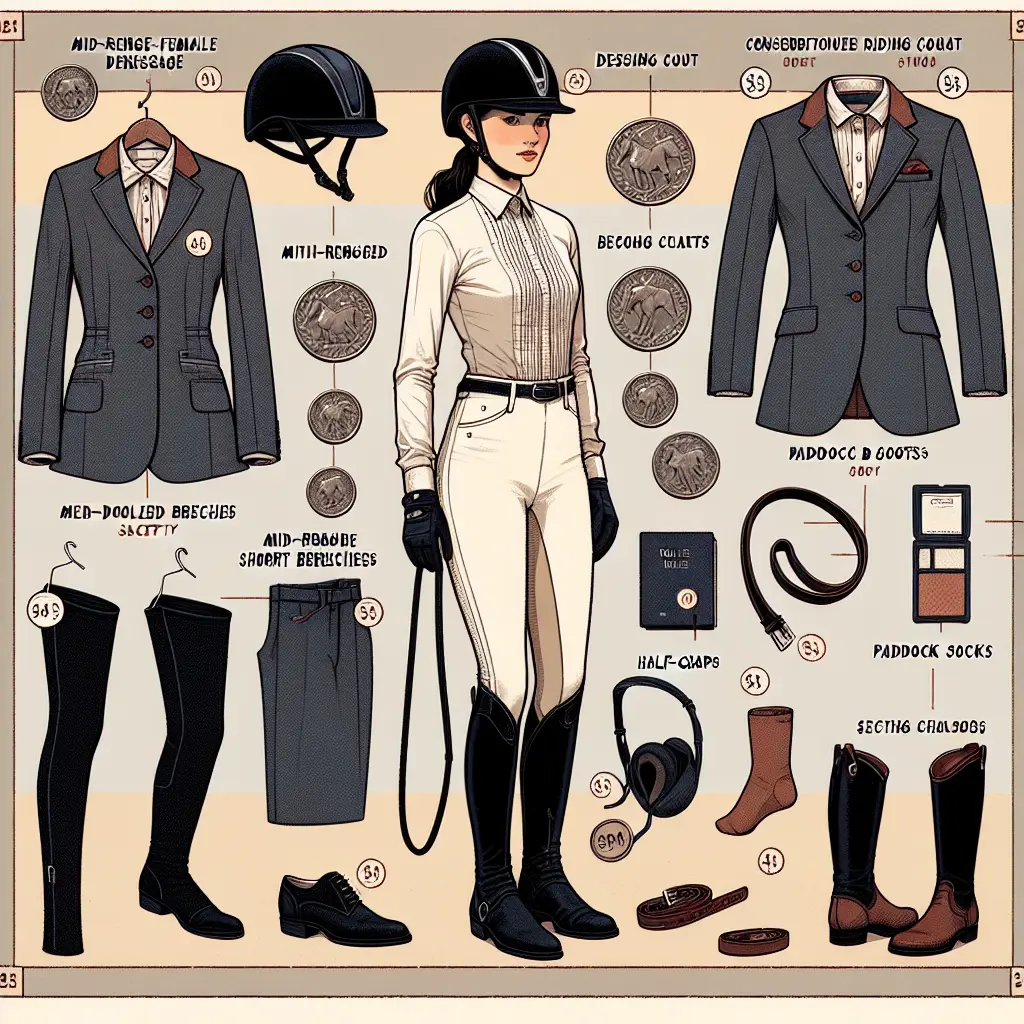
- USEF/USDF guidance allows riders at lower levels to wear paddock or jodhpur boots with matching half-chaps made of smooth leather or leather-like material.
- Tall boots (dress or field) only become mandatory above Fourth Level.
- Eventing dressage at beginner levels also allows black or brown tall boots or jodhpur boots with garter straps for juniors.
Budget strategy:
- If you already own paddock boots, buy simple black half-chaps that match the boot color and are smooth leather or leather-like.
- Look for:
- Clean, well-fitted boots that you can walk and ride in comfortably
- Neutral colors (black is safest for dressage; brown acceptable in some eventing dressage phases)
You can upgrade to tall boots later, once you’re sure you love dressage and are showing more frequently.
Breeches vs jodhpurs: What’s the difference?
- Adult riders usually wear breeches, which are designed to be worn with tall boots or half-chaps.
- Jodhpurs extend to the ankle with a cuff and are more common for juniors, worn with paddock boots and garter straps.
- For competition, white, light, or dark colours are permitted; bright colors or wild patterns are not.
A dressage apparel guide notes that full-seat grip breeches are particularly popular in dressage because they help with stability and contact in the saddle.
Budget strategy:
- For first shows, light tan, beige, or other conservative light colours are usually accepted, especially at schooling shows.
- A Chronicle Forums discussion of first schooling shows notes that light tan breeches and a simple collared shirt are perfectly acceptable at many informal venues.
- You can often find quality breeches second-hand at consignment tack shops or online resale platforms for a fraction of the original price.
Jackets, Shirts, and “Do I Really Need a Show Coat?”
What beginners actually need to wear
For schooling shows and many low-level competitions, rules are often more relaxed than for rated shows:
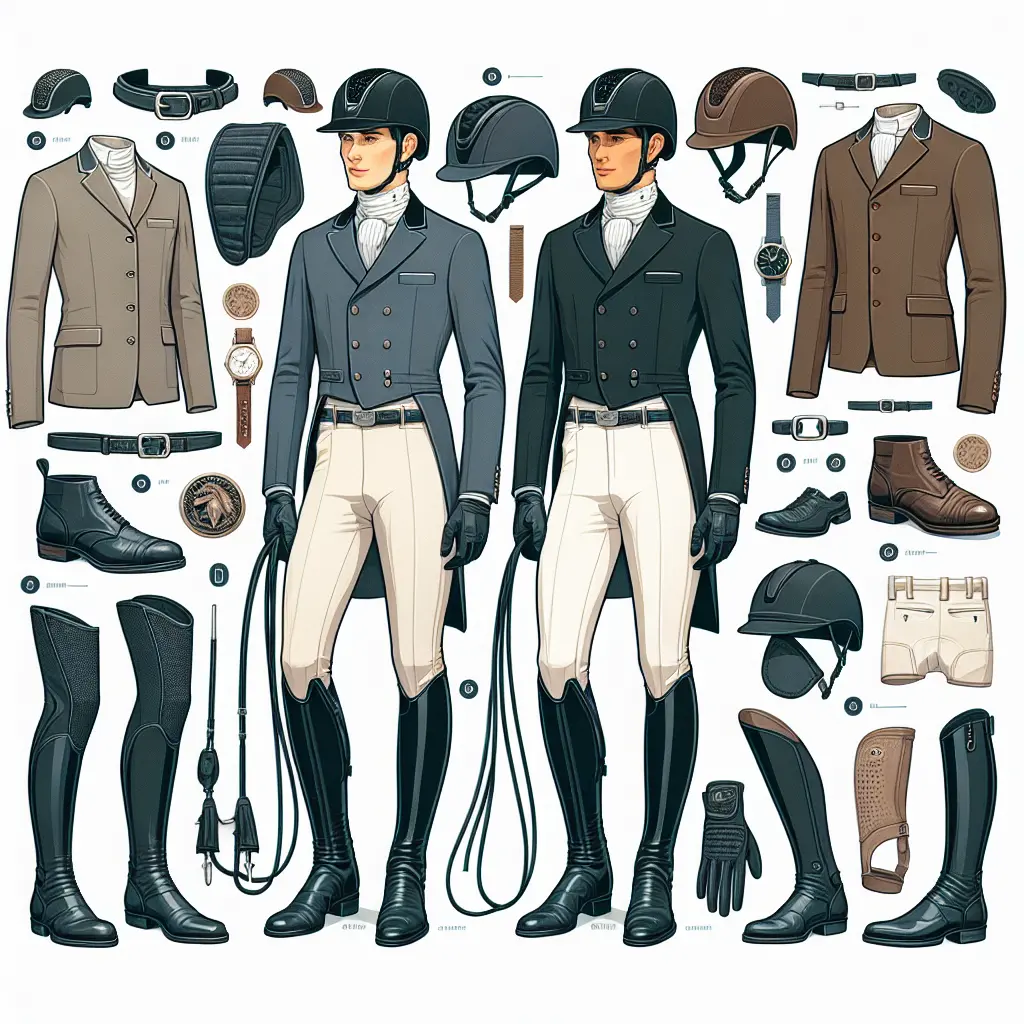
- RJ Classics, a major show apparel brand, notes that at schooling shows, riders typically wear:
- A long-sleeved collared show shirt in a solid neutral colour
- Proper riding breeches or jodhpurs
- Paddock boots or tall boots
- A certified helmet and gloves
You do not need to invest in a full competition wardrobe right away; many riders start with schooling gear and gradually upgrade over time.
For recognized dressage shows (e.g., USEF/USDF in the US):
- DR120 requires a short riding coat of conservative colour through Fourth Level, with white or light breeches, appropriate shirt/neckwear, and boots.
- The 2022 USDF visual guide clarifies that:
- Any single-colour jacket is allowed, not just black/navy.
- Subtle checks or pinstripes are permitted; bold multi-colored patterns are not.
- In hot weather, show management may waive jackets, allowing riders to compete in a long- or short-sleeved shirt with a stand-up collar.
Budget strategy:
- For your first few schooling shows:
- Skip the show coat if the show allows it.
- Wear a neat, collared shirt (polo or sun shirt) tucked into well-fitting breeches.
- When you’re ready to show recognized:
- Look for a used or older-model coat in a conservative colour.
- Remember: any single, dark or conservative colour that fits and is clean will do the job.
Gloves, Belts, Socks, and the “Small Stuff” That Still Matters
Gloves
Gloves are a relatively low-cost item that can make you look polished.
- USEF encourages gloves of conservative colour for dressage.
- Eventing dressage lists gloves (black, tan, beige, or white) as part of standard attire.
From a practical standpoint, gloves help with rein grip and can protect your hands; they are a good early purchase that doesn’t need to be expensive. Explore our Horse Riding Gloves Collection.
Shirts and neckwear
- Shirt must have a stand-up collar or be worn with a tie, choker, or stock tie under a jacket according to US dressage attire rules.
- Ties and stock ties may be any colour, as long as the overall appearance is conservative.
- Most dressage riders still opt for plain white or light show shirts because they look clean with or without a jacket.
If jackets are waived, having a neat show shirt that looks good on its own gives you flexibility in hot weather.
Socks and underlayers
Basic but important:
- Long socks that match your boot height can prevent rubbing. Browse our Horse Riding Socks Collection.
- Moisture-wicking fabrics for base layers improve comfort during hot or long show days.
These are places where cheaper, generic athletic brands (not necessarily equestrian) can work perfectly well.
How Much Does a Beginner Dressage Outfit Really Cost?
Costs vary by country and brand, but you can roughly divide items into “must invest” and “can save here” categories.
Must invest (safety + fit critical)
- Helmet (ASTM/SEI certified)
- Boots/half-chaps that fit properly and are safe to ride in
Can start inexpensively or second-hand
- Breeches/jodhpurs (as long as colour and cut comply)
- Show shirt (simple collared shirt often fine for schooling shows)
- Jacket (can come later, often available second-hand)
- Gloves, belt, and socks
Some riders put together a perfectly acceptable schooling show outfit with:
- Existing paddock boots + new half-chaps
- One pair of light-coloured breeches
- A collared shirt they already own (if allowed)
- A mid-range certified helmet
- Budget-friendly gloves
This layered approach lets you spread out costs over your first season rather than buying everything at once.
Building Your Wardrobe Gradually: A Practical Roadmap
Instead of seeing dressage attire as one huge bill, treat it as a multi-season project.
Phase 1: Lessons and first schooling shows
Focus on:
- Certified helmet
- Any safe, heeled riding boot (paddock or tall) + half-chaps if needed
- One or two pairs of breeches in conservative colours
- Collared shirt (polo or technical sun shirt)
- Simple gloves
At this point, you’re prioritizing comfort and safety over looks.
Phase 2: More frequent schooling shows
Upgrade:
- Add a nicer show shirt (white or light colour, moisture-wicking)
- Invest in a second pair of breeches so you’re not panicking about laundry between rides.
- Improve boot fit/appearance if needed (conditioning, polish, or eventually taller boots).
Phase 3: Recognized shows
Add:
- A conservative single-colour jacket compliant with current dressage rules.
- Possibly white or very light breeches if your region and competition level expect them.
- A slightly more formal look in gloves and belt (still budget-friendly).
By the time you’re consistently riding recognized shows, you’ll have spread your purchases over months or even years.
Common Beginner Mistakes (and How to Avoid Them)
- Over-shopping before checking rules: Always read your competition’s rule book or prize list. US riders can consult USEF DR120 and the USDF visual attire guide for specifics.
- Thinking everything must be white and designer: Many organizations allow light or dark conservative breeches and a range of jacket colours. Schooling shows often accept tan breeches and simple shirts.
- Ignoring fit in favour of brand: An inexpensive coat or breech that fits well will always look better than an expensive item that doesn’t. Good fit also affects your comfort and position in the saddle.
- Buying tall boots too early: If you’re still growing, or unsure about show frequency, start with paddock boots + half-chaps if rules allow.
- Neglecting helmet safety: Always choose certified headgear and follow replacement guidelines after falls.
Where to Find Reliable Information and Inspiration
When researching or adding backlinks for authority, prioritize:
-
National federations and rule books
- USEF Dressage rules and DR120 Dress code (US)
- USDF visual attire guide (illustrated, user-friendly)
- National eventing organizations for dressage phase guidelines
-
Reputable apparel and tack retailers
- Guides explaining beginner dressage wardrobe basics, including helmet, show coat, breeches, boots, and gloves.
-
Educational brands and blogs
- Articles from major riding apparel companies explaining what to wear for first lessons and schooling shows, including practical advice that you don’t need a full competition wardrobe immediately.
-
Community insights
- Rider forums (e.g., Chronicle of the Horse) where real riders discuss what was accepted and expected at their first schooling shows.
These sources give you both official rules and real-world expectations, which are both crucial for beginners trying to navigate dressage attire without overspending.
By understanding what’s truly required, using rule-based resources, and making strategic, phased purchases, beginners can step into the dressage arena confidently, correctly dressed, and without breaking the bank.