

How to Find Reputable Companies for Rubber School Topping Without Metal Contamination
Choosing the right company for rubber school topping is imperative to ensure the safety of our children in playgrounds. This guide is designed to assist school administrators, parents, and facility managers in identifying suppliers who prioritize non-toxic and contaminant-free materials.
Why Rubber School Topping Matters for Safety
Rubber school topping, commonly known as poured-in-place (PIP) surfacing, creates a seamless, shock-absorbing surface under playground equipment. This surfacing is crucial as approximately 45% of playground injuries are severe, including fractures and concussions (source). Thus, compliant surfacing is essential for reducing these life-threatening injuries.
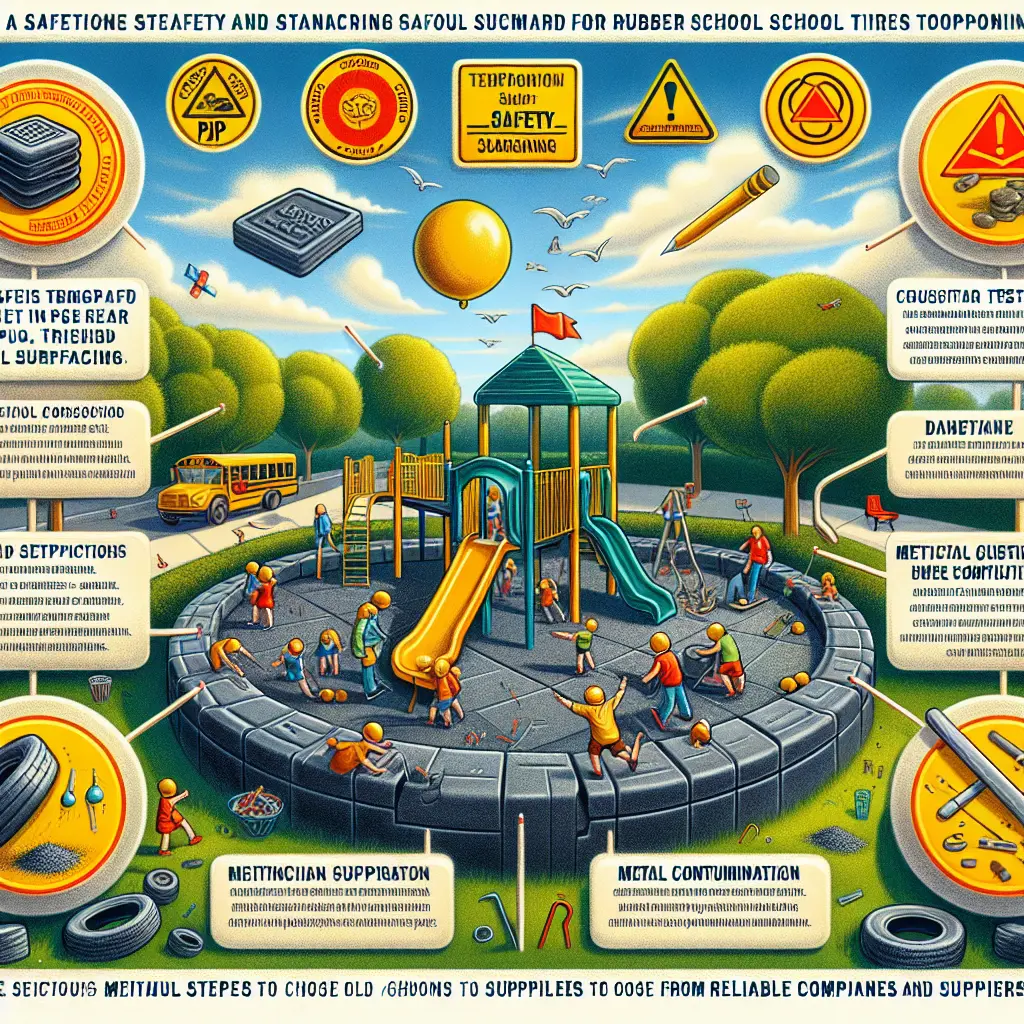
The surfacing's safety is tested with standards such as ASTM F1292, which measures Head Injury Criterion (HIC) to ensure effective impact absorption. Reputable systems protect children from falls up to heights of 12 feet with about 6.5 inches of surfacing depth.
The Metal Contamination Risk in Rubber Surfacing
PIP surfaces often use shredded waste tires, which can contain metal fragments. Over time, wear and exposure can lead to these metals surfacing and creating hazardous conditions (source). Preventing metal contamination is crucial for maintaining long-term safety.
Critical Standards and Testing
Standards like ASTM F2075 ensure safety by limiting hazardous metals in materials. Regular third-party tests are recommended, as weather and frequent use can degrade surface performance (source). Clean and safe sourcing methods are essential to avoid risks from tramp metals that damage playground safety over time.
Step-by-Step: How to Find Reputable Companies
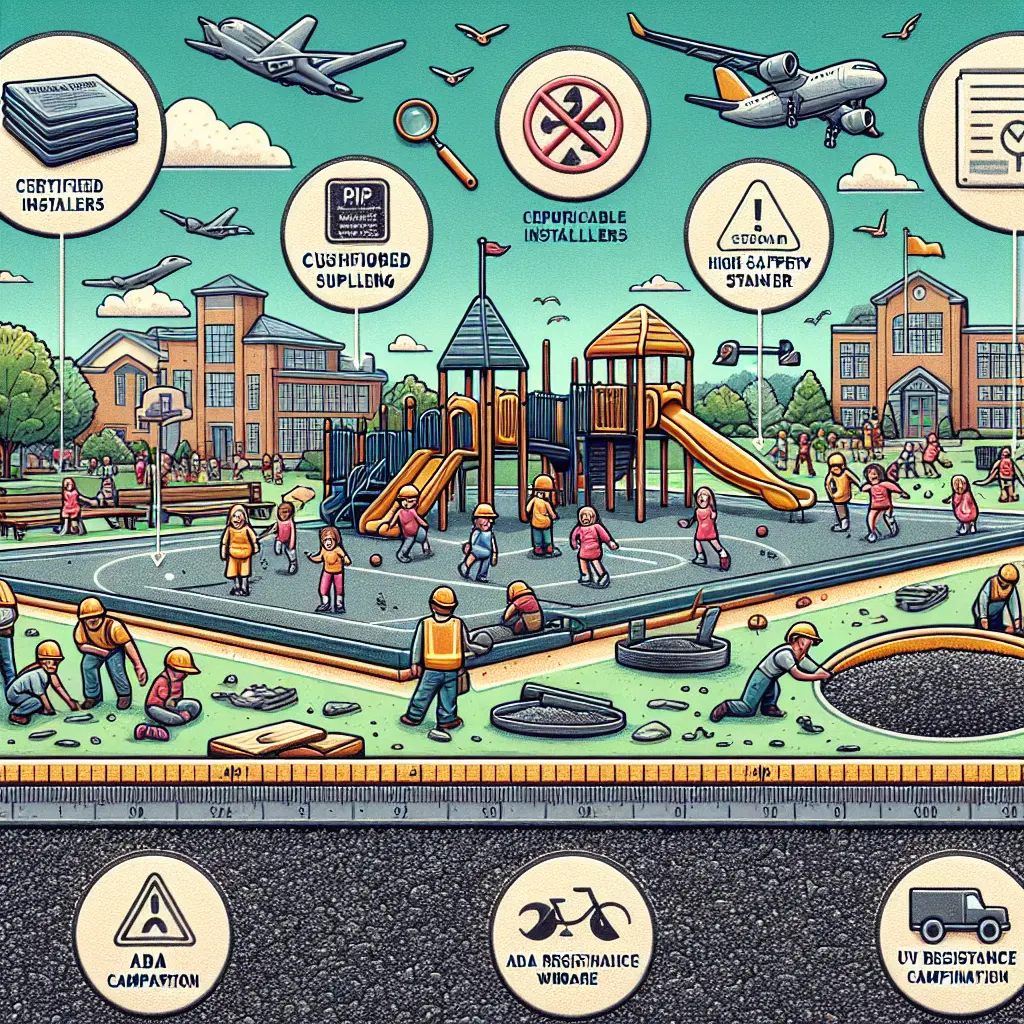
1. Demand Certification and Testing Data
Always confirm whether the company’s PIP systems meet ASTM F1292 standards. Ask for field test results conducted during cooler temperatures when rubber surfaces tend to harden.
2. Verify Metal Contamination Safety
Ensure suppliers provide proof of tramp metal tests (meeting ASTM standards) and a detailed Material Safety Data Sheet (MSDS) that guarantees low heavy metals content.
3. ADA Compliance and Durability
Seek out companies offering ADA-compliant designs that ensure safety for all children. Reliable systems should be UV resistant and come with warranties of at least 5 to 10 years.
4. Independent Certifications and References
Prioritize IPEMA-certified companies adhering to CPSC guidelines. Always ask for references, case studies, and testimonials to verify performance claims in similar installations.

5. Evaluate Installation and Maintenance Practices
Check if the installations are performed by certified professionals and are followed by routine maintenance checks. This includes annual inspections and maintenance plans to prolong surfacing lifespan and ensure safety standards are continually met.
Questions to Ask Potential Suppliers
- "What tramp metal and heavy metal tests does your rubber pass?"
- "Do you offer IPEMA certification for your products?"
- "Could you provide recent third-party ASTM F1292 field tests?"
Long-Term Value: Maintenance for Contaminant-Free Play
Regular maintenance post-installation is vital for sustained safety. Conduct annual impact performance tests to prevent material degradation. Cleaning plans ensure surfacing remains hazard-free. This diligence supports longevity, often safeguarding playgrounds from injuries related to falls (source).
Conclusion
In conclusion, selecting a reputable company for rubber school topping requires thorough checks on certifications, demonstrated safety measures, and proven performance records. Prioritize compliance to maximize safety and durability, ensuring playgrounds remain places of joy and security for children. By following the outlined steps, you can create a playground environment that minimizes severe injury risks, ensuring it remains free from metal contamination.