

Exploring Hoof Health: To Shoe or Not to Shoe for Equine Well-Being?
Whether to shoe a horse or leave it barefoot is a decision that hinges on multiple factors like the horse's conformation, hoof quality, workload, and terrain. Both approaches have their pros and cons, requiring consultation with a qualified farrier and veterinarian. Here, we explore the ins and outs of horse hoof health, offering insight into how you might make the best choice for your equine companion.
Why Hoof Health Matters
Hoof health is a critical component of equine soundness. The hoof transmits and absorbs forces during locomotion, protects internal structures, and plays a vital role in limb biomechanics. Improper hoof care can lead to lameness and performance issues, which highlights the importance of making informed shoeing decisions.
 The hoof's ability to expand under load (about 2–4 mm in normal hooves) is integral for shock absorption. Studies have shown that fast speeds can exert impact loads exceeding 2.5 times the horse's body weight [5].
What Shoes Do: Benefits and Risks
Protection and Wear
Horseshoes protect the hoof wall and sole from excessive wear, especially on hard or abrasive surfaces. This is crucial for horses with heavy workloads. Shoes help preserve hoof length and shape, ensuring the horse operates at its peak form [1][4].
Traction and Performance
Equipping a horse with shoes can enhance traction and optimize performance, especially in certain disciplines like dressage or show jumping. This is often achieved by using specialized pads or studs [7].
Biomechanics and Injury Risk
Shoes can affect hoof biomechanics, potentially limiting normal hoof expansion and altering loading patterns. This, in turn, might increase pressures in joints and strains on tendons, possibly leading to degenerative changes over time [4][5][8].
Circulation and Temperature
Some therapeutic shoes have been linked to lower hoof surface temperatures, which raises questions about potential changes in circulation. However, evidence is not conclusive and depends largely on shoe type and fit [2].
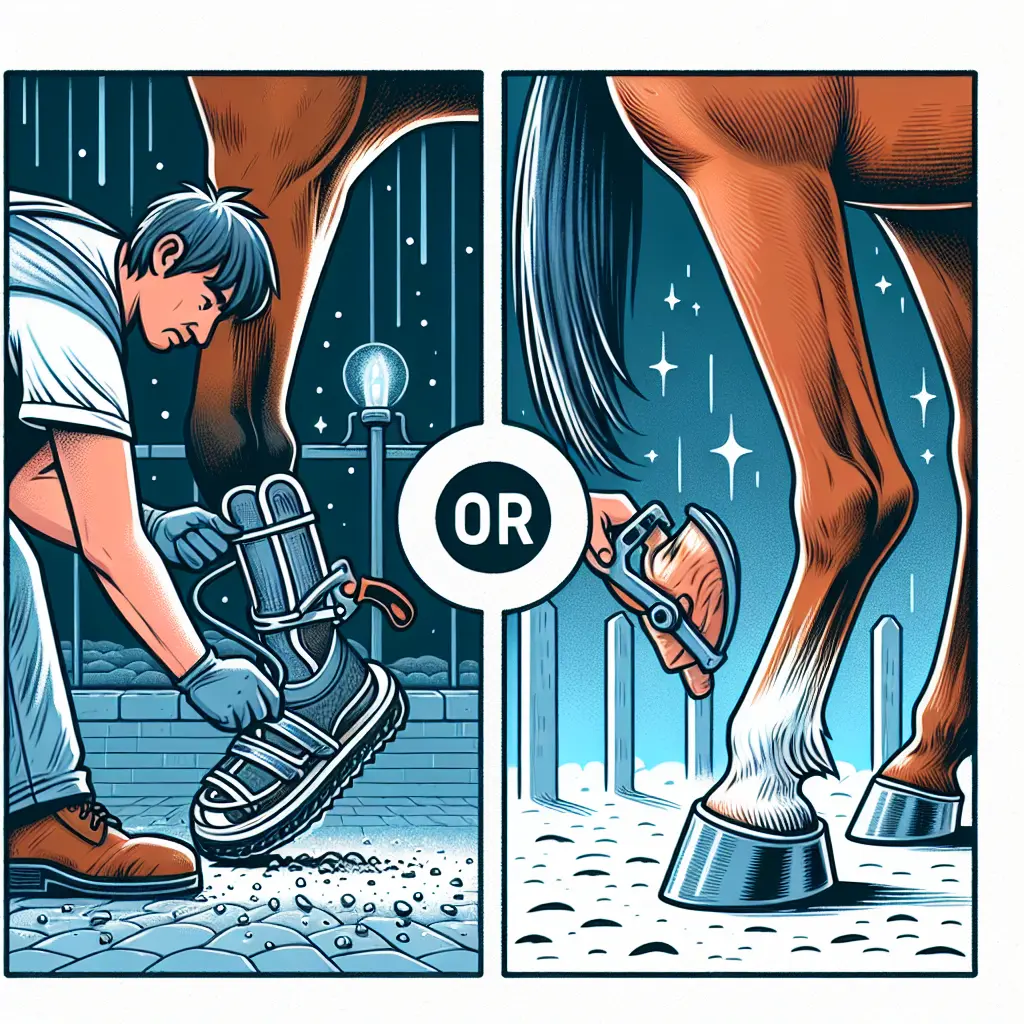 It's essential to choose the correct shoe type, such as steel, aluminum, therapeutic pads, egg-bar, or wedge, and maintain appropriate intervals for shoeing to manage hoof angle changes [4].
Going Barefoot: Benefits and Limits
Adaptation and Development
Horses kept barefoot long-term can develop thicker soles and tougher hoof walls. However, they remain susceptible to bruises or injuries, depending on terrain and workload [3][1].
Case for Barefoot
For horses with stable, healthy hooves that are primarily kept on soft footing, barefoot management can be practical. These horses would need regular trimming and conditioning as part of their routine [3][4].
Evidence Deep Dive
Protection and Wear Study
Controlled studies have shown that steel shoes provide protective effects, particularly at the toe, influencing hoof dimensions. Shod horses displayed different changes in hoof circumference compared to barefoot horses over seven weeks, suggesting that shoeing impacts hoof shape [4].
Biomechanics and Injury Risk Reflections
According to laboratory and clinical studies, shoes change hoof mechanics by limiting palmar expansion and increasing joint pressure. This could potentially contribute to degenerative changes in some horses [5][8].
Therapeutic Shoes and Circulation
Thermography studies observed that egg bar or wedge shoes cause statistically significant drops in minimum temperatures in some palmar regions compared to barefoot, indicating possible local circulatory effects [2].
 Healing and balancing the hoof before shoeing is emphasized in these studies, highlighting the need for correct hoof balance [2].
Practical Decision Framework for Owners
Step 1: Assessing Individual Needs
Consider the horse's workload, the surfaces on which they'll be ridden, conformation, age, and any previous foot problems. These factors will guide the decision-making process [3][4].
Step 2: Team Evaluation
Consult both a qualified farrier and a veterinarian. Farriers focus on hoof balance, while vets evaluate bone, joint and tendon health [3][2].
Step 3: Consider Common Indications
Shoe if the horse has chronic thin or poor-quality hooves, intense performance needs, corrective or therapeutic needs, or frequent road work. Barefoot management may work for horses with stable, healthy hooves kept on soft footing [7][1][6].
Step 4: Choose Appropriate Intervention
Select the correct shoe type and maintain a suitable interval for trim or shoe cycles. If managing barefoot, consider regular trims and possibly hoof boots for protection on abrasive or rocky terrain [4][7][8].
Step 5: Monitor Outcomes
Keep an eye on hoof shape, gait, lameness, sole thickness, and any temperature changes. Re-evaluate intervals and materials as needed [4][2].
Common Myths and Clarifications
"Shoes Always Prevent Lameness"
This is a misconception. While shoes reduce certain risks, improper shoeing can lead to nail injuries and other hoof problems [1][3][7].
"Barefoot Is Always Healthier"
Not necessarily. Barefoot management requires optimal hoof quality, appropriate terrain, and regular trimming. Some horses benefit from shoe protection or corrective measures [3][1].
"Therapeutic Shoes Always Improve Circulation"
Therapeutic shoes may cause reduced hoof surface temperatures in some studies, with mixed results depending on the shoe's design and hoof balance [2].
 Balancing hoof care with the right equipment and expert assessment is crucial for optimal hoof health.
Practical Tips for Horse Owners
Enhance your horse's journey with these practical tips:
- Schedule farrier visits every 4-8 weeks based on shoeing, growth rate, and discipline. Shod horses may require shorter intervals [4][3].
- Document hoof changes, lameness issues, sole thickness, and shoeing dates for better monitoring.
- Use hoof boots during the transition to barefoot or on rough terrain.
- Prioritize hoof balance over aesthetics.
- Confirm baseline hoof balance before using therapeutic shoes and follow up with clinical reassessment if needed [2].
Conclusion
In considering whether to shoe or go barefoot, weigh the benefits and drawbacks—and remember that individualized care tailored to the specific needs of your horse is paramount. Consulting with a team of experts, including your farrier and veterinarian, ensures informed decisions that support your horse’s longevity and performance. For the best outcomes, incorporate professional insight and scientific evidence into your equine management strategies.
For more on horse riding equipment and advice on managing your horse's health, explore our comprehensive Jodhpur Collection, Riding Boots, and Riding Gloves. Give your horse comfort and quality that enhances every ride.