

Documenting The Journey: Raising Mylo from Foal to Competitor
The journey of raising a horse from a newborn foal to a competent competitor is a remarkable and fulfilling experience. From the moment they take their first wobbly steps to the day they stride into a competition ring, every stage is filled with challenges and triumphs. This guide sheds light on raising Mylo, our industrious young horse, from sharing moments of trust-building to reaching his competitive prime.
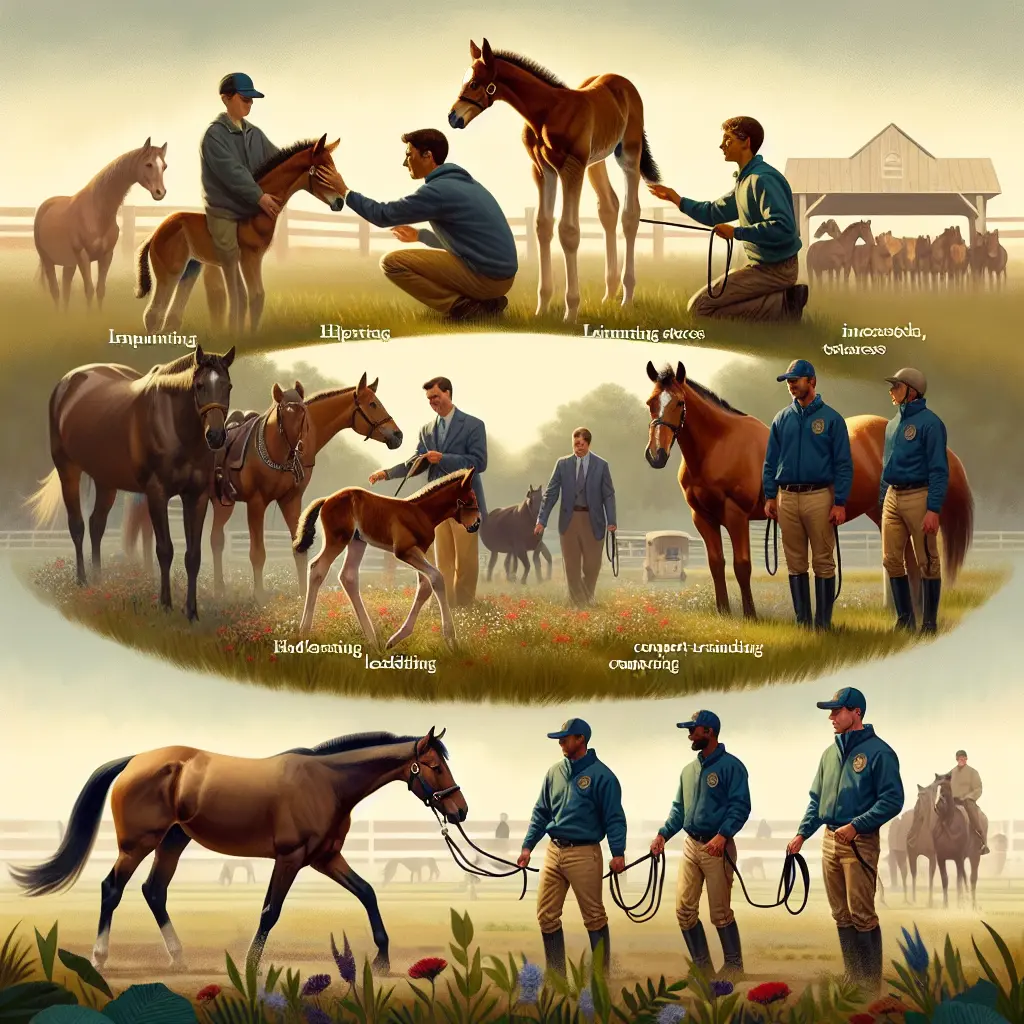
Imprinting and Early Training
Our journey begins at birth with a process known as imprinting. Establishing trust and teaching fundamental skills are key aspects of this initial stage. Clinton Anderson, a renowned horse trainer, emphasizes the importance of early human interaction to positively shape the foal's future behavior.
Foundational Steps
From touching to rubbing, these crucial first interactions help set a foundation of trust in young horses. Imprinting helps Mylo become accustomed to human touch, which is vital for establishing a lifelong positive perspective towards humans. This strengthens the bond that is essential for future training regimens.
Basic Training Exercises
Once Mylo feels comfortable around humans, we introduce basic training exercises as suggested by Clinton Anderson's Foal Training Series. These activities enable Mylo to grasp common actions without overwhelming him.
Training Focus Areas
Key exercises include teaching Mylo to wear a halter properly, understanding lead commands, and handling his feet. These are not only essential for Mylo’s future in competitions but also ensure he accommodates regular care routines like farrier visits.
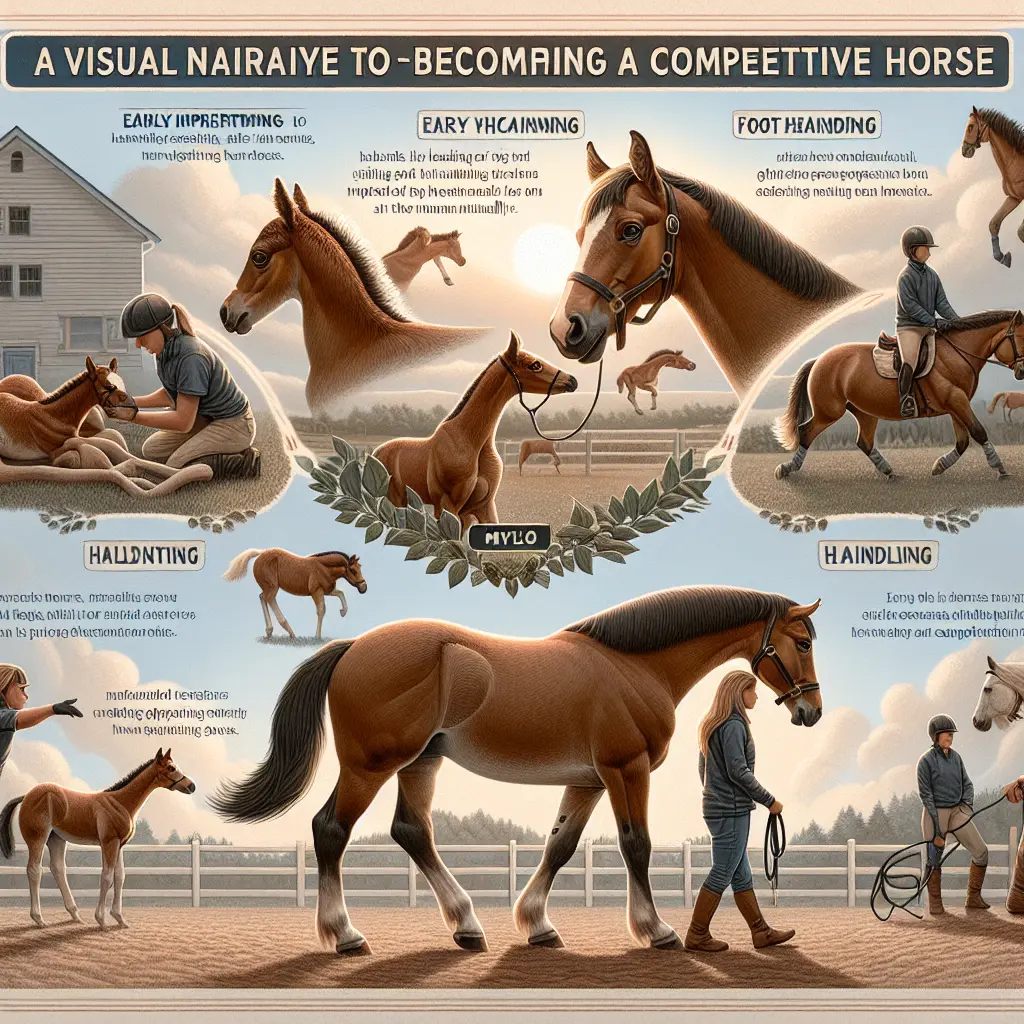
Establishing Respect and Boundaries
An often overlooked aspect of horse training is setting boundaries. Orphan foals, particularly those bottle-fed, might lack the natural discipline from a mare. Without clear guidelines, they can become unruly. This requires applying gentle techniques that mimic natural herd dynamics, ensuring Mylo respects human space and leadership.
Preventing Over-Familiarity
To prevent Mylo from becoming too familiar, we incorporate techniques that communicate boundaries effectively. Ensuring Mylo follows without pushing or overpowering humans helps him grow into a respectful and balanced horse. Read more on orphan foal care.
Progression and Milestones
Each developmental stage is marked by significant milestones. At four to six months, Mylo should be adept at basic exercises. More specialized training soon follows, featuring intermediate groundwork—an excellent foundation for future discipline-specific training.
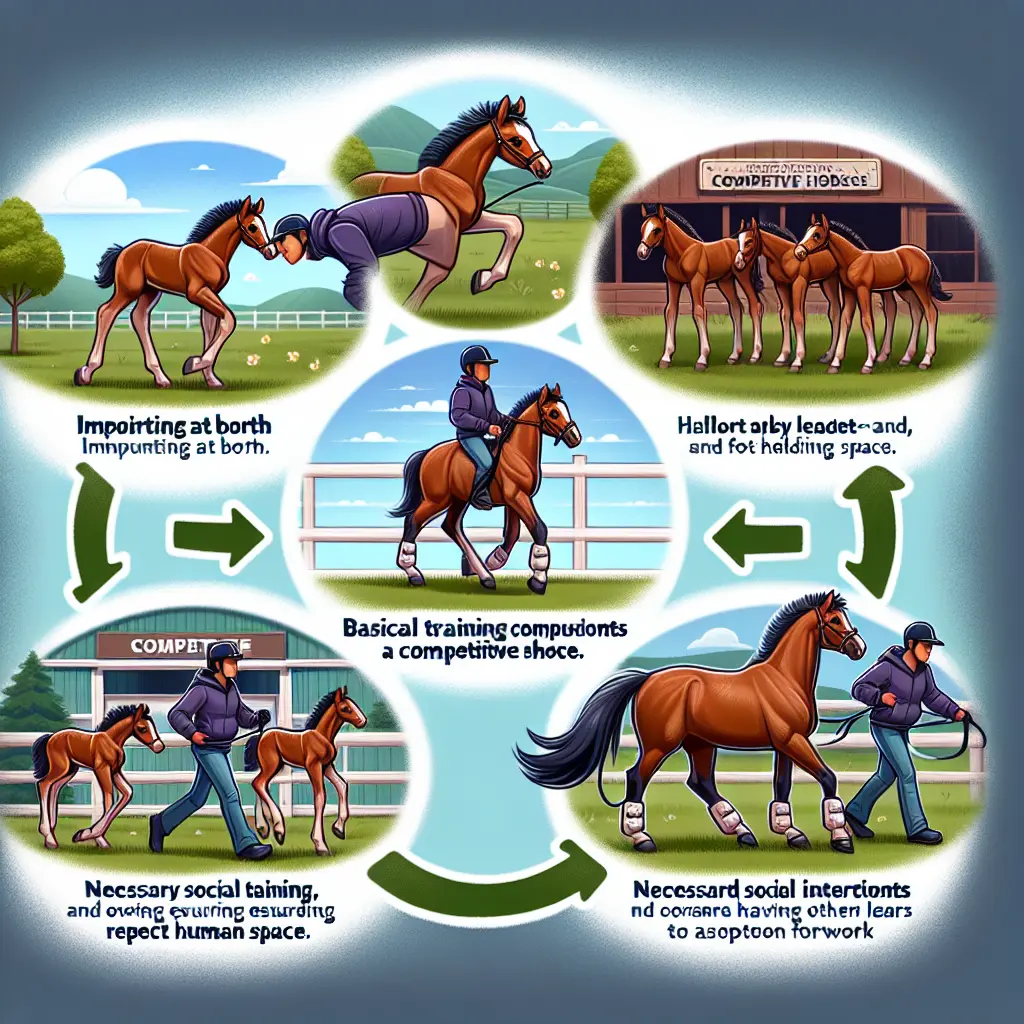
Advanced Groundwork
After successfully navigating through basics, Mylo is ready for intermediate training, preparing him for more precise and complex tasks. Regular sessions, about six days a week, contribute significantly to his development.
Moderation and Balance
In training horses, maintaining moderation and balance is crucial. Overtraining can lead to exhaustion, whereas too little can hinder developmental progress. We ensure Mylo enjoys short, structured sessions coupled with adequate rest, nurturing both his body and mind without overwhelm.
Socialization and Pasture Time
Interaction with fellow horses in a pasture setting is indispensable. It allows Mylo to learn social skills and engage in natural behaviors. Viewing this as a break from training, he enjoys being a horse, learning from the herd and reinforcing earlier training.
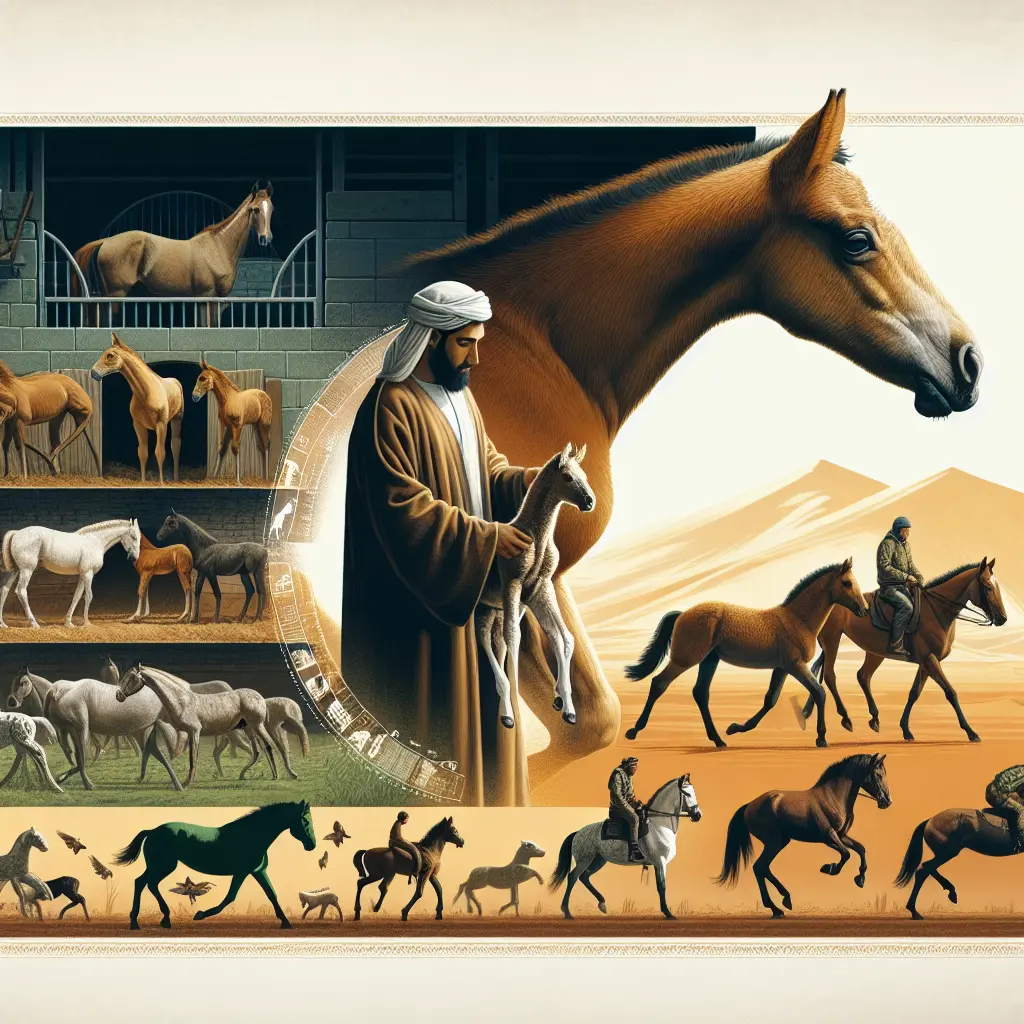
Transition to Competitor
As Mylo matures, training focus shifts to competition-prone skills. This includes mastering advanced training exercises, necessary for success in chosen equestrian disciplines such as dressage, jumping, or reining.
Physical Conditioning
Ensuring Mylo's optimal health through balanced diets and regular exercise routines is imperative. Strength and endurance are fundamental for budding competitors, and these aspects require dedicated attention throughout his grooming process.
Mental Preparation
Competitions can often be stressful. Mylo undergoes gradual exposure to competition-like environments to build confidence. Consistent praise and positive reinforcement ensure he remains calm and responsive under pressure.
Culmination of Training
Raising Mylo from foal to competitor is a labor of love. This journey is characterized by patience, commitment, and trust. By embracing techniques rooted in natural horse behavior and regular training, Mylo continues his path toward success, preparing for future challenges and achievements. Explore the Jodhpur Collection for just the right gear to enhance Mylo’s journey.
Conclusion
The path to raising a great competitor like Mylo demands foresight and dedication. Combining foundational training principles, a deep understanding of equine psychology, and the consistent application of practice, you too can cultivate a horse who is both a champion on the field and a loved companion off it. Remember, in equestrian endeavors, perseverance and passion make all the difference.