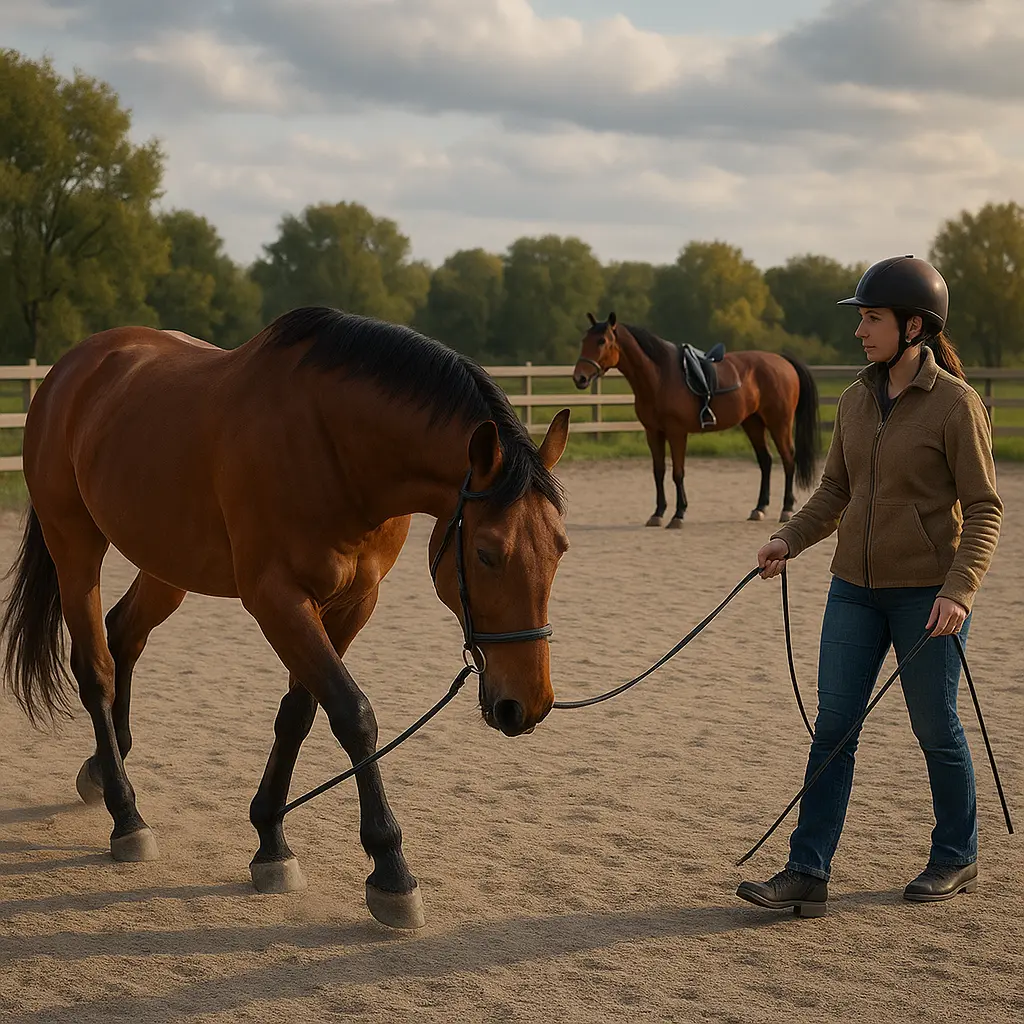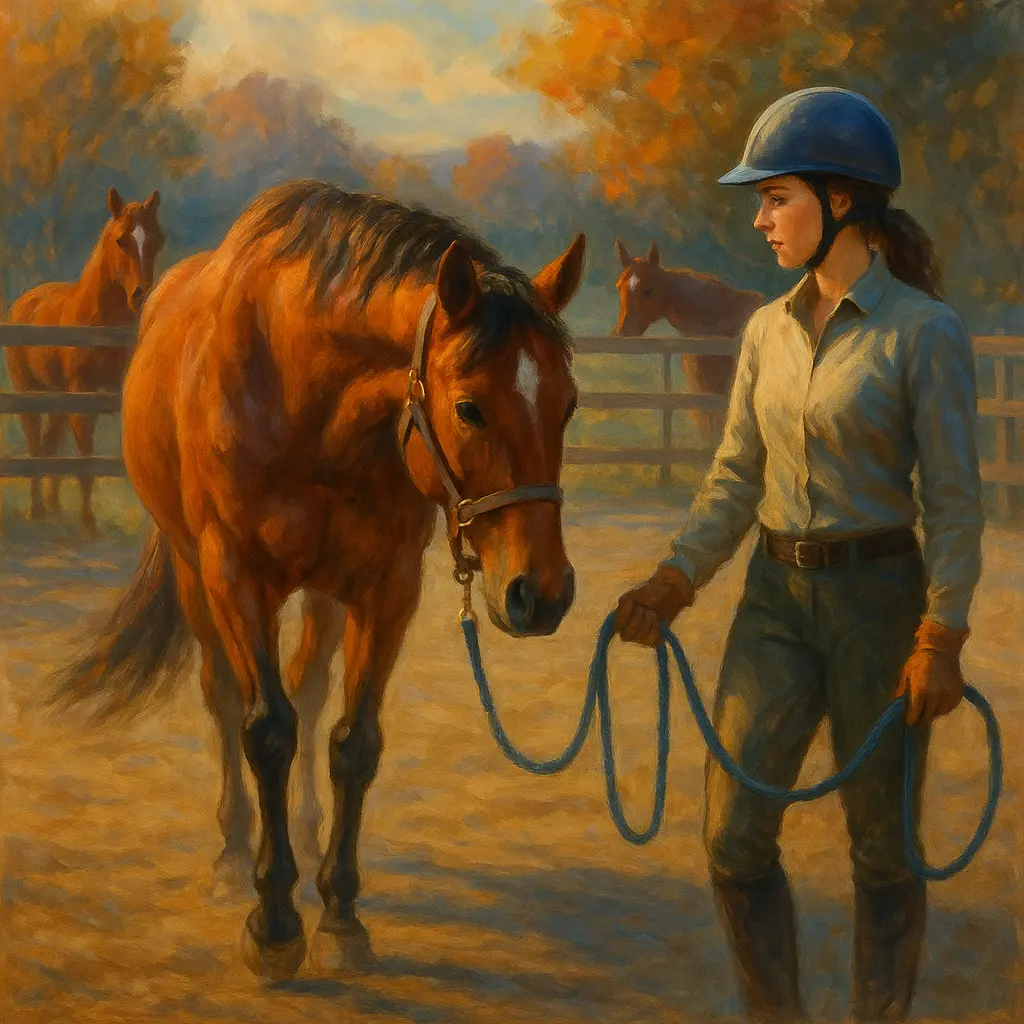
Your horse clinging to a field mate, calling in the menage, or napping when a buddy leaves isn’t “naughty” — it’s instinct. The good news: with a simple, consistent routine 5–6 days a week, most herd-bound behaviours ease within days and markedly improve within a fortnight.
Key takeaway: Treat herd-bound behaviour as an emotional issue, build daily, low-stress separation, and progress step-by-step — most horses settle fast when you make calm the easiest option.
Why do horses become herd-bound?
Horses are hard-wired to seek safety in a herd, and stress or poor socialisation can turn that instinct into napping, calling, or bolting around others. Regular, calm separation training 5–6 days a week reduces anxiety quickly — often in days to a couple of weeks.
Herd dependence is normal equine behaviour. As trainer Julie Goodnight puts it, “Treat the horse’s emotionality as a mental health issue and not a training issue” — your aim is to help your horse feel safe away from the group, not to “prove a point.” (source) UK yards can unintentionally amplify the problem: resource guarding over hay, crowded warm-ups, and tense rider energy all raise arousal. Behaviourist Hannah Weston notes that anxious horses can refuse to enter arenas, shy from other horses, pin ears, threaten to kick, or escalate to rearing/bolting when proximity feels unsafe (source).
At Just Horse Riders, we recommend viewing every session as a chance to reinforce relaxation. Short, repeatable wins build your horse’s confidence that leaving the herd leads to comfort and clarity, not conflict.
How long will it take my horse to improve?
With consistent daily separation (5–6 sessions per week), most horses show improvement within days and make substantial progress in 1–2 weeks. The first day is usually the hardest; it gets easier from there.
Goodnight’s approach highlights quick adaptation when you make calm the goal and apply steady, fair repetition (source). Small, predictable sessions translate fast: a relaxed head-lower, a deep breath, or a soft chew earns release; panic never does. That clarity reshapes the emotional pattern. Expect setbacks if you skip days early on—consistency is your shortcut.
What daily separation routine actually works?
Begin on the ground with short, calm separations for grooming, tying, or hand-walking away from the herd; only release or return when your horse genuinely relaxes (head lowers, breath deepens). Build duration and distance gradually across 5–6 days per week.
Here’s a simple UK-friendly plan you can run before or after work, even in winter:
- Set up for success: Choose a quiet spot just out of sight of the buddy (start “around the corner”). Use a safe tie point or hold the lead, and bring a familiar brush set to establish a soothing routine. A well-fitted headcollar and lead are essential; good gloves and sturdy footwear help too — consider supportive horse riding boots for secure handling on wet yards.
- Groom to relax: Start with friendly strokes; if your horse tenses, pause your hands and wait. The instant you see a relaxation sign (blow out, lick and chew, head drop), resume grooming. Build a few minutes of calm before heading back.
- Walk the loop: Lead a short circuit away from the herd, halt, breathe, reward relaxation, then return. Repeat 2–3 times.
- Extend time only on calm: If your horse calls or fidgets, stand quietly; do not march back to the buddy. When they settle, end the session or take a short walk back as the reward.
Quick tip: Reward calm with low-arousal reinforcement — a wither scratch, a quiet word, or a small treat. If you like food rewards, keep them tidy and low value; our customers love using simple nibbles from our horse treats selection for this kind of work.
UK weather reality: Keep momentum through rain and mud by using sheltered spaces for consistent practice. For post-groom comfort and outdoor sessions in drizzle, kit up appropriately with turnout rugs or stable sessions backed by warm stable rugs. Brands like WeatherBeeta and Shires are reliable yard staples when the forecast turns.
Pro tip: Distract the buddy, too. Hanging a haynet for the friend left behind reduces mutual calling and makes departures drama-free. Shires and WeatherBeeta yard gear often covers haynet needs — browse our Shires range for practical yard essentials.
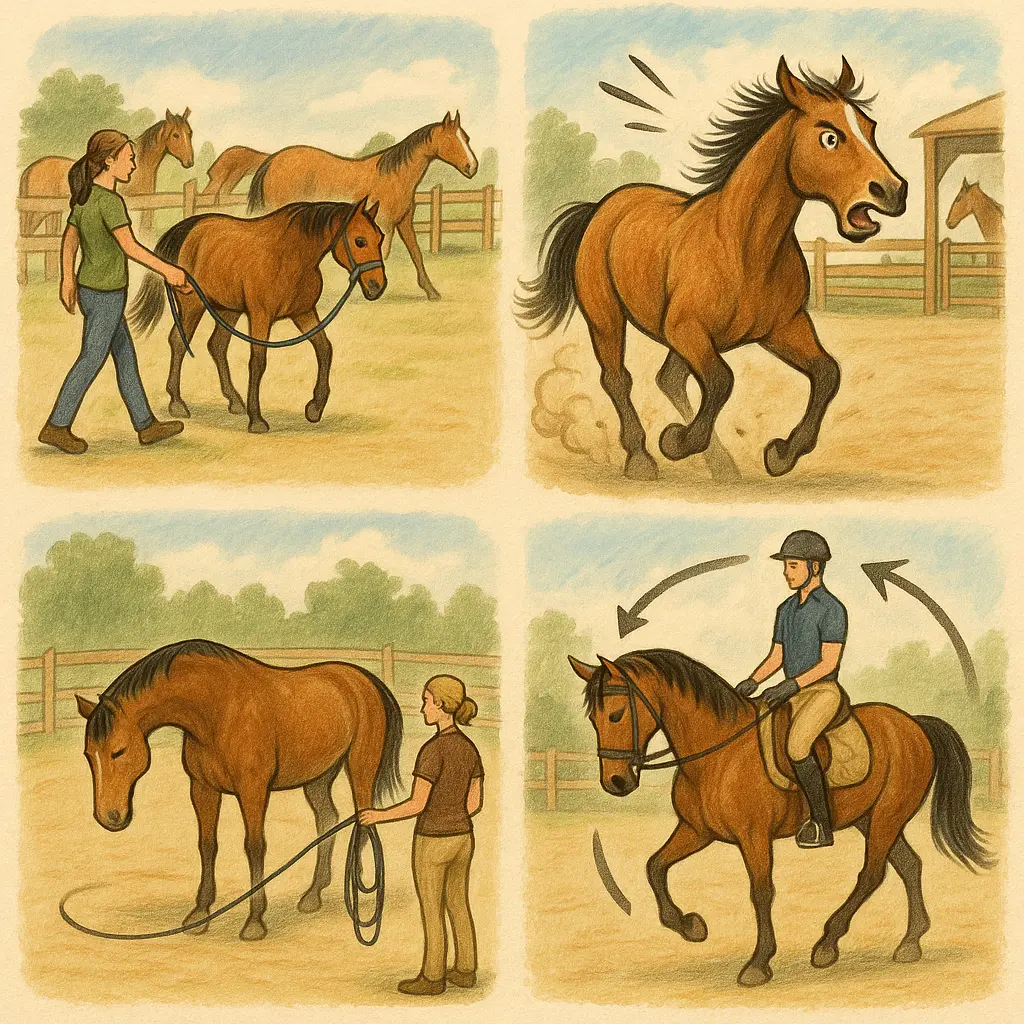
How do I stop panic around other horses in the arena?
Start alone to establish focus, then add one calm horse at a safe distance, closing the gap gradually while preventing any fear response. If your horse tenses, create distance, reset to relaxation, and re-approach.
This is classic systematic desensitisation. Monty Roberts University guidance stresses beginning with one horse/person in the arena and expanding in small, non-threatening steps to avoid sensitisation (source). In practice:
- Phase 1 — Alone: Lunge or long-line to establish listening and “go/stop/turn” on light cues. Keep sessions short and successful. A lightweight long line and a clear, visible lunge whip help maintain a safe bubble.
- Phase 2 — One at a distance: Invite a steady horse and rider to enter and keep 20–30 metres away. You continue groundwork or quiet ridden work. If your horse notices but stays soft, praise and carry on. If they brace or call, put them to work in a small task until you get the sigh or head-lower, then relax again.
- Phase 3 — Controlled approach/retreat: Spiral 5–10 metres closer, then back out; repeat. Your horse learns they can move away when worried and return when calm.
- Phase 4 — Sharing space: Add brief passes, halts alongside, and short follows behind a calm horse. Finish early on a win.
Hannah Weston warns that flooding (too many horses, too close, too soon) creates the very rearing/bolting we’re trying to avoid (source). Micro-steps beat meltdowns every time.
Safety first: Wear a certified helmet and grippy footwear — browse our riding helmets and supportive women’s jodhpurs & breeches to stay secure when sessions get lively. If you need spare kit without the premium price tag, check the Secret Tack Room clearance for bargains on yard and training essentials.
How do I keep both of us calm when others come and go?
Your calm, consistent signals prevent escalation; then ask for one simple, repeatable exercise to redirect your horse’s focus. When another horse enters or leaves, breathe out, soften your body, and put your horse to a known task until they re-settle.
Confidence is contagious. Fear Free Horse Training summarises it simply: “Confidence is the key… Always work in an arena or an area without distractions and teach your horse to concentrate on you.” (source) Before mixing with others, confirm you can get instant responses to a few “focus buttons”:
- Turn on the forehand/haunches: One or two deliberate steps, then release.
- Back two steps, walk on: Keep it rhythmic and easy.
- Small circles, change of bend: Quiet hands, clear intent.
- One repeatable pattern: For example, ride a 10 m circle, then a straight line, then halt — repeat when distractions appear.
Julie Goodnight stresses the value of reminding the horse “how good it feels to be relaxed.” (source) When another horse leaves the arena, don’t chase the issue; just run your focus pattern until relaxation returns, then reward. A few minutes of patient repetition most days rewires the response rapidly (source).
Quick tip: If you feel your own nerves spike, hop off for a minute of in-hand work. Re-mount when you both breathe again. A secure pair of riding boots helps you stay planted and relaxed on the ground as well as in the saddle.
Can feeding help with separation anxiety?
Yes — feed a portion of your horse’s ration away from the buddy, starting around the corner and building to fully out of sight; distract the buddy with hay to prevent duet calling. Increase distance and duration gradually over multiple feeds.
Many cases show one horse struggles more than the other. The Horse Care UK approach is practical: begin by feeding just out of sight, then move further over repeated sessions until the anxious horse is content alone for the full meal (source). Pair this with your daily grooming/groundwork routine and the arena plan above for a whole-yard solution. Using a sturdy haynet for the buddy left behind reduces stress on both sides and keeps the yard quiet while you work.
Pro tip: Keep food rewards tiny and consistent, and avoid “feeding the fidgets.” Wait for the exhale or head-lower, then deliver. For tidy, pocket-friendly options, see our curated horse treats. If you’re considering a calming supplement, always consult your vet (BEVA-aligned) and a nutritionist first; you can browse our broad supplements range to discuss options professionally.
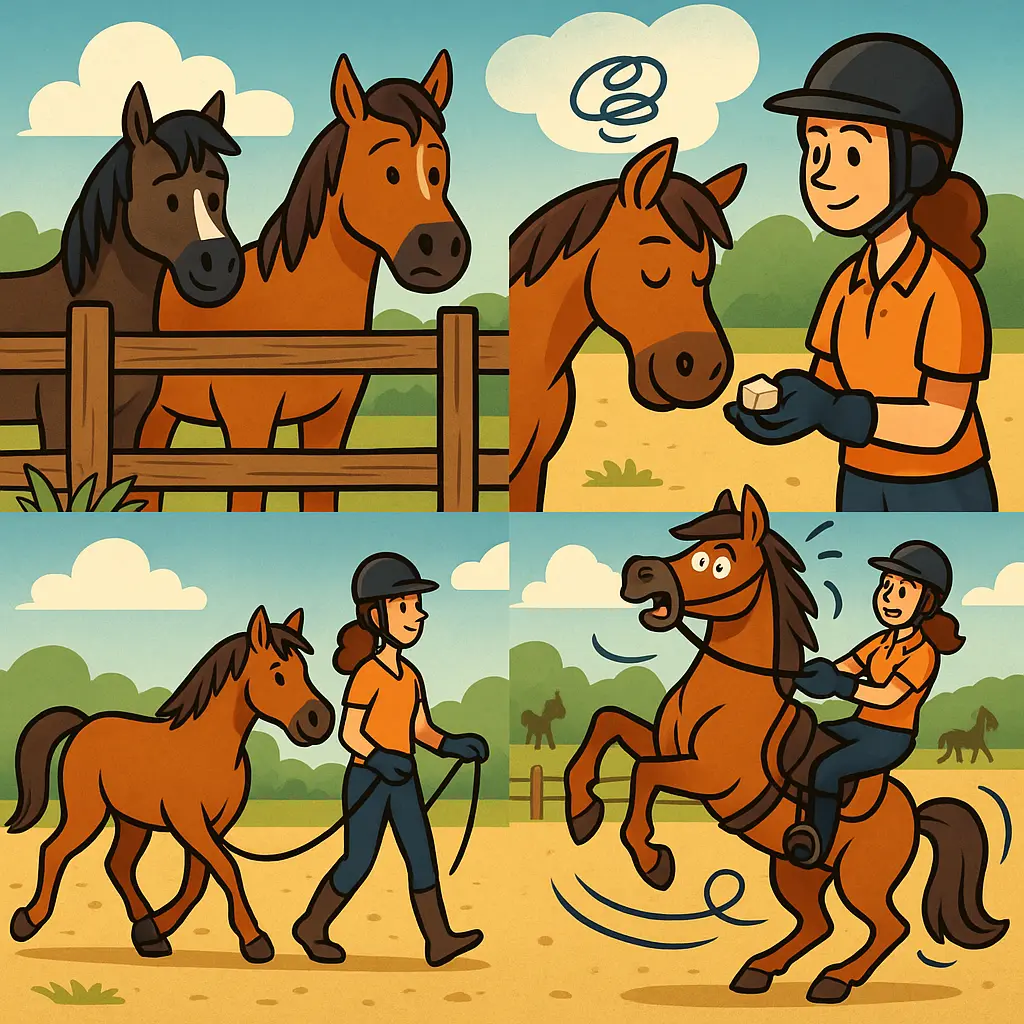
What UK-specific timing and yard tactics work best?
Practise at home to mimic shared menage and competition warm-ups, and start your programme in spring/summer so habits are strong before the wet winter crowding returns. Rehearse “horses arriving/leaving” as part of normal training.
On UK livery yards, horses often nap or panic when a buddy leaves the menage. Build this scenario into your weekly plan: ask friends to pop in and out while you run your focus exercises, then cool off and finish on a calm note. Wet winters confine many to indoor schools and shared spaces, so use drier months to push your outdoor confidence. When weather turns, keep progress ticking in a covered round pen or quiet stable aisle. Preparing your horse for the elements (and keeping them comfortable after sessions) with breathable winter turnout rugs and cosy stable rugs helps you maintain frequency no matter the forecast.
Safety and visibility matter if you integrate short hacks as part of the separation plan. For roadside work in low light, add smart hi-vis rider gear to your set-up so focus-building doesn’t clash with autumn afternoons.
What should I avoid so I don’t make it worse?
Avoid flooding with too many horses, inconsistent routines, and retreating while your horse is anxious; each of these hardwires panic. Keep sessions short, frequent, and always end on relaxation.
- Too much, too soon: Adding three horses at once or going straight to a busy lesson sensitises your horse rather than desensitises them (source).
- Leaving while tense: Returning to the buddy when your horse is calling/dragging teaches them that anxiety “works.” Wait for the sigh or soften, then head back.
- Skipping days early on: Momentum matters. Aim for 5–6 short sessions per week at the start (source).
- Rider tension: Your nerves magnify your horse’s alarm. Practise breathing, keep your aids light, and sit tall. A well-fitted helmet and comfortable breeches support relaxed, confident riding.
- Ignoring the buddy: Keep the left-behind horse content with hay and a quiet routine to reduce mutual calling (source).
- Progress without proof: Only move closer or increase time once you can easily regain relaxation at the current step.
If you want a second pair of eyes, a BHS Accredited Professional Coach can structure sessions, and your vet (via BEVA standards) can rule out pain that may amplify anxiety responses.
Putting it all together: a simple weekly plan
Run 5–6 short sessions per week, pair separation with relaxation, and build in controlled arena exposure. Within 1–2 weeks, you should see a calmer, more focused horse.
- Days 1–3: Daily 10–20 minutes of groom-and-stand just out of sight, plus a short hand-walk loop. If riding, stay alone and practise your focus buttons for 10 minutes.
- Days 4–7: Add feeding a half ration away from the buddy; begin arena Phase 2 with one calm horse at distance. Add approach/retreat spirals and short follows.
- Week 2: Increase distance and duration for feeding and tie sessions; add brief passes and exits/entries by other horses while you run your repeatable exercise.
- Ongoing: Randomise small challenges (a friend leaves mid-session, a new horse appears) and finish early on a calm win.
Gear that helps you keep it consistent: a reliable grooming kit from our grooming collection for low-arousal rewards, weather-ready rugs from WeatherBeeta, and safe rider basics such as boots and helmets. Consistency—far more than complexity—is what changes the picture.
As a reminder from the experts:
“The key to success is in reminding the horse how good it feels to be relaxed... Treat the horse’s emotionality as a mental health issue and not a training issue.” — Julie Goodnight (source)
FAQs
Why does my horse nap or rear when its buddy leaves the menage?
It’s instinctive herd anxiety, often worsened by past stress or poor socialisation; treat it as an emotional issue. Run a daily separation routine, then practise controlled arena exposures, using simple focus exercises as other horses come and go (source, source).
How long until my herd-bound horse improves?
The first day is usually the hardest, but with 5–6 sessions per week you should see progress in days and meaningful change within 1–2 weeks (source).
Should I ride or do groundwork first when separating?
Start with groundwork and grooming to build calm focus, then add short ridden sessions within your horse’s comfort zone, expanding slowly with positive reinforcement (source).
What if my horse panics around other horses in the arena?
Desensitise stepwise: work alone first, then add one calm horse at distance and close the gap gradually; rider confidence and clear focus cues are essential to avoid sensitisation (source, source).
Is herd-bound behaviour a training failure or bad temperament?
Neither. It’s normal equine instinct. You don’t change temperament; you change the emotional pattern through consistent, low-stress separation and rewards for relaxation.
Can I fix separation anxiety with feeding alone?
Feeding away from the buddy helps but works best when combined with daily movement and calm handling. Distract the buddy with hay at the same time to reduce mutual calling (source).
What kit helps make sessions safer and smoother?
Choose a certified riding helmet, supportive riding boots, and simple, soothing rewards from our grooming and treats ranges. For year-round consistency, keep your horse comfortable in suitable turnout or stable rugs.
Build your plan, keep it calm, and show up most days. Your horse will learn that leaving the herd is safe — and that’s when the real partnership begins.