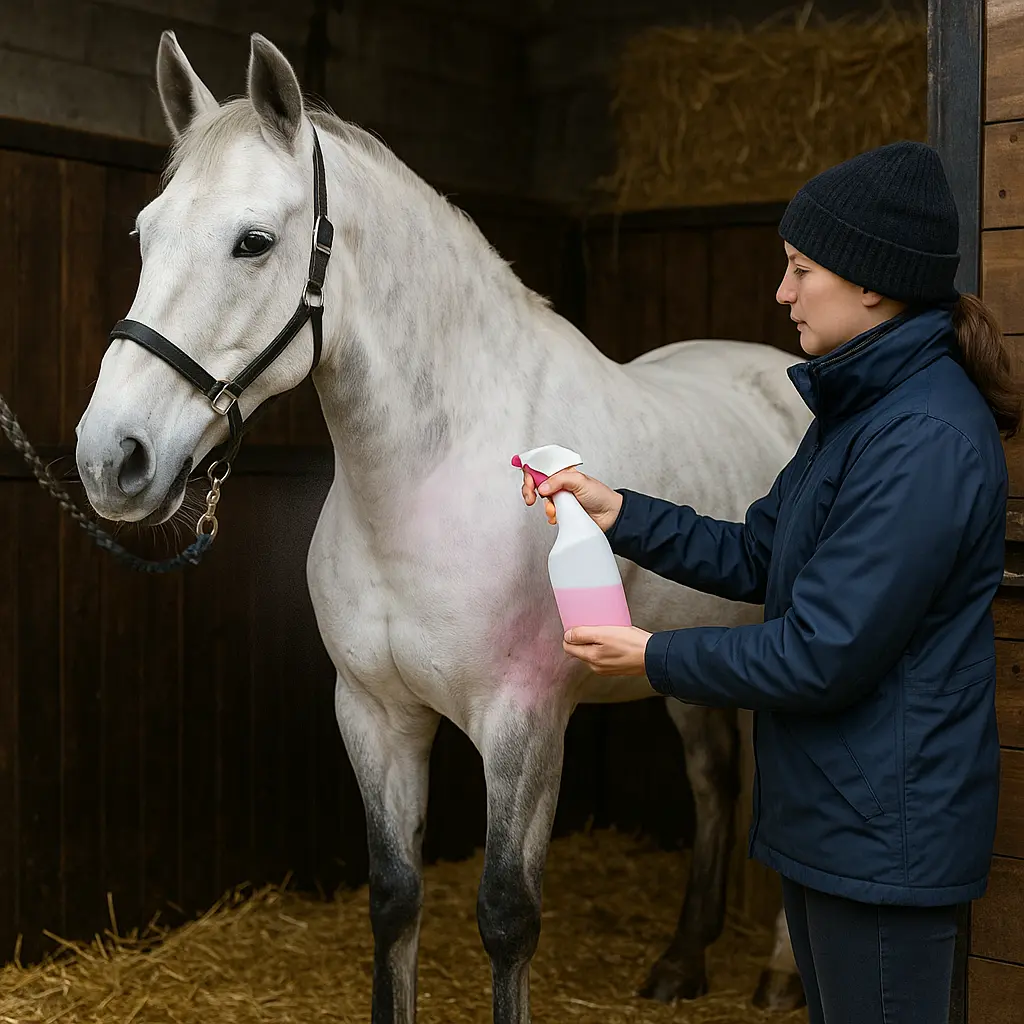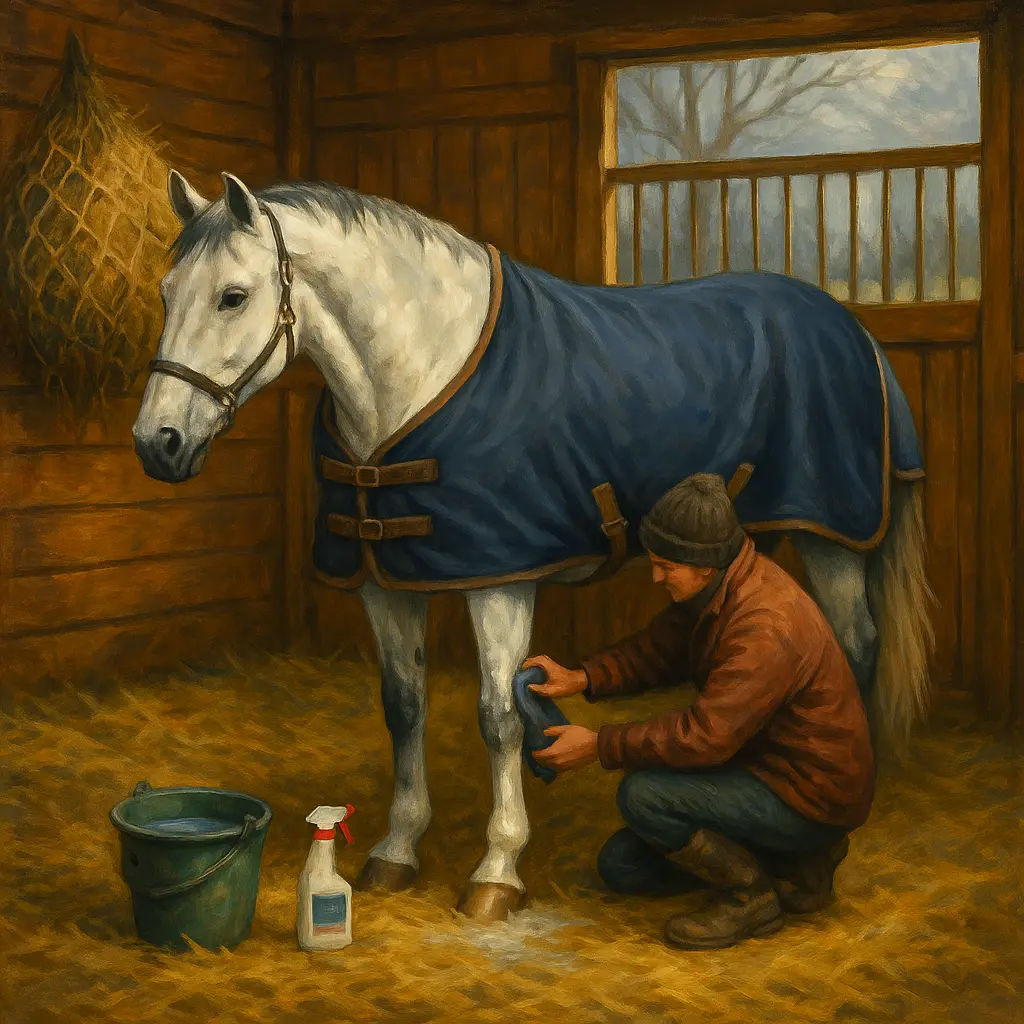
Grey horses and UK winters aren’t the easiest pairing: constant rain, sticky mud and more stable time invite stains that seem to set overnight. The good news is you can keep your grey 80–90% clean with the right daily routine, smart rugging, and a few pro stain-busting tricks.
Key takeaway: In a UK winter, focus on daily spot-cleaning, ultra-clean stabling, careful rugging only when needed, and Omega‑3 nutrition to keep a grey bright without stripping essential coat oils.
Why greys get so grimy in UK winters
UK winters mean frequent rain, deep mud and often restricted turnout, so greys spend longer in stables where urine and manure stains set quickly.
From October to March, many British yards limit turnout to protect fields. That extra stable time is a double-edged sword for greys: it keeps them out of the mud but massively increases the chance of bed stains, especially if they like a good roll. Professional grooms consistently stress that immaculate stabling is non-negotiable in winter. As Emily Lapolla puts it:
“The best practice is honestly to keep them in a clean environment. I often pick Wembley’s stall five or six times a day to make sure it’s spotless. It may seem like overkill, but it makes the job much easier!”
Daily grooming also matters, but you need to balance cleaning with preserving your horse’s natural waterproofing. The British Horse Society (BHS) reminds owners that overgrooming strips the coat of oils that help shed rain — a key defence in wet UK weather. Focus on removing mud where tack sits and spot-clean the rest, rather than bathing heavily.
Rugging and clipping: what your grey really needs
Only rug if your horse is clipped or genuinely needs extra protection; clip the back and hindquarters for regular work to prevent overheating, and use exercise sheets in wet/cold conditions.
The BHS is clear: don’t assume your horse needs a rug just because you feel cold. Horses grow a thick winter coat and don’t experience cold like we do. Over-rugging can cause sweating, which then chills the horse, especially when ridden or in changeable UK weather. Clipping the back and hindquarters (trace or blanket clip styles) is ideal if your grey is in regular work, so they don’t overheat during exercise — then add warmth sensibly with rugs and exercise sheets as needed.
At Just Horse Riders, we recommend choosing turnouts with reliable waterproofing and breathability for field time, and a comfortable stable rug for nights in. Explore our curated ranges:
- winter turnout rugs with dependable, UK‑proof weather protection
- stable rugs for cosy, mud‑free stabling
- Trusted brands our customers love: WeatherBeeta and Shires for robust rugging options
Quick tip: After riding, check for sweat under the saddle area and girth. If your grey is getting damp there in winter work, consider a partial clip and an exercise sheet to help manage temperature.
The right winter grooming routine (without stripping oils)
Brush 2–3 times a week (more if muddy) with soft tools to distribute natural oils, and spot-clean daily; avoid frequent full baths in winter.
Greys need a bit more diligence, but blasting them with shampoo every other day in January does more harm than good. Veterinary and grooming guidance agrees: reserve full baths, and instead prioritise regular brushing to lift dust, detangle, and spread protective oils. According to Equine MedSurg, 2–3 grooming sessions per week is the minimum in winter, increasing after muddy turnout.
“If left un-rugged, try not to overgroom horses as this can strip the coat of natural oils which help with waterproofing, although it’s still important to remove any mud from areas where tack will be worn to prevent rubbing.” — British Horse Society
For greys, add quick daily stain checks. Use a damp sponge with a touch of whitening shampoo on targeted areas (hocks, knees, elbows), then dry thoroughly. Save full washes for milder days or shows. You’ll find stain removers, soft-body brushes, mane combs and sweat scrapers in our grooming collection; many riders rate tools from LeMieux for gentle but effective everyday use.
Tails, legs and mud fever prevention for greys
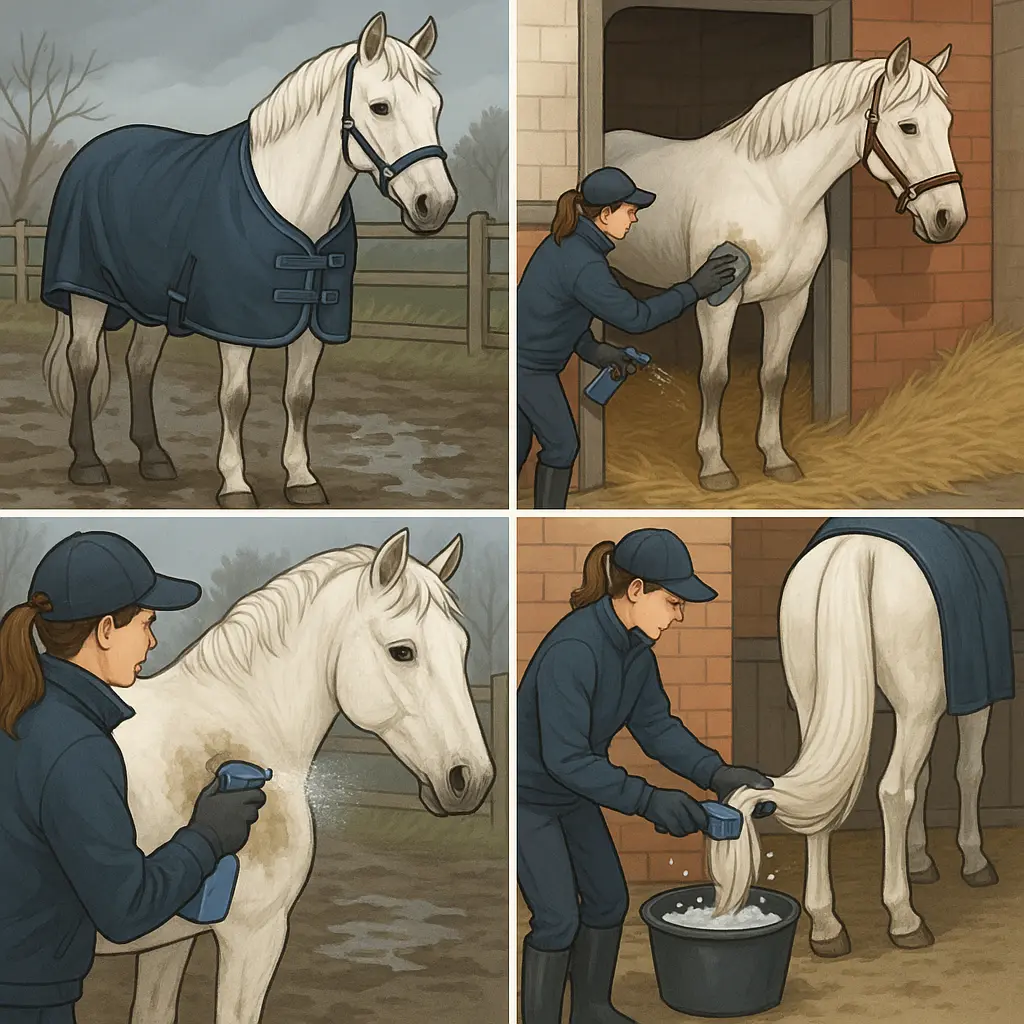
Wash grey tails weekly with a whitening formula and condition for moisture; coat legs with pig oil before turnout to repel mud and help guard against mud fever.
White tails love to yellow in winter, so a focused tail routine pays off. Aim for a weekly deep clean with a whitening shampoo, then condition and allow to dry fully before turnout. If the tail is lightly soiled on off-days, a warm-water rinse or a quick rub with a damp cloth and a touch of soap is enough — over-washing causes dryness and encourages more dirt to stick.
Pre-turnout, brush the legs clean and apply a light layer of pig oil from knee to fetlock/pastern to create a mud-repellent barrier — a widely used UK practice, particularly for horses prone to mud fever. Many owners also use turnout boots for extra protection when fields are at their wettest; see our horse boots and bandages collection for supportive and turnout-friendly options. For skincare support, consider reputable brands like NAF as part of your winter leg-care toolkit.
Pro tip: Patch-test pig oil on a small area first. Some sensitive-skinned horses prefer a diluted mix (50/50 with baby oil) and a less frequent application schedule.
Stain removal that actually works (fast, simple and winter-proof)
Hose or wipe fresh stains each morning, then use a targeted whitening stain remover and a damp towel; hot-towel baths are the winter-friendly alternative to full washes.
Fresh stains lift easily; old ones set like concrete. The consensus among UK owners and grooms is to tackle stains as early as possible. One practical routine shared by owners on Horse & Hound:
“Hose off all stains in the morning, if it’s cold, then spray with Carr and Day stain remover, and wipe off with a damp towel.”
When hoses are frozen or the weather is biting, swap to a hot-towel method:
- Mix warm water with a dash of whitening shampoo.
- Soak a clean microfibre cloth, wring out well.
- Press and lift the stain (don’t scrub); repeat with fresh hot cloths as needed.
- Finish with a light coat conditioner or shine spray to repel dust.
For stubborn set-in patches (hocks, elbows, knees), apply a concentrated whitening product directly, wait a few minutes, then rinse or wipe away. For show-day touch-ups, a sprinkle of baby powder or cornstarch on clean, dry hair helps brighten knees and hocks; follow with a dust-repelling coat conditioner for a polished look. You’ll find specialist whitening shampoos, stain removers, and finishing sprays in our grooming essentials.
Feed for shine this winter: forage, Omega‑3s and warm water
Base your horse’s diet on forage, add an Omega‑3 source like flaxseed, and encourage hydration with warmed water to support coat health and winter shine.
Horses evolved to chew 16–18 hours a day, and in winter forage does more than feed — the fibre fermentation acts as an internal “heater” when grass is scarce. The BHS emphasises that ad-lib forage is essential for warmth and digestive health in cold months. For coat quality, Omega‑3 fatty acids (such as ground flaxseed/linseed) are widely used to boost skin condition and sheen from within. Always introduce supplements gradually and consult your vet if your horse has metabolic or digestive issues.
Hydration is often overlooked in winter. Many horses drink better if their water is slightly warmed on cold mornings and evenings. Good hydration helps skin function and reduces the risk of impaction colic. Explore targeted coat and skin support in our supplements range and keep the forage pile generous when temperatures drop. For more on winter horse care fundamentals, see the BHS winter care guidance.
Stable management to stop yellowing (and save you hours)
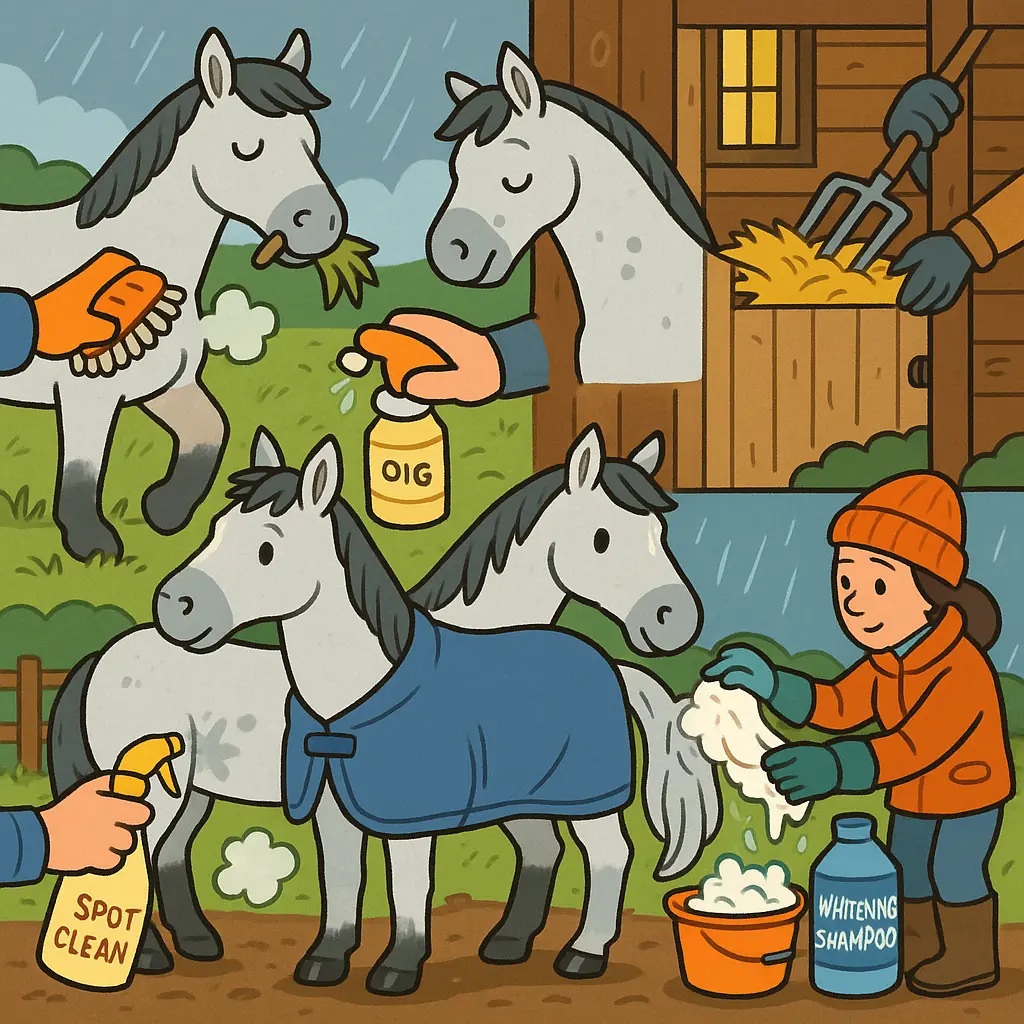
Pick out stables 5–6 times a day and manage dust to prevent yellowing and set-in stains on greys.
Clean, dry bedding is your biggest time-saver. Frequent skipping out prevents fresh stains from “baking in” and keeps the coat brighter with minimal effort. It also reduces ammonia build-up, which can irritate skin and lungs. Dust control matters too: vacuum or lightly dampen dusty walkways, and use low-dust bedding if your horse is sensitive. As noted in UK-relevant pro-groom advice, that 5–6-times-daily spot-picking may sound excessive — but it’s what separates “permanently yellow” from “nearly show-ready” in winter.
Quick tip: Stable rugs help keep the coat cleaner overnight and speed up your morning routine. A well-fitted option from Shires or WeatherBeeta can make a visible difference to a grey’s brightness over winter.
What to wear for winter rides (so you can keep the routine going)
Use hi-vis for every off-road hack and choose warm, waterproof riding kit to keep you comfortable and consistent with winter exercise.
Consistency keeps a clipped grey’s temperature and coat management on track, so dress for the weather. High-visibility kit is essential in dark mornings and early twilights — add a tabard and leg bands at minimum. Keep yourself warm and dry so you don’t cut rides short: insulated riding boots, thermal jodhpurs or breeches, and a safe, well-fitting riding helmet make winter rides safer and more enjoyable. For visibility, browse our hi‑vis rider collection.
A simple weekly plan for a cleaner grey
Follow a short daily routine plus one weekly deep-groom and a tail wash to keep your grey bright without over-bathing.
- Daily AM: Quick stable pick; check for fresh stains. If mild, wipe with a warm damp cloth and a dab of whitening shampoo; dry thoroughly. If very cold, use the hot-towel method.
- Daily PM: Pick out the stable again; brush off dried mud from legs and belly; apply pig oil to clean, dry legs before muddy turnout days.
- 3x weekly: 10–15 minutes of gentle brushing to distribute oils (body brush; soft curry on muddy areas away from the saddle patch). Clean tack areas thoroughly.
- Weekly: Deep tail wash with whitening shampoo; condition and fully dry. Apply coat conditioner or shine spray lightly to repel dust.
- Weekly: Health check — scan for rubs under rugs, any skin irritation on legs, and assess whether clipping or rugging needs adjusting.
- Nutrition: Keep forage ad-lib, ensure fresh water, and add Omega‑3 support if your vet agrees.
- Stabling: Aim to skip out 5–6 times daily if turnout is restricted; keep bedding dry and low-dust.
At Just Horse Riders, we find that owners who adopt this routine see fewer set-in stains and spend far less time scrubbing on show days.
FAQs
Is it possible to keep a grey horse fully white in UK winter mud?
No — not fully in everyday conditions. But with immaculate stabling, rain sheets for turnout, and daily spot removers, you can keep a grey 80–90% clean, reserving full “paper white” for pre‑show routines. This aligns with advice from professional grooms and UK owner experience.
Should I rug my grey horse all winter?
No, not automatically. The BHS advises rugging only when necessary; unclipped horses rely on natural coat oils for waterproofing, and over‑rugging can cause sweating and chills. Clip according to work level, then rug appropriately and use exercise sheets in wet/cold rides.
How often should I wash a grey’s tail in winter?
Weekly with a whitening shampoo and conditioner is ideal, with light rinses on other days if needed. Dry the tail thoroughly before turnout to avoid chills and to prevent fresh mud sticking.
What causes yellowing in grey coats over winter?
Urine and manure stains set in when stabling is prolonged and dusty. Frequent stable picking (5–6 times daily in restricted-turnout periods) and good ventilation/dust control dramatically reduce yellowing.
Can supplements help a grey horse’s coat brightness?
Yes. Omega‑3s (e.g., flaxseed/linseed) support skin and coat health, particularly when winter diets are forage‑heavy. Always introduce gradually and consult your vet for individual needs. See our coat and skin supplements.
What’s the best mud prevention for grey legs?
Coat clean, dry legs with pig oil before turnout to repel mud and help deter mud fever. Add turnout boots for the worst fields and rinse or wipe mud off gently after work. For supportive leg care, browse boots and bandages and proven care from NAF.
How often should I groom a grey in winter?
Brush at least 2–3 times per week (more if muddy) to lift dirt and distribute oils, with daily spot-cleaning of stains. Avoid frequent full baths in cold weather to preserve the coat’s natural waterproofing.
Grey or not, winter care is about balance: preserve natural oils, target the dirtiest bits, feed well, and keep the stable pristine. If you need help choosing the right rug, stain remover, or grooming tools, our team is here to advise — and our collections are ready for your winter kit list: turnout rugs, stable rugs, grooming essentials, and rider hi‑vis for those dark hacks. For further reading, bookmark the BHS winter care page and, for grey‑specific shine strategies, this practical guide from Equus UK.