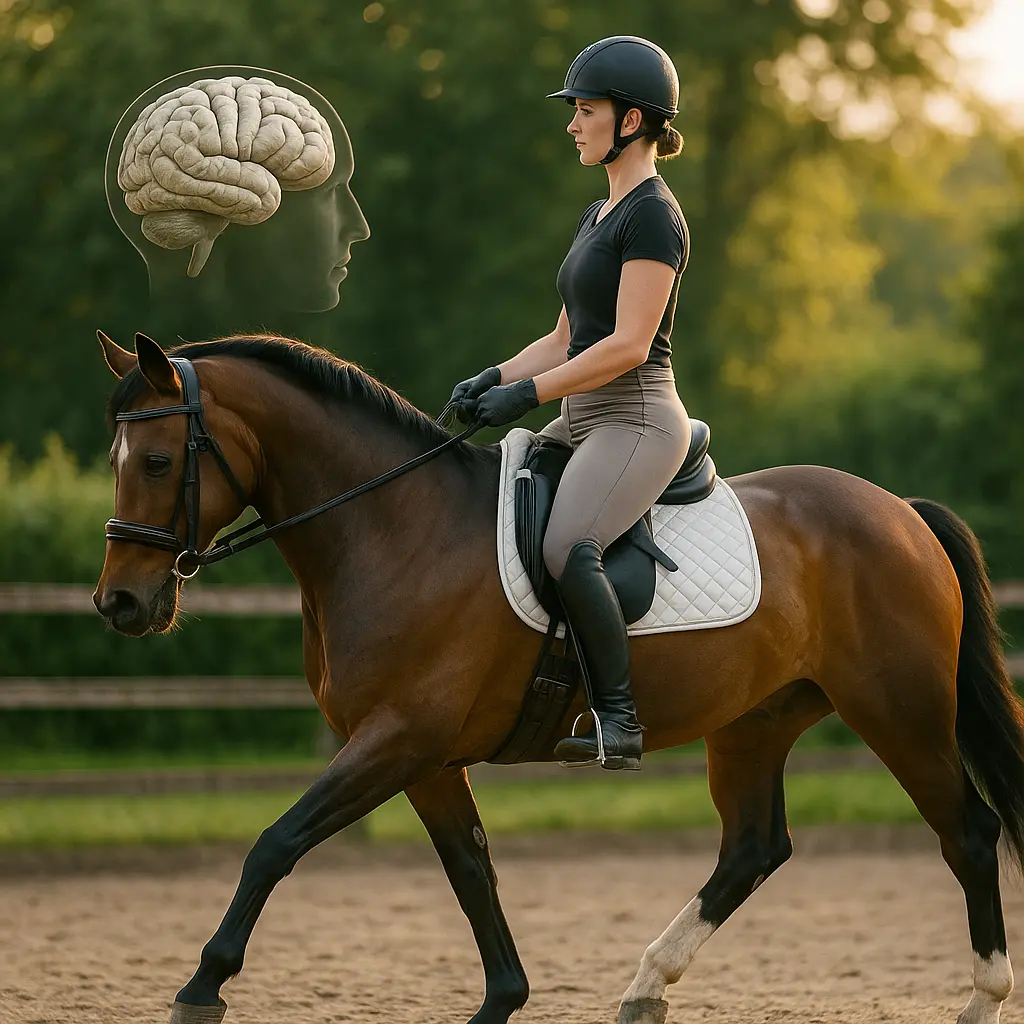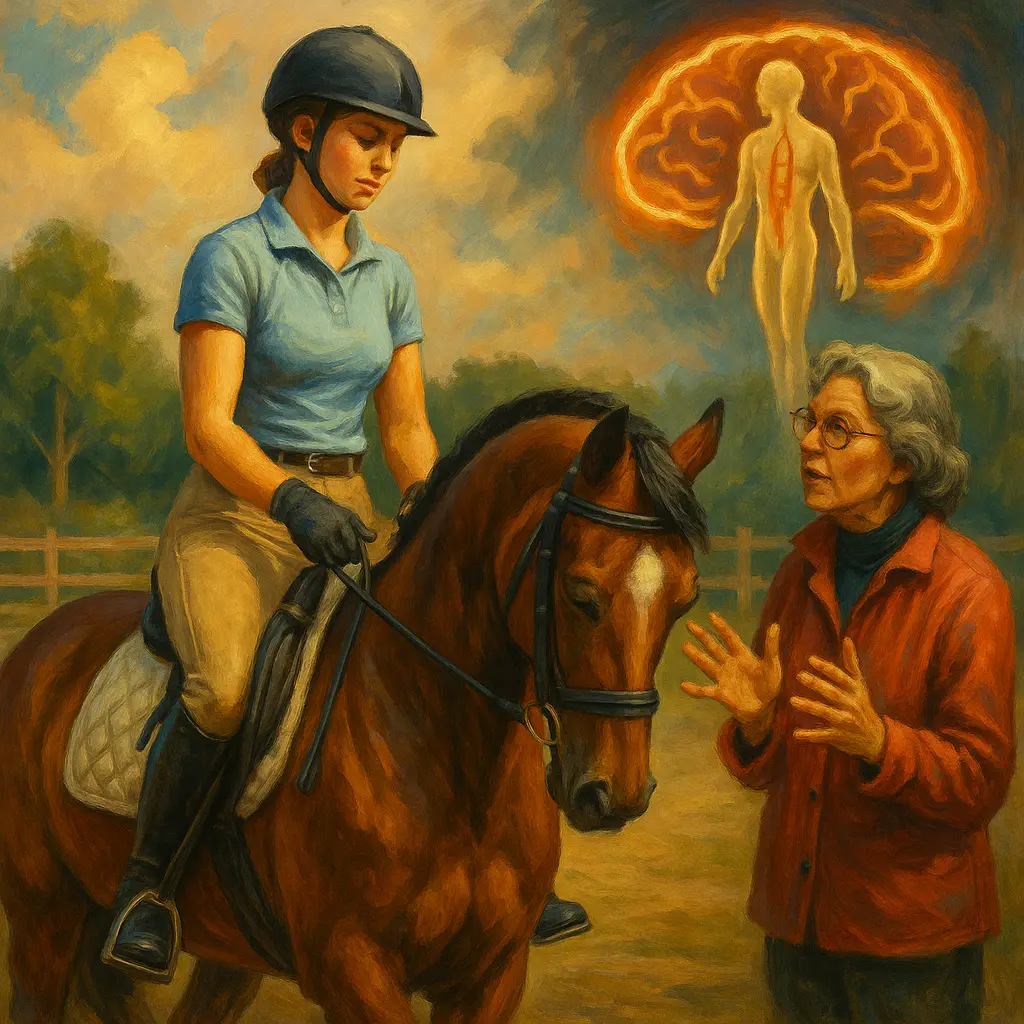
You don’t have to be “born talented” to ride with balance, confidence and feel. Ride With Your Mind (RWYM) shows UK riders how to build that skill set deliberately — even if winter weather, nerves or old habits have been holding you back.
Key takeaway: RWYM trains daily core “Muscle Power”, sharpens concentration and body awareness, and uses right-brain feel so you improve your seat and your horse’s way of going — reliably, not by luck.
What is Ride With Your Mind (RWYM)?
RWYM is a UK-developed rider biomechanics system that trains concentration, body awareness and core strength to improve your seat and your horse’s way of going. Created by Mary Wanless — a BHS-qualified instructor and Bristol University Physics graduate — it blends science with practical coaching for everyday riders.
Mary’s approach, born in British riding schools and eventing, translates elite “talent” into teachable building blocks using physics and anatomy. In her words:
“The bottom line is that improvements in concentration, body awareness, and core muscle strength create incredible improvements both in the rider's seat, and in the horse's way of going.”
Source: Mary Wanless, BHS-qualified instructor and physicist
RWYM is also explicitly about feel and clarity. As Mary explains: “RWYM helps organise your mind and body like riders we call ‘talented.’ Learn what ‘talented’ riders do that they rarely realise! Learn the feels.” Source.
Why Ride With Your Mind works
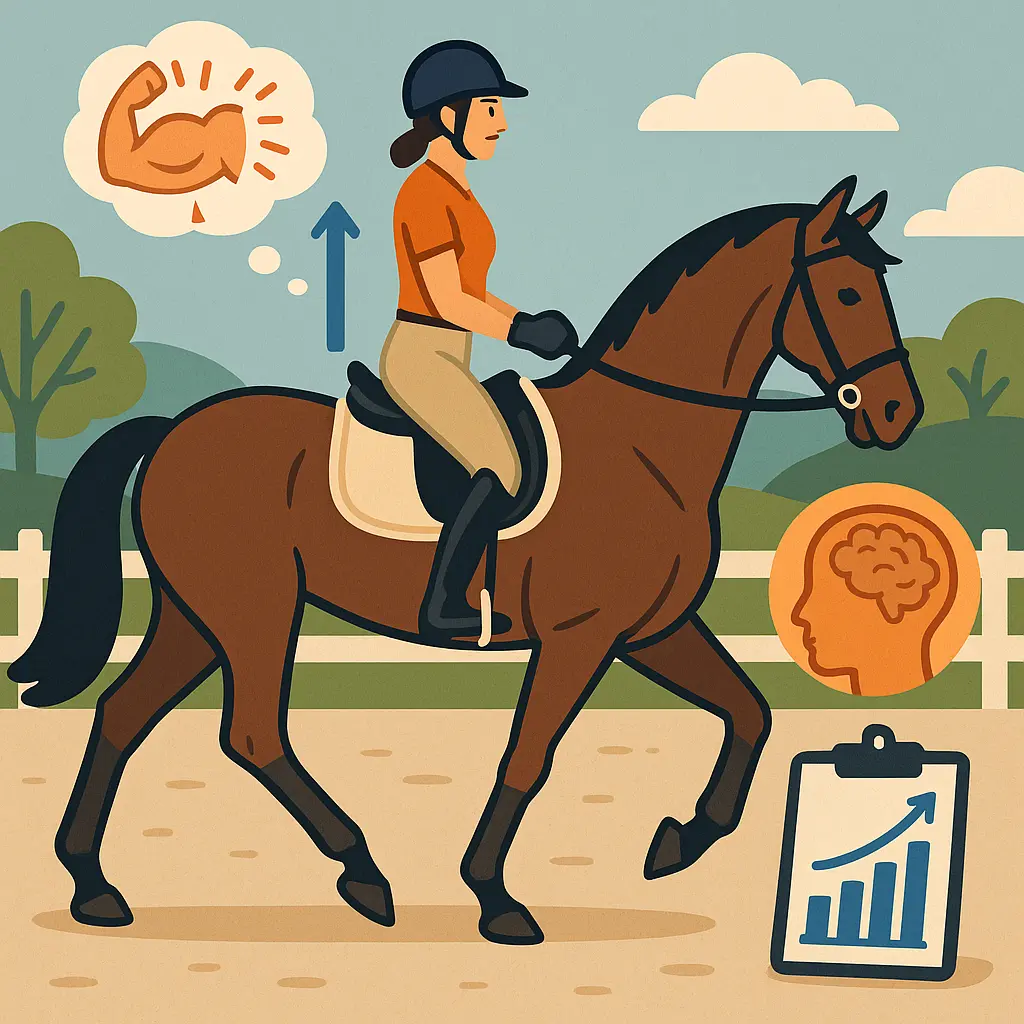
RWYM works by training daily “Muscle Power” in your core and shifting you into higher “brain space” where learning sticks and anxiety drops. Only about 5% of riders naturally possess this Muscle Power — the rest can build it with targeted practice until it becomes part of your identity.
Practically, the method uses biomechanics and clear sensory images to help you:
- Activate a stable core (“internal lift”) for a quieter, more independent seat.
- Use a brain space scale (1–10) to reduce anxiety and unlock learning capacity ride by ride.
- Work in a coach–rider feedback loop that makes good moments reproducible, not random.
- Ride from right-brain “feelages” (images and sensations), avoiding overthinking that scrambles coordination.
“The details of the muscular co-ordination needed... is far more intricate than the thinking mind can understand... It works much better to let the right brain do the job... storing it in images or ‘feelages’ which the body can instantly recognise.”
Source: Mary Wanless in The Horse Magazine
Riders commonly report that as they become comfortable with exercises (including grids and small fences), their brain space number rises — instructions “land,” anxiety fades, and progress accelerates.
How to start RWYM today: a 10-minute routine
Start with the “internal lift”, a simple core activation you can practice on the ground and in walk for instant stability. Then layer in a feel–compare–contrast sequence and finish with a quick brain space check to lock in learning.
- Ground warm-up (2 minutes): Stand tall, soften your knees. Gently pull your stomach in to form a “wall,” then press your guts against it to switch on your deep core. This is the RWYM “internal lift.” Breathe — no bracing.
- Mount and find neutral (2 minutes): Sit so your ear–shoulder–hip–heel line stacks. Imagine your pelvis as a bowl: neither tipping nor tucking. Keep your internal lift just “on”.
- Walk feel (2 minutes): Match your lift to the horse’s back movement. You should feel taller, steadier hands, and a quieter lower leg. If you feel you’re leaning, reduce or refine the lift rather than switching it off.
- Compare and contrast (2 minutes): Briefly release 20% of the lift, notice what degrades (wobblier hands? heavier seat?), then restore it. This contrast sharpens your body map.
- Brain space check (2 minutes): Rate your brain space 1–10 before and after. Aim for a shift upward (calmer, clearer, more teachable). If you drop, simplify — often walk + internal lift is enough today.
Quick tip: Use a single “feelage” to cue your lift, such as “zip up the front of my body” or “grow tall from seat bones”. Right-brain images beat left-brain monologues every time.
Pro tip (coach session): Describe what you feel; ask your coach to confirm what they see in both horse and rider. Repeat the action until the feel and visual result match predictably — that’s your feedback loop.
For days when arenas are windy or the yard is slippery, keep it simple: walk-focused internal lift, a few trot transitions, and a short cool-down. Neutral balance minimises aches and niggles in British winter conditions — as one seasoned UK rider put it, “keeping everything neutral… minimises aches and pains.” Horse & Hound forum.
Gear to support RWYM in UK conditions
Choose grippy gloves, weatherproof rugs, supportive pads, and safe boots and helmets to stay balanced and focused in British weather. Stable, weather-ready kit means you can practise RWYM consistently through the wet and wind.
- Safety first: A well-fitted helmet is non-negotiable, especially when you’re experimenting with new feels. Explore our curated riding helmets — popular with UK riders for everyday schooling.
- Secure lower leg: Consistent contact starts at your feet. Support your alignment with sturdy, grippy horse riding boots suited to winter surfaces.
- Stay riding when it rains: Keep your horse comfortable in showers so you can keep sessions short and focused. See our range of weatherproof turnout rugs for UK seasons.
- Support and protection: When adding polework or small grids to build confidence, protect limbs and aid symmetry with horse boots & bandages.
- Neutral balance support: Many riders love stable, well-contoured pads that help a centred feel. Browse rider-favourite designs in our LeMieux collection.
- Your base layer matters: Stretchy, non-slip fabrics help you feel the saddle. Try supportive fits in our women’s jodhpurs & breeches selection.
- Be seen on murky days: If you’re hacking to keep the mind quiet and the body moving, add high-visibility rider gear to stay safe.
At Just Horse Riders, we recommend setting up a simple “RWYM-friendly” kit bag: helmet, boots, a favourite pad, and a quick-brush grooming tool so you can tack up fast between showers and keep the focus on feel.
Coach smarter with feedback loops
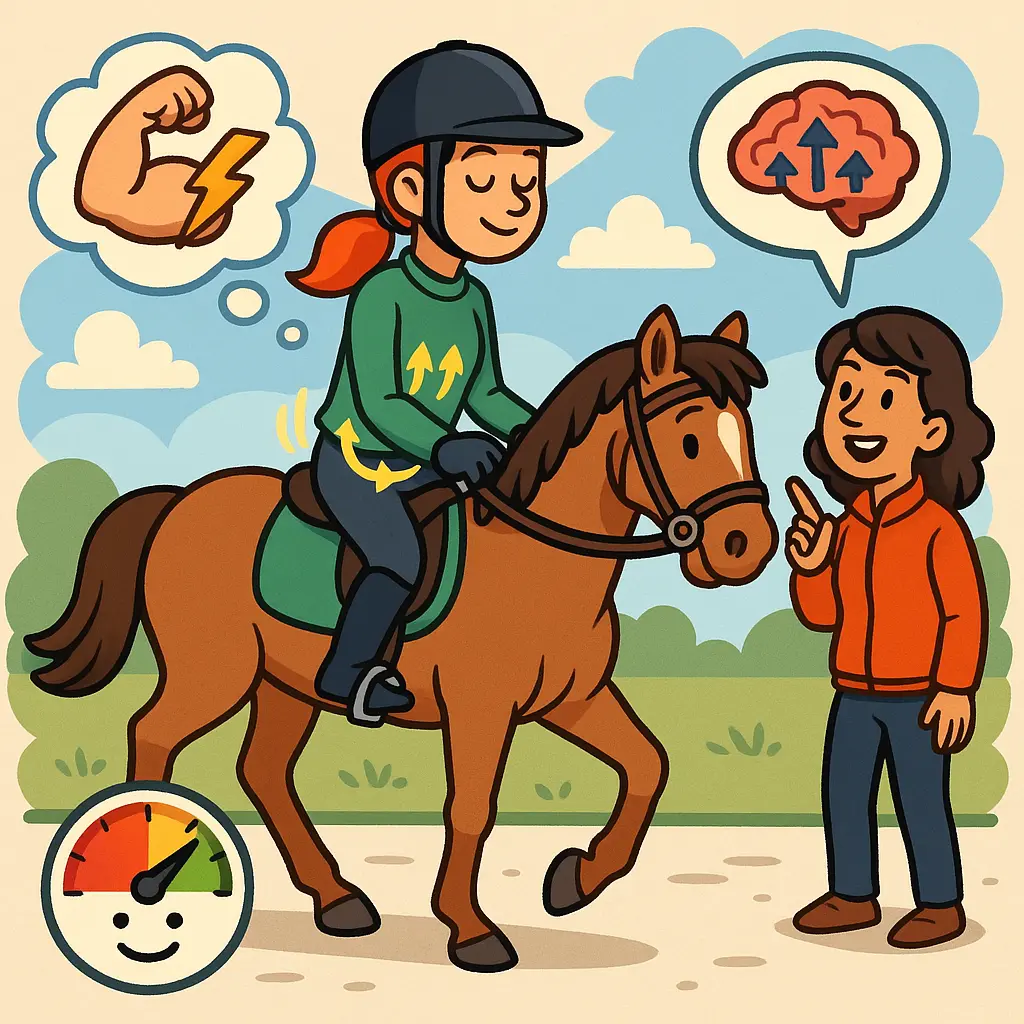
Use a simple describe–confirm–repeat loop to link feel to visible change, turning good moments into reliable skills. This is the backbone of RWYM coaching and the fastest route to progress.
Here’s how to run it with your coach or a skilled schooling friend:
- Describe what you feel in the horse’s body (e.g., “left shoulder drifting,” “hind stepping under”).
- Act with a specific correction (e.g., notch up your internal lift, widen hands a fraction, soften your outside hip).
- Confirm what changed — your helper names the visible change in horse and rider (e.g., “straightened in two strides; your hands got quieter”).
- Repeat until the action–feel–result trio becomes your new normal.
This iterative loop builds from walk to trot to canter, from straight lines to circles, and eventually to poles and small fences. Learning stays evidence-based and ethical, aligning with BHS priorities on correct, welfare-friendly rider position.
Quick tip: Keep a “brain space and feels” journal. Note your pre- and post-ride brain space number (1–10), a one-line feelage that worked, and one visible change. Over a wet January, this log becomes gold.
Common mistakes RWYM fixes
The biggest mistakes are bracing, collapsing, and overthinking; RWYM counters them with internal lift, neutral balance, and right-brain focus. Addressing these early prevents aches and protects confidence, especially in winter.
- Bracing (gripping thighs, held breath): Swap for a low-dose internal lift and quiet breathing. Think “tall and elastic,” not “stiff and strong.”
- Collapsing a side in corners: Imagine a helium balloon lifting the shorter side. Recheck ear–shoulder–hip–heel alignment as you turn.
- Overthinking every aid: Pick one feelage per exercise (e.g., “zip tall”). Fewer words, better coordination.
- Hands chasing the head: Stabilise your torso first; soft elbows follow naturally when your middle is organised.
- Rushing the work in bad weather: Shorten, don’t skip. Five minutes of quality RWYM walk is more valuable than 30 minutes of wrestling.
As one experienced UK rider summed it up: “It’s all about putting yourself in the optimum position of balance and keeping everything neutral which minimises aches and pains.” Source: Horse & Hound forum.
Timeline and progress: what to expect
Expect immediate stability gains from internal lift, with measurable brain space improvements in early sessions and seat changes building session by session. Progress compounds as daily Muscle Power becomes habitual.
Typical pattern we see in UK riders adopting RWYM:
- Week 1–2: Clearer posture and hand quietness in walk and trot; brain space numbers rise as anxiety drops.
- Week 3–4: Consistent transitions and lines; easier straightness; reduced post-ride stiffness thanks to neutral balance.
- Weeks 5+: Better sitting trot and light seat; ability to recreate “the good trot” on demand; increased comfort with poles and small grids.
Mary Wanless emphasises that the right-brain approach prevents overthinking and speeds learning. As your body stores “feelages,” you spend less energy on internal chatter and more on producing the same correct coordination again tomorrow.
“RWYM helps organise your mind and body like riders we call ‘talented’... Learn the feels.”
Source: Ride With Your Mind USA
Keep in mind that UK weather can interrupt plans; RWYM thrives on micro-practice. A five-minute walk session with internal lift on a rainy day keeps the habit alive and your Muscle Power engaged.
Bring science to the yard: groundwork and right-brain focus
Support your under-saddle work with simple, science-based groundwork and right-brain images to refine feel. This keeps training ethical, consistent, and in line with UK welfare standards.
- Groundwork for symmetry: In-hand halt–walk, gentle lateral positioning at the shoulder, and pole-in-hand work help you “see” where the horse drifts — then you can feel and fix it from the saddle.
- One image per task: For a balanced upward transition, try “grow tall from seat bones” rather than listing aids — your coordination will be cleaner.
- Micro-sets at the mounting block: Two breaths of internal lift before you swing a leg over sets your tone for the ride.
As Mary notes, the body recognises and reproduces stored images far faster than it obeys wordy commands. Read more.
Conclusion: ride better by design, not by chance
RWYM turns “talent” into a daily, do-able system: internal lift for Muscle Power, right-brain feelages to reduce overthinking, and a simple feedback loop to make improvement stick. Equip yourself for UK weather, keep sessions short and focused, and record your brain space score to watch confidence grow.
Ready to begin? Pick one feelage today, choose kit that keeps you safe and steady, and give yourself ten minutes of quality practice. Your horse will thank you for it — and so will your future seat.
FAQs
Does RWYM make you overthink while riding?
No. RWYM deliberately shifts you from left-brain “crude orders” to right-brain “feelages,” so your body reproduces correct coordination with less internal chatter. As Mary Wanless explains, storing movement in images and feel is faster and more reliable than analysis. Source.
How long before I see benefits like a better seat?
You’ll usually feel immediate stability from the internal lift and a quick rise in your brain space score as anxiety drops. Seat improvements then build session by session through the feedback loop and daily Muscle Power practice highlighted by RWYM.
Is RWYM suitable for nervous UK riders in bad weather?
Yes. RWYM’s neutral balance reduces aches and wobbles on slippery surfaces, and the brain space scale helps you manage nerves in windy, wet conditions. Keep sessions short, focused on walk and balance, and use safe, weather-ready kit.
What’s the core RWYM exercise for beginners?
Start with the “internal lift”: gently pull your stomach in to make a wall, then press your guts against it to activate deep core muscles. Use a single image (your “feelage”) to cue it, and practise in walk before adding trot.
Can RWYM help with jumping anxiety?
Yes. Riders report improved brain space scores and comfort after grid or pole exercises when using RWYM principles. As confidence rises and balance improves, coaching cues start to “land,” making learning easier.
What kit helps me stick with RWYM through winter?
Keep it safe and simple: a properly fitted riding helmet, supportive riding boots, a reliable turnout rug so your horse stays comfortable, protective boots or bandages for poles, a stable pad from our LeMieux collection, supportive jodhpurs or breeches, and hi-vis if you’re hacking.
Where can I read more from the source?
Start with Mary Wanless’s overview of the method here, explore the RWYM community and resources here, and dive deeper into right-brain riding insights here.