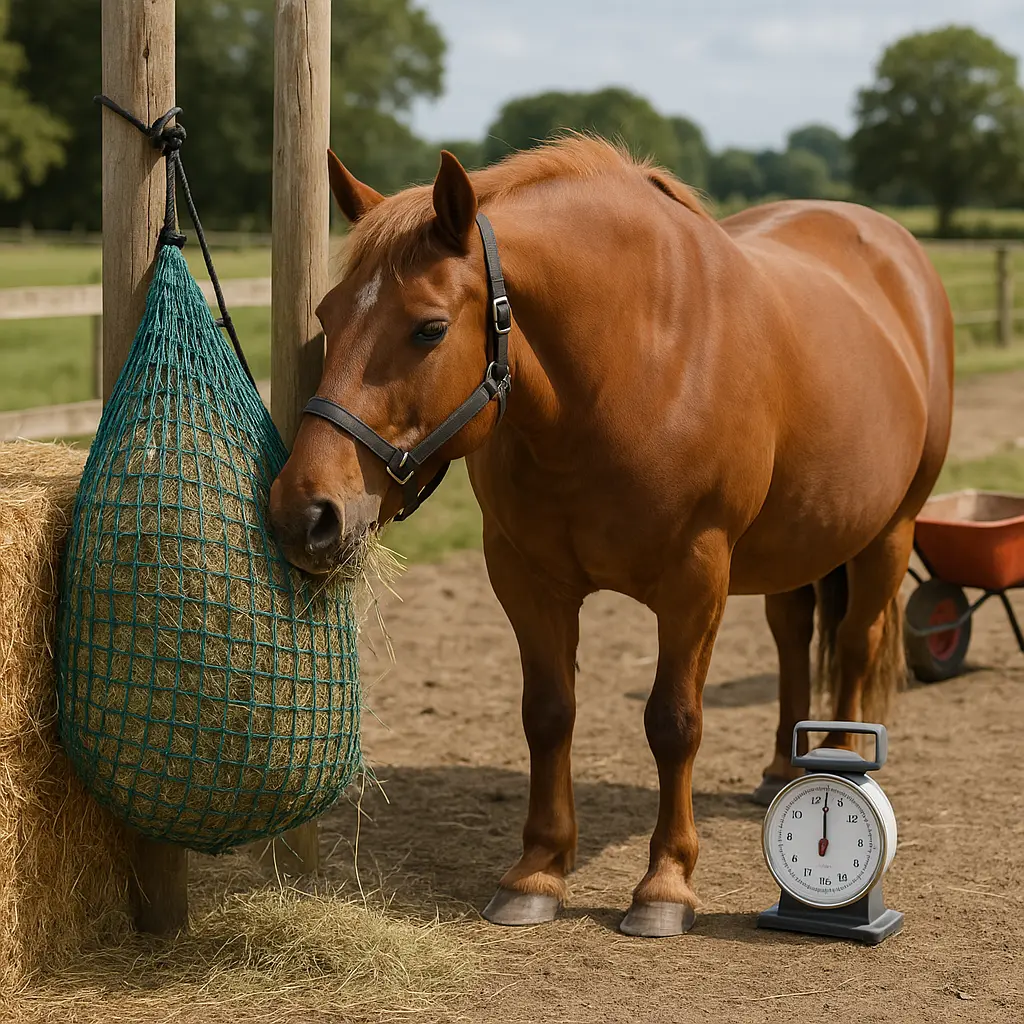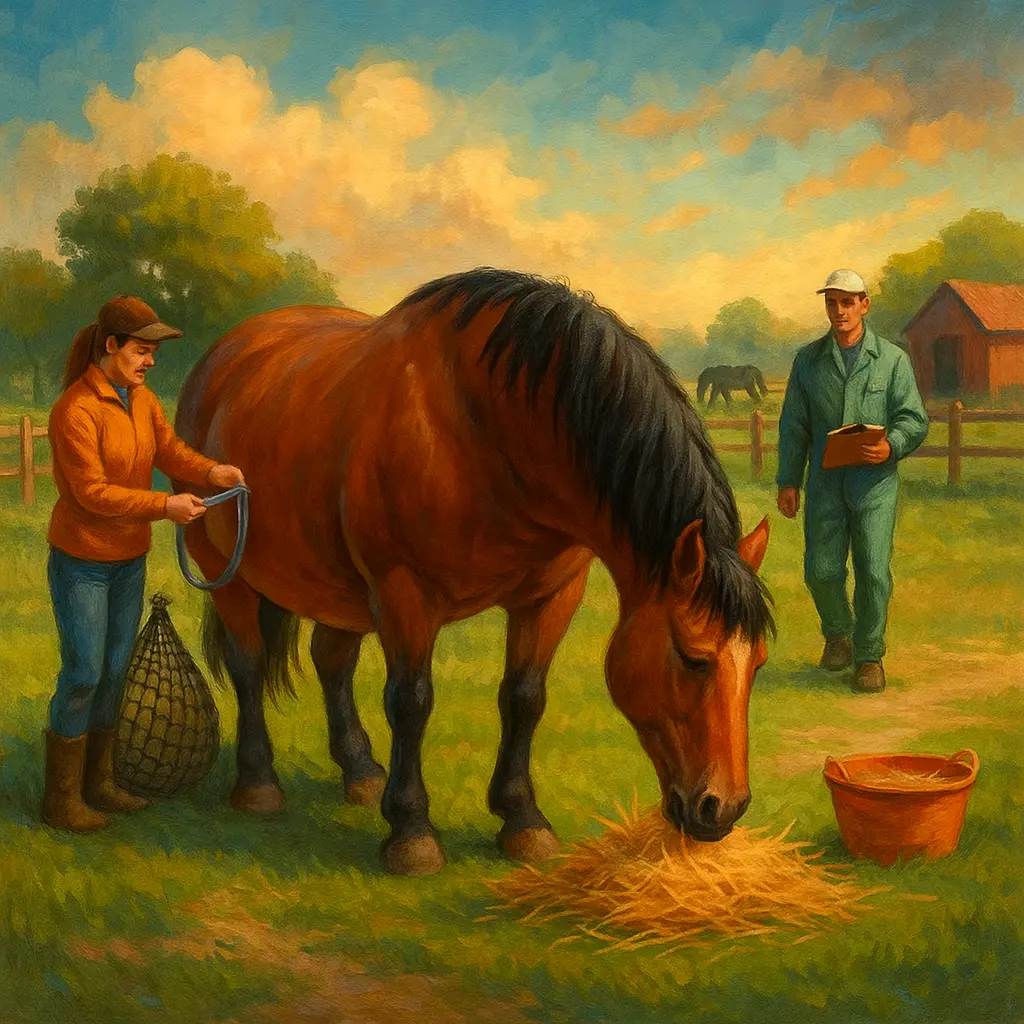
If your mare just won’t shift the weight, keeps flirting with laminitis, and seems lethargic, Equine Metabolic Syndrome (EMS) is a likely culprit. The good news: EMS is manageable, and with the right plan many mares return to soundness, fertility and a safer weight.
Key takeaway: For overweight or insulin‑dysregulated horses, feed 1.5% of bodyweight in forage per day, introduce up to 30–50% clean straw to lower calories and insulin, manage grazing to night/early morning, and add gentle, regular exercise.
What is EMS in mares?
EMS is a metabolic disorder most common in overweight horses and ponies, and the primary treatment is weight management. Typical signs in mares include difficulty losing weight, recurring laminitis, increased drinking/urination, lethargy and even infertility.
In the UK, the British Horse Society (BHS) summarises the cornerstone of care clearly:
“The primary treatment for EMS is weight management. This can be difficult as horses with EMS are often resistant to weight loss... Seeking support from professionals, friends or yard mates can help to maintain weight loss routines.” — British Horse Society
That resistance to weight loss is why a purposeful plan matters. Focus on controlled forage, reduced sugars and starches, consistency, and movement. Partner with your vet to rule out or manage laminitis and to tailor any medication if needed.
Exactly how much forage should an overweight EMS mare get daily?
Feed 1.5% of bodyweight in forage per day for significant weight loss, ensuring no long gaps between feeds. Keep the ration balanced with adequate protein, vitamins and minerals via a low‑calorie feed balancer.
For a 500 kg mare, 1.5% equals 7.5 kg of total forage over 24 hours. If she’s obese and you’ve set a target weight (e.g., 450 kg), use 1.5% of the target weight (6.75 kg/day) once your vet agrees it’s safe. UK vets echo this approach:
“When initially treating EMS and trying to achieve significant weight loss you should aim to feed 1.5% of your horse’s body weight per day. It is important that the diet remains balanced and contains adequate levels of protein, vitamins and minerals. The best way to achieve this is to feed a comprehensive feed balancer.” — BW Equine Vets
As a rule of thumb, daily forage for healthy maintenance sits around 2% of bodyweight, but for overweight horses you reduce to 1.75–1.5% under professional guidance. Nutritionist Lisa Elliott MSc explains:
“Daily forage recommendations are generally around 2% daily, but for overweight or obese horses and ponies, the amount of forage can be reduced to supply 1.75% or 1.5% of bodyweight.” — Lisa Elliott, MSc – Equine Nutrition Solutions
Quick tip: Weigh forage with a hanging scale initially. Once you’ve calibrated “by eye,” keep auditing weekly so creeping portions don’t undo your hard work.
Should you feed straw to EMS horses?
Yes—replacing 30–50% of daily forage with good hygienic straw safely reduces calories, extends chewing time, and can lower insulin in insulin‑dysregulated horses. Introduce it gradually over 2–4 weeks and do not exceed 50% of total forage as barley or oat straw.
High‑quality wheat straw has been studied as a partial forage replacement for overweight horses. Researchers reported no gastric ulcers when clean wheat straw replaced up to half of the daily ration, alongside real behavioural and metabolic benefits:
“Good hygienic quality wheat straw can be included for up to 50% of the diet without causing gastric ulcers and it can extend feeding time and promote a metabolic profile more suitable for overweight horses.” — Peer‑reviewed study
Why it helps: straw dilutes dietary sugar and calories while keeping the fibre bulk and chewing time your horse needs. One study example showed foraging time extending to around 11.2 hours per 24 hours on straw mixes, compared with about 6.2 hours on grass forage—vital for satiety and gut health.
How to start: swap in up to 30% straw first (barley, oat or wheat straw of good hygienic quality), then increase to a maximum of 50% if needed. Introduce over 2–4 weeks to let the gut adapt and monitor droppings, appetite, and demeanour. Always ensure constant access to fresh water.
Pro tip: Mix straw thoroughly through the hay so your mare can’t sort it out. Double‑layered hay nets further slow intake and support 24/7 trickle feeding without long forage gaps.
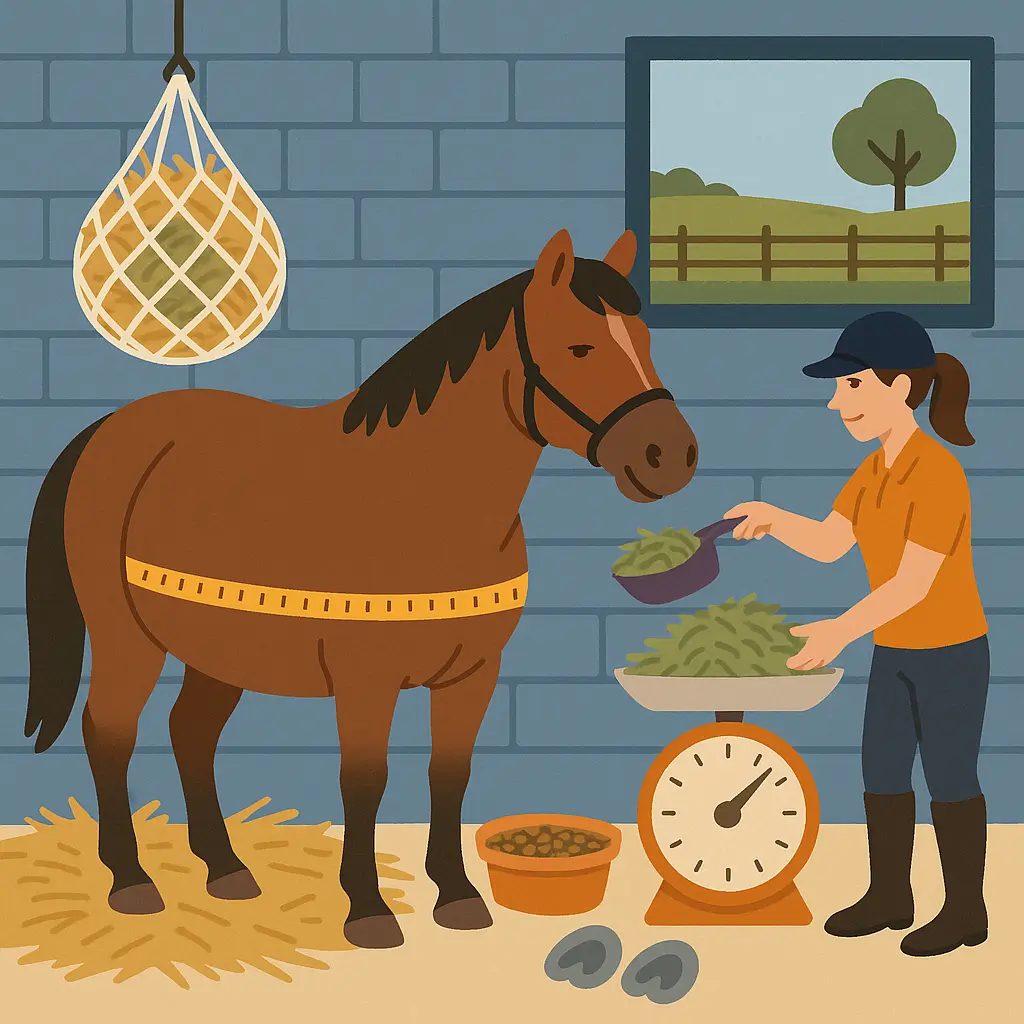
How do you build a safe UK feeding plan for EMS?
Base the diet on 1.5% bodyweight in forage, reduce sugars and starches by soaking hay, replace 30–50% of forage with clean straw as needed, and add a low‑calorie feed balancer to meet vitamins and minerals.
Put it together step by step:
- Calculate forage: 1.5% of current bodyweight (or target bodyweight once safe) spread across the full day and night. Example: 500 kg mare = 7.5 kg total forage per 24 hours.
- Choose the forage: Low‑NSC hay if possible. Soak for at least 1 hour in fresh water to reduce sugar. Drain well.
- Straw inclusion: Start by replacing around 30% of the hay with good, hygienic barley, oat or wheat straw. Build to a maximum of 50% if further calorie reduction is needed and your vet agrees.
- Avoid long gaps: Use multiple small nets or slow‑feeders to keep your mare nibbling. Avoid “meal feeding” or stretches without fibre.
- Balance the ration: Add a low‑calorie feed balancer for protein, vitamins and minerals on restricted forage. Explore our low‑calorie feed balancers and supplements to keep nutrients topped up without extra calories.
- Keep starch and sugar low: Avoid cereal‑based mixes and high‑sugar chaffs. For laminitis‑prone horses, choose low‑NSC options only.
- Hydration and salt: Ensure free access to fresh water and offer plain salt daily if appropriate.
At Just Horse Riders, we often see the biggest wins when owners combine soaked low‑NSC hay with 30–50% straw and a balancer, delivered via slow‑feeders—horses are calmer, less hungry, and steadily lose weight. For practical slow‑feeding hardware, many owners choose durable nets from trusted brands; browse stable staples from Shires.
Quick tip: Log every forage allocation for the first 2–3 weeks. Consistency is everything with insulin‑dysregulated horses.
How should you manage grazing and turnout in the UK?
Turn out overnight to early morning when grass sugars are lower, restrict or muzzle daytime grazing in spring and autumn flushes, and use tracks or strip‑grazing to control intake.
In the UK, bright days followed by cool nights drive sugar peaks in grass—especially in spring and autumn. To control calories and non‑structural carbohydrates (NSCs):
- Time turnout: Favour night and early morning. Avoid sunny daytime turnout during peak growth flushes.
- Control access: Once weight is trending down, consider a grazing muzzle for measured pasture time. Use only when laminitis signs are absent and under your vet’s guidance.
- Create a track: A perimeter track with sparse grass encourages movement and limits intake. Top or cross‑graze lush areas with sheep if available on your yard.
- Weather watch: After frosty nights and sunny mornings, grass NSC can spike—tighten restrictions on those days.
Comfort on the yard matters too. Night turnout may be cooler or wet—choose suitable layers so you can stick to your grazing plan. For changeable British weather, see our range of lightweight turnout rugs and, in fly season, protective fly rugs for summer turnout.
Pro tip: Weigh your netted forage before turnout, even on “poor” paddocks. EMS horses are expert grazers and a “nibble” soon adds up.
What exercise is safe and effective for EMS horses?
Start with 15 minutes of walking exercise 3–4 days per week on even, supportive surfaces, and increase duration and intensity gradually if there are no laminitis signs.
Movement improves insulin sensitivity and calorie expenditure. Begin with in‑hand or ridden walk on a sand arena, firm track, or smooth field margin. Add short bouts of trot only when your vet confirms the lamellar structures are safe.
- Week 1–2: 15 minutes, 3–4 days per week (mostly walk; gentle hills if sound).
- Week 3–4: 20–30 minutes, 4–5 days per week (introduce brief trot if vet‑approved).
- Beyond: Build towards 30–45 minutes most days, mixing walk/trot, poles, and light schooling.
Safety first: choose level footing and avoid tight turns if there’s any foot tenderness. Support limbs if needed and fit tack correctly. For protection during in‑hand or ridden work, explore horse boots and bandages. If you’re road‑walking to build time, wear rider hi‑vis so you’re clearly seen in early mornings or dusky evenings.
Quick tip: Count steps. A simple pedometer target helps you add 5–10 minutes a week without overthinking it.
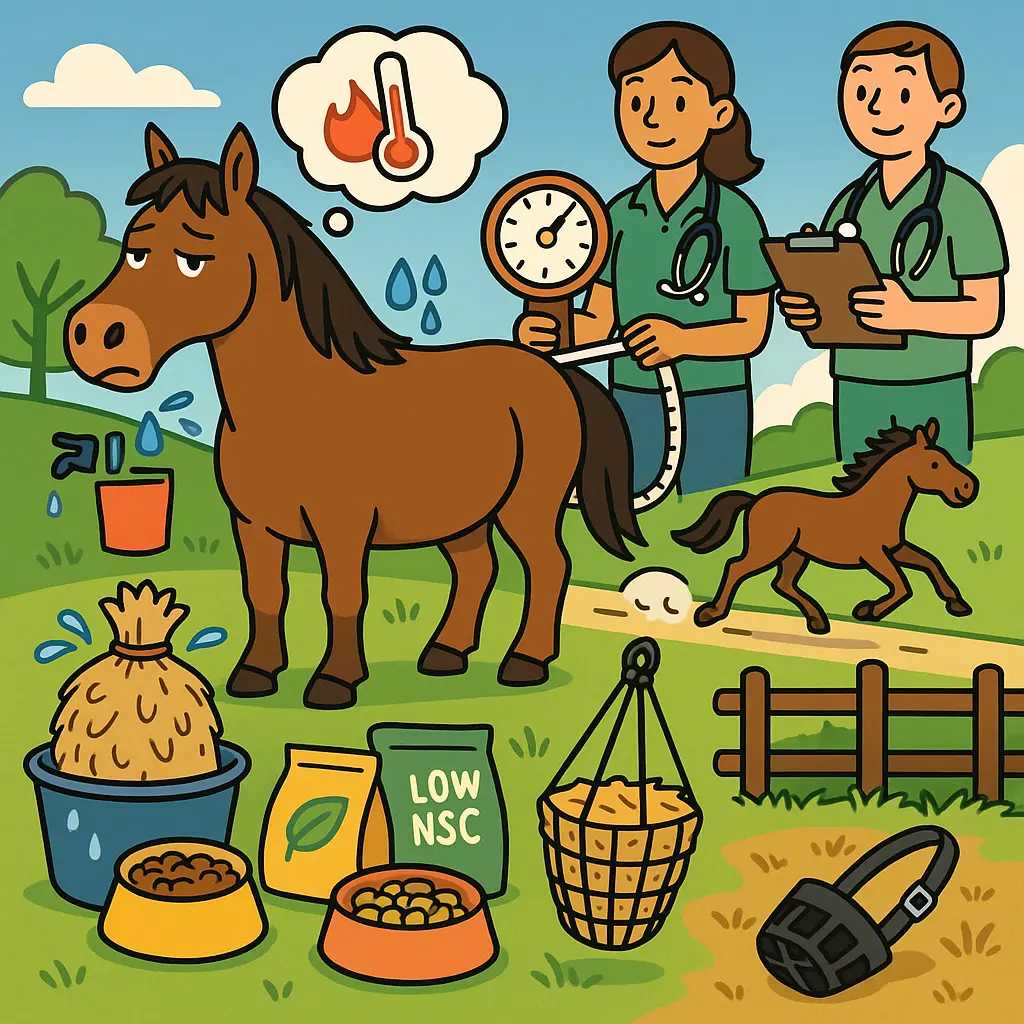
How do you monitor progress and keep weight loss on track?
Use a weigh tape and body condition scoring weekly, log changes, and adjust forage by small increments while maintaining fibre intake. Partner with your vet if progress stalls or if laminitis flares.
Routine keeps EMS plans honest. Each week:
- Weigh tape and fat‑score: Record girth and neck crest measurements plus a 0–5 or 1–9 condition score.
- Photograph: Same pose, same light—your future self will spot changes better.
- Adjust forage: If there’s no movement after 2–3 weeks, review hay analysis, soaking time, straw proportion (up to 50%), and step count.
- Review comfort: Check feet daily for heat, pulse, or short steps; pause increases in workload if anything worries you.
At Just Horse Riders, we recommend setting one simple weekly goal (e.g., “Replace 40% of hay with straw,” or “Add one extra 10‑minute walk”). Small, consistent actions compound into real change.
When should you involve your vet—and is medication needed?
Involve your vet from the outset to confirm EMS, check for laminitis, and design a weight‑loss plan; diet and exercise are primary, while medication such as metformin may be added for severe insulin dysregulation under veterinary supervision.
Vets help you prioritise safe weight loss without triggering laminitis. They may also investigate related issues, including reproductive performance—remember, EMS‑related infertility in mares often improves as weight and insulin normalise. If your mare won’t lose weight despite tightly controlled forage and added exercise, ask your vet to reassess: some horses are markedly resistant, and the plan may need a tweak.
Quick tip: Share your feeding log and step counts at each check‑up—it speeds decisions and shows your consistency.
Finally, don’t forget the “kit” that makes routines easy. Slow‑feeder nets and stable organisers reduce waste and keep you consistent; and a comprehensive balancer keeps nutrition sound on restricted rations. You’ll find proven options in our supplements and feed balancers and targeted support from NAF supplements, with stable standbys from Shires to help you stay organised.
Bottom line: Controlled forage (1.5% bodyweight), strategic straw (30–50%), night/early‑morning turnout, and steady exercise form the proven path to reversing EMS signs and protecting your mare from laminitis.
FAQs
How much forage should an overweight EMS mare get daily without gaps?
Feed 1.5% of bodyweight (or target bodyweight when safe) in total forage per 24 hours. For a 500 kg mare that’s 7.5 kg/day, ideally split into multiple slow‑fed nets so there are no long periods without fibre. Keep the ration balanced with a low‑calorie balancer.
When should I use straw for weight loss?
Use straw when your mare is an easy‑keeper, overweight, or insulin‑dysregulated and you need to create a calorie deficit without leaving her hungry. Replace up to 30% initially, building to a maximum of 50% of total forage with clean barley, oat or wheat straw over 2–4 weeks. Monitor droppings and comfort as you transition.
Does straw increase ulcer risk?
Research shows good hygienic wheat straw can make up to 50% of the ration without causing gastric ulcers and can extend feeding time while improving the metabolic profile in overweight horses. Quality and gradual introduction are key—always ensure free access to water.
Is a grazing muzzle suitable for EMS mares in the UK?
Yes—once weight loss is underway and there are no laminitis signs, a well‑fitted grazing muzzle can allow controlled turnout, especially through spring and autumn when daytime grass sugars peak. Combine with night/early‑morning turnout to keep sugars lower.
What if my mare won’t lose weight despite diet changes?
EMS horses are often resistant to weight loss. Tighten the plan: verify 1.5% forage by weight, consider increasing straw to 40–50%, soak hay for at least 1 hour, add gentle exercise 3–4 days a week, and ask your vet to reassess for underlying issues or to consider medication such as metformin if appropriate.
Can EMS cause infertility in mares—and will weight loss help?
Yes, EMS is associated with reproductive issues including infertility. As weight normalises and insulin sensitivity improves, fertility can improve too—work with your vet to pair weight management with reproductive planning.
What gear helps me stick to an EMS plan?
Slow‑feeder hay nets, a reliable weigh tape, and a simple logbook are essentials. For safe exercise and turnout, consider leg protection, hi‑vis for road walking, season‑appropriate turnout rugs and fly rugs, plus nutrient support from feed balancers and supplements including options from NAF.