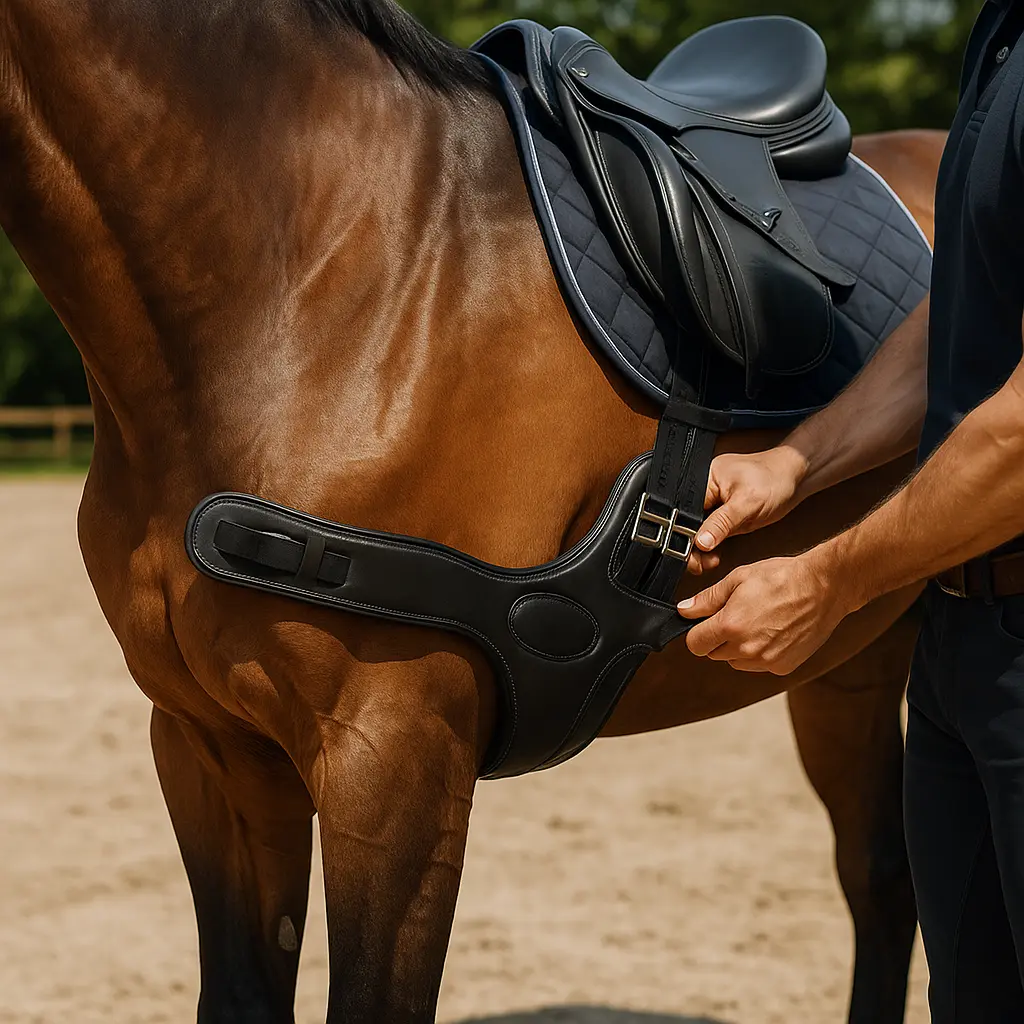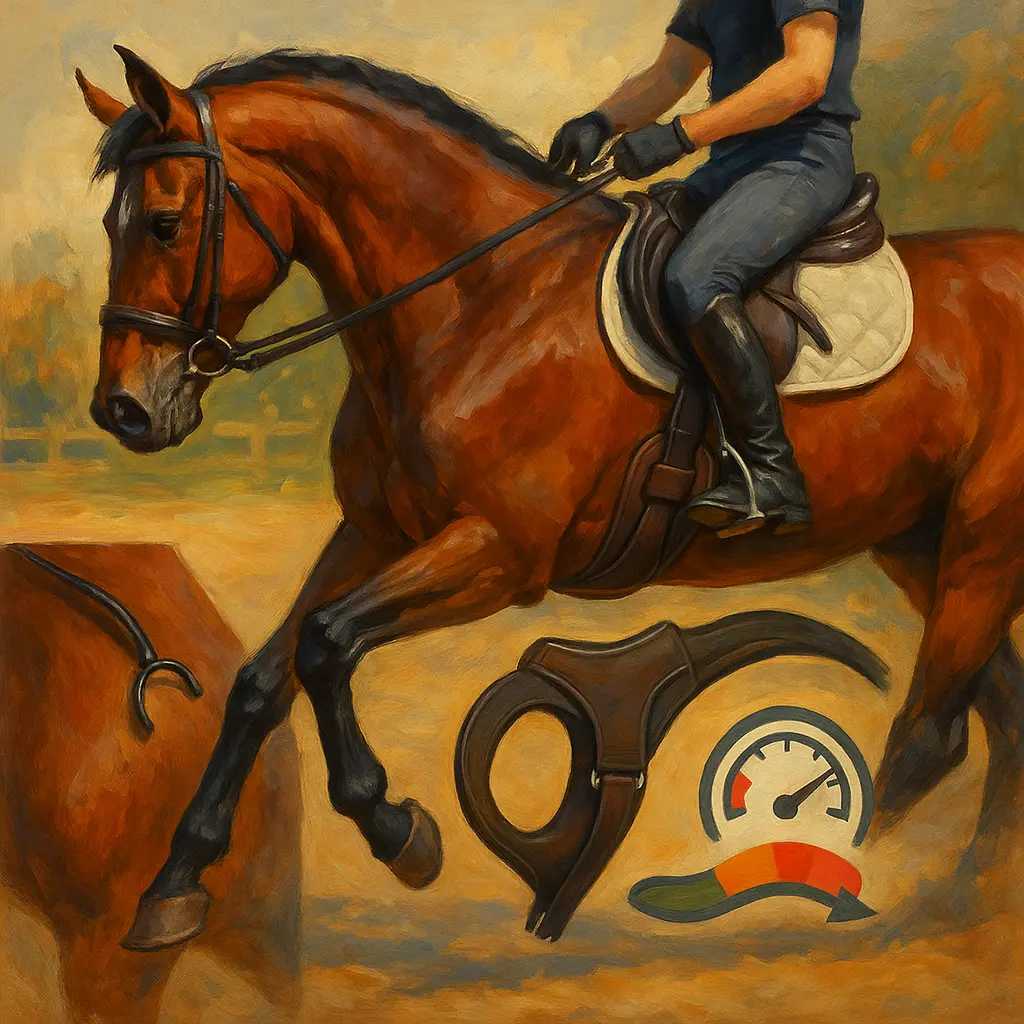
A well-fitted, well-chosen girth can be the difference between a soft, swinging stride and a tight, resistant back. The latest research gives us hard numbers on tension and clear guidance on shape — so you can girth up with confidence, not guesswork.
Key takeaway: Start at 8 kg resting tension, avoid cranking beyond 16 kg, and match girth shape to your horse’s girth groove and elbows; anatomical designs reduce peak pressure and can improve flexion and comfort over time.
Do anatomical girths really improve movement?
In the short term, stride length and most joint angles don’t change dramatically, but shaped/anatomical girths consistently reduce peak pressure and are associated with improved carpal and tarsal flexion. Over time, this can translate into freer movement and better comfort.
A controlled study of six ridden horses found no major differences in stride length or overall joint motion between straight and anatomical girths at either 8 kg or 16 kg tension, with only slightly increased carpal flexion at 8 kg in the anatomical model. More importantly, the same research showed girth tension rises significantly once you move off: from 6 kg at rest to 7.1 kg at trot (+18%) and 9.6 kg at canter (+60%), and from 18 kg at rest to 21.3 kg at trot (+18%) and 24.3 kg at canter (+35%). You gird up “fine”, then pressure escalates as soon as you trot on — a key reason to start at a measured, moderate resting tension. See the open-access paper here: peer‑reviewed study on girth tension and saddle pressure.
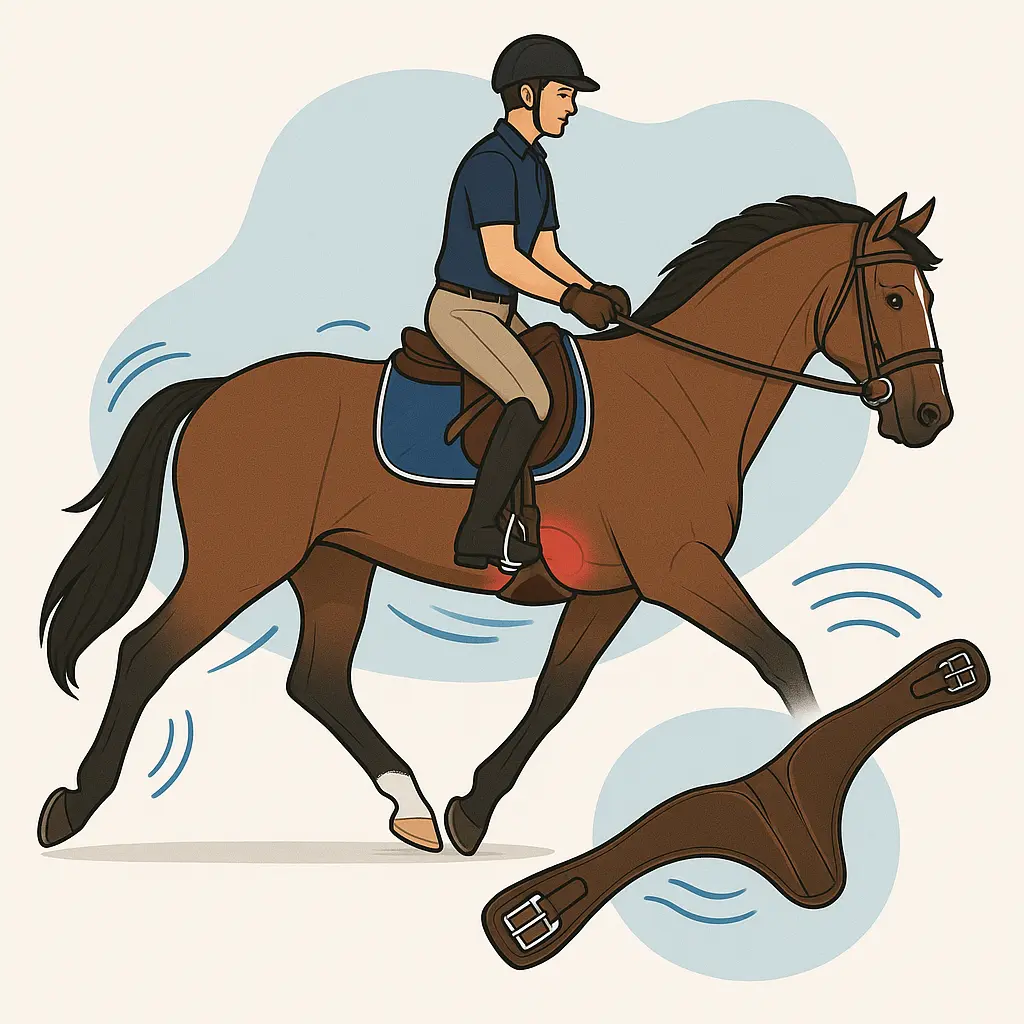
Where anatomical designs really earn their keep is in how they manage pressure. A larger, shaped contact area — cut back behind the elbows — helps spread load and avoid the peak-pressure zone identified behind the elbow during forelimb extension and landing phases. This is why you’ll see less rubbing in winter coats and a happier, rounder ribcage under saddle.
“Using a girth designed to avoid locations of maximum pressure led to lower maximum pressure compared to the horse’s usual girth, and was associated with greater stride length, carpal and tarsal flexion.” — Murray et al., Veterinary Journal (full text PDF)
How tight should the girth be?
Set 8 kg at rest as your baseline, then expect tension to climb by 18–60% at trot and canter; avoid tightening beyond 16 kg at rest because higher tension shifts saddle pressure forward and can compromise comfort.
In real-life UK schooling, it’s tempting to “add one more hole” before canter, but the figures are clear: extra resting tension translates to more cranial (forward) pressure under the saddle. Racing data show average resting tensions around 9–13 kg, with peaks up to 53 kg during tightening (average peak 40 kg) — a stark reminder of how fast loads can spike. In a companion pressure study, doubling from 8 kg to 16 kg didn’t raise average pressure but moved it forwards towards the front of the saddle, which is linked to thoracic back discomfort over time.
“Higher girth tension [16 kg vs 8 kg] did not increase overall average pressure but shifted it forward (cranially), which could contribute to discomfort, reduced freedom of movement, or thoracic back pain over time.” — Research team, pressure-mat and kinematics study (open access)
Quick tip: You don’t need a lab-grade load cell to apply this. Girth up to “snug and stable” at the mounting block, ride a 5–10 minute walk warm‑up, and recheck. If you habitually add two holes “just in case,” try adding one less and monitor way-of-going, breathing, and saddle stability — you’ll often see more freedom through the shoulder and better swing through the back at a sensibly moderate setting.
Choose the right shape and material
Match the girth to the horse’s girth groove and billet alignment; go anatomical or asymmetric for forward girth grooves and round barrels, and choose materials that reduce friction (e.g., leather, quality synthetics, or lambskin linings) for sensitive elbows.
Horses with a forward girth groove or a round ribcage tend to pull straight girths forward into the elbows. Anatomical (contoured) girths are cut away behind the elbow, with a broader midsection to disperse pressure and maintain a stable contact patch. Retailer guides summarising the Fairfax research highlight that peak girth pressure occurs behind the elbow during forelimb extension and jump landings — exactly where cut‑aways and pressure‑dispersing panels help most (guide referencing girth pressure research).
Materials matter too, especially in UK autumn/winter when thicker coats increase friction and sweat. Merino lambskin linings (around 30 mm pile) cushion the contact, wick moisture and reduce rubbing, while elastic integration helps equalise tension side-to-side. In one comparative test, horses maintained lower heart rates in a multi‑segment elastic “Equi‑soft” style girth versus non‑elastic designs — a practical indicator of improved comfort for “girthy” horses.
At Just Horse Riders, we see consistent success with:
- Anatomical leather girths (£100–£300): for forward grooves and shoulder freedom.
- Sheepskin‑lined contoured girths (£150–£400): for sensitive skin or winter coats prone to rubs.
- Elastic comfort girths (Equi‑soft style) (£80–£250): for horses showing tension, girth aversion, or variable ribcage width through breathing.
- Straight cotton cord girths (£20–£60): budget choice for standard conformation — monitor closely for rubbing and pressure points.
Pro tip: If your horse is jumping British Eventing-style efforts or landing steeply, prioritise a girth with robust elbow relief and broad pressure panels to handle those peak forces.
Size your girth correctly
Measure from one saddle billet hole (not the lowest) around the belly to the opposite billet hole, then round to the nearest size and confirm with a saddle fitter; expect 24–30 inch girths for dressage saddles and 50–54 inch (127–137 cm) for GP/jump saddles.
This simple tape-measure method avoids the common mistake of sizing to the lowest billet hole, which can push buckles into the elbow crease. Once you’ve measured, consult a Society of Master Saddlers fitter or BHS-accredited professional to match shape to your horse’s conformation and to your saddle’s billet arrangement (straight, V, or point billets). Crescent or asymmetric designs can transform stability on round-barrelled types (cobs and natives common on UK livery yards), preventing the saddle being pulled forwards.
Fit details to check:
- Buckles should sit clear of the elbow and not under the rider’s thigh.
- Wither clearance is unaffected by girth length — but cranial saddle pressure is; don’t over‑tighten “for lift.”
- Elastic should be balanced (both ends or centrally designed) to keep tension even.
Seasonal note: In wet, muddy winters, friction increases under tack. Pair your girth choice with well-fitting winter turnout rugs that keep the coat laying flat and clean, and keep salt and mud off the girth area with regular grooming essentials to prevent micro‑rubs turning into sores.
Saddle pressure and back health: what girth tension changes
Increasing girth tension from 8 kg to 16 kg shifts average saddle pressure forwards, which can aggravate the thoracic back over time; shaped girths designed to avoid peak-pressure zones reduce maximum girth pressure and can improve limb protraction.
This is the crux of the modern approach to girthing: aim for stability without “winching” the saddle down. In the pressure‑mat work, higher tension didn’t raise overall average pressure but moved it cranially — towards the front of the saddle tree — where sensitive thoracic tissues live. Over months of schooling, that pattern is linked to guarded movement and potential discomfort.
Conversely, the Veterinary Journal study by Murray and colleagues demonstrated that a girth purposely designed to avoid peak-pressure locations reduced maximum pressure under the girth and was associated with improved stride length and flexion in both fore and hind limbs. For UK riders schooling on varying surfaces, that extra freedom in protraction (6–11% forelimb and 10–20% hindlimb in eventing contexts) helps your horse stay looser, straighter and more resilient in day-to-day work.
If your horse is persistently “cold‑backed,” ears back during girthing, or hollow in transitions, involve your RCVS vet as needed and a qualified saddle fitter. A BHS-accredited coach can also help you evaluate way-of-going changes after switching girths or adjusting tension. And remember the whole picture: protect limbs and manage warm‑ups with appropriate horse boots and bandages to keep movement symmetrical and confident.
Your step-by-step girthing routine (5 minutes well spent)
Girth up in stages to around 8 kg at rest, check elbow clearance, walk 5–10 minutes, recheck once, and avoid cranking past 16 kg; monitor behaviour and breathing as your best real-time comfort gauges.
Follow this quick checklist before every ride:
- Brush sweat, mud and grit from the girth area; a 60‑second pass with your go‑to grooming brushes prevents rubs.
- Place the saddle, align billets, and attach the girth on the third or fourth billet hole initially (not the lowest).
- Tighten to “snug” (target ~8 kg at rest). If you don’t have a gauge, think “firm handshake,” not “clamp.”
- Mount using a mounting block to reduce saddle yaw and girth pull.
- Walk 5–10 minutes to allow the ribcage to expand and the pad to settle. Recheck once; add one hole if the saddle is unstable, then stop.
- Observe your horse: pinned ears, tail swishing, or holding breath during girthing are red flags. Consider an elastic comfort or lambskin-lined anatomical option.
Pro tip: Reward relaxed behaviour at each stage — a scratch, or a small nibble from our selection of healthy horse treats can turn a “girthy” pattern into a cooperative routine over a few weeks.
Safety check: If you’re heading out hacking or to a show, make sure your own kit is sorted — a secure, current‑standard riding helmet and reliable footwear make mounting/dismounting calmer, helping you avoid last‑minute over‑tightening.
When to use a stud or belly guard girth
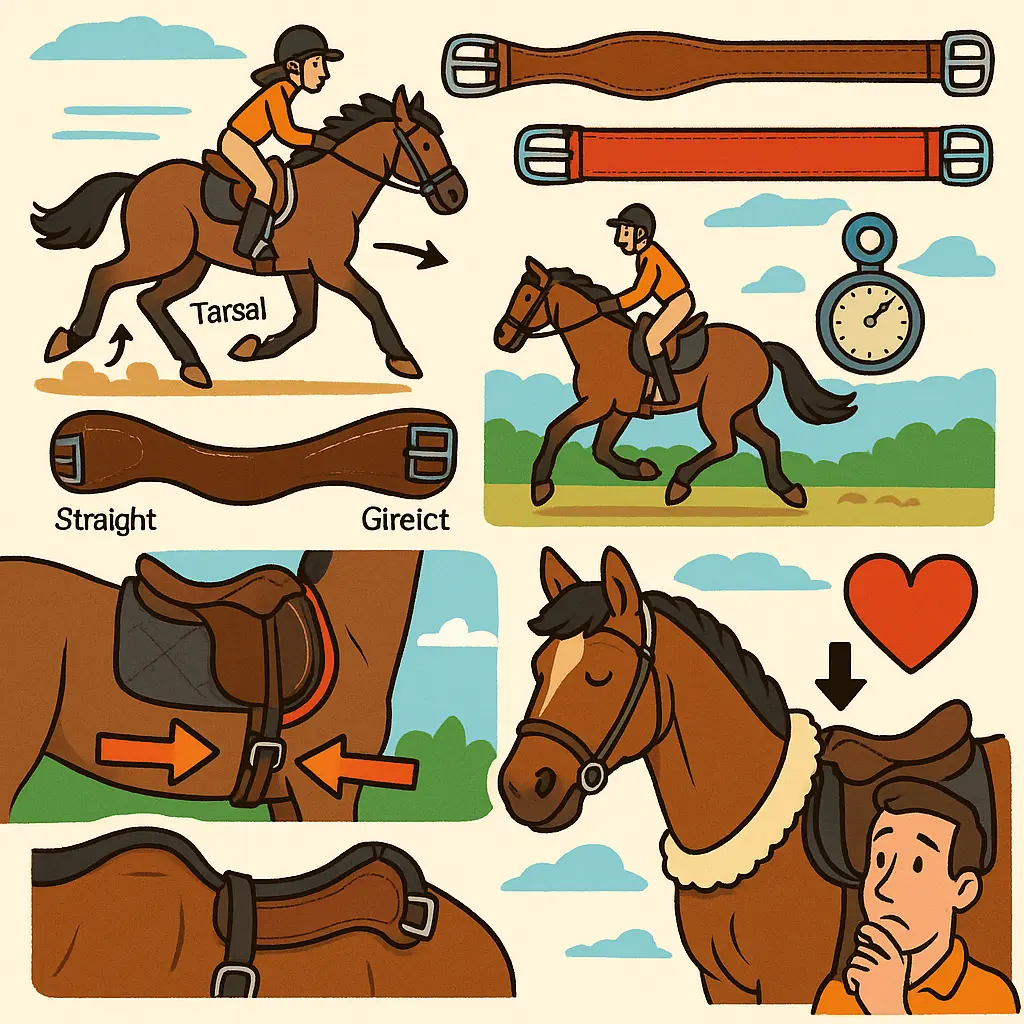
Use a stud (belly guard) girth for showjumping and cross-country to protect the sternum from shoe or stud strikes, and choose one with appropriate elastic and elbow relief for comfort.
Eventers and jumpers in the UK’s muddy seasons are more likely to draw the knees up close; a belly guard spreads impact and prevents painful knocks that can sour a careful jumper. Choose a guard with soft edges and a shaped profile that still clears the elbow. For many horses, a belly guard with elastic inserts and an anatomical cut combines protection with even pressure distribution. Expect £50–£200 for reliable options; pair with supportive front and hind boots for full landing-phase protection.
Brand note: Rugged, weatherproof tack pairs well with resilient stable and turnout kit. Explore dependable layers from WeatherBeeta, and consider quality girth sleeves or pads from LeMieux to fine‑tune comfort on sensitive types.
Putting it all together: practical recommendations
Start at 8 kg resting tension, match girth shape to conformation, and prioritise pressure-distributing designs for forward girth grooves or sensitive elbows; reassess after your warm‑up and avoid exceeding 16 kg at rest.
Here’s a concise decision path you can use today:
- Forward girth groove/round barrel? Choose an anatomical or crescent/asymmetric girth to prevent elbow pinch and saddle creep.
- “Girthy” behaviour or sensitive skin? Trial an elastic comfort design or a Merino-lined contoured girth; many riders report calmer tacking and softer breathing. If pain persists, consult your vet. Some owners also support overall wellbeing with targeted supplements — browse NAF supplements with your vet’s guidance.
- Jumping or eventing regularly? Add a stud/belly guard girth and double-check buckle placement and elastic balance.
- Winter coat/wet weather? Reduce friction with lambskin linings and keep the girth area clean and dry. Well-fitting, breathable turnout rugs help maintain coat condition under tack.
- Competing? Confirm discipline fit (short girth 61–76 cm for dressage, long 127–137 cm for GP/jump) and ensure your show kit is ready; if you need a refresh, explore our curated competition clothing edit.
At Just Horse Riders, we recommend trialling one change at a time: first adjust tension and routine, then test shape/material. Keep short notes on behaviour and way‑of‑going for a fortnight; you’ll quickly see what your horse prefers.
FAQs
Do anatomical girths outperform straight cotton cord girths?
In immediate kinematics, differences are small, but shaped designs reduce peak pressure and are associated with improved carpal/tarsal flexion and longer stride over time. Straight cotton cords can work on standard conformations but carry higher rub/pressure risk, especially behind the elbow.
What girth tension should I use at rest?
Target 8 kg at rest and avoid cranking past 16 kg; expect tension to rise by 18–60% once you trot and canter. If you don’t have a gauge, tighten in stages and recheck after a 5–10 minute walk.
Why does my horse object to girthing?
Commonly, localised pressure and friction. Try an elastic comfort or lambskin-lined anatomical girth and ensure even tightening on both sides. One comparative study found all horses maintained lower heart rates with an “Equi‑soft” style girth, reflecting better comfort. Also rule out gastric and musculoskeletal pain with your vet.
How do I measure for the right girth size?
Run a tape from one billet hole (not the lowest), around the belly, to the opposite billet hole; round to the nearest size. Dressage saddles typically use 24–30 inch girths; GP/jump saddles 50–54 inch (127–137 cm). Confirm with a qualified saddle fitter.
Is paying more for an anatomical girth worth it?
If your horse has a forward girth groove, round barrel or sensitive elbows, yes — research shows shaped designs reduce maximum pressure and can improve limb protraction. For straightforward conformations, a well-padded, well-fitted straight girth can suffice with attentive care.
When should I use a stud/belly guard girth?
For showjumping and cross-country, especially with studs fitted, to protect the sternum from knocks. Choose models with elastic and elbow relief for comfort.
Any UK-specific care tips in winter?
Thicker coats and wet conditions raise rub risk. Keep the girth area clean, consider lambskin linings, and maintain coat condition with appropriate turnout rugs. Regular grooming and drying the girth after rides help prevent sores.
Further reading: explore the open-access study on girth tension and saddle pressure (PMCID: PMC12427339), the Veterinary Journal paper on girth pressure and gait (Murray et al., 2013), and a clear summary of pressure hotspots and girth shapes (Houghton Country guide).