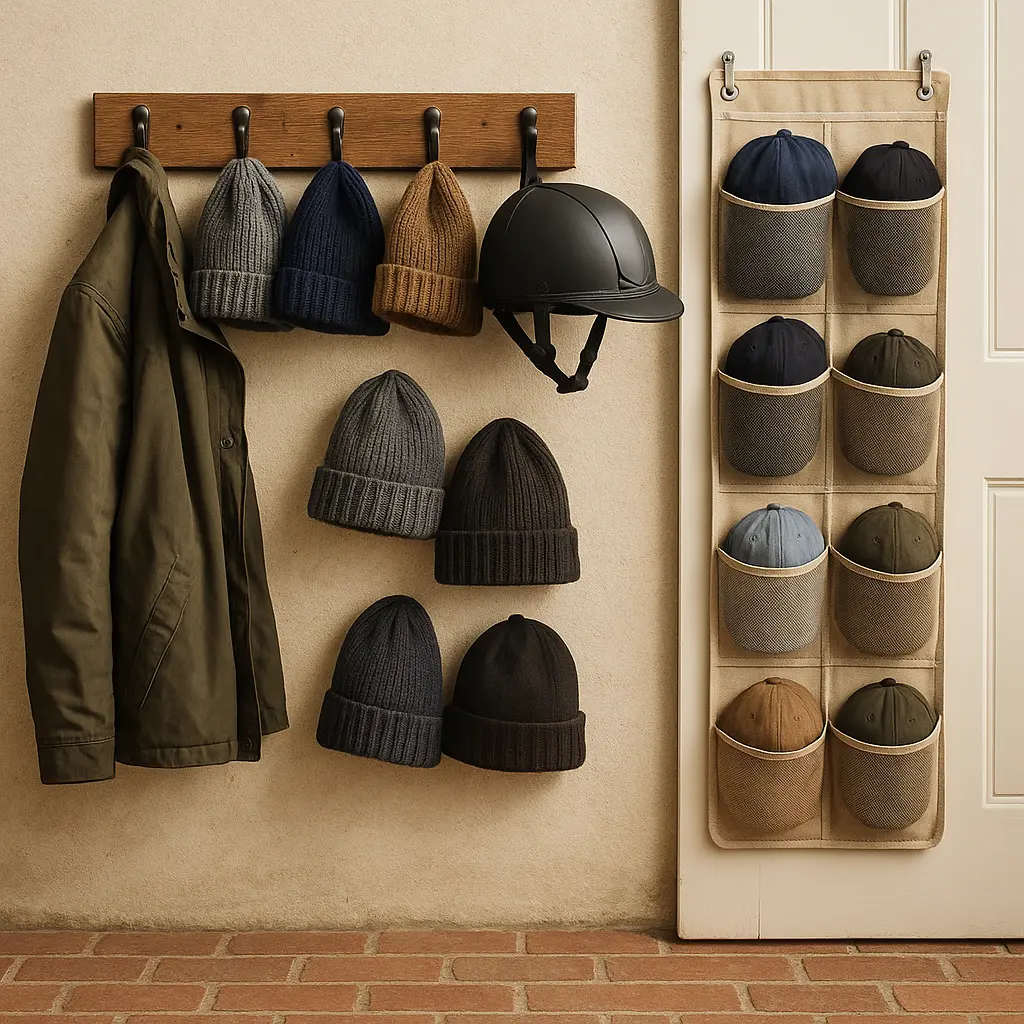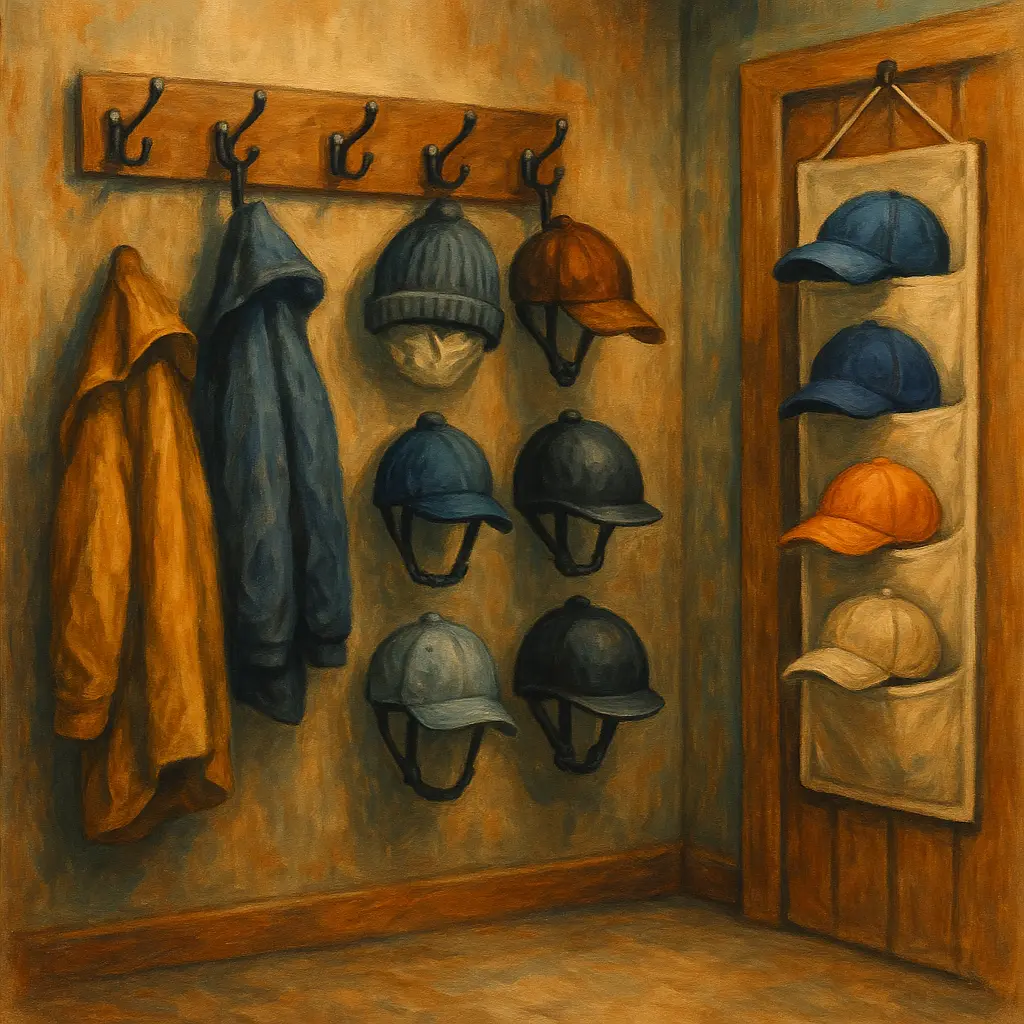
Wet floors, musty smells, and cobwebs are the enemies of clean headwear in a busy UK yard. The good news: a few smart, wall-mounted solutions will keep your beanies and caps dry, tidy, and ready to grab between rides.
Key takeaway: Hang your hats on wall-mounted racks in a dry, well-ventilated spot, clean and air-dry them before storage, rotate seasonally, and review every 2–3 months to rehome what you don’t use.
Why hanging beats stacking in a UK tack room
Hanging hats on wall-mounted racks or hooks keeps them off damp floors and allows airflow, which prevents mould and mildew in the UK’s high winter humidity (often 80–90%). This simple switch also reduces dust build-up and discourages common stable pests like spiders, moths, and mice.
In British barns and tack rooms, floors get wet and stay wet: horses drip after turnout, riders come in from the rain, and condensation is a fact of life. When headwear sits on benches or in piles, moisture becomes trapped, causing musty odours and fabric damage. A vertical system turns dead wall space into safe storage, lifting hats away from damp and helping them dry between uses. It also makes your routine faster—no more rummaging for the right cap before you head out in your hi-vis jacket or vest.
At Just Horse Riders, we recommend dedicating one clear wall to hats and outer layers, keeping aisles uncluttered and floors clear to reduce slips—an approach aligned with general welfare guidance commonly promoted by UK bodies like the BHS that emphasises organised, hazard-free tack rooms.
Choose the right racks and hooks
Use wall-mounted coat or hat racks with multiple hooks and mount them at eye level; choose dedicated helmet racks for hard hats and sturdy screw-in hooks for heavier winter beanies. Spaced hooks maintain airflow and stop hats getting crushed.
Multi-hook coat or tack racks are perfect for daily headwear rotation—think beanies, caps, snoods, and lightweight scarves. For helmets, a purpose-built rack or shelf keeps the shell safe from scratches. If space is tight, a slimline rack behind the door or above a saddle stand uses vertical height without projecting into walkways. Where you expect heavier items (like waterlogged beanies after a wet hack), use screw-in hooks into studs or brick and allow a finger’s width between items for ventilation.
“Store your equipment in a dry, well-ventilated area to prevent mould and mildew growth, especially likely in the UK rain—hang hats and jackets on a coat rack or tack rack to keep them off the floor.” — GearHooks Equestrian Gear Guide
“Hat and helmet racks are great for showcasing your hats and helmets while keeping them dust-free; hang them to add equestrian decor and prevent pest issues in tack rooms.” — Schneiders Tack Room Organization
Where bridles and headcollars hang, it’s logical to slot your day-to-day hats nearby for a quick grab-and-go system. As stable accessory specialists at Kramer put it:
“Use bridle holders, stable hooks, and racks for headwear to keep the tack room tidy—only store essentials and rehome the rest periodically.” — Kramer Equestrian Guide
Clean and prepare hats before you hang
Always brush off dirt and fully air-dry hats before storage, then hang them in breathable bags or directly on hooks to prevent mildew. For caps, hang by the brim; for beanies, shape and hang to allow airflow.
Mud and sweat are mould’s best friends. A fast clean routine pays off:
- Brush off dried mud and dust; for stubborn marks, spot-clean with a damp cloth and mild detergent.
- Air-dry completely (never on a radiator, which can deform fibres). A cool, breezy corner for 12–24 hours works well.
- Store in breathable cotton bags if you need extra protection from dust—avoid plastic which traps moisture.
- Hang caps by the brim to keep the crown’s shape, and space beanies so they’re not compressed when damp.
Quick tip: Stuff beanies with newspaper while they dry, then move them to a sturdy hook to maintain shape.
If you keep a riding helmet alongside your everyday hats, protect the shell from scuffs by using a case or shelf and avoid stacking other items on top. Browse our curated range of certified riding helmets when it’s time to upgrade, and keep a soft cloth in your grooming kit to wipe away sweat and dust after each ride—our yard-favourite grooming brushes and sprays make quick work of post-ride clean-ups.
Organise for multiple horses and shared yards
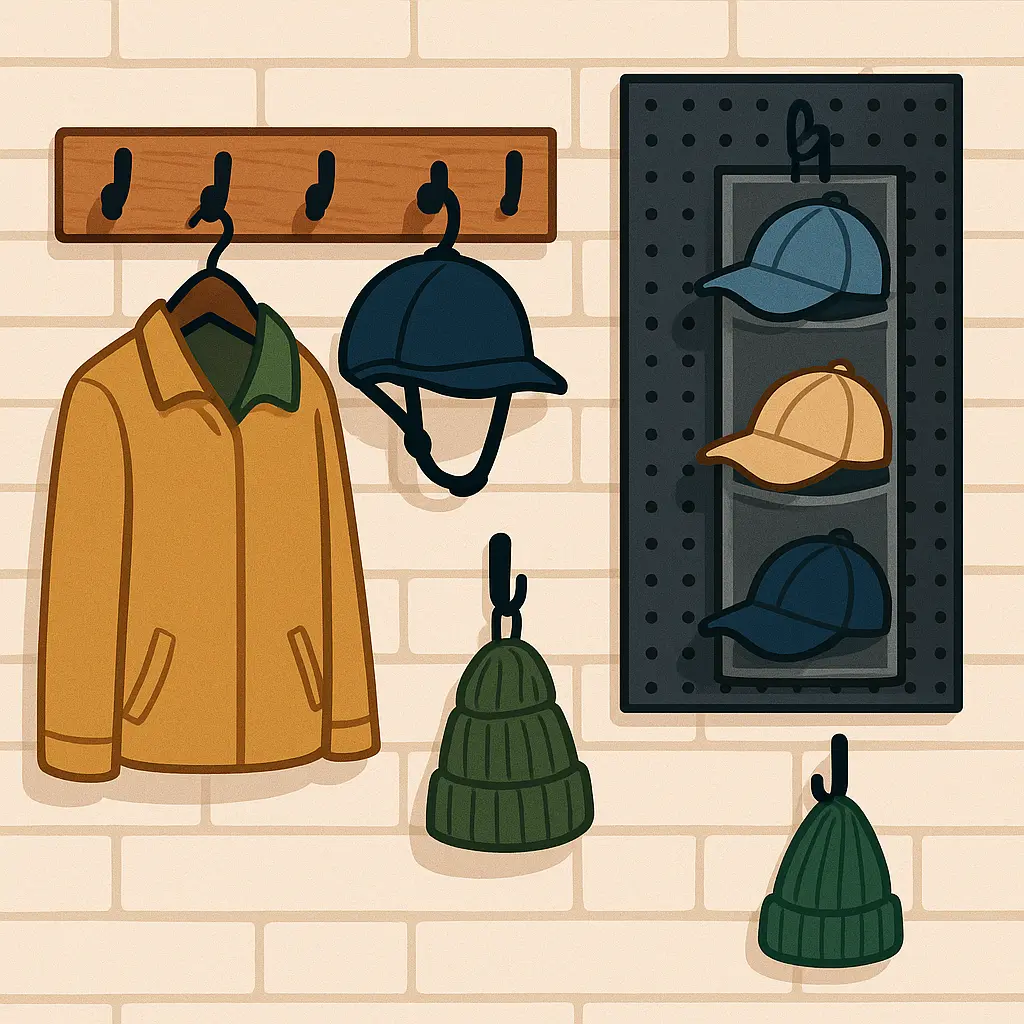
Colour-code hooks or bins by horse and season, and label clearly to avoid mix-ups and speed up changeovers. Over-door organisers or pegboards help group items neatly in shared spaces.
At a busy livery, hats can vanish into the chaos unless you set a system. Simple, low-cost tactics work brilliantly:
- Colour-code by horse (blue tags for one, red for another) and label racks at eye level.
- Split by season: winter beanies on the left hooks; summer caps on the right, or vice versa.
- Use over-door pocket organisers for small headwear and accessories; label each pocket for “Beanies – Horse A”, “Caps – Horse B”, etc.
- Adopt a “one hook, one item” rule—no piling. This protects shape and boosts airflow.
In shared UK yards, compactness matters. Mobile storage trolleys in the £20–£100 range are ideal if you can’t install permanent fixtures—load them with hats, gloves, and your hi-vis layer for a quick roll from tack room to stable block. Keep walkways clear and avoid protruding hooks at head height to minimise snags and trips; this tidy, clutter-free approach supports the general safety focus highlighted by UK industry bodies like the BHS and BEVA.
Pro tip: Create a “ready-to-ride” bay with your hat rack, gloves, and hi-vis essentials together; and, for family yards, label a second bay for junior riders’ kit next to their children’s jodhpurs and breeches to make school-night rides simpler.
Space-saving ideas for small UK tack rooms and homes
Use vertical solutions—wall racks, over-door organisers, pegboards, and mobile trolleys (£20–£100)—to maximise space in compact British tack rooms and home wardrobes. Mount racks at eye level and avoid projecting into narrow aisles.
Not every yard offers generous storage, and many UK riders split kit between home and livery. Make small spaces work harder:
- Back-of-door: Over-door organisers with mesh pockets keep breathable airflow around beanies and caps.
- Pegboards: Adaptable layouts grow with your kit; add hooks for headwear, gloves, even lightweight snoods.
- Modular rails: Slot a slim rail above a saddle rack for daily hats and a second rail higher up for spares.
- Mobile trolleys: Wheel hats from car to stable to arena; choose models with a narrow footprint for tight corridors.
At home, copy your tack-room logic in a hallway or utility: a shallow rack for hats above a boot tray keeps mud contained and kit ready for the next ride. If you’re refreshing your setup on a budget, our Secret Tack Room clearance is a handy place to spot end-of-line yard bargains while you plan your wall space. And if you love a coordinated look, colour-match your hat area to your favourite brand palette—think classic navy or bold teal to tie in with your LeMieux saddle pads and yard wear from our LeMieux collection.
Seasonal rotation that works in British weather
Keep winter beanies accessible October–March and box summer caps during wet months; always prioritise ventilation because UK winters often bring 0–5°C frosts and persistently high humidity. Rotate seasonally so the right hats are always within easy reach.
Set a calendar reminder for early October and late March to swap your racks. In autumn, move insulated beanies to the front row and assign a couple of hooks for spares so you’re never without a dry one. In spring, wash and air-dry winter headwear thoroughly, then store it in breathable bags at the top of the rack or in a labelled box on a high shelf. Summer caps need airflow too—hang by the brim and space them so the sweatband can dry between rides.
Seasonal care goes hand-in-hand with the rest of your horse’s wardrobe. While you’re rotating hats, check your rugs are clean and ready for the next spell of weather—our curated winter turnout rugs and cosy stable rugs include trusted options from leading brands like WeatherBeeta. A consistent, elevated storage approach across hats, rugs, and jackets helps everything dry faster and resist the UK’s persistent damp.
Keep it tidy: what to keep, what to rehome
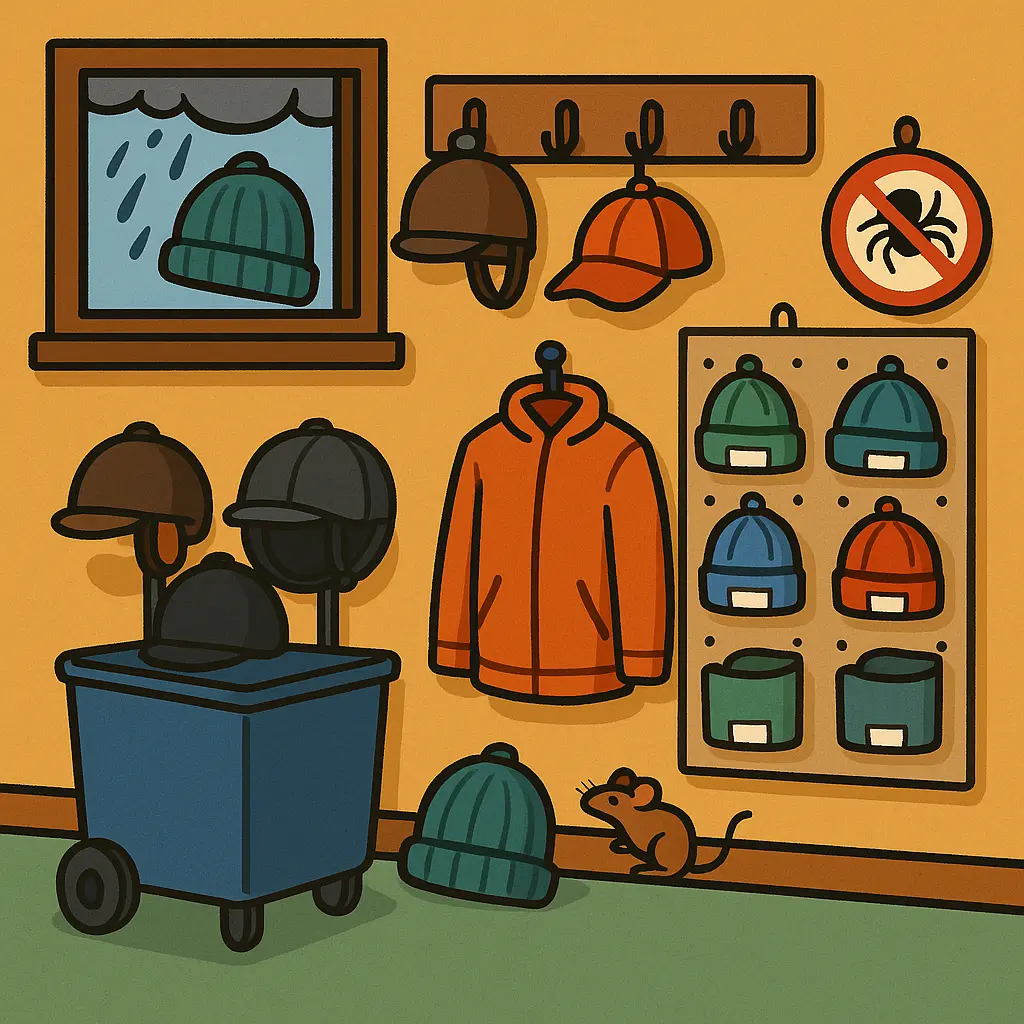
Audit your hats every 2–3 months; keep the ones you wear, and rehome clean, unworn items via UK equestrian Facebook groups or Horse & Hound classifieds. Photograph before listing and check condition honestly, especially after heavy UK rain and mud.
Clutter creeps up fast when you ride multiple horses or share a tack room. Set a simple rule: if a hat hasn’t been worn in a season, it’s a candidate for rehoming. Before you sell or donate, wash or spot-clean, air-dry thoroughly, and photograph in good light. Note any sun fading on caps, stretched ribbing on beanies, or staining around sweatbands so buyers know exactly what they’re getting.
Pro tip: Create a “pending” bin on a top shelf—if you don’t reach into it by the next audit, those hats go. If you’re replacing kit, keep an eye on our women’s jodhpurs and breeches and seasonal yard staples in our competition clothing collection to refresh your look while you streamline your space—and consider gifting any still-good extras to a new rider or yard friend from our thoughtful equestrian gifts selection.
Common mistakes to avoid
Over the years, we’ve seen the same storage slip-ups in UK tack rooms; avoid these and your hats will last longer and stay fresher:
- Piling hats on benches or in baskets—this traps moisture and flattens shapes.
- Hanging in poorly ventilated corners—choose airflow over hidden nooks.
- Using plastic bags—these encourage condensation and mould growth.
- Mounting hooks too low—keep them off splash zones and mud-prone floors.
- Storing helmets without protection—use a case or shelf to prevent scratches.
- Skipping the dry stage—always air-dry fully before you hang.
At Just Horse Riders, we recommend you align your hat rack height with your jacket pegs and keep your daily ride kit—helmet, gloves, caps, and riding boots—zoned together so your routine stays streamlined in all weathers.
FAQs
How do I stop my equestrian beanies getting mouldy in a UK winter tack room?
Hang them on ventilated wall racks in a dry area, clean and air-dry thoroughly after rides, and avoid plastic bags. UK humidity is high in winter, so airflow is non-negotiable.
What’s the best way to organise hats for two horses at a livery yard?
Colour-code hooks or labelled bins by horse and season. Keep daily hats front and centre and spares higher up; over-door organisers with labelled pockets work well.
Can I store baseball caps with riding helmets safely?
Yes—hang caps on adjacent hooks and keep the helmet on a dedicated rack or in a protective case to prevent scratches. Browse our latest certified riding helmets when it’s time to replace.
How often should I rehome unworn hats to keep space tidy?
Every 2–3 months. Photograph clean items and list via UK equestrian Facebook groups or Horse & Hound classifieds; be honest about any rain or mud wear.
Do hats need special care before hanging?
Yes. Brush off dirt, spot-clean if needed, and air-dry completely. Store in breathable bags or directly on hooks; condition fabric as appropriate to withstand UK rain exposure.
Are wall racks suitable for home storage of riding caps?
Absolutely. Vertical hooks save space in a hallway, garage, or wardrobe and mimic the tack-room setup for quick, organised access on busy mornings.
What height should I mount my hat rack?
Eye level for easy access and airflow, with at least a boot’s height from the floor to avoid splash zones. Ensure hooks don’t project into narrow walkways.