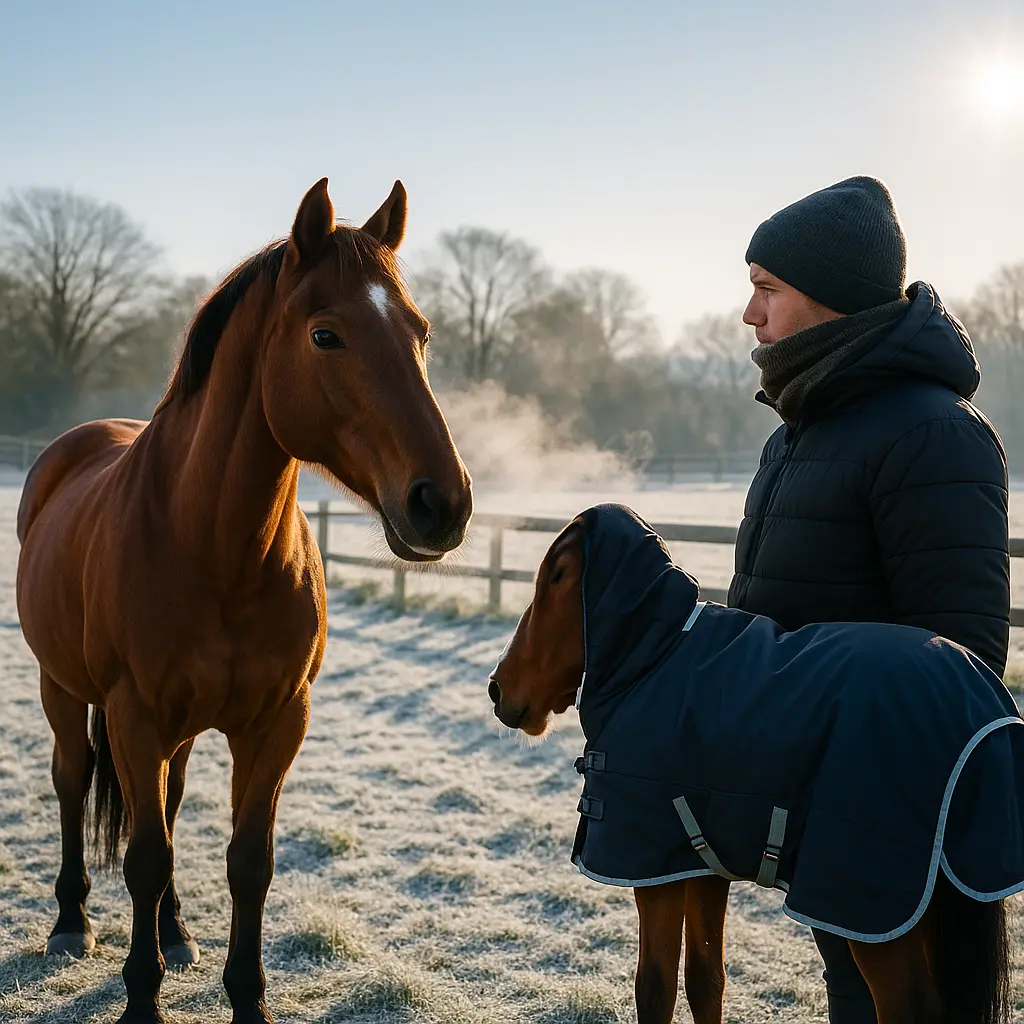
Blue skies can fool even the best of us. You’re freezing on the yard, but your unclipped cob is happily mooching with steam rising off their back in the sunshine. Rug or not to rug?
Key takeaway: Above 5°C, most unclipped, healthy horses do not need a rug — brightness doesn’t change their thermal comfort, air temperature does.
Should you rug on bright, freezing days?
If the air temperature is above 5°C and your horse is unclipped and in normal body condition, don’t rug — sunlight doesn’t change how horses thermoregulate. If it’s below 5°C or your horse is clipped, older, underweight or fine-coated, choose a light, well-fitted rug matched to the conditions.
Horses are comfortable in a thermoneutral zone (TNZ) of roughly 5°C to 25°C without expending extra energy to stay warm or cool. This is far wider than ours. We often overestimate how cold horses feel because humans typically start feeling chilly around 15°C when clothed. As Kim Hodgess MSc, who led UK research on rugging, put it:
“Humans often make decisions about rugging their horses based on whether they feel cold themselves, so they may well be using a rug on their horse when it really is not necessary.” — Horse & Hound
On bright days, the sun may slightly warm your horse’s coat, but it doesn’t alter the biological fact: if the air is above 5°C, a healthy, unclipped horse already sits within their comfort range.
How cold is “cold” for a horse?
For most horses, “cold” starts below 5°C; for most humans, “cold” starts around 15°C when dressed. That 10°C gap is why we over-rug.
Studies place the equine TNZ at approximately 5°C to 25°C. By contrast, humans are comfortable around 15°C to 25°C when clothed (25°C to 30°C un-clothed). This fundamental difference drives well-meaning but unnecessary rugging. The International Society for Equitation Science (ISES) warns:
“Some types of rugs can significantly increase horse surface temperature beyond temperatures that are comfortable for the horse and could therefore compromise the horses’ capacity to regulate their own temperature.” — via Horse & Hound
The British Horse Society (BHS) adds a practical caution:
“It’s much easier for a horse to warm themselves up than it is to cool themselves down. If a thick fill rug is used in inappropriate conditions, it will trap a lot of heat, which can radiate back to the horse’s body, placing stress on the horse and making them uncomfortable.” — BHS guidance
In short: your horse likely copes better with “brisk” than you do. Save rugs for genuinely cold, wet, or windy conditions, and for horses with reduced natural insulation.
Which rug types add how much heat?
Sweet itch/fly rugs raise surface temperature by about 4.2°C; fleeces by 11.2°C; light quilted rugs by 15.8°C on average. In sub-zero weather, rugged horses showed surface temperatures of 24°C–30°C versus unrugged controls at 12.5°C–18.5°C.
In a UK study (12 horses: 10 stabled, 2 turned out), researchers measured how different rugs affect a horse’s surface temperature:
- Sweet itch/fly rugs: average +4.2°C
- Fleece rugs: average +11.2°C
- Light quilted rugs: average +15.8°C
During extreme cold (c. -0.5°C to 4.5°C), rugged horses’ surface temperatures reached 24°C–30°C compared with 12.5°C–18.5°C in the unrugged controls. That’s a big jump — and a clear signal that heavier rugs in mild weather risk overheating. ISES’ bottom line is simple: choose the right type and weight for your horse and the day’s weather.
Quick tip: Don’t assume a “thin” rug cools your horse. Even the lightest fly rugs still add warmth compared with no rug at all.
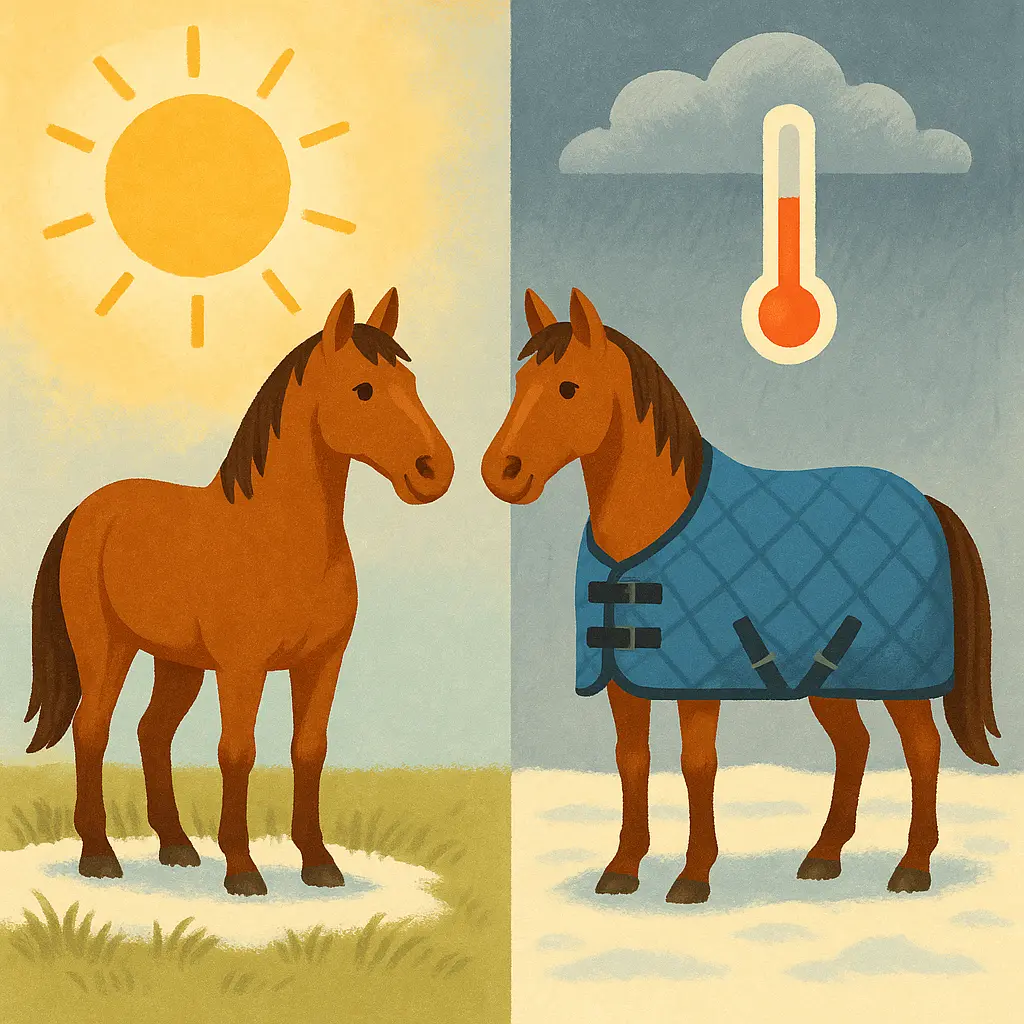
When does a horse genuinely need a rug in the UK?
Rug when the air temperature dips below 5°C, or when it’s wet/windy, and always for clipped, older, underweight, or fine-coated horses in cold conditions. Otherwise, many UK horses cope well unrugged in typical 5–10°C winter days.
UK winters are often damp and changeable rather than Siberian. Many days sit between 0°C and 10°C, with wind and rain doing most of the mischief. Use 5°C as your starting line, then factor in:
- Coat and clip: Freshly clipped horses lose insulation and may need a light stable rug indoors or a light/medium turnout rug outdoors below 10°C, stepping up if it’s wet or windy.
- Age and condition: Older or underweight horses benefit from earlier rugging.
- Breed/type: Thoroughbreds and Arabs often need support sooner than natives or cobs.
- Weather exposure: A cold, wet wind can cut through any coat; waterproof turnouts protect against chilling from rain and wind.
Remember, cooling a hot horse is harder than warming a cool one. Err on the lighter side, then reassess later in the day.
How to pick the right rug weight today
Match the rug to air temperature and horse factors: sweet itch/fly rugs for 5–25°C and fly protection; fleeces for moderate cold; light quilted or medium-weight turnouts for genuine cold snaps below 5°C.
Use this quick decision framework:
- Check the air temperature, wind, and precipitation for turnout hours (not just the morning). If daytime high is 6–8°C but dropping to 0–2°C overnight, plan layers or a change between day and night.
- Assess your horse: unclipped and well-conditioned vs clipped/older/fine-coated/underweight.
- Choose type and weight:
- 5°C to 25°C, flies around: minimal insulation. Opt for sweet itch/fly rugs that raise surface temp modestly while protecting skin.
- 0°C to 10°C, dry and light wind: consider a fleece layer or a light turnout (50–100g) for clipped or lean horses. Native types may still need nothing in calm, dry conditions.
- Below 5°C with wind/rain: a light quilted or medium turnout (c. 100–200g) for most clipped or finer types; heavyweights are for sustained sub-zero spells, fully clipped horses, or living out 24/7 in exposed fields.
- Fit and features: Good shoulder freedom, secure fastenings, and breathable, waterproof outer for turnouts. Trusted builds from brands like WeatherBeeta and Shires help maintain comfort and durability in UK weather.
- Recheck at midday: Sunshine can push an over-rugged horse into the overheating zone even when air temps are single-digit.
Pro tip: A mesh or cooler sheet after exercise helps wick moisture while preventing a sharp chill — a better choice than throwing on a heavy rug over a damp coat.
How to check if your horse is too hot or cold
Rely on behaviour and physiology, not touch tests: sweating, rapid breathing, lethargy, and reluctance to move signal overheating; shivering and tight posture signal cold. Ears or a hand under the rug are not reliable indicators.
Research cited by Dr David Marlin highlights the limits of tactile checks. Instead, look at the whole horse:
- Too hot: damp/sweaty coat under the rug, flared nostrils or faster breathing at rest, irritability, moving away when you approach with the rug, or seeking shade. Remove a layer promptly.
- Too cold: persistent shivering, tucked-up abdomen, hunched or static posture, or cold, wet coat after rain and wind exposure. Add a light layer and reassess.
- Just right: dry coat, normal interest in feed and environment, relaxed movement, no signs of agitation.
Good daily care makes assessment easier: regular grooming shows you what’s happening under the rug, and appropriate supplements can support coat and skin health through winter.
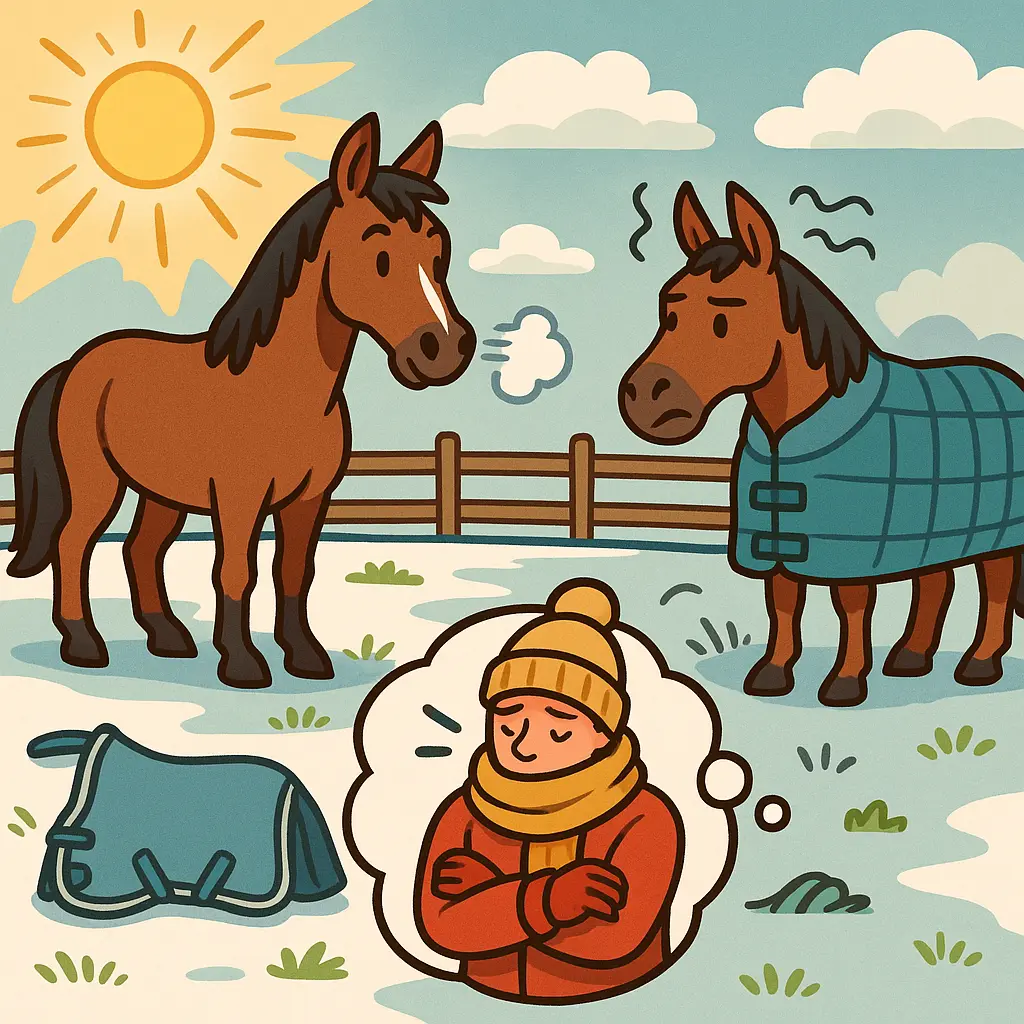
Common UK rugging mistakes (and quick fixes)
The most common mistake is over-rugging based on human comfort; the fix is to use the 5°C rule and your horse’s behaviour as your guide.
Watch for these pitfalls:
- Rugging because you’re cold: remember, your horse’s TNZ starts around 5°C.
- Using heavy rugs in mild weather: light quilted rugs raised surface temperature by about 15.8°C in research — that’s a lot on an 8°C day.
- Ignoring wind and rain: a moderate-weight turnout rug beats a heavy stable rug if it’s wet and blowy.
- Leaving one rug on all day: a sunny afternoon after a frosty morning can push a horse from comfy to overheated. Reassess at lunch.
- Touch tests: ears and “hand-under-rug” aren’t reliable; read the whole horse.
Quick tip: If in doubt, start lighter. It’s easier to add a layer than to cool an overheated horse.
Note on the evidence: The key UK study involved 12 horses total. While the trends are clear, larger samples will refine the details (e.g., colour of rugs, long-term skin effects, and whether rugs affect mutual grooming in turnout). The practical guidance above still stands: choose the lightest effective rug for today’s conditions and your individual horse.
What we recommend at Just Horse Riders
Start light, layer only when needed, and prioritise breathability and fit — especially in changeable UK weather.
At Just Horse Riders, we recommend building a small, versatile rug wardrobe so you can match the day, not the season:
- Mild, fly-prone days (5–25°C): breathable fly and sweet itch rugs for turnout.
- Moderate chill or post-exercise: airy fleeces and coolers for wicking and gentle warmth.
- Cold, wet, and windy spells: correctly weighted, waterproof winter turnout rugs with secure fastenings.
- Indoor comfort for clipped horses: properly fitted stable rugs that won’t overheat.
Our customers consistently rate the build and fit from brands like WeatherBeeta and Shires for British conditions — robust outers, reliable waterproofing, and thoughtful design for shoulder movement make day-to-day management easier.
Pro tip: Fit matters as much as fill. A well-fitted 100g turnout will outperform an ill-fitting heavyweight for comfort and welfare.
Conclusion
On bright, freezing-feeling days, check the air temperature — not your goosebumps. Above 5°C, most unclipped, healthy horses don’t need a rug; below 5°C or in wet/windy weather, choose the lightest effective rug for your individual horse. Monitor behaviour, reassess at midday, and remember the golden rule from the BHS and ISES: it’s easier for horses to warm up than to cool down. For dependable, well-fitting options across the range, explore our curated turnout rugs, stable rugs, and fly rugs collections.
FAQs
Use 5°C as your starting rule: above 5°C, healthy unclipped horses rarely need a rug; below 5°C or in wet, windy weather, select the lightest effective rug for your horse and the day.
Is a thin turnout or fly rug colder than no rug on a bright, freezing-feeling day?
No. Even sweet itch/fly rugs increased surface temperature by about 4.2°C in UK research. A thin rug still adds warmth compared with no rug at all.
What’s the thermoneutral zone (TNZ) for horses versus humans?
Horses: ~5°C to 25°C. Humans: ~15°C to 25°C when clothed (25°C to 30°C without). This gap explains why owners often over-rug.
Which rug types add the most heat?
Average increases measured: sweet itch/fly +4.2°C; fleece +11.2°C; light quilted +15.8°C. In very cold weather, rugged horses reached 24°C–30°C surface temperatures versus 12.5°C–18.5°C for unrugged controls.
How can I tell if my horse is too hot in a rug?
Look for sweating, rapid breathing, lethargy, irritability, or reluctance to move. Don’t rely on ear temperature or putting your hand under the rug — these aren’t reliable indicators.
When should I rug in typical UK winter weather?
Rug below 5°C, in persistent rain or wind, and for clipped, older, underweight, or fine-coated horses. Choose breathable, waterproof turnout rugs outdoors and well-fitted stable rugs indoors as needed.
Can a lightweight turnout improve welfare in mild conditions?
Yes, when it’s mild (above 5°C), a lightweight turnout can provide fly protection and modest insulation without compromising thermoregulation — particularly useful for horses at pasture.
What about study limitations — should I be cautious?
Yes, the featured UK study involved 12 horses, and more research is needed on long-term skin health, social behaviours, and rug colour effects. Still, the practical takeaway is robust: avoid over-rugging and match rug weight to today’s conditions and your individual horse.